5.5 Classification
5.5.1
Outline the binomial system of nomenclature
(also referred to as a scientific name)
Swedish botanist, Carolus Linnaeus (17071778)
Internationally recognised name for each
species
5.5 Classification
Rules for binomial nomenclature:
1. The first name is the Genus name
2. The Genus name is CAPITALISED
3. The second name is the species name
4. The species name is not capitalised
5. Italics are used if the name is printed
6. The name is underlined if handwritten
Homo sapiens, Panthera leo, etc.
5.5 Classification
5.5.2
List the seven levels in the hierarchy of taxa
- use an example from two different
kingdoms for each level.
Dusky leaf monkey

Hibiscus
Dusky Leaf Monkey

o

!
n
w
o
r

Animalia
Chordata
Mammalia
Primates
Cercopithecidae
Trachypithecus
T. obscurus

m
r

k
a

u
o
y
e

Plantae
Magnoliophyta
Magnoliopsida
Malvales
Malvaceae
Hibiscus

Gross Sometimes

Kingdom
Phylum
Class
Order
Family
Genus
Species

Hibiscus

H. rosa-sinensis

Kings Play Chess On Folding Glass Stools

Kissing Pretty Cute Otter Feels

King Phillip Came Over For Good Soup
5.5 Classification
• 5.5.3 Distinguish between the following
phyla of plants, using simple external
recognition features: bryophyta,
filicinophyta, coniferophyta and
angiospermophyta.
• 5.5.4 Distinguish between the following
phyla of animals, using simple external
recognition features: porifera, cnidaria,
platyhelminthes, annelida, mollusca and
arthropoda.
Bryophyta – mosses and liverworts
(0.5m)
• No roots, just rhizoids
• Small
• Spores produced in capsules
Mosses have simple
leaves and stems

Liverworts have
a flattened “thallus”
Filicinophyta – ferns (<15m)
•
•

Roots, leaves and short (non-woody)stems
Pinnate leaves

•

Curled up in buds

•

Spores in sporangia (underside of leaves)
shallow roots
Coniferophyta – conifers (100m)
• Shrubs or trees with roots, leaves and woody
stems
• Narrow
leaves
(needles)
with thick
waxy
cuticle

• Produce seeds from ovules in femaleones (&
cones (pollen is produced from
from smaller male cones)
Angiospermophyta – flowering
plants (100m)
• Roots, stems and leaves
• If shrubs or trees, woody stems
• Produce seeds from ovules inside ovaries.
Fruits develop from
ovaries, to disperse
seeds
Porifera (sponges)
• Poriferans don't have mouths or
anuses; instead, they have tiny
pores in their outer walls through
which water is drawn.
• No symmetry and sessile
Cnidaria (corals, anemones and jellyfish)
• Single opening to stomach, that functions as both
mouth and anus
• It has radial symmetry
• Has tentacles armed with stinging cells called
nematocysts.
Platyhelminths (flatworms)
• Bilaterally
symmetrical
• Flat bodies
• No body cavity other
than the gut
• Mouth but no anus
Annelida (segmented worms)
• Segmented, long body (often with chitae)
• Mouth and anus
• Bilaterally symmetrical
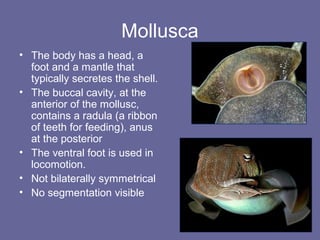
Mollusca
• The body has a head, a
foot and a mantle that
typically secretes the shell.
• The buccal cavity, at the
anterior of the mollusc,
contains a radula (a ribbon
of teeth for feeding), anus
at the posterior
• The ventral foot is used in
locomotion.
• Not bilaterally symmetrical
• No segmentation visible
Arthropoda
• Exoskeleton made of chitin (may be
strengthened with calcium carbonate)
• Jointed limbs
• Bilaterally
symmetrical
• Segmentation
usually visible
• Four classes:
insects, arachnids,
crustaceans, millipedes
5.5 Classification
• 5.5.5 Apply and design a key for a group
of up to eight organisms.
• A dichotomous key should be used.
Design a dichotomous key for 8
organisms
5.5 Classification
5.5.1
Outline the binomial system of nomenclature
(also referred to as a scientific name)
Swedish botanist, Carolus Linnaeus (17071778)
Internationally recognised name for each
species
5.5 Classification
5.5.2
List the seven levels in the hierarchy of taxa
- use an example from two different
kingdoms for each level.
5.5 Classification
• 5.5.3 Distinguish between the following
phyla of plants, using simple external
recognition features: bryophyta,
filicinophyta, coniferophyta and
angiospermophyta.
• 5.5.4 Distinguish between the following
phyla of animals, using simple external
recognition features: porifera, cnidaria,
platyhelminthes, annelida, mollusca and
arthropoda.
5.5 Classification
• 5.5.5 Apply and design a key for a group
of up to eight organisms.
• A dichotomous key should be used.

5.5 classification

  • 1.
    5.5 Classification 5.5.1 Outline thebinomial system of nomenclature (also referred to as a scientific name) Swedish botanist, Carolus Linnaeus (17071778) Internationally recognised name for each species
  • 2.
    5.5 Classification Rules forbinomial nomenclature: 1. The first name is the Genus name 2. The Genus name is CAPITALISED 3. The second name is the species name 4. The species name is not capitalised 5. Italics are used if the name is printed 6. The name is underlined if handwritten Homo sapiens, Panthera leo, etc.
  • 3.
    5.5 Classification 5.5.2 List theseven levels in the hierarchy of taxa - use an example from two different kingdoms for each level.
  • 4.
  • 5.
    Dusky Leaf Monkey o ! n w o r Animalia Chordata Mammalia Primates Cercopithecidae Trachypithecus T.obscurus m r k a u o y e Plantae Magnoliophyta Magnoliopsida Malvales Malvaceae Hibiscus Gross Sometimes Kingdom Phylum Class Order Family Genus Species Hibiscus H. rosa-sinensis Kings Play Chess On Folding Glass Stools Kissing Pretty Cute Otter Feels King Phillip Came Over For Good Soup
  • 6.
    5.5 Classification • 5.5.3Distinguish between the following phyla of plants, using simple external recognition features: bryophyta, filicinophyta, coniferophyta and angiospermophyta. • 5.5.4 Distinguish between the following phyla of animals, using simple external recognition features: porifera, cnidaria, platyhelminthes, annelida, mollusca and arthropoda.
  • 7.
    Bryophyta – mossesand liverworts (0.5m) • No roots, just rhizoids • Small • Spores produced in capsules Mosses have simple leaves and stems Liverworts have a flattened “thallus”
  • 8.
    Filicinophyta – ferns(<15m) • • Roots, leaves and short (non-woody)stems Pinnate leaves • Curled up in buds • Spores in sporangia (underside of leaves) shallow roots
  • 9.
    Coniferophyta – conifers(100m) • Shrubs or trees with roots, leaves and woody stems • Narrow leaves (needles) with thick waxy cuticle • Produce seeds from ovules in femaleones (& cones (pollen is produced from from smaller male cones)
  • 10.
    Angiospermophyta – flowering plants(100m) • Roots, stems and leaves • If shrubs or trees, woody stems • Produce seeds from ovules inside ovaries. Fruits develop from ovaries, to disperse seeds
  • 11.
    Porifera (sponges) • Poriferansdon't have mouths or anuses; instead, they have tiny pores in their outer walls through which water is drawn. • No symmetry and sessile
  • 12.
    Cnidaria (corals, anemonesand jellyfish) • Single opening to stomach, that functions as both mouth and anus • It has radial symmetry • Has tentacles armed with stinging cells called nematocysts.
  • 13.
    Platyhelminths (flatworms) • Bilaterally symmetrical •Flat bodies • No body cavity other than the gut • Mouth but no anus
  • 14.
    Annelida (segmented worms) •Segmented, long body (often with chitae) • Mouth and anus • Bilaterally symmetrical
  • 15.
    Mollusca • The bodyhas a head, a foot and a mantle that typically secretes the shell. • The buccal cavity, at the anterior of the mollusc, contains a radula (a ribbon of teeth for feeding), anus at the posterior • The ventral foot is used in locomotion. • Not bilaterally symmetrical • No segmentation visible
  • 16.
    Arthropoda • Exoskeleton madeof chitin (may be strengthened with calcium carbonate) • Jointed limbs • Bilaterally symmetrical • Segmentation usually visible • Four classes: insects, arachnids, crustaceans, millipedes
  • 17.
    5.5 Classification • 5.5.5Apply and design a key for a group of up to eight organisms. • A dichotomous key should be used.
  • 18.
    Design a dichotomouskey for 8 organisms
  • 19.
    5.5 Classification 5.5.1 Outline thebinomial system of nomenclature (also referred to as a scientific name) Swedish botanist, Carolus Linnaeus (17071778) Internationally recognised name for each species
  • 20.
    5.5 Classification 5.5.2 List theseven levels in the hierarchy of taxa - use an example from two different kingdoms for each level.
  • 21.
    5.5 Classification • 5.5.3Distinguish between the following phyla of plants, using simple external recognition features: bryophyta, filicinophyta, coniferophyta and angiospermophyta. • 5.5.4 Distinguish between the following phyla of animals, using simple external recognition features: porifera, cnidaria, platyhelminthes, annelida, mollusca and arthropoda.
  • 22.
    5.5 Classification • 5.5.5Apply and design a key for a group of up to eight organisms. • A dichotomous key should be used.