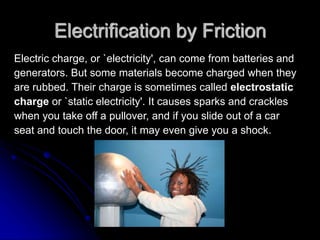
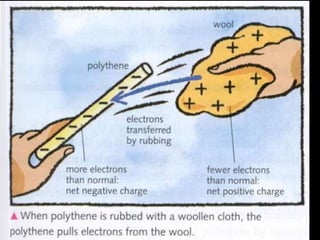
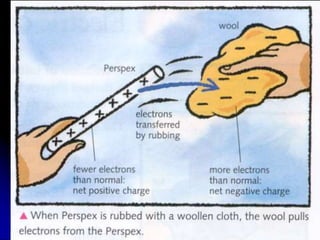
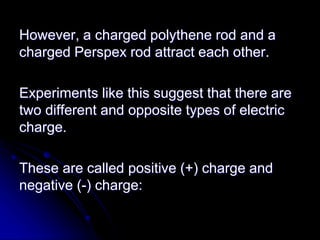
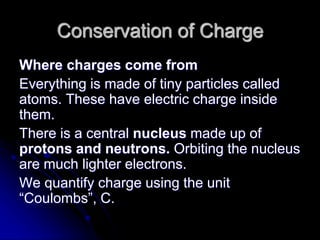
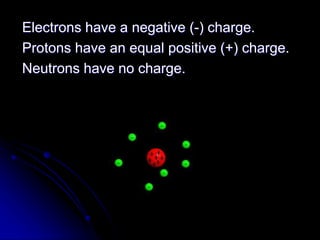
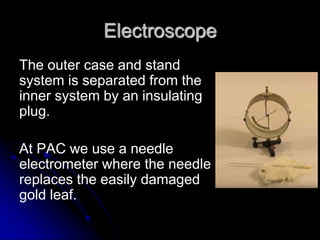
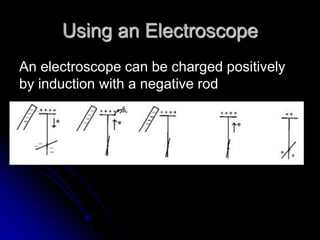
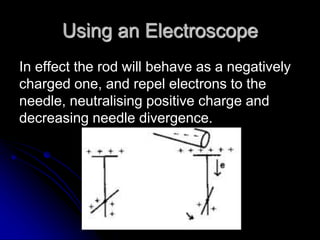
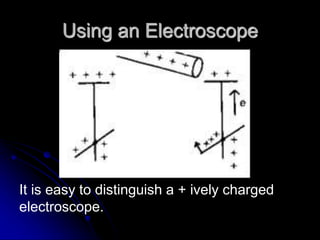
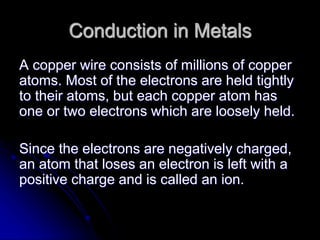
1. Electric charge can come from batteries, generators or by rubbing certain materials together. Rubbing materials transfers electrons between them, leaving one with an excess of electrons and a negative charge and the other with a deficiency of electrons and a positive charge.
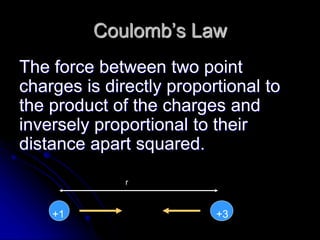
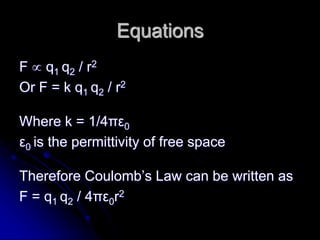
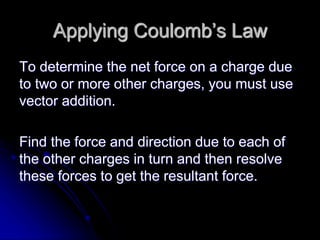
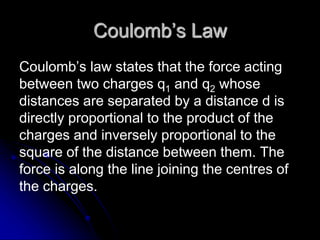
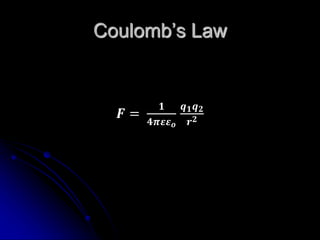
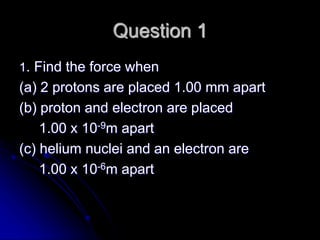
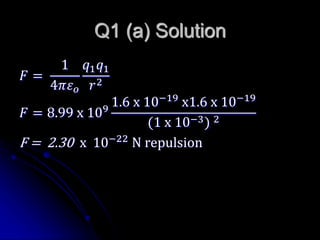
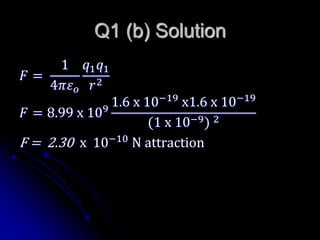
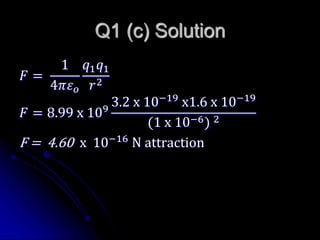
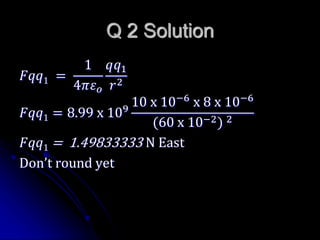
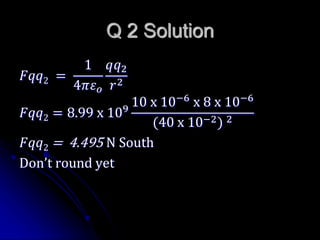
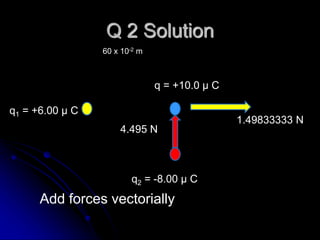
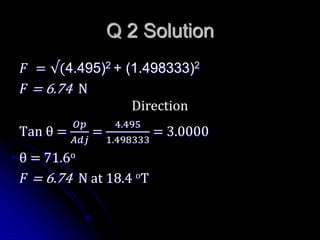
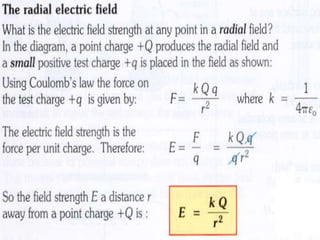
2. Coulomb's law describes the electric force between two point charges. It states that the force is directly proportional to the product of the charges and inversely proportional to the square of the distance between them.
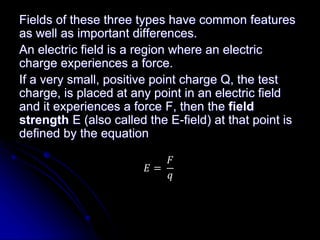
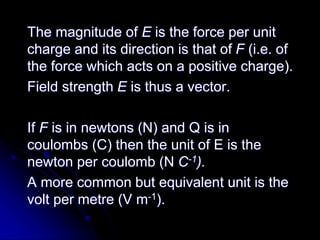
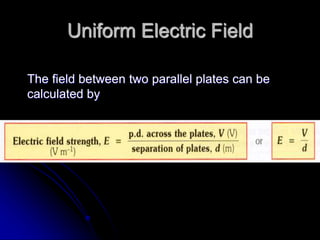
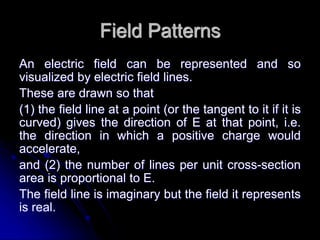
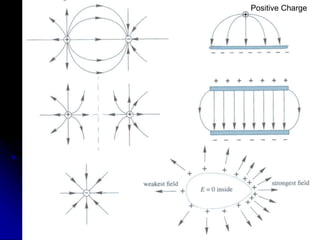
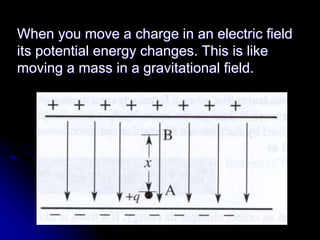
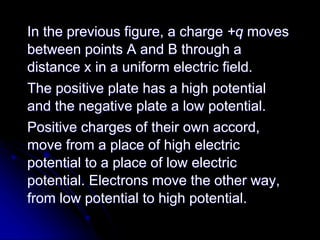
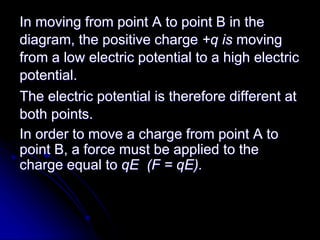
3. An electric field is defined as the force per unit charge exerted on a small test charge placed at a point in space. Electric field lines show the direction and strength of the electric field.