KNOWLEDGE FOR THE BENEFIT OF HUMANITY 
ADVANCED NUTRITION (HFS4352) WORLD HUNGER A challenge to food and nutritional sciences 
Mohd Razif Shahril, PhD 
School of Nutrition & Dietetics 
Faculty of Medicine and Health Sciences 
Universiti Sultan Zainal Abidin 
1
Outline 
•Introduction 
•Trends of global hunger 
•Food security 
•Hunger and malnutrition 
•Technological advancement: a solution? 
2
Introduction 
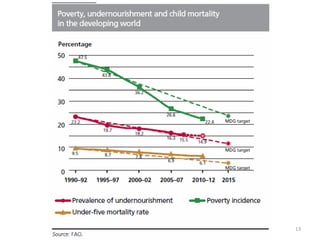
•United Nations Millennium Declaration 2001 
–To improve human well-being by alleviating hunger, poverty and disease. 
–Targets of the Millennium Development Goals (MDGs) 
•To reduce the prevalence of hunger by half between 1990 and 2015. 
•World’s population is still increasing, but the pace of increase is getting slower 
•Numerous people around the world are still suffering from hunger 
3
4
Trends of Global Hunger 
5
Hungry people in the world 
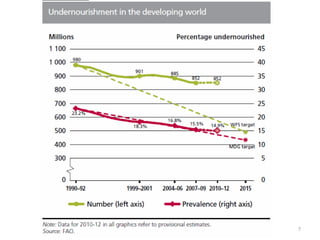
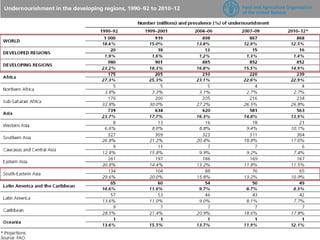
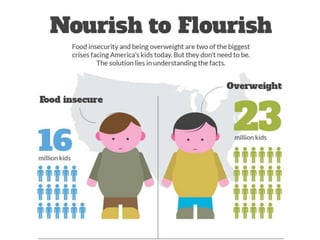
•Nearly 870 million people of the 7.1 billion people in the world (or 1 in 8) were suffering from chronic undernourishment in 2010 – 2012 
–Live in the developing countries representing 15% of the population of developing countries. 
–16 million people undernourished in developed countries 
6 
Reference: FAO. 2012. The State of Food Security in the World 2012. http://www.fao.org/docrep/016/i3027e/i3027e.pdf
7
8
9
cont. Hungry people in the world 
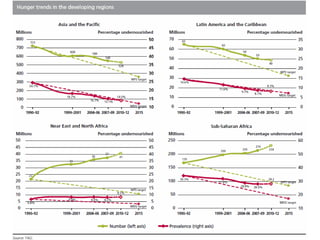
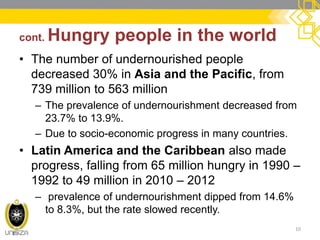
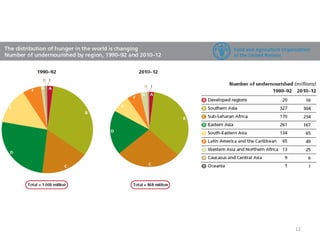
•The number of undernourished people decreased 30% in Asia and the Pacific, from 739 million to 563 million 
–The prevalence of undernourishment decreased from 23.7% to 13.9%. 
–Due to socio-economic progress in many countries. 
•Latin America and the Caribbean also made progress, falling from 65 million hungry in 1990 – 1992 to 49 million in 2010 – 2012 
– prevalence of undernourishment dipped from 14.6% to 8.3%, but the rate slowed recently. 
10
cont. Hungry people in the world 
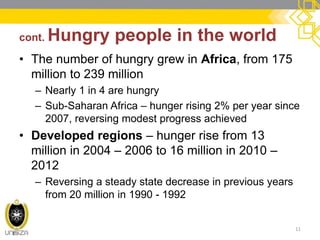
•The number of hungry grew in Africa, from 175 million to 239 million 
–Nearly 1 in 4 are hungry 
–Sub-Saharan Africa – hunger rising 2% per year since 2007, reversing modest progress achieved 
•Developed regions – hunger rise from 13 million in 2004 – 2006 to 16 million in 2010 – 2012 
–Reversing a steady state decrease in previous years from 20 million in 1990 - 1992 
11
12
13
Does the world produce enough food? 
•YES! 
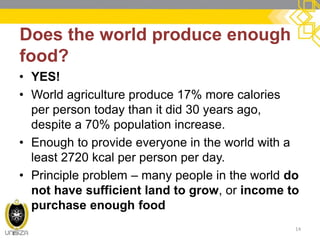
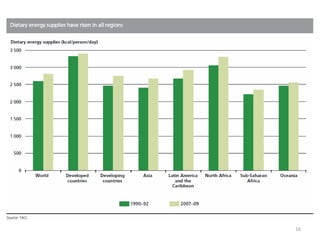
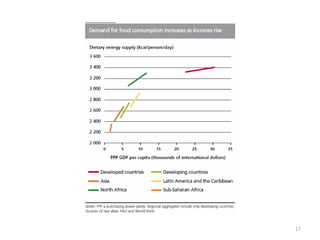
•World agriculture produce 17% more calories per person today than it did 30 years ago, despite a 70% population increase. 
•Enough to provide everyone in the world with a least 2720 kcal per person per day. 
•Principle problem – many people in the world do not have sufficient land to grow, or income to purchase enough food 
14
15
16
17
18
19
20
21
22
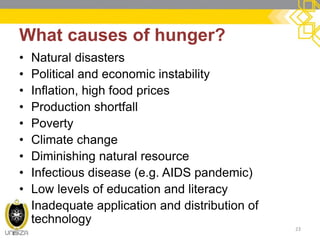
What causes of hunger? 
•Natural disasters 
•Political and economic instability 
•Inflation, high food prices 
•Production shortfall 
•Poverty 
•Climate change 
•Diminishing natural resource 
•Infectious disease (e.g. AIDS pandemic) 
•Low levels of education and literacy 
•Inadequate application and distribution of technology 
23
Food security 
24
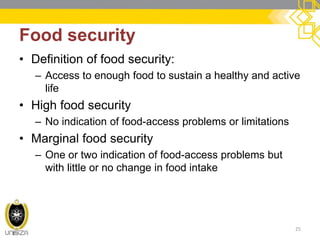
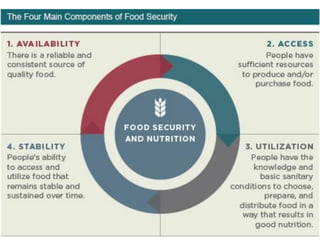
Food security 
•Definition of food security: 
–Access to enough food to sustain a healthy and active life 
•High food security 
–No indication of food-access problems or limitations 
•Marginal food security 
–One or two indication of food-access problems but with little or no change in food intake 
25
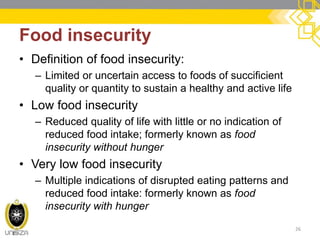
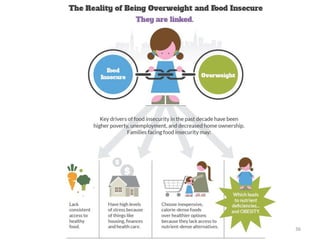
Food insecurity 
•Definition of food insecurity: 
–Limited or uncertain access to foods of succificient quality or quantity to sustain a healthy and active life 
•Low food insecurity 
–Reduced quality of life with little or no indication of reduced food intake; formerly known as food insecurity without hunger 
•Very low food insecurity 
–Multiple indications of disrupted eating patterns and reduced food intake: formerly known as food insecurity with hunger 
26
27
Hunger and Malnutrition 
28
Hunger concepts and definition 
•Hunger 
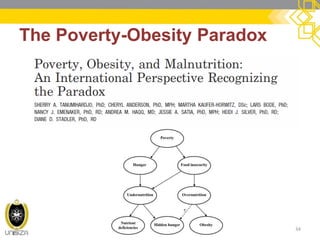
–A condition in which people lack macronutrients and micronutrients for fully productive, active, and healthy lives 
–Can result from insufficient nutrients intake or from impaired absorption of the required nutrients in the body (also called hidden hunger) 
•Malnutrition 
–Is a physical condition in which people experience either a deficiencies of nutrients (undernutrition) or an excess of certain nutrients (overnutrition) 
29
Nutrient deficiencies and its threats to food security 
30 
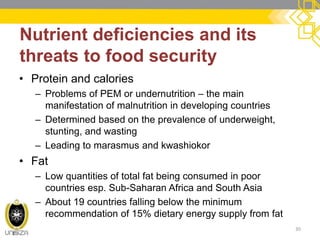
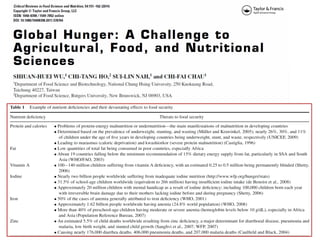
•Protein and calories 
–Problems of PEM or undernutrition – the main manifestation of malnutrition in developing countries 
–Determined based on the prevalence of underweight, stunting, and wasting 
–Leading to marasmus and kwashiokor 
•Fat 
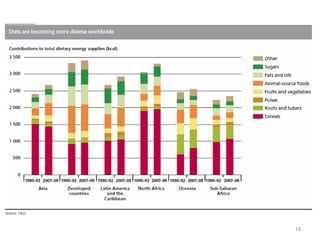
–Low quantities of total fat being consumed in poor countries esp. Sub-Saharan Africa and South Asia 
–About 19 countries falling below the minimum recommendation of 15% dietary energy supply from fat
cont. Nutrient deficiencies and its threats to food security 
31 
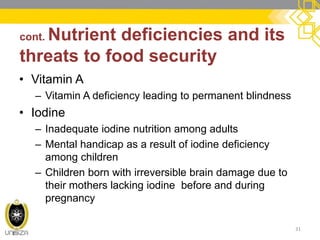
•Vitamin A 
–Vitamin A deficiency leading to permanent blindness 
•Iodine 
–Inadequate iodine nutrition among adults 
–Mental handicap as a result of iodine deficiency among children 
–Children born with irreversible brain damage due to their mothers lacking iodine before and during pregnancy
cont. Nutrient deficiencies and its threats to food security 
32 
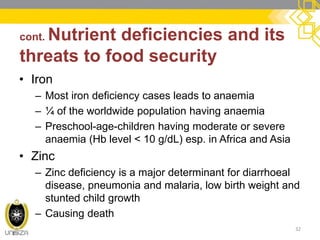
•Iron 
–Most iron deficiency cases leads to anaemia 
–¼ of the worldwide population having anaemia 
–Preschool-age-children having moderate or severe anaemia (Hb level < 10 g/dL) esp. in Africa and Asia 
•Zinc 
–Zinc deficiency is a major determinant for diarrhoeal disease, pneumonia and malaria, low birth weight and stunted child growth 
–Causing death
33
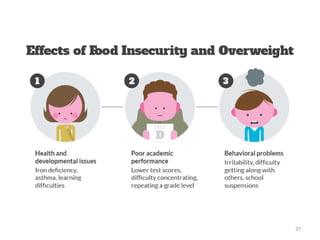
The Poverty-Obesity Paradox 
34
35
36
37
38
Technological advancement: a solution? 
39 
Self-directed learning
40
Thank You 
41

4. World Hunger

  • 1.
    KNOWLEDGE FOR THEBENEFIT OF HUMANITY ADVANCED NUTRITION (HFS4352) WORLD HUNGER A challenge to food and nutritional sciences Mohd Razif Shahril, PhD School of Nutrition & Dietetics Faculty of Medicine and Health Sciences Universiti Sultan Zainal Abidin 1
  • 2.
    Outline •Introduction •Trendsof global hunger •Food security •Hunger and malnutrition •Technological advancement: a solution? 2
  • 3.
    Introduction •United NationsMillennium Declaration 2001 –To improve human well-being by alleviating hunger, poverty and disease. –Targets of the Millennium Development Goals (MDGs) •To reduce the prevalence of hunger by half between 1990 and 2015. •World’s population is still increasing, but the pace of increase is getting slower •Numerous people around the world are still suffering from hunger 3
  • 4.
  • 5.
  • 6.
    Hungry people inthe world •Nearly 870 million people of the 7.1 billion people in the world (or 1 in 8) were suffering from chronic undernourishment in 2010 – 2012 –Live in the developing countries representing 15% of the population of developing countries. –16 million people undernourished in developed countries 6 Reference: FAO. 2012. The State of Food Security in the World 2012. http://www.fao.org/docrep/016/i3027e/i3027e.pdf
  • 7.
  • 8.
  • 9.
  • 10.
    cont. Hungry peoplein the world •The number of undernourished people decreased 30% in Asia and the Pacific, from 739 million to 563 million –The prevalence of undernourishment decreased from 23.7% to 13.9%. –Due to socio-economic progress in many countries. •Latin America and the Caribbean also made progress, falling from 65 million hungry in 1990 – 1992 to 49 million in 2010 – 2012 – prevalence of undernourishment dipped from 14.6% to 8.3%, but the rate slowed recently. 10
  • 11.
    cont. Hungry peoplein the world •The number of hungry grew in Africa, from 175 million to 239 million –Nearly 1 in 4 are hungry –Sub-Saharan Africa – hunger rising 2% per year since 2007, reversing modest progress achieved •Developed regions – hunger rise from 13 million in 2004 – 2006 to 16 million in 2010 – 2012 –Reversing a steady state decrease in previous years from 20 million in 1990 - 1992 11
  • 12.
  • 13.
  • 14.
    Does the worldproduce enough food? •YES! •World agriculture produce 17% more calories per person today than it did 30 years ago, despite a 70% population increase. •Enough to provide everyone in the world with a least 2720 kcal per person per day. •Principle problem – many people in the world do not have sufficient land to grow, or income to purchase enough food 14
  • 15.
  • 16.
  • 17.
  • 18.
  • 19.
  • 20.
  • 21.
  • 22.
  • 23.
    What causes ofhunger? •Natural disasters •Political and economic instability •Inflation, high food prices •Production shortfall •Poverty •Climate change •Diminishing natural resource •Infectious disease (e.g. AIDS pandemic) •Low levels of education and literacy •Inadequate application and distribution of technology 23
  • 24.
  • 25.
    Food security •Definitionof food security: –Access to enough food to sustain a healthy and active life •High food security –No indication of food-access problems or limitations •Marginal food security –One or two indication of food-access problems but with little or no change in food intake 25
  • 26.
    Food insecurity •Definitionof food insecurity: –Limited or uncertain access to foods of succificient quality or quantity to sustain a healthy and active life •Low food insecurity –Reduced quality of life with little or no indication of reduced food intake; formerly known as food insecurity without hunger •Very low food insecurity –Multiple indications of disrupted eating patterns and reduced food intake: formerly known as food insecurity with hunger 26
  • 27.
  • 28.
  • 29.
    Hunger concepts anddefinition •Hunger –A condition in which people lack macronutrients and micronutrients for fully productive, active, and healthy lives –Can result from insufficient nutrients intake or from impaired absorption of the required nutrients in the body (also called hidden hunger) •Malnutrition –Is a physical condition in which people experience either a deficiencies of nutrients (undernutrition) or an excess of certain nutrients (overnutrition) 29
  • 30.
    Nutrient deficiencies andits threats to food security 30 •Protein and calories –Problems of PEM or undernutrition – the main manifestation of malnutrition in developing countries –Determined based on the prevalence of underweight, stunting, and wasting –Leading to marasmus and kwashiokor •Fat –Low quantities of total fat being consumed in poor countries esp. Sub-Saharan Africa and South Asia –About 19 countries falling below the minimum recommendation of 15% dietary energy supply from fat
  • 31.
    cont. Nutrient deficienciesand its threats to food security 31 •Vitamin A –Vitamin A deficiency leading to permanent blindness •Iodine –Inadequate iodine nutrition among adults –Mental handicap as a result of iodine deficiency among children –Children born with irreversible brain damage due to their mothers lacking iodine before and during pregnancy
  • 32.
    cont. Nutrient deficienciesand its threats to food security 32 •Iron –Most iron deficiency cases leads to anaemia –¼ of the worldwide population having anaemia –Preschool-age-children having moderate or severe anaemia (Hb level < 10 g/dL) esp. in Africa and Asia •Zinc –Zinc deficiency is a major determinant for diarrhoeal disease, pneumonia and malaria, low birth weight and stunted child growth –Causing death
  • 33.
  • 34.
  • 35.
  • 36.
  • 37.
  • 38.
  • 39.
    Technological advancement: asolution? 39 Self-directed learning
  • 40.
  • 41.