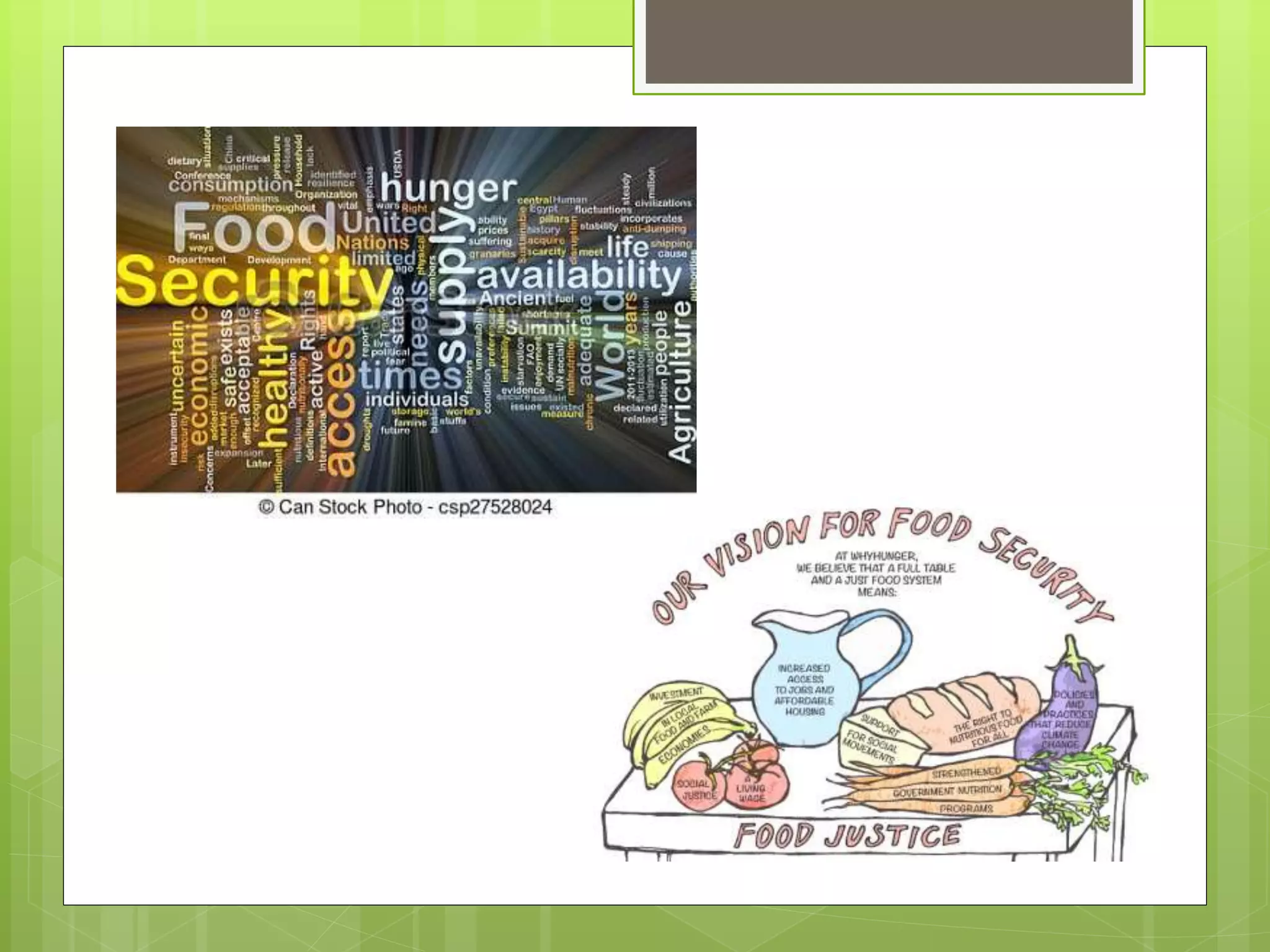
Food security
Student: Perișan Mihaela
Group: 8213
Coordinating Teacher: Mihai Daniel Frumușelu
 Food security is a measure of the availability of food
and individuals' accessibility to it, where accessibility
includes affordability. There is evidence of food security
being a concern over 10,000 years ago, with central
authorities in ancient China and ancient Egypt being
known to release food from storage in times of famine.
 At the 1974 World Food Conference the term "food
security" was defined with an emphasis on supply. Food
security, they said, is the "availability at all times of
adequate, nourishing, diverse, balanced and moderate
world food supplies of basic foodstuffs to sustain a
steady expansion of food consumption and to offset
fluctuations in production and prices".
 Later definitions added demand and access issues to the
definition.
 The final report of the 1996 World Food Summit states
that food security "exists when all people, at all times,
have physical and economic access to sufficient, safe
and nutritious food to meet their dietary needs and food
preferences for an active and healthy life”.
 Food security can be measured by calorie intake per
person per day, available on a household budget. In
general the objective of food security indicators and
measures is to capture some or all of the main
components of food security in terms of food
availability, access and utilization or adequacy.
 Food insecurity is measured in the United States by
questions in the Census Bureau's Current Population
Survey. The questions asked are about anxiety that the
household budget is inadequate to buy enough food,
inadequacy in the quantity or quality of food eaten by
adults and children in the household, and instances of
reduced food intake or consequences of reduced food
intake for adults and for children.
Food security is assessed by four measurements:
 Availability: the physical presence of food through
domestic production, commercial imports or food aid.
Indicators of changes in food availability might include crop
and livestock production trends.
 Access: a household's ability to acquire adequate amounts
of food, through a combination of home production and
stocks, purchases, gifts, borrowing and aid. Indicators of
food access changes might include food price trends and
market flows.
 Utilisation: a household's consumption of the food it has
access to and the individuals' ability to absorb and
metabolise the nutrients. Indicators could include
physiological development.
 Stability: the condition where food is regularly and
periodically available and affordable so that it contributes
to nutritional security. Indicators of stability include the
impact of shocks such as floods and droughts on crop
production. Changes in climate and increases in some
extreme weather events, such as floods and droughts,
could disrupt stability in the supply of food and people's
livelihoods making it more difficult for them to earn a stable
income to purchase food.
Bibliography
 https://en.wikipedia.org/wiki/Food_security
 https://www.metoffice.gov.uk/climate-
guide/climate-change/impacts/food
Food security

Food security

  • 1.
    Food security Student: PerișanMihaela Group: 8213 Coordinating Teacher: Mihai Daniel Frumușelu
  • 2.
     Food securityis a measure of the availability of food and individuals' accessibility to it, where accessibility includes affordability. There is evidence of food security being a concern over 10,000 years ago, with central authorities in ancient China and ancient Egypt being known to release food from storage in times of famine.
  • 3.
     At the1974 World Food Conference the term "food security" was defined with an emphasis on supply. Food security, they said, is the "availability at all times of adequate, nourishing, diverse, balanced and moderate world food supplies of basic foodstuffs to sustain a steady expansion of food consumption and to offset fluctuations in production and prices".  Later definitions added demand and access issues to the definition.
  • 4.
     The finalreport of the 1996 World Food Summit states that food security "exists when all people, at all times, have physical and economic access to sufficient, safe and nutritious food to meet their dietary needs and food preferences for an active and healthy life”.
  • 5.
     Food securitycan be measured by calorie intake per person per day, available on a household budget. In general the objective of food security indicators and measures is to capture some or all of the main components of food security in terms of food availability, access and utilization or adequacy.
  • 6.
     Food insecurityis measured in the United States by questions in the Census Bureau's Current Population Survey. The questions asked are about anxiety that the household budget is inadequate to buy enough food, inadequacy in the quantity or quality of food eaten by adults and children in the household, and instances of reduced food intake or consequences of reduced food intake for adults and for children.
  • 7.
    Food security isassessed by four measurements:  Availability: the physical presence of food through domestic production, commercial imports or food aid. Indicators of changes in food availability might include crop and livestock production trends.  Access: a household's ability to acquire adequate amounts of food, through a combination of home production and stocks, purchases, gifts, borrowing and aid. Indicators of food access changes might include food price trends and market flows.
  • 8.
     Utilisation: ahousehold's consumption of the food it has access to and the individuals' ability to absorb and metabolise the nutrients. Indicators could include physiological development.  Stability: the condition where food is regularly and periodically available and affordable so that it contributes to nutritional security. Indicators of stability include the impact of shocks such as floods and droughts on crop production. Changes in climate and increases in some extreme weather events, such as floods and droughts, could disrupt stability in the supply of food and people's livelihoods making it more difficult for them to earn a stable income to purchase food.
  • 10.