Downloaded 16 times


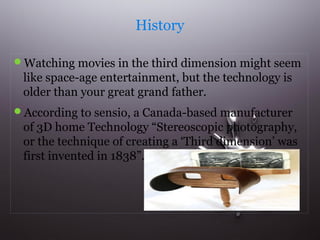

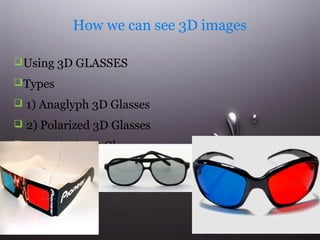
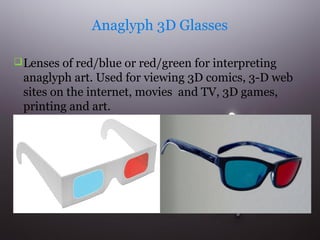
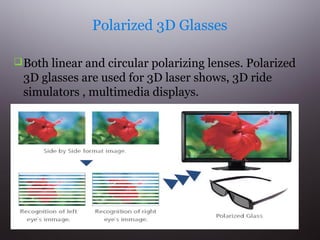
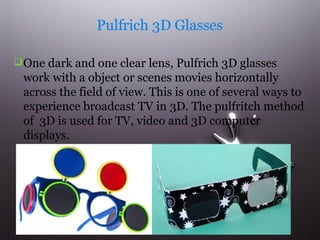
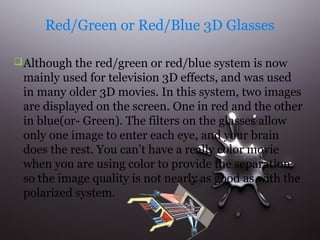
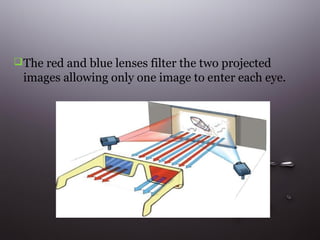
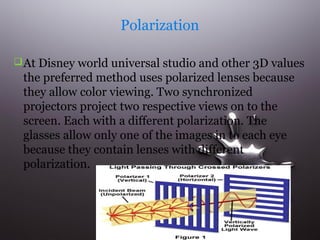
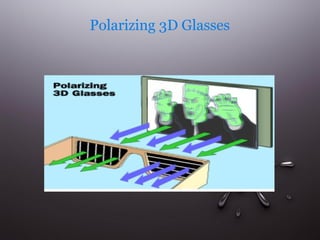
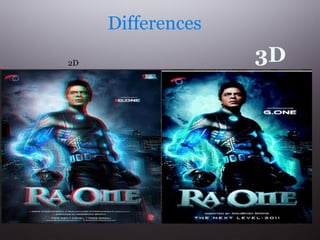
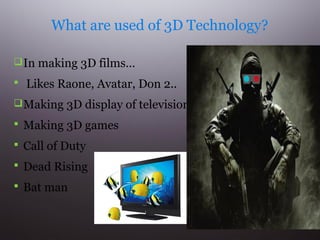




3D technology creates the illusion of depth by displaying stereoscopic images that mimic human binocular vision. The technology was first invented in 1838 with stereoscopic photography. There are several methods for viewing 3D images, including using anaglyph, polarized, or Pulfrich 3D glasses to allow each eye to see a different image. The brain then combines these into a single image with depth perception. 3D technology is now used in movies, TV shows, video games, and displays to make the content more immersive. It has advantages for education by sparking students' interest and encouraging deeper engagement with subjects.


