SCREEN LESS DISPLAY
CONTENTS
 INTRODUCTION
 TYPES OF SCREEN LESS DISPLAYS
 VISUAL IMAGE DISPLAY
 RETINAL DISPLAY
 SYNAPTIC INTERFACE.
 ADVANTAGES
 DISADVANTAGES
 APPLICATIONS
INTRODUCTION
 ‘SCREEN LESS DISPLAY’ As the name implies
the display of several things without the use of
screens using projector.
t is one of the TOP 10 emerging technologies in IT
 It is the one of the top 10 emerging
technologies in IT field.
 We will be using Screen less display technology
during 2020’s
Types of screen less displays
 It involves the following 3 different working
principles.
1. Visual image.
2. Virtual retinal display.
3. Synaptic interface.
VISUAL IMAGE screen less display
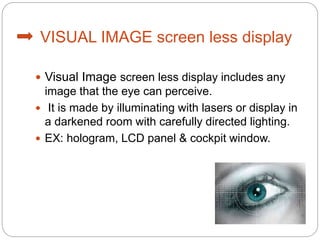
 Visual Image screen less display includes any
image that the eye can perceive.
 It is made by illuminating with lasers or display in
a darkened room with carefully directed lighting.
 EX: hologram, LCD panel & cockpit window.
HOLOGRAM
 Hologram is a photographic recording of a light
field, rather than of an image formed by a lens.
 It is used to display a fully 3-D image of subject,
which is seen without the using of any special
glasses.
 These are saved in HOLOLOIDS.
Working principle of hologram
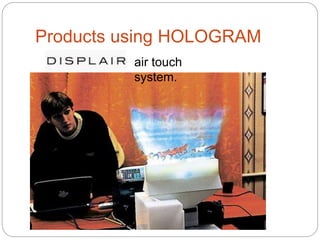
Products using HOLOGRAM
air touch
system.
VIRTUAL RETINA DISPLAY
 Virtual retinal display systems are a type of
screen less displays in which images are
projected directly onto the retina.
 They are distinguished from visual image
systems because light is not reflected from
some intermediate object onto the retina
 As the video falls directly on to retina of
a intended viewer it is highly secured.
VIRTUAL RETINA DISPLAY
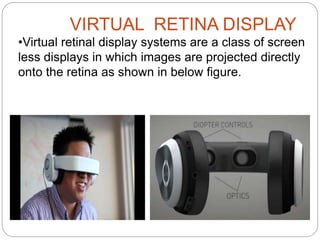
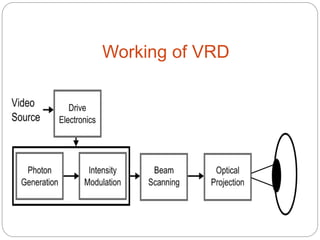
•Virtual retinal display systems are a class of screen
less displays in which images are projected directly
onto the retina as shown in below figure.
Working of VRD
APPLICATIONS:
SYNAPTIC INTER FACE
 Synaptic Interface it is the interface b/w brain
and eye.
 Visual information completely bypasses the
eye and is transmitted directly to brain.
 While such systems have yet to be
implemented in humans.
Camera sends
images to electrode
implant
ADVANTAGES
 Wider angle of view- Retinal projectors will be
able to provide a wider field of view than is
possible with display screens.
 Greater brightness and better contrast-
Retinal projectors can provide higher levels of
contrast and brightness than any other display
system.
DISADVANTAGES
 The principle disadvantage is that Virtual
retinal display (VRD) is not yet available in the
significant number.
 Prototypes and special experimental models
are now being Built, but their cost per unit is
high.
 The VRD technology is still under progress
and Development.
CONCLUSION
 The future technologies makes our life even
better for the development of mankind in all
aspects of life.
 We should effectively apply these technologies in
reasonable situations and make life easier.
 Physically and Mentally challenged people also
have to be equipped with latest technologies, to
enable them to live a peaceful life.
from

Screen less display

  • 1.
  • 2.
    CONTENTS  INTRODUCTION  TYPESOF SCREEN LESS DISPLAYS  VISUAL IMAGE DISPLAY  RETINAL DISPLAY  SYNAPTIC INTERFACE.  ADVANTAGES  DISADVANTAGES  APPLICATIONS
  • 3.
    INTRODUCTION  ‘SCREEN LESSDISPLAY’ As the name implies the display of several things without the use of screens using projector. t is one of the TOP 10 emerging technologies in IT  It is the one of the top 10 emerging technologies in IT field.  We will be using Screen less display technology during 2020’s
  • 4.
    Types of screenless displays  It involves the following 3 different working principles. 1. Visual image. 2. Virtual retinal display. 3. Synaptic interface.
  • 5.
    VISUAL IMAGE screenless display  Visual Image screen less display includes any image that the eye can perceive.  It is made by illuminating with lasers or display in a darkened room with carefully directed lighting.  EX: hologram, LCD panel & cockpit window.
  • 6.
    HOLOGRAM  Hologram isa photographic recording of a light field, rather than of an image formed by a lens.  It is used to display a fully 3-D image of subject, which is seen without the using of any special glasses.  These are saved in HOLOLOIDS.
  • 7.
  • 8.
  • 9.
    VIRTUAL RETINA DISPLAY Virtual retinal display systems are a type of screen less displays in which images are projected directly onto the retina.  They are distinguished from visual image systems because light is not reflected from some intermediate object onto the retina  As the video falls directly on to retina of a intended viewer it is highly secured.
  • 10.
    VIRTUAL RETINA DISPLAY •Virtualretinal display systems are a class of screen less displays in which images are projected directly onto the retina as shown in below figure.
  • 11.
  • 12.
  • 13.
    SYNAPTIC INTER FACE Synaptic Interface it is the interface b/w brain and eye.  Visual information completely bypasses the eye and is transmitted directly to brain.  While such systems have yet to be implemented in humans.
  • 14.
    Camera sends images toelectrode implant
  • 15.
    ADVANTAGES  Wider angleof view- Retinal projectors will be able to provide a wider field of view than is possible with display screens.  Greater brightness and better contrast- Retinal projectors can provide higher levels of contrast and brightness than any other display system.
  • 16.
    DISADVANTAGES  The principledisadvantage is that Virtual retinal display (VRD) is not yet available in the significant number.  Prototypes and special experimental models are now being Built, but their cost per unit is high.  The VRD technology is still under progress and Development.
  • 17.
    CONCLUSION  The futuretechnologies makes our life even better for the development of mankind in all aspects of life.  We should effectively apply these technologies in reasonable situations and make life easier.  Physically and Mentally challenged people also have to be equipped with latest technologies, to enable them to live a peaceful life.
  • 19.