3-D password
By:
K.Karthik
11E41A0531
CSE-A
Agenda
• Identification
• Passwords
• Passphrase
• Biometrics
• 3-d password
Three Basic Identification Methods of password
•Password
•PIN
•Keys
•Passport
•Smart Card
•Face
•Fingerprint
•Iris
Possession
(“something I have”)
Biometrics
(“something I am”)
Knowledge
(“something I know”)
Password
• It is basically an encryption algorithms.
• Usually it is 8-15 character or slightly more
than that.
• Mostly textual passwords nowadays, are kept
very simple say a word from the dictionary or
their pet names, friends etc.
passphrase
• It’s nothing but the enhance version of
password.
• Usually it is a combination of words or simply
collection of password in proper sequence is
passphrase.
• It contains any well known thought also.
• Length of passphrase is about 30-50 character
or more than that also.
• But it has also some limitations because 30-50
character is creates ambiguity to remember if
there is no any proper sequence.
Biometrics
• Refer to a broad range of technologies
• Automate the identification or verification of an
individual
• Based on human characteristics or body organs
– Physiological: Face, fingerprint, iris
– Behavioral: Hand-written signature, voice
Characteristics
011001010010101…
011010100100110…
001100010010010...
Templates
3-D password
• The 3D passwords which are more customizable,
and very interesting way of authentication.
• The 3-D password is a multifactor authentication
scheme.
• To be authenticated, we present a 3-D virtual
environment where the user navigates and
interacts with various objects.
• The sequence of actions and interactions toward
the objects inside the 3-D environment constructs
the user’s 3-D password.
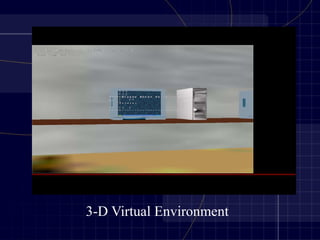
3-D Virtual Environment
• Virtual objects can be any object that we
encounter in real life.
• Moreover, any user input (such as speaking in
a specific location) in the virtual 3-D
environment can be
considered as a part of the 3-D password.
Snapshot of a proof-of-concept virtual art
gallery, which contains 36
pictures and six computers.
DESIGN
• Designing a well-studied 3-D virtual
environment affects the usability,
effectiveness, and acceptability of a 3-D
password system.
• The design of 3-D virtual environments should
follow these guidelines…..
1) Real-life similarity
2) Object uniqueness and distinction
3) Three-dimensional virtual environment size
4) Number of objects (items) and their types
5) System importance
• Possible critical applications include the
following….
1) Critical servers
2) Nuclear and military facilities
3) Airplanes and jetfighters
• A small 3-D virtual environment can be
used in many systems, including the
following:
1) ATMs
2) personal digital assistants
3) desktop computers and laptop logins
4) web authentication
THANK YOU

3D PASSWORD

  • 1.
  • 2.
    Agenda • Identification • Passwords •Passphrase • Biometrics • 3-d password
  • 3.
    Three Basic IdentificationMethods of password •Password •PIN •Keys •Passport •Smart Card •Face •Fingerprint •Iris Possession (“something I have”) Biometrics (“something I am”) Knowledge (“something I know”)
  • 4.
    Password • It isbasically an encryption algorithms. • Usually it is 8-15 character or slightly more than that. • Mostly textual passwords nowadays, are kept very simple say a word from the dictionary or their pet names, friends etc.
  • 5.
    passphrase • It’s nothingbut the enhance version of password. • Usually it is a combination of words or simply collection of password in proper sequence is passphrase. • It contains any well known thought also.
  • 6.
    • Length ofpassphrase is about 30-50 character or more than that also. • But it has also some limitations because 30-50 character is creates ambiguity to remember if there is no any proper sequence.
  • 7.
    Biometrics • Refer toa broad range of technologies • Automate the identification or verification of an individual • Based on human characteristics or body organs – Physiological: Face, fingerprint, iris – Behavioral: Hand-written signature, voice Characteristics 011001010010101… 011010100100110… 001100010010010... Templates
  • 8.
    3-D password • The3D passwords which are more customizable, and very interesting way of authentication. • The 3-D password is a multifactor authentication scheme. • To be authenticated, we present a 3-D virtual environment where the user navigates and interacts with various objects. • The sequence of actions and interactions toward the objects inside the 3-D environment constructs the user’s 3-D password.
  • 9.
  • 10.
    • Virtual objectscan be any object that we encounter in real life. • Moreover, any user input (such as speaking in a specific location) in the virtual 3-D environment can be considered as a part of the 3-D password.
  • 11.
    Snapshot of aproof-of-concept virtual art gallery, which contains 36 pictures and six computers.
  • 14.
    DESIGN • Designing awell-studied 3-D virtual environment affects the usability, effectiveness, and acceptability of a 3-D password system. • The design of 3-D virtual environments should follow these guidelines…..
  • 15.
    1) Real-life similarity 2)Object uniqueness and distinction 3) Three-dimensional virtual environment size 4) Number of objects (items) and their types 5) System importance
  • 16.
    • Possible criticalapplications include the following…. 1) Critical servers 2) Nuclear and military facilities 3) Airplanes and jetfighters
  • 17.
    • A small3-D virtual environment can be used in many systems, including the following: 1) ATMs 2) personal digital assistants 3) desktop computers and laptop logins 4) web authentication
  • 18.