SHREE RAMKRISHNA INSTITUTE OF
SCIENCE & TECHNOLOGY
Abhinandan Kumar
Dept- Mechanical eng.
Semester- 6th
Roll- 12
Section- A
PRESENTED BY:~
Topic- 2 stroke vs 4 stroke engines
OUTLINE
 WHAT IS STROKE ?
 WHAT IS 2S & 4S ?
 Basic Parts of the 2 stroke petrol engine.
 WORKING PRINCIPLE OF 2S .
 Advantages & Disadvantages of 2S-petrol engine
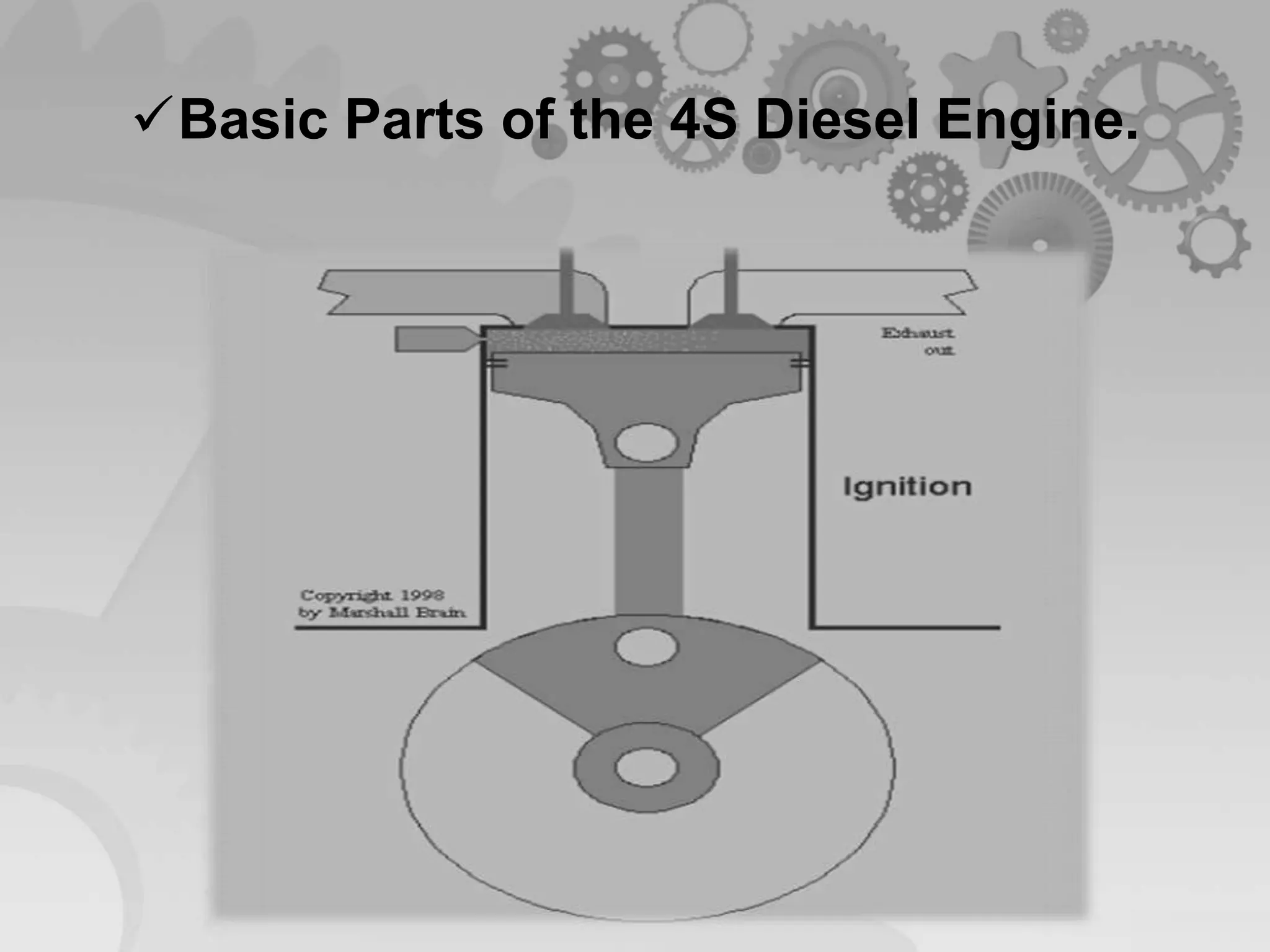
 Basic Parts of the 4S Diesel Engine.
 Working of 4S-Diesel engine
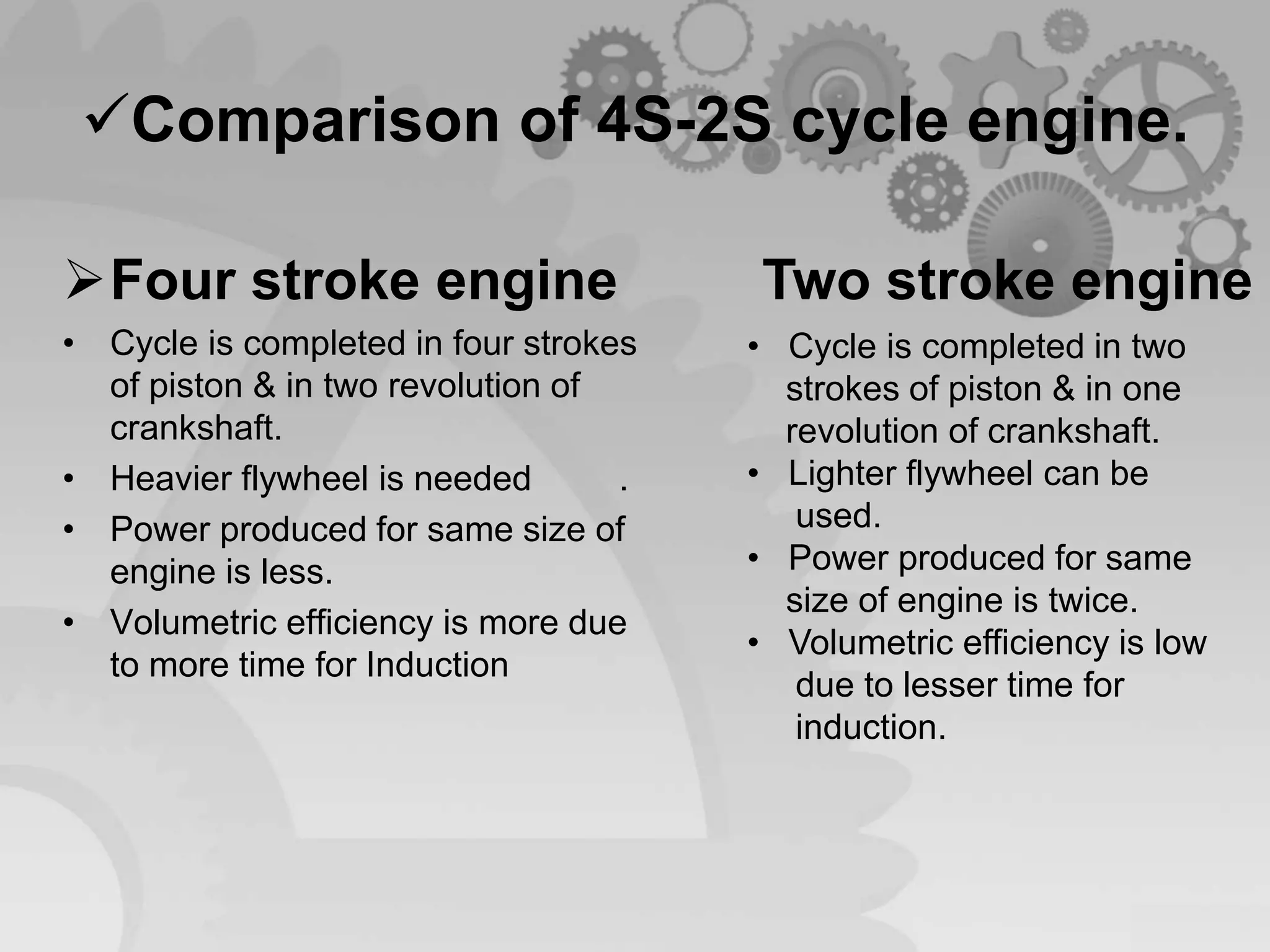
 Comparison of 4S-2S cycle engine.
• Reciprocating motion, used in reciprocating engines and other
mechanisms, is back and-forth motion. Each cycle of reciprocation
consists of two opposite motions: there is a motion in one direction,
and then a motion back in the opposite direction. Each of these is
called a stroke.
WHAT IS 2S & 4S ?
• A two-stroke petrol engine is an internal combustion
engine that completes the process cycle in one
revolution of the crankshaft. Thus, one power stroke is
obtained in each revolution of the crank shaft.
• A four stroke diesel engine is an internal combustion
engine that completes the process cycle in two
revolution of the crank shaft. Thus, one power stroke is
obtained in each two revolutions of the crank shaft.
What is stroke?
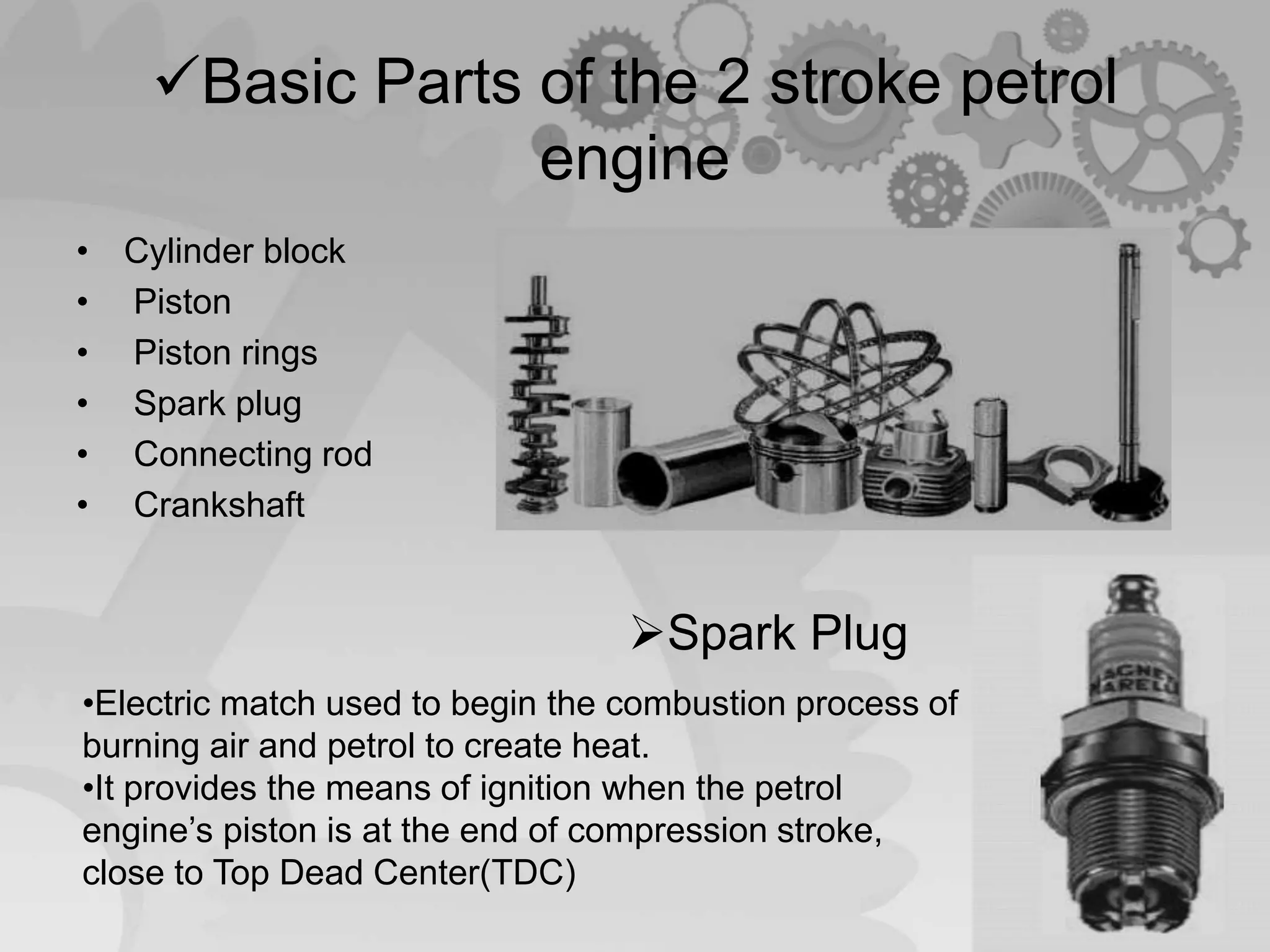
Basic Parts of the 2 stroke petrol
engine
• Cylinder block
• Piston
• Piston rings
• Spark plug
• Connecting rod
• Crankshaft
Spark Plug
•Electric match used to begin the combustion process of
burning air and petrol to create heat.
•It provides the means of ignition when the petrol
engine’s piston is at the end of compression stroke,
close to Top Dead Center(TDC)
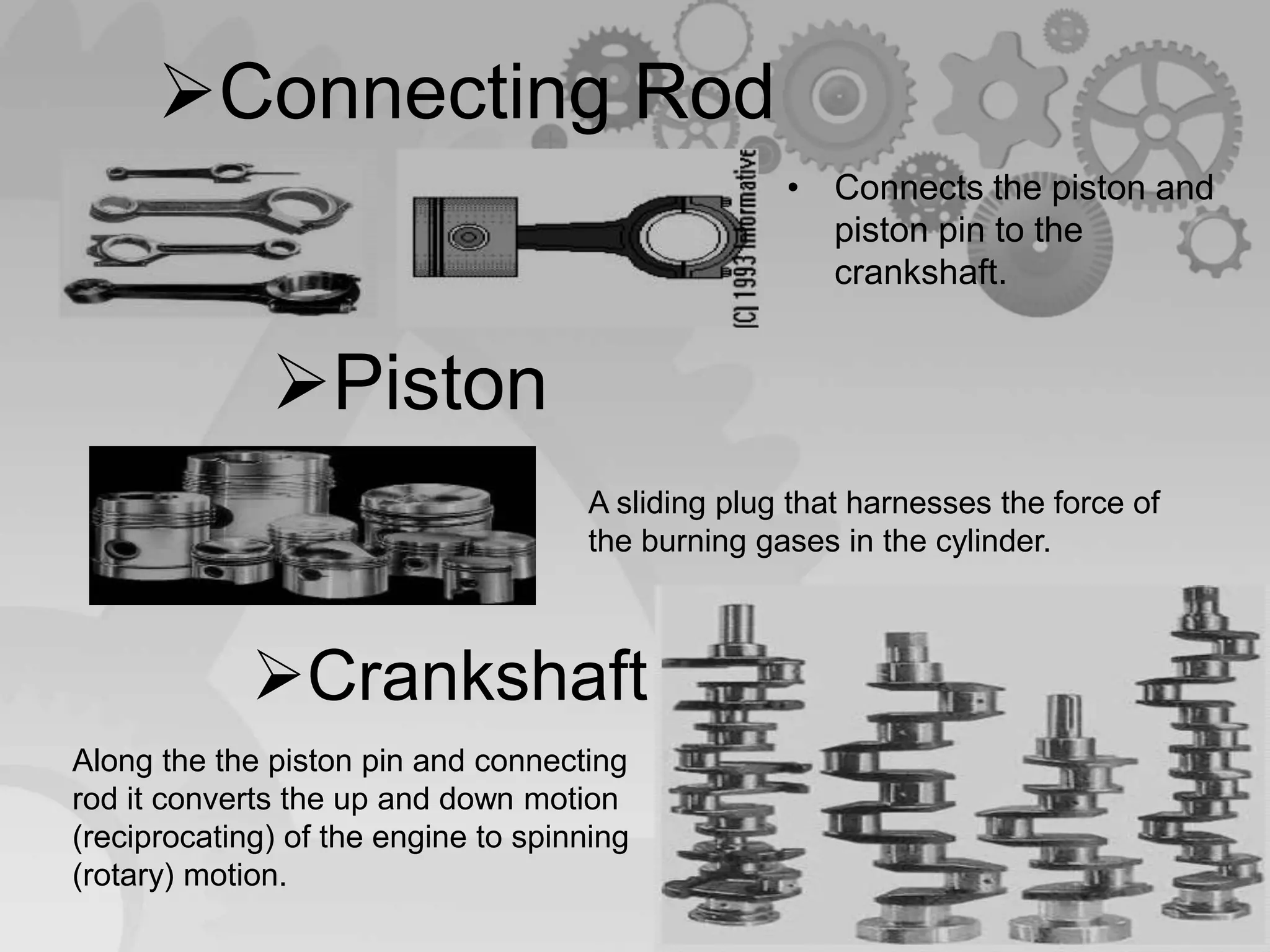
Connecting Rod
• Connects the piston and
piston pin to the
crankshaft.
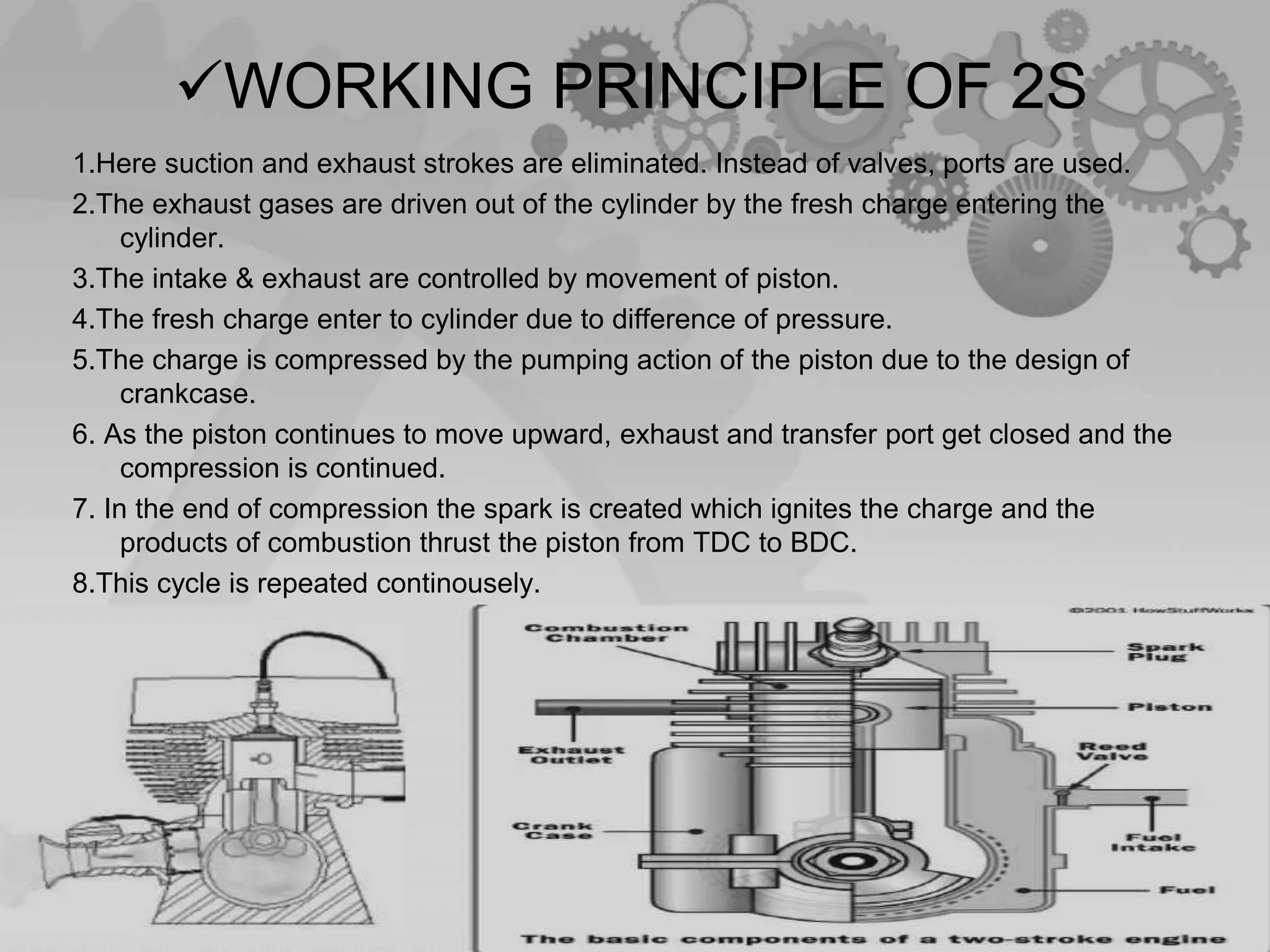
Piston
A sliding plug that harnesses the force of
the burning gases in the cylinder.
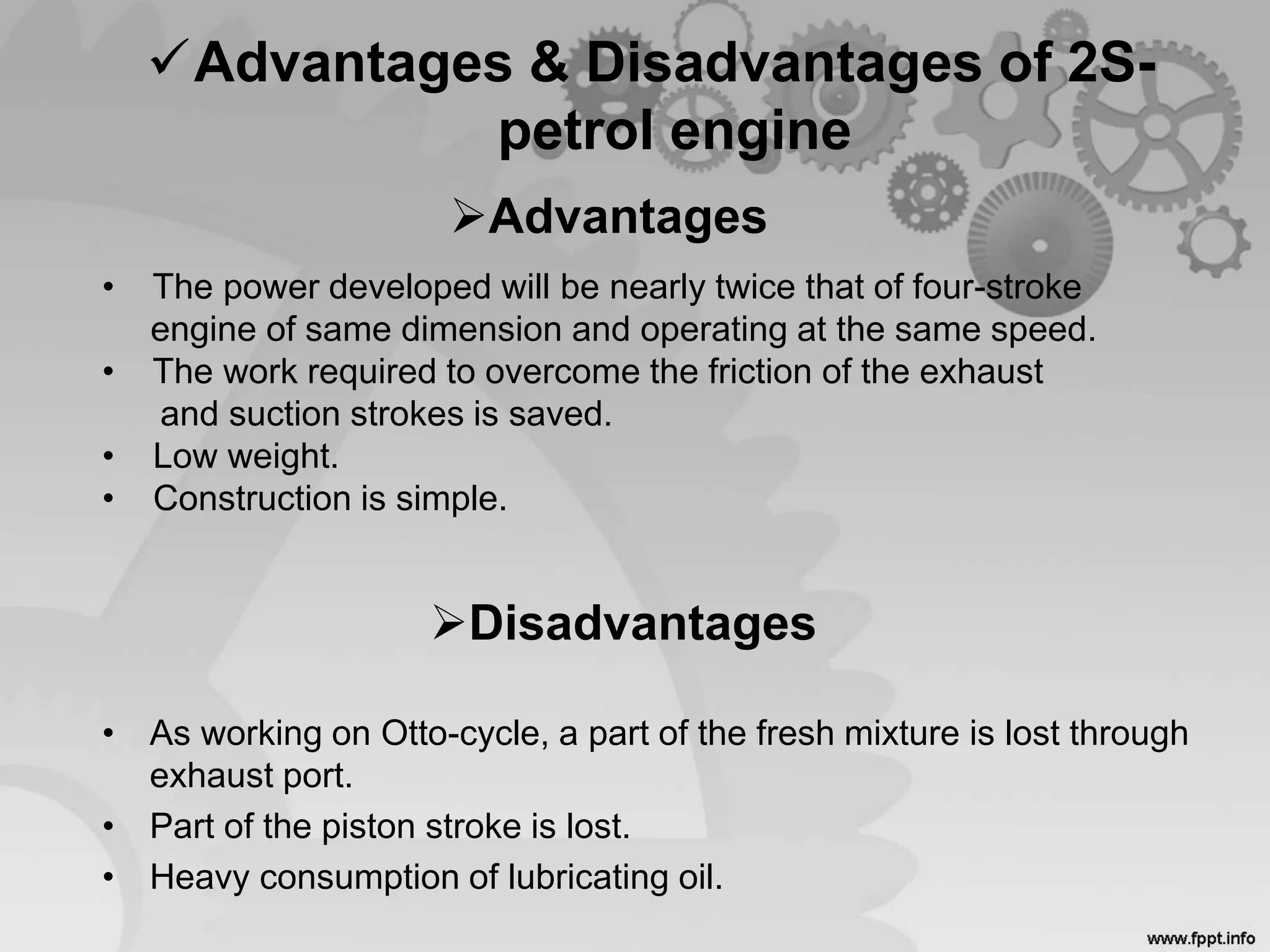
Crankshaft
Along the the piston pin and connecting
rod it converts the up and down motion
(reciprocating) of the engine to spinning
(rotary) motion.
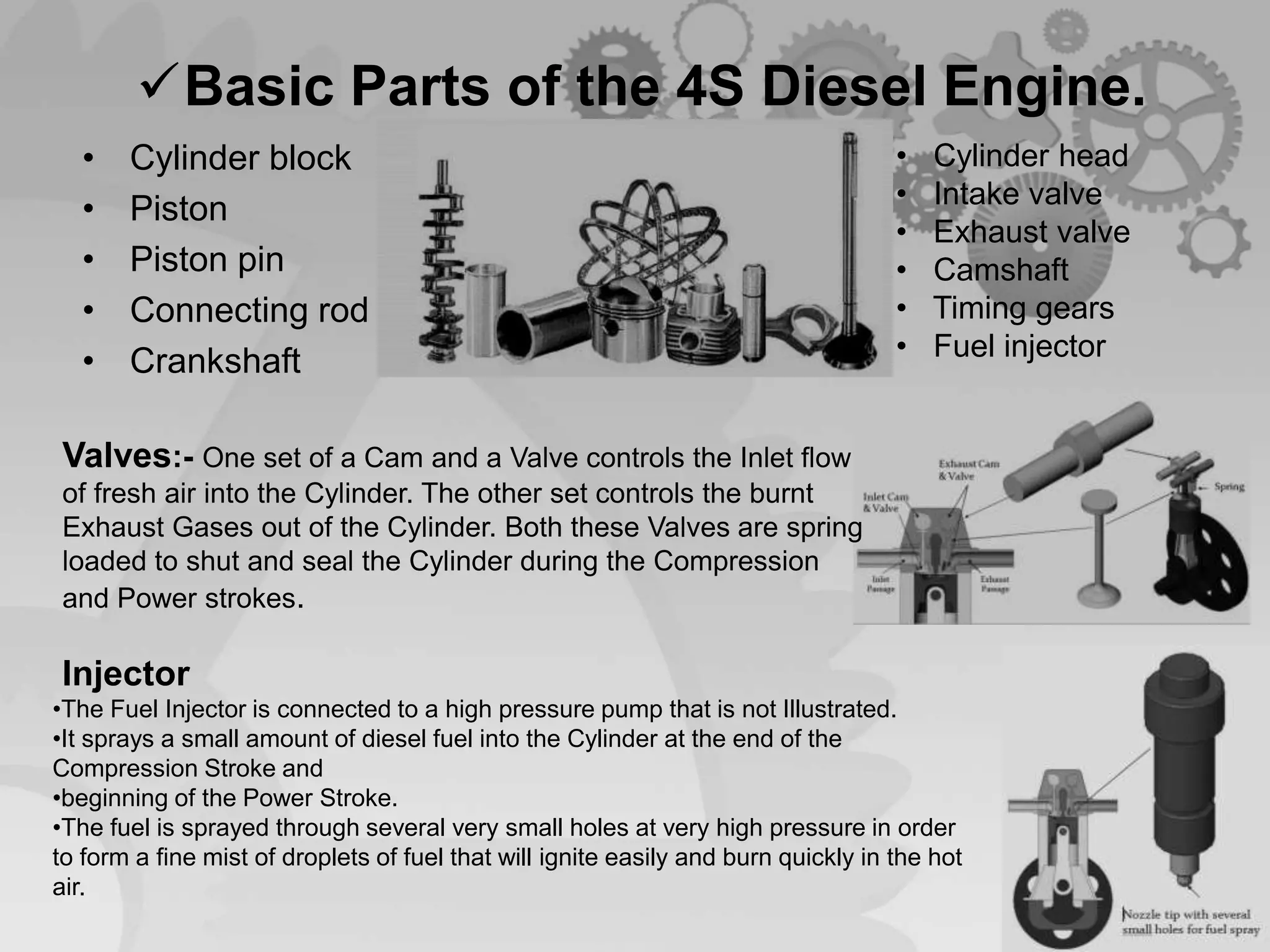
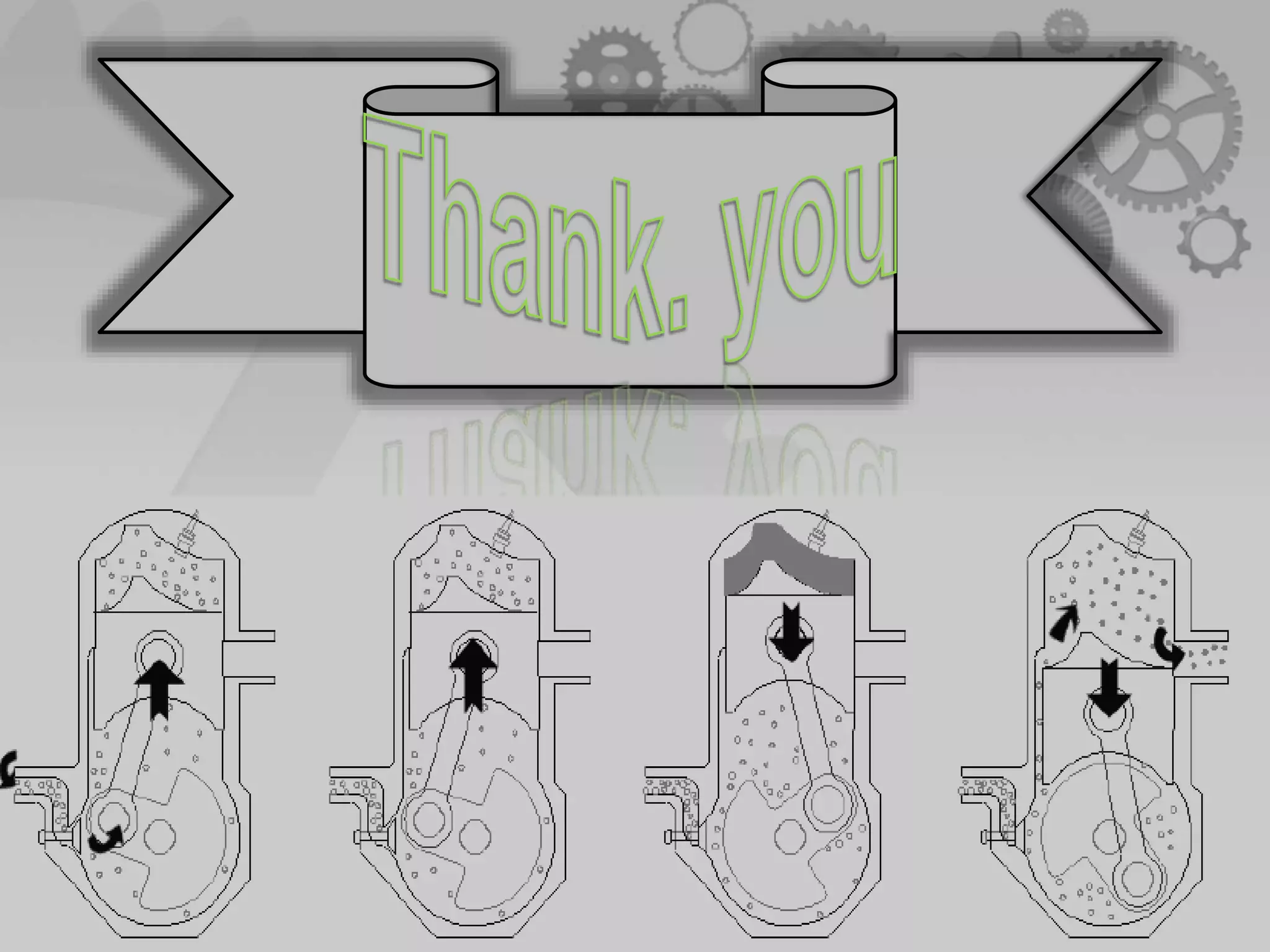
WORKING PRINCIPLE OF 2S
1.Here suction and exhaust strokes are eliminated. Instead of valves, ports are used.
2.The exhaust gases are driven out of the cylinder by the fresh charge entering the
cylinder.
3.The intake & exhaust are controlled by movement of piston.
4.The fresh charge enter to cylinder due to difference of pressure.
5.The charge is compressed by the pumping action of the piston due to the design of
crankcase.
6. As the piston continues to move upward, exhaust and transfer port get closed and the
compression is continued.
7. In the end of compression the spark is created which ignites the charge and the
products of combustion thrust the piston from TDC to BDC.
8.This cycle is repeated continousely.
Advantages & Disadvantages of 2S-
petrol engine
• As working on Otto-cycle, a part of the fresh mixture is lost through
exhaust port.
• Part of the piston stroke is lost.
• Heavy consumption of lubricating oil.
Advantages
Disadvantages
• The power developed will be nearly twice that of four-stroke
engine of same dimension and operating at the same speed.
• The work required to overcome the friction of the exhaust
and suction strokes is saved.
• Low weight.
• Construction is simple.
Basic Parts of the 4S Diesel Engine.
• Cylinder block
• Piston
• Piston pin
• Connecting rod
• Crankshaft
• Cylinder head
• Intake valve
• Exhaust valve
• Camshaft
• Timing gears
• Fuel injector
Valves:- One set of a Cam and a Valve controls the Inlet flow
of fresh air into the Cylinder. The other set controls the burnt
Exhaust Gases out of the Cylinder. Both these Valves are spring
loaded to shut and seal the Cylinder during the Compression
and Power strokes.
Injector
•The Fuel Injector is connected to a high pressure pump that is not Illustrated.
•It sprays a small amount of diesel fuel into the Cylinder at the end of the
Compression Stroke and
•beginning of the Power Stroke.
•The fuel is sprayed through several very small holes at very high pressure in order
to form a fine mist of droplets of fuel that will ignite easily and burn quickly in the hot
air.
Basic Parts of the 4S Diesel Engine.
Comparison of 4S-2S cycle engine.
Four stroke engine
• Cycle is completed in four strokes
of piston & in two revolution of
crankshaft.
• Heavier flywheel is needed .
• Power produced for same size of
engine is less.
• Volumetric efficiency is more due
to more time for Induction
Two stroke engine
• Cycle is completed in two
strokes of piston & in one
revolution of crankshaft.
• Lighter flywheel can be
used.
• Power produced for same
size of engine is twice.
• Volumetric efficiency is low
due to lesser time for
induction.
2s vs 4s stroke engines (mechanical)

2s vs 4s stroke engines (mechanical)

  • 1.
    SHREE RAMKRISHNA INSTITUTEOF SCIENCE & TECHNOLOGY Abhinandan Kumar Dept- Mechanical eng. Semester- 6th Roll- 12 Section- A PRESENTED BY:~ Topic- 2 stroke vs 4 stroke engines
  • 2.
    OUTLINE  WHAT ISSTROKE ?  WHAT IS 2S & 4S ?  Basic Parts of the 2 stroke petrol engine.  WORKING PRINCIPLE OF 2S .  Advantages & Disadvantages of 2S-petrol engine  Basic Parts of the 4S Diesel Engine.  Working of 4S-Diesel engine  Comparison of 4S-2S cycle engine.
  • 3.
    • Reciprocating motion,used in reciprocating engines and other mechanisms, is back and-forth motion. Each cycle of reciprocation consists of two opposite motions: there is a motion in one direction, and then a motion back in the opposite direction. Each of these is called a stroke. WHAT IS 2S & 4S ? • A two-stroke petrol engine is an internal combustion engine that completes the process cycle in one revolution of the crankshaft. Thus, one power stroke is obtained in each revolution of the crank shaft. • A four stroke diesel engine is an internal combustion engine that completes the process cycle in two revolution of the crank shaft. Thus, one power stroke is obtained in each two revolutions of the crank shaft. What is stroke?
  • 4.
    Basic Parts ofthe 2 stroke petrol engine • Cylinder block • Piston • Piston rings • Spark plug • Connecting rod • Crankshaft Spark Plug •Electric match used to begin the combustion process of burning air and petrol to create heat. •It provides the means of ignition when the petrol engine’s piston is at the end of compression stroke, close to Top Dead Center(TDC)
  • 5.
    Connecting Rod • Connectsthe piston and piston pin to the crankshaft. Piston A sliding plug that harnesses the force of the burning gases in the cylinder. Crankshaft Along the the piston pin and connecting rod it converts the up and down motion (reciprocating) of the engine to spinning (rotary) motion.
  • 6.
    WORKING PRINCIPLE OF2S 1.Here suction and exhaust strokes are eliminated. Instead of valves, ports are used. 2.The exhaust gases are driven out of the cylinder by the fresh charge entering the cylinder. 3.The intake & exhaust are controlled by movement of piston. 4.The fresh charge enter to cylinder due to difference of pressure. 5.The charge is compressed by the pumping action of the piston due to the design of crankcase. 6. As the piston continues to move upward, exhaust and transfer port get closed and the compression is continued. 7. In the end of compression the spark is created which ignites the charge and the products of combustion thrust the piston from TDC to BDC. 8.This cycle is repeated continousely.
  • 7.
    Advantages & Disadvantagesof 2S- petrol engine • As working on Otto-cycle, a part of the fresh mixture is lost through exhaust port. • Part of the piston stroke is lost. • Heavy consumption of lubricating oil. Advantages Disadvantages • The power developed will be nearly twice that of four-stroke engine of same dimension and operating at the same speed. • The work required to overcome the friction of the exhaust and suction strokes is saved. • Low weight. • Construction is simple.
  • 8.
    Basic Parts ofthe 4S Diesel Engine. • Cylinder block • Piston • Piston pin • Connecting rod • Crankshaft • Cylinder head • Intake valve • Exhaust valve • Camshaft • Timing gears • Fuel injector Valves:- One set of a Cam and a Valve controls the Inlet flow of fresh air into the Cylinder. The other set controls the burnt Exhaust Gases out of the Cylinder. Both these Valves are spring loaded to shut and seal the Cylinder during the Compression and Power strokes. Injector •The Fuel Injector is connected to a high pressure pump that is not Illustrated. •It sprays a small amount of diesel fuel into the Cylinder at the end of the Compression Stroke and •beginning of the Power Stroke. •The fuel is sprayed through several very small holes at very high pressure in order to form a fine mist of droplets of fuel that will ignite easily and burn quickly in the hot air.
  • 9.
    Basic Parts ofthe 4S Diesel Engine.
  • 10.
    Comparison of 4S-2Scycle engine. Four stroke engine • Cycle is completed in four strokes of piston & in two revolution of crankshaft. • Heavier flywheel is needed . • Power produced for same size of engine is less. • Volumetric efficiency is more due to more time for Induction Two stroke engine • Cycle is completed in two strokes of piston & in one revolution of crankshaft. • Lighter flywheel can be used. • Power produced for same size of engine is twice. • Volumetric efficiency is low due to lesser time for induction.