
![Shear Strength (MPa) DAE Ti-nanoHA
Chemical Bonding?
Machined Ti
DAE Ti
DAE Ti-nanoHA
Shear strength at 2 wk
S=F/A [N/mm2]](https://image.slidesharecdn.com/2-recentadvancesinimplantsurfacesciencecopy-120417152524-phpapp02/85/Recent-Advances-in-Implant-Surface-Science-79-320.jpg)
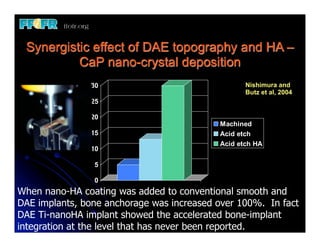
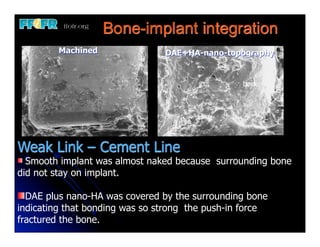
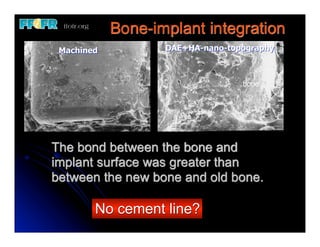
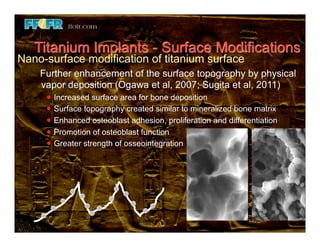
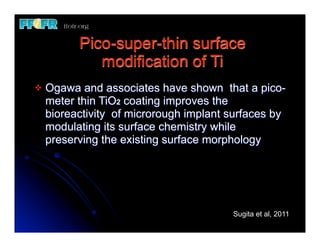
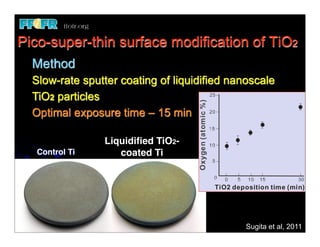
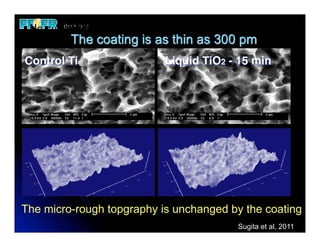
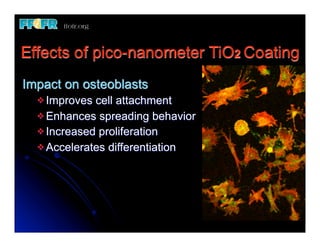
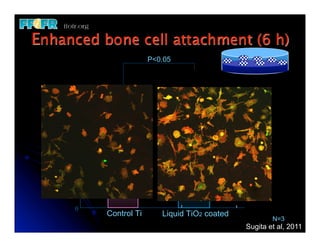
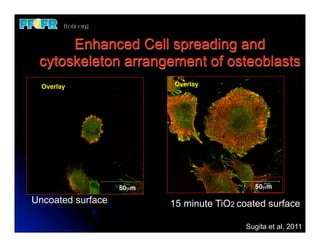
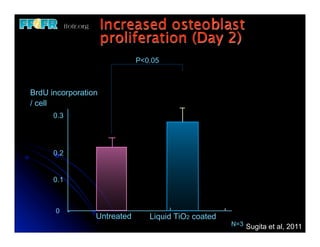
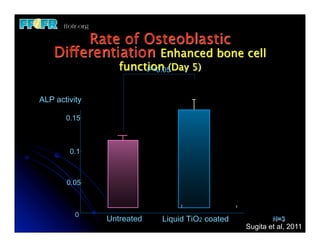
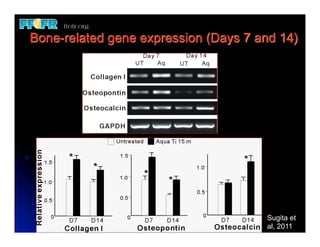
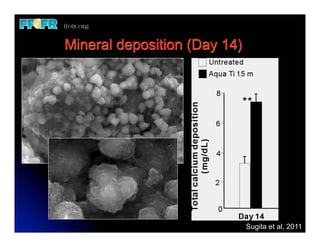
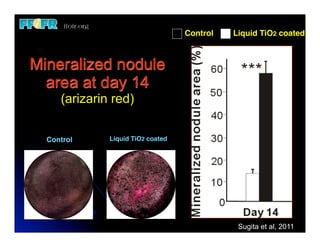


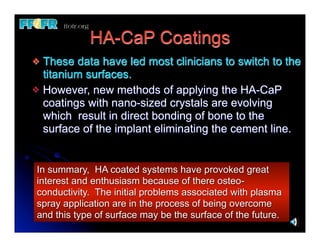
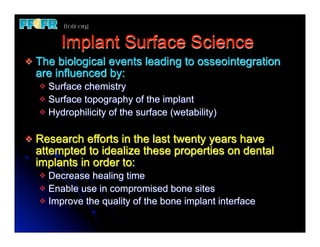
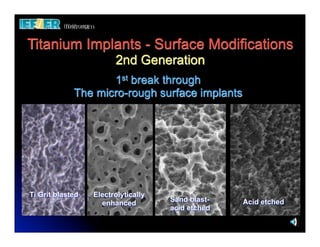
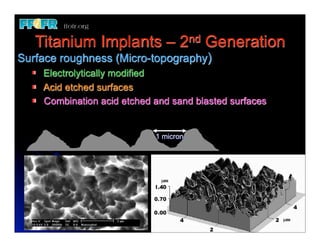
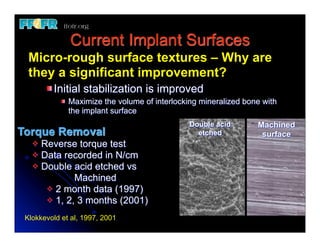
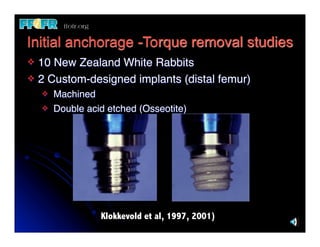
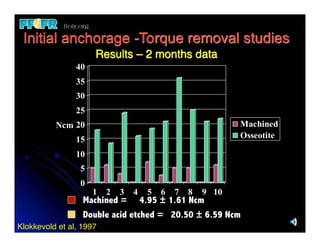
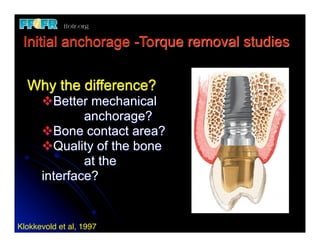
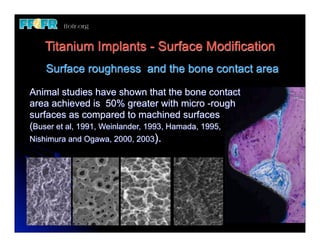
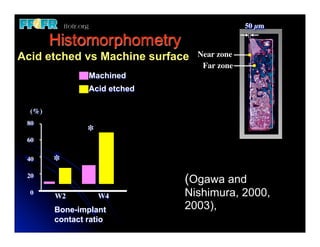
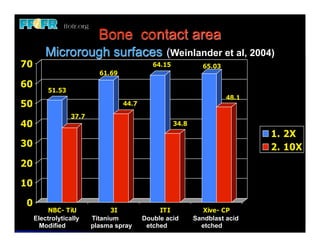
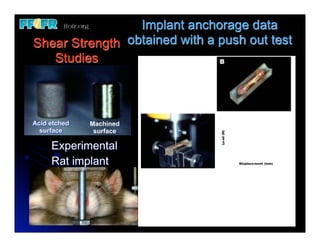
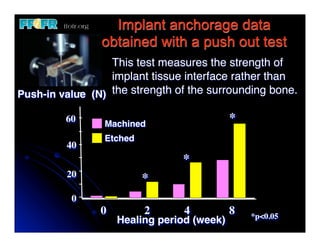
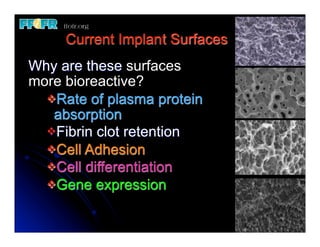
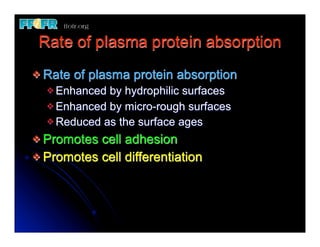
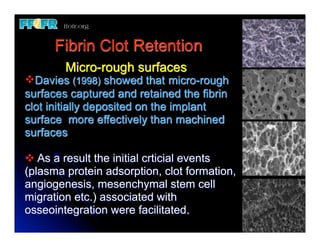
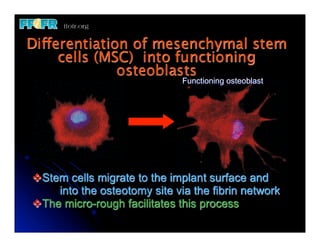
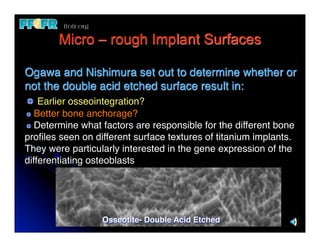
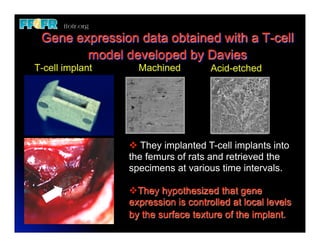
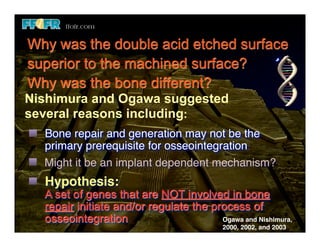
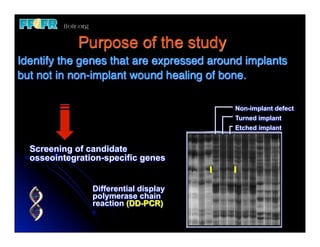
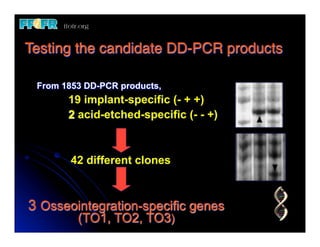
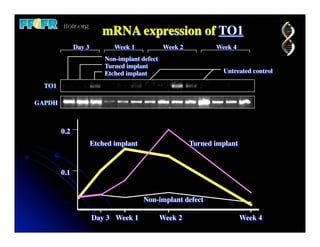
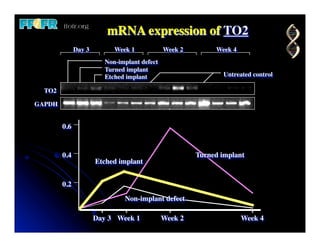
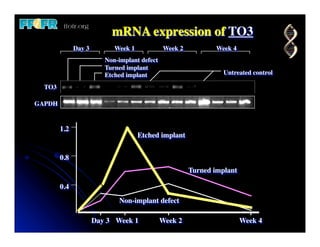
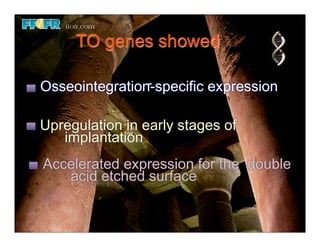
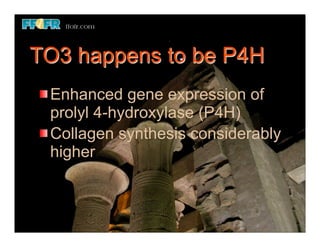
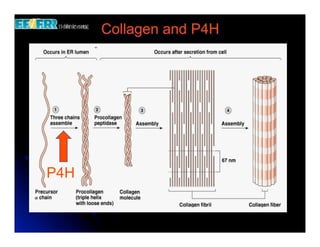
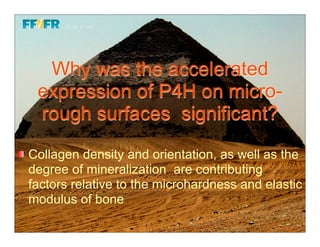
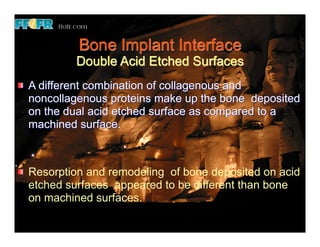
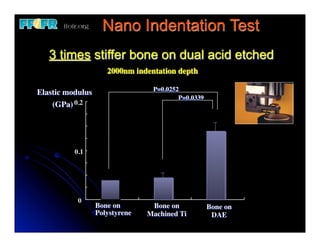
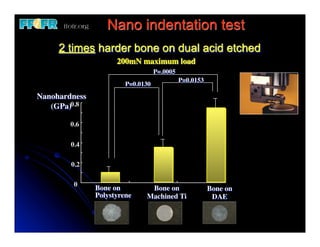
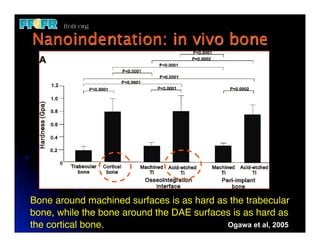
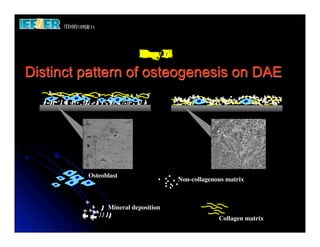
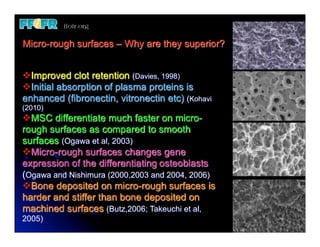
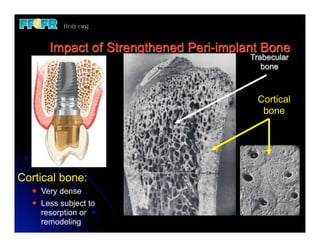
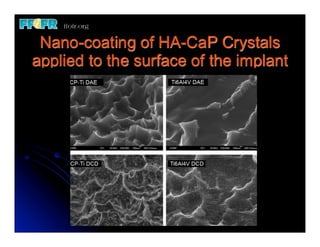
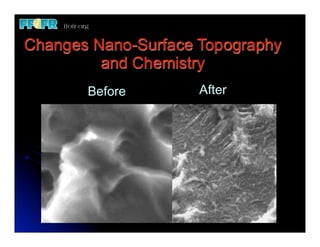
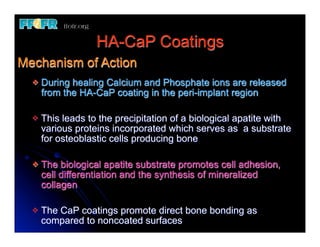
1) Micro-rough implant surfaces like double acid etched surfaces promote faster osseointegration compared to machined surfaces due to increased protein absorption, fibrin clot retention, and stem cell differentiation. 2) Studies found double acid etched surfaces had greater bone contact area and initial anchorage due to interlocking of bone. They also identified three genes specifically related to osseointegration that were upregulated earlier around micro-rough surfaces. 3) One gene in particular, P4H, was expressed at higher levels on double acid etched surfaces and led to higher collagen production and mineralization, resulting in bone that was harder and stiffer forming around these surfaces.


![PERI-PROSTHETIC FRACTURE NAIL-PLATE CONSTRUCT [NPC].pptx](https://cdn.slidesharecdn.com/ss_thumbnails/drarunkumardrmohamedashrafperiprostheticfrasturenail-plateconstructnpc-260209164459-7e9d15a1-thumbnail.jpg?width=640&height=640&fit=bounds)


