JOINTS OF HEAD & NECK
Dr. Mujahid Khan
Atlanto-Occipital Joints
 Are synovial joints
 Formed between the occipital condyles
above and the superior surfaces of the
lateral masses of the atlas below
 Occipital condyles are found on either side
of the foramen magnum
Ligaments
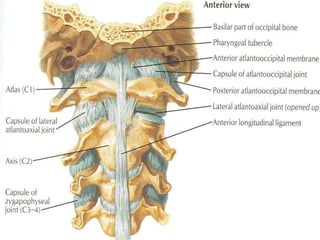
Anterior atlanto-occipital membrane:
 This is a continuation of the anterior longitudinal
ligament
 It runs as a band down the anterior surface of
the vertebral column
 The membrane connects the anterior arch of the
atlas to the anterior margin of the foramen
magnum
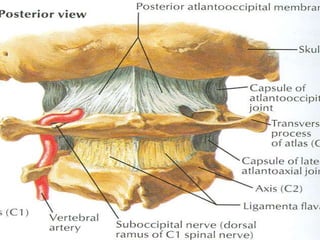
Posterior Atlanto-occipital
Membrane
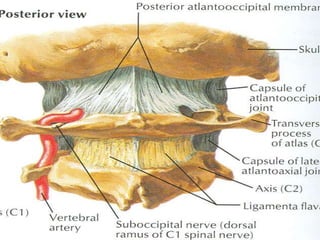
 This membrane is similar to the ligamentum
flavum
 It connects the posterior arch of the atlas to the
posterior margin of the foramen magnum
Movements
 Flexion
 Extension
 Lateral flexion
 They do not rotate
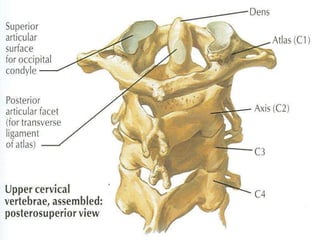
Atlanto-Axial Joints
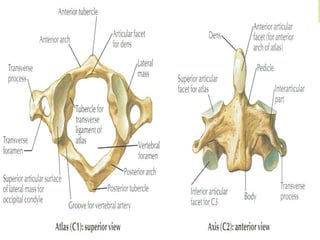
 They are three synovial joints
 One is between the odontoid process and
the anterior arch of the atlas
 Other two are between the lateral masses
of the bones
Ligaments
Apical ligament:
 This median placed structure connects the
apex of the odontoid process to the
anterior margin of the foramen magnum
Ligaments
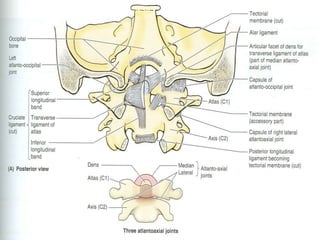
Alar ligaments:
 These lie one on each side of the apical
ligament and connect the odontoid
process to the medial side of the occipital
condyles
Ligaments
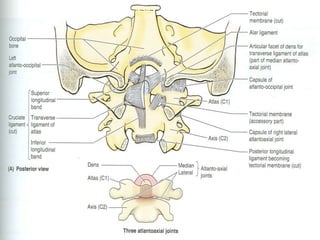
Cruciate ligament :
 This ligament consists of a transverse part and a vertical
part
 The transverse part is attached on each side to the inner
aspect of the lateral mass of the atlas
 It binds the odontoid process to the anterior arch of the
atlas
 The vertical part runs from the posterior surface of the
body of the axis to the anterior margin of the foramen
magnum
Ligaments
Membrana tectoria
 This is an upward continuation of the posterior
longitudinal ligament
 Attached above to the occipital bone just within
the foramen magnum
 It covers the posterior surface of the odontoid
process and the apical, alar, and cruciate
ligaments
Movements
 Extensive rotation of the atlas and thus of
the head on the axis
Fracture of Odontoid Process
 Fractures of odontoid process are
relatively common
 Result from falls and blows on the head
 Excessive mobility of the odontoid
fragment or rupture of the transverse
ligament can result in compression injury
to the spinal cord
Fracture of Pedicle of Axis
 Cause is severe extension injury of the neck,
such as automobile accident or a fall
 Sudden overextension of the neck, as produced
by the knot of a hangman’s rope beneath the
chin
 Forward displacement of the vertebral body of
the axis occurs
 Spinal cord is rarely compressed

27-Joints Head & Neck.ppt

  • 1.
    JOINTS OF HEAD& NECK Dr. Mujahid Khan
  • 2.
    Atlanto-Occipital Joints  Aresynovial joints  Formed between the occipital condyles above and the superior surfaces of the lateral masses of the atlas below  Occipital condyles are found on either side of the foramen magnum
  • 3.
    Ligaments Anterior atlanto-occipital membrane: This is a continuation of the anterior longitudinal ligament  It runs as a band down the anterior surface of the vertebral column  The membrane connects the anterior arch of the atlas to the anterior margin of the foramen magnum
  • 5.
    Posterior Atlanto-occipital Membrane  Thismembrane is similar to the ligamentum flavum  It connects the posterior arch of the atlas to the posterior margin of the foramen magnum
  • 7.
    Movements  Flexion  Extension Lateral flexion  They do not rotate
  • 8.
    Atlanto-Axial Joints  Theyare three synovial joints  One is between the odontoid process and the anterior arch of the atlas  Other two are between the lateral masses of the bones
  • 10.
    Ligaments Apical ligament:  Thismedian placed structure connects the apex of the odontoid process to the anterior margin of the foramen magnum
  • 12.
    Ligaments Alar ligaments:  Theselie one on each side of the apical ligament and connect the odontoid process to the medial side of the occipital condyles
  • 14.
    Ligaments Cruciate ligament : This ligament consists of a transverse part and a vertical part  The transverse part is attached on each side to the inner aspect of the lateral mass of the atlas  It binds the odontoid process to the anterior arch of the atlas  The vertical part runs from the posterior surface of the body of the axis to the anterior margin of the foramen magnum
  • 16.
    Ligaments Membrana tectoria  Thisis an upward continuation of the posterior longitudinal ligament  Attached above to the occipital bone just within the foramen magnum  It covers the posterior surface of the odontoid process and the apical, alar, and cruciate ligaments
  • 18.
    Movements  Extensive rotationof the atlas and thus of the head on the axis
  • 19.
    Fracture of OdontoidProcess  Fractures of odontoid process are relatively common  Result from falls and blows on the head  Excessive mobility of the odontoid fragment or rupture of the transverse ligament can result in compression injury to the spinal cord
  • 20.
    Fracture of Pedicleof Axis  Cause is severe extension injury of the neck, such as automobile accident or a fall  Sudden overextension of the neck, as produced by the knot of a hangman’s rope beneath the chin  Forward displacement of the vertebral body of the axis occurs  Spinal cord is rarely compressed