26.4 Making Peace
LEQ: What factors influenced the peace
treaties that ended World War I, and how did
people react to the treaties?
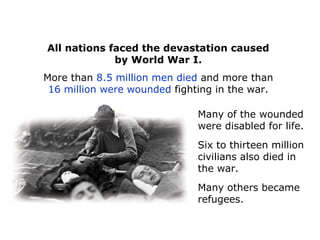
All nations faced the devastation caused
by World War I.
More than 8.5 million men died and more than
16 million were wounded fighting in the war.
Many of the wounded
were disabled for life.
Six to thirteen million
civilians also died in
the war.
Many others became
refugees.
The situation was worsened by a 1918 influenza
pandemic that killed 20 million people worldwide.
• Buildings all over Europe had been bombed
into rubble.
• Countries faced huge war debts and the cost
of reconstruction.
• Refugees had to rebuild.
• pandemic – a disease spread across a large area, country,
continent, or the entire world
Colonial troops hoped for independence for their
occupied countries.
Political radicals dreamed of instituting new social and
political systems, including bolshevism (communism).
The governments in Russia, Germany, Austria-
Hungary, and the Ottoman empire had collapsed
under the stresses of war.
• radicals – people who want to make
extreme changes
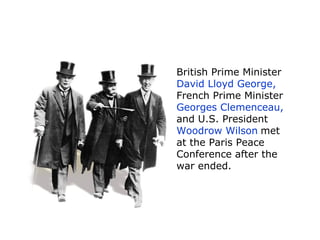
British Prime Minister
David Lloyd George,
French Prime Minister
Georges Clemenceau,
and U.S. President
Woodrow Wilson met
at the Paris Peace
Conference after the
war ended.
The three leaders met with the leaders of the other
Allied countries to discuss the fate of Europe, the
former Ottoman empire, and various colonies.
The Paris Peace Talks
The Central Powers and Russia were not allowed to
take part in the negotiations at the conference.
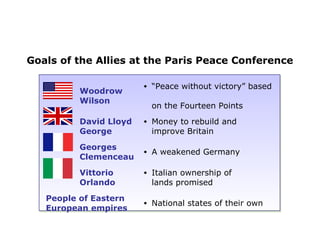
Goals of the Allies at the Paris Peace Conference
Woodrow
Wilson
• “Peace without victory” based
on the Fourteen Points
David Lloyd
George
• Money to rebuild and
improve Britain
Georges
Clemenceau
• A weakened Germany
Vittorio
Orlando
• Italian ownership of
lands promised
People of Eastern
European empires
• National states of their own
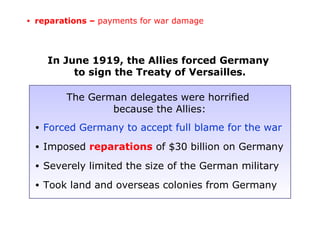
The German delegates were horrified
because the Allies:
• Forced Germany to accept full blame for the war
• Imposed reparations of $30 billion on Germany
• Severely limited the size of the German military
• Took land and overseas colonies from Germany
In June 1919, the Allies forced Germany
to sign the Treaty of Versailles.
• reparations – payments for war damage
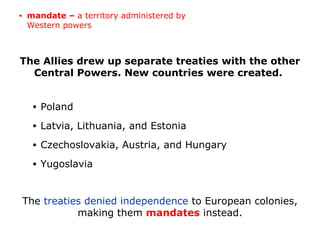
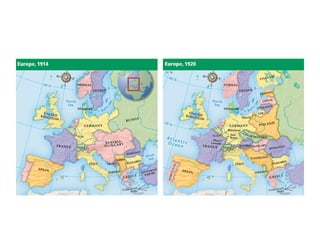
The Allies drew up separate treaties with the other
Central Powers. New countries were created.
The treaties denied independence to European colonies,
making them mandates instead.
• Poland
• Latvia, Lithuania, and Estonia
• Czechoslovakia, Austria, and Hungary
• Yugoslavia
• mandate – a territory administered by
Western powers
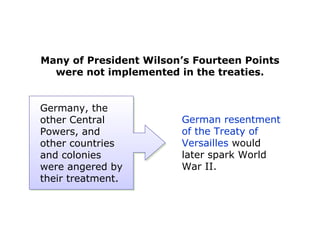
Many of President Wilson’s Fourteen Points
were not implemented in the treaties.
German resentment
of the Treaty of
Versailles would
later spark World
War II.
Germany, the
other Central
Powers, and
other countries
and colonies
were angered by
their treatment.
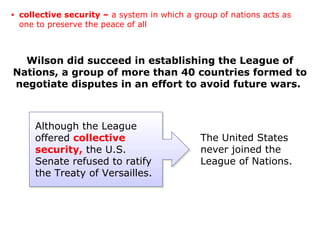
Wilson did succeed in establishing the League of
Nations, a group of more than 40 countries formed to
negotiate disputes in an effort to avoid future wars.
Although the League
offered collective
security, the U.S.
Senate refused to ratify
the Treaty of Versailles.
The United States
never joined the
League of Nations.
• collective security – a system in which a group of nations acts as
one to preserve the peace of all
The huge human, financial, and political costs of
the war influenced the treaties. Many were
dissatisfied with the outcomes.
LEQ: What factors influenced the peace treaties
that ended World War I, and how did people
react to the treaties?

26.4 making peace

  • 1.
  • 2.
    LEQ: What factorsinfluenced the peace treaties that ended World War I, and how did people react to the treaties?
  • 3.
    All nations facedthe devastation caused by World War I. More than 8.5 million men died and more than 16 million were wounded fighting in the war. Many of the wounded were disabled for life. Six to thirteen million civilians also died in the war. Many others became refugees.
  • 4.
    The situation wasworsened by a 1918 influenza pandemic that killed 20 million people worldwide. • Buildings all over Europe had been bombed into rubble. • Countries faced huge war debts and the cost of reconstruction. • Refugees had to rebuild. • pandemic – a disease spread across a large area, country, continent, or the entire world
  • 5.
    Colonial troops hopedfor independence for their occupied countries. Political radicals dreamed of instituting new social and political systems, including bolshevism (communism). The governments in Russia, Germany, Austria- Hungary, and the Ottoman empire had collapsed under the stresses of war. • radicals – people who want to make extreme changes
  • 6.
    British Prime Minister DavidLloyd George, French Prime Minister Georges Clemenceau, and U.S. President Woodrow Wilson met at the Paris Peace Conference after the war ended.
  • 7.
    The three leadersmet with the leaders of the other Allied countries to discuss the fate of Europe, the former Ottoman empire, and various colonies. The Paris Peace Talks The Central Powers and Russia were not allowed to take part in the negotiations at the conference.
  • 8.
    Goals of theAllies at the Paris Peace Conference Woodrow Wilson • “Peace without victory” based on the Fourteen Points David Lloyd George • Money to rebuild and improve Britain Georges Clemenceau • A weakened Germany Vittorio Orlando • Italian ownership of lands promised People of Eastern European empires • National states of their own
  • 9.
    The German delegateswere horrified because the Allies: • Forced Germany to accept full blame for the war • Imposed reparations of $30 billion on Germany • Severely limited the size of the German military • Took land and overseas colonies from Germany In June 1919, the Allies forced Germany to sign the Treaty of Versailles. • reparations – payments for war damage
  • 10.
    The Allies drewup separate treaties with the other Central Powers. New countries were created. The treaties denied independence to European colonies, making them mandates instead. • Poland • Latvia, Lithuania, and Estonia • Czechoslovakia, Austria, and Hungary • Yugoslavia • mandate – a territory administered by Western powers
  • 12.
    Many of PresidentWilson’s Fourteen Points were not implemented in the treaties. German resentment of the Treaty of Versailles would later spark World War II. Germany, the other Central Powers, and other countries and colonies were angered by their treatment.
  • 13.
    Wilson did succeedin establishing the League of Nations, a group of more than 40 countries formed to negotiate disputes in an effort to avoid future wars. Although the League offered collective security, the U.S. Senate refused to ratify the Treaty of Versailles. The United States never joined the League of Nations. • collective security – a system in which a group of nations acts as one to preserve the peace of all
  • 14.
    The huge human,financial, and political costs of the war influenced the treaties. Many were dissatisfied with the outcomes. LEQ: What factors influenced the peace treaties that ended World War I, and how did people react to the treaties?