Chapters 13 and 14 Study GuideWorld War II
Axis and Allied PowersAxis Powers		CountriesGermanyItalyJapanGoalsConquest and control of EuropeControl of Mediterranean areaControl of the Pacific and Northern ChinaAllied PowersCountriesUnited StatesFranceGreat BritainUSSRGoalsDefeat the Axis powersLiberate France and western EuropeRebuild European economy
TerminologyAppeasement----Allies gave in to Hitler’s demands for territory in order to prevent war.Blitzkrieg---- Lightening War, Germany strategy of striking quickly with overwhelming force Holocaust---Killing of 6 million Jews by the NazisIsland hopping---Japanese strategy in the Pacific of conquering small island to use as air bases then “hopping” to the next.Kamikaze---Japanese suicide pilots Bushido---Code of honor practiced by Japanese soldiers. Made them disciplined and willing to fight to the death.
People of World War IIFascist leader of ItalyFascist leader of Nazi GermanyLeader of JapanPrime Minister of EnglandPremier of Soviet UnionU.S. President 1933-1945Symbol of women factory workers during the warU.S. President 1945-1953 became President following FDR’s death in 1945Supreme Allied CommanderCommander of U.S. forces in the Pacific Benito MussoliniAdolph HitlerEmperor Hirohito Winston Churchill Joseph StalinFranklin RooseveltRosie the RiveterHarry S. TrumanDwight EisenhowerDouglas MacArthur
Benito		Adolph	              Emperor	        Winston	         JosephMussolini		Hitler	              Hirohito	         Churchill	         StalinFranklin		Rosie the	             Harry S.	          Dwight	        DouglasRoosevelt		Riveter 	             Truman	          Eisenhower           MacArthur
Beginning of the War: Major EventsMunich Pact: British and French representatives meet with Hitler and allow him to take over Czechoslovakia; 9/29-9/30/1938Nazi-Soviet Pact: 8/24/1939 peace agreement between Germany and USSR preventing Russia from entering the war.
Start of the war: Nazi invasion of Poland September, 1939
Neutrality Acts: Passed by Congress in the 1930’s aimed at keeping the U.S. out of a European war
Lend-Lease Acts: Series of laws passed by Congress allowing the U.S. to sell war materials to the Allies
U.S. entry into the war: Bombing of Pearl Harbor, Hawaii December 7, 1941War on the Home frontWASPs: Women Air force Service Pilots flew cargo missions to free men for bombing missionsWomen in the workforce: Women took jobs in factories building war materials as men served in the armed forces Women in the military (WASPs)
Women in the workforce
Japanese interment
Reasons created
 Conditions
Effects of Japanese InternmentJapanese InternmentInternment or forced removal of Japanese Americans was enacted by the government for security reasons. Japanese Americans were viewed as spies and potential threatsConditions: Interment camps were designed to resemble cities with block numbers, schools, post office and other facilities. Lacked indoor plumbing and other amenitiesEffects: Not until the 1980’s that Japanese Americans received an official apology and reparations for interment.
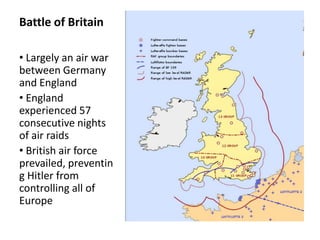
Battle of the Atlantic Name given to the campaign fought between Allied navies and German U-boats throughout Atlantic shipping lanes from U.S. to BritainBattle of Britain Largely an air war between Germany and England
England experienced 57 consecutive nights of air raids
British air force prevailed, preventing Hitler from controlling all of EuropeCampaign for North Africa Began 10 June, 1940 with the Italian invasion of Egypt
Erwin Rommel commander of German forces
Bernard Montgomery and George Patton led the Allied forces
Ended 16 May, 1943 when the Allies captured TunisCampaign for Italy Following victory in Africa, Allies launched an invasion of Italy
Advance was slowed by fierce fighting and crossing the Italian Alps

Chapters 13 & !4 study guide

  • 1.
    Chapters 13 and14 Study GuideWorld War II
  • 2.
    Axis and AlliedPowersAxis Powers CountriesGermanyItalyJapanGoalsConquest and control of EuropeControl of Mediterranean areaControl of the Pacific and Northern ChinaAllied PowersCountriesUnited StatesFranceGreat BritainUSSRGoalsDefeat the Axis powersLiberate France and western EuropeRebuild European economy
  • 3.
    TerminologyAppeasement----Allies gave into Hitler’s demands for territory in order to prevent war.Blitzkrieg---- Lightening War, Germany strategy of striking quickly with overwhelming force Holocaust---Killing of 6 million Jews by the NazisIsland hopping---Japanese strategy in the Pacific of conquering small island to use as air bases then “hopping” to the next.Kamikaze---Japanese suicide pilots Bushido---Code of honor practiced by Japanese soldiers. Made them disciplined and willing to fight to the death.
  • 4.
    People of WorldWar IIFascist leader of ItalyFascist leader of Nazi GermanyLeader of JapanPrime Minister of EnglandPremier of Soviet UnionU.S. President 1933-1945Symbol of women factory workers during the warU.S. President 1945-1953 became President following FDR’s death in 1945Supreme Allied CommanderCommander of U.S. forces in the Pacific Benito MussoliniAdolph HitlerEmperor Hirohito Winston Churchill Joseph StalinFranklin RooseveltRosie the RiveterHarry S. TrumanDwight EisenhowerDouglas MacArthur
  • 5.
    Benito Adolph Emperor Winston JosephMussolini Hitler Hirohito Churchill StalinFranklin Rosie the Harry S. Dwight DouglasRoosevelt Riveter Truman Eisenhower MacArthur
  • 6.
    Beginning of theWar: Major EventsMunich Pact: British and French representatives meet with Hitler and allow him to take over Czechoslovakia; 9/29-9/30/1938Nazi-Soviet Pact: 8/24/1939 peace agreement between Germany and USSR preventing Russia from entering the war.
  • 7.
    Start of thewar: Nazi invasion of Poland September, 1939
  • 8.
    Neutrality Acts: Passedby Congress in the 1930’s aimed at keeping the U.S. out of a European war
  • 9.
    Lend-Lease Acts: Seriesof laws passed by Congress allowing the U.S. to sell war materials to the Allies
  • 10.
    U.S. entry intothe war: Bombing of Pearl Harbor, Hawaii December 7, 1941War on the Home frontWASPs: Women Air force Service Pilots flew cargo missions to free men for bombing missionsWomen in the workforce: Women took jobs in factories building war materials as men served in the armed forces Women in the military (WASPs)
  • 11.
    Women in theworkforce
  • 12.
  • 13.
  • 14.
  • 15.
    Effects of JapaneseInternmentJapanese InternmentInternment or forced removal of Japanese Americans was enacted by the government for security reasons. Japanese Americans were viewed as spies and potential threatsConditions: Interment camps were designed to resemble cities with block numbers, schools, post office and other facilities. Lacked indoor plumbing and other amenitiesEffects: Not until the 1980’s that Japanese Americans received an official apology and reparations for interment.
  • 16.
    Battle of theAtlantic Name given to the campaign fought between Allied navies and German U-boats throughout Atlantic shipping lanes from U.S. to BritainBattle of Britain Largely an air war between Germany and England
  • 17.
    England experienced 57consecutive nights of air raids
  • 18.
    British air forceprevailed, preventing Hitler from controlling all of EuropeCampaign for North Africa Began 10 June, 1940 with the Italian invasion of Egypt
  • 19.
    Erwin Rommel commanderof German forces
  • 20.
    Bernard Montgomery andGeorge Patton led the Allied forces
  • 21.
    Ended 16 May,1943 when the Allies captured TunisCampaign for Italy Following victory in Africa, Allies launched an invasion of Italy
  • 22.
    Advance was slowedby fierce fighting and crossing the Italian Alps