ISSN: 2278 – 1323
                                       International Journal of Advanced Research in Computer Engineering & Technology
                                                                                           Volume 1, Issue 4, June 2012


 ICCC: Information Correctness to the Customers in
               Cloud Data Storage
                  Gangolu Sreedevi                                                      Prof. C. Rajendra,
                    M. Tech (CS),                                                    H.O.D, CSE Department,
                    ASCET, India                                                             ASCET, India
              gangolusreedevi@gmail.com

    Abstract- Cloud storage is the only solution to the IT           correctness proof that the data that is stored by a user at
organizations to optimize the escalating storage costs and           remote data storage in the cloud archives is not modified by
maintenance. Data outsourcing in to the cloud has become             the archive and thereby the correctness of the data is
today trending environment for the thin organizations. The
entire user’s data is store in large data centers, those which are
                                                                     assured. Such kinds of correctness proofs are much
located remotely and the users don’t have any control on it. on      helpful in P to P (peer-to-peer) storage systems, long term
the other hand, this unique feature of the cloud poses many          archives, database systems, file storage systems. The
new security challenges which need to be clearly understood          authentication systems avert the archives of cloud from mis-
and resolved. Even the information is not accessible by the          representing or modifying the data stored at it without the
user the data centers should grant a way for the customer to         approval of the data holder by using frequent checks on the
check the correctness of his data is maintained or is
                                                                     storage archives. Such checks must allow the data holder
compromise.
    As a solution this we are proposing providing information        to efficiently, frequently, quickly and securely validate that
correctness to the customers in Cloud Storage. The proposing         the cloud archive is not cheating the data holder. Cheating,
system gives a information correctness proof, the customer           in this situation, means that the cloud storage archive might
c a n employ to check the correctness o f his data i n the           delete some of the data or may tamper or modify some of
cloud. The correctness of the data can be approved upon by           the data. It must be noted that the cloud storage server
both the cloud and the customer a n d can be included in             might not be spiteful; instead, it might be simply
the Service level agreement ( SLA). This scheme ensures
that the storage at the client side is minimal which will be
                                                                     undependable and lose or unconsciously corrupt the
beneficial for thin clients.                                         hosted data. But the information correctness schemes that
                                                                     are to be developed need to be often applicable for spiteful
Keywords: Cloud computing, Data correctness, Cloud Storage           as well as unreliable cloud storage servers. Any such
                                                                     correctness proofs possession schemes will not protect the
                                                                     information from dishonesty by the archive. To guarantee
                     I.   INTRODUCTION
                                                                     file toughness other kind of techniques like i n f o r m a t i o n
   Many organization and users outstanding their economic            redundancy across multiple systems can be maintained. It
advantages through the information outsourcing to cloud              just allows invention of modification of a remotely located
storage servers. Because cloud outsourcing is the raising            file at an unreliable cloud storage server.
trend today’s computing. The cloud storage means that the               While implementing the information correctness proofs
holder of the data store his data in a third party cloud server      for data possession at un-trusted cloud storage servers we
which is supposed to apparently for a fee and provide back           are habitually partial by the property at the cloud server
the data to the client whenever required. The data storage           as well as at the client (customer). Given that the data
becomes costly for small Organizations to regularly update           sizes are large and are stored at remote servers, accessing
their hardware whenever additional data is made and                  the entire file can be expensive in hardware costs to the
maintenance of the stored data can be hard task. Cloud data          storage server.
outsourcing helps such organizations by reducing the
                                                                        Transmitting the information across the network to
maintenance costs, personnel costs and storage costs. The
                                                                     the user (client) can devour heavy bandwidths. Because
cloud storage also offers a reliability of important data by
                                                                     development in cloud storage capacity has fat outpaced the
maintaining multiple copies of the data thereby reducing the
                                                                     development in cloud data access as well as network speed or
chance of data lose by hardware failures.
                                                                     bandwidth, transmitting and accessing the entire network
   The cloud in spite of many protection concerns for the
                                                                     resources.
users data storing which need to be expansively investigated
for making it a reliable solution to the problem of avoiding            Furthermore, the hardware to establish the information
local storage of data.                                               correctness proof obstruct with the on-demand bandwidth
                                                                     of the cloud server used for normal storage and retrieving
   Many problems like data verification and truthfulness [1]
                                                                     purpose. The problem is more intricate by the fact that the
outsourcing encrypted data and associated difficult
                                                                     holder of the data may be a small device, like a Personal
problems dealing with querying over encrypted domain [2]
                                                                     Digital Assist (PDA) or a mobile phone, which have limited
were discussed in research review.
                                                                     battery power, CPU power and communication bandwidth.
   In this paper our proposal ICCC deal with the crisis of
                                                                     Therefore a information correctness proof that has to be
implementing a protocol for obtaining the correctness of
                                                                     urbanized needs to take the above limitations into
data possession in the cloud sometimes referred to as Proof
                                                                     consideration. The ICCC should be able to produce a
of retrievability. The ICCC tries to achieve and validate a

                                                                                                                                  234
                                          All Rights Reserved © 2012 IJARCET
ISSN: 2278 – 1323
                                       International Journal of Advanced Research in Computer Engineering & Technology
                                                                                           Volume 1, Issue 4, June 2012

evidence without the need for the cloud server to access             key can be used irrespective of the size of the file or the
the entire data file or the client (user) retrieving the entire      number of files whose retrievability it wants to verify. Also
file from the server. Also the ICCC should diminish the              the archive needs to access only a small portion of the file
local computation at the client as well as the bandwidth             F unlike in the key-has scheme which required the archive
consumed at the client (user).                                       to process the entire file F for protocol verification. This
                                                                     small portion of the file F is in fact independent of the
                                                                     length of F. The Figure 1 shows the pictorial view of the
                    II.   RELATED WORK                               proposing ICCC.
    Cloud computing refers to the delivery of computing and
storage capacity as a service to a heterogeneous community
of end-recipients. The name comes from the use of clouds as
an abstraction for the complex infrastructure it contains in
system diagrams. Cloud computing entrusts services with a
user's data, software and computation over a network. It has
considerable overlap with software as a service (SaaS).
    End users access cloud based applications through a web
browser or a light weight desktop or mobile app while the
business software and data are stored on servers at a remote
location. Proponents claim that cloud computing allows                Figure 1 pictorial view of information correctness proof of retrievability
                                                                              based on inserting random sentinels in the data file F
enterprises to get their applications up and running faster,
with improved manageability and less maintenance, and
enables IT to more rapidly adjust resources to meet                      In this approach special blocks (called sentinels) are
fluctuating and unpredictable business demand.                       hidden among other blocks in the data file F. In the
    Cloud computing relies on sharing of resources to                setup phase, the verifier randomly embeds these sentinels
achieve coherence and economies of scale similar to a utility        among the data blocks. I n the verification phase, to
(like the electricity grid) over a network (typically the            check the correctness of the data file F, the verifier
Internet). At the foundation of cloud computing is the               challenges the prover (cloud archive) by specifying the
broader concept of converged infrastructure and shared               positions of a collection of sentinels and asking the prover
services.                                                            to return the associated sentinel values. If the prover has
   The ICCC system can be prepared using a encryption                modified or deleted a substantial portion of F, then with
function         hk (F), ICCC the correctness verifier, before       high probability it will also have suppressed a number of
archiving the data file F in the cloud data storage, pre-            sentinels.
computes the cryptographic encrypted hash value of F                    When the encrypted information is large, this approach
u s in g hk (F) and stores this hash v a lu e as well as the         involves the encryption of the F utilizing the key it becomes
e n c r y p t e d key K. To check if the correctness of the file F   computationally awkward. There will also be storage
is lost, the correctness verifier releases the encrypted key K       transparency at the server, partly due to the newly inserted
to the cloud storage archive and asks it to compute and              sentinels and partly due to the error correcting codes that
return the value of hk (F). By storing multiple hash values          are inserted. The client wants to store all the sentinels with
for different keys the verifier can check for the                    it, which may be storage overhead to thin clients (PDAs,
correctness of the file F for multiple times, each one               low power devices etc.).
being independent evidence.
   Though this ICCC approach is very simple and easily
implemental, the main disadvantage of this approach is the                                 III.    ICCC APPROACH
high supply costs it requires for the implementation. The                Our ICCC information correctness proof approach does
verifier in this approach requires storing as many keys and          not encrypt the whole information. The ICCC encrypts only
the number of checks to perform and the hash value of the            few bits of the data per data block thus reducing the
information file F with each hash key. Computing hash                computational transparency on the clients. Our approach is
value for even a fairly large information files can be               suitable for thin organizations because the client storage
computationally arduous for some clients (PDAs, mobile               transparency is also minimized as it does not store any data
phones, etc).                                                        with it.
   The archive side requires each incantation of the                     The verifier has to store only a single encrypted key in
protocol; the archive requires processing the entire                 our information correctness protocol. Because of the
information file F. This can be computationally difficult            irrespective of the size of the i n f o r m a t i o n file F - and
for the archive even for a lightweight operation like                t h e two functions which produce a random sequence. The
hashing. Furthermore, it requires that each information              verifier does not store any data with it. The verifier
correctness proof requires the proverb to read the entire            appends meta data to the file F before storing the file at the
file F - a significant overhead for an archive whose intended        archive and stores at the archive side. In the verification
load is only an occasional read per file, were every file to         phase the verifier uses this meta data to verify the
be tested frequently [3].                                            correctness of the data. It is important to note that our
   Juels and Burton proposed a approach called Proof of              proof of data integrity protocol just checks the integrity of
retrievability for large files using” sentinels” [3]. In this        data i.e. if the data has been illegally modified or deleted.
approach, unlike in the key-hash approach, only a single

                                                                                                                                           235
                                          All Rights Reserved © 2012 IJARCET
ISSN: 2278 – 1323
                                         International Journal of Advanced Research in Computer Engineering & Technology
                                                                                             Volume 1, Issue 4, June 2012

                                                                  encryption method can be improvised to provide still
                                                                  stronger protection for verifiers data.
                                                                     3) Appending of meta data: All the meta data bit
                                                                  blocks that are generated using the above procedure are to
                                                                  be concatenated together. This concatenated Meta data
                                                                  should be appended to the file F before storing it at the
                                                                  cloud server. The file F along with the appended meta data
                                                                  e
                                                                  F is archived with the cloud. Figure 4 shows the encrypted
                                                                       e
                                                                  file F after appending the meta data to the data file F .
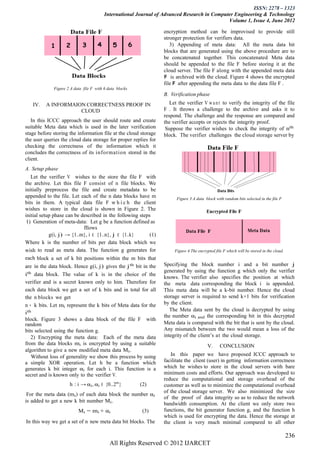
             Figure 2 A data file F with 6 data blocks
                                                                  B. Verification phase
   IV.   A INFORMAION CORRECTNESS PROOF IN                           Let the verifier V w a n t to verify the integrity of the file
                    CLOUD                                         F . It throws a challenge to the archive and asks it to
                                                                  respond. The challenge and the response are compared and
   In this ICCC approach the user should route and create         the verifier accepts or rejects the integrity proof.
suitable Meta data which is used in the later verification         Suppose the verifier wishes to check the integrity of nth
stage before storing the information file at the cloud storage    block. The verifier challenges the cloud storage server by
the user queries the cloud data storage for proper replies for
checking the correctness of the information which it
concludes the correctness of its information stored in the
client.
A. Setup phase
   Let the verifier V wishes to the store the file F with
the archive. Let this file F consist of n file blocks. We
initially preprocess the file and create metadata to be
appended to the file. Let each of the n data blocks have m              Figure 3 A data block with random bits selected in the file F
bits in them. A typical data file F w h i c h the client
wishes to store in the cloud is shown in Figure 2. The
initial setup phase can be described in the following steps
 1) Generation of meta-data: Let g be a function defined as
                            fllows
            g(i, j) → {1..m}, i ∈ {1..n}, j ∈ {1..k}       (1)
Where k is the number of bits per data block which we
wish to read as meta data. The function g generates for                Figure 4 The encrypted file F which will be stored in the cloud.
each block a set of k bit positions within the m bits that
are in the data block. Hence g(i, j) gives the j th bit in the    Specifying the block number i and a bit number j
                                                                  generated by using the function g which only the verifier
ith data block. The value of k is in the choice of the
                                                                  knows. The verifier also specifies the position at which
verifier and is a secret known only to him. Therefore for         the meta data corresponding the block i is appended.
each data block we get a set of k bits and in total for all       This meta data will be a k-bit number. Hence the cloud
the n blocks we get                                               storage server is required to send k+1 bits for verification
n ∗ k bits. Let mi represent the k bits of Meta data for the      by the client.
                                                                     The Meta data sent by the cloud is decrypted by using
ith
                                                                  the number αi and the corresponding bit in this decrypted
block. Figure 3 shows a data block of the file F with
random                                                            Meta data is compared with the bit that is sent by the cloud.
bits selected using the function g.                               Any mismatch between the two would mean a loss of the
   2) Encrypting the meta data: Each of the meta data             integrity of the client’s at the cloud storage.
from the data blocks mi is encrypted by using a suitable                                  V.     CONCLUSION
algorithm to give a new modified meta data Mi .
   Without loss of generality we show this process by using          In this paper we have proposed ICCC approach to
a simple XOR operation. Let h be a function which                 facilitate the client (user) in getting information correctness
generates k bit integer αi for each i. This function is a         which he wishes to store in the cloud servers with bare
secret and is known only to the verifier V.                       minimum costs and efforts. Our approach was developed to
                                                                  reduce the computational and storage overhead of the
                     h : i → αi , αi ∈ {0..2n }          (2)      customer as well as to minimize the computational overhead
                                                                  of the cloud storage server. We also minimized the size
 For the meta data (mi ) of each data block the number αi
                                                                  of the proof of data integrity so as to reduce the network
is added to get a new k bit number Mi .
                                                                  bandwidth consumption. At the client we only store two
                          Mi = mi + αi                    (3)     functions, the bit generator function g, and the function h
                                                                  which is used for encrypting the data. Hence the storage at
In this way we get a set of n new meta data bit blocks. The       the client is very much minimal compared to all other

                                                                                                                                          236
                                            All Rights Reserved © 2012 IJARCET
ISSN: 2278 – 1323
                                               International Journal of Advanced Research in Computer Engineering & Technology
                                                                                                   Volume 1, Issue 4, June 2012

schemes [4] that were developed. Hence this scheme proves
advantageous to thin clients like PDAs and mobile phones
    It should be noted that our approach applies to static
storage of information and also dynamic storage
information. Also the number of queries that can be asked
by the client is fixed apriori. But this number is quite large
and can be sufficient if the period of data storage is short. It
will be a challenge to increase the number of queries using
this scheme.
                           REFERENCES
[1] E . Mykletun, M. Narasimha, and G. Tsudik, “Authentication and
   integrity in outsourced databases,” Trans. Storage, vol. 2, no. 2, pp. 107–
   138, 2006.
[2] D . X. Song, D. Wagner, and A. Perrig, “Practical techniques for
   searches on encrypted data,” in SP ’00: Proceedings of the 2000 IEEE
   Symposium on Security and Privacy.              Washington, DC, USA:
   IEEE Computer Society, 2000, p. 44.
[3] A. Juels and B. S. Kaliski, Jr., “Pors: proofs of retrievability for large
   files,” in CCS ’07: Proceedings of the 14th ACM conference on
   Computer and communications security.            New York, NY, USA:
   ACM, 2007, pp. 584–597.
[4] G. Ateniese, R. Burns, R. Curtmola, J. Herring, L. Kissner, Z.
     Peterson, and D. Song, “Provable data possession at untrusted stores,”
     in CCS ’07: Proceedings of the 14th ACM conference on Computer
     and communica- tions security. New York,


                                                                                                                          237
                                                  All Rights Reserved © 2012 IJARCET

234 237

  • 1.
    ISSN: 2278 –1323 International Journal of Advanced Research in Computer Engineering & Technology Volume 1, Issue 4, June 2012 ICCC: Information Correctness to the Customers in Cloud Data Storage Gangolu Sreedevi Prof. C. Rajendra, M. Tech (CS), H.O.D, CSE Department, ASCET, India ASCET, India gangolusreedevi@gmail.com Abstract- Cloud storage is the only solution to the IT correctness proof that the data that is stored by a user at organizations to optimize the escalating storage costs and remote data storage in the cloud archives is not modified by maintenance. Data outsourcing in to the cloud has become the archive and thereby the correctness of the data is today trending environment for the thin organizations. The entire user’s data is store in large data centers, those which are assured. Such kinds of correctness proofs are much located remotely and the users don’t have any control on it. on helpful in P to P (peer-to-peer) storage systems, long term the other hand, this unique feature of the cloud poses many archives, database systems, file storage systems. The new security challenges which need to be clearly understood authentication systems avert the archives of cloud from mis- and resolved. Even the information is not accessible by the representing or modifying the data stored at it without the user the data centers should grant a way for the customer to approval of the data holder by using frequent checks on the check the correctness of his data is maintained or is storage archives. Such checks must allow the data holder compromise. As a solution this we are proposing providing information to efficiently, frequently, quickly and securely validate that correctness to the customers in Cloud Storage. The proposing the cloud archive is not cheating the data holder. Cheating, system gives a information correctness proof, the customer in this situation, means that the cloud storage archive might c a n employ to check the correctness o f his data i n the delete some of the data or may tamper or modify some of cloud. The correctness of the data can be approved upon by the data. It must be noted that the cloud storage server both the cloud and the customer a n d can be included in might not be spiteful; instead, it might be simply the Service level agreement ( SLA). This scheme ensures that the storage at the client side is minimal which will be undependable and lose or unconsciously corrupt the beneficial for thin clients. hosted data. But the information correctness schemes that are to be developed need to be often applicable for spiteful Keywords: Cloud computing, Data correctness, Cloud Storage as well as unreliable cloud storage servers. Any such correctness proofs possession schemes will not protect the information from dishonesty by the archive. To guarantee I. INTRODUCTION file toughness other kind of techniques like i n f o r m a t i o n Many organization and users outstanding their economic redundancy across multiple systems can be maintained. It advantages through the information outsourcing to cloud just allows invention of modification of a remotely located storage servers. Because cloud outsourcing is the raising file at an unreliable cloud storage server. trend today’s computing. The cloud storage means that the While implementing the information correctness proofs holder of the data store his data in a third party cloud server for data possession at un-trusted cloud storage servers we which is supposed to apparently for a fee and provide back are habitually partial by the property at the cloud server the data to the client whenever required. The data storage as well as at the client (customer). Given that the data becomes costly for small Organizations to regularly update sizes are large and are stored at remote servers, accessing their hardware whenever additional data is made and the entire file can be expensive in hardware costs to the maintenance of the stored data can be hard task. Cloud data storage server. outsourcing helps such organizations by reducing the Transmitting the information across the network to maintenance costs, personnel costs and storage costs. The the user (client) can devour heavy bandwidths. Because cloud storage also offers a reliability of important data by development in cloud storage capacity has fat outpaced the maintaining multiple copies of the data thereby reducing the development in cloud data access as well as network speed or chance of data lose by hardware failures. bandwidth, transmitting and accessing the entire network The cloud in spite of many protection concerns for the resources. users data storing which need to be expansively investigated for making it a reliable solution to the problem of avoiding Furthermore, the hardware to establish the information local storage of data. correctness proof obstruct with the on-demand bandwidth of the cloud server used for normal storage and retrieving Many problems like data verification and truthfulness [1] purpose. The problem is more intricate by the fact that the outsourcing encrypted data and associated difficult holder of the data may be a small device, like a Personal problems dealing with querying over encrypted domain [2] Digital Assist (PDA) or a mobile phone, which have limited were discussed in research review. battery power, CPU power and communication bandwidth. In this paper our proposal ICCC deal with the crisis of Therefore a information correctness proof that has to be implementing a protocol for obtaining the correctness of urbanized needs to take the above limitations into data possession in the cloud sometimes referred to as Proof consideration. The ICCC should be able to produce a of retrievability. The ICCC tries to achieve and validate a 234 All Rights Reserved © 2012 IJARCET
  • 2.
    ISSN: 2278 –1323 International Journal of Advanced Research in Computer Engineering & Technology Volume 1, Issue 4, June 2012 evidence without the need for the cloud server to access key can be used irrespective of the size of the file or the the entire data file or the client (user) retrieving the entire number of files whose retrievability it wants to verify. Also file from the server. Also the ICCC should diminish the the archive needs to access only a small portion of the file local computation at the client as well as the bandwidth F unlike in the key-has scheme which required the archive consumed at the client (user). to process the entire file F for protocol verification. This small portion of the file F is in fact independent of the length of F. The Figure 1 shows the pictorial view of the II. RELATED WORK proposing ICCC. Cloud computing refers to the delivery of computing and storage capacity as a service to a heterogeneous community of end-recipients. The name comes from the use of clouds as an abstraction for the complex infrastructure it contains in system diagrams. Cloud computing entrusts services with a user's data, software and computation over a network. It has considerable overlap with software as a service (SaaS). End users access cloud based applications through a web browser or a light weight desktop or mobile app while the business software and data are stored on servers at a remote location. Proponents claim that cloud computing allows Figure 1 pictorial view of information correctness proof of retrievability based on inserting random sentinels in the data file F enterprises to get their applications up and running faster, with improved manageability and less maintenance, and enables IT to more rapidly adjust resources to meet In this approach special blocks (called sentinels) are fluctuating and unpredictable business demand. hidden among other blocks in the data file F. In the Cloud computing relies on sharing of resources to setup phase, the verifier randomly embeds these sentinels achieve coherence and economies of scale similar to a utility among the data blocks. I n the verification phase, to (like the electricity grid) over a network (typically the check the correctness of the data file F, the verifier Internet). At the foundation of cloud computing is the challenges the prover (cloud archive) by specifying the broader concept of converged infrastructure and shared positions of a collection of sentinels and asking the prover services. to return the associated sentinel values. If the prover has The ICCC system can be prepared using a encryption modified or deleted a substantial portion of F, then with function hk (F), ICCC the correctness verifier, before high probability it will also have suppressed a number of archiving the data file F in the cloud data storage, pre- sentinels. computes the cryptographic encrypted hash value of F When the encrypted information is large, this approach u s in g hk (F) and stores this hash v a lu e as well as the involves the encryption of the F utilizing the key it becomes e n c r y p t e d key K. To check if the correctness of the file F computationally awkward. There will also be storage is lost, the correctness verifier releases the encrypted key K transparency at the server, partly due to the newly inserted to the cloud storage archive and asks it to compute and sentinels and partly due to the error correcting codes that return the value of hk (F). By storing multiple hash values are inserted. The client wants to store all the sentinels with for different keys the verifier can check for the it, which may be storage overhead to thin clients (PDAs, correctness of the file F for multiple times, each one low power devices etc.). being independent evidence. Though this ICCC approach is very simple and easily implemental, the main disadvantage of this approach is the III. ICCC APPROACH high supply costs it requires for the implementation. The Our ICCC information correctness proof approach does verifier in this approach requires storing as many keys and not encrypt the whole information. The ICCC encrypts only the number of checks to perform and the hash value of the few bits of the data per data block thus reducing the information file F with each hash key. Computing hash computational transparency on the clients. Our approach is value for even a fairly large information files can be suitable for thin organizations because the client storage computationally arduous for some clients (PDAs, mobile transparency is also minimized as it does not store any data phones, etc). with it. The archive side requires each incantation of the The verifier has to store only a single encrypted key in protocol; the archive requires processing the entire our information correctness protocol. Because of the information file F. This can be computationally difficult irrespective of the size of the i n f o r m a t i o n file F - and for the archive even for a lightweight operation like t h e two functions which produce a random sequence. The hashing. Furthermore, it requires that each information verifier does not store any data with it. The verifier correctness proof requires the proverb to read the entire appends meta data to the file F before storing the file at the file F - a significant overhead for an archive whose intended archive and stores at the archive side. In the verification load is only an occasional read per file, were every file to phase the verifier uses this meta data to verify the be tested frequently [3]. correctness of the data. It is important to note that our Juels and Burton proposed a approach called Proof of proof of data integrity protocol just checks the integrity of retrievability for large files using” sentinels” [3]. In this data i.e. if the data has been illegally modified or deleted. approach, unlike in the key-hash approach, only a single 235 All Rights Reserved © 2012 IJARCET
  • 3.
    ISSN: 2278 –1323 International Journal of Advanced Research in Computer Engineering & Technology Volume 1, Issue 4, June 2012 encryption method can be improvised to provide still stronger protection for verifiers data. 3) Appending of meta data: All the meta data bit blocks that are generated using the above procedure are to be concatenated together. This concatenated Meta data should be appended to the file F before storing it at the cloud server. The file F along with the appended meta data e F is archived with the cloud. Figure 4 shows the encrypted e file F after appending the meta data to the data file F . Figure 2 A data file F with 6 data blocks B. Verification phase IV. A INFORMAION CORRECTNESS PROOF IN Let the verifier V w a n t to verify the integrity of the file CLOUD F . It throws a challenge to the archive and asks it to respond. The challenge and the response are compared and In this ICCC approach the user should route and create the verifier accepts or rejects the integrity proof. suitable Meta data which is used in the later verification Suppose the verifier wishes to check the integrity of nth stage before storing the information file at the cloud storage block. The verifier challenges the cloud storage server by the user queries the cloud data storage for proper replies for checking the correctness of the information which it concludes the correctness of its information stored in the client. A. Setup phase Let the verifier V wishes to the store the file F with the archive. Let this file F consist of n file blocks. We initially preprocess the file and create metadata to be appended to the file. Let each of the n data blocks have m Figure 3 A data block with random bits selected in the file F bits in them. A typical data file F w h i c h the client wishes to store in the cloud is shown in Figure 2. The initial setup phase can be described in the following steps 1) Generation of meta-data: Let g be a function defined as fllows g(i, j) → {1..m}, i ∈ {1..n}, j ∈ {1..k} (1) Where k is the number of bits per data block which we wish to read as meta data. The function g generates for Figure 4 The encrypted file F which will be stored in the cloud. each block a set of k bit positions within the m bits that are in the data block. Hence g(i, j) gives the j th bit in the Specifying the block number i and a bit number j generated by using the function g which only the verifier ith data block. The value of k is in the choice of the knows. The verifier also specifies the position at which verifier and is a secret known only to him. Therefore for the meta data corresponding the block i is appended. each data block we get a set of k bits and in total for all This meta data will be a k-bit number. Hence the cloud the n blocks we get storage server is required to send k+1 bits for verification n ∗ k bits. Let mi represent the k bits of Meta data for the by the client. The Meta data sent by the cloud is decrypted by using ith the number αi and the corresponding bit in this decrypted block. Figure 3 shows a data block of the file F with random Meta data is compared with the bit that is sent by the cloud. bits selected using the function g. Any mismatch between the two would mean a loss of the 2) Encrypting the meta data: Each of the meta data integrity of the client’s at the cloud storage. from the data blocks mi is encrypted by using a suitable V. CONCLUSION algorithm to give a new modified meta data Mi . Without loss of generality we show this process by using In this paper we have proposed ICCC approach to a simple XOR operation. Let h be a function which facilitate the client (user) in getting information correctness generates k bit integer αi for each i. This function is a which he wishes to store in the cloud servers with bare secret and is known only to the verifier V. minimum costs and efforts. Our approach was developed to reduce the computational and storage overhead of the h : i → αi , αi ∈ {0..2n } (2) customer as well as to minimize the computational overhead of the cloud storage server. We also minimized the size For the meta data (mi ) of each data block the number αi of the proof of data integrity so as to reduce the network is added to get a new k bit number Mi . bandwidth consumption. At the client we only store two Mi = mi + αi (3) functions, the bit generator function g, and the function h which is used for encrypting the data. Hence the storage at In this way we get a set of n new meta data bit blocks. The the client is very much minimal compared to all other 236 All Rights Reserved © 2012 IJARCET
  • 4.
    ISSN: 2278 –1323 International Journal of Advanced Research in Computer Engineering & Technology Volume 1, Issue 4, June 2012 schemes [4] that were developed. Hence this scheme proves advantageous to thin clients like PDAs and mobile phones It should be noted that our approach applies to static storage of information and also dynamic storage information. Also the number of queries that can be asked by the client is fixed apriori. But this number is quite large and can be sufficient if the period of data storage is short. It will be a challenge to increase the number of queries using this scheme. REFERENCES [1] E . Mykletun, M. Narasimha, and G. Tsudik, “Authentication and integrity in outsourced databases,” Trans. Storage, vol. 2, no. 2, pp. 107– 138, 2006. [2] D . X. Song, D. Wagner, and A. Perrig, “Practical techniques for searches on encrypted data,” in SP ’00: Proceedings of the 2000 IEEE Symposium on Security and Privacy. Washington, DC, USA: IEEE Computer Society, 2000, p. 44. [3] A. Juels and B. S. Kaliski, Jr., “Pors: proofs of retrievability for large files,” in CCS ’07: Proceedings of the 14th ACM conference on Computer and communications security. New York, NY, USA: ACM, 2007, pp. 584–597. [4] G. Ateniese, R. Burns, R. Curtmola, J. Herring, L. Kissner, Z. Peterson, and D. Song, “Provable data possession at untrusted stores,” in CCS ’07: Proceedings of the 14th ACM conference on Computer and communica- tions security. New York, 237 All Rights Reserved © 2012 IJARCET