Historical Roots of Comparative
Education
Instructor: Che-Wei Lee
ADMPS 3343 Comparative Education, Spring 2013
Thursday, 17 January 2013, 7:15-9:55 pm
4301 Wesley W. Posvar Hall
University of Pittsburgh
All Rights Reserved @ 2013 by Che-Wei Lee
Learning Objectives
• Key Terms
• Development of the Field
• Comparative Education in Scientific Communities
• Comparative Education Today
All Rights Reserved @ 2013 by Che-Wei Lee
• I will lecture on major ideas that are central to the course
content, yet discussions will become integral to classroom
activity, the way in which that structure will evolve depends
upon the direction of our class discussions.
• The following classes will first invite several class members to
share a 10-minutes feedback on the key topics raised in each
of the readings. So be prepared before class please. The
discussion items should cover at least:
– a synthesis and brief summary of the key findings/arguments of the
assigned reading;
– a critique of whether or not you agree or disagree, and explain why;
– and how does this reading relate to your research in terms of
application into practice and theoretical contribution?
Agenda
All Rights Reserved @ 2013 by Che-Wei Lee
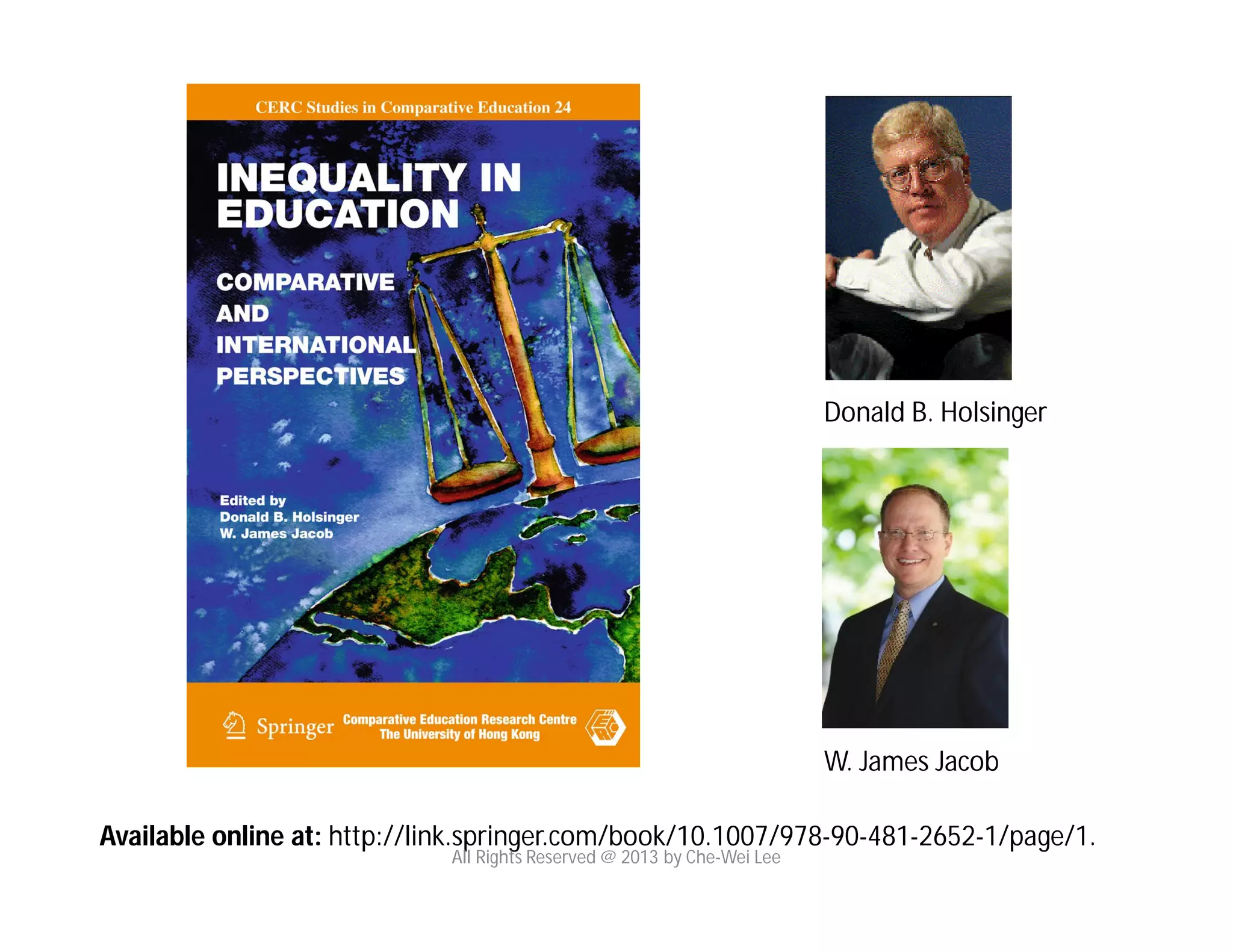
Let’s start with a book chapter (2008)
Inequality in Education:
A Critical Analysis
by
Dr. W. James Jacob
Dr. Donald B. Holsinger
All Rights Reserved @ 2013 by Che-Wei Lee
Available online at: http://link.springer.com/book/10.1007/978-90-481-2652-1/page/1.
Donald B. Holsinger
W. James Jacob
All Rights Reserved @ 2013 by Che-Wei Lee
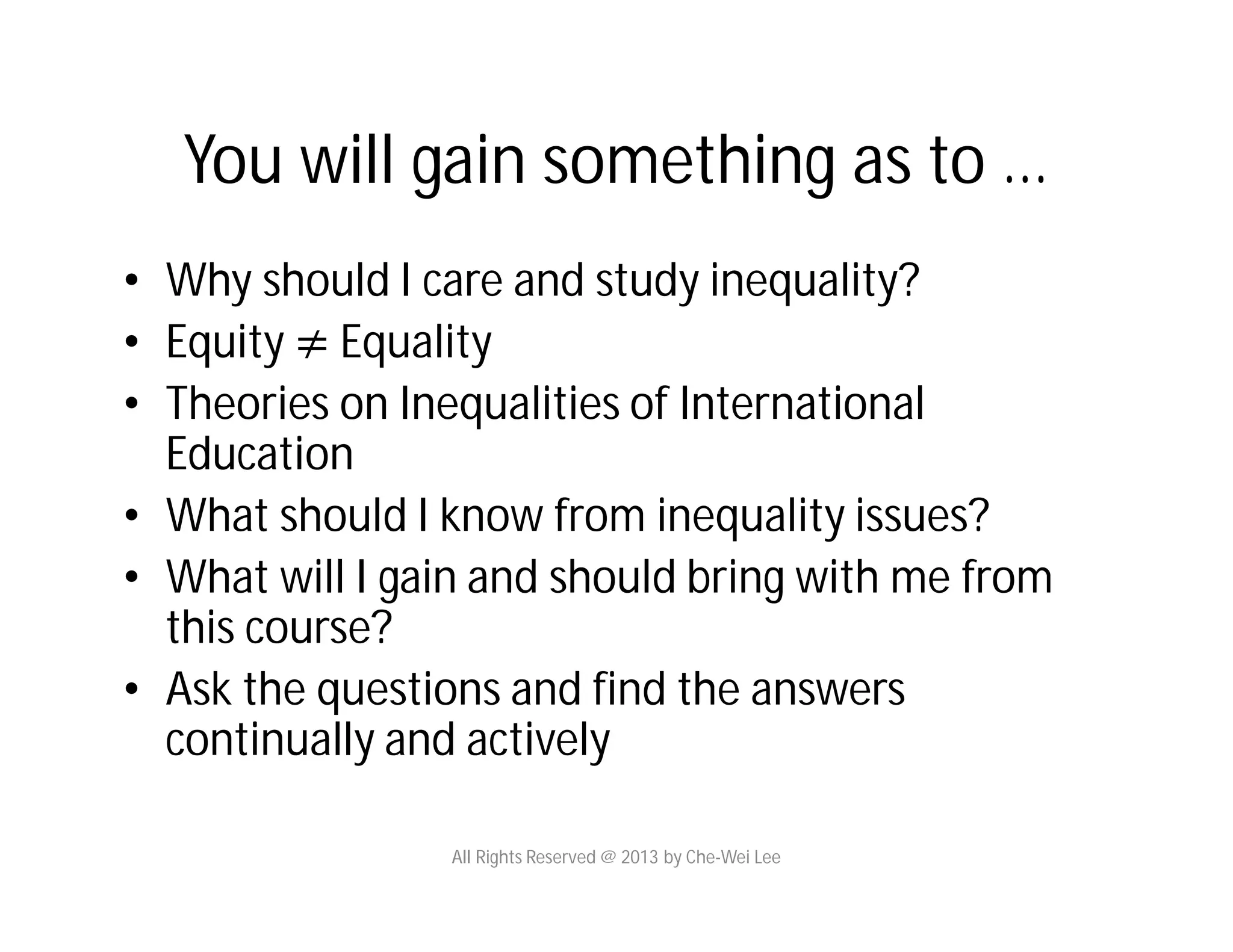
You will gain something as to …
• Why should I care and study inequality?
• Equity ≠ Equality
• Theories on Inequalities of International
Education
• What should I know from inequality issues?
• What will I gain and should bring with me from
this course?
• Ask the questions and find the answers
continually and actively
All Rights Reserved @ 2013 by Che-Wei Lee
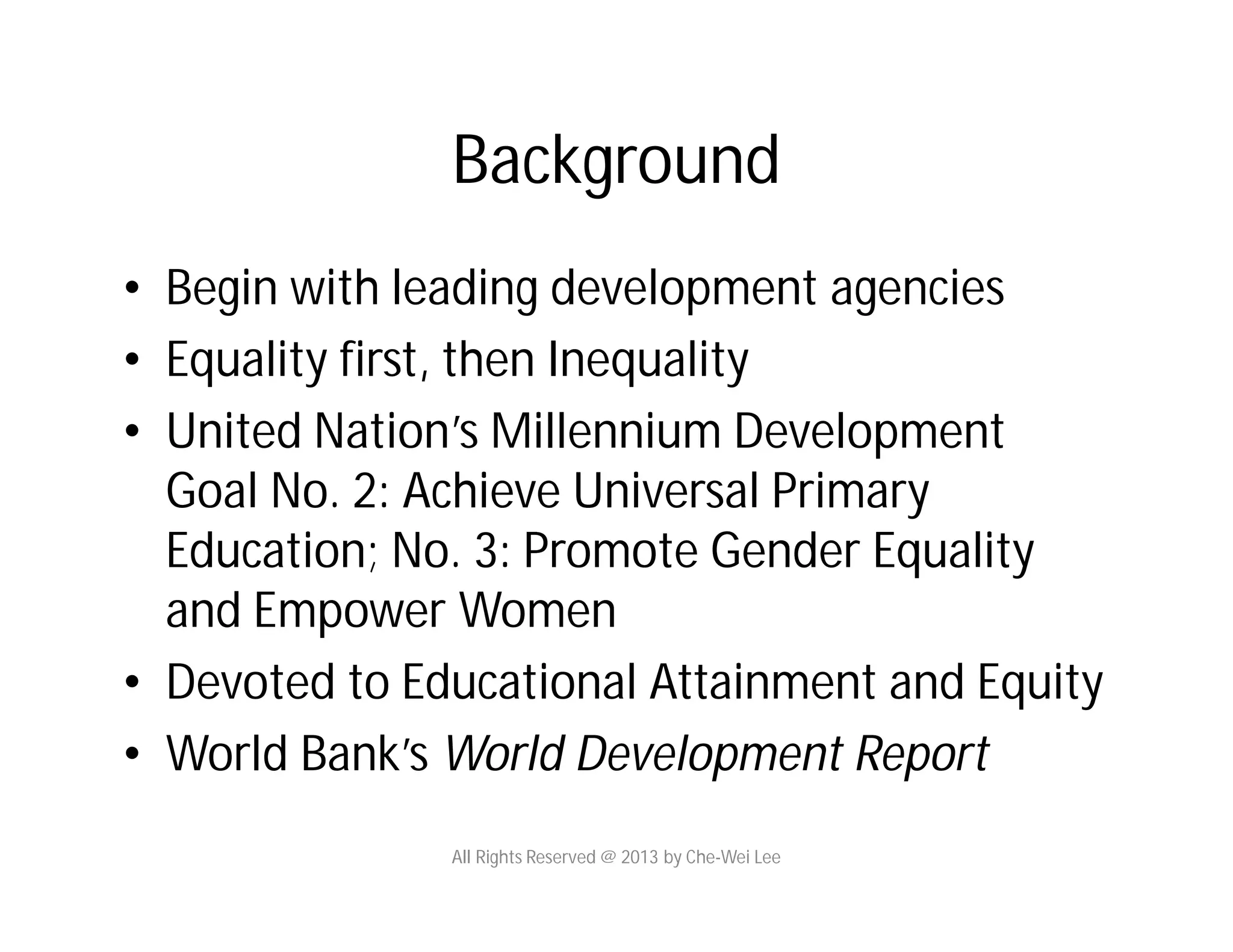
Background
• Begin with leading development agencies
• Equality first, then Inequality
• United Nation’s Millennium Development
Goal No. 2: Achieve Universal Primary
Education; No. 3: Promote Gender Equality
and Empower Women
• Devoted to Educational Attainment and Equity
• World Bank’s World Development Report
All Rights Reserved @ 2013 by Che-Wei Lee
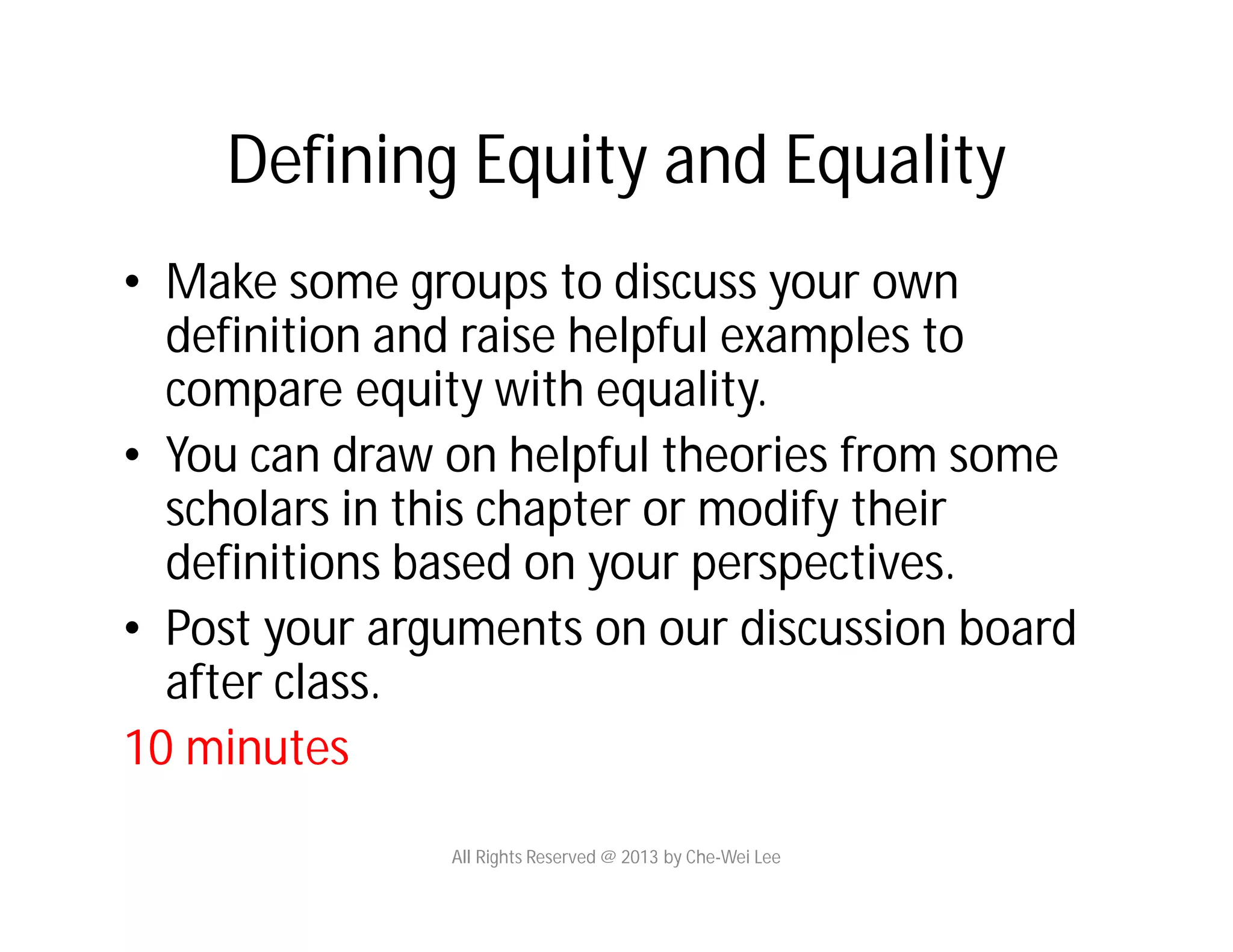
Defining Equity and Equality
• Make some groups to discuss your own
definition and raise helpful examples to
compare equity with equality.
• You can draw on helpful theories from some
scholars in this chapter or modify their
definitions based on your perspectives.
• Post your arguments on our discussion board
after class.
10 minutes
All Rights Reserved @ 2013 by Che-Wei Lee
Defining Equity and Equality
Each group should pick up a factor that lead to
or maintain inequalities in education, then share
your ideas with the reason why you choose it
and why it is important to you or your research
interest.
10 minutes
All Rights Reserved @ 2013 by Che-Wei Lee
Key Statistical Terms
• Gini Coefficient or Gini Index
• Education Gini Coefficient
• Theil Index
The instructor will provide you with the sound
explanation in the discussion board.
All Rights Reserved @ 2013 by Che-Wei Lee
Theme 1
The Concept of Inequality as Applied to
Education
All Rights Reserved @ 2013 by Che-Wei Lee
Theme 2
The Measurement of Education Inequality
All Rights Reserved @ 2013 by Che-Wei Lee
Theme 3
The Relationship between Education Inequality
and Economic Growth
All Rights Reserved @ 2013 by Che-Wei Lee
Theme 4
The Relationship between Inequality and Per
Capita Income
All Rights Reserved @ 2013 by Che-Wei Lee
Theme 5
Changes and Trends in Education Inequality
All Rights Reserved @ 2013 by Che-Wei Lee
Theme 6
Race, Social Class, Disability, and Gender
All Rights Reserved @ 2013 by Che-Wei Lee
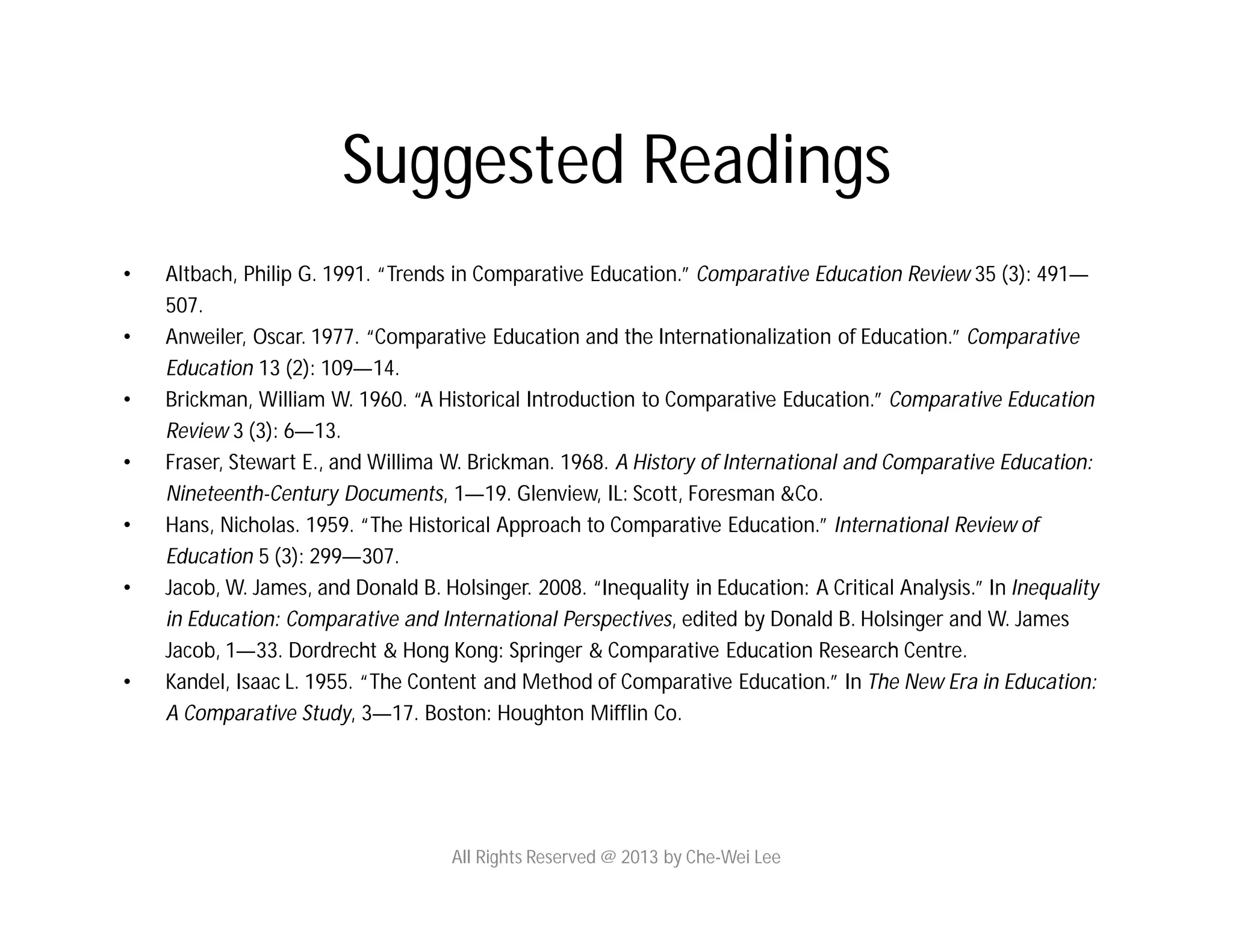
Suggested Readings
• Altbach, Philip G. 1991. “Trends in Comparative Education.” Comparative Education Review 35 (3): 491—
507.
• Anweiler, Oscar. 1977. “Comparative Education and the Internationalization of Education.” Comparative
Education 13 (2): 109—14.
• Brickman, William W. 1960. “A Historical Introduction to Comparative Education.” Comparative Education
Review 3 (3): 6—13.
• Fraser, Stewart E., and Willima W. Brickman. 1968. A History of International and Comparative Education:
Nineteenth-Century Documents, 1—19. Glenview, IL: Scott, Foresman &Co.
• Hans, Nicholas. 1959. “The Historical Approach to Comparative Education.” International Review of
Education 5 (3): 299—307.
• Jacob, W. James, and Donald B. Holsinger. 2008. “Inequality in Education: A Critical Analysis.” In Inequality
in Education: Comparative and International Perspectives, edited by Donald B. Holsinger and W. James
Jacob, 1—33. Dordrecht & Hong Kong: Springer & Comparative Education Research Centre.
• Kandel, Isaac L. 1955. “The Content and Method of Comparative Education.” In The New Era in Education:
A Comparative Study, 3—17. Boston: Houghton Mifflin Co.
All Rights Reserved @ 2013 by Che-Wei Lee

Historical Roots of Comparative Education

  • 1.
    Historical Roots ofComparative Education Instructor: Che-Wei Lee ADMPS 3343 Comparative Education, Spring 2013 Thursday, 17 January 2013, 7:15-9:55 pm 4301 Wesley W. Posvar Hall University of Pittsburgh All Rights Reserved @ 2013 by Che-Wei Lee
  • 2.
    Learning Objectives • KeyTerms • Development of the Field • Comparative Education in Scientific Communities • Comparative Education Today All Rights Reserved @ 2013 by Che-Wei Lee
  • 3.
    • I willlecture on major ideas that are central to the course content, yet discussions will become integral to classroom activity, the way in which that structure will evolve depends upon the direction of our class discussions. • The following classes will first invite several class members to share a 10-minutes feedback on the key topics raised in each of the readings. So be prepared before class please. The discussion items should cover at least: – a synthesis and brief summary of the key findings/arguments of the assigned reading; – a critique of whether or not you agree or disagree, and explain why; – and how does this reading relate to your research in terms of application into practice and theoretical contribution? Agenda All Rights Reserved @ 2013 by Che-Wei Lee
  • 4.
    Let’s start witha book chapter (2008) Inequality in Education: A Critical Analysis by Dr. W. James Jacob Dr. Donald B. Holsinger All Rights Reserved @ 2013 by Che-Wei Lee
  • 5.
    Available online at:http://link.springer.com/book/10.1007/978-90-481-2652-1/page/1. Donald B. Holsinger W. James Jacob All Rights Reserved @ 2013 by Che-Wei Lee
  • 6.
    You will gainsomething as to … • Why should I care and study inequality? • Equity ≠ Equality • Theories on Inequalities of International Education • What should I know from inequality issues? • What will I gain and should bring with me from this course? • Ask the questions and find the answers continually and actively All Rights Reserved @ 2013 by Che-Wei Lee
  • 7.
    Background • Begin withleading development agencies • Equality first, then Inequality • United Nation’s Millennium Development Goal No. 2: Achieve Universal Primary Education; No. 3: Promote Gender Equality and Empower Women • Devoted to Educational Attainment and Equity • World Bank’s World Development Report All Rights Reserved @ 2013 by Che-Wei Lee
  • 8.
    Defining Equity andEquality • Make some groups to discuss your own definition and raise helpful examples to compare equity with equality. • You can draw on helpful theories from some scholars in this chapter or modify their definitions based on your perspectives. • Post your arguments on our discussion board after class. 10 minutes All Rights Reserved @ 2013 by Che-Wei Lee
  • 9.
    Defining Equity andEquality Each group should pick up a factor that lead to or maintain inequalities in education, then share your ideas with the reason why you choose it and why it is important to you or your research interest. 10 minutes All Rights Reserved @ 2013 by Che-Wei Lee
  • 10.
    Key Statistical Terms •Gini Coefficient or Gini Index • Education Gini Coefficient • Theil Index The instructor will provide you with the sound explanation in the discussion board. All Rights Reserved @ 2013 by Che-Wei Lee
  • 11.
    Theme 1 The Conceptof Inequality as Applied to Education All Rights Reserved @ 2013 by Che-Wei Lee
  • 12.
    Theme 2 The Measurementof Education Inequality All Rights Reserved @ 2013 by Che-Wei Lee
  • 13.
    Theme 3 The Relationshipbetween Education Inequality and Economic Growth All Rights Reserved @ 2013 by Che-Wei Lee
  • 14.
    Theme 4 The Relationshipbetween Inequality and Per Capita Income All Rights Reserved @ 2013 by Che-Wei Lee
  • 15.
    Theme 5 Changes andTrends in Education Inequality All Rights Reserved @ 2013 by Che-Wei Lee
  • 16.
    Theme 6 Race, SocialClass, Disability, and Gender All Rights Reserved @ 2013 by Che-Wei Lee
  • 17.
    Suggested Readings • Altbach,Philip G. 1991. “Trends in Comparative Education.” Comparative Education Review 35 (3): 491— 507. • Anweiler, Oscar. 1977. “Comparative Education and the Internationalization of Education.” Comparative Education 13 (2): 109—14. • Brickman, William W. 1960. “A Historical Introduction to Comparative Education.” Comparative Education Review 3 (3): 6—13. • Fraser, Stewart E., and Willima W. Brickman. 1968. A History of International and Comparative Education: Nineteenth-Century Documents, 1—19. Glenview, IL: Scott, Foresman &Co. • Hans, Nicholas. 1959. “The Historical Approach to Comparative Education.” International Review of Education 5 (3): 299—307. • Jacob, W. James, and Donald B. Holsinger. 2008. “Inequality in Education: A Critical Analysis.” In Inequality in Education: Comparative and International Perspectives, edited by Donald B. Holsinger and W. James Jacob, 1—33. Dordrecht & Hong Kong: Springer & Comparative Education Research Centre. • Kandel, Isaac L. 1955. “The Content and Method of Comparative Education.” In The New Era in Education: A Comparative Study, 3—17. Boston: Houghton Mifflin Co. All Rights Reserved @ 2013 by Che-Wei Lee