By
Tim Gisone
 Temperatures changes that happen even
though heat isn’t added or taken away are
called adiabatic temperature changes.
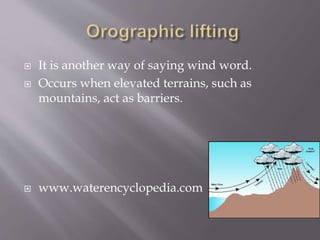
 It is another way of saying wind word.
 Occurs when elevated terrains, such as
mountains, act as barriers.
 www.waterencyclopedia.com
 It occurs between colliding masses of warm
and cold air.
 Frontal wedging is the process where cold air
acts as a barrier for warmer air.
 Lifting air from the lower atmosphere flowing
together.
 Unequal heating of surface warms pockets of
air more then the air that surrounds it.
 It tends to stay in its original position, while the
air that is unstable is rises.
 When the air is most stable conditions happen
like air temperatures increase with height, this
is called temperature inversion.
 The air must be saturated for any
condensations to form like dew, fog, or clouds
to form.
 Tiny bits of particulate matter called
condensation nuclei occurs in the air above
ground, and they serve as water vapor for the
surface.
 Cirrus clouds are clouds are high, white, and
thin, they occur as patches or delicate veil-like
sheets.
 Cumulus clouds are rounded individual
masses, they normally have flat bases and the
form around rising domes, or towers.
 Cirrocumulus clouds are mad up of fluffy
masses, and cirrostratus clouds are flat.
 High clouds are thin and white and mostly
made up of ice crystals.
 This is because of the low temperatures and
small quantities of water vapor.
 Altocumulus clouds are made up of rounded
masses that differ from cirrocumulus clouds in
that altocumulus clouds are larger and denser.
 There are 3 types of low clouds one is stratus,
stratocumulus, and nimbostratus, occasionally
these clouds produce light precipitation.
 These clouds have their bases in the low height
range but often extend upward into the middle
or high altitudes.
 Fog can form on cool, clear, calm nights
progresses, a earths surface cools rapidly by
radiation.
 When cool air moves over warm water, enough
moisture may evaporate from the water surface
to produce satuation.
 The Bergeron process is a theory of precipition
of supercooled clouds, freeing nuclei, and
different levels of saturation of ice and liquid
water.
 Liquid water below 0 is supercooled.
 When air gets saturated with water it is
supersaturated with ice.
 The collision-coalescence process is raindrop
formations in warm clouds, and large cloud
droplets collide together with smaller droplets
to become raindrop.
 When surface temperatures is above 4 degrees
C, snowflakes usually melt and continue their
decent ad rain before they reach the ground.
 Rain means drops of water that fall from a
cloud and have a diameter of at least 0.5 mm.
 Sleet is the fall of small particles of clear-to-
translucent ice. For sleet to form, a layer of air
with temperatures above freezing must overlie
a subfreezing layer near the ground.
 Hail is made in cumulonimbus clouds, hail
begins as small ice pellets that grow by
collecting supercooled water droplets as they
fall through a cloud.
2 tgisone

2 tgisone

  • 1.
  • 2.
     Temperatures changesthat happen even though heat isn’t added or taken away are called adiabatic temperature changes.
  • 3.
     It isanother way of saying wind word.  Occurs when elevated terrains, such as mountains, act as barriers.  www.waterencyclopedia.com
  • 4.
     It occursbetween colliding masses of warm and cold air.  Frontal wedging is the process where cold air acts as a barrier for warmer air.
  • 5.
     Lifting airfrom the lower atmosphere flowing together.
  • 6.
     Unequal heatingof surface warms pockets of air more then the air that surrounds it.
  • 7.
     It tendsto stay in its original position, while the air that is unstable is rises.  When the air is most stable conditions happen like air temperatures increase with height, this is called temperature inversion.
  • 8.
     The airmust be saturated for any condensations to form like dew, fog, or clouds to form.  Tiny bits of particulate matter called condensation nuclei occurs in the air above ground, and they serve as water vapor for the surface.
  • 9.
     Cirrus cloudsare clouds are high, white, and thin, they occur as patches or delicate veil-like sheets.  Cumulus clouds are rounded individual masses, they normally have flat bases and the form around rising domes, or towers.
  • 10.
     Cirrocumulus cloudsare mad up of fluffy masses, and cirrostratus clouds are flat.  High clouds are thin and white and mostly made up of ice crystals.  This is because of the low temperatures and small quantities of water vapor.
  • 11.
     Altocumulus cloudsare made up of rounded masses that differ from cirrocumulus clouds in that altocumulus clouds are larger and denser.
  • 12.
     There are3 types of low clouds one is stratus, stratocumulus, and nimbostratus, occasionally these clouds produce light precipitation.
  • 13.
     These cloudshave their bases in the low height range but often extend upward into the middle or high altitudes.
  • 14.
     Fog canform on cool, clear, calm nights progresses, a earths surface cools rapidly by radiation.  When cool air moves over warm water, enough moisture may evaporate from the water surface to produce satuation.
  • 15.
     The Bergeronprocess is a theory of precipition of supercooled clouds, freeing nuclei, and different levels of saturation of ice and liquid water.  Liquid water below 0 is supercooled.
  • 16.
     When airgets saturated with water it is supersaturated with ice.  The collision-coalescence process is raindrop formations in warm clouds, and large cloud droplets collide together with smaller droplets to become raindrop.
  • 17.
     When surfacetemperatures is above 4 degrees C, snowflakes usually melt and continue their decent ad rain before they reach the ground.  Rain means drops of water that fall from a cloud and have a diameter of at least 0.5 mm.
  • 18.
     Sleet isthe fall of small particles of clear-to- translucent ice. For sleet to form, a layer of air with temperatures above freezing must overlie a subfreezing layer near the ground.  Hail is made in cumulonimbus clouds, hail begins as small ice pellets that grow by collecting supercooled water droplets as they fall through a cloud.