CLINICAL SPECIALITY – II CARDIOVASCULAR & THORACIC
NURSING
UNIT V CARDIAC DISORDERS AND NURSING MANAGEMENT
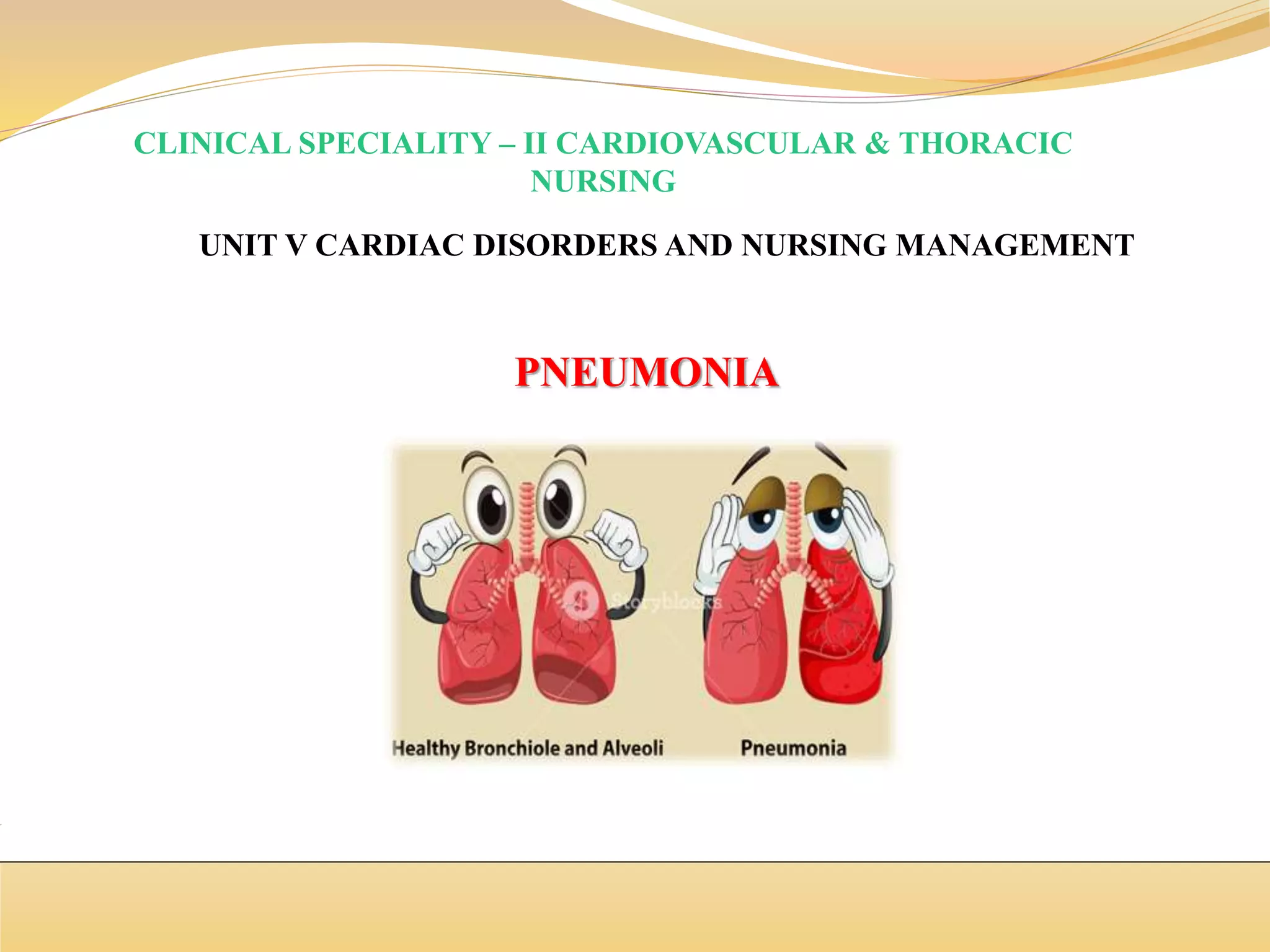
PNEUMONIA
General objective:
 At the end of this class students will be acquainted with
Pneumonia.
Specific objective:
 Define Pneumonia.
 Mention the causes of Pneumonia
 Discuss the types of Pneumonia
 Describe clinical manifestation of Pneumonia.
 Discuss management of Pneumonia.
 Pneumonia is an infection in one or both lungs. It can be
caused by bacteria, viruses, or fungi.
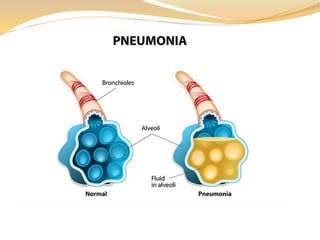
 Pneumonia causes inflammation in the air sacs in your
lungs, which are called alveoli. The alveoli fill with fluid
or pus, making it difficult to breathe.
PNEUMONIA
 Cigarette smoking
 Recent viral respiratory infection (common cold,
laryngitis, influenza)
 Difficulty swallowing (due to stroke, dementia,
Parkinson’s disease, or other neurological conditions)
 Chronic lung disease (COPD, bronchiectasis, cystic
fibrosis)
RISK FACTORS
 Cerebral palsy
 Other serious illnesses, such as heart disease, liver
cirrhosis, or diabetes mellitus
 Impaired consciousness (loss of brain function due to
dementia, stroke, or other neurologic conditions)
 Recent surgery or trauma
 Immune system problem
 Bacterial pneumonia :
 Pneumococcal pneumonia :
 Staphylococcal pneumonia :
 Streptococcal pneumonia :
 Viral and mycoplasma pneumonia :
 Pneumocytitis carinii pneumonia
TYPES
 Legionella pneumonia
 Aspiration pneumonia
 Hypostatic pneumonia
 Lobar pneumonia
 broncopneumonia
 Community-acquired pneumonia
 Hospital- acquired pneumonia
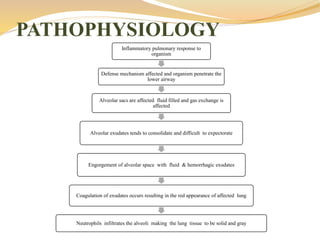
PATHOPHYSIOLOGY
Inflammatory pulmonary response to
organism
Defense mechanism affected and organism penetrate the
lower airway
Alveolar sacs are affected fluid filled and gas exchange is
affected
Alveolar exudates tends to consolidate and difficult to expectorate
Engorgement of alveolar space with fluid & hemorrhagic exudates
Coagulation of exudates occurs resulting in the red appearance of affected lung
Neutrophils infiltrates the alveoli making the lung tissue to be solid and gray
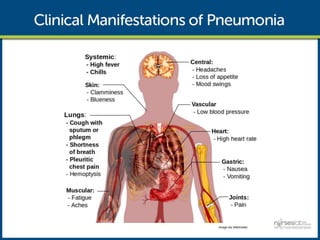
 CLINICAL MANIFESTATIONS :
Complications:
 Pleurisy
 Atelectasis
 Lung abscess
 Pericarditis
 Endocarditic.
 Pleural effusion
 Bactremia.
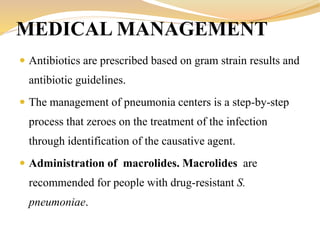
 Antibiotics are prescribed based on gram strain results and
antibiotic guidelines.
 The management of pneumonia centers is a step-by-step
process that zeroes on the treatment of the infection
through identification of the causative agent.
 Administration of macrolides. Macrolides are
recommended for people with drug-resistant S.
pneumoniae.
MEDICAL MANAGEMENT
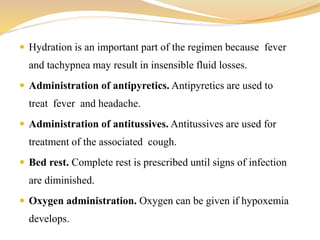
 Hydration is an important part of the regimen because fever
and tachypnea may result in insensible fluid losses.
 Administration of antipyretics. Antipyretics are used to
treat fever and headache.
 Administration of antitussives. Antitussives are used for
treatment of the associated cough.
 Bed rest. Complete rest is prescribed until signs of infection
are diminished.
 Oxygen administration. Oxygen can be given if hypoxemia
develops.
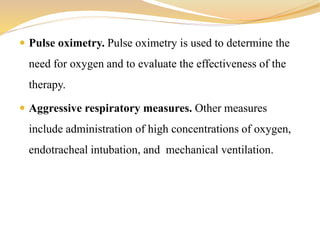
 Pulse oximetry. Pulse oximetry is used to determine the
need for oxygen and to evaluate the effectiveness of the
therapy.
 Aggressive respiratory measures. Other measures
include administration of high concentrations of oxygen,
endotracheal intubation, and mechanical ventilation.
Nursing Assessment
 Nursing assessment is critical in detecting pneumonia.
Assess respiratory symptoms.
 Symptoms of fever, chills, or night sweats in a patient
should be reported immediately to the nurse as these can
be signs of bacterial pneumonia.
Assess clinical manifestations.
Respiratory assessment should further identify clinical
manifestations such as pleuritic pain, bradycardia,
tachypnea, and fatigue, use of accessory muscles for
breathing, coughing, and purulent sputum.
NURSING MANAGEMENT
 Physical assessment.
 Assess the changes in temperature and pulse; amount,
odor, and color of secretions; frequency and severity
of cough; degree of tachypnea or shortness of breath; and
changes in the chest x-ray findings.
 Assessment in elderly patients. Assess elderly patients
for altered mental status, dehydration, unusual behavior,
excessive fatigue, and concomitant heart failure.
o Ineffective airway clearance related to copious
tracheobronchial secretions.
 Activity intolerance related to impaired respiratory
function.
 Risk for deficient fluid volume related to fever and a
rapid respiratory rate.
Nursing diagnosis
To improve airway patency:
 Removal of secretions.
 Adequate hydration of 2 to 3 liters per day thins and loosens
pulmonary secretions.
 Humidification may loosen secretions and improve ventilation.
 Coughing exercises. An effective, directed cough can also
improve airway patency.
 Chest physiotherapy. Chest physiotherapy is important
because it loosens and mobilizes secretions.
To promote rest and conserve energy:
 Encourage avoidance of overexertion and possible
exacerbation of symptoms.
 Semi-Fowler’s position.
To promote fluid intake:
 Fluid intake. Increase in fluid intake to at least 2L per day
to replace insensible fluid losses.
To maintain nutrition:
 Fluids with electrolytes. This may help provide fluid,
calories, and electrolytes.
 Nutrition-enriched beverages. Nutritionally enhanced
drinks and shakes can also help restore proper nutrition.

2 pnuemonia

  • 1.
    CLINICAL SPECIALITY –II CARDIOVASCULAR & THORACIC NURSING UNIT V CARDIAC DISORDERS AND NURSING MANAGEMENT PNEUMONIA
  • 2.
    General objective:  Atthe end of this class students will be acquainted with Pneumonia. Specific objective:  Define Pneumonia.  Mention the causes of Pneumonia  Discuss the types of Pneumonia  Describe clinical manifestation of Pneumonia.  Discuss management of Pneumonia.
  • 4.
     Pneumonia isan infection in one or both lungs. It can be caused by bacteria, viruses, or fungi.  Pneumonia causes inflammation in the air sacs in your lungs, which are called alveoli. The alveoli fill with fluid or pus, making it difficult to breathe. PNEUMONIA
  • 5.
     Cigarette smoking Recent viral respiratory infection (common cold, laryngitis, influenza)  Difficulty swallowing (due to stroke, dementia, Parkinson’s disease, or other neurological conditions)  Chronic lung disease (COPD, bronchiectasis, cystic fibrosis) RISK FACTORS
  • 6.
     Cerebral palsy Other serious illnesses, such as heart disease, liver cirrhosis, or diabetes mellitus  Impaired consciousness (loss of brain function due to dementia, stroke, or other neurologic conditions)  Recent surgery or trauma  Immune system problem
  • 7.
     Bacterial pneumonia:  Pneumococcal pneumonia :  Staphylococcal pneumonia :  Streptococcal pneumonia :  Viral and mycoplasma pneumonia :  Pneumocytitis carinii pneumonia TYPES
  • 8.
     Legionella pneumonia Aspiration pneumonia  Hypostatic pneumonia  Lobar pneumonia  broncopneumonia  Community-acquired pneumonia  Hospital- acquired pneumonia
  • 9.
    PATHOPHYSIOLOGY Inflammatory pulmonary responseto organism Defense mechanism affected and organism penetrate the lower airway Alveolar sacs are affected fluid filled and gas exchange is affected Alveolar exudates tends to consolidate and difficult to expectorate Engorgement of alveolar space with fluid & hemorrhagic exudates Coagulation of exudates occurs resulting in the red appearance of affected lung Neutrophils infiltrates the alveoli making the lung tissue to be solid and gray
  • 10.
  • 11.
    Complications:  Pleurisy  Atelectasis Lung abscess  Pericarditis  Endocarditic.  Pleural effusion  Bactremia.
  • 13.
     Antibiotics areprescribed based on gram strain results and antibiotic guidelines.  The management of pneumonia centers is a step-by-step process that zeroes on the treatment of the infection through identification of the causative agent.  Administration of macrolides. Macrolides are recommended for people with drug-resistant S. pneumoniae. MEDICAL MANAGEMENT
  • 14.
     Hydration isan important part of the regimen because fever and tachypnea may result in insensible fluid losses.  Administration of antipyretics. Antipyretics are used to treat fever and headache.  Administration of antitussives. Antitussives are used for treatment of the associated cough.  Bed rest. Complete rest is prescribed until signs of infection are diminished.  Oxygen administration. Oxygen can be given if hypoxemia develops.
  • 15.
     Pulse oximetry.Pulse oximetry is used to determine the need for oxygen and to evaluate the effectiveness of the therapy.  Aggressive respiratory measures. Other measures include administration of high concentrations of oxygen, endotracheal intubation, and mechanical ventilation.
  • 16.
    Nursing Assessment  Nursingassessment is critical in detecting pneumonia. Assess respiratory symptoms.  Symptoms of fever, chills, or night sweats in a patient should be reported immediately to the nurse as these can be signs of bacterial pneumonia. Assess clinical manifestations. Respiratory assessment should further identify clinical manifestations such as pleuritic pain, bradycardia, tachypnea, and fatigue, use of accessory muscles for breathing, coughing, and purulent sputum. NURSING MANAGEMENT
  • 17.
     Physical assessment. Assess the changes in temperature and pulse; amount, odor, and color of secretions; frequency and severity of cough; degree of tachypnea or shortness of breath; and changes in the chest x-ray findings.  Assessment in elderly patients. Assess elderly patients for altered mental status, dehydration, unusual behavior, excessive fatigue, and concomitant heart failure.
  • 18.
    o Ineffective airwayclearance related to copious tracheobronchial secretions.  Activity intolerance related to impaired respiratory function.  Risk for deficient fluid volume related to fever and a rapid respiratory rate. Nursing diagnosis
  • 19.
    To improve airwaypatency:  Removal of secretions.  Adequate hydration of 2 to 3 liters per day thins and loosens pulmonary secretions.  Humidification may loosen secretions and improve ventilation.  Coughing exercises. An effective, directed cough can also improve airway patency.  Chest physiotherapy. Chest physiotherapy is important because it loosens and mobilizes secretions.
  • 20.
    To promote restand conserve energy:  Encourage avoidance of overexertion and possible exacerbation of symptoms.  Semi-Fowler’s position. To promote fluid intake:  Fluid intake. Increase in fluid intake to at least 2L per day to replace insensible fluid losses.
  • 21.
    To maintain nutrition: Fluids with electrolytes. This may help provide fluid, calories, and electrolytes.  Nutrition-enriched beverages. Nutritionally enhanced drinks and shakes can also help restore proper nutrition.