BAD MESSAGES 
1
 Messages which include refusing requests and 
delivering bad news to a customer or to those 
within an organization. 
 Negative messages are usually difficult to 
write because the audience is being told 
exactly what they don't want to hear. 
 Both direct and indirect approach can be used. 
2 
Syeda Komal Zil e Zehra Zaidi 3:)
 Planning: The first thing you have to remember is that the 
audience does not want to hear the message. Make sure 
to consider the purpose and recognize whether it’s going 
to be a straightforward message or a more complicated 
one. Keep the audience in mind and gather the required 
information for them to accept and understand your message. 
You also have to know what type of medium to use for the 
message. It is sometimes recommended that bad news be 
delivered in person rather than in a letter or e-mail. 
 Writing: When it comes down to actually writing the message, 
make sure that the message is clear and kind. Use positive 
words rather than negative words. 
3
 Completing: Once your message is complete, pay close 
attention to details and make sure there are no errors. The 
audience will tend to focus even on the smallest of errors when 
reading a negative message. Also, be sure to deliver your 
message promptly, before the audience hears it from 
somebody else. 
4
 Your tone contributes to your messages effectiveness by helping 
your readers. It’s not what you say but how you say it that counts. 
 When establishing tone strive for firmness, fairness, goodwill, 
respect. 
 Use “you” attitude. But sometimes “you” attitude is best observed 
by avoiding the word you. 
 Use positive phrasing. 
5
 Refusal of a request or favor 
 Denial of a claim 
 Denial of credit 
 Message of constructive criticism 
6
 Acceptance: Reader understands and accepts bad 
news. Indirect pattern helps. 
 Image: Positive Promote good image of yourself and 
company. Be ethical. 
 Message clarity: Make message so clear that 
additional correspondence is not necessary. 
 Reduce future correspondence: Try to reduce or 
eliminate future correspondence on the matter . 
7
Presents the bad news first 
8 
BAD NEWS 
REASONS 
POSITIVE CLOSING
 The bad news will be considered insignificant or 
your reader is already expecting it. 
 The reader may skip or ignore the bad news. 
 You want to emphasize the bad news. For 
example, you have already said "no" several times, 
and your reader keeps asking for the same 
thing. 
 Your relationship with your reader is very close. 
9
 The reader prefers a direct style and will see the indirect 
approach as a waste of time, insincere, or condescending. If 
the reader has already corresponded with you using the 
direct style, you're safe also using the direct style. 
 Your relationship with your reader is strained or 
suspicious. With the direct style, a suspicious reader won't 
be likely to feel he or she is being given the "runaround". 
 Most commonly used in situations where the bad news is being 
presented orally. 
10
Says something positive first and then presents the bad news 
11 
(BODY) 
BAD NEWS 
POSITIVE 
CLOSING
 When some preparation will help your audience 
accept your bad news. Beginning a bad news 
message with a blunt “no” could well prevent 
people who prefer an explanation first from 
reading or listening to your reasons. 
12
 A neutral but meaningful statement that does 
not mention the bad news. 
 Use a buffer that is neutral , relevant , not 
misleading, assertive. 
 Avoid giving the impression that good news will 
follow. 
 Best news, compliment, appreciation statement, 
relevant point you both agree on, objective 
facts, show understanding, carefully worded 
apology. 
13
 Praise: Find an attribute or an achievement to compliment. 
 Appreciation: Express sincere thanks for receiving 
something. 
 Agreement: Find a point on which you and the reader share 
similar views. 
 Understanding: Demonstrate the you understand the 
reader’s goals and needs. 
 Cooperation: Convey your willingness to help in any way you 
realistically can. 
 Good News: Start with the part of your message that is 
favorable. 
14
 Resale: Favorably discuss the product or company related to 
the subject of the letter. 
 Fairness: Assure the reader that you have closely examined 
and carefully considered the problem, or mention an 
appropriate action that has already been taken. 
15
 Explain the causes of the bad news before 
disclosing it. 
 If possible, show how your decision benefits the 
receiver or others. Look for reader benefits. Show 
empathy and fairness 
 Avoid blaming the customer or hiding behind 
company policy. 
16
 Explain what caused the decision necessitating 
the bad news. 
 Use objective, nonjudgmental, and 
nondiscriminatory language. 
 Show that the matter was treated seriously and 
fairly. 
 Well-written reasons are detailed, tactful, 
individualized, unapologetic, positive. But 
sometimes detailed reasons shouldn’t be provided. 
17
 Reveal the bad news without emphasizing on it. 
Provide an alternative and compromise, if possible. 
 Use a conditional statement. (e.g. “When you have more 
managerial experience, you are welcome to reapply) 
 Accent the positive: describe what you can do 
instead of what you can’t do. 
 Position the bad news strategically within the letter. 
But don’t let bad news get lost by overemphasizing the 
positive. 
 Try not to let the bad news start or end the 
paragraph. 
18
 Freebies – coupons, samples, gifts, etc. 
 Reference to promotions, if applicable. 
 Avoid endings that sound canned, insincere, 
inappropriate, or self-serving. Avoid phrases “ if we can 
be of any help, please contact us”. 
 Limit future correspondence. Encourage additional 
communication only if you are willing to. 
 Be optimistic about the future. Avoid phrases “ should 
you have further problems, please let us know” 
19
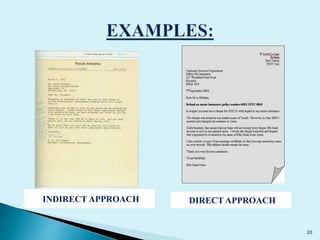
INDIRECT APPROACH DIRECT APPROACH 
20
THE END :P 
21

Bad messages

  • 1.
  • 2.
     Messages whichinclude refusing requests and delivering bad news to a customer or to those within an organization.  Negative messages are usually difficult to write because the audience is being told exactly what they don't want to hear.  Both direct and indirect approach can be used. 2 Syeda Komal Zil e Zehra Zaidi 3:)
  • 3.
     Planning: Thefirst thing you have to remember is that the audience does not want to hear the message. Make sure to consider the purpose and recognize whether it’s going to be a straightforward message or a more complicated one. Keep the audience in mind and gather the required information for them to accept and understand your message. You also have to know what type of medium to use for the message. It is sometimes recommended that bad news be delivered in person rather than in a letter or e-mail.  Writing: When it comes down to actually writing the message, make sure that the message is clear and kind. Use positive words rather than negative words. 3
  • 4.
     Completing: Onceyour message is complete, pay close attention to details and make sure there are no errors. The audience will tend to focus even on the smallest of errors when reading a negative message. Also, be sure to deliver your message promptly, before the audience hears it from somebody else. 4
  • 5.
     Your tonecontributes to your messages effectiveness by helping your readers. It’s not what you say but how you say it that counts.  When establishing tone strive for firmness, fairness, goodwill, respect.  Use “you” attitude. But sometimes “you” attitude is best observed by avoiding the word you.  Use positive phrasing. 5
  • 6.
     Refusal ofa request or favor  Denial of a claim  Denial of credit  Message of constructive criticism 6
  • 7.
     Acceptance: Readerunderstands and accepts bad news. Indirect pattern helps.  Image: Positive Promote good image of yourself and company. Be ethical.  Message clarity: Make message so clear that additional correspondence is not necessary.  Reduce future correspondence: Try to reduce or eliminate future correspondence on the matter . 7
  • 8.
    Presents the badnews first 8 BAD NEWS REASONS POSITIVE CLOSING
  • 9.
     The badnews will be considered insignificant or your reader is already expecting it.  The reader may skip or ignore the bad news.  You want to emphasize the bad news. For example, you have already said "no" several times, and your reader keeps asking for the same thing.  Your relationship with your reader is very close. 9
  • 10.
     The readerprefers a direct style and will see the indirect approach as a waste of time, insincere, or condescending. If the reader has already corresponded with you using the direct style, you're safe also using the direct style.  Your relationship with your reader is strained or suspicious. With the direct style, a suspicious reader won't be likely to feel he or she is being given the "runaround".  Most commonly used in situations where the bad news is being presented orally. 10
  • 11.
    Says something positivefirst and then presents the bad news 11 (BODY) BAD NEWS POSITIVE CLOSING
  • 12.
     When somepreparation will help your audience accept your bad news. Beginning a bad news message with a blunt “no” could well prevent people who prefer an explanation first from reading or listening to your reasons. 12
  • 13.
     A neutralbut meaningful statement that does not mention the bad news.  Use a buffer that is neutral , relevant , not misleading, assertive.  Avoid giving the impression that good news will follow.  Best news, compliment, appreciation statement, relevant point you both agree on, objective facts, show understanding, carefully worded apology. 13
  • 14.
     Praise: Findan attribute or an achievement to compliment.  Appreciation: Express sincere thanks for receiving something.  Agreement: Find a point on which you and the reader share similar views.  Understanding: Demonstrate the you understand the reader’s goals and needs.  Cooperation: Convey your willingness to help in any way you realistically can.  Good News: Start with the part of your message that is favorable. 14
  • 15.
     Resale: Favorablydiscuss the product or company related to the subject of the letter.  Fairness: Assure the reader that you have closely examined and carefully considered the problem, or mention an appropriate action that has already been taken. 15
  • 16.
     Explain thecauses of the bad news before disclosing it.  If possible, show how your decision benefits the receiver or others. Look for reader benefits. Show empathy and fairness  Avoid blaming the customer or hiding behind company policy. 16
  • 17.
     Explain whatcaused the decision necessitating the bad news.  Use objective, nonjudgmental, and nondiscriminatory language.  Show that the matter was treated seriously and fairly.  Well-written reasons are detailed, tactful, individualized, unapologetic, positive. But sometimes detailed reasons shouldn’t be provided. 17
  • 18.
     Reveal thebad news without emphasizing on it. Provide an alternative and compromise, if possible.  Use a conditional statement. (e.g. “When you have more managerial experience, you are welcome to reapply)  Accent the positive: describe what you can do instead of what you can’t do.  Position the bad news strategically within the letter. But don’t let bad news get lost by overemphasizing the positive.  Try not to let the bad news start or end the paragraph. 18
  • 19.
     Freebies –coupons, samples, gifts, etc.  Reference to promotions, if applicable.  Avoid endings that sound canned, insincere, inappropriate, or self-serving. Avoid phrases “ if we can be of any help, please contact us”.  Limit future correspondence. Encourage additional communication only if you are willing to.  Be optimistic about the future. Avoid phrases “ should you have further problems, please let us know” 19
  • 20.
  • 21.