Liu Nanobionics Lab

Biomaterials
Tissue Engineering
Nanotechnology
Biomaterials




Biomaterials encompasses aspects of
medicine, biology, chemistry,
engineering and materials science.
Biomaterials are : “Non-viable
materials used in a medical devices
intended to interact with biological
systems” [D.F. Williams, 1987]
Human Tissue Damage



Disease (e.g cancer, infection, degenerative
diseases).
Trauma (e.g accidental, surgery).
Congenital abnormalities (e.g birth defects).



Current clinical treatment based on:





Grafts and Transplants

Artificial Biomaterials
Tissue loss as a result of injury or
disease, provides reduced quality
of life for many at significant
socioeconomic cost.




Thus a shift is needed from tissue
replacement to tissue regeneration by
stimulation the body’s natural
regenerative mechanisms.
Biomaterials: Examples













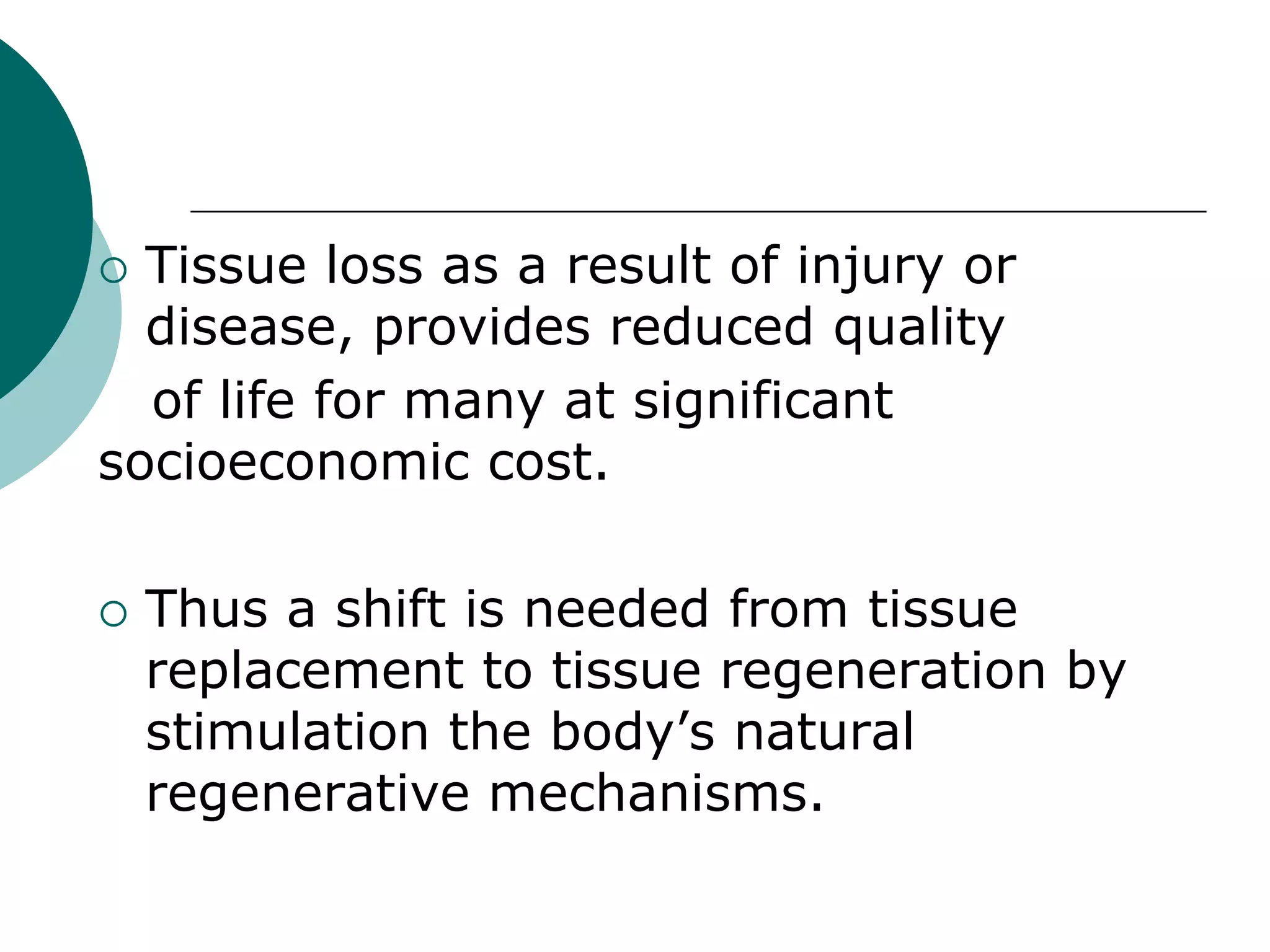
Joint replacements
Bone plates
Bone cement
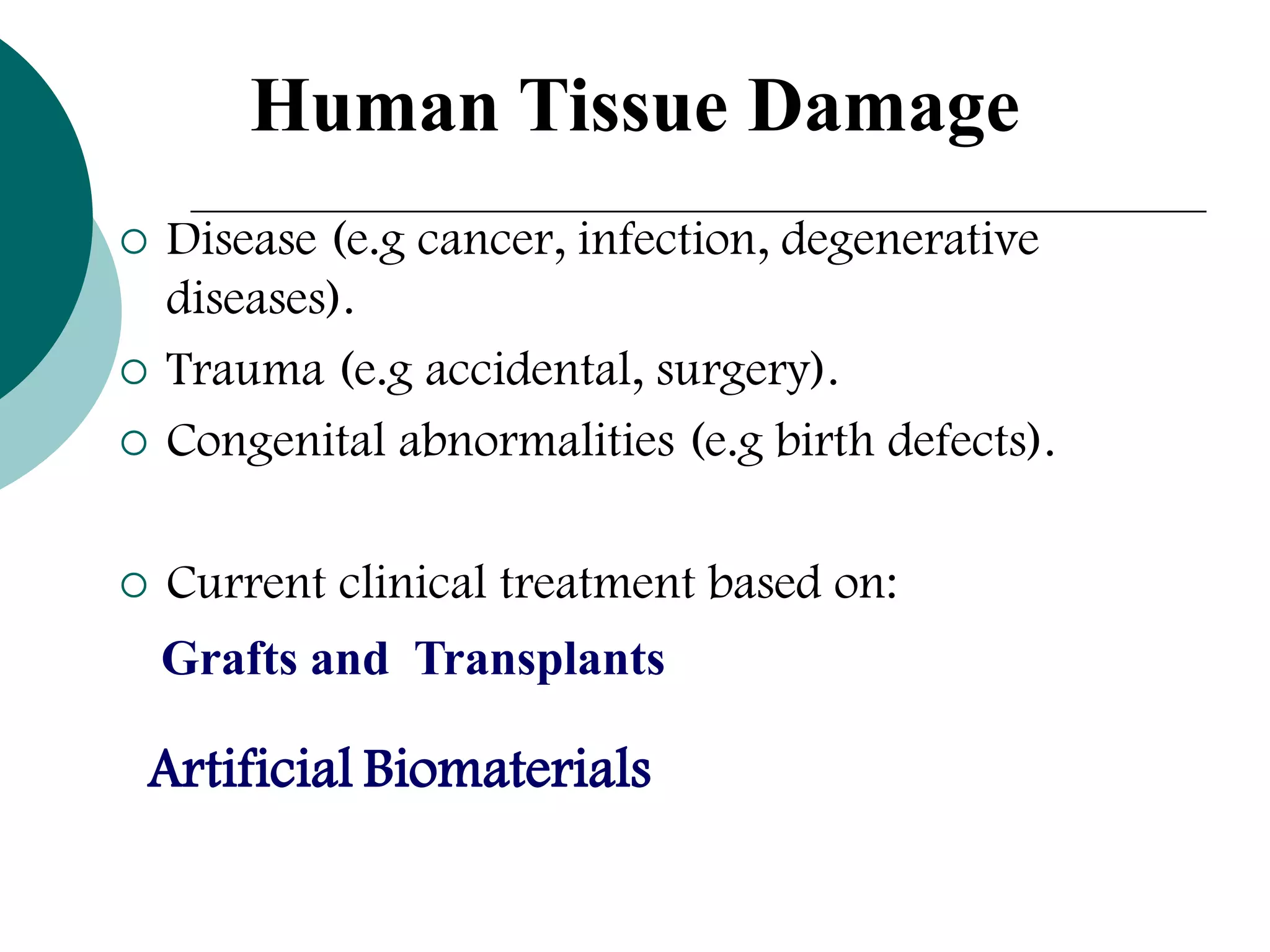
Hip Joint
Artificial ligaments
and tendons
Dental implants for
tooth fixation
Blood vessel
prostheses
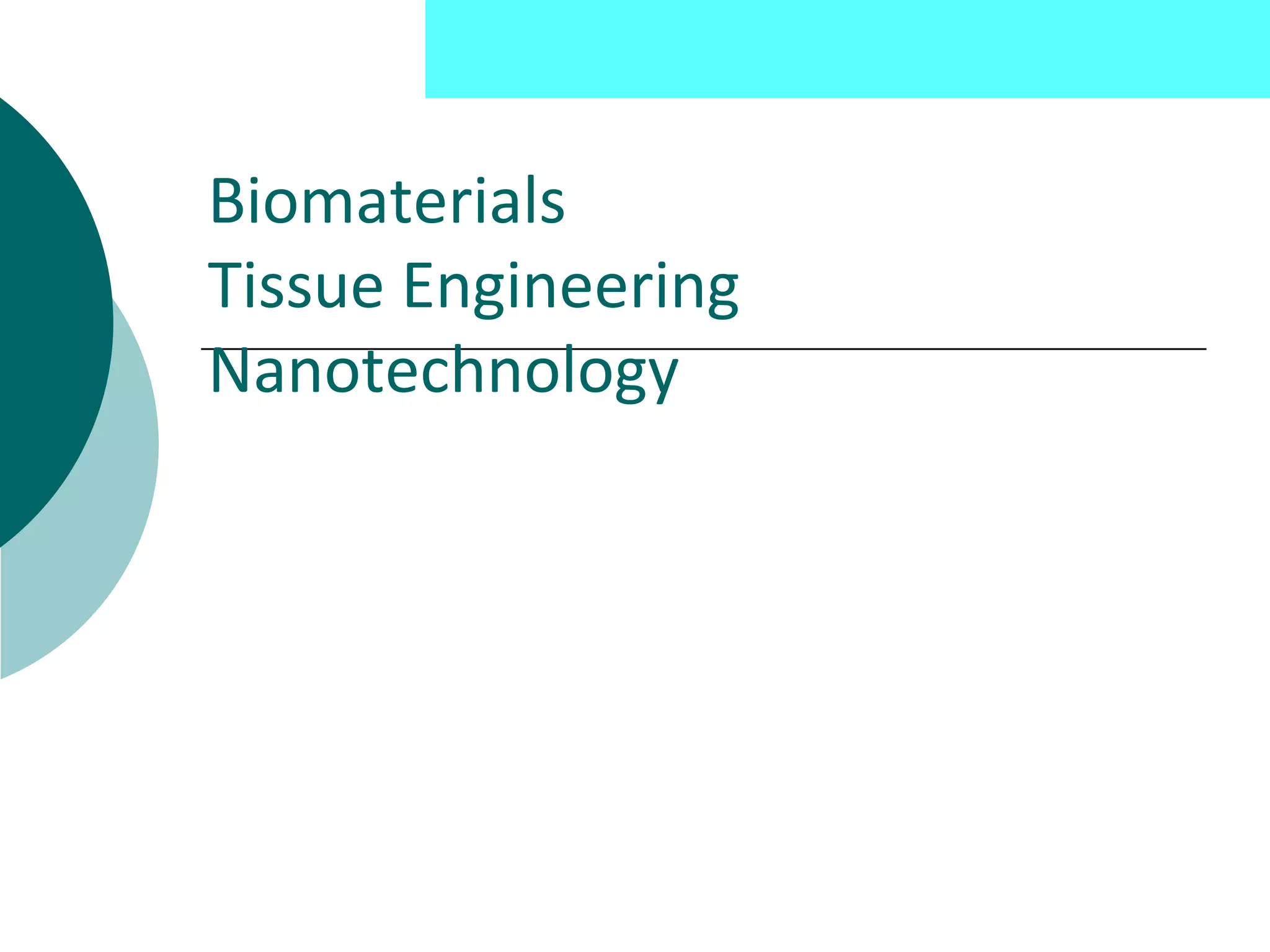
Heart valves
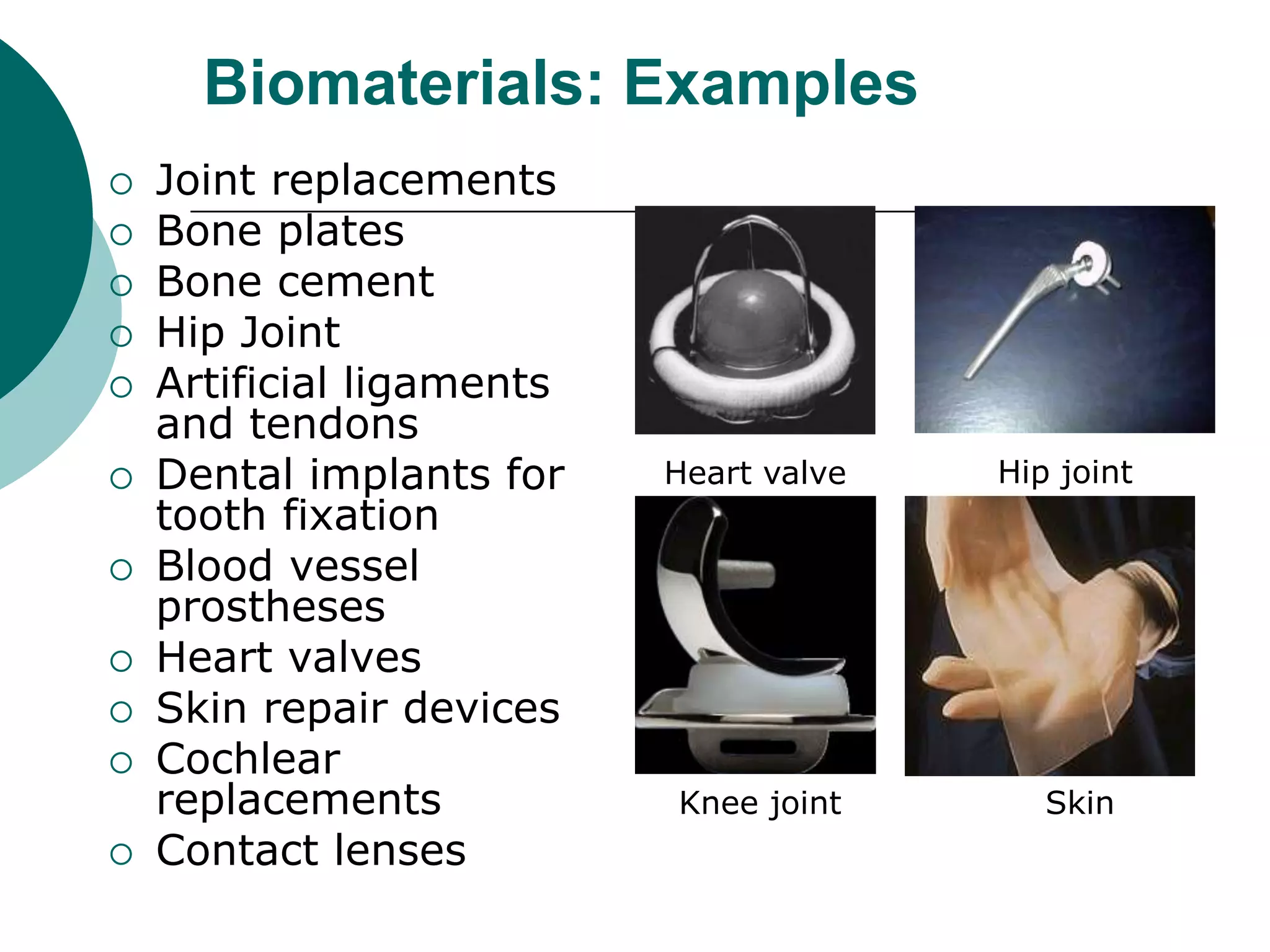
Skin repair devices
Cochlear
replacements
Contact lenses

Heart valve

Knee joint

Hip joint

Skin
Biomaterials




Prostheses have significantly
improved the quality of life ( Joint
replacement, Cartilage meniscal
repair, Large diameter blood vessels,
dental)
However, incompatibility due to
elastic mismatch leads to
biomaterials failure.
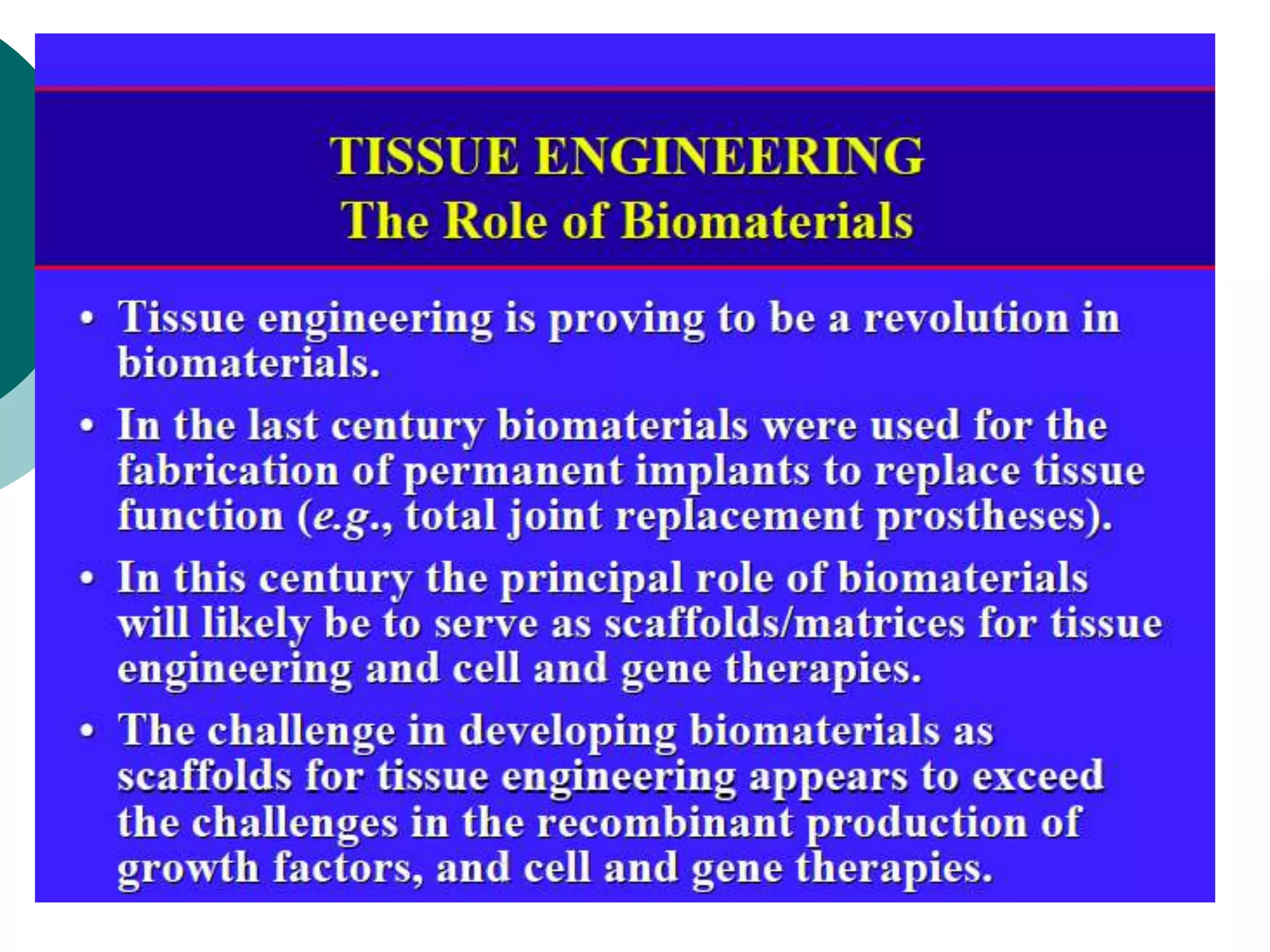
Tissue Engineering


National Science Foundation first defined
tissue engineering in 1987 as “ an
interdisciplinary field that applies the
principles of engineering and the life
sciences towards the development of
biological substitutes that restore,
maintain or improve tissue function”
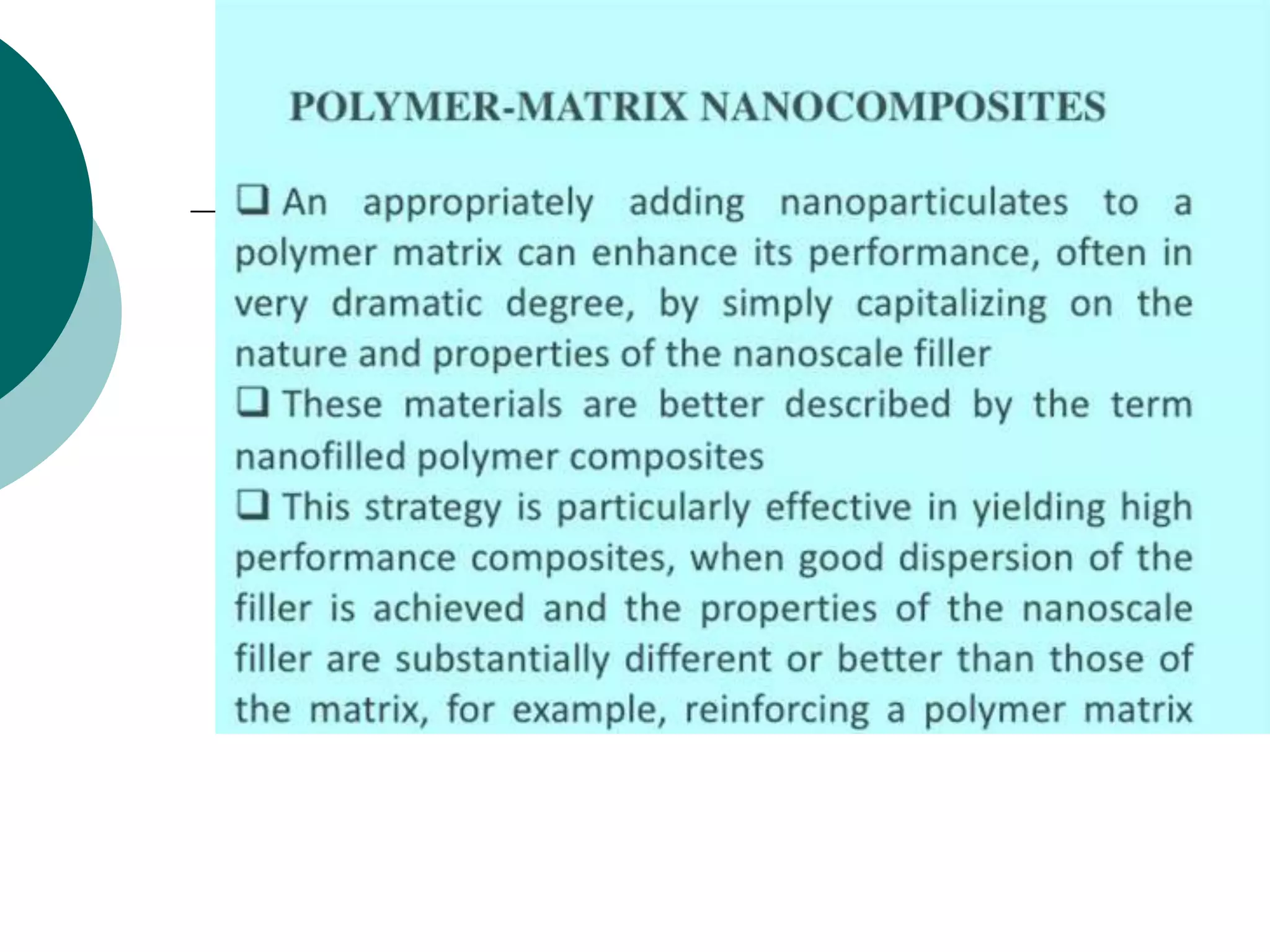
Tissue engineering


Potential advantages:
 unlimited

supply
 no rejection issues
 cost-effective
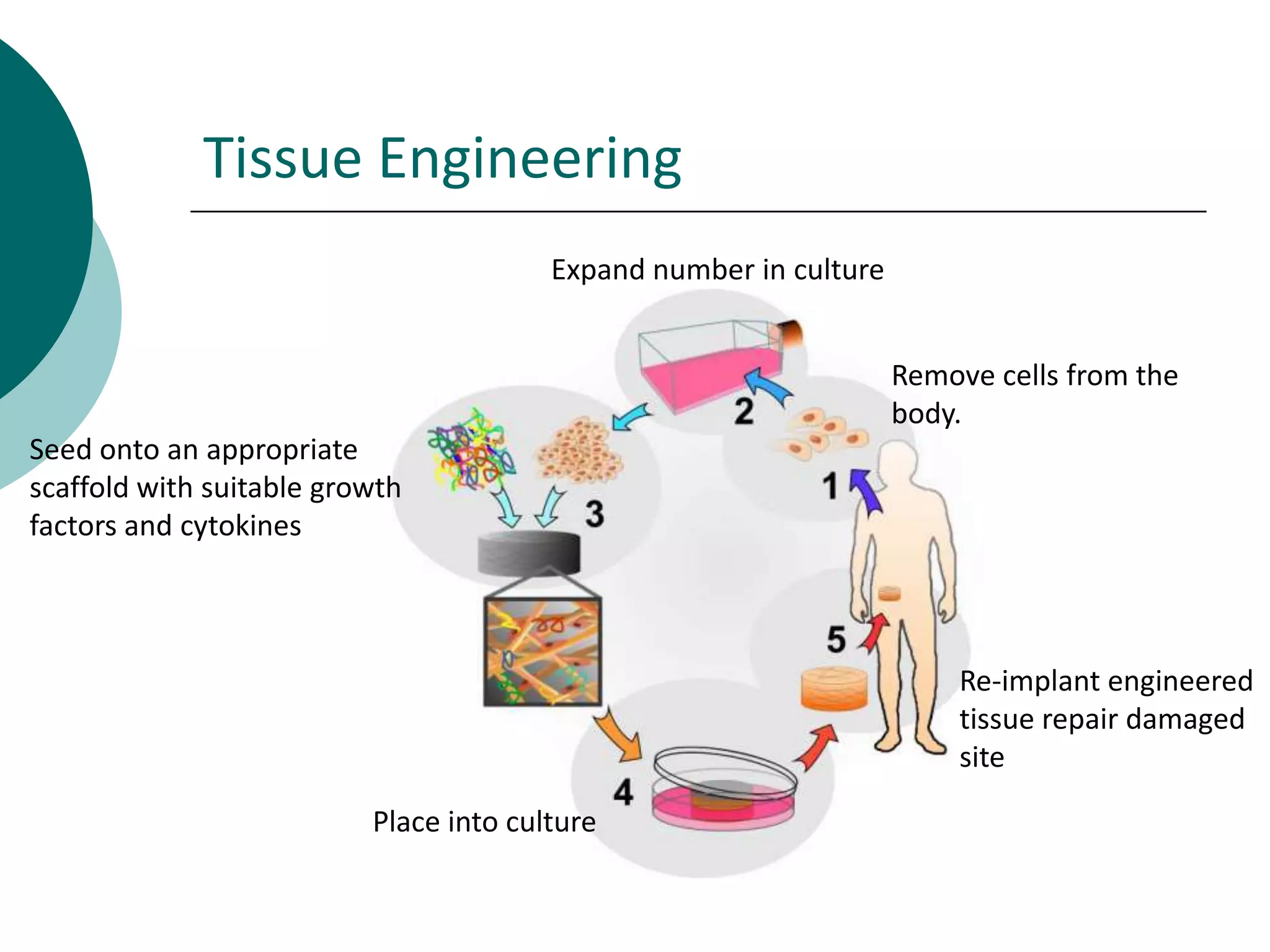
Tissue Engineering
Expand number in culture
Remove cells from the
body.
Seed onto an appropriate
scaffold with suitable growth
factors and cytokines

Re-implant engineered
tissue repair damaged
site
Place into culture
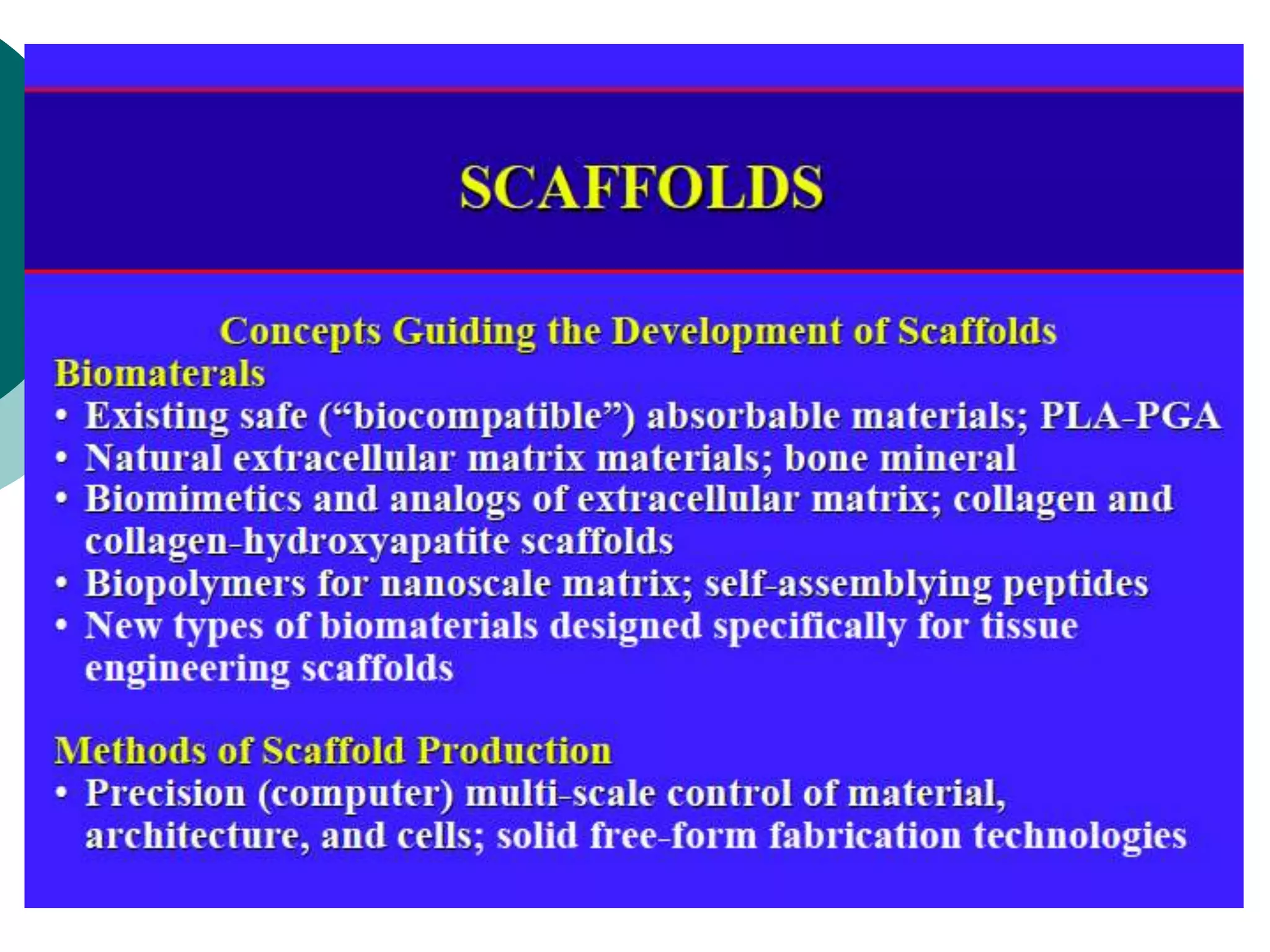
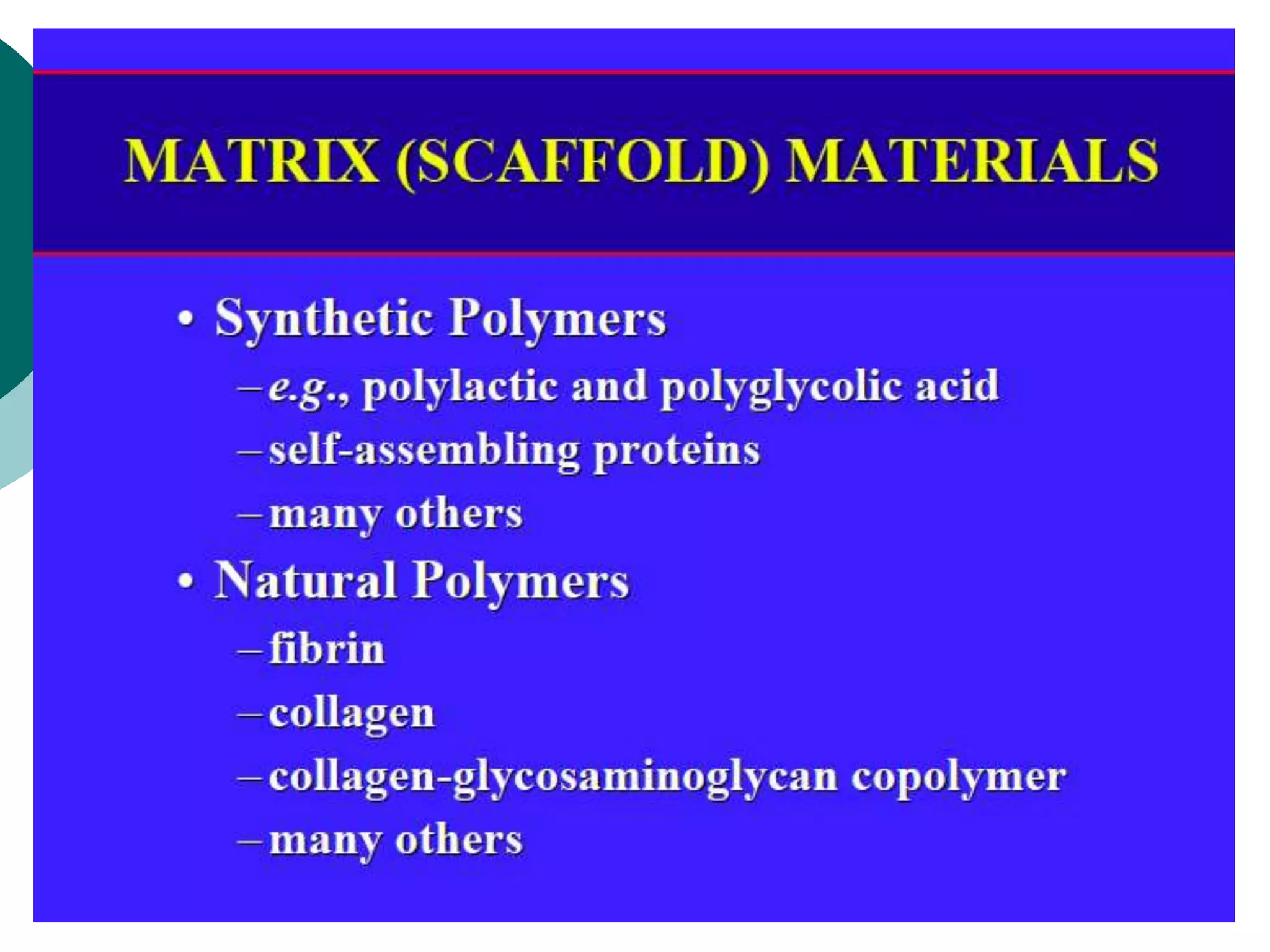
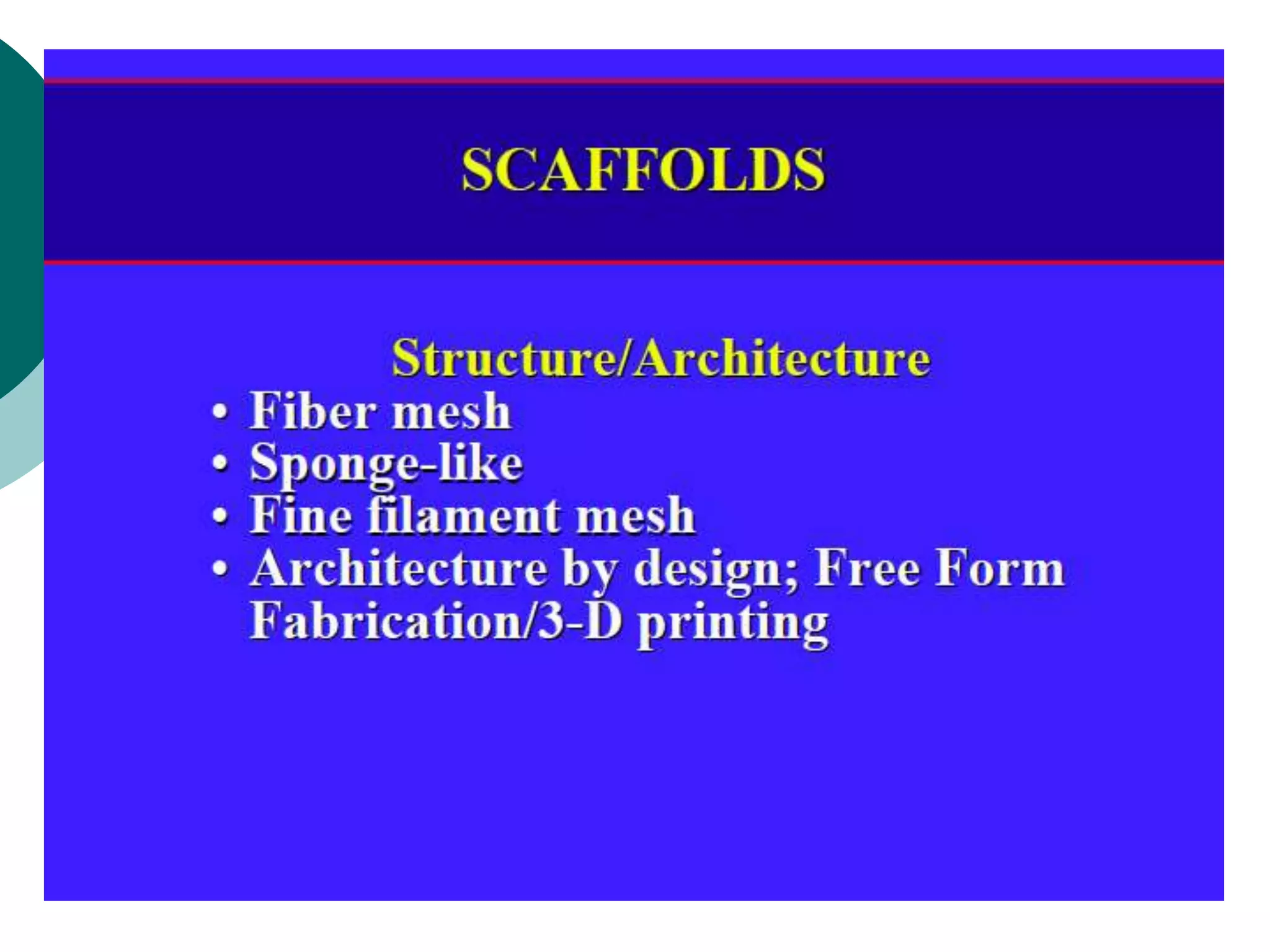
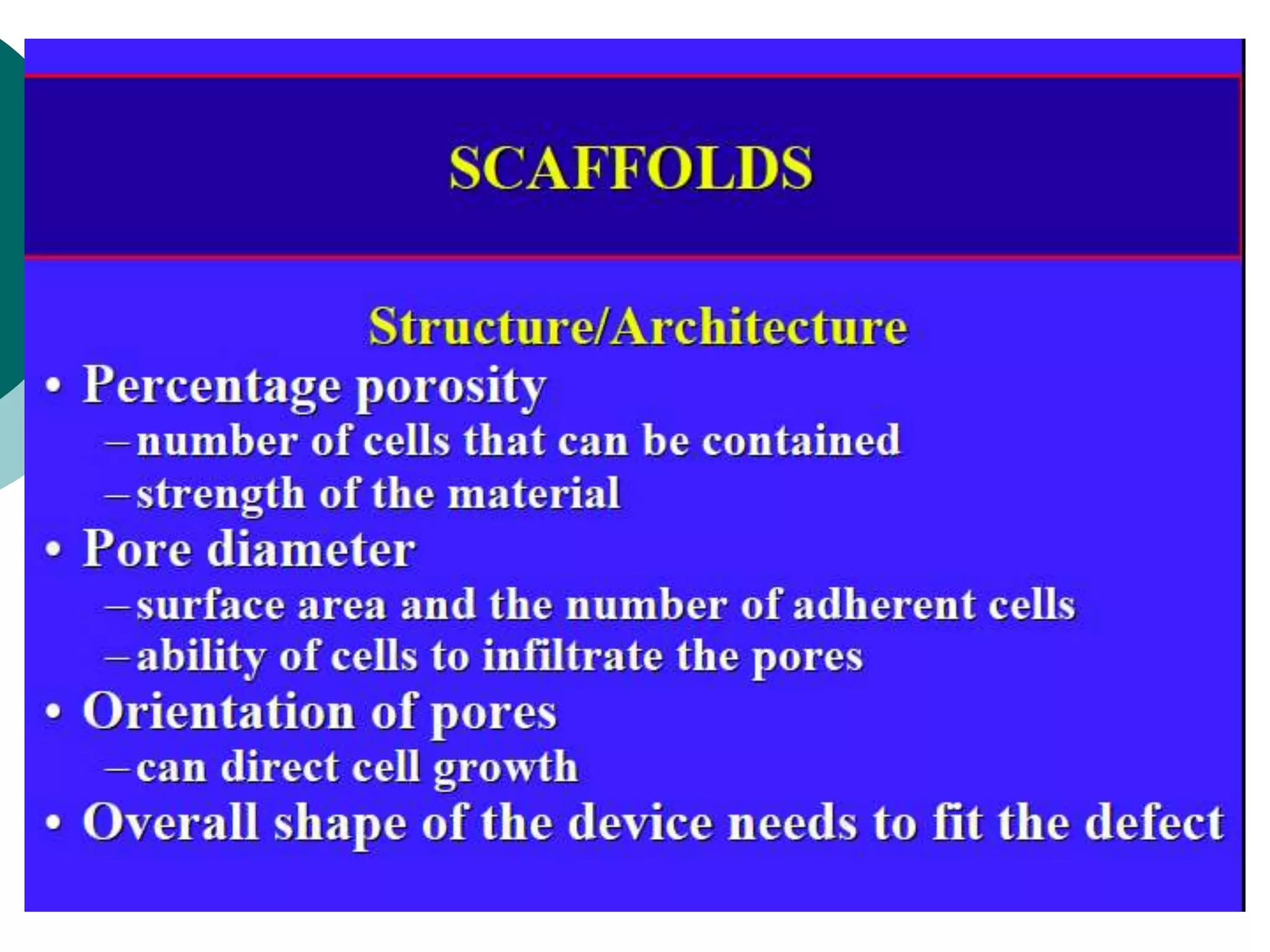
 SCAFFOLDS
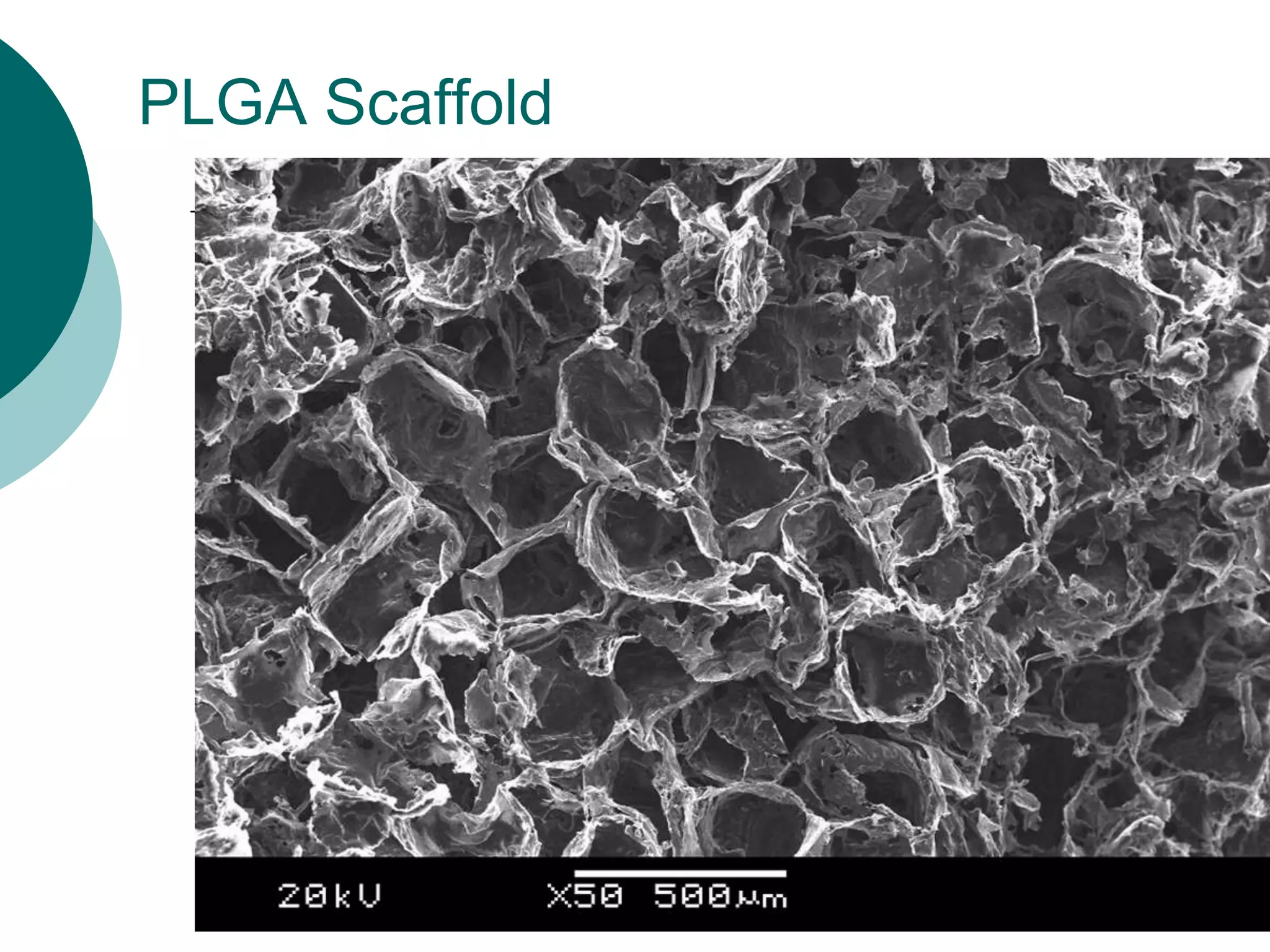
PLGA Scaffold
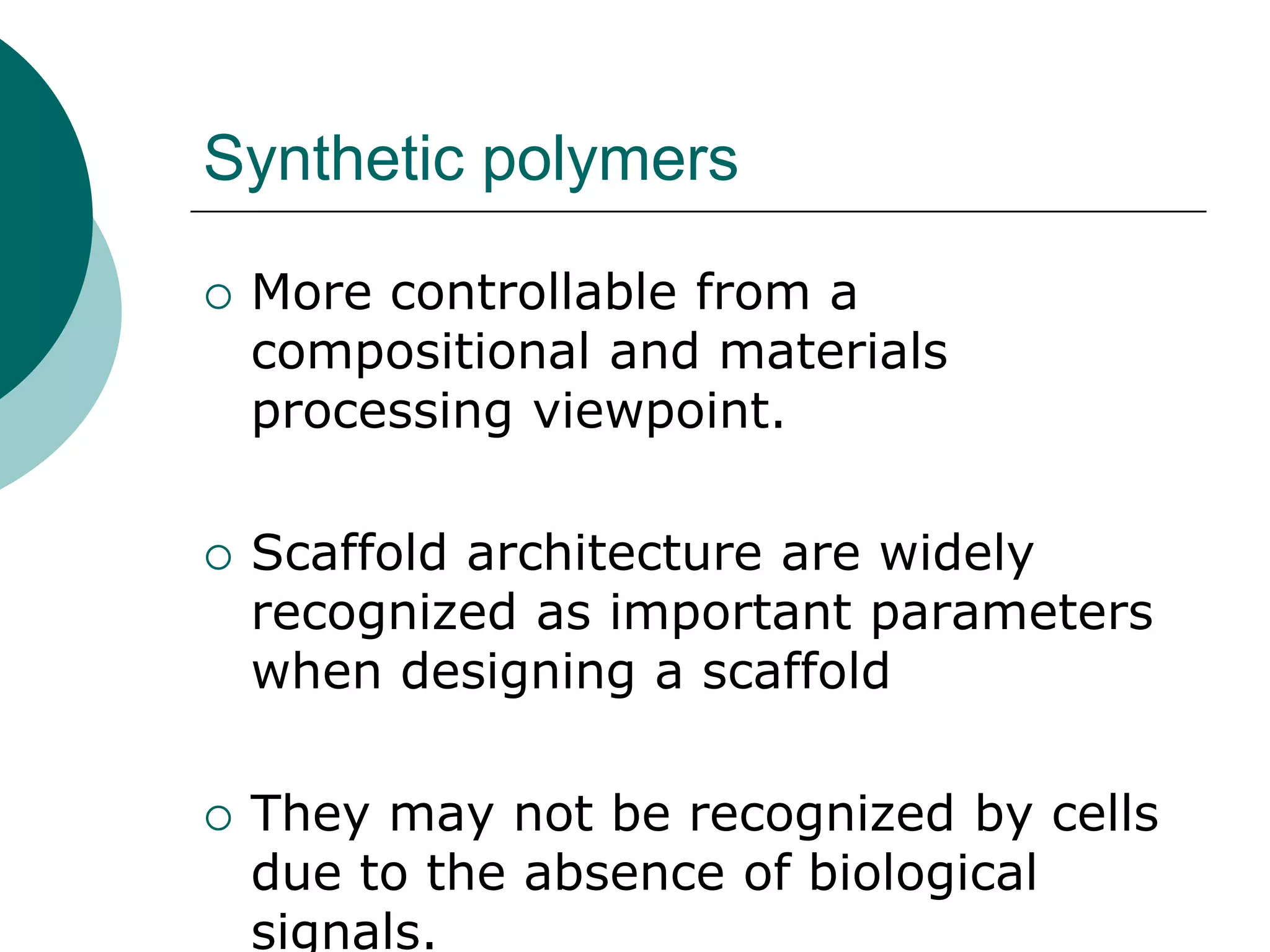
Synthetic polymers






More controllable from a
compositional and materials
processing viewpoint.
Scaffold architecture are widely
recognized as important parameters
when designing a scaffold

They may not be recognized by cells
due to the absence of biological
signals.
Natural polymers






Natural materials are readily
recognized by cells.

Interactions between cells and
biological materials are catalysts to
many critical functions in tissues

These materials have poor
mechanical properties.
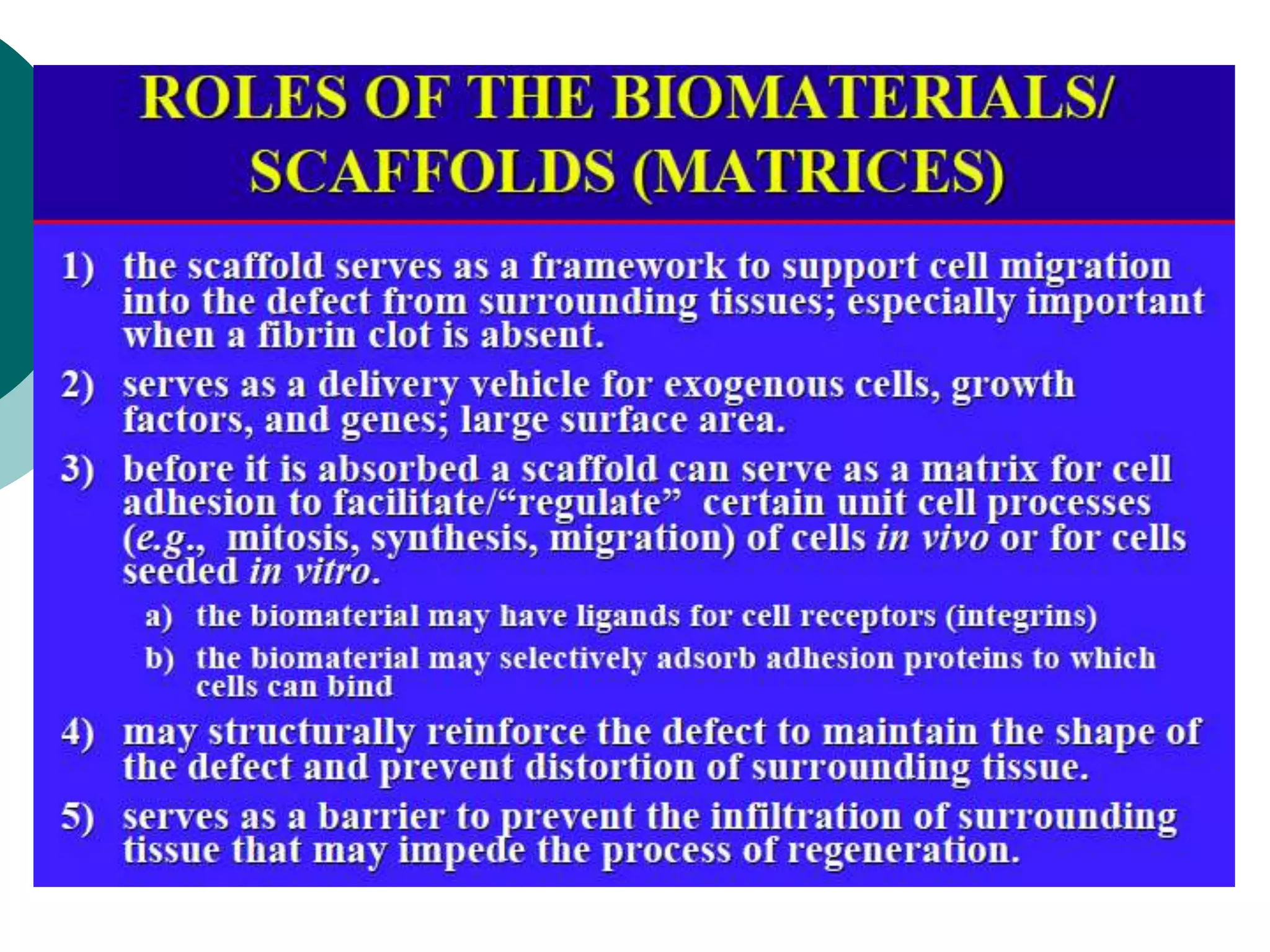
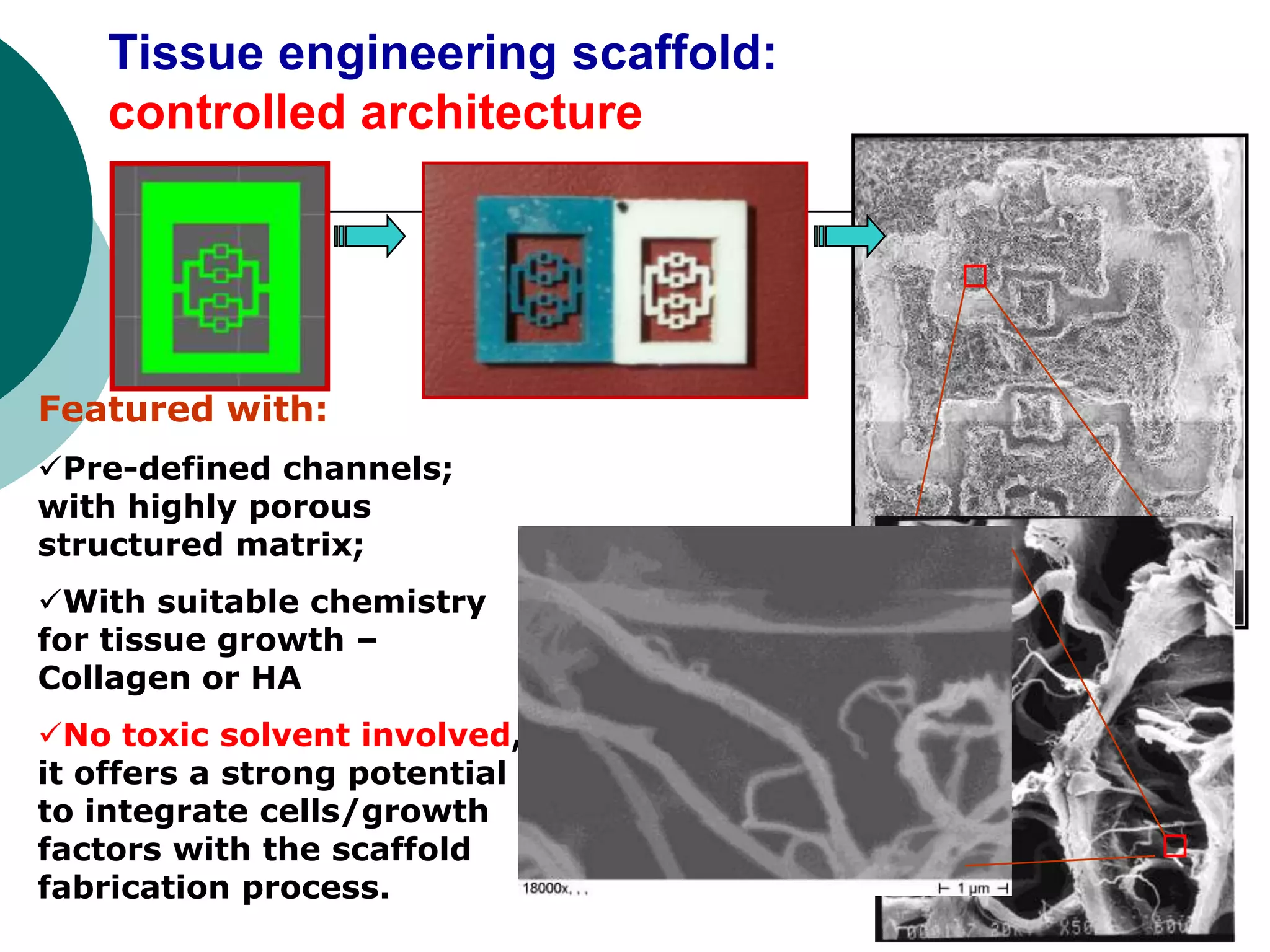
Tissue engineering scaffold:
controlled architecture

Featured with:
Pre-defined channels;
with highly porous
structured matrix;
With suitable chemistry
for tissue growth –
Collagen or HA
No toxic solvent involved,
it offers a strong potential
to integrate cells/growth
factors with the scaffold
fabrication process.
Architecture of Hard Tissue








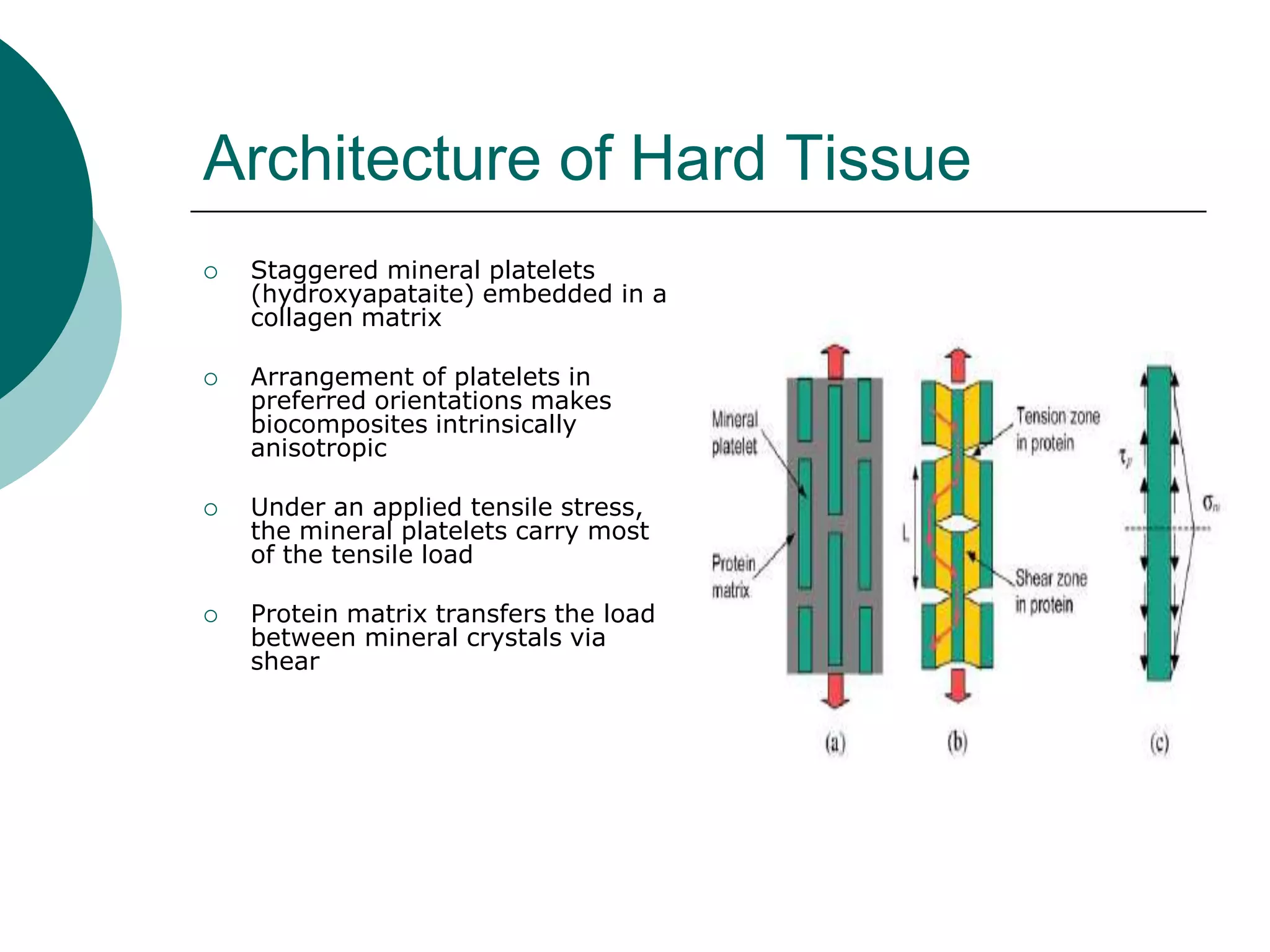
Staggered mineral platelets
(hydroxyapataite) embedded in a
collagen matrix

Arrangement of platelets in
preferred orientations makes
biocomposites intrinsically
anisotropic
Under an applied tensile stress,
the mineral platelets carry most
of the tensile load
Protein matrix transfers the load
between mineral crystals via
shear
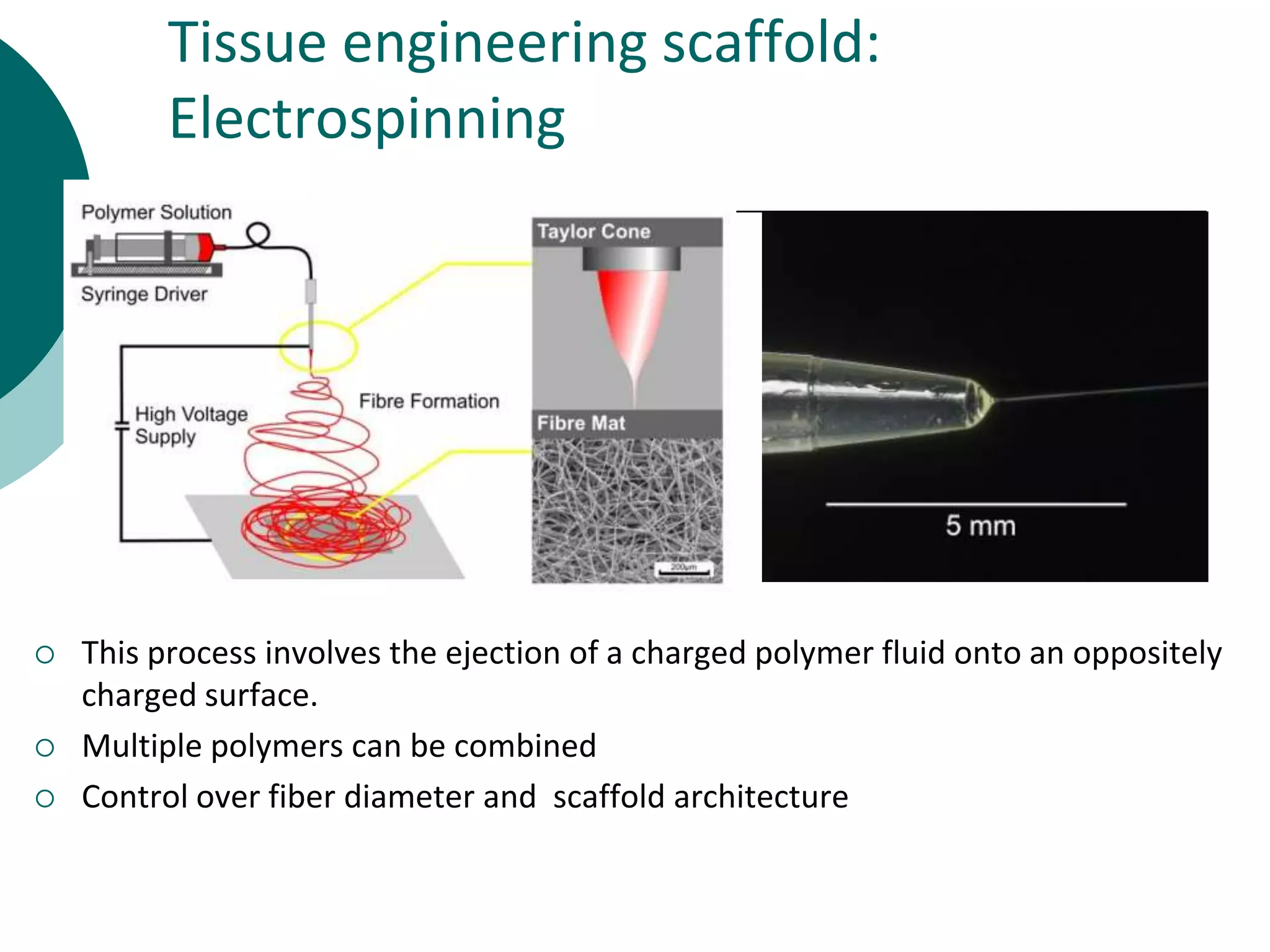
Tissue engineering scaffold:
Electrospinning






This process involves the ejection of a charged polymer fluid onto an oppositely
charged surface.
Multiple polymers can be combined
Control over fiber diameter and scaffold architecture
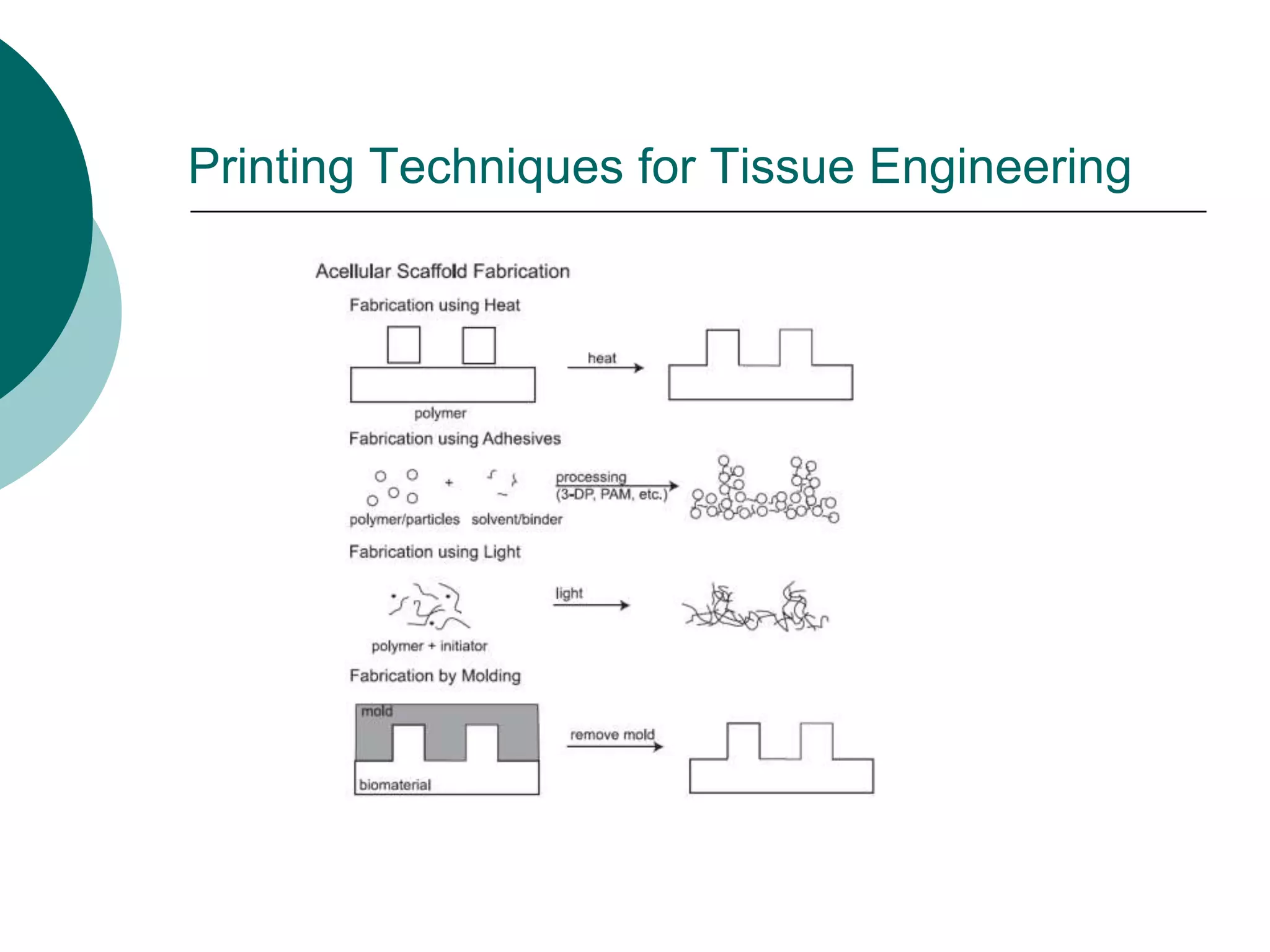
Printing Techniques for Tissue Engineering
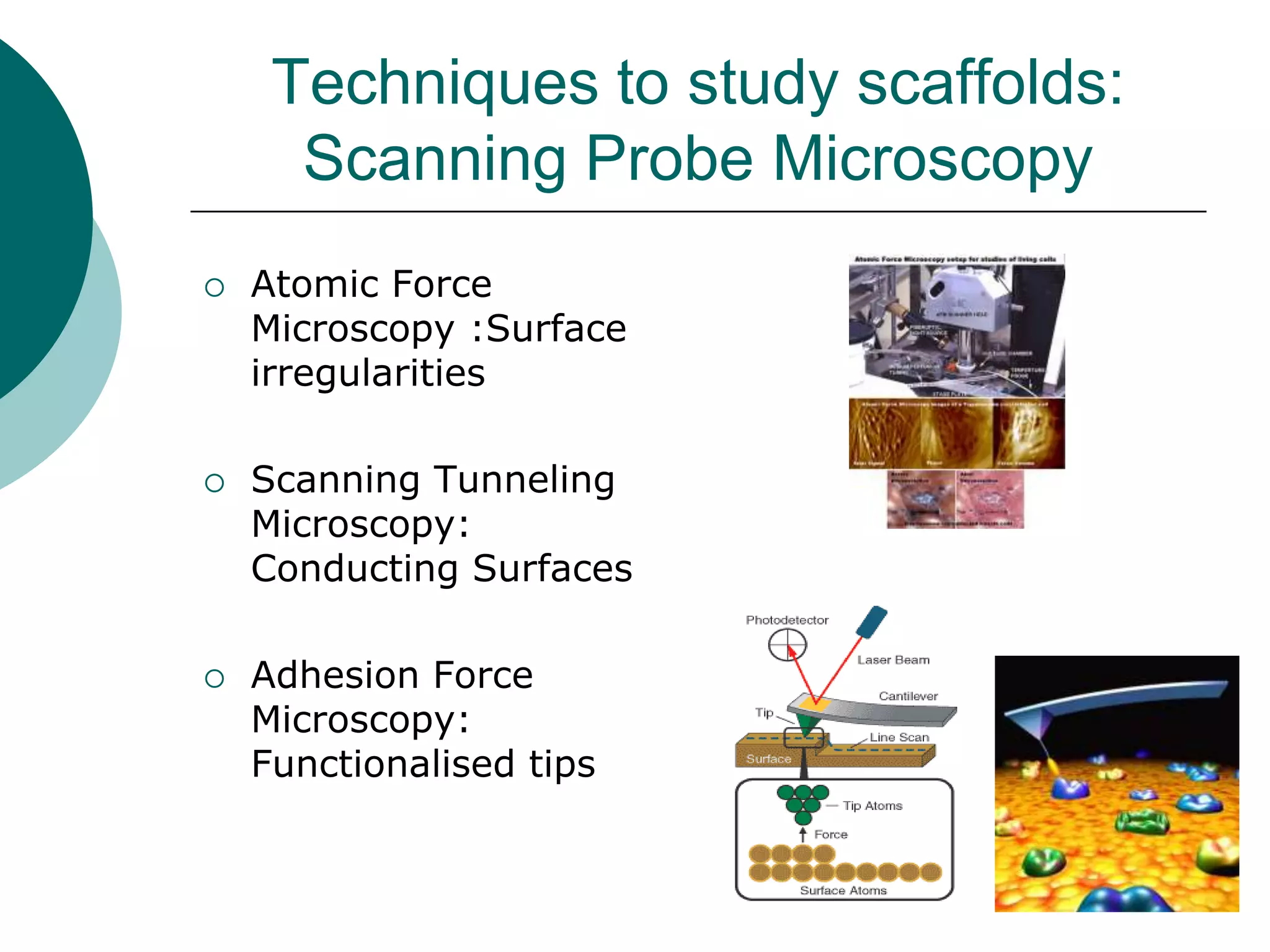
Techniques to study scaffolds:
Scanning Probe Microscopy






Atomic Force
Microscopy :Surface
irregularities
Scanning Tunneling
Microscopy:
Conducting Surfaces
Adhesion Force
Microscopy:
Functionalised tips
Surface Modification of Biomaterials
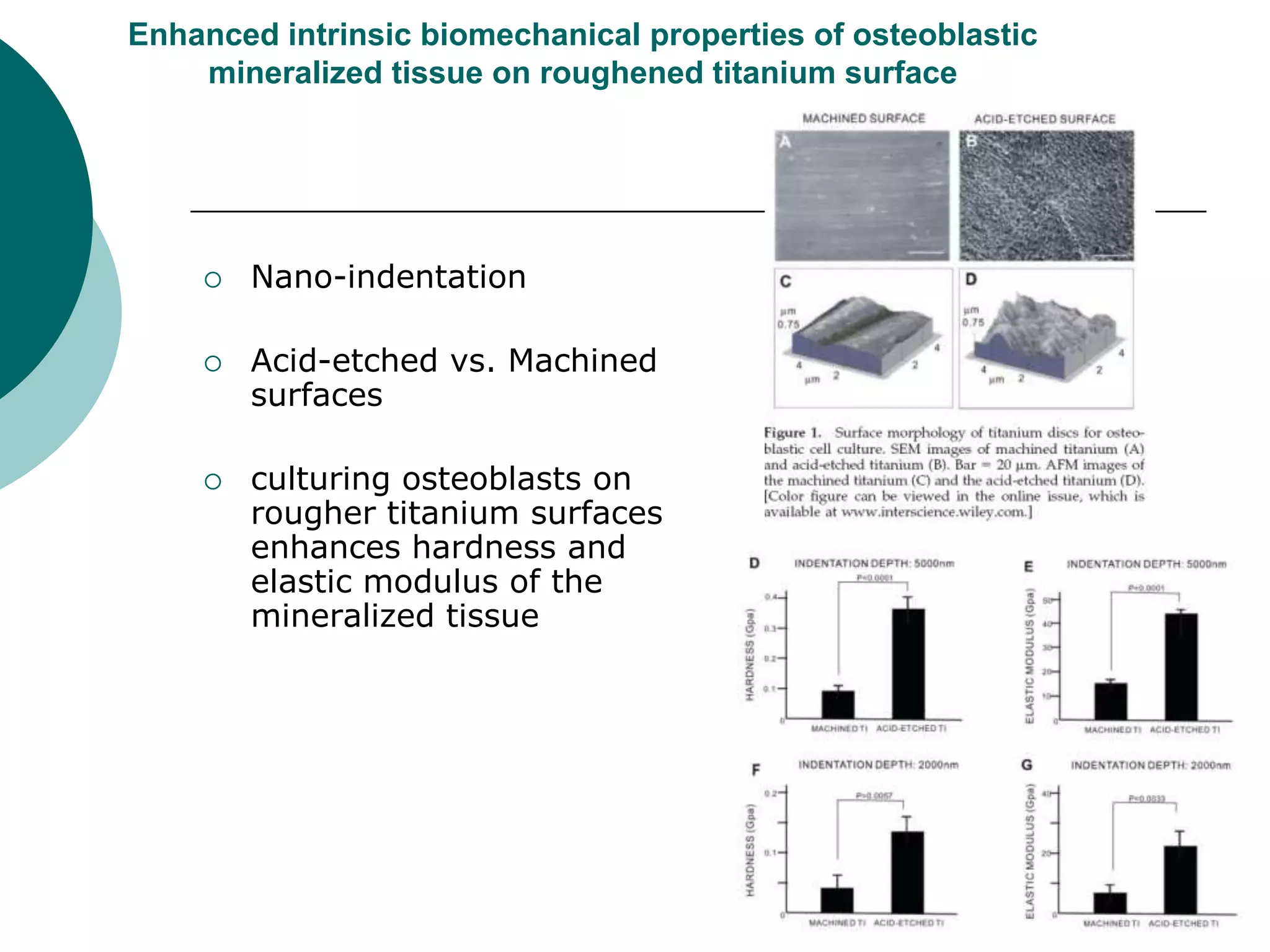
Enhanced intrinsic biomechanical properties of osteoblastic
mineralized tissue on roughened titanium surface







Nano-indentation

Acid-etched vs. Machined
surfaces
culturing osteoblasts on
rougher titanium surfaces
enhances hardness and
elastic modulus of the
mineralized tissue
Protecting Bionic Implants
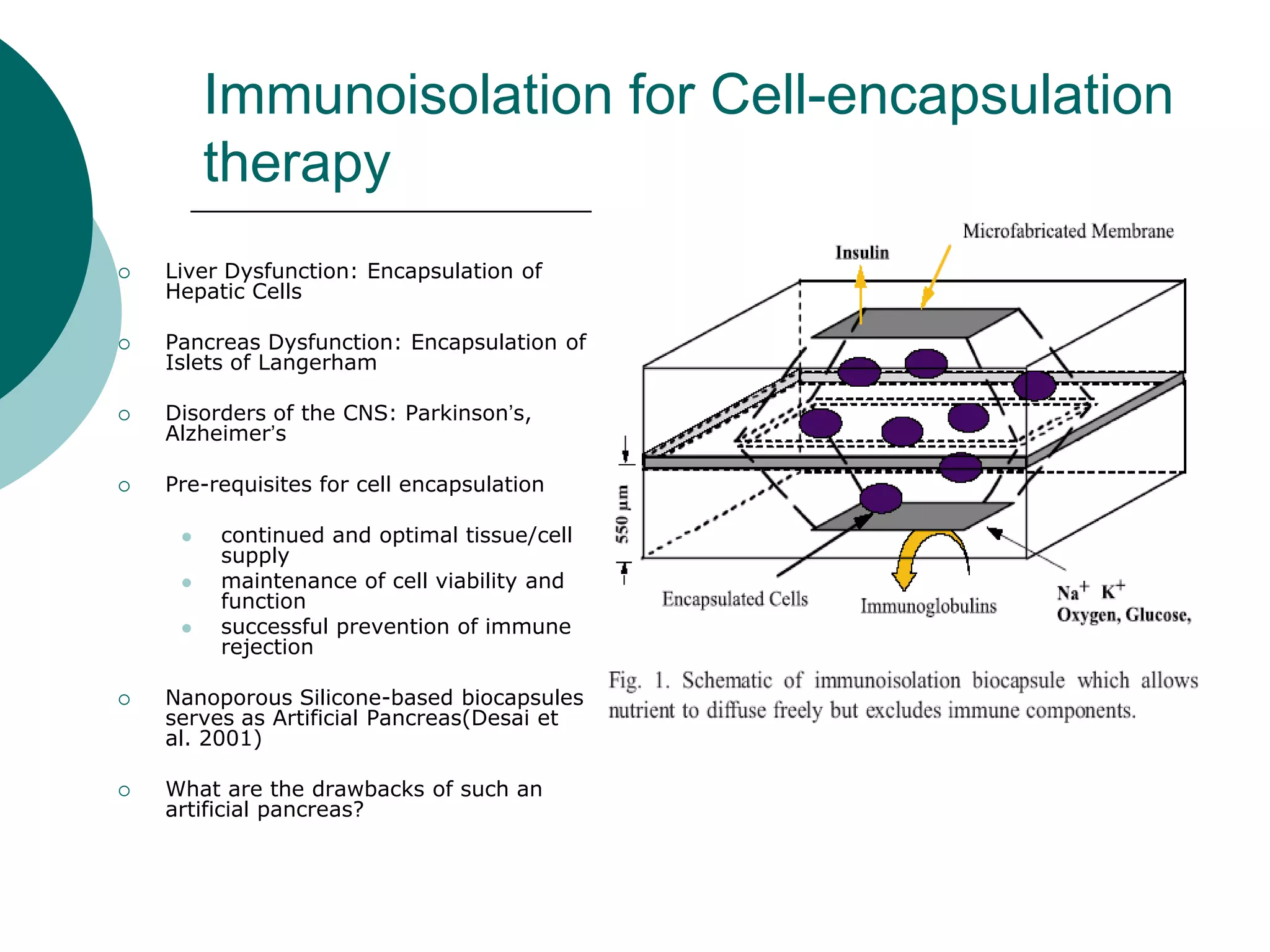
Immunoisolation for Cell-encapsulation
therapy


Liver Dysfunction: Encapsulation of
Hepatic Cells



Pancreas Dysfunction: Encapsulation of
Islets of Langerham



Disorders of the CNS: Parkinson’s,
Alzheimer’s



Pre-requisites for cell encapsulation








continued and optimal tissue/cell
supply
maintenance of cell viability and
function
successful prevention of immune
rejection

Nanoporous Silicone-based biocapsules
serves as Artificial Pancreas(Desai et
al. 2001)
What are the drawbacks of such an
artificial pancreas?
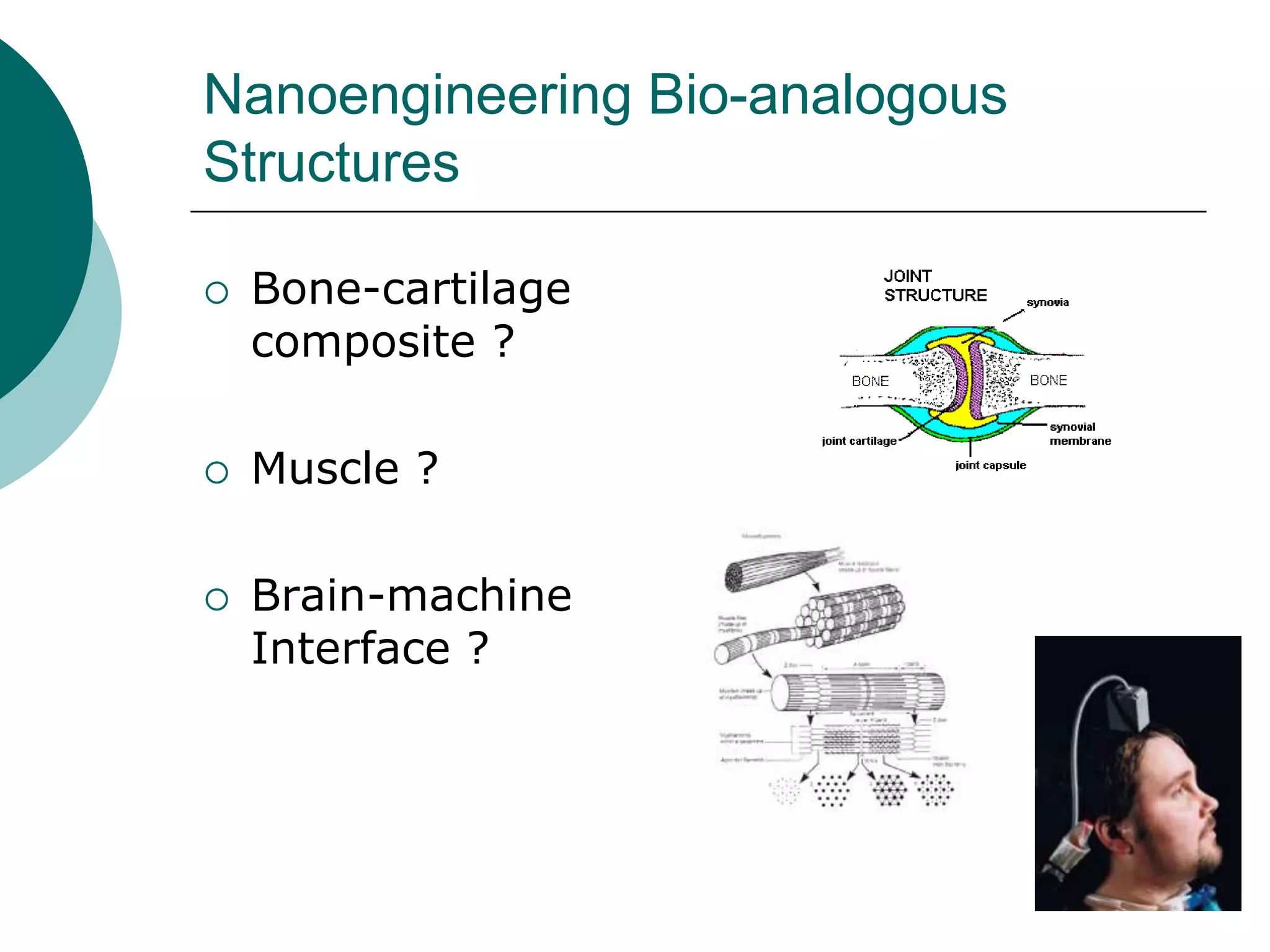
Nanoengineering Bio-analogous
Structures






Bone-cartilage
composite ?
Muscle ?

Brain-machine
Interface ?
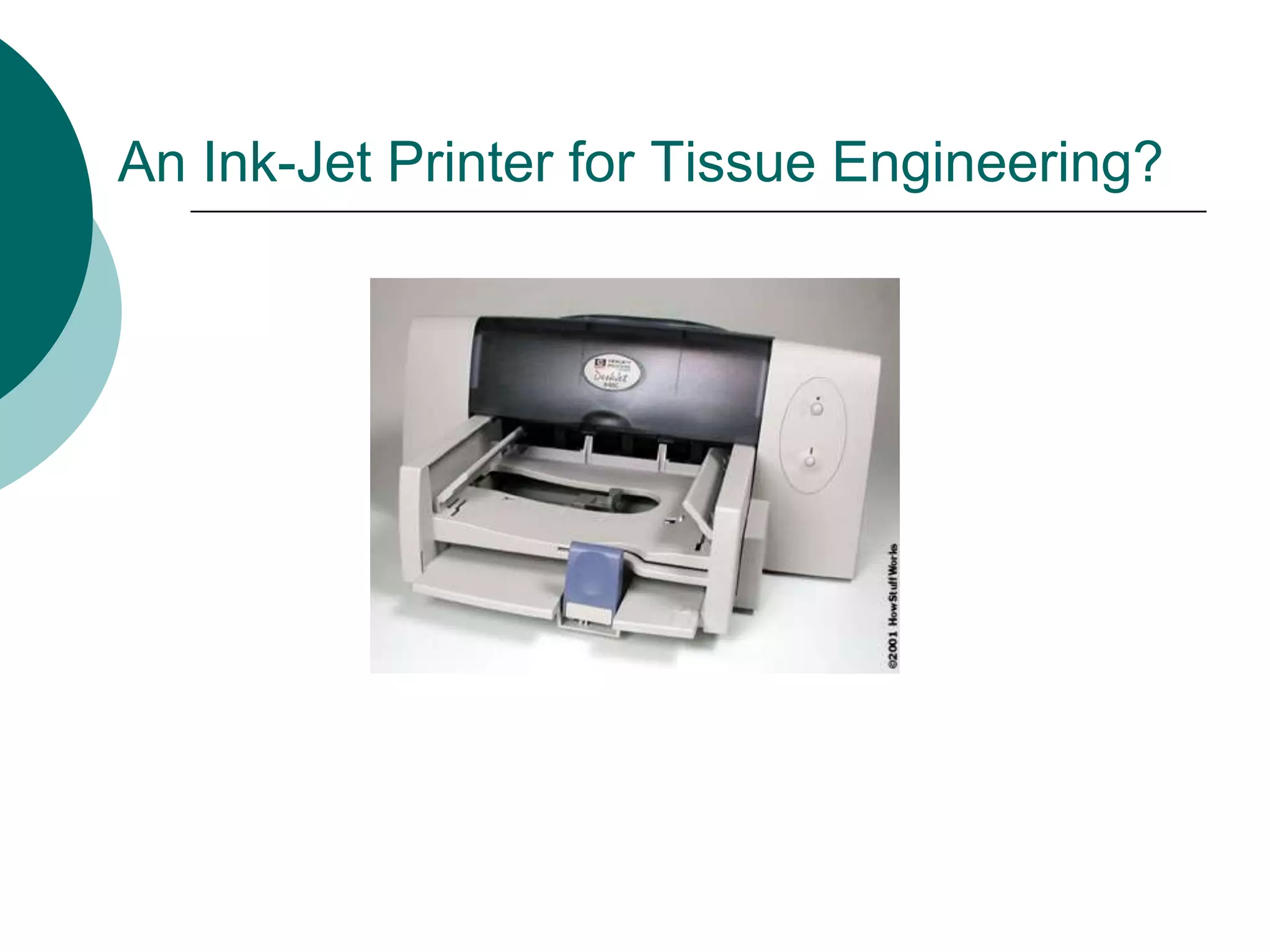
An Ink-Jet Printer for Tissue Engineering?

13 biomaterials

  • 1.
    Liu Nanobionics Lab Biomaterials TissueEngineering Nanotechnology
  • 2.
    Biomaterials   Biomaterials encompasses aspectsof medicine, biology, chemistry, engineering and materials science. Biomaterials are : “Non-viable materials used in a medical devices intended to interact with biological systems” [D.F. Williams, 1987]
  • 3.
    Human Tissue Damage  Disease(e.g cancer, infection, degenerative diseases). Trauma (e.g accidental, surgery). Congenital abnormalities (e.g birth defects).  Current clinical treatment based on:   Grafts and Transplants Artificial Biomaterials
  • 4.
    Tissue loss asa result of injury or disease, provides reduced quality of life for many at significant socioeconomic cost.   Thus a shift is needed from tissue replacement to tissue regeneration by stimulation the body’s natural regenerative mechanisms.
  • 5.
    Biomaterials: Examples            Joint replacements Boneplates Bone cement Hip Joint Artificial ligaments and tendons Dental implants for tooth fixation Blood vessel prostheses Heart valves Skin repair devices Cochlear replacements Contact lenses Heart valve Knee joint Hip joint Skin
  • 6.
    Biomaterials   Prostheses have significantly improvedthe quality of life ( Joint replacement, Cartilage meniscal repair, Large diameter blood vessels, dental) However, incompatibility due to elastic mismatch leads to biomaterials failure.
  • 7.
    Tissue Engineering  National ScienceFoundation first defined tissue engineering in 1987 as “ an interdisciplinary field that applies the principles of engineering and the life sciences towards the development of biological substitutes that restore, maintain or improve tissue function”
  • 8.
    Tissue engineering  Potential advantages: unlimited supply  no rejection issues  cost-effective
  • 9.
    Tissue Engineering Expand numberin culture Remove cells from the body. Seed onto an appropriate scaffold with suitable growth factors and cytokines Re-implant engineered tissue repair damaged site Place into culture
  • 11.
  • 17.
  • 18.
    Synthetic polymers    More controllablefrom a compositional and materials processing viewpoint. Scaffold architecture are widely recognized as important parameters when designing a scaffold They may not be recognized by cells due to the absence of biological signals.
  • 19.
    Natural polymers    Natural materialsare readily recognized by cells. Interactions between cells and biological materials are catalysts to many critical functions in tissues These materials have poor mechanical properties.
  • 21.
    Tissue engineering scaffold: controlledarchitecture Featured with: Pre-defined channels; with highly porous structured matrix; With suitable chemistry for tissue growth – Collagen or HA No toxic solvent involved, it offers a strong potential to integrate cells/growth factors with the scaffold fabrication process.
  • 22.
    Architecture of HardTissue     Staggered mineral platelets (hydroxyapataite) embedded in a collagen matrix Arrangement of platelets in preferred orientations makes biocomposites intrinsically anisotropic Under an applied tensile stress, the mineral platelets carry most of the tensile load Protein matrix transfers the load between mineral crystals via shear
  • 23.
    Tissue engineering scaffold: Electrospinning    Thisprocess involves the ejection of a charged polymer fluid onto an oppositely charged surface. Multiple polymers can be combined Control over fiber diameter and scaffold architecture
  • 24.
    Printing Techniques forTissue Engineering
  • 25.
    Techniques to studyscaffolds: Scanning Probe Microscopy    Atomic Force Microscopy :Surface irregularities Scanning Tunneling Microscopy: Conducting Surfaces Adhesion Force Microscopy: Functionalised tips
  • 26.
  • 27.
    Enhanced intrinsic biomechanicalproperties of osteoblastic mineralized tissue on roughened titanium surface    Nano-indentation Acid-etched vs. Machined surfaces culturing osteoblasts on rougher titanium surfaces enhances hardness and elastic modulus of the mineralized tissue
  • 28.
  • 29.
    Immunoisolation for Cell-encapsulation therapy  LiverDysfunction: Encapsulation of Hepatic Cells  Pancreas Dysfunction: Encapsulation of Islets of Langerham  Disorders of the CNS: Parkinson’s, Alzheimer’s  Pre-requisites for cell encapsulation      continued and optimal tissue/cell supply maintenance of cell viability and function successful prevention of immune rejection Nanoporous Silicone-based biocapsules serves as Artificial Pancreas(Desai et al. 2001) What are the drawbacks of such an artificial pancreas?
  • 30.
  • 31.
    An Ink-Jet Printerfor Tissue Engineering?