Regents Biology 2009-2010
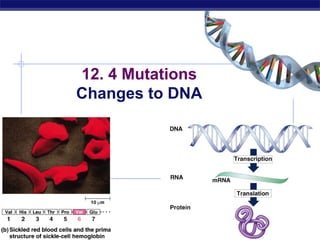
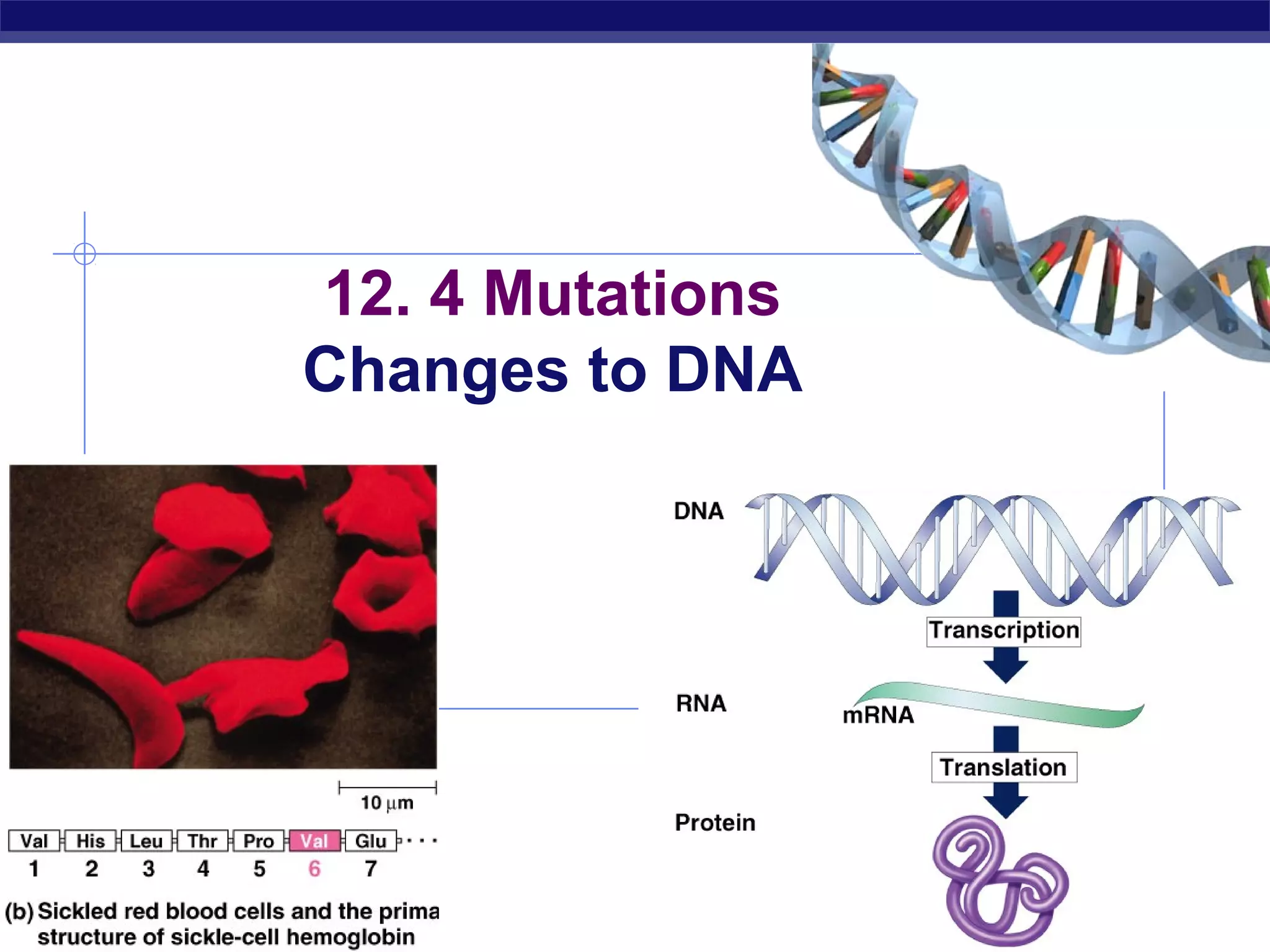
12. 4 Mutations
Changes to DNA
Regents Biology
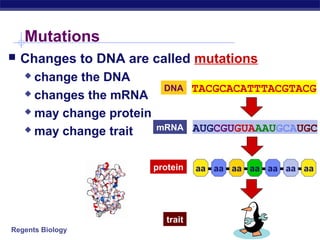
Mutations
 Changes to DNA are called mutations
 change the DNA
 changes the mRNA
 may change protein
 may change trait
DNA TACGCACATTTACGTACG
mRNA AUGCGUGUAAAUGCAUGC
aa aa aa aa aa aa aaprotein
trait
Regents Biology
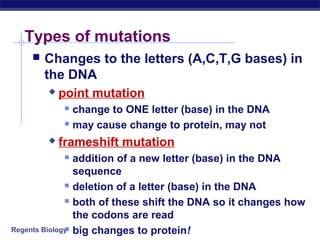
Types of mutations
 Changes to the letters (A,C,T,G bases) in
the DNA
 point mutation
 change to ONE letter (base) in the DNA
 may cause change to protein, may not
 frameshift mutation
 addition of a new letter (base) in the DNA
sequence
 deletion of a letter (base) in the DNA
 both of these shift the DNA so it changes how
the codons are read
 big changes to protein!
Regents Biology
Point Mutations
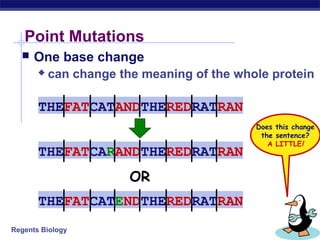
 One base change
 can change the meaning of the whole protein
THEFATCATANDTHEREDRATRAN
THEFATCARANDTHEREDRATRAN
THEFATCATENDTHEREDRATRAN
OR
Does this change
the sentence?
A LITTLE!
Regents Biology
Point Mutations
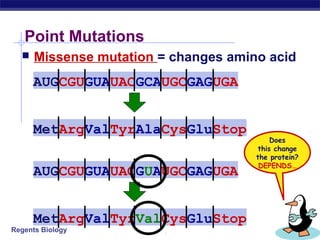
 Missense mutation = changes amino acid
AUGCGUGUAUACGCAUGCGAGUGA
MetArgValTyrAlaCysGluStop
AUGCGUGUAUACGUAUGCGAGUGA
MetArgValTyrValCysGluStop
Does
this change
the protein?
DEPENDS…
Regents Biology
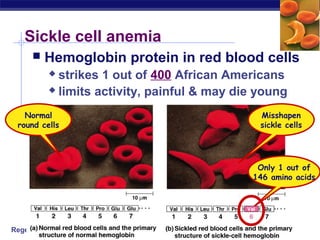
Sickle cell anemia
 Hemoglobin protein in red blood cells
 strikes 1 out of 400 African Americans
 limits activity, painful & may die young
Normal
round cells
Misshapen
sickle cells
Only 1 out of
146 amino acids
Regents Biology
Point Mutations
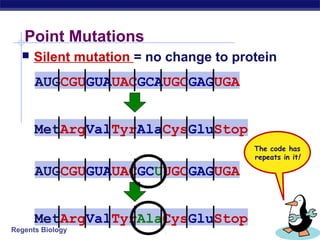
 Silent mutation = no change to protein
AUGCGUGUAUACGCAUGCGAGUGA
MetArgValTyrAlaCysGluStop
AUGCGUGUAUACGCUUGCGAGUGA
MetArgValTyrAlaCysGluStop
Does this change
the protein?
Why not?
The code has
repeats in it!
Regents Biology
Point Mutations
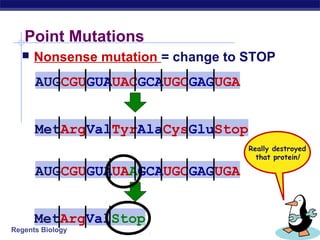
 Nonsense mutation = change to STOP
AUGCGUGUAUACGCAUGCGAGUGA
MetArgValTyrAlaCysGluStop
AUGCGUGUAUAAGCAUGCGAGUGA
MetArgValStop
Really destroyed
that protein!
Regents Biology
Frameshift Mutations
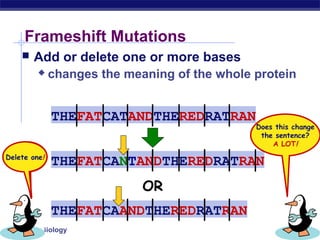
 Add or delete one or more bases
 changes the meaning of the whole protein
THEFATCATANDTHEREDRATRAN
THEFATCANTANDTHEREDRATRAN
THEFATCAANDTHEREDRATRAN
OR
Add one!Delete one!
Does this change
the sentence?
A LOT!
Regents Biology
Frameshift Mutations
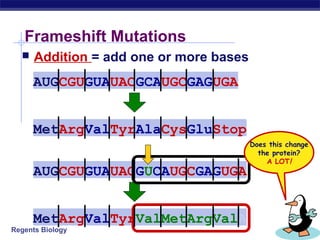
 Addition = add one or more bases
AUGCGUGUAUACGCAUGCGAGUGA
MetArgValTyrAlaCysGluStop
AUGCGUGUAUACGUCAUGCGAGUGA
MetArgValTyrValMetArgValA
Does this change
the protein?
A LOT!
Regents Biology
Frameshift Mutations
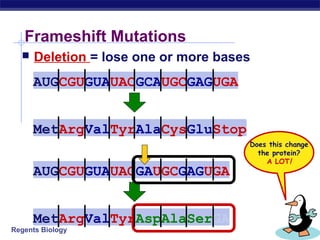
 Deletion = lose one or more bases
AUGCGUGUAUACGCAUGCGAGUGA
MetArgValTyrAlaCysGluStop
AUGCGUGUAUACGAUGCGAGUGA
MetArgValTyrAspAlaSerGA
Does this change
the protein?
A LOT!
Regents Biology
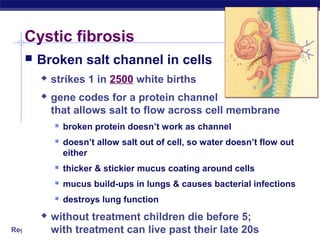
Cystic fibrosis
 Broken salt channel in cells
 strikes 1 in 2500 white births
 gene codes for a protein channel
that allows salt to flow across cell membrane
 broken protein doesn’t work as channel
 doesn’t allow salt out of cell, so water doesn’t flow out
either
 thicker & stickier mucus coating around cells
 mucus build-ups in lungs & causes bacterial infections
 destroys lung function
 without treatment children die before 5;
with treatment can live past their late 20s
Regents Biology
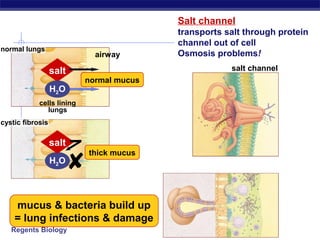
Salt channel
transports salt through protein
channel out of cell
Osmosis problems!airway
salt
H2O
H2O
salt
normal lungs
cystic fibrosis
cells lining
lungs
salt channel
normal mucus
thick mucus
mucus & bacteria build up
= lung infections & damage

Regents Biology
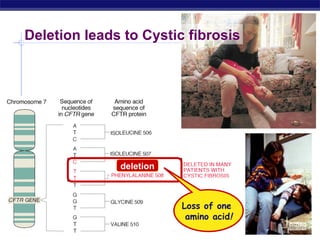
Deletion leads to Cystic fibrosis
deletion
Loss of one
amino acid!
Regents Biology 2009-2010
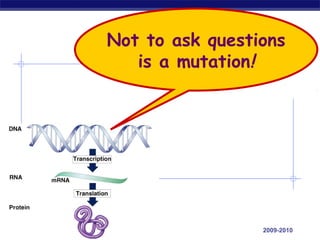
Not to ask questions
is a mutation!

12.4 Mutations

  • 1.
    Regents Biology 2009-2010 12.4 Mutations Changes to DNA
  • 2.
    Regents Biology Mutations  Changesto DNA are called mutations  change the DNA  changes the mRNA  may change protein  may change trait DNA TACGCACATTTACGTACG mRNA AUGCGUGUAAAUGCAUGC aa aa aa aa aa aa aaprotein trait
  • 3.
    Regents Biology Types ofmutations  Changes to the letters (A,C,T,G bases) in the DNA  point mutation  change to ONE letter (base) in the DNA  may cause change to protein, may not  frameshift mutation  addition of a new letter (base) in the DNA sequence  deletion of a letter (base) in the DNA  both of these shift the DNA so it changes how the codons are read  big changes to protein!
  • 4.
    Regents Biology Point Mutations One base change  can change the meaning of the whole protein THEFATCATANDTHEREDRATRAN THEFATCARANDTHEREDRATRAN THEFATCATENDTHEREDRATRAN OR Does this change the sentence? A LITTLE!
  • 5.
    Regents Biology Point Mutations Missense mutation = changes amino acid AUGCGUGUAUACGCAUGCGAGUGA MetArgValTyrAlaCysGluStop AUGCGUGUAUACGUAUGCGAGUGA MetArgValTyrValCysGluStop Does this change the protein? DEPENDS…
  • 6.
    Regents Biology Sickle cellanemia  Hemoglobin protein in red blood cells  strikes 1 out of 400 African Americans  limits activity, painful & may die young Normal round cells Misshapen sickle cells Only 1 out of 146 amino acids
  • 7.
    Regents Biology Point Mutations Silent mutation = no change to protein AUGCGUGUAUACGCAUGCGAGUGA MetArgValTyrAlaCysGluStop AUGCGUGUAUACGCUUGCGAGUGA MetArgValTyrAlaCysGluStop Does this change the protein? Why not? The code has repeats in it!
  • 8.
    Regents Biology Point Mutations Nonsense mutation = change to STOP AUGCGUGUAUACGCAUGCGAGUGA MetArgValTyrAlaCysGluStop AUGCGUGUAUAAGCAUGCGAGUGA MetArgValStop Really destroyed that protein!
  • 9.
    Regents Biology Frameshift Mutations Add or delete one or more bases  changes the meaning of the whole protein THEFATCATANDTHEREDRATRAN THEFATCANTANDTHEREDRATRAN THEFATCAANDTHEREDRATRAN OR Add one!Delete one! Does this change the sentence? A LOT!
  • 10.
    Regents Biology Frameshift Mutations Addition = add one or more bases AUGCGUGUAUACGCAUGCGAGUGA MetArgValTyrAlaCysGluStop AUGCGUGUAUACGUCAUGCGAGUGA MetArgValTyrValMetArgValA Does this change the protein? A LOT!
  • 11.
    Regents Biology Frameshift Mutations Deletion = lose one or more bases AUGCGUGUAUACGCAUGCGAGUGA MetArgValTyrAlaCysGluStop AUGCGUGUAUACGAUGCGAGUGA MetArgValTyrAspAlaSerGA Does this change the protein? A LOT!
  • 12.
    Regents Biology Cystic fibrosis Broken salt channel in cells  strikes 1 in 2500 white births  gene codes for a protein channel that allows salt to flow across cell membrane  broken protein doesn’t work as channel  doesn’t allow salt out of cell, so water doesn’t flow out either  thicker & stickier mucus coating around cells  mucus build-ups in lungs & causes bacterial infections  destroys lung function  without treatment children die before 5; with treatment can live past their late 20s
  • 13.
    Regents Biology Salt channel transportssalt through protein channel out of cell Osmosis problems!airway salt H2O H2O salt normal lungs cystic fibrosis cells lining lungs salt channel normal mucus thick mucus mucus & bacteria build up = lung infections & damage 
  • 14.
    Regents Biology Deletion leadsto Cystic fibrosis deletion Loss of one amino acid!
  • 15.
    Regents Biology 2009-2010 Notto ask questions is a mutation!

Editor's Notes

  • #13 Cystic fibrosis is an inherited disease that is relatively common in the U.S. Cystic fibrosis affects multiple parts of the body including the pancreas, the sweat glands, and the lungs. When someone has cystic fibrosis, they often have lots of lung problems. The cause of their lung problems is directly related to basic problems with diffusion and osmosis in the large airways of the lungs. People without cystic fibrosis have a small layer of salt water in the large airways of their lungs. This layer of salt water is under the mucus layer which lines the airways. The mucus layer in the airways helps to clear dust and other inhaled particles from the lungs.
  • #14 In people without cystic fibrosis, working cystic fibrosis proteins allow salt (chloride) to enter the air space and water follows by osmosis. The mucus layer is dilute and not very sticky. In people with cystic fibrosis, non-working cystic fibrosis proteins mean no salt (chloride) enters the air space and water doesn't either. The mucus layer is concentrated and very sticky. People with cystic fibrosis have lung problems because: Proteins for diffusion of salt into the airways don't work. (less diffusion) Less salt in the airways means less water in the airways. (less osmosis) Less water in the airways means mucus layer is very sticky (viscous). Sticky mucus cannot be easily moved to clear particles from the lungs. Sticky mucus traps bacteria and causes more lung infections. Therefore, because of less diffusion of salt and less osmosis of water, people with cystic fibrosis have too much sticky mucus in the airways of their lungs and get lots of lung infections. Thus, they are sick a lot.