Photosynthesis 
Trapping the Sun’s Energy
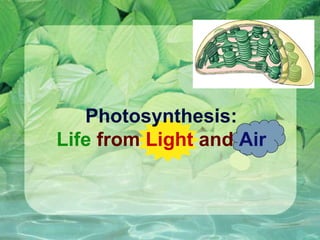
Photosynthesis: 
Life from Light and Air
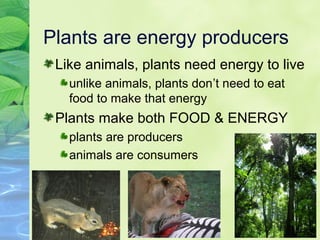
Plants are energy producers 
Like animals, plants need energy to live 
unlike animals, plants don’t need to eat 
food to make that energy 
Plants make both FOOD & ENERGY 
plants are producers 
animals are consumers
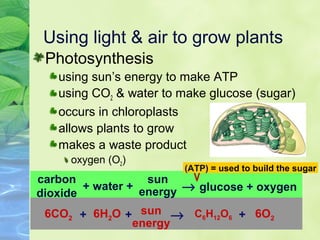
Using light & air to grow plants 
Photosynthesis 
using sun’s energy to make ATP 
using CO2 & water to make glucose (sugar) 
occurs in chloroplasts 
allows plants to grow 
makes a waste product 
(ATP) = used to build the sugar 
oxygen (O2) 
carbon sun 
dioxide 
+ water + energy 
® glucose + oxygen 
6CO2 6H2O C6H12O6 6O2 sun 
energy + + ®
 +
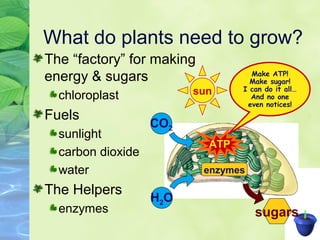
What do plants need to grow? 
The “factory” for making 
energy & sugars 
chloroplast 
Fuels 
sunlight 
carbon dioxide 
water 
The Helpers 
H2O 
enzymes 
sugars 
ATP 
Make ATP! 
Make sugar! 
I can do it all… 
And no one 
even notices! 
enzymes 
CO2 
sun
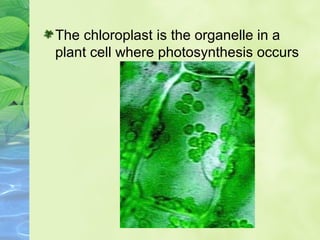
The chloroplast is the organelle in a 
plant cell where photosynthesis occurs
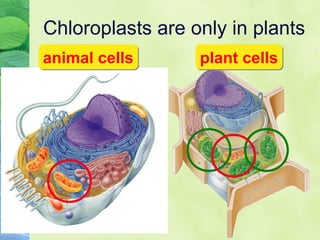
Chloroplasts are only in plants 
aanniimmaall cceellllss ppllaanntt cceellllss
What absorbs light in a plant? 
Pigments are molecules that absorb 
specific wavelengths of sunlight 
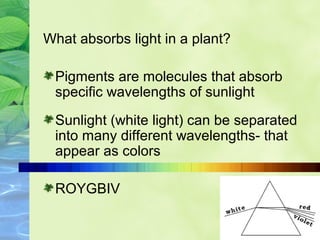
Sunlight (white light) can be separated 
into many different wavelengths- that 
appear as colors 
ROYGBIV
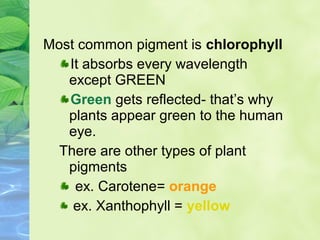
Most common pigment is chlorophyll 
It absorbs every wavelength 
except GREEN 
Green gets reflected- that’s why 
plants appear green to the human 
eye. 
There are other types of plant 
pigments 
ex. Carotene= orange 
ex. Xanthophyll = yellow
Why do leaves turn colors in 
the fall? 
Chlorophylls are more abundant than 
other pigments in the leaves. 
As trees prepare to lose their leaves, 
chlorophyll molecules break down, 
revealing the other pigments that are 
also in the leaf.
Photosynthesis has 2 phases; 
1. Light Dependent Reactions 
2. Light Independent Reactions 
-aka Calvin Cycle
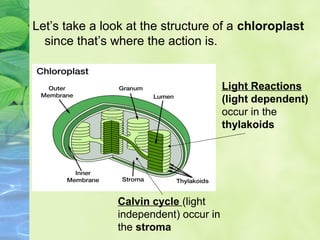
Let’s take a look at the structure of a chloroplast 
since that’s where the action is. 
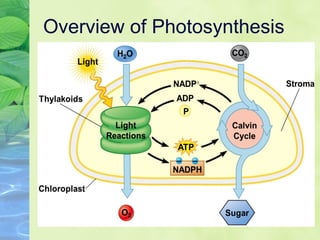
Calvin cycle (light 
independent) occur in 
the stroma 
Light Reactions 
(light dependent) 
occur in the 
thylakoids
Overview of Photosynthesis
Phase 1: 
Light Dependent Reactions 
Require Sunlight
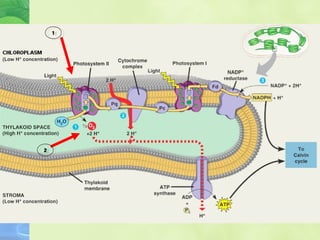
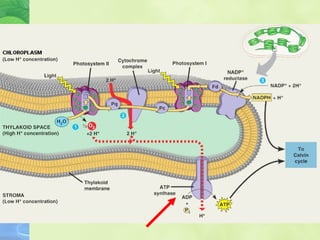
Steps to the Light Dependent Reaction 
1. Light hits the chlorophyll molecules 
in the thylakoid membrane of the 
chloroplast. 
2. Causes water to split. 
a. H+ ions  Build up in the 
thylakoid space 
b. Electrons  move down the 
electron transport chain 
c. Oxygen  Released into the air 
as a waste product
11 
22
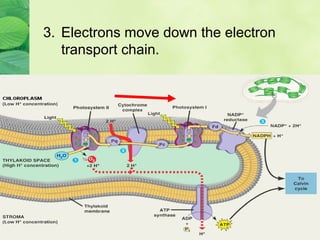
3. Electrons move down the electron 
transport chain.
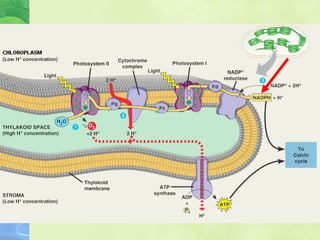
4. The electron exits the electron 
transport chain and binds with 
NADP+ to make NADPH. 
a. NADPH is like an electron bus, 
shuttling electrons to the Calvin 
Cycle.
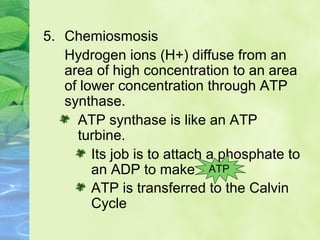
5. Chemiosmosis 
Hydrogen ions (H+) diffuse from an 
area of high concentration to an area 
of lower concentration through ATP 
synthase. 
ATP synthase is like an ATP 
turbine. 
Its job is to attach a phosphate to 
an ADP to make 
ATP 
ATP is transferred to the Calvin 
Cycle
Light Dependent Reactions Recap: 
Water was split 
Oxygen was released as a 
waste product 
ATP and NADPH were 
transferred to the Calvin Cycle 
(Calvin Cycle is aka Light Independent Reactions)
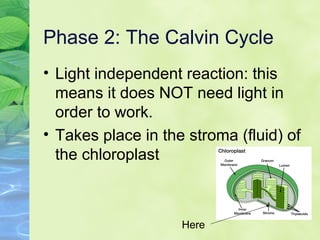
Phase 2: The Calvin Cycle 
• Light independent reaction: this 
means it does NOT need light in 
order to work. 
• Takes place in the stroma (fluid) of 
the chloroplast 
Here
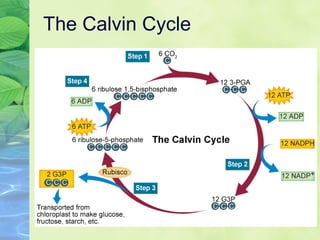
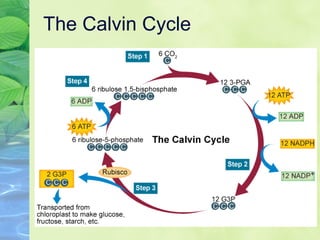
The Calvin Cycle
Stages of the Calvin Cycle 
1. CO2 (carbon dioxide) enters the 
chloroplast 
a. The carbon in CO2 is added to a 
5-carbon (RuBP) molecule to 
form a 6-carbon molecule
Stages of the Calvin Cycle 
2. The 6 carbon molecule is split into two 
3-carbon molecules (called PGA) 
a. ATP and NADPH help convert a molecule 
of PGA into G3P. 
b. During this reaction, ATP loses a 
phosphate (turning it into ADP) and NADPH 
loses its hydrogen (turning it into NADP+). 
c. These molecules return to the light 
dependent reaction.
Stages of the Calvin Cycle 
3. After several rounds of the Calvin 
Cycle, two molecules of G3P leave the 
cycle to form glucose 
Making glucose is the entire point 
of photosynthesis!
Stages of the Calvin Cycle 
4. Some G3P molecules reform 
the 5-carbon sugar (RuBP) 
with the help of rubisco and 
energy from ATP 
5. The cycle is ready to begin 
again!
The Calvin Cycle
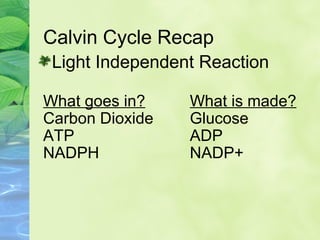
Calvin Cycle Recap 
Light Independent Reaction 
What is made? 
Glucose 
ADP 
NADP+ 
What goes in? 
Carbon Dioxide 
ATP 
NADPH
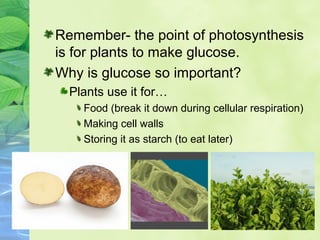
Remember- the point of photosynthesis 
is for plants to make glucose. 
Why is glucose so important? 
Plants use it for… 
Food (break it down during cellular respiration) 
Making cell walls 
Storing it as starch (to eat later)
Questions: 
1. What is the formula for 
photosynthesis? 
2. In what organelle does 
photosynthesis take place? 
3. What is used by a plant during the 
light dependent reactions? 
4. What is released by a plant during the 
light dependent reactions?
Questions: 
5. What is used by a plant during the light 
independent reactions? 
6. What is released by a plant during the 
light independent reactions? 
7. What two things produced by light 
independent reactions are used 
during light dependent reactions?

8.2 Photosynthesis 2014

  • 1.
  • 2.
  • 3.
    Plants are energyproducers Like animals, plants need energy to live unlike animals, plants don’t need to eat food to make that energy Plants make both FOOD & ENERGY plants are producers animals are consumers
  • 4.
    Using light &air to grow plants Photosynthesis using sun’s energy to make ATP using CO2 & water to make glucose (sugar) occurs in chloroplasts allows plants to grow makes a waste product (ATP) = used to build the sugar oxygen (O2) carbon sun dioxide + water + energy ® glucose + oxygen 6CO2 6H2O C6H12O6 6O2 sun energy + + ® +
  • 5.
    What do plantsneed to grow? The “factory” for making energy & sugars chloroplast Fuels sunlight carbon dioxide water The Helpers H2O enzymes sugars ATP Make ATP! Make sugar! I can do it all… And no one even notices! enzymes CO2 sun
  • 6.
    The chloroplast isthe organelle in a plant cell where photosynthesis occurs
  • 7.
    Chloroplasts are onlyin plants aanniimmaall cceellllss ppllaanntt cceellllss
  • 8.
    What absorbs lightin a plant? Pigments are molecules that absorb specific wavelengths of sunlight Sunlight (white light) can be separated into many different wavelengths- that appear as colors ROYGBIV
  • 9.
    Most common pigmentis chlorophyll It absorbs every wavelength except GREEN Green gets reflected- that’s why plants appear green to the human eye. There are other types of plant pigments ex. Carotene= orange ex. Xanthophyll = yellow
  • 10.
    Why do leavesturn colors in the fall? Chlorophylls are more abundant than other pigments in the leaves. As trees prepare to lose their leaves, chlorophyll molecules break down, revealing the other pigments that are also in the leaf.
  • 11.
    Photosynthesis has 2phases; 1. Light Dependent Reactions 2. Light Independent Reactions -aka Calvin Cycle
  • 12.
    Let’s take alook at the structure of a chloroplast since that’s where the action is. Calvin cycle (light independent) occur in the stroma Light Reactions (light dependent) occur in the thylakoids
  • 13.
  • 14.
    Phase 1: LightDependent Reactions Require Sunlight
  • 15.
    Steps to theLight Dependent Reaction 1. Light hits the chlorophyll molecules in the thylakoid membrane of the chloroplast. 2. Causes water to split. a. H+ ions  Build up in the thylakoid space b. Electrons  move down the electron transport chain c. Oxygen  Released into the air as a waste product
  • 16.
  • 17.
    3. Electrons movedown the electron transport chain.
  • 18.
    4. The electronexits the electron transport chain and binds with NADP+ to make NADPH. a. NADPH is like an electron bus, shuttling electrons to the Calvin Cycle.
  • 20.
    5. Chemiosmosis Hydrogenions (H+) diffuse from an area of high concentration to an area of lower concentration through ATP synthase. ATP synthase is like an ATP turbine. Its job is to attach a phosphate to an ADP to make ATP ATP is transferred to the Calvin Cycle
  • 22.
    Light Dependent ReactionsRecap: Water was split Oxygen was released as a waste product ATP and NADPH were transferred to the Calvin Cycle (Calvin Cycle is aka Light Independent Reactions)
  • 23.
    Phase 2: TheCalvin Cycle • Light independent reaction: this means it does NOT need light in order to work. • Takes place in the stroma (fluid) of the chloroplast Here
  • 24.
  • 25.
    Stages of theCalvin Cycle 1. CO2 (carbon dioxide) enters the chloroplast a. The carbon in CO2 is added to a 5-carbon (RuBP) molecule to form a 6-carbon molecule
  • 26.
    Stages of theCalvin Cycle 2. The 6 carbon molecule is split into two 3-carbon molecules (called PGA) a. ATP and NADPH help convert a molecule of PGA into G3P. b. During this reaction, ATP loses a phosphate (turning it into ADP) and NADPH loses its hydrogen (turning it into NADP+). c. These molecules return to the light dependent reaction.
  • 27.
    Stages of theCalvin Cycle 3. After several rounds of the Calvin Cycle, two molecules of G3P leave the cycle to form glucose Making glucose is the entire point of photosynthesis!
  • 28.
    Stages of theCalvin Cycle 4. Some G3P molecules reform the 5-carbon sugar (RuBP) with the help of rubisco and energy from ATP 5. The cycle is ready to begin again!
  • 29.
  • 30.
    Calvin Cycle Recap Light Independent Reaction What is made? Glucose ADP NADP+ What goes in? Carbon Dioxide ATP NADPH
  • 31.
    Remember- the pointof photosynthesis is for plants to make glucose. Why is glucose so important? Plants use it for… Food (break it down during cellular respiration) Making cell walls Storing it as starch (to eat later)
  • 32.
    Questions: 1. Whatis the formula for photosynthesis? 2. In what organelle does photosynthesis take place? 3. What is used by a plant during the light dependent reactions? 4. What is released by a plant during the light dependent reactions?
  • 33.
    Questions: 5. Whatis used by a plant during the light independent reactions? 6. What is released by a plant during the light independent reactions? 7. What two things produced by light independent reactions are used during light dependent reactions?