Download as PDF, PPTX

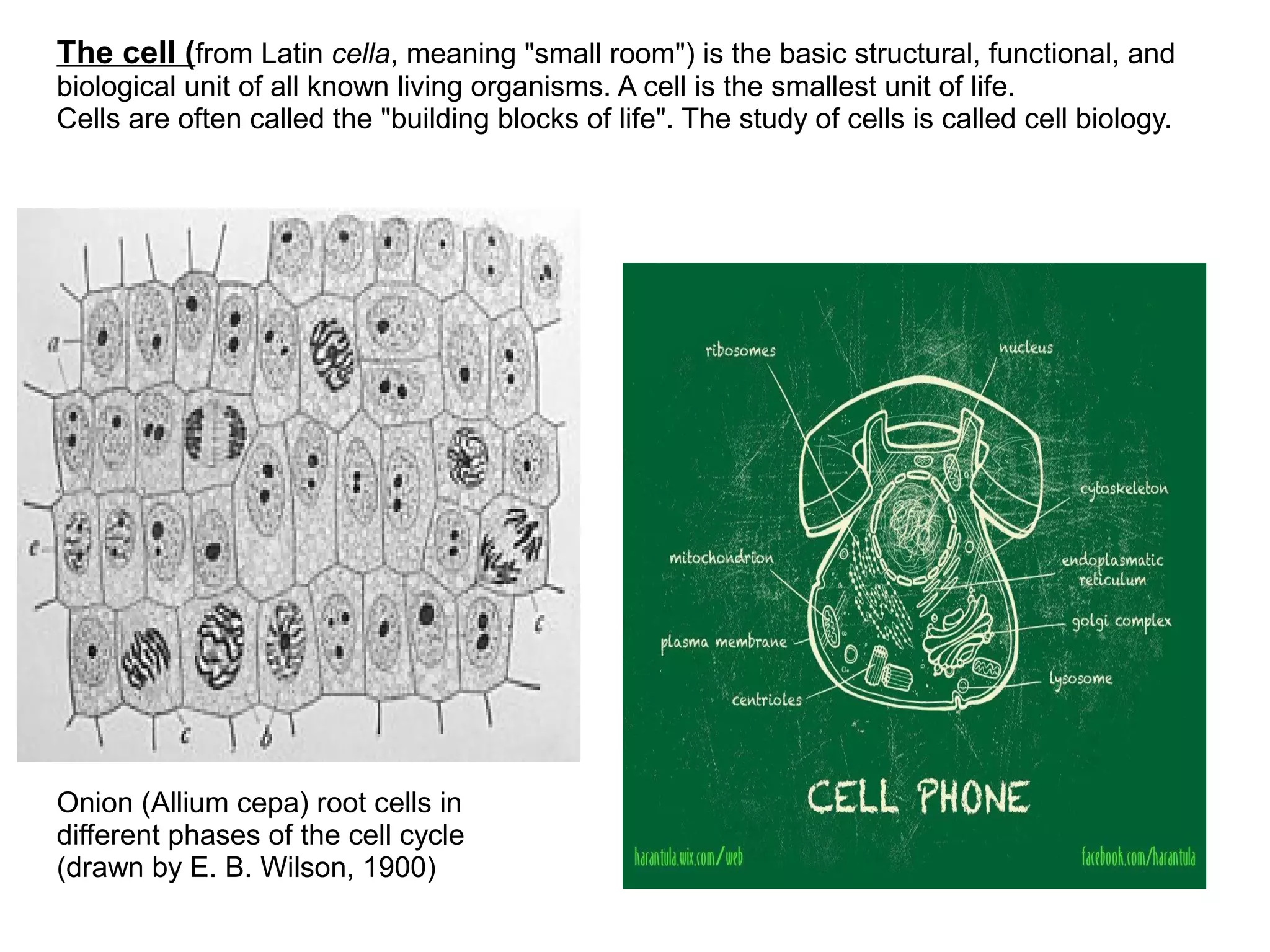
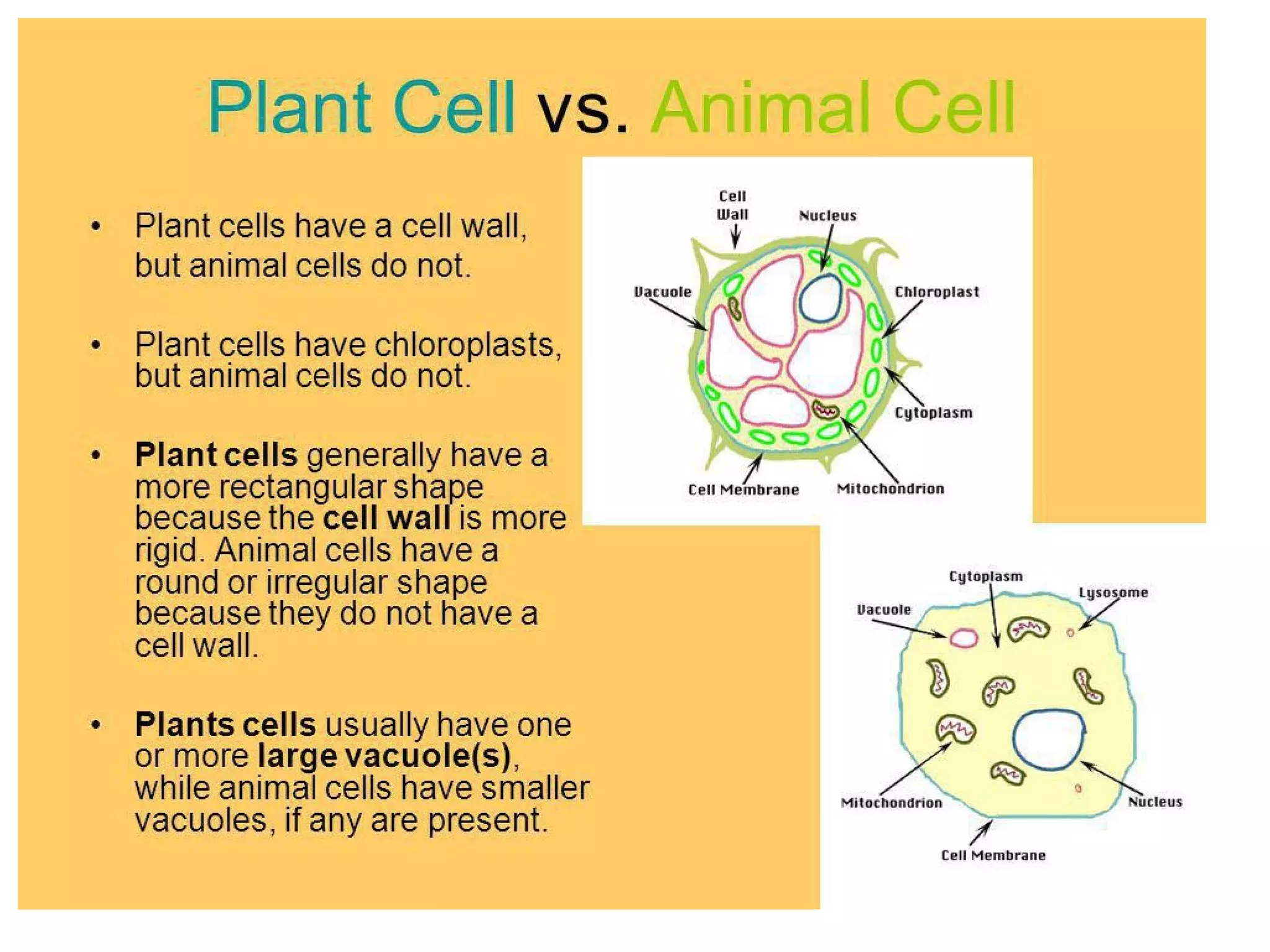
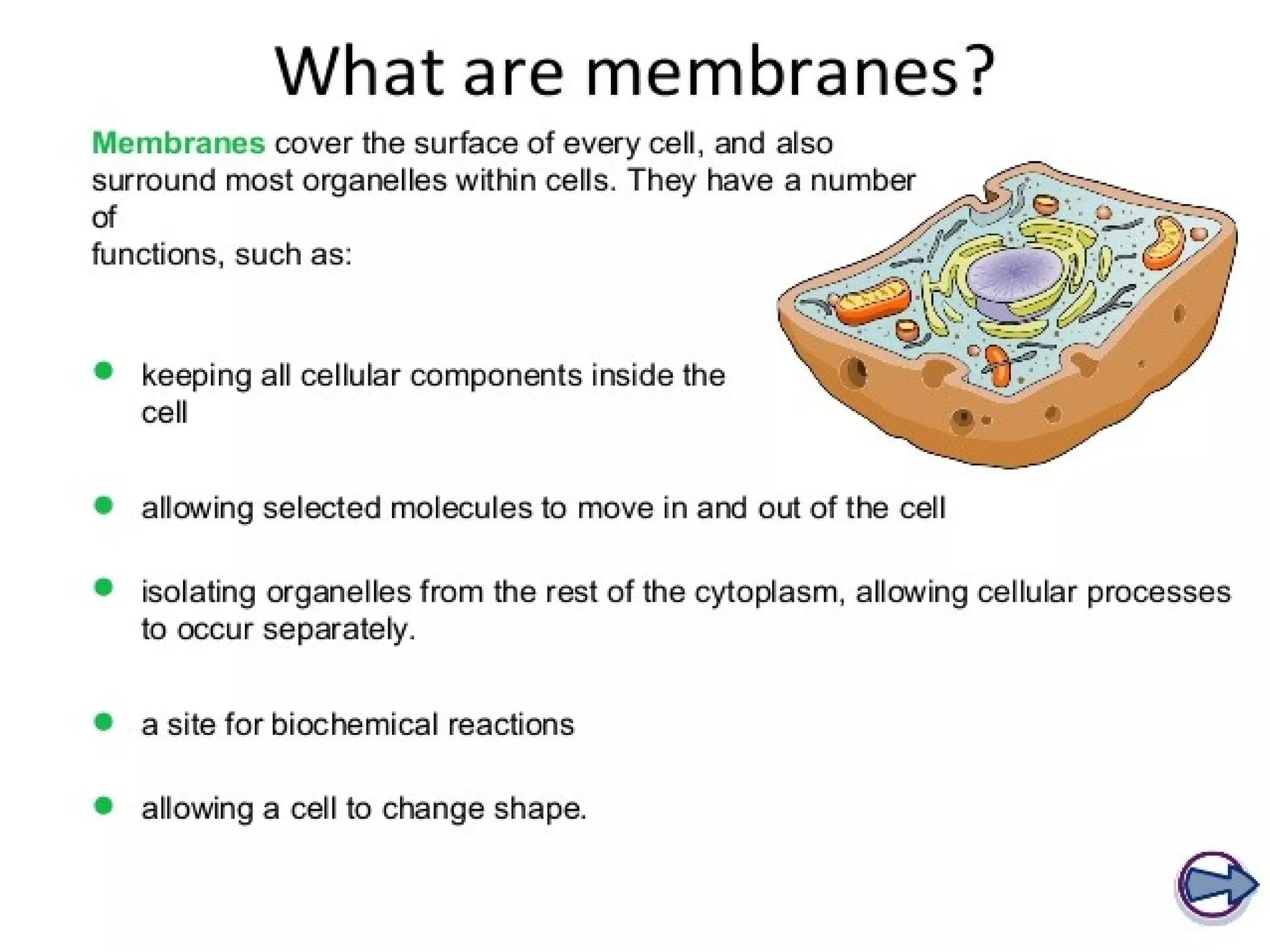
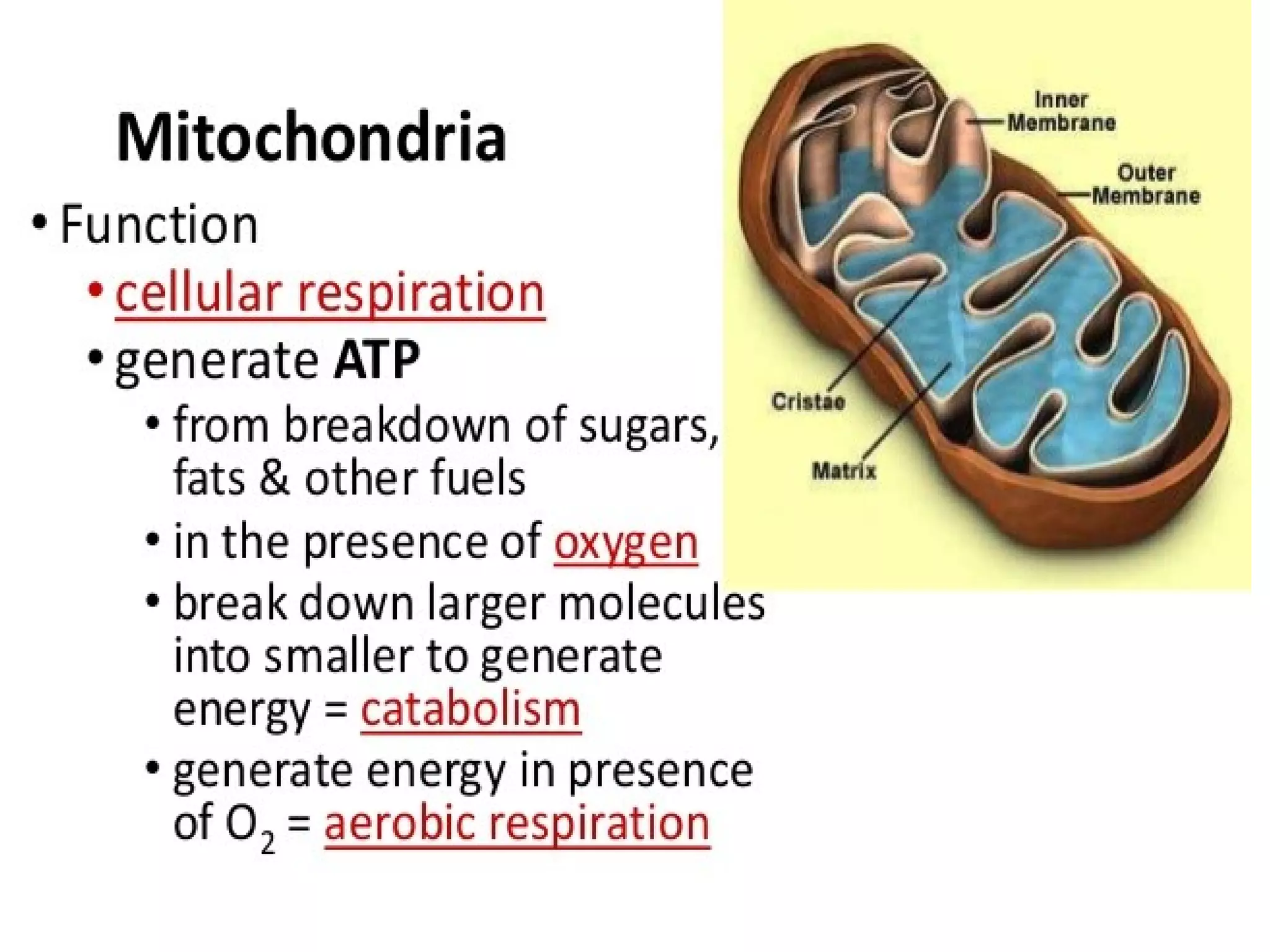
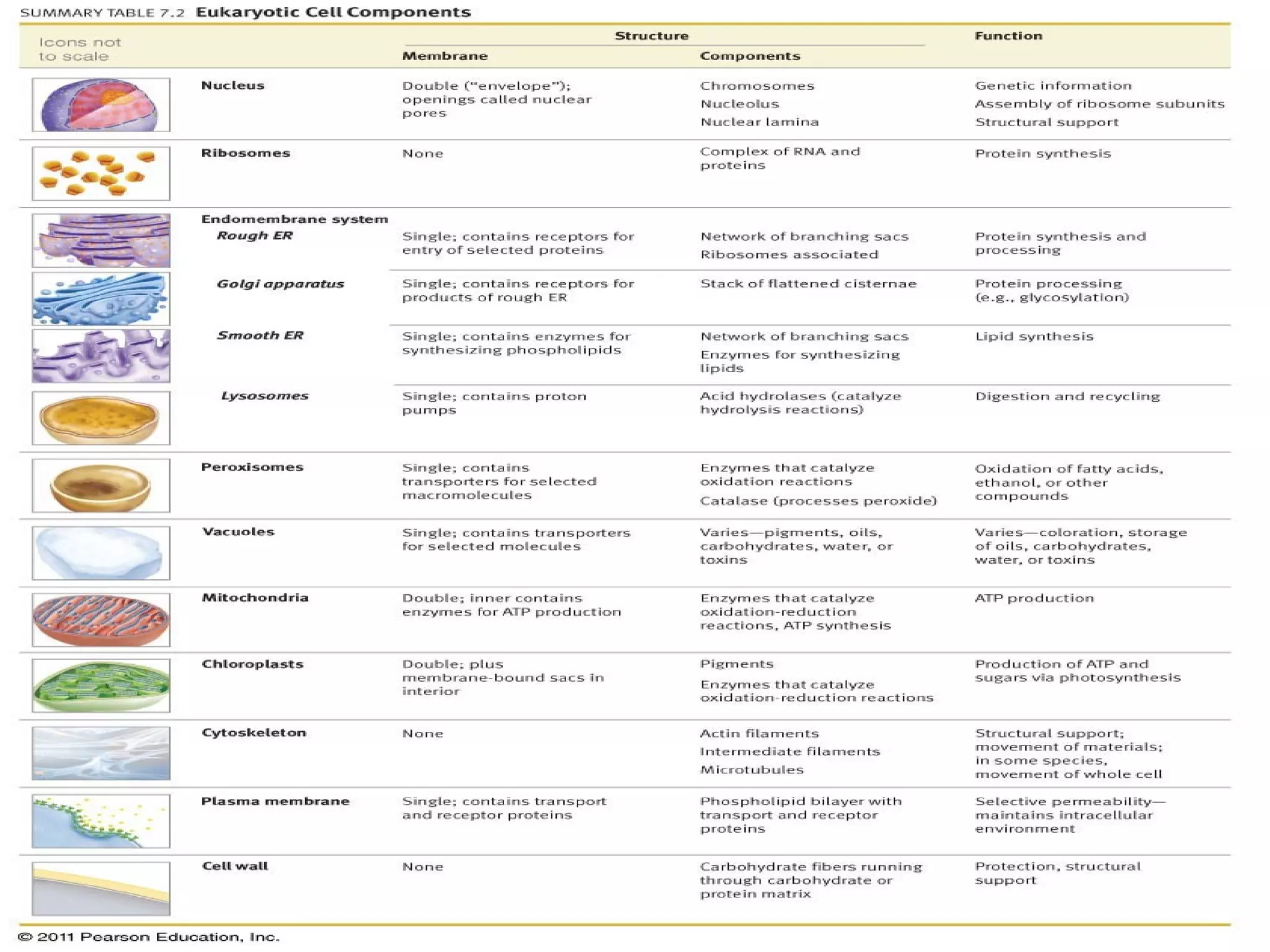
![1.What is the part of the animal cell that is labelled by A?
[1 mark]
A Cell membrane
B Chloroplast
C Mitochondrion
D Nucleus
2.Which of these units is most suitable for measuring the length of a cell?
[1 mark]
A Kilometre
B Metre
C Centimetre
D Micrometre
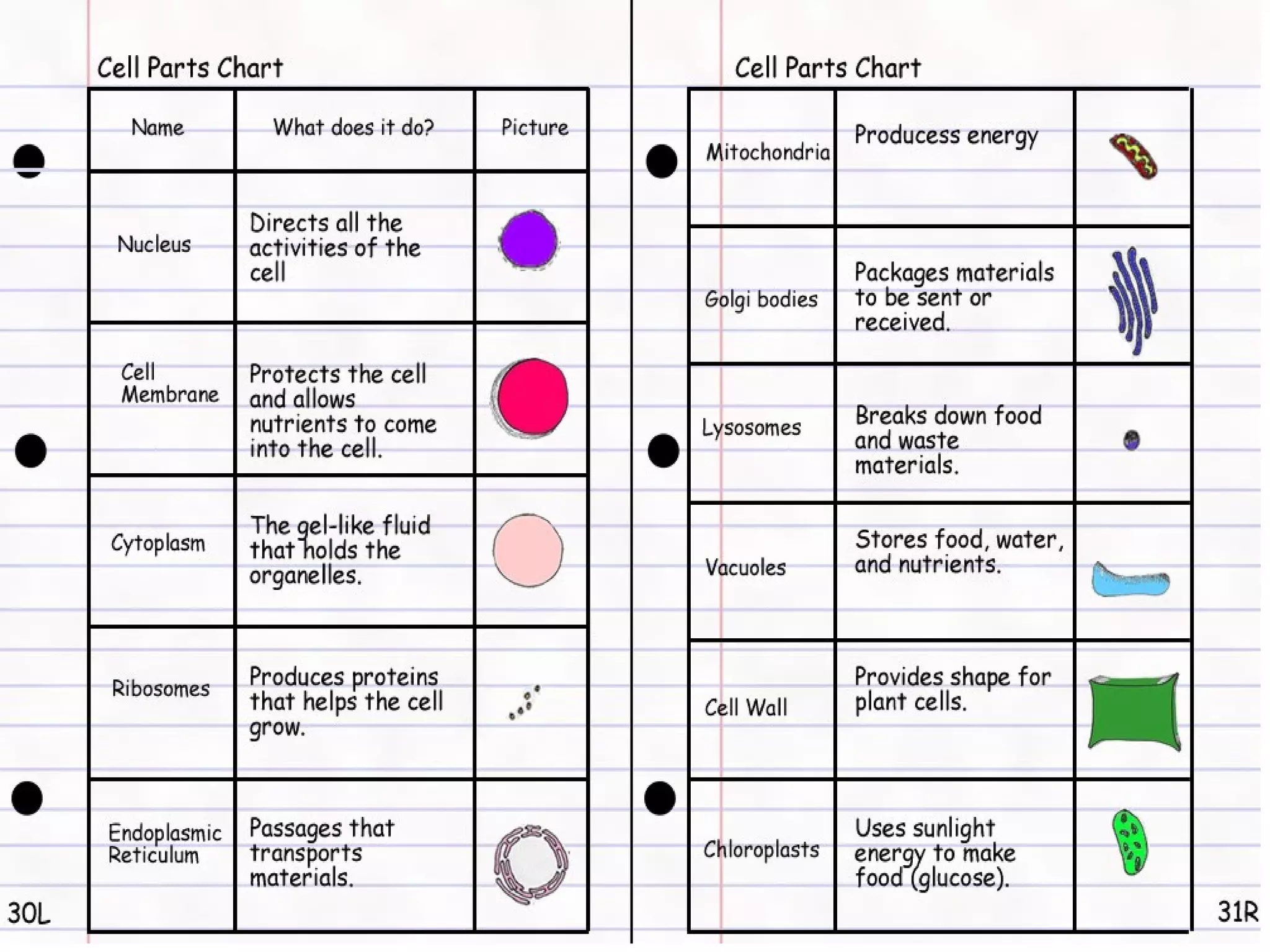
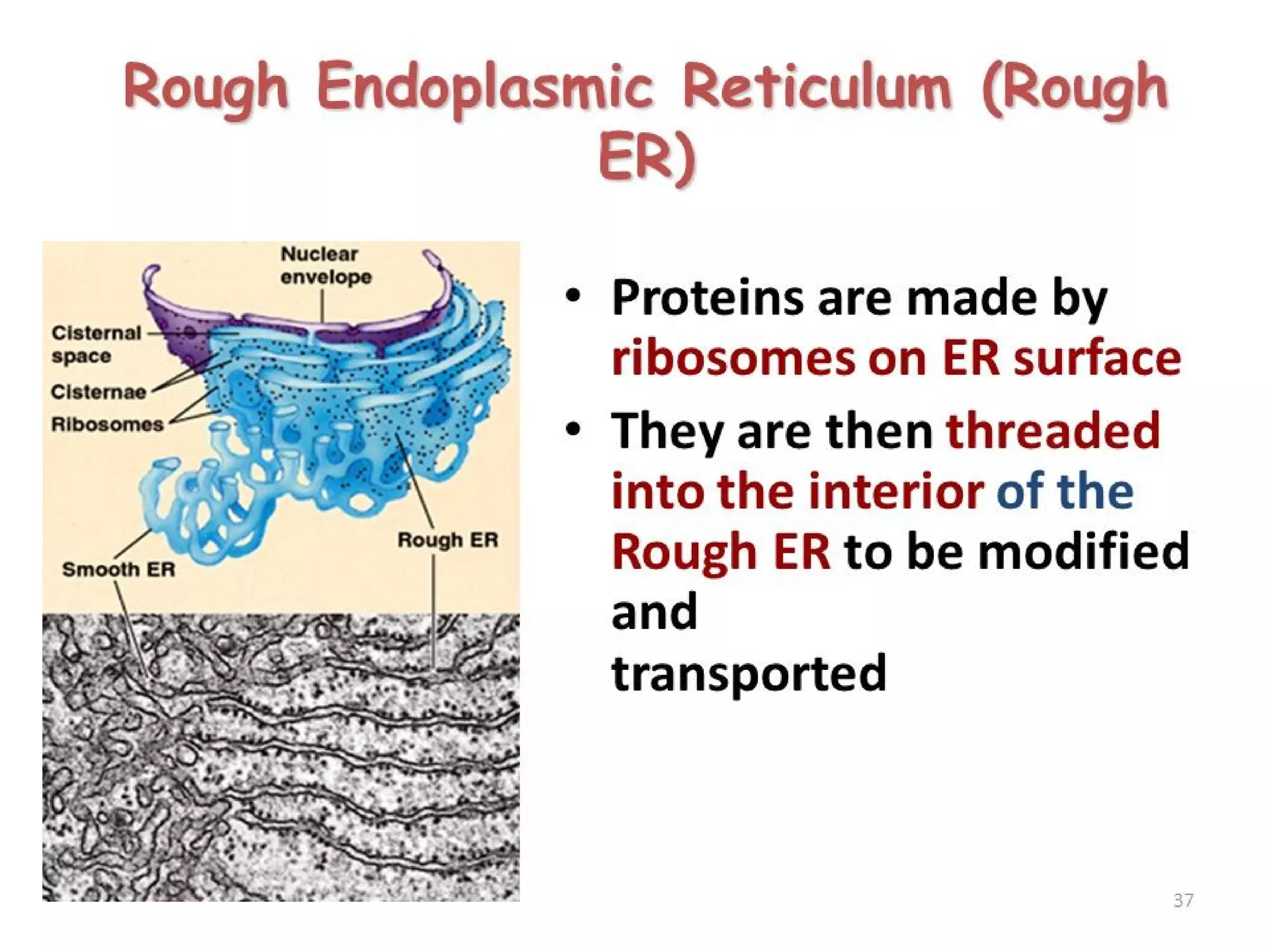
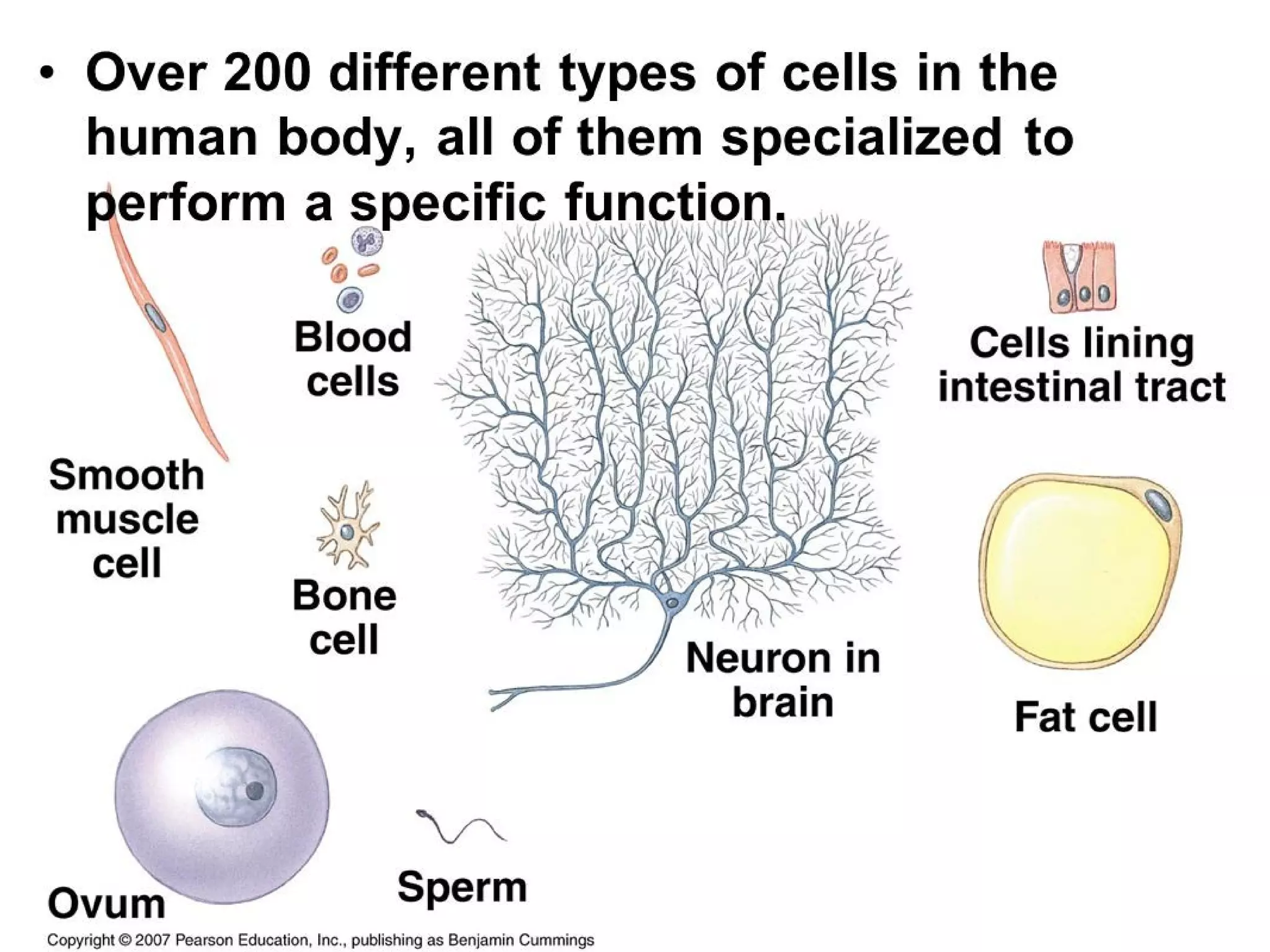
3.A cell of the pancreas produces digestive enzymes, which are proteins. The
enzymes are released into the small intestine.
Suggest which two of the following are adaptations to its role?
Tick two boxes.
[2 marks]
A A small surface area to volume ratio
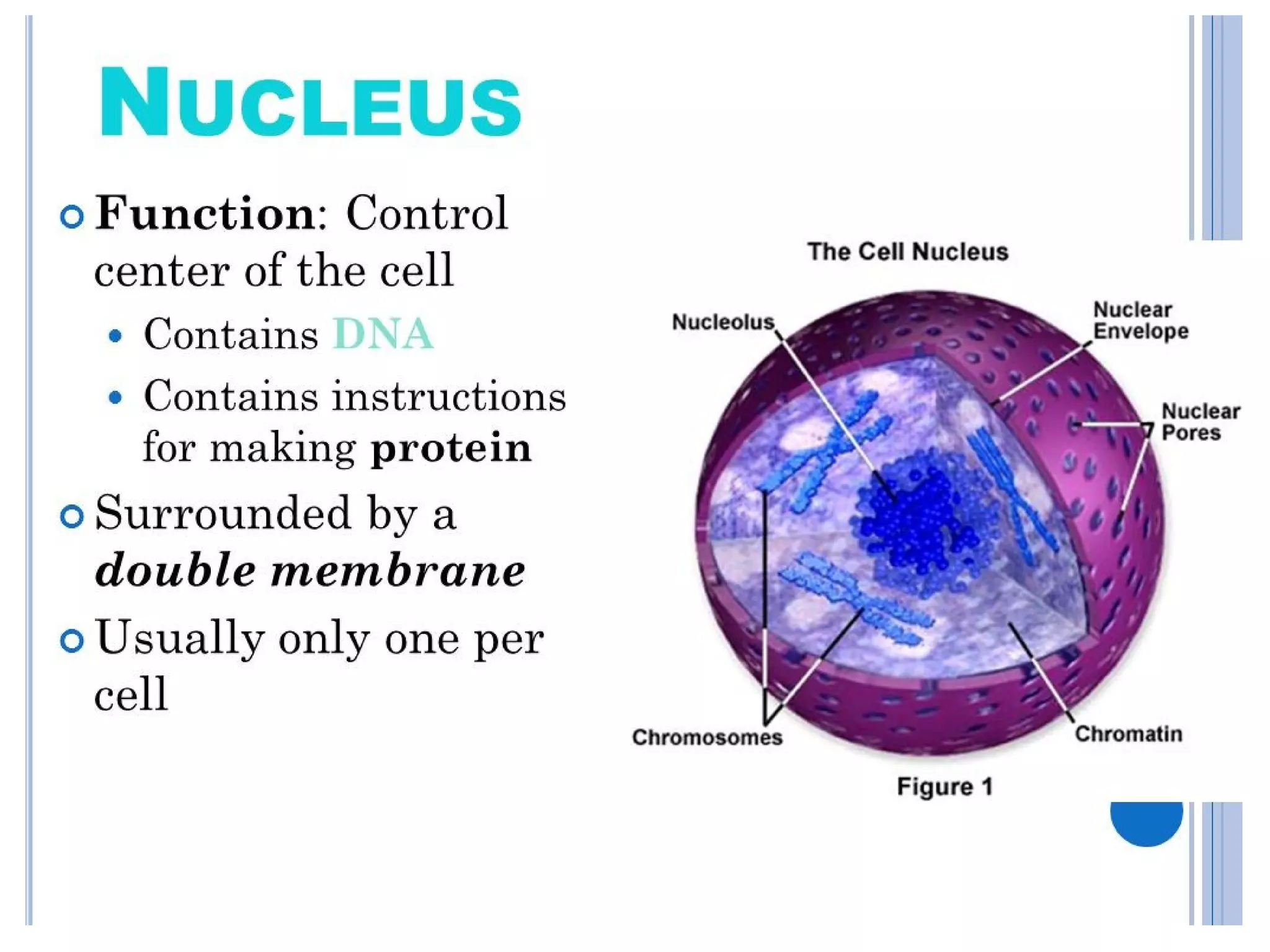
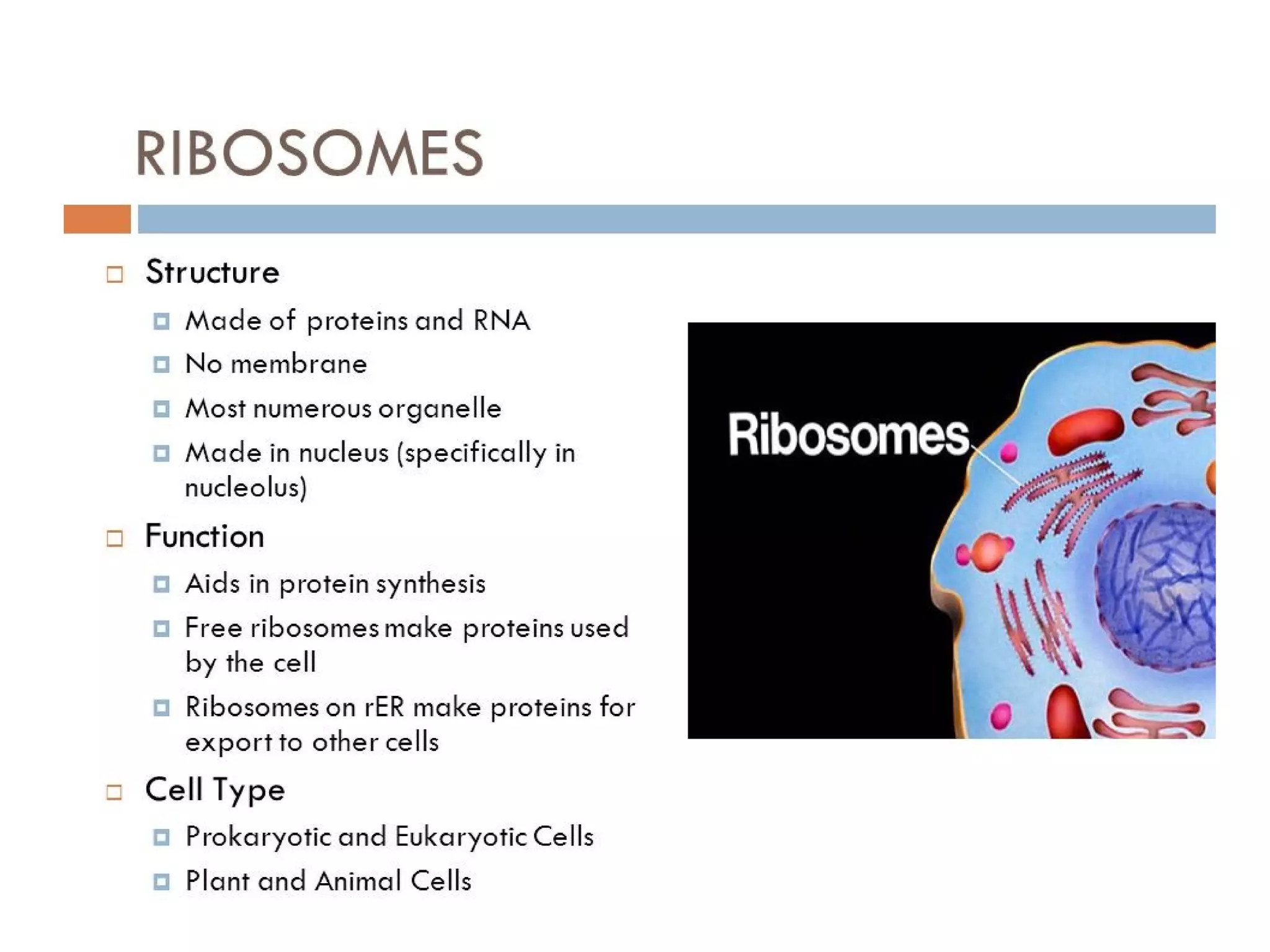
B Large numbers of ribosomes
C Mitochondria with well-developed internal membranes
D The ability to move
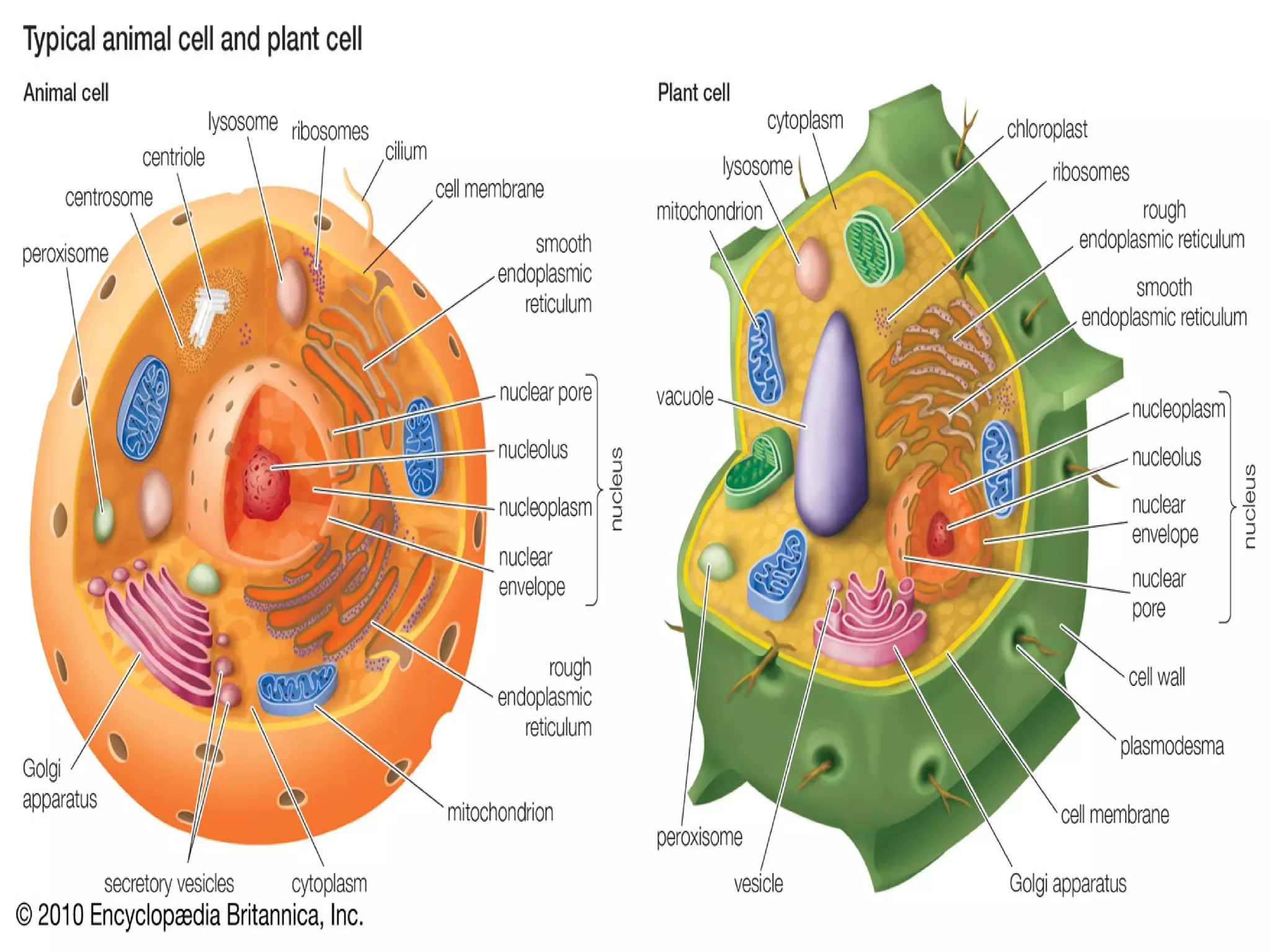
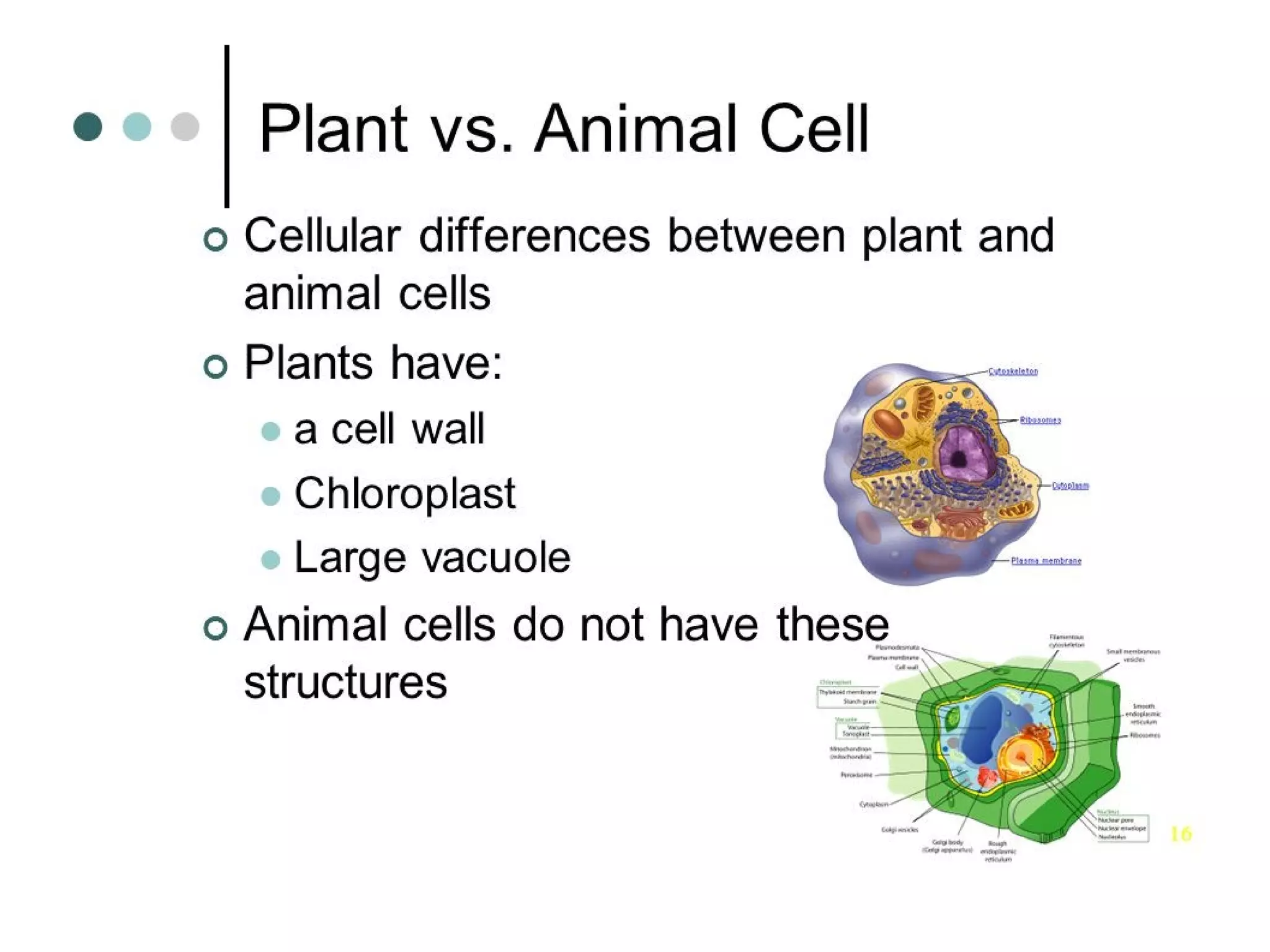
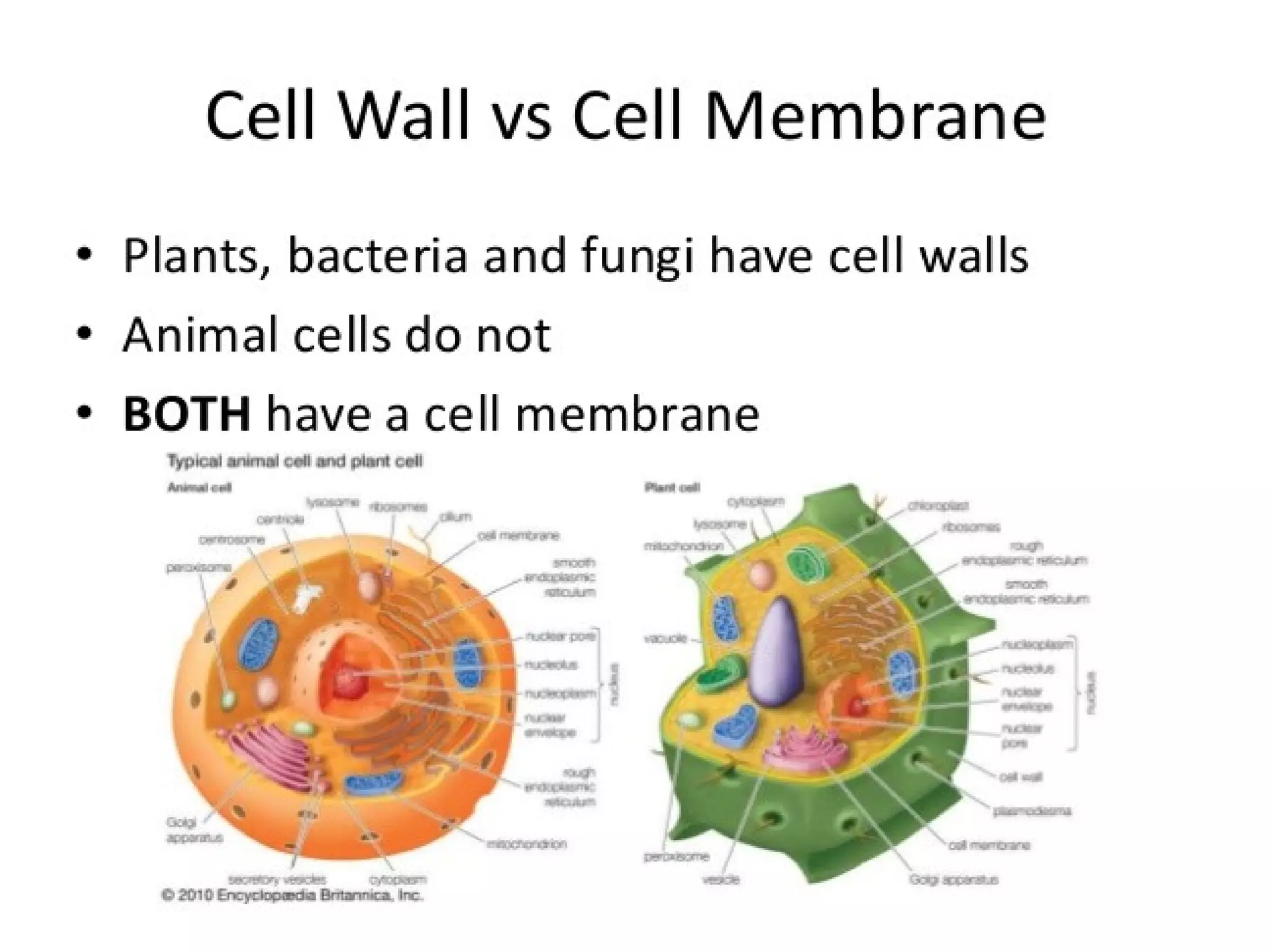
4.Give two differences between plant and animal cells.
[2 marks]
5.Compare the advantages and disadvantages of light and electron microscopes.
[4 marks]
6.The student measured a cell they were looking at as 0.5 mm.
Convert this into micrometres.](https://image.slidesharecdn.com/cells-cellstructure-cellsandorganisms-181103154757/75/Cell-cell-structure-Tissues-Organ-systems-and-organisms-IGCSE-Biology-25-2048.jpg)
![7.The student measured a cell they were looking at as 0.5 mm.
Convert this into micrometres.
8.Describe how to prepare a stained slide of onion epidermal tissue.
[6 marks]
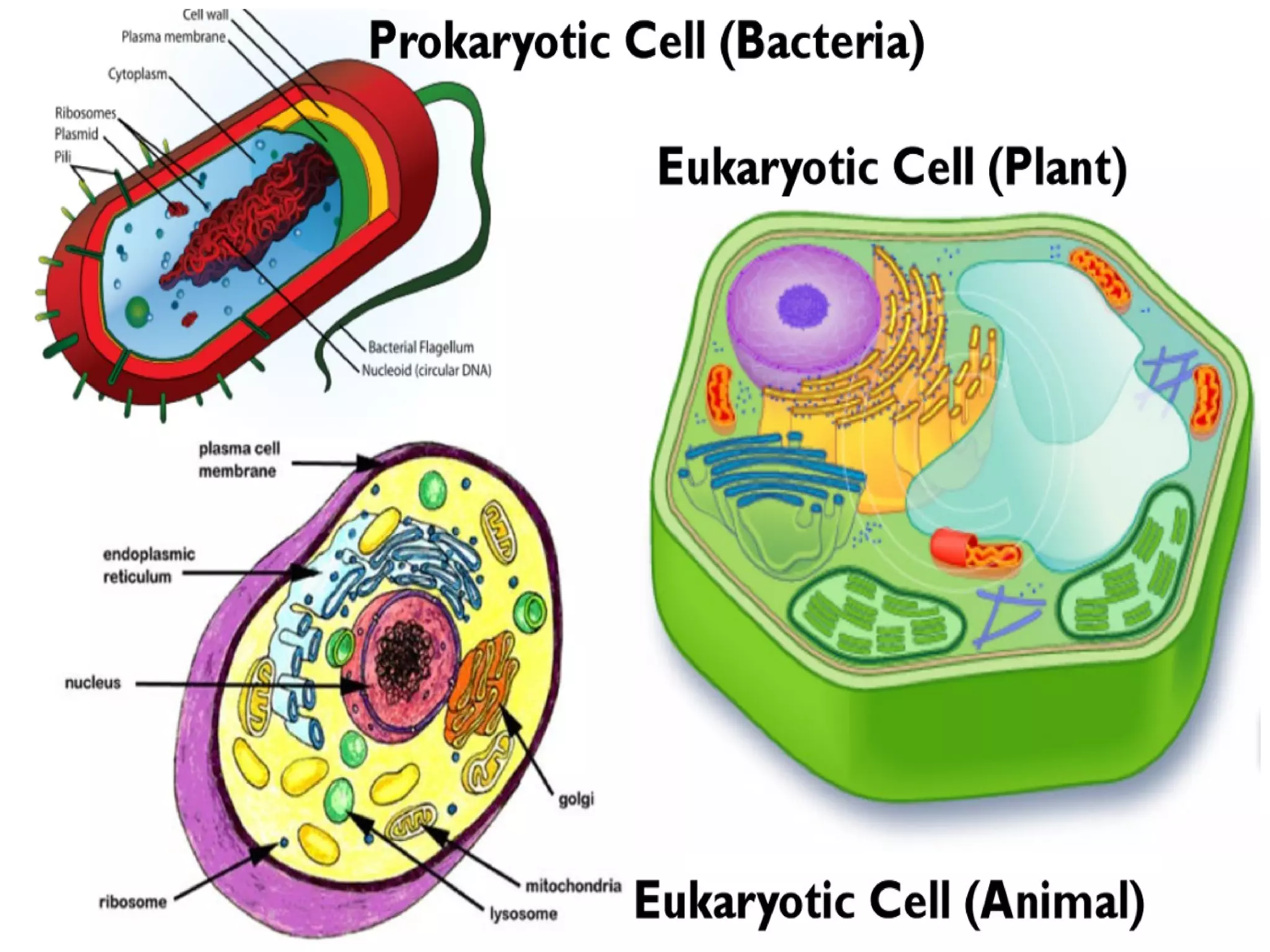
9.Compare the structure of prokaryotic and eukaryotic organisms. [6 marks]
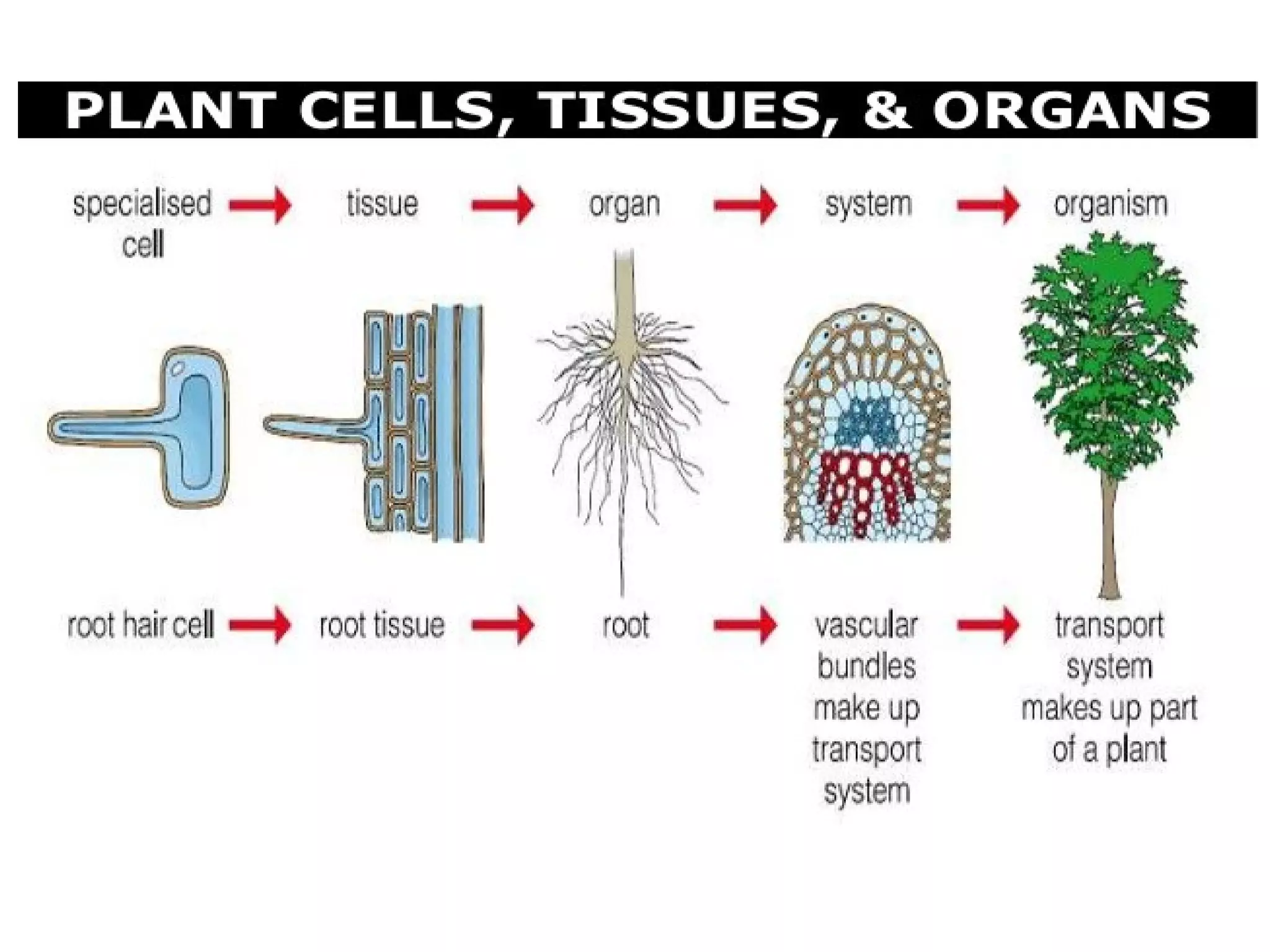
10.Explain what is an organism [7marks]](https://image.slidesharecdn.com/cells-cellstructure-cellsandorganisms-181103154757/75/Cell-cell-structure-Tissues-Organ-systems-and-organisms-IGCSE-Biology-26-2048.jpg)

The document discusses the fundamental aspects of cells as the basic units of life and introduces cell biology. It includes questions related to cell structure, function, measurement, differences between cell types, microscopy, and experimental preparation. The content suggests a focus on educational assessment regarding cellular knowledge and comprehension.


