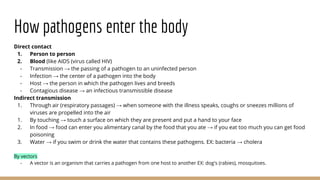
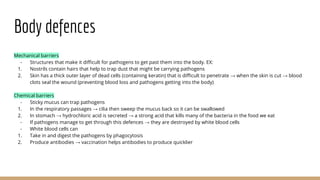
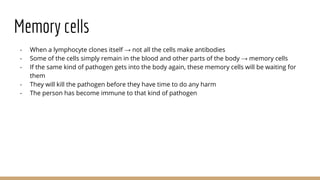
Pathogens such as viruses, bacteria, protists, and fungi can cause infectious diseases when they enter the body. The immune system provides defenses against pathogens through mechanical barriers like skin and mucus, chemical barriers such as stomach acid, and immune cells that destroy pathogens through phagocytosis and antibody production. Antibodies are proteins that bind to antigens on pathogens. Memory cells provide long-lasting immunity against pathogens the body has previously encountered through vaccination or prior infection. Vaccines work by exposing the immune system to weakened or dead pathogens to stimulate antibody and memory cell production.





![Sub 1[1].5 form 5](https://cdn.slidesharecdn.com/ss_thumbnails/sub11-5bodydefencemechanism-120602213445-phpapp01-thumbnail.jpg?width=640&height=640&fit=bounds)


