http://www.huffingtonpost.com/2014/01/13 
Disease 
Sarah Jones
What is a healthy organism? 
Health is the wellbeing of the organism. All our 
body functions, which are under the control of 
our genes, work together to maintain health. 
karmajello.com
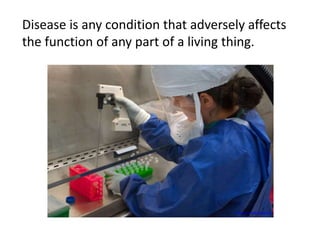
Disease is any condition that adversely affects 
the function of any part of a living thing. 
commons.wikimedia.org
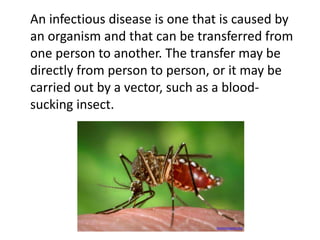
An infectious disease is one that is caused by 
an organism and that can be transferred from 
one person to another. The transfer may be 
directly from person to person, or it may be 
carried out by a vector, such as a blood-sucking 
insect. 
keysmosquito.org
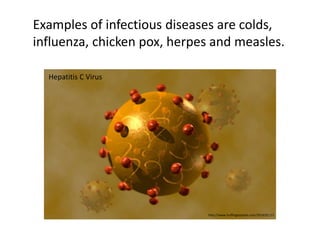
Examples of infectious diseases are colds, 
influenza, chicken pox, herpes and measles. 
http://www.huffingtonpost.com/2014/01/13 
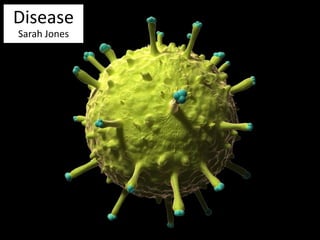
Hepatitis C Virus
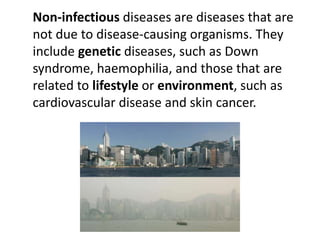
Non-infectious diseases are diseases that are 
not due to disease-causing organisms. They 
include genetic diseases, such as Down 
syndrome, haemophilia, and those that are 
related to lifestyle or environment, such as 
cardiovascular disease and skin cancer.
Agents of Disease
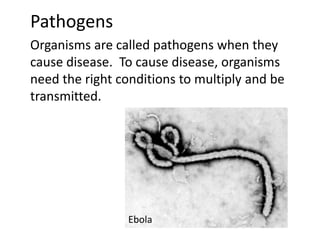
Pathogens 
Organisms are called pathogens when they 
cause disease. To cause disease, organisms 
need the right conditions to multiply and be 
transmitted. 
Ebola
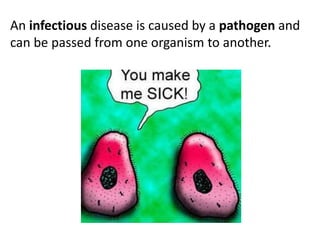
An infectious disease is caused by a pathogen and 
can be passed from one organism to another.
How are diseases spread? 
• Airborne 
• Contact 
• Faeces 
• By other organisms 
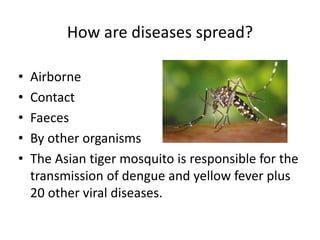
• The Asian tiger mosquito is responsible for the 
transmission of dengue and yellow fever plus 
20 other viral diseases.
Pathogens and Epidemics 
During the Middle Ages waves of infectious 
diseases such as cholera and plague swept 
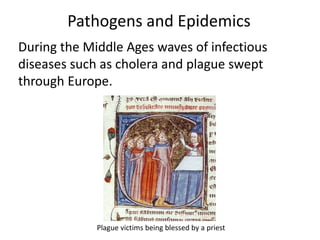
through Europe. 
Plague victims being blessed by a priest
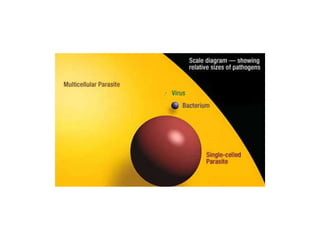
Macroparasites 
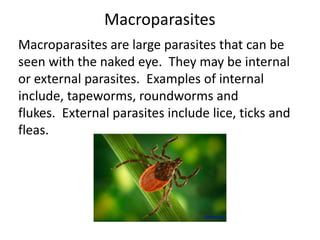
Macroparasites are large parasites that can be 
seen with the naked eye. They may be internal 
or external parasites. Examples of internal 
include, tapeworms, roundworms and 
flukes. External parasites include lice, ticks and 
fleas. 
sph.unc.edu
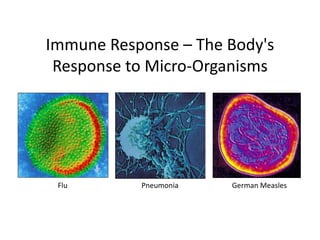
Immune Response – The Body's 
Response to Micro-Organisms 
Flu Pneumonia German Measles
Bodies Defence 
1. Physical (skin and mucous) 
2. Nonspecific defensive cells (phagocytes, 
white blood cells, inflammation and fever) 
3. Immune Response (lymphatic system-recognition 
of foreign cells) 
www.just-health.net
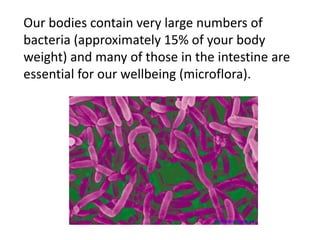
Our bodies contain very large numbers of 
bacteria (approximately 15% of your body 
weight) and many of those in the intestine are 
essential for our wellbeing (microflora). 
nutritionresearchcenter.org
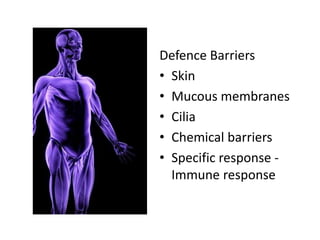
Defence Barriers 
• Skin 
• Mucous membranes 
• Cilia 
• Chemical barriers 
• Specific response - 
Immune response
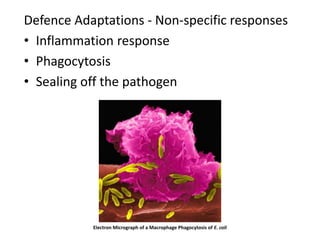
Defence Adaptations - Non-specific responses 
• Inflammation response 
• Phagocytosis 
• Sealing off the pathogen 
Electron Micrograph of a Macrophage Phagocytosis of E. coli
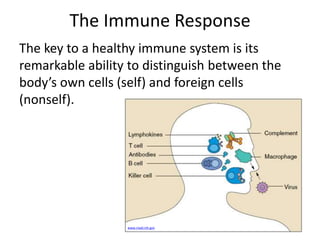
The Immune Response 
The key to a healthy immune system is its 
remarkable ability to distinguish between the 
body’s own cells (self) and foreign cells 
(nonself). 
www.niaid.nih.gov
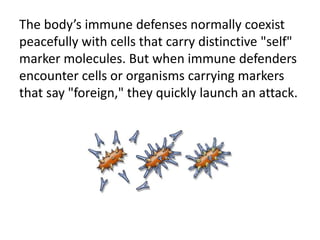
The body’s immune defenses normally coexist 
peacefully with cells that carry distinctive "self" 
marker molecules. But when immune defenders 
encounter cells or organisms carrying markers 
that say "foreign," they quickly launch an attack.
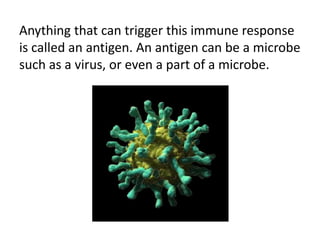
Anything that can trigger this immune response 
is called an antigen. An antigen can be a microbe 
such as a virus, or even a part of a microbe. 
http://www.huffingtonpost.com/2014/01/13
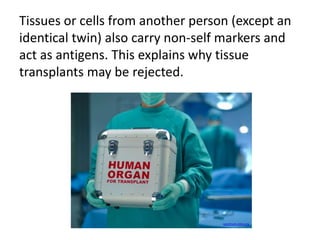
Tissues or cells from another person (except an 
identical twin) also carry non-self markers and 
act as antigens. This explains why tissue 
transplants may be rejected. 
spectrum.ieee.org

Disease

  • 1.
  • 2.
    What is ahealthy organism? Health is the wellbeing of the organism. All our body functions, which are under the control of our genes, work together to maintain health. karmajello.com
  • 3.
    Disease is anycondition that adversely affects the function of any part of a living thing. commons.wikimedia.org
  • 4.
    An infectious diseaseis one that is caused by an organism and that can be transferred from one person to another. The transfer may be directly from person to person, or it may be carried out by a vector, such as a blood-sucking insect. keysmosquito.org
  • 5.
    Examples of infectiousdiseases are colds, influenza, chicken pox, herpes and measles. http://www.huffingtonpost.com/2014/01/13 Hepatitis C Virus
  • 6.
    Non-infectious diseases arediseases that are not due to disease-causing organisms. They include genetic diseases, such as Down syndrome, haemophilia, and those that are related to lifestyle or environment, such as cardiovascular disease and skin cancer.
  • 7.
  • 8.
    Pathogens Organisms arecalled pathogens when they cause disease. To cause disease, organisms need the right conditions to multiply and be transmitted. Ebola
  • 9.
    An infectious diseaseis caused by a pathogen and can be passed from one organism to another.
  • 10.
    How are diseasesspread? • Airborne • Contact • Faeces • By other organisms • The Asian tiger mosquito is responsible for the transmission of dengue and yellow fever plus 20 other viral diseases.
  • 11.
    Pathogens and Epidemics During the Middle Ages waves of infectious diseases such as cholera and plague swept through Europe. Plague victims being blessed by a priest
  • 12.
    Macroparasites Macroparasites arelarge parasites that can be seen with the naked eye. They may be internal or external parasites. Examples of internal include, tapeworms, roundworms and flukes. External parasites include lice, ticks and fleas. sph.unc.edu
  • 14.
    Immune Response –The Body's Response to Micro-Organisms Flu Pneumonia German Measles
  • 15.
    Bodies Defence 1.Physical (skin and mucous) 2. Nonspecific defensive cells (phagocytes, white blood cells, inflammation and fever) 3. Immune Response (lymphatic system-recognition of foreign cells) www.just-health.net
  • 16.
    Our bodies containvery large numbers of bacteria (approximately 15% of your body weight) and many of those in the intestine are essential for our wellbeing (microflora). nutritionresearchcenter.org
  • 17.
    Defence Barriers •Skin • Mucous membranes • Cilia • Chemical barriers • Specific response - Immune response
  • 18.
    Defence Adaptations -Non-specific responses • Inflammation response • Phagocytosis • Sealing off the pathogen Electron Micrograph of a Macrophage Phagocytosis of E. coli
  • 19.
    The Immune Response The key to a healthy immune system is its remarkable ability to distinguish between the body’s own cells (self) and foreign cells (nonself). www.niaid.nih.gov
  • 20.
    The body’s immunedefenses normally coexist peacefully with cells that carry distinctive "self" marker molecules. But when immune defenders encounter cells or organisms carrying markers that say "foreign," they quickly launch an attack.
  • 21.
    Anything that cantrigger this immune response is called an antigen. An antigen can be a microbe such as a virus, or even a part of a microbe. http://www.huffingtonpost.com/2014/01/13
  • 22.
    Tissues or cellsfrom another person (except an identical twin) also carry non-self markers and act as antigens. This explains why tissue transplants may be rejected. spectrum.ieee.org