Launch
  Grab your binder and immediately take a seat
  Take out last night’s homework
1.  From memory, sketch out the periodic table and label
   the 5 families.

2.  What family do the following belong to?
  i.      Sr
  ii.     I
  iii.    Fr
  iv.     Xe
Weekly Schedule
  Monday: Atomic Radius
  Tuesday: Electronegativity & Ionization Energy
  Wednesday: Metals, nonmetals, special groups
  Thursday: Atomic structure & nuclear processes
  Friday: Mid-Term Exam
    Only excused absences, otherwise 0!
    No retakes!

              We don’t have much time!

        If you don’t understand something, ask!
Review Session Today
  During lunch
  After school (until 4:30pm)
How is the atom
  structured?
     Mr. Heffner
     10/15/09
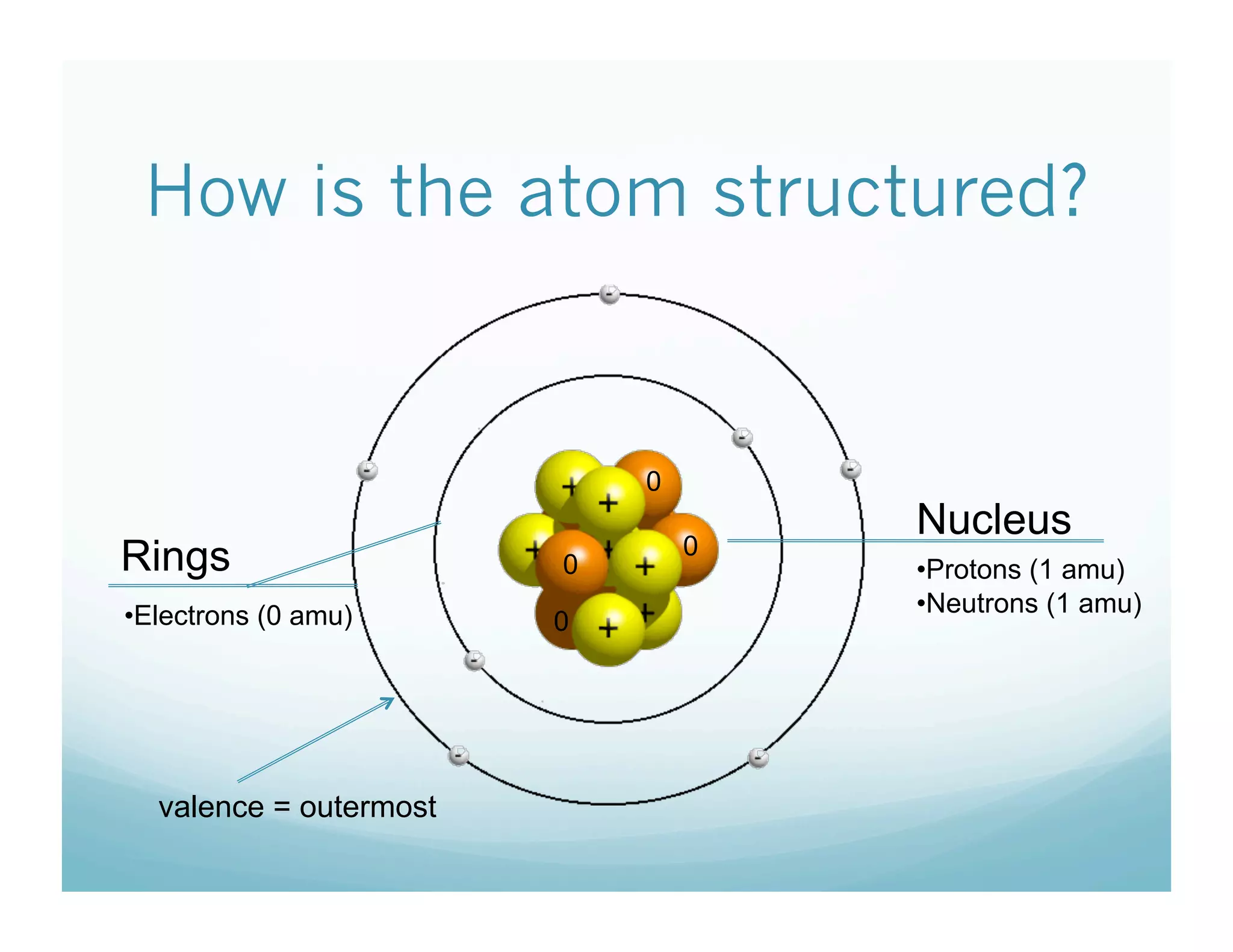
How is the atom structured?


                            0
                                    Nucleus
                                0
Rings                   0           • Protons (1 amu)
• Electrons (0 amu)                 • Neutrons (1 amu)
                        0


  valence = outermost
How is the atom structured?
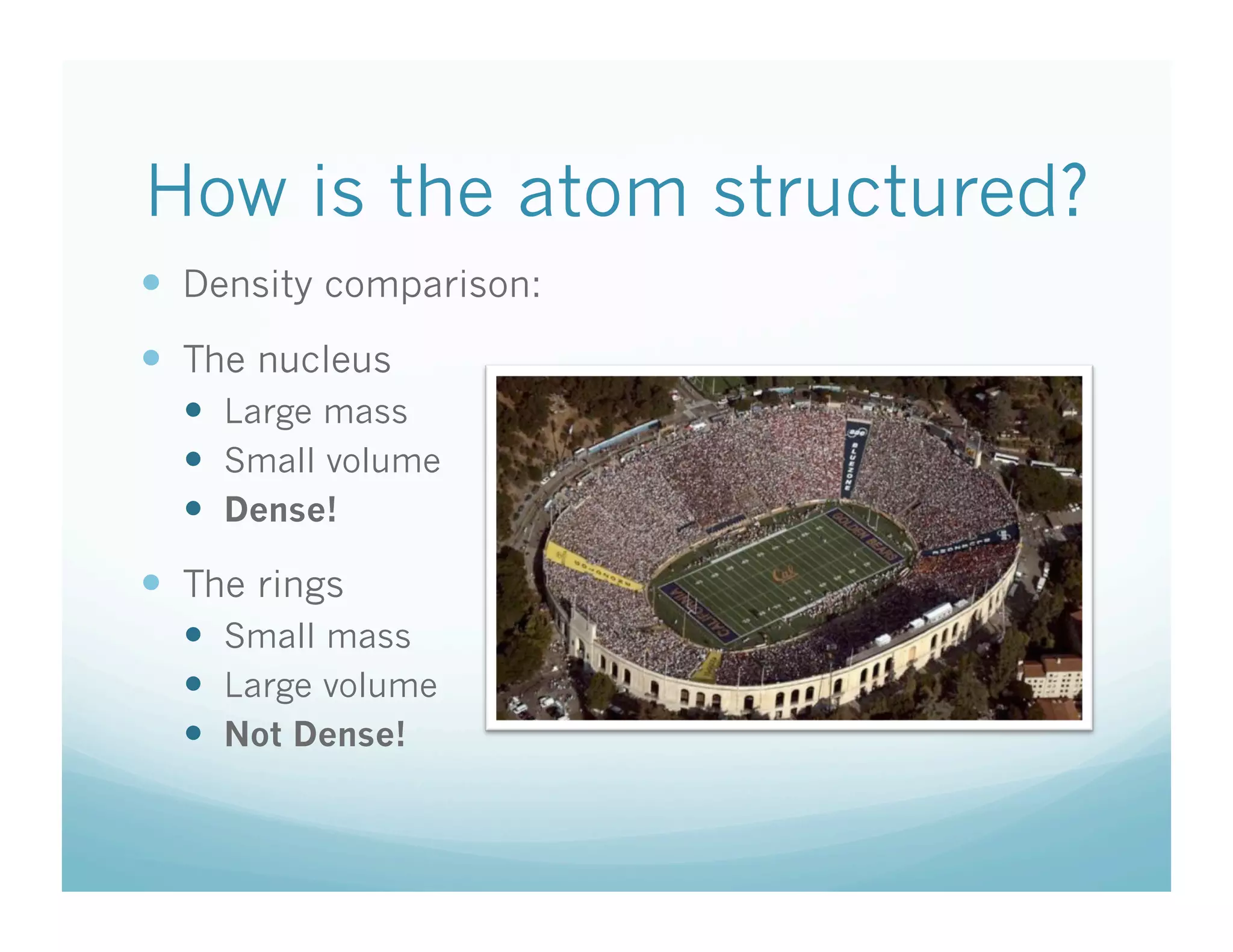
  Density comparison:
  The nucleus
    Large mass
    Small volume
    Dense!

  The rings
    Small mass
    Large volume
    Not Dense!
How is the atom structured?

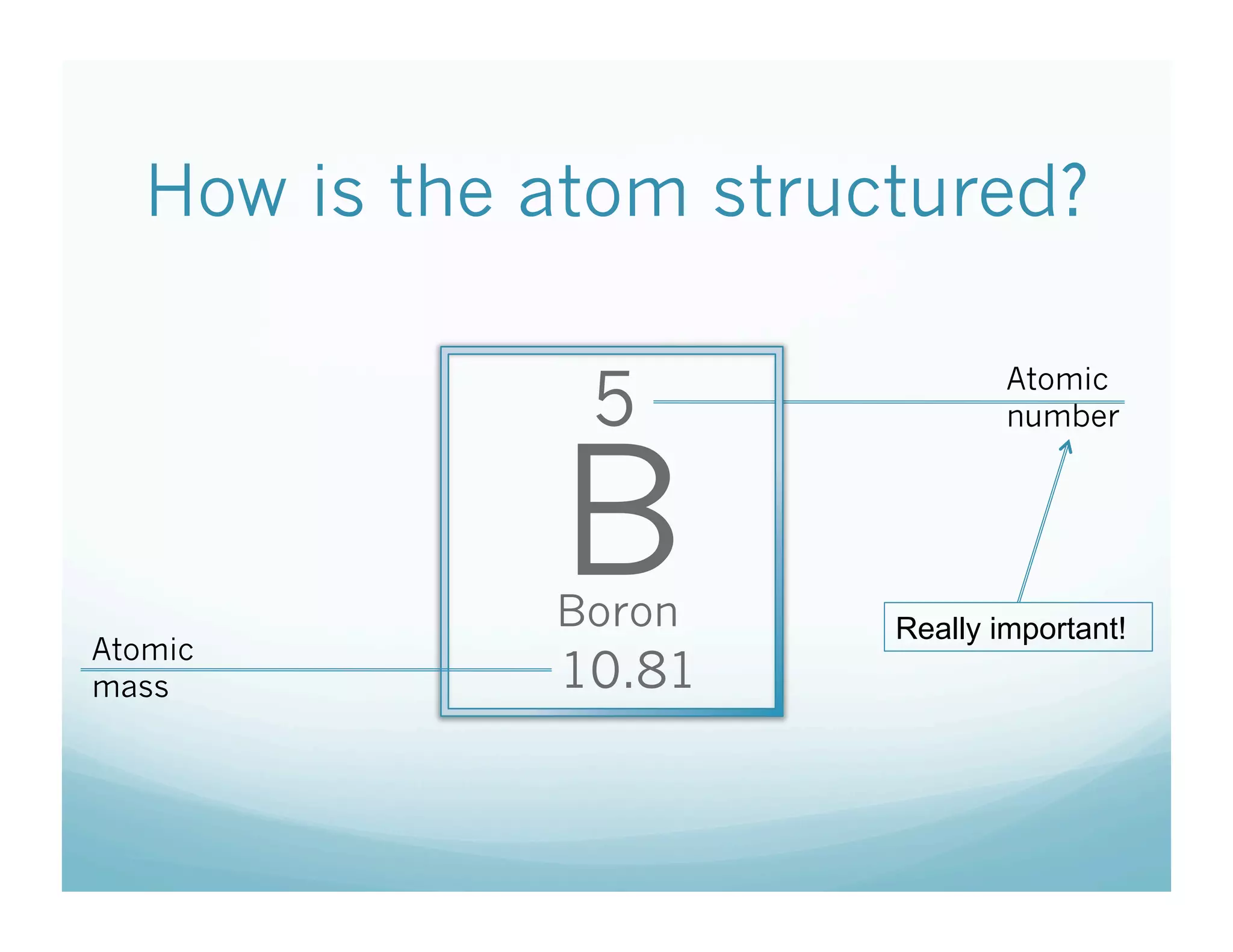
               5                Atomic
                                number


Atomic
              B
              Boron     Really important!
mass          10.81
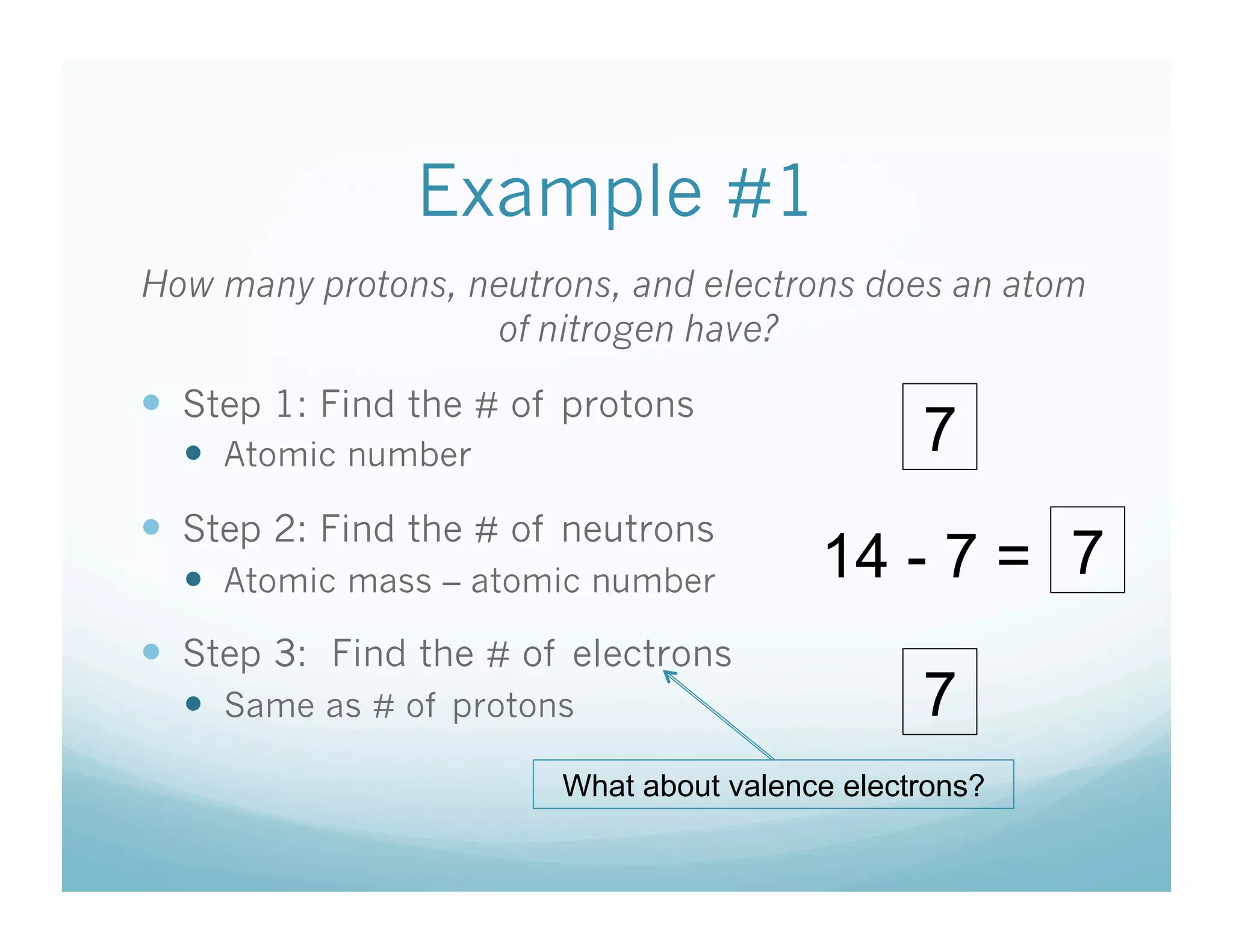
Example #1
How many protons, neutrons, and electrons does an atom
                   of nitrogen have?

  Step 1: Find the # of protons
    Atomic number                              7
  Step 2: Find the # of neutrons
    Atomic mass – atomic number         14 - 7 = 7
  Step 3: Find the # of electrons
    Same as # of protons                       7
                        What about valence electrons?
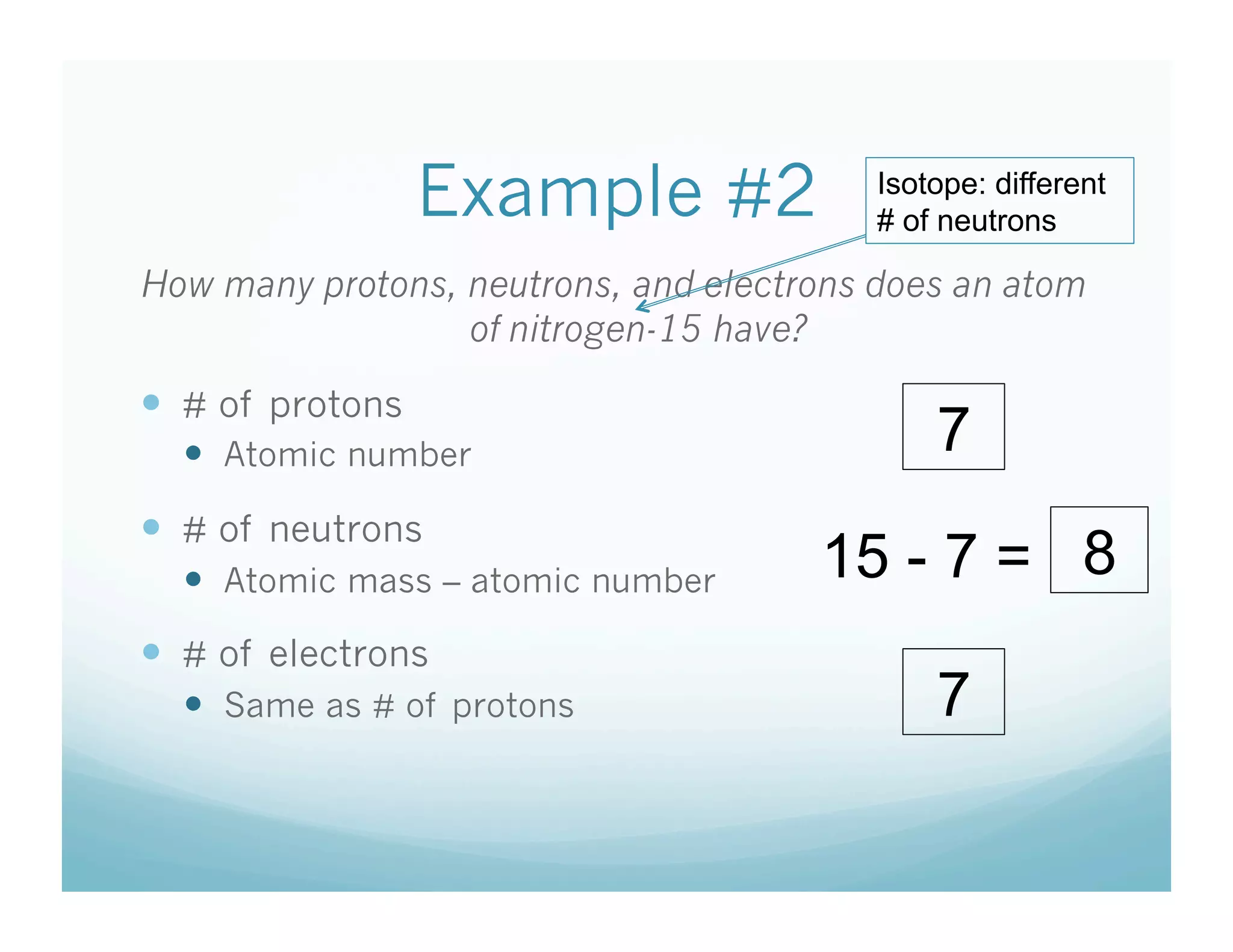
Example #2              Isotope: different
                                          # of neutrons

How many protons, neutrons, and electrons does an atom
                  of nitrogen-15 have?

  # of protons
    Atomic number                            7
  # of neutrons
    Atomic mass – atomic number      15 - 7 = 8
  # of electrons
    Same as # of protons                     7
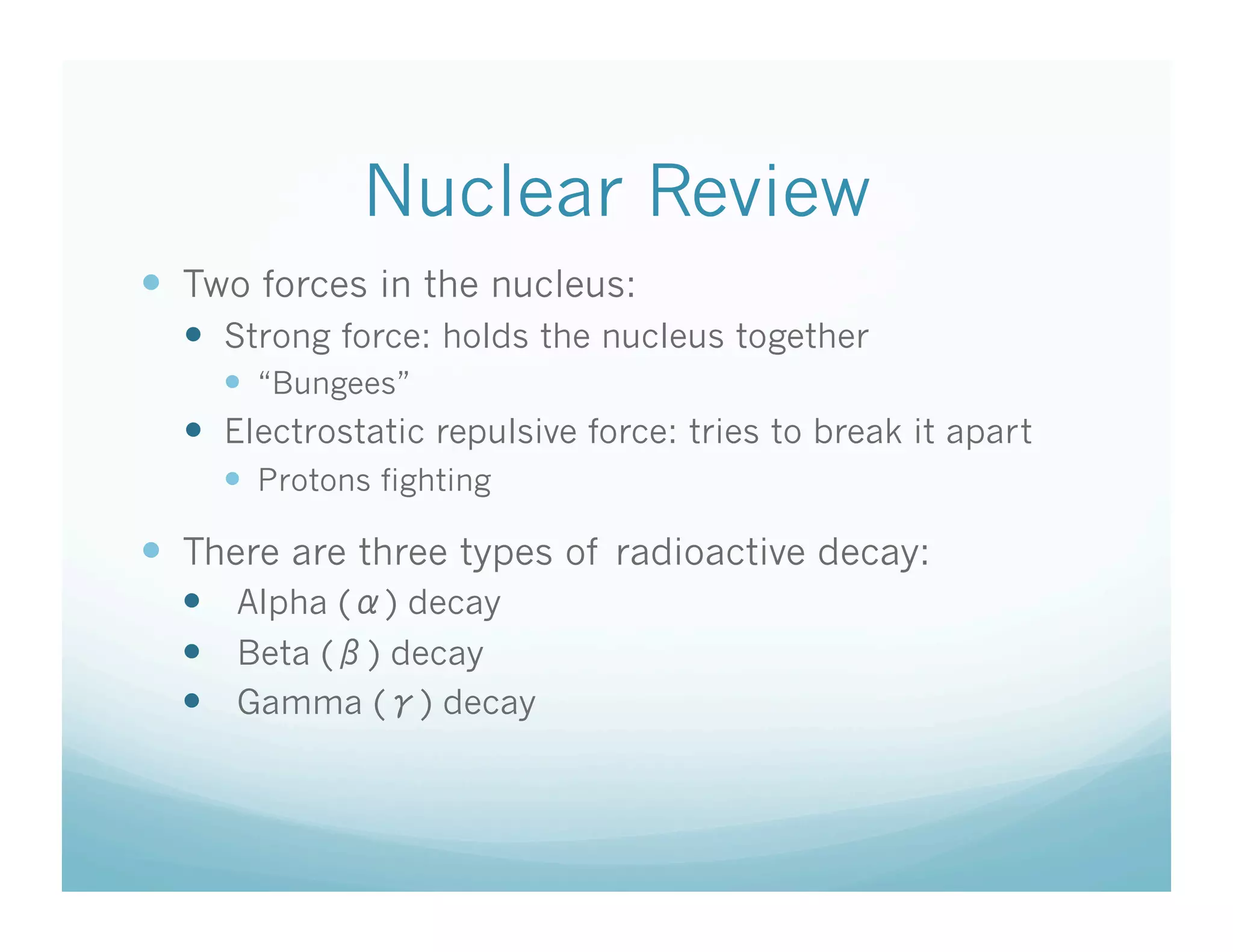
Nuclear Review
  Two forces in the nucleus:
    Strong force: holds the nucleus together
       “Bungees”
    Electrostatic repulsive force: tries to break it apart
       Protons fighting

  There are three types of radioactive decay:
    Alpha ( ) decay
    Beta ( ) decay
    Gamma ( ) decay
Practice Questions
  Review Worksheet #4
Notecard
  One notecard, front and back
  Things I would include:
    Definitions: isotope, atomic number, alpha particle,
     valence electron, density of nucleus…
    Pictures of the trends
    Families on the periodic table
Homework
  Make a notecard
  Finish Review Worksheet #4
  Study hard!
    Review your notes
    Check out our exit slips online!

10/15 Review: Atomic Structure

  • 1.
    Launch   Grab yourbinder and immediately take a seat   Take out last night’s homework 1.  From memory, sketch out the periodic table and label the 5 families. 2.  What family do the following belong to? i.  Sr ii.  I iii.  Fr iv.  Xe
  • 2.
    Weekly Schedule   Monday:Atomic Radius   Tuesday: Electronegativity & Ionization Energy   Wednesday: Metals, nonmetals, special groups   Thursday: Atomic structure & nuclear processes   Friday: Mid-Term Exam   Only excused absences, otherwise 0!   No retakes! We don’t have much time! If you don’t understand something, ask!
  • 3.
    Review Session Today  During lunch   After school (until 4:30pm)
  • 4.
    How is theatom structured? Mr. Heffner 10/15/09
  • 5.
    How is theatom structured? 0 Nucleus 0 Rings 0 • Protons (1 amu) • Electrons (0 amu) • Neutrons (1 amu) 0 valence = outermost
  • 6.
    How is theatom structured?   Density comparison:   The nucleus   Large mass   Small volume   Dense!   The rings   Small mass   Large volume   Not Dense!
  • 7.
    How is theatom structured? 5 Atomic number Atomic B Boron Really important! mass 10.81
  • 8.
    Example #1 How manyprotons, neutrons, and electrons does an atom of nitrogen have?   Step 1: Find the # of protons   Atomic number 7   Step 2: Find the # of neutrons   Atomic mass – atomic number 14 - 7 = 7   Step 3: Find the # of electrons   Same as # of protons 7 What about valence electrons?
  • 9.
    Example #2 Isotope: different # of neutrons How many protons, neutrons, and electrons does an atom of nitrogen-15 have?   # of protons   Atomic number 7   # of neutrons   Atomic mass – atomic number 15 - 7 = 8   # of electrons   Same as # of protons 7
  • 10.
    Nuclear Review   Twoforces in the nucleus:   Strong force: holds the nucleus together   “Bungees”   Electrostatic repulsive force: tries to break it apart   Protons fighting   There are three types of radioactive decay:   Alpha ( ) decay   Beta ( ) decay   Gamma ( ) decay
  • 11.
  • 12.
    Notecard   One notecard,front and back   Things I would include:   Definitions: isotope, atomic number, alpha particle, valence electron, density of nucleus…   Pictures of the trends   Families on the periodic table
  • 13.
    Homework   Make anotecard   Finish Review Worksheet #4   Study hard!   Review your notes   Check out our exit slips online!