You Will Need:
1)Pencil, Colored Pencils
2)Power Notes – Atomic
  Structure – Book shelf 3
  pages 6 sides- Please Staple.
Reminders        :


1.Binder Check #2 – Due at the beginning
  of class on Thur.
  1.Table of Contents on-line
  2.Edit out my notes
  3.Number your pages starting with Log
    #2
2. ½ page of notes for Test #2 – Thur-
  Computer, Fri-Written portion
     Front side only – Done by hand
Class Notes
            Power Notes –
Topic: ________________________   Atomic       Name ________________________________________
                                              Class ________________________________________
           Structure
Questions/Main Ideas:                         Period ________________________________________
                                                Date _____________________________________
                                                                   Notes:


                                           • Is made up of tiny particles
1. All Matter
                                             called atoms.


 2. What are                               • Smallest particle into which
 Atoms?                                      an element can be divided
                                             and still keep its properties.

                                           • EX: one atom of gold still has
                                             all the properties of
                                             gold….but if you split the
                                             atom it is no longer gold.
• Most of what we know was
3. How do we
know what we          discovered throughout
know about            history from indirect
atoms?                observations. (without ever seeing an
                      image)….remember the “Whatzit?”


4. How big is the      • The diameter is about one
atom?                    hundred-millionth of a
                         centimeter (0.00000001 cm)
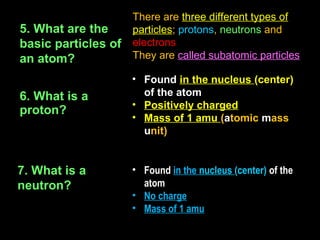
There are three different types of
5. What are the      particles; protons, neutrons and
basic particles of   electrons
an atom?             They are called subatomic particles

                     • Found in the nucleus (center)
6. What is a           of the atom
                     • Positively charged
proton?
                     • Mass of 1 amu (atomic mass
                       unit)


7. What is a         • Found in the nucleus (center) of the
neutron?               atom
                     • No charge
                     • Mass of 1 amu
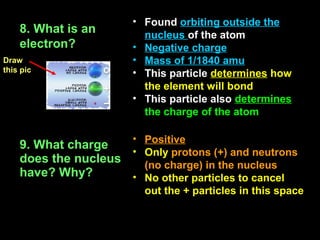
• Found orbiting outside the
    8. What is an        nucleus of the atom
    electron?          • Negative charge
Draw                   • Mass of 1/1840 amu
this pic               • This particle determines how
                         the element will bond
                       • This particle also determines
                         the charge of the atom

                       •
                       Positive
    9. What charge
                     • Only protons (+) and neutrons
    does the nucleus   (no charge) in the nucleus
    have? Why?       • No other particles to cancel
                           out the + particles in this space
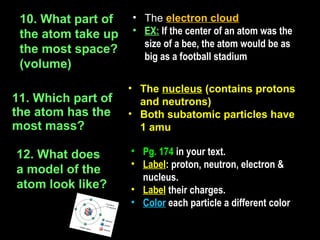
10. What part of   • The electron cloud
 the atom take up   • EX: If the center of an atom was the
                      size of a bee, the atom would be as
 the most space?
                      big as a football stadium
 (volume)
                    • The nucleus (contains protons
11. Which part of     and neutrons)
the atom has the    • Both subatomic particles have
most mass?            1 amu

12. What does       • Pg. 174 in your text.
                    • Label: proton, neutron, electron &
a model of the
                      nucleus.
atom look like?     • Label their charges.
                    • Color each particle a different color
13. If all elements   •   Each element has their own unique amount
are made up of            of protons
                      •   No two elements have the same amount of
atoms, how do we          protons
know which element    •   Count the protons in the nucleus and you
we are looking at?        can identify what element you are looking
                          at

                      • Atoms found on the Periodic Table are
                        electronically neutral.
14. What charge do    • They have the same # of protons (+) and
the atoms have?         electrons (-),.
                      • Their charges cancel each other out.


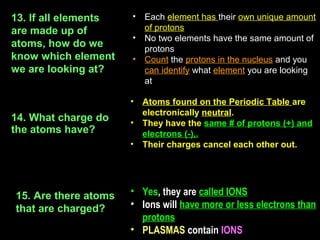
15. Are there atoms   • Yes, they are called IONS
that are charged?     • Ions will have more or less electrons than
                        protons
                      • PLASMAS contain IONS
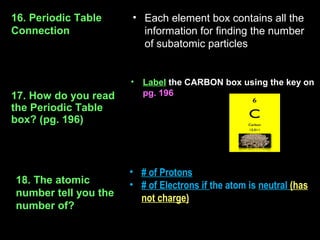
16. Periodic Table    • Each element box contains all the
Connection              information for finding the number
                        of subatomic particles


                      •   Label the CARBON box using the key on
17. How do you read       pg. 196
the Periodic Table
box? (pg. 196)


                      • # of Protons
18. The atomic        • # of Electrons if the atom is neutral (has
number tell you the     not charge)
number of?
19. The atomic mass        • Protons added to the number of
tells you the number         Neutrons
of?                        • In other words: the mass of the
                             nucleus

20. How do you find    •     Round the atomic mass to the nearest
the # of neutrons            whole #
                       •     Subtract the Atomic Number from the
                             Atomic Mass
                       •     Your answer represents the # of
                             neutrons in the most common isotope of
                             an element


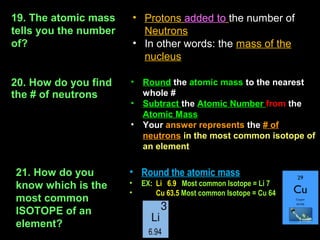
21. How do you         • Round the atomic mass
know which is the      •    EX: Li 6.9 Most common Isotope = Li 7
                       •        Cu 63.5 Most common Isotope = Cu 64
most common
ISOTOPE of an
element?
22. What is an            • Same element with a different # of
ISOTOPE?                    neutrons

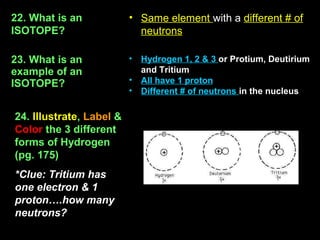
23. What is an            •   Hydrogen 1, 2 & 3 or Protium, Deutirium
example of an                 and Tritium
ISOTOPE?                  •   All have 1 proton
                          •   Different # of neutrons in the nucleus

24. Illustrate, Label &
Color the 3 different
forms of Hydrogen
(pg. 175)
*Clue: Tritium has
one electron & 1
proton….how many
neutrons?
25. How are the     • Same # of protons
ISOTOPES similar?   • Same element


 Review:

 Use your notes to help answer the Review
 questions.
1. Power Notes – Due by the end
   of the period Tomorrow
2. Binder Check #2 - Due
   Thursday
3. Test #2-1/2 page of notes –
   Due Thursday

Power Notes Atomic Structure-Day 1

  • 1.
    You Will Need: 1)Pencil,Colored Pencils 2)Power Notes – Atomic Structure – Book shelf 3 pages 6 sides- Please Staple.
  • 2.
    Reminders : 1.Binder Check #2 – Due at the beginning of class on Thur. 1.Table of Contents on-line 2.Edit out my notes 3.Number your pages starting with Log #2 2. ½ page of notes for Test #2 – Thur- Computer, Fri-Written portion Front side only – Done by hand
  • 3.
    Class Notes Power Notes – Topic: ________________________ Atomic Name ________________________________________ Class ________________________________________ Structure Questions/Main Ideas: Period ________________________________________ Date _____________________________________ Notes: • Is made up of tiny particles 1. All Matter called atoms. 2. What are • Smallest particle into which Atoms? an element can be divided and still keep its properties. • EX: one atom of gold still has all the properties of gold….but if you split the atom it is no longer gold.
  • 4.
    • Most ofwhat we know was 3. How do we know what we discovered throughout know about history from indirect atoms? observations. (without ever seeing an image)….remember the “Whatzit?” 4. How big is the • The diameter is about one atom? hundred-millionth of a centimeter (0.00000001 cm)
  • 5.
    There are threedifferent types of 5. What are the particles; protons, neutrons and basic particles of electrons an atom? They are called subatomic particles • Found in the nucleus (center) 6. What is a of the atom • Positively charged proton? • Mass of 1 amu (atomic mass unit) 7. What is a • Found in the nucleus (center) of the neutron? atom • No charge • Mass of 1 amu
  • 6.
    • Found orbitingoutside the 8. What is an nucleus of the atom electron? • Negative charge Draw • Mass of 1/1840 amu this pic • This particle determines how the element will bond • This particle also determines the charge of the atom • Positive 9. What charge • Only protons (+) and neutrons does the nucleus (no charge) in the nucleus have? Why? • No other particles to cancel out the + particles in this space
  • 7.
    10. What partof • The electron cloud the atom take up • EX: If the center of an atom was the size of a bee, the atom would be as the most space? big as a football stadium (volume) • The nucleus (contains protons 11. Which part of and neutrons) the atom has the • Both subatomic particles have most mass? 1 amu 12. What does • Pg. 174 in your text. • Label: proton, neutron, electron & a model of the nucleus. atom look like? • Label their charges. • Color each particle a different color
  • 8.
    13. If allelements • Each element has their own unique amount are made up of of protons • No two elements have the same amount of atoms, how do we protons know which element • Count the protons in the nucleus and you we are looking at? can identify what element you are looking at • Atoms found on the Periodic Table are electronically neutral. 14. What charge do • They have the same # of protons (+) and the atoms have? electrons (-),. • Their charges cancel each other out. 15. Are there atoms • Yes, they are called IONS that are charged? • Ions will have more or less electrons than protons • PLASMAS contain IONS
  • 9.
    16. Periodic Table • Each element box contains all the Connection information for finding the number of subatomic particles • Label the CARBON box using the key on 17. How do you read pg. 196 the Periodic Table box? (pg. 196) • # of Protons 18. The atomic • # of Electrons if the atom is neutral (has number tell you the not charge) number of?
  • 10.
    19. The atomicmass • Protons added to the number of tells you the number Neutrons of? • In other words: the mass of the nucleus 20. How do you find • Round the atomic mass to the nearest the # of neutrons whole # • Subtract the Atomic Number from the Atomic Mass • Your answer represents the # of neutrons in the most common isotope of an element 21. How do you • Round the atomic mass know which is the • EX: Li 6.9 Most common Isotope = Li 7 • Cu 63.5 Most common Isotope = Cu 64 most common ISOTOPE of an element?
  • 11.
    22. What isan • Same element with a different # of ISOTOPE? neutrons 23. What is an • Hydrogen 1, 2 & 3 or Protium, Deutirium example of an and Tritium ISOTOPE? • All have 1 proton • Different # of neutrons in the nucleus 24. Illustrate, Label & Color the 3 different forms of Hydrogen (pg. 175) *Clue: Tritium has one electron & 1 proton….how many neutrons?
  • 12.
    25. How arethe • Same # of protons ISOTOPES similar? • Same element Review: Use your notes to help answer the Review questions.
  • 13.
    1. Power Notes– Due by the end of the period Tomorrow 2. Binder Check #2 - Due Thursday 3. Test #2-1/2 page of notes – Due Thursday