Digestive System
Yogeshwary M. Bhongade
Assistant Professor
Kamla Neharu College of Pharmacy, Butibori, Nagpur
What is Digestion?
• Digestion is the complex process of turning the food you eat into
nutrients, which the body uses for energy, growth and cell repair needed
to survive.
• The digestion process also involves creating waste to be eliminated.
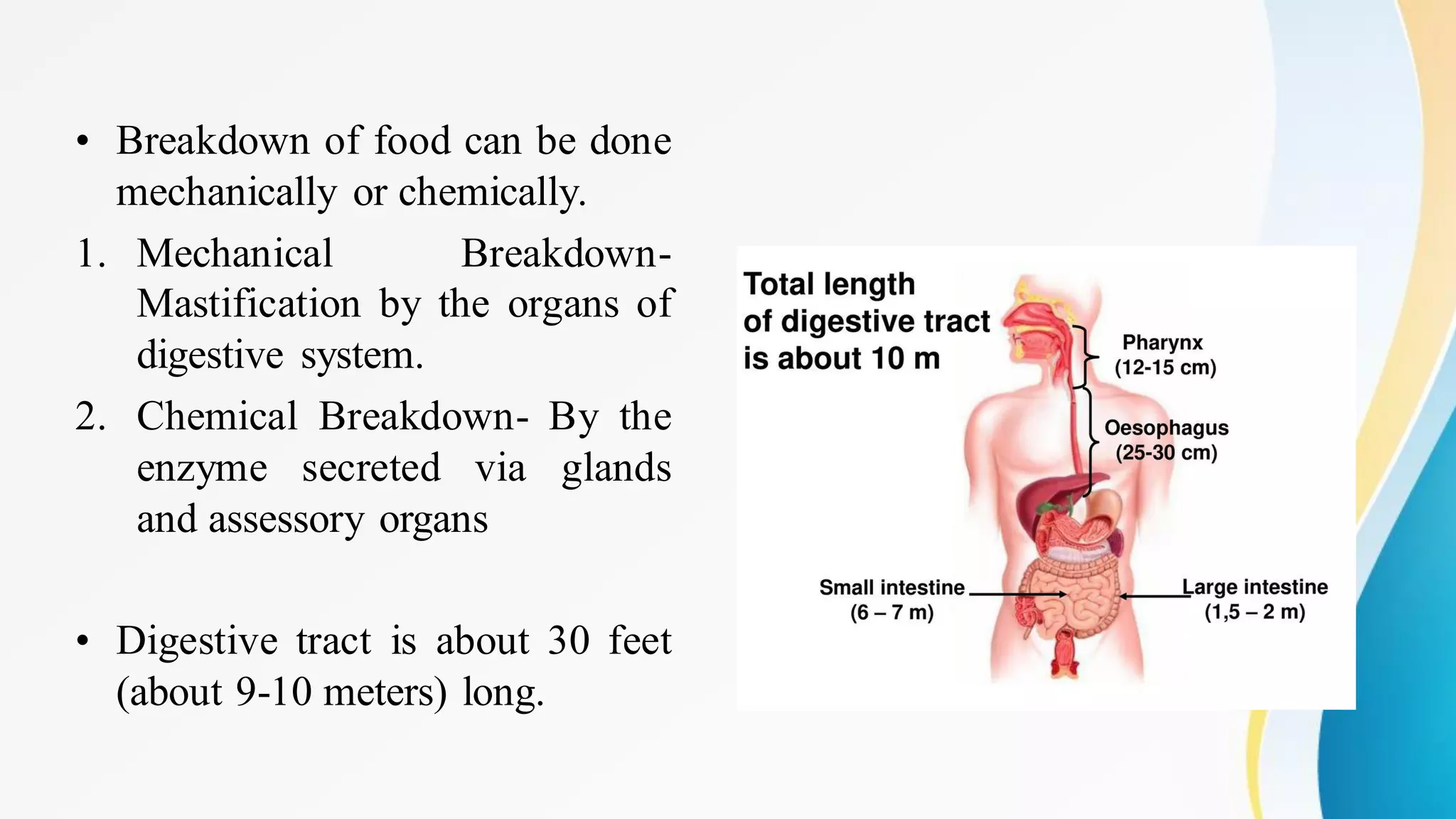
• The digestive tract (or gastrointestinal tract) is a long twisting tube that
starts at the mouth and ends at the anus. It is made up of a series of
muscles that coordinate the movement of food and other cells that
produce enzymes and hormones to aid in the breakdown of food.
or
• It is the process by which food is broken down into simple chemical
substances that canbe absorb or used as nutrients by the body.
• Breakdown of food can be done
mechanically or chemically.
1. Mechanical Breakdown-
Mastification by the organs of
digestive system.
2. Chemical Breakdown- By the
enzyme secreted via glands
and assessory organs
• Digestive tract is about 30 feet
(about 9-10 meters) long.
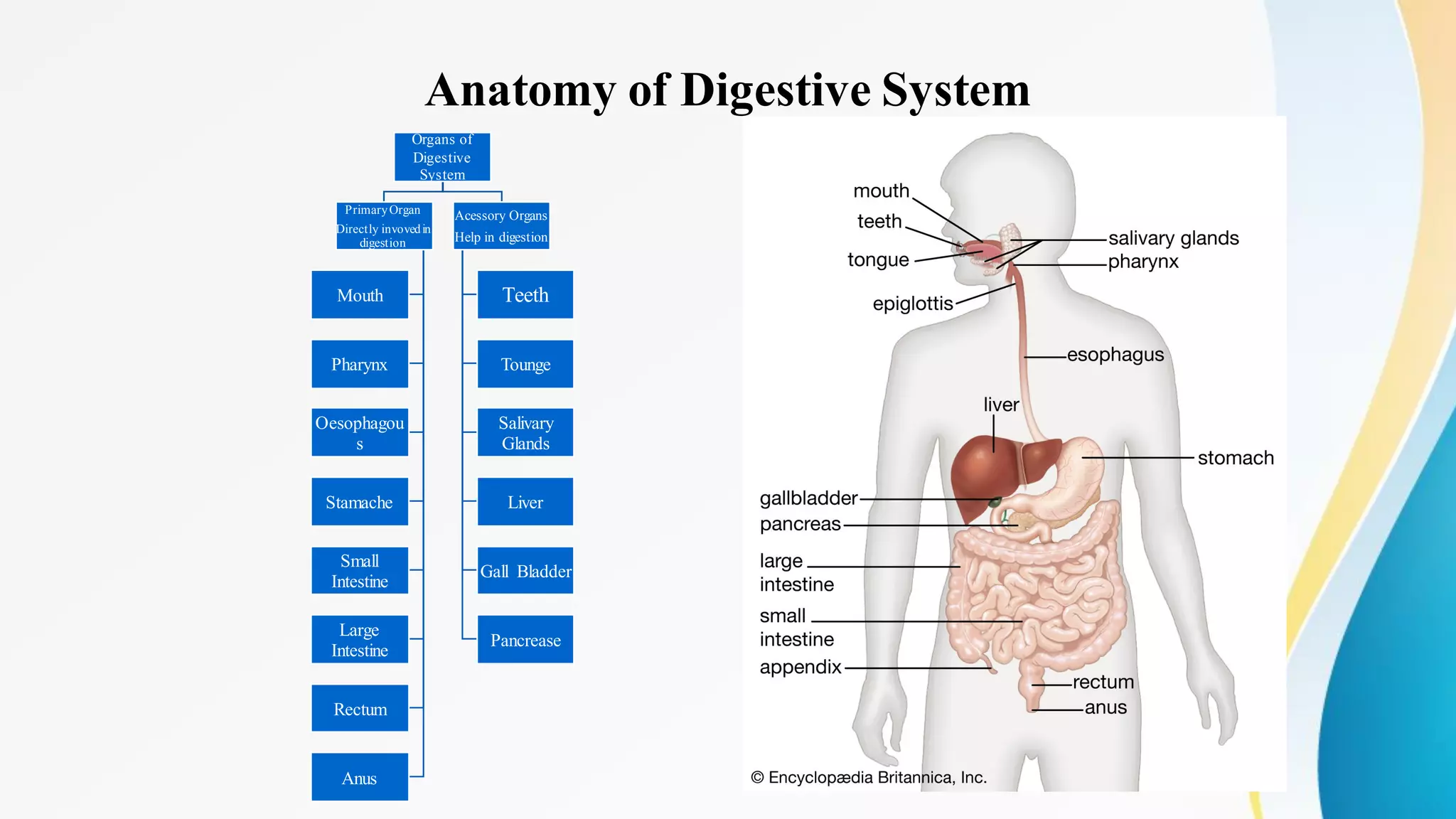
Anatomy of Digestive System
Organs of
Digestive
System
PrimaryOrgan
Directly invovedin
digestion
Mouth
Pharynx
Oesophagou
s
Stamache
Small
Intestine
Large
Intestine
Rectum
Anus
Acessory Organs
Help in digestion
Teeth
Tounge
Salivary
Glands
Liver
Gall Bladder
Pancrease
Activities of Digestive System
1. Ingestion
2. Propulsion
3. Digestion
4. Absorption
5. Elimination
Parts of Digestive System
Mouth (Baccal Cavity)
• Upper expanded portion which form the begining of alimentary Canal.
• It can be divided into two parts;
1. Vestibule- An outer part lies between lips and inner lining of cheeks
externally and gums and teeth internally.
2. Cavity of mouth- An inner part. It is bounded by teeth and mastoid bone at
the sides, palate above and tounge below.
• Other important Structure of mouth are
• Tounge
• Teeth
• Salivary Glands
Food's Journey Through the Digestive System
Mouth (Baccal Cavity)
• It is the beginning of the digestive system, and, in fact, digestion starts here
before you even take the first bite of a meal.
• The smell of food triggers the salivary glands in your mouth to secrete
saliva, causing your mouth to water.
• When you actually taste the food, saliva increases.
• Once you start chewing and breaking the food down into pieces small
enough to be digested, other mechanisms come into play. More saliva is
produced.
• It contains substances including enzymes that begin the process of breaking
down food into a form your body can absorb and use.
Pharynx
• Pharynx lies between mouth and oesophagus.
1. Nasopharynx- It lies behind the nasal cavity. It extend from base of
skull to the level of soft palate. On either side, it has an opening for
Eustachian tube.
2. Oropharynx- It lies behind the mouth. It extends between soft
palate above and upper opening of larynx. The lateral wall of
oropharynx contain the tonsils.
3. Laryngopharynx- Lowest part and it lies behind the larynx.
Food's Journey Through the Digestive System
The Pharynx and Esophagus
• Also called the throat, the pharynx is the portion of the digestive tract
that receives the food from your mouth. Branching off the pharynx is
the esophagus, which carries food to the stomach, and the trachea or
windpipe, which carries air to the lungs.
• The act of swallowing takes place in the pharynx partly as a reflex and
partly under voluntary control. The tongue and soft palate the soft part
of the roof of the mouth -- push food into the pharynx, which closes
off the trachea. The food then enters the esophagus.
Esophagus
• The esophagus is a muscular tube extending from the pharynx and
behind the trachea to the stomach.
• The oesophagus contains sphinctures at its upper and lower ends.
These sphinctures relax during swallowing.
Deglutition (Act of Swallowing)
1. Stage 1- Closing of the lips and raising of tounge against the palate
forces the bolus into oropharynx.
2. Stage 2- By the contraction of the muscle of pharynx,the bolus is
forced into oesophagus.
3. Stage 3- In the oesophagus, contraction of its muscular walls carries
the food down to stomach.
Food's Journey Through the Digestive System
• Food is pushed through the esophagus and into the stomach by means of
a series of contractions called peristalsis.
• Just before the opening to the stomach is an important ring-shaped muscle
called the lower esophageal sphincter (LES).
• This sphincter opens to let food pass into the stomach and closes to keep
it there.
• If your LES doesn't work properly, you may suffer from a condition
called GERD, or reflux, which causes heartburn and regurgitation (the
feeling of food coming back up).
Stomach
• The stomach is a sac-like organ with
strong muscular walls. In addition to
holding food, it serves as the mixer
and grinder of food.
• The stomach secretes acid and
powerful enzymes that continue the
process of breaking the food down
and changing it to a consistency of
liquid or paste. From there, food
moves to the small intestine.
• Stamach secretes pepsin, renin,
HCL, intrinsic factor, chyme.
Small Intestine
• Small intestine is the part of alimentary canal
which extend from polyric end of stamch to
caecum.
• Between meals, the non-liquefiable remnants are
released from the stomach and ushered through the
rest of the intestines to be eliminated.
• Made up of three segments -- the duodenum,
jejunum, and ileum -- the small intestine also
breaks down food using enzymes released by the
pancreas and bile from the liver.
• The duodenum is largely responsible for the
continuing breakdown process, with the jejunum
and ileum being mainly responsible for absorption
of nutrients into the bloodstream.
• The small intestine is the 'work horse' of digestion, as this is where
most nutrients are absorbed.
• Peristalsis is also at work in this organ, moving food through and
mixing it up with the digestive secretions from the pancreas and liver,
including bile.
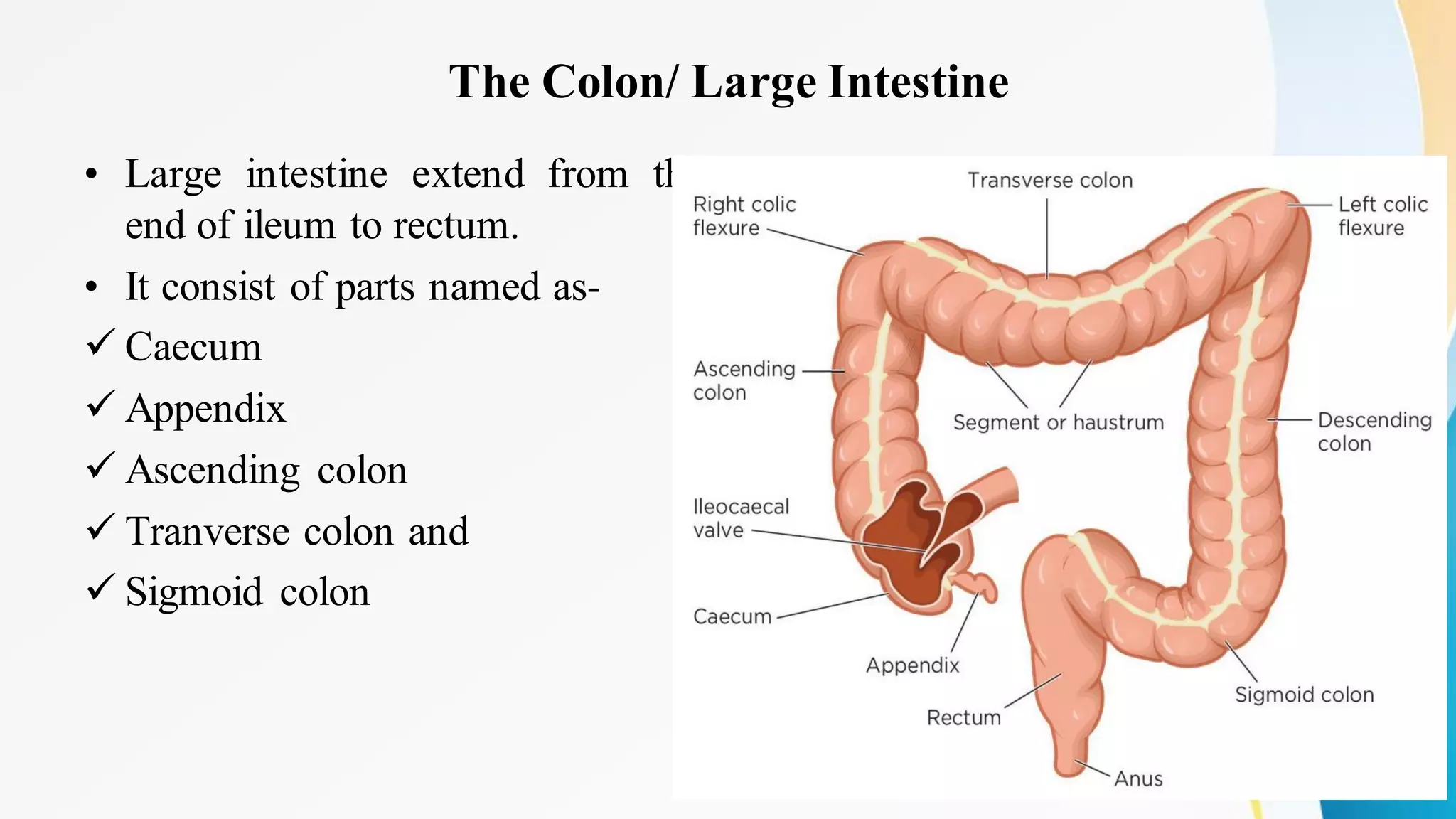
The Colon/ Large Intestine
• Large intestine extend from the
end of ileum to rectum.
• It consist of parts named as-
āœ“ Caecum
āœ“ Appendix
āœ“ Ascending colon
āœ“ Tranverse colon and
āœ“ Sigmoid colon
Function of Large Intestine
• Digestion
• Absorption
• Secretion
• Excretion
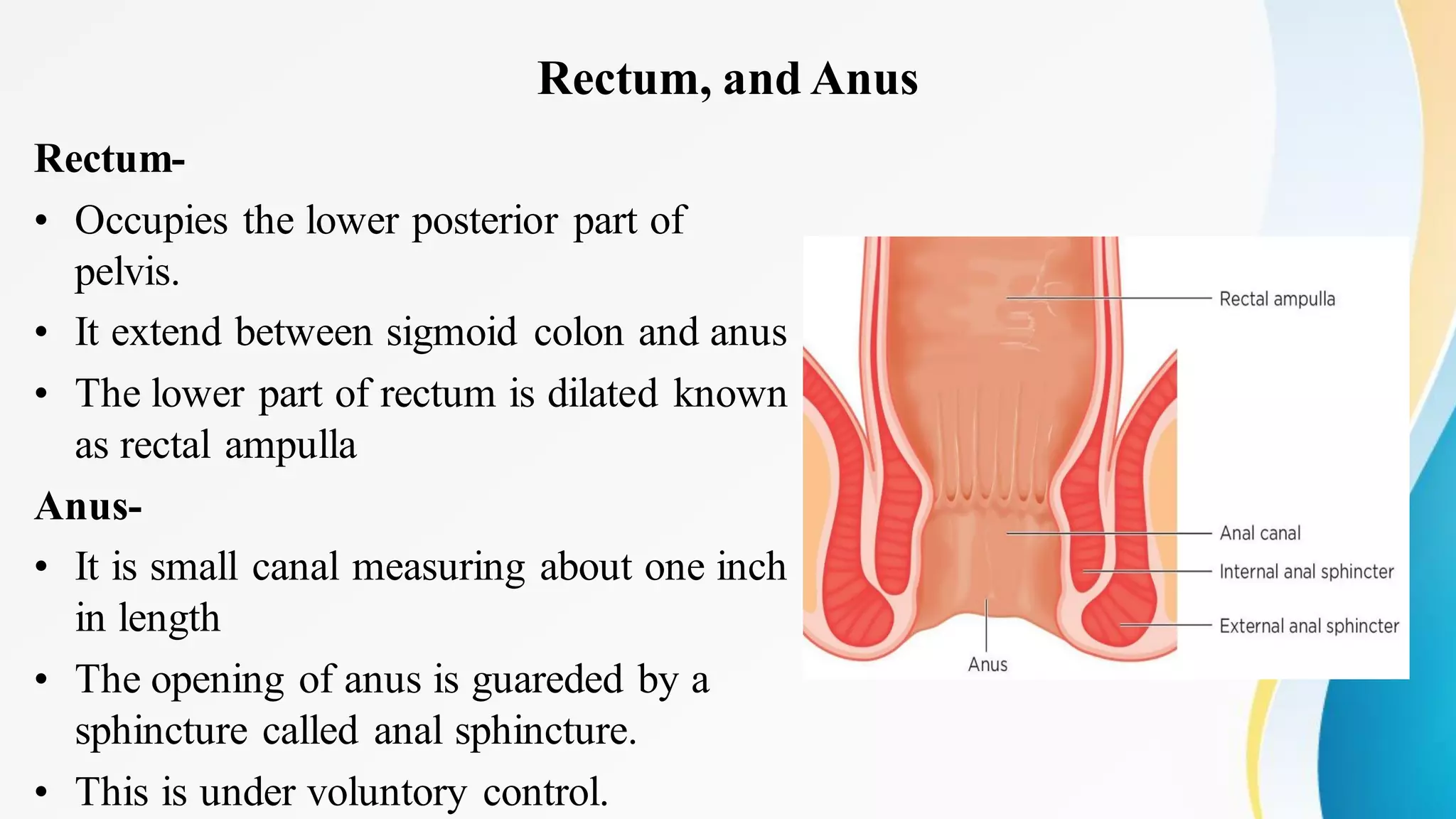
Rectum, and Anus
Rectum-
• Occupies the lower posterior part of
pelvis.
• It extend between sigmoid colon and anus
• The lower part of rectum is dilated known
as rectal ampulla
Anus-
• It is small canal measuring about one inch
in length
• The opening of anus is guareded by a
sphincture called anal sphincture.
• This is under voluntory control.
Accessory Digestive Organs
Pancreas
• Among other functions, the pancreas is the chief factory for digestive enzymes that are
secreted into the duodenum, the first segment of the small intestine. These enzymes break
down protein, fats, and carbohydrates.
Liver
• The liver has multiple functions, but two of its main functions within the digestive system
are to make and secrete an important substance called bile and to process the blood coming
from the small intestine containing the nutrients just absorbed. The liver purifies this blood
of many impurities before traveling to the rest of the body.
Gallbladder
• The gallbladder is a storage sac for excess bile. Bile made in the liver travels to the small
intestine via the bile ducts. If the intestine doesn't need it, the bile travels into the
gallbladder, where it awaits the signal from the intestines that food is present. Bile serves
two main purposes. First, it helps absorb fats in the diet, and secondly, it carries waste from
the liver that cannot go through the kidneys.
Function of Digestive System
• Ingestion
• Breaking of food into smaller particals
• Transport of food into different areas of digestive tract
• Secretion of enzyme and other substances
• Digestion
• Absorption of nutrients
• Removal of unwanted Material
Liver
• The liver is located in the upper right-
hand portion of the abdominal cavity,
beneath the diaphragm, and on top of
the stomach, right kidney, and intestines.
• Shaped like a cone, the liver is a dark
reddish-brown organ that weighs about
1500 g and comprises ~2% of total BW.
External features of liver
• Liver contain two lobes and surfaces
• Lobes-
1. A right Loabe &
2. A Left Lobe
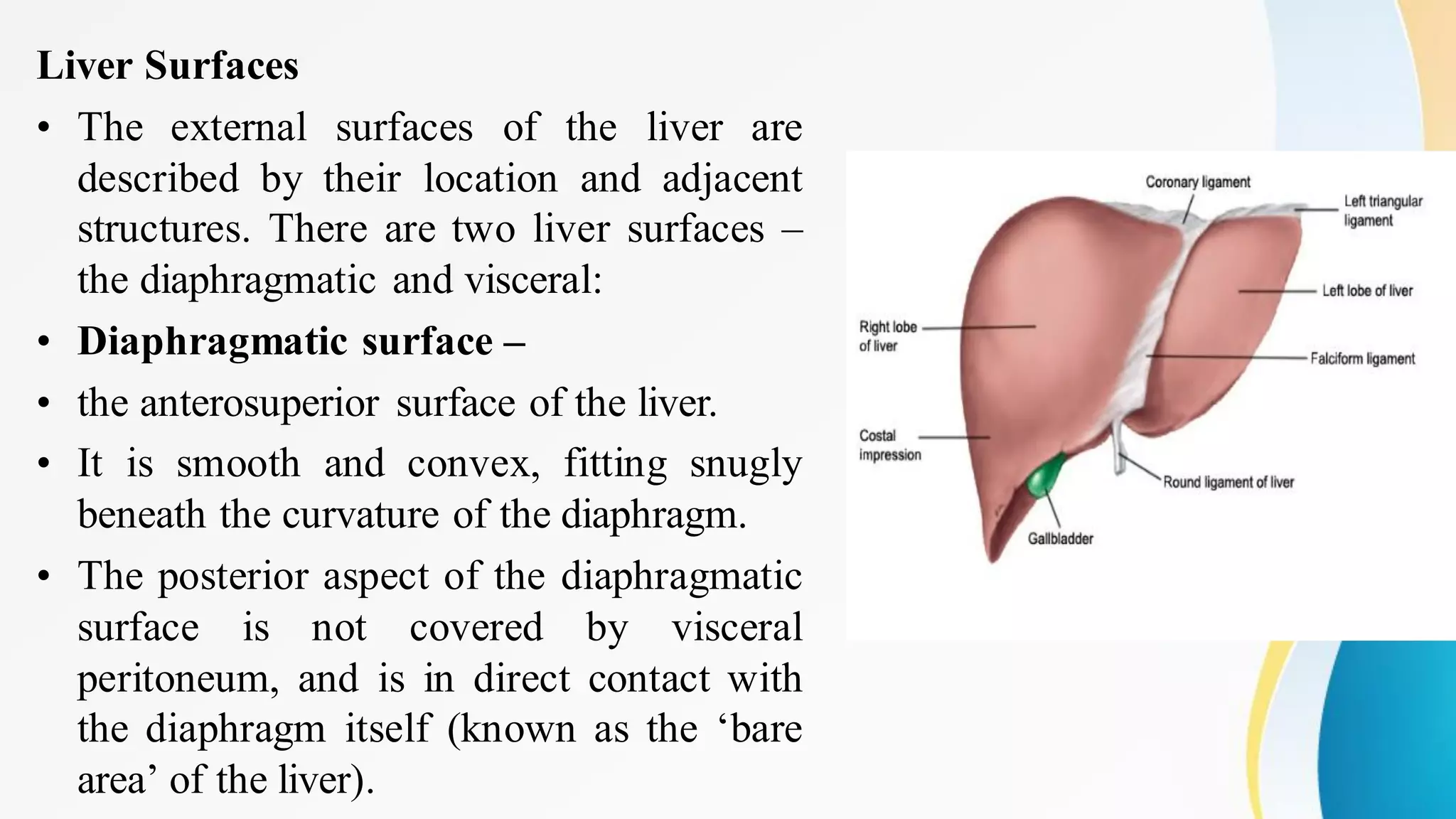
Liver Surfaces
• The external surfaces of the liver are
described by their location and adjacent
structures. There are two liver surfaces –
the diaphragmatic and visceral:
• Diaphragmatic surface –
• the anterosuperior surface of the liver.
• It is smooth and convex, fitting snugly
beneath the curvature of the diaphragm.
• The posterior aspect of the diaphragmatic
surface is not covered by visceral
peritoneum, and is in direct contact with
the diaphragm itself (known as the ā€˜bare
area’ of the liver).
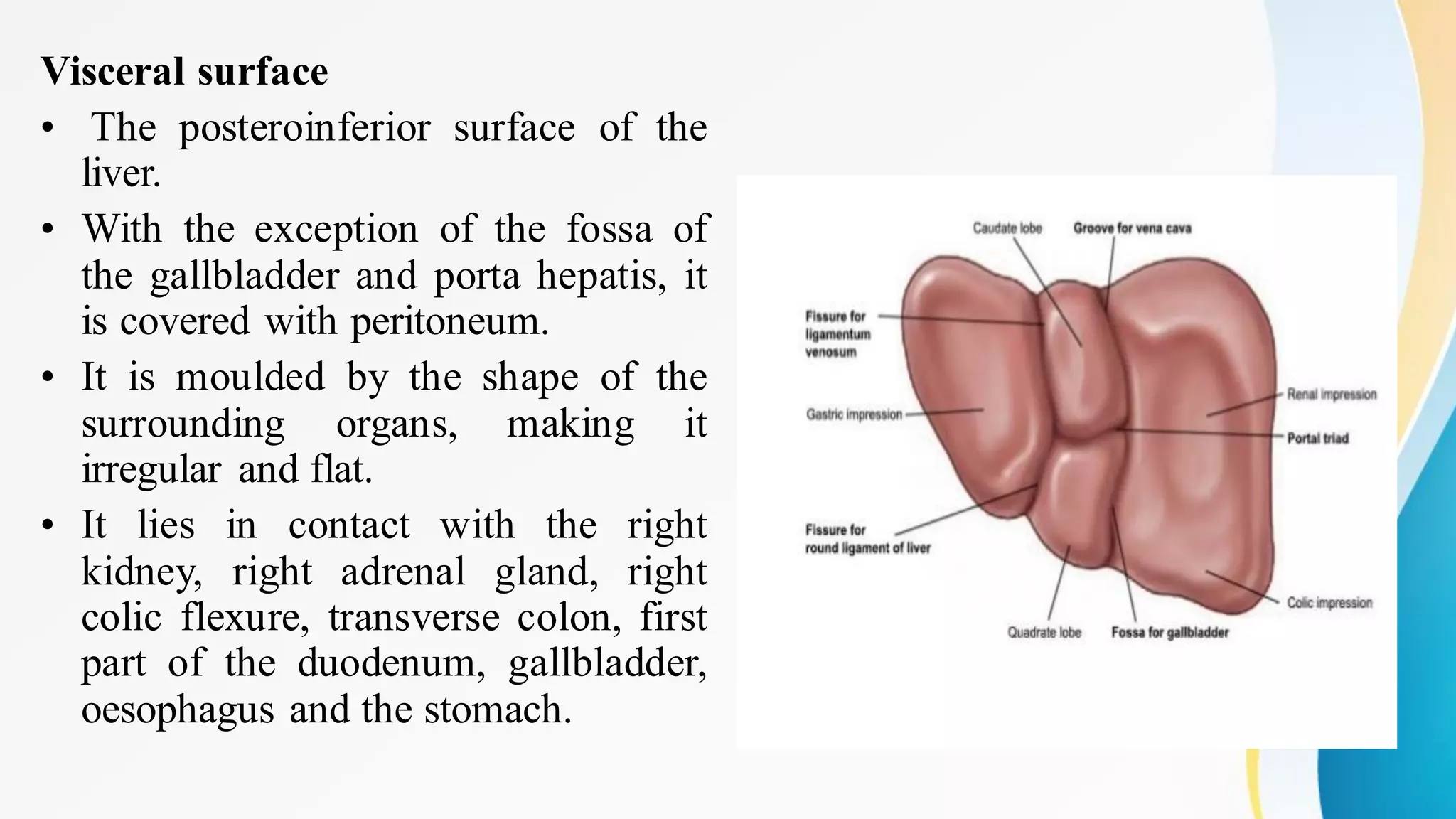
Visceral surface
• The posteroinferior surface of the
liver.
• With the exception of the fossa of
the gallbladder and porta hepatis, it
is covered with peritoneum.
• It is moulded by the shape of the
surrounding organs, making it
irregular and flat.
• It lies in contact with the right
kidney, right adrenal gland, right
colic flexure, transverse colon, first
part of the duodenum, gallbladder,
oesophagus and the stomach.
Internal/ Minute or Microscopic Structure of Liver
• The liver consist of a large
number of cells called lobules.
• Each lobules has cental vein or
intralobular vein.
• The connective tissue lying in
between the lobules contains the
branches of -
1. Portal Vein
2. Hepatic Vein
3. Bile duct
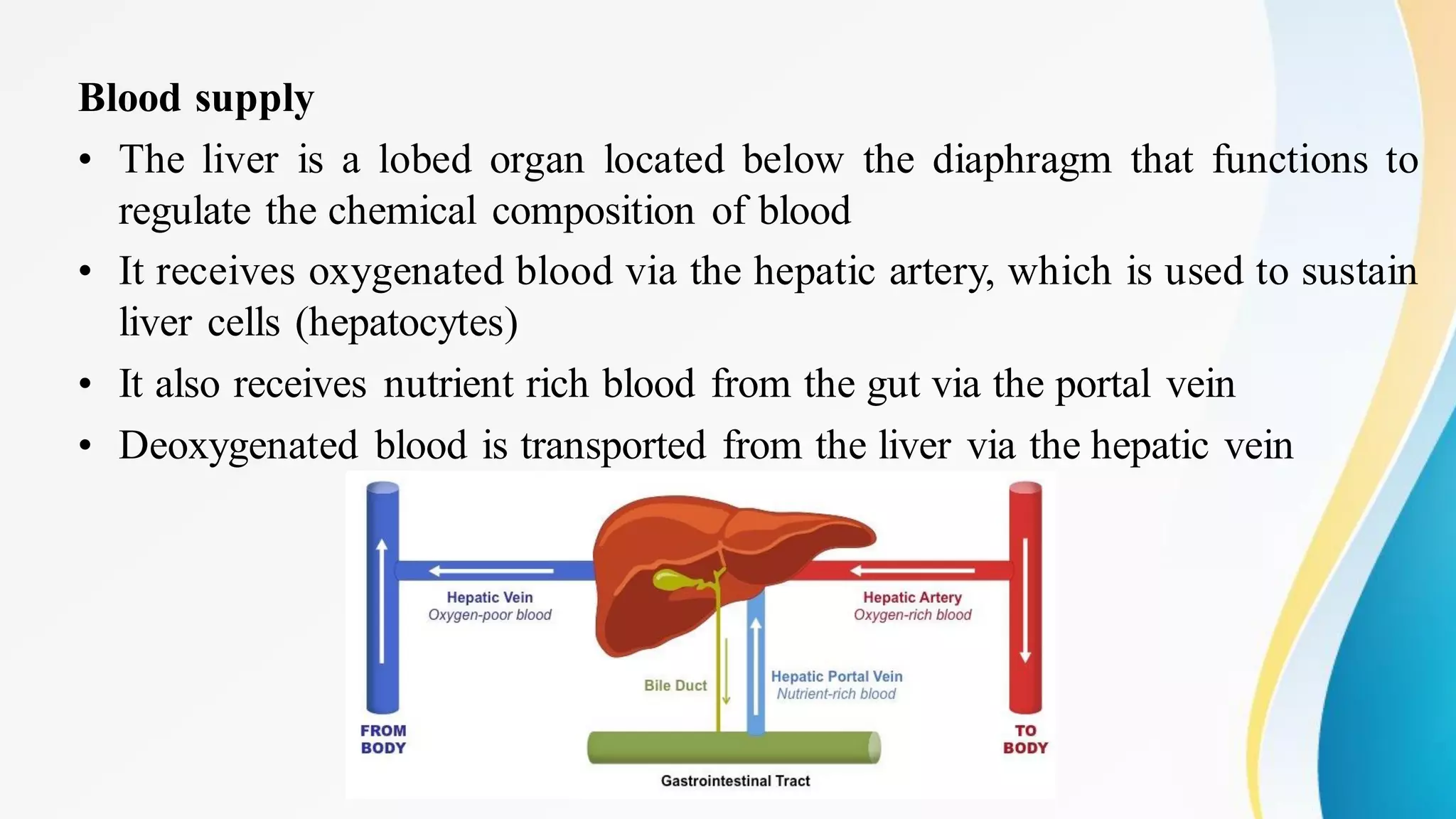
Blood supply
• The liver is a lobed organ located below the diaphragm that functions to
regulate the chemical composition of blood
• It receives oxygenated blood via the hepatic artery, which is used to sustain
liver cells (hepatocytes)
• It also receives nutrient rich blood from the gut via the portal vein
• Deoxygenated blood is transported from the liver via the hepatic vein
Functions of Liver
• Bile production: Bile helps the small intestine break down and absorb fats,
cholesterol, and some vitamins. Bile consists of bile salts, cholesterol, bilirubin,
electrolytes, and water.
• Absorbing and metabolizing bilirubin: Bilirubin is formed by the breakdown of
hemoglobin. The iron released from hemoglobin is stored in the liver or bone
marrow and used to make the next generation of blood cells.
• Supporting blood clots: Vitamin K is necessary for the creation of certain
coagulants that help clot the blood. Bile is essential for vitamin K absorption and
is created in the liver. If the liver does not produce enough bile, clotting factors
cannot be produced.
• Metabolizing carbohydrates: Carbohydrates are stored in the liver, where they
are broken down into glucose and siphoned into the bloodstream to maintain
normal glucose levels. They are stored as glycogen and released whenever a
quick burst of energy is needed.
• Fat metabolization: Bile breaks down fats and makes them easier to digest.
• Vitamin and mineral storage: The liver stores vitamins A, D, E, K, and B12. It
keeps significant amounts of these vitamins stored. In some cases, several
years’ worth of vitamins is held as a backup. The liver stores iron from
hemoglobin in the form of ferritin, ready to make new red blood cells. The
liver also stores and releases copper.
• Helps metabolize proteins: Bile helps break down proteins for digestion.
• Filters the blood: The liver filters and removes compounds from the body,
including hormones, such as estrogen and aldosterone, and compounds from
outside the body, including alcohol and other drugs.
• Immunological function: The liver is part of the mononuclear phagocyte
system. It contains high numbers of Kupffer cells that are involved in immune
activity. These cells destroy any disease-causing agentsTrusted Source that
might enter the liver through the gut.
• Production of albumin: Albumin is the most common protein in blood
serum. It transports fatty acids and steroid hormones to help maintain
the correct pressure and prevent the leaking of blood vessels.
• Synthesis of angiotensinogen: This hormone raises blood pressure by
narrowing the blood vessels when alerted by production of an enzyme
called renin in the kidneys.
Physiology of Digestion & Absorption
Digestion
• Digestion is the process of mechanically
and enzymatically breaking down food
into substances for absorption into the
bloodstream.
• The food contains three macronutrients
that require digestion before they can be
absorbed:
āœ“ Fats,
āœ“ Carbohydrates, and
āœ“ Proteins.
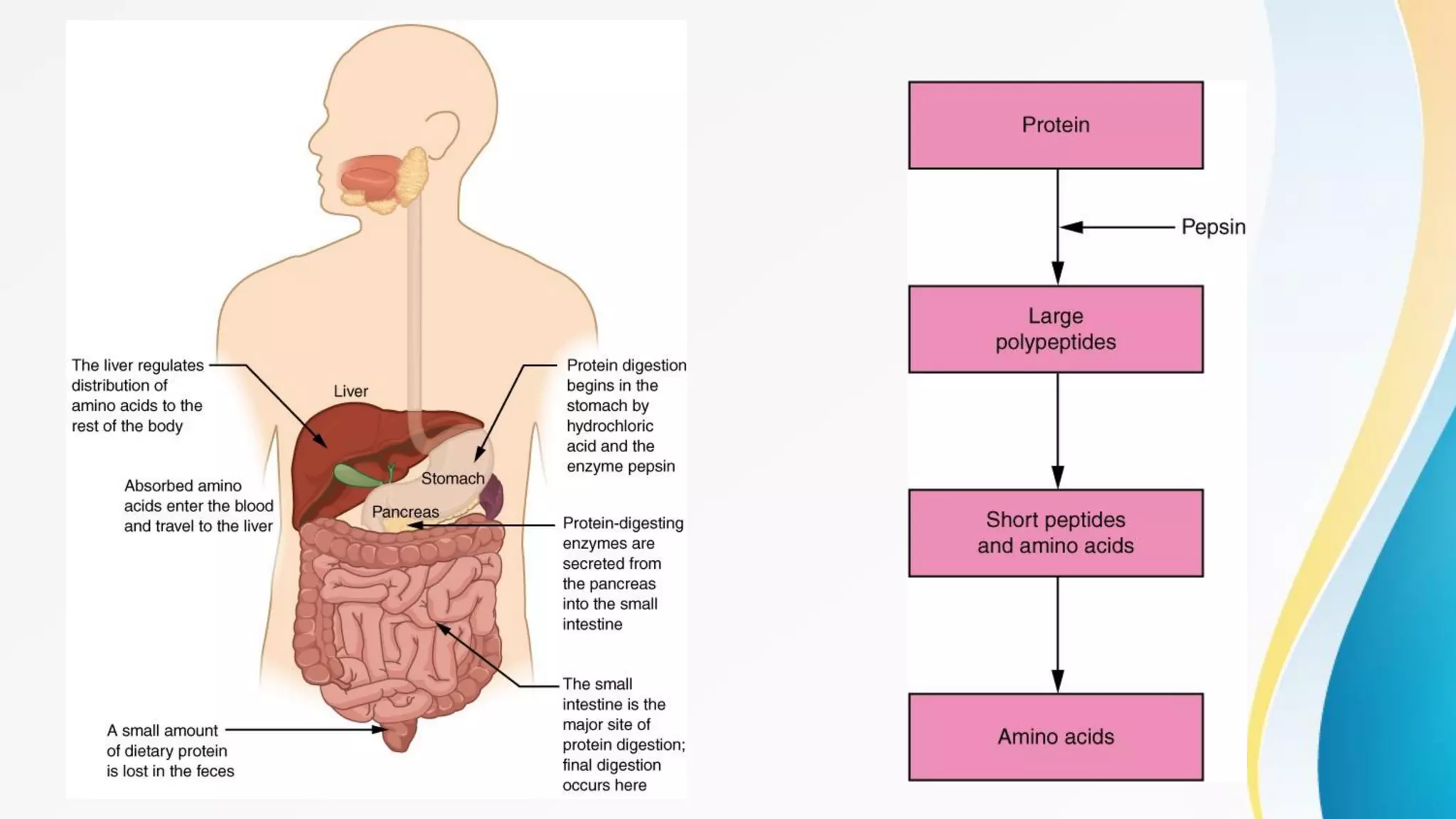
Protein
• Proteins are polymers composed of amino acids linked by peptide bonds to
form long chains.
• Digestion reduces them to their constituent amino acids.
• You usually consume about 15 to 20 percent of your total calorie intake as
protein.
• The digestion of protein starts in the stomach, where HCl and pepsin break
proteins into smaller polypeptides, which then travel to the small intestine.
• Chemical digestion in the small intestine is continued by pan- creatic enzymes,
including chymotrypsin and trypsin, each of which act on specifc bonds in
amino acid sequences.
• At the same time, the cells of the brush border secrete enzymes such as
aminopeptidase and dipeptidase, which further break down peptide chains.
This results in molecules small enough to enter the bloodstream.
Carbohydrate
• Ptyaline (Salivary amylase) present in saliva converts cooked starches in
food into a sugar called maltose.
• This conversion occures in mouth.
• All the sugars are converted to simple monosachharide by action of
enzyme (sucrase, maltase, lactase)
• Disaccharide sucrose (regular table sugar: glucose + fructose), lactose
(milk sugar: glucose + galactose), and maltose (grain sugar: glucose +
glucose), and the polysaccharides glycogen and starch (chains of
monosaccharides).
• Glucose is absorbed through the capillaries of villi in the small intestine.
• It is then carried to liver by portal vein where it is stored as glycogen.
Lipid Digestion / Fats
• A healthy diet limits lipid intake to 35 percent of total calorie intake.
• The most common dietary lipids are triglycerides, which are made up
of a glycerol molecule bound to three fatty acid chains.
• Small amounts of di- etary cholesterol and phospholipids are also
consumed.
• The three lipases responsible for lipid digestion are lingual lipase,
gastric lipase, and pancreatic lipase. However, because the pancreas is
the only consequential source of lipase, virtually all lipid digestion
occurs in the small intestine.
• Pancreatic lipase breaks down each triglyceride into two free fatty
acids and a monoglyceride.
• The fatty acids include both short-chain (less than 10 to 12 carbons)
and long-chain fatty acids.
Absorption of food
• The mechanical and digestive processes have one goal: to convert food into
molecules small enough to be absorbed by the epithelial cells of the intestinal
villi.
• The absorptive capacity of the alimentary canal is almost endless.
• Each day, the alimentary canal processes up to 10 liters of food, liquids, and GI
secretions, yet less than one liter enters the large intes- tine.
• Almost all ingested food, 80 percent of electrolytes, and 90 percent of water
are absorbed in the small intestine.
• Although the entire small intestine is involved in the absorption of water and
lipids, most absorption of carbohydrates and proteins occurs in the jejunum.
• Notably, bile salts and vitamin B12 are absorbed in the terminal ileum. By the
time chyme passes from the ileum into the large intestine, it is essentially indi-
gestible food residue (mainly plant ¹bers like cellulose), some water, and
millions of bacteria
• Absorption can occur through five mechanisms:
(1) active transport,
(2) passive diĀ·usion,
(3) facilitated diĀ·usion,
(4) co-transport (or secondary active transport), and
(5) endocytosis.
Thank You

10. digestive system

  • 1.
    Digestive System Yogeshwary M.Bhongade Assistant Professor Kamla Neharu College of Pharmacy, Butibori, Nagpur
  • 2.
    What is Digestion? •Digestion is the complex process of turning the food you eat into nutrients, which the body uses for energy, growth and cell repair needed to survive. • The digestion process also involves creating waste to be eliminated. • The digestive tract (or gastrointestinal tract) is a long twisting tube that starts at the mouth and ends at the anus. It is made up of a series of muscles that coordinate the movement of food and other cells that produce enzymes and hormones to aid in the breakdown of food. or • It is the process by which food is broken down into simple chemical substances that canbe absorb or used as nutrients by the body.
  • 3.
    • Breakdown offood can be done mechanically or chemically. 1. Mechanical Breakdown- Mastification by the organs of digestive system. 2. Chemical Breakdown- By the enzyme secreted via glands and assessory organs • Digestive tract is about 30 feet (about 9-10 meters) long.
  • 4.
    Anatomy of DigestiveSystem Organs of Digestive System PrimaryOrgan Directly invovedin digestion Mouth Pharynx Oesophagou s Stamache Small Intestine Large Intestine Rectum Anus Acessory Organs Help in digestion Teeth Tounge Salivary Glands Liver Gall Bladder Pancrease
  • 5.
    Activities of DigestiveSystem 1. Ingestion 2. Propulsion 3. Digestion 4. Absorption 5. Elimination
  • 6.
    Parts of DigestiveSystem Mouth (Baccal Cavity) • Upper expanded portion which form the begining of alimentary Canal. • It can be divided into two parts; 1. Vestibule- An outer part lies between lips and inner lining of cheeks externally and gums and teeth internally. 2. Cavity of mouth- An inner part. It is bounded by teeth and mastoid bone at the sides, palate above and tounge below. • Other important Structure of mouth are • Tounge • Teeth • Salivary Glands
  • 7.
    Food's Journey Throughthe Digestive System Mouth (Baccal Cavity) • It is the beginning of the digestive system, and, in fact, digestion starts here before you even take the first bite of a meal. • The smell of food triggers the salivary glands in your mouth to secrete saliva, causing your mouth to water. • When you actually taste the food, saliva increases. • Once you start chewing and breaking the food down into pieces small enough to be digested, other mechanisms come into play. More saliva is produced. • It contains substances including enzymes that begin the process of breaking down food into a form your body can absorb and use.
  • 8.
    Pharynx • Pharynx liesbetween mouth and oesophagus. 1. Nasopharynx- It lies behind the nasal cavity. It extend from base of skull to the level of soft palate. On either side, it has an opening for Eustachian tube. 2. Oropharynx- It lies behind the mouth. It extends between soft palate above and upper opening of larynx. The lateral wall of oropharynx contain the tonsils. 3. Laryngopharynx- Lowest part and it lies behind the larynx.
  • 9.
    Food's Journey Throughthe Digestive System The Pharynx and Esophagus • Also called the throat, the pharynx is the portion of the digestive tract that receives the food from your mouth. Branching off the pharynx is the esophagus, which carries food to the stomach, and the trachea or windpipe, which carries air to the lungs. • The act of swallowing takes place in the pharynx partly as a reflex and partly under voluntary control. The tongue and soft palate the soft part of the roof of the mouth -- push food into the pharynx, which closes off the trachea. The food then enters the esophagus.
  • 10.
    Esophagus • The esophagusis a muscular tube extending from the pharynx and behind the trachea to the stomach. • The oesophagus contains sphinctures at its upper and lower ends. These sphinctures relax during swallowing. Deglutition (Act of Swallowing) 1. Stage 1- Closing of the lips and raising of tounge against the palate forces the bolus into oropharynx. 2. Stage 2- By the contraction of the muscle of pharynx,the bolus is forced into oesophagus. 3. Stage 3- In the oesophagus, contraction of its muscular walls carries the food down to stomach.
  • 11.
    Food's Journey Throughthe Digestive System • Food is pushed through the esophagus and into the stomach by means of a series of contractions called peristalsis. • Just before the opening to the stomach is an important ring-shaped muscle called the lower esophageal sphincter (LES). • This sphincter opens to let food pass into the stomach and closes to keep it there. • If your LES doesn't work properly, you may suffer from a condition called GERD, or reflux, which causes heartburn and regurgitation (the feeling of food coming back up).
  • 12.
    Stomach • The stomachis a sac-like organ with strong muscular walls. In addition to holding food, it serves as the mixer and grinder of food. • The stomach secretes acid and powerful enzymes that continue the process of breaking the food down and changing it to a consistency of liquid or paste. From there, food moves to the small intestine. • Stamach secretes pepsin, renin, HCL, intrinsic factor, chyme.
  • 13.
    Small Intestine • Smallintestine is the part of alimentary canal which extend from polyric end of stamch to caecum. • Between meals, the non-liquefiable remnants are released from the stomach and ushered through the rest of the intestines to be eliminated. • Made up of three segments -- the duodenum, jejunum, and ileum -- the small intestine also breaks down food using enzymes released by the pancreas and bile from the liver. • The duodenum is largely responsible for the continuing breakdown process, with the jejunum and ileum being mainly responsible for absorption of nutrients into the bloodstream.
  • 14.
    • The smallintestine is the 'work horse' of digestion, as this is where most nutrients are absorbed. • Peristalsis is also at work in this organ, moving food through and mixing it up with the digestive secretions from the pancreas and liver, including bile.
  • 15.
    The Colon/ LargeIntestine • Large intestine extend from the end of ileum to rectum. • It consist of parts named as- āœ“ Caecum āœ“ Appendix āœ“ Ascending colon āœ“ Tranverse colon and āœ“ Sigmoid colon
  • 16.
    Function of LargeIntestine • Digestion • Absorption • Secretion • Excretion
  • 17.
    Rectum, and Anus Rectum- •Occupies the lower posterior part of pelvis. • It extend between sigmoid colon and anus • The lower part of rectum is dilated known as rectal ampulla Anus- • It is small canal measuring about one inch in length • The opening of anus is guareded by a sphincture called anal sphincture. • This is under voluntory control.
  • 18.
    Accessory Digestive Organs Pancreas •Among other functions, the pancreas is the chief factory for digestive enzymes that are secreted into the duodenum, the first segment of the small intestine. These enzymes break down protein, fats, and carbohydrates. Liver • The liver has multiple functions, but two of its main functions within the digestive system are to make and secrete an important substance called bile and to process the blood coming from the small intestine containing the nutrients just absorbed. The liver purifies this blood of many impurities before traveling to the rest of the body. Gallbladder • The gallbladder is a storage sac for excess bile. Bile made in the liver travels to the small intestine via the bile ducts. If the intestine doesn't need it, the bile travels into the gallbladder, where it awaits the signal from the intestines that food is present. Bile serves two main purposes. First, it helps absorb fats in the diet, and secondly, it carries waste from the liver that cannot go through the kidneys.
  • 19.
    Function of DigestiveSystem • Ingestion • Breaking of food into smaller particals • Transport of food into different areas of digestive tract • Secretion of enzyme and other substances • Digestion • Absorption of nutrients • Removal of unwanted Material
  • 20.
    Liver • The liveris located in the upper right- hand portion of the abdominal cavity, beneath the diaphragm, and on top of the stomach, right kidney, and intestines. • Shaped like a cone, the liver is a dark reddish-brown organ that weighs about 1500 g and comprises ~2% of total BW. External features of liver • Liver contain two lobes and surfaces • Lobes- 1. A right Loabe & 2. A Left Lobe
  • 21.
    Liver Surfaces • Theexternal surfaces of the liver are described by their location and adjacent structures. There are two liver surfaces – the diaphragmatic and visceral: • Diaphragmatic surface – • the anterosuperior surface of the liver. • It is smooth and convex, fitting snugly beneath the curvature of the diaphragm. • The posterior aspect of the diaphragmatic surface is not covered by visceral peritoneum, and is in direct contact with the diaphragm itself (known as the ā€˜bare area’ of the liver).
  • 22.
    Visceral surface • Theposteroinferior surface of the liver. • With the exception of the fossa of the gallbladder and porta hepatis, it is covered with peritoneum. • It is moulded by the shape of the surrounding organs, making it irregular and flat. • It lies in contact with the right kidney, right adrenal gland, right colic flexure, transverse colon, first part of the duodenum, gallbladder, oesophagus and the stomach.
  • 23.
    Internal/ Minute orMicroscopic Structure of Liver • The liver consist of a large number of cells called lobules. • Each lobules has cental vein or intralobular vein. • The connective tissue lying in between the lobules contains the branches of - 1. Portal Vein 2. Hepatic Vein 3. Bile duct
  • 24.
    Blood supply • Theliver is a lobed organ located below the diaphragm that functions to regulate the chemical composition of blood • It receives oxygenated blood via the hepatic artery, which is used to sustain liver cells (hepatocytes) • It also receives nutrient rich blood from the gut via the portal vein • Deoxygenated blood is transported from the liver via the hepatic vein
  • 25.
    Functions of Liver •Bile production: Bile helps the small intestine break down and absorb fats, cholesterol, and some vitamins. Bile consists of bile salts, cholesterol, bilirubin, electrolytes, and water. • Absorbing and metabolizing bilirubin: Bilirubin is formed by the breakdown of hemoglobin. The iron released from hemoglobin is stored in the liver or bone marrow and used to make the next generation of blood cells. • Supporting blood clots: Vitamin K is necessary for the creation of certain coagulants that help clot the blood. Bile is essential for vitamin K absorption and is created in the liver. If the liver does not produce enough bile, clotting factors cannot be produced. • Metabolizing carbohydrates: Carbohydrates are stored in the liver, where they are broken down into glucose and siphoned into the bloodstream to maintain normal glucose levels. They are stored as glycogen and released whenever a quick burst of energy is needed.
  • 26.
    • Fat metabolization:Bile breaks down fats and makes them easier to digest. • Vitamin and mineral storage: The liver stores vitamins A, D, E, K, and B12. It keeps significant amounts of these vitamins stored. In some cases, several years’ worth of vitamins is held as a backup. The liver stores iron from hemoglobin in the form of ferritin, ready to make new red blood cells. The liver also stores and releases copper. • Helps metabolize proteins: Bile helps break down proteins for digestion. • Filters the blood: The liver filters and removes compounds from the body, including hormones, such as estrogen and aldosterone, and compounds from outside the body, including alcohol and other drugs. • Immunological function: The liver is part of the mononuclear phagocyte system. It contains high numbers of Kupffer cells that are involved in immune activity. These cells destroy any disease-causing agentsTrusted Source that might enter the liver through the gut.
  • 27.
    • Production ofalbumin: Albumin is the most common protein in blood serum. It transports fatty acids and steroid hormones to help maintain the correct pressure and prevent the leaking of blood vessels. • Synthesis of angiotensinogen: This hormone raises blood pressure by narrowing the blood vessels when alerted by production of an enzyme called renin in the kidneys.
  • 28.
    Physiology of Digestion& Absorption Digestion • Digestion is the process of mechanically and enzymatically breaking down food into substances for absorption into the bloodstream. • The food contains three macronutrients that require digestion before they can be absorbed: āœ“ Fats, āœ“ Carbohydrates, and āœ“ Proteins.
  • 29.
    Protein • Proteins arepolymers composed of amino acids linked by peptide bonds to form long chains. • Digestion reduces them to their constituent amino acids. • You usually consume about 15 to 20 percent of your total calorie intake as protein. • The digestion of protein starts in the stomach, where HCl and pepsin break proteins into smaller polypeptides, which then travel to the small intestine. • Chemical digestion in the small intestine is continued by pan- creatic enzymes, including chymotrypsin and trypsin, each of which act on specifc bonds in amino acid sequences. • At the same time, the cells of the brush border secrete enzymes such as aminopeptidase and dipeptidase, which further break down peptide chains. This results in molecules small enough to enter the bloodstream.
  • 30.
    Carbohydrate • Ptyaline (Salivaryamylase) present in saliva converts cooked starches in food into a sugar called maltose. • This conversion occures in mouth. • All the sugars are converted to simple monosachharide by action of enzyme (sucrase, maltase, lactase) • Disaccharide sucrose (regular table sugar: glucose + fructose), lactose (milk sugar: glucose + galactose), and maltose (grain sugar: glucose + glucose), and the polysaccharides glycogen and starch (chains of monosaccharides). • Glucose is absorbed through the capillaries of villi in the small intestine. • It is then carried to liver by portal vein where it is stored as glycogen.
  • 32.
    Lipid Digestion /Fats • A healthy diet limits lipid intake to 35 percent of total calorie intake. • The most common dietary lipids are triglycerides, which are made up of a glycerol molecule bound to three fatty acid chains. • Small amounts of di- etary cholesterol and phospholipids are also consumed. • The three lipases responsible for lipid digestion are lingual lipase, gastric lipase, and pancreatic lipase. However, because the pancreas is the only consequential source of lipase, virtually all lipid digestion occurs in the small intestine. • Pancreatic lipase breaks down each triglyceride into two free fatty acids and a monoglyceride. • The fatty acids include both short-chain (less than 10 to 12 carbons) and long-chain fatty acids.
  • 33.
    Absorption of food •The mechanical and digestive processes have one goal: to convert food into molecules small enough to be absorbed by the epithelial cells of the intestinal villi. • The absorptive capacity of the alimentary canal is almost endless. • Each day, the alimentary canal processes up to 10 liters of food, liquids, and GI secretions, yet less than one liter enters the large intes- tine. • Almost all ingested food, 80 percent of electrolytes, and 90 percent of water are absorbed in the small intestine. • Although the entire small intestine is involved in the absorption of water and lipids, most absorption of carbohydrates and proteins occurs in the jejunum. • Notably, bile salts and vitamin B12 are absorbed in the terminal ileum. By the time chyme passes from the ileum into the large intestine, it is essentially indi- gestible food residue (mainly plant ¹bers like cellulose), some water, and millions of bacteria
  • 34.
    • Absorption canoccur through five mechanisms: (1) active transport, (2) passive diĀ·usion, (3) facilitated diĀ·usion, (4) co-transport (or secondary active transport), and (5) endocytosis.
  • 35.