CENTRIFUGATION
By
Yogeshwary Bhongade
Assistant Professor
Gondia college of Pharmacy, Gondia
CONTENT
• Objectives, principle & applications of Centrifugation,
• principles, construction, working, uses, merits and demerits of –
Perforated basket centrifuge,
Non-perforated basket centrifuge,
Semi continuous centrifuge &
Super centrifuge.
Introduction
• It is the process in which centrifugal force is used as driving force for
the phase separation.
• Centrifugation is a technique used for the separation of particles from
a solution according to their size, shape, density, viscosity of the
medium and rotor speed.
• The particles are suspended in a liquid medium and placed in a
centrifuge tube. The tube is then placed in a rotor and spun at a define
speed.
Applications
• Widely used in bulk drug industry to separate crystaline material for
separation
• Production of biological product
• Evaluation of suspention and emultion
• Determination of molecular weight of colloids
Equipment for centrifugation
1. Filtration centrifuge
- Perforated Basket Centrifuge
- Semicontinuous Centrifuge
2. Sedimentation Centrifuge
- Non-Perforated Basket Centrifuge
- Supper centrifuge
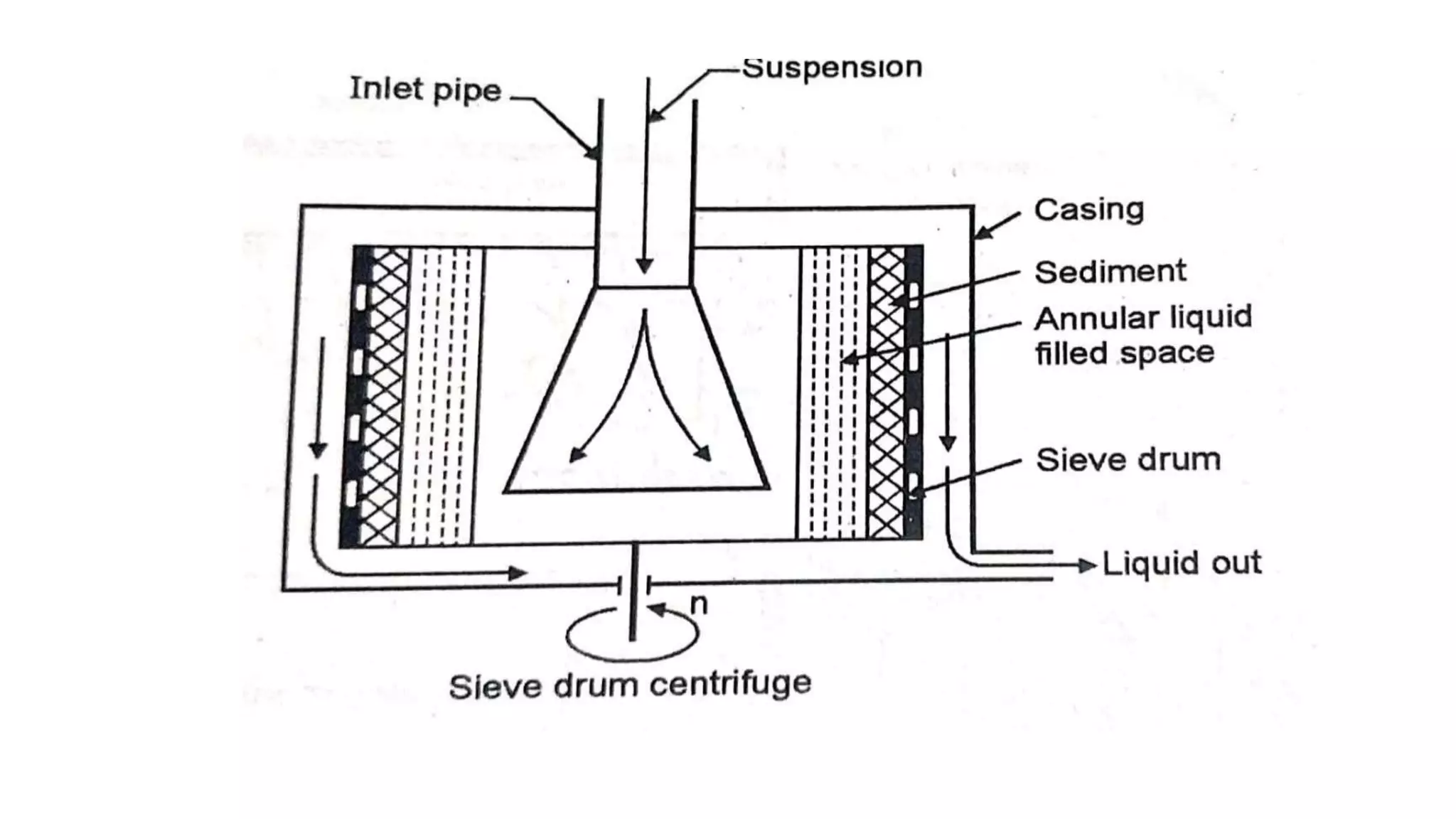
Perforated Basket Centrifuge
Principle
• A basket is rotated at high speed.
• Feed is incarporated at the centre and suspention is carried out by
perforated wall.
Construction
• It consist of verical perforated drum.
• The drum is fitted with filter cloth.
• This assembly is fitted with casing
Working
• The slurry is fed at centre
• Liquid force out throufg the filter cloth is collected in gap between the
drum and casing and drained out.
• The particle are collected on the filter cloth and can be simply wiped
out.
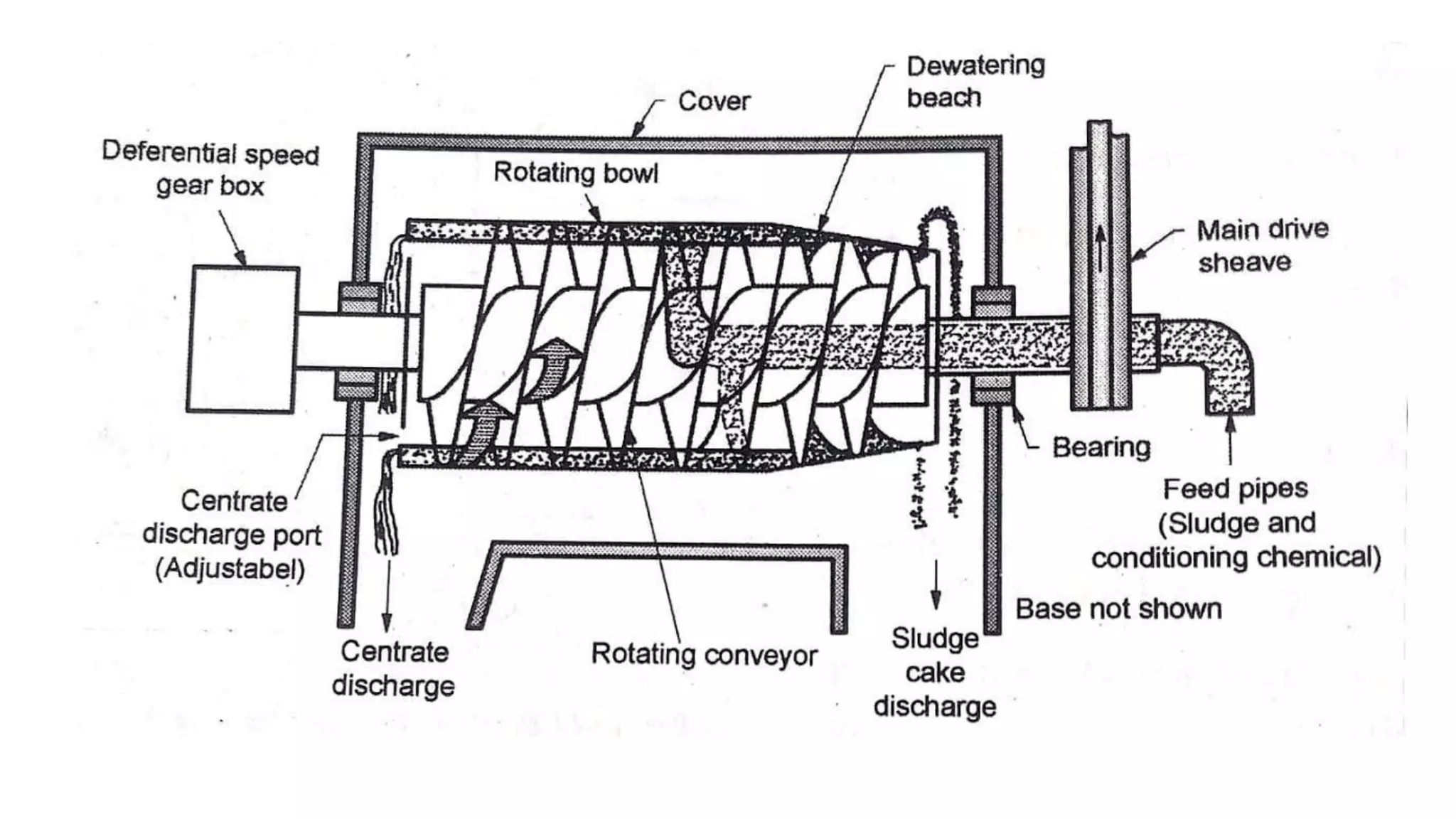
Semicontinuous Centrifuge
Principle
• Based on filtration centrifuge
• Separation is through perforated wallbse on difference in densities of solid
and liquid phase.
Construction
• Vertical perforate basket is mounted on horizontal shaft
• Fees and wash pipe are introduced through the open side of the perforated
basket.
• Wash pipe is connected theough the diphragm valve throufg air supply.
• Hydraulic cylinder attachment is made in such a matte that discharge chute
enters from the side of basket.
Working
• Perforated basket rotate while the slurry is introduced from the side pipe
• The slurry passes through the perforated wall during centrifugation.
• The solid are retain in the basket while the iltrate is allowed to leave in the
basket.
• Further cake is washed with water and the wash is allowed to leave the basket
throufh the filtrate outlet.
• once the desired thickness is achived the feeler cuts of the air supply to
diphragm valve that automatically shuts off the entry of slurry.
• The hydraulic cylinder is attached which lift the knifealong with the discharge
chute.
• The crystals are scraped off and collected from the solid outlet.
Advantages
• Solid can direclty drain out from bowl.
• Fast process
Disadvantages
• Complex construction
Non-Perforated Basket Centrifuge
Construction
• Consist of plane vertical drum which rotate at desired speed.
• Skimmers or weirs are provided to remove the liquid.
Working
• Solid get deposited on the wall, followed by heavier liquid and the
lighter liquid.
• The liquid is removed by weirs and solids are removed bu the end by
scrapper.
Super centrifuge
Principle
• based on sedimentation sentrifuge
• Separation is based on difference in densities of two immiscible liquids
without a porous barrier.
Construction
• It consist of hallow cylinder bowl of small diameter.
• The bowl is suspended from a flexible spindle at the top and guided at the
bottom by loose fit bushing.
• It is rotated on its longitudinal axis.
• Provision is made at bottom for the feed inlet using pressure system
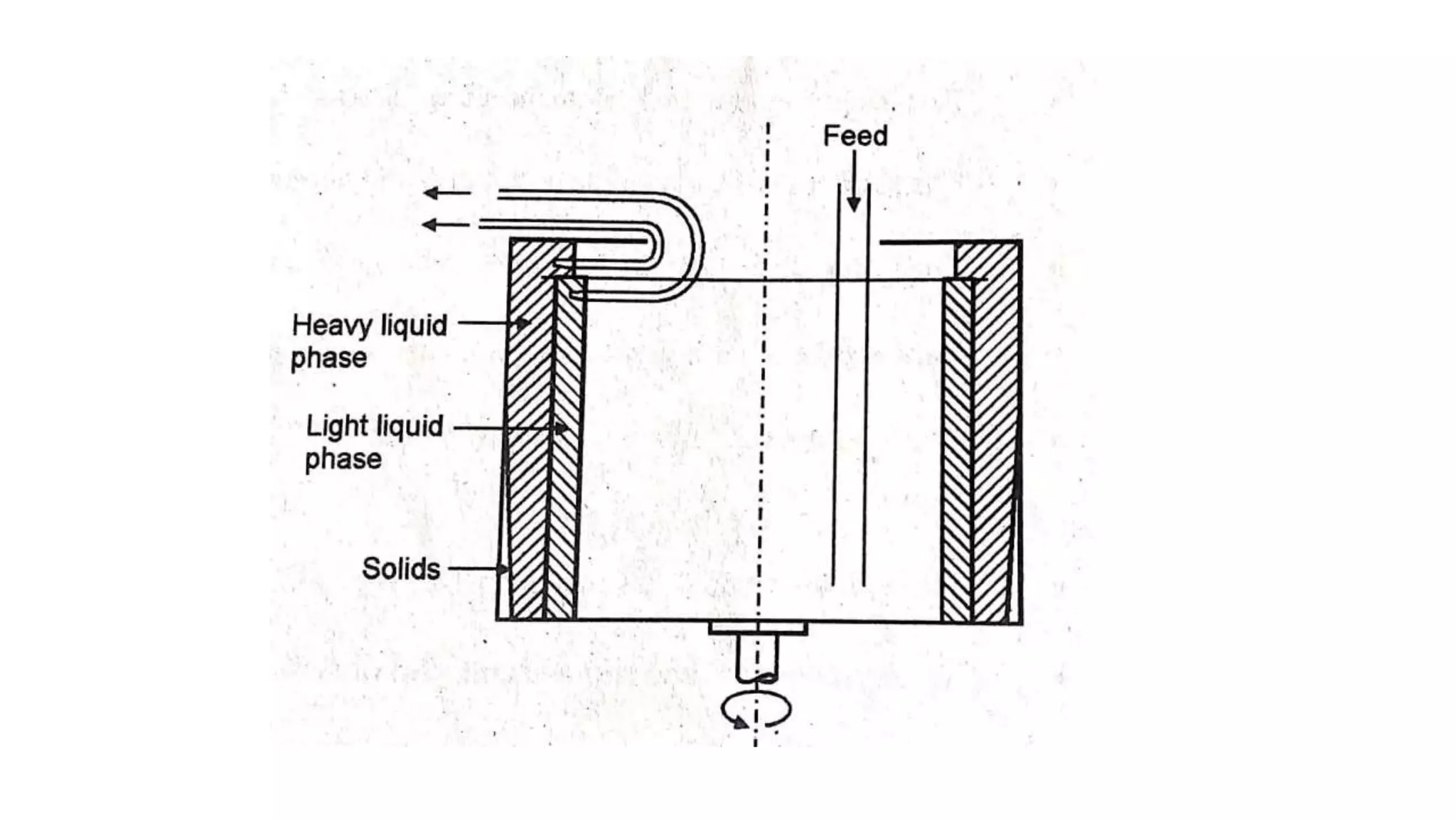
• Two liquid outlet are provided at
different height at top of the
bowlfor simultaeous recovery of
separated liquids
Working
• Bowl is allowed to ratate at high speed upto 2000RPM
• Feed is introduced from the bottom
• During Centrifugation two liquid gets separated based on difference in
densities.
• The heavier liquids are thrown against the wall of bowel and lighter
remains in the middle.
• Both liquid rise to top due to the conical shape of the bowl and exert
pressure.
• The liquids are separated simultaneously and are collected from different
outlet.
Advantages
• Contineuous process
• Separate two immisible liquids
• Rapid process
Disadvantages
• Hifg energy consuption
• Expensive
• High cost of maintainace
THANK YOU

Centrifugation

  • 1.
  • 2.
    CONTENT • Objectives, principle& applications of Centrifugation, • principles, construction, working, uses, merits and demerits of – Perforated basket centrifuge, Non-perforated basket centrifuge, Semi continuous centrifuge & Super centrifuge.
  • 3.
    Introduction • It isthe process in which centrifugal force is used as driving force for the phase separation. • Centrifugation is a technique used for the separation of particles from a solution according to their size, shape, density, viscosity of the medium and rotor speed. • The particles are suspended in a liquid medium and placed in a centrifuge tube. The tube is then placed in a rotor and spun at a define speed.
  • 4.
    Applications • Widely usedin bulk drug industry to separate crystaline material for separation • Production of biological product • Evaluation of suspention and emultion • Determination of molecular weight of colloids
  • 5.
    Equipment for centrifugation 1.Filtration centrifuge - Perforated Basket Centrifuge - Semicontinuous Centrifuge 2. Sedimentation Centrifuge - Non-Perforated Basket Centrifuge - Supper centrifuge
  • 6.
    Perforated Basket Centrifuge Principle •A basket is rotated at high speed. • Feed is incarporated at the centre and suspention is carried out by perforated wall. Construction • It consist of verical perforated drum. • The drum is fitted with filter cloth. • This assembly is fitted with casing
  • 8.
    Working • The slurryis fed at centre • Liquid force out throufg the filter cloth is collected in gap between the drum and casing and drained out. • The particle are collected on the filter cloth and can be simply wiped out.
  • 9.
    Semicontinuous Centrifuge Principle • Basedon filtration centrifuge • Separation is through perforated wallbse on difference in densities of solid and liquid phase. Construction • Vertical perforate basket is mounted on horizontal shaft • Fees and wash pipe are introduced through the open side of the perforated basket. • Wash pipe is connected theough the diphragm valve throufg air supply. • Hydraulic cylinder attachment is made in such a matte that discharge chute enters from the side of basket.
  • 11.
    Working • Perforated basketrotate while the slurry is introduced from the side pipe • The slurry passes through the perforated wall during centrifugation. • The solid are retain in the basket while the iltrate is allowed to leave in the basket. • Further cake is washed with water and the wash is allowed to leave the basket throufh the filtrate outlet. • once the desired thickness is achived the feeler cuts of the air supply to diphragm valve that automatically shuts off the entry of slurry. • The hydraulic cylinder is attached which lift the knifealong with the discharge chute. • The crystals are scraped off and collected from the solid outlet.
  • 12.
    Advantages • Solid candireclty drain out from bowl. • Fast process
  • 13.
  • 14.
    Non-Perforated Basket Centrifuge Construction •Consist of plane vertical drum which rotate at desired speed. • Skimmers or weirs are provided to remove the liquid.
  • 16.
    Working • Solid getdeposited on the wall, followed by heavier liquid and the lighter liquid. • The liquid is removed by weirs and solids are removed bu the end by scrapper.
  • 17.
    Super centrifuge Principle • basedon sedimentation sentrifuge • Separation is based on difference in densities of two immiscible liquids without a porous barrier. Construction • It consist of hallow cylinder bowl of small diameter. • The bowl is suspended from a flexible spindle at the top and guided at the bottom by loose fit bushing. • It is rotated on its longitudinal axis. • Provision is made at bottom for the feed inlet using pressure system
  • 18.
    • Two liquidoutlet are provided at different height at top of the bowlfor simultaeous recovery of separated liquids
  • 19.
    Working • Bowl isallowed to ratate at high speed upto 2000RPM • Feed is introduced from the bottom • During Centrifugation two liquid gets separated based on difference in densities. • The heavier liquids are thrown against the wall of bowel and lighter remains in the middle. • Both liquid rise to top due to the conical shape of the bowl and exert pressure. • The liquids are separated simultaneously and are collected from different outlet.
  • 20.
    Advantages • Contineuous process •Separate two immisible liquids • Rapid process Disadvantages • Hifg energy consuption • Expensive • High cost of maintainace
  • 21.