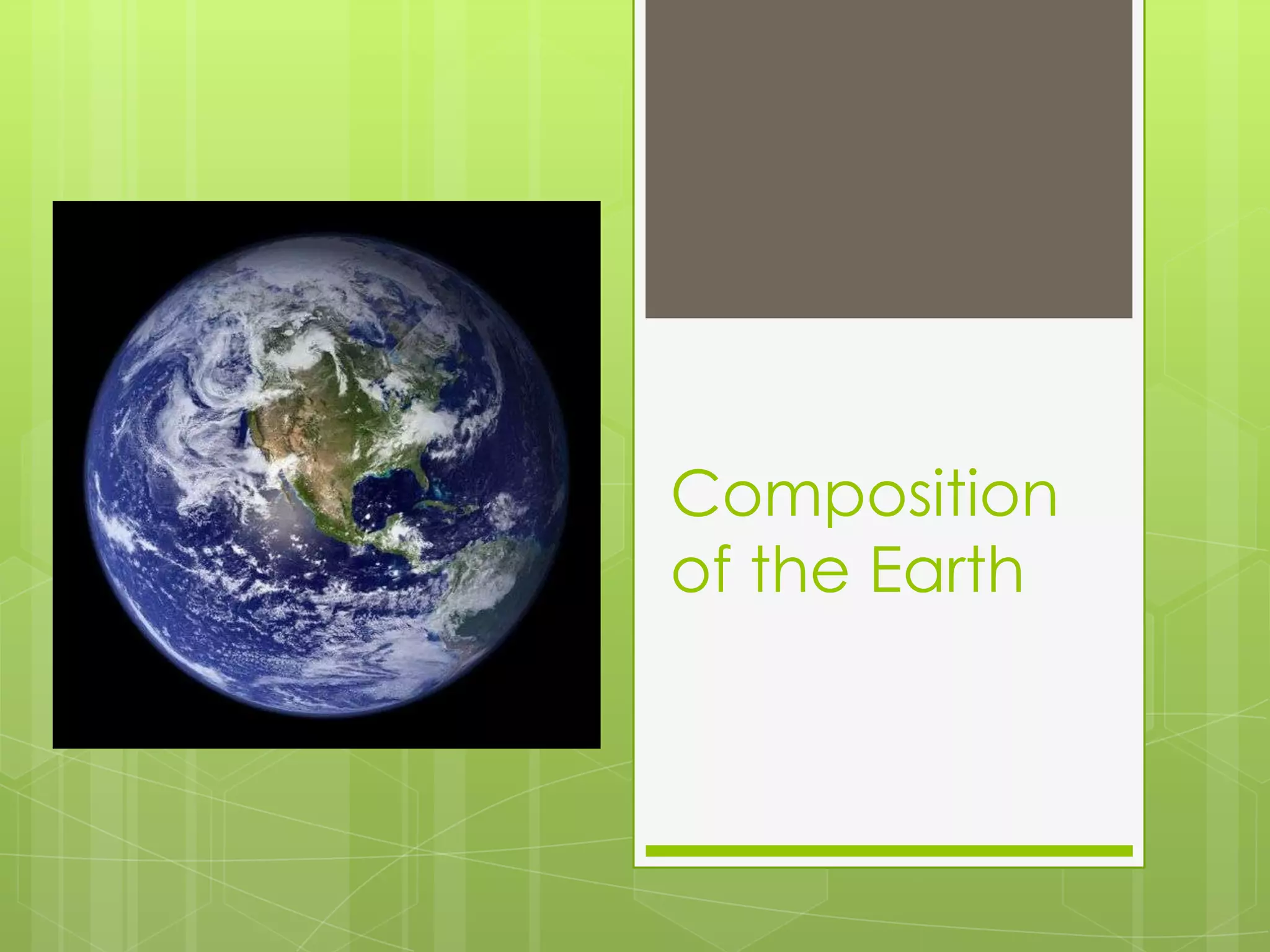
Composition of the Earth
Earth Basics:Earth is unique because it is the only planet:With liquid water on surfaceWith oxygen in the atmosphere in such a large proportionThat supports life
Basic Facts:4.6 billion years oldMade mostly of rock71% of surface covered with waterSlightly flattened sphereRotates on its axis
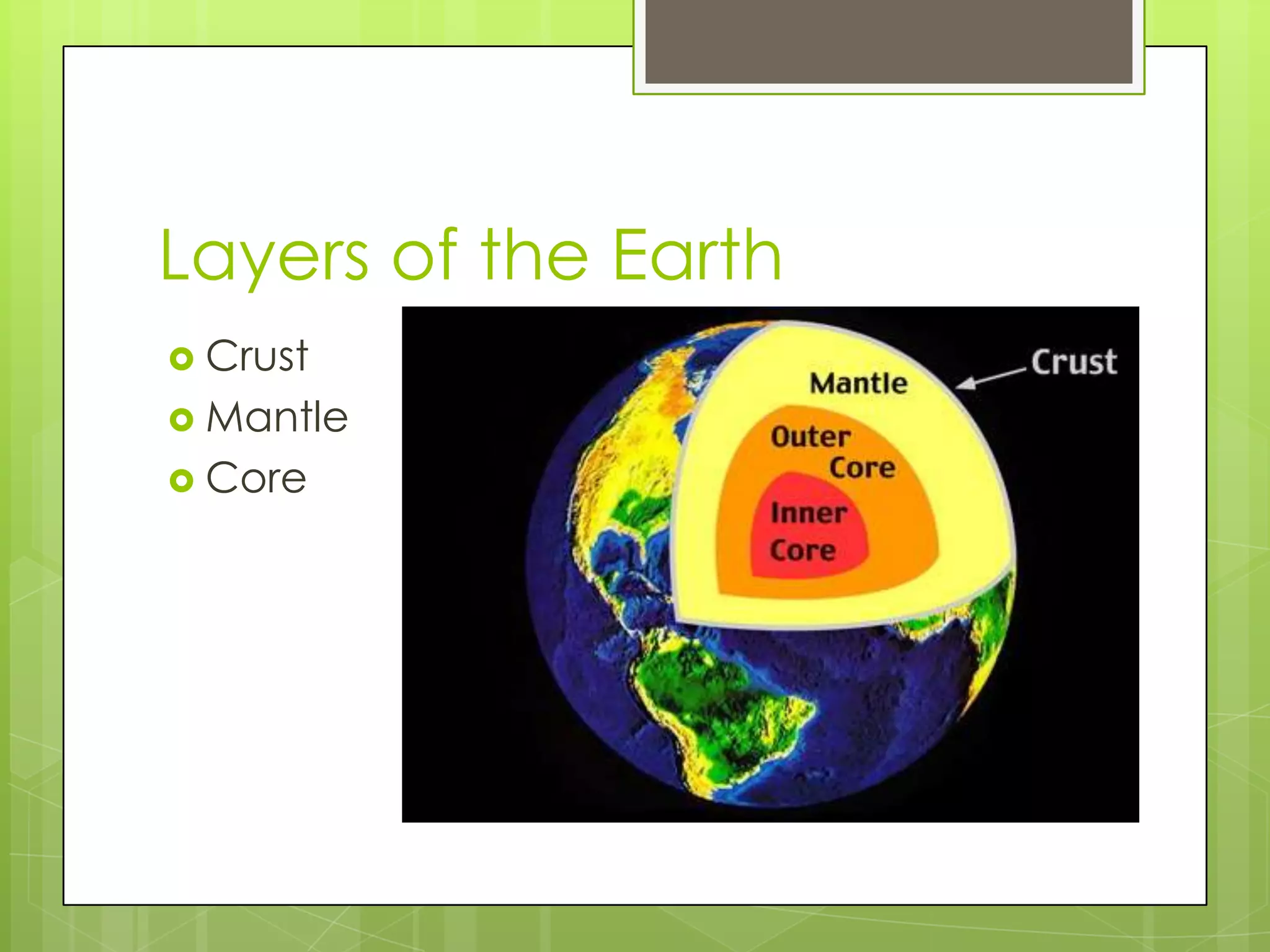
Layers of the EarthCrustMantleCore
Crust:Thin, solid outermost layer of the Earth that makes up less than 1% than the volume of the EarthTwo Types of Crust:OceanicContinental
Mantle:Layer of “solid-ish” rock located between the crust and the coreable to move through convection currentsdenser than the crustmakes up 2/3 of the mass of the Earth
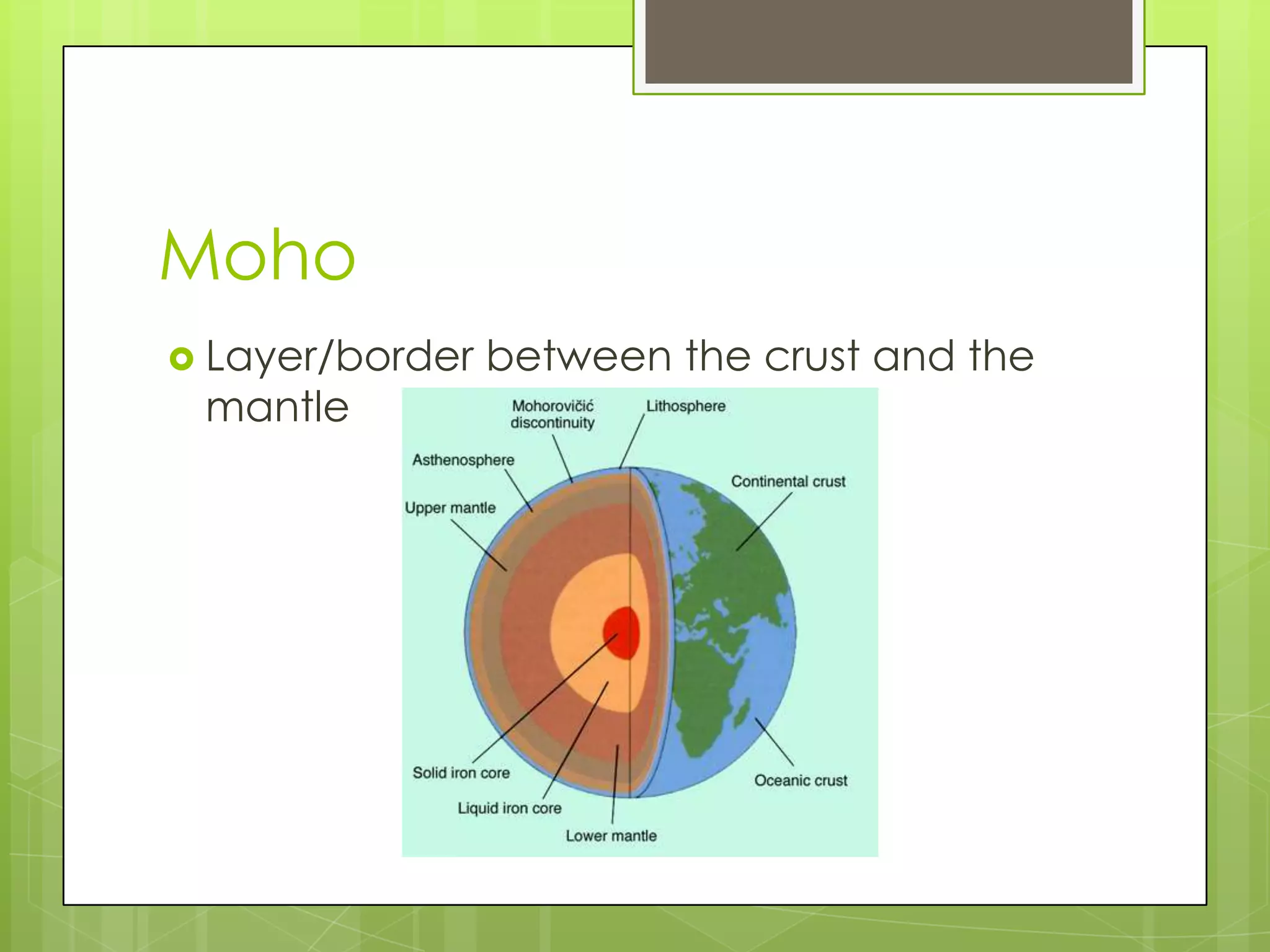
MohoLayer/border between the crust and the mantle
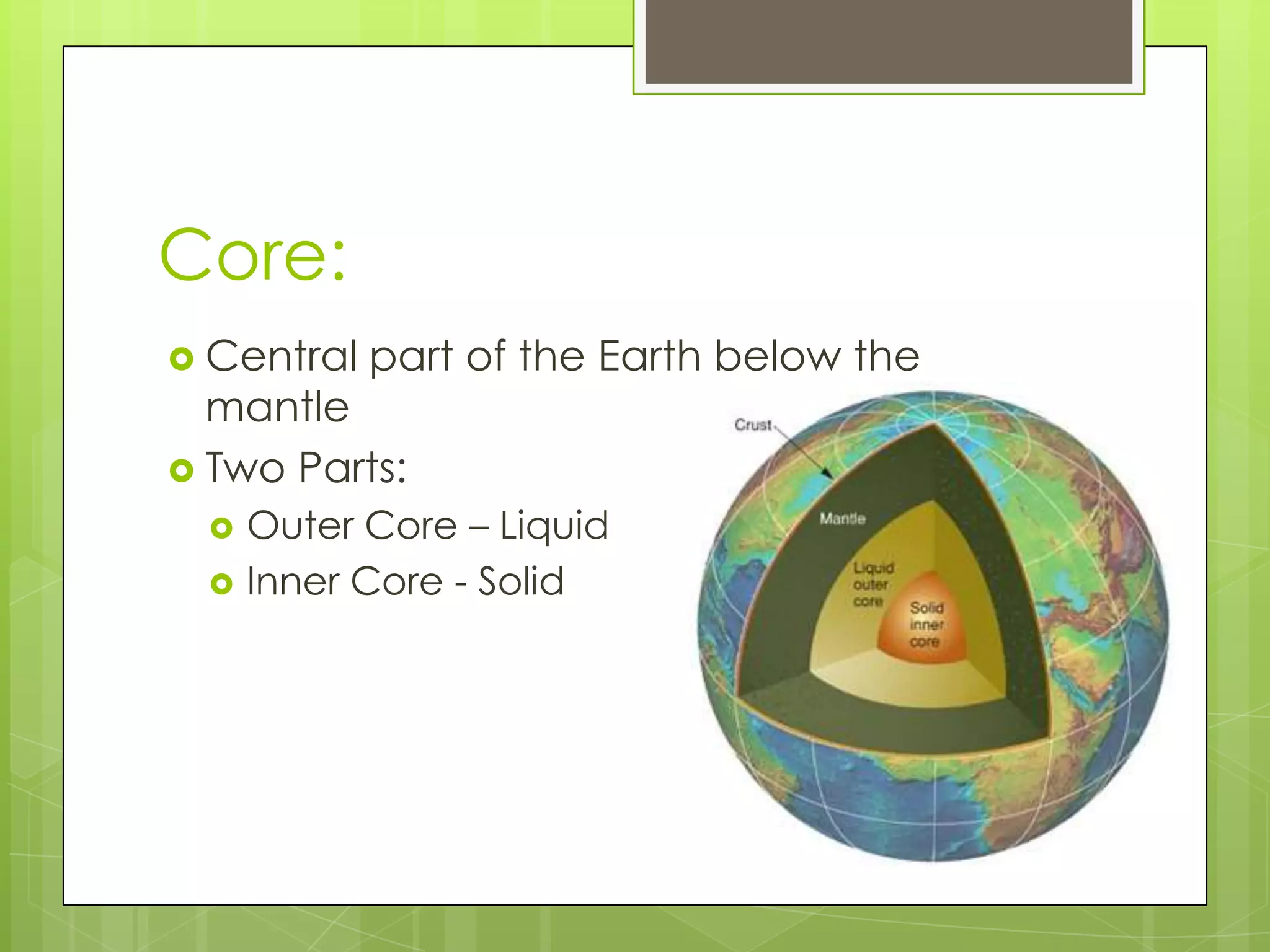
Core:Central part of the Earth below the mantleTwo Parts:Outer Core – LiquidInner Core - Solid
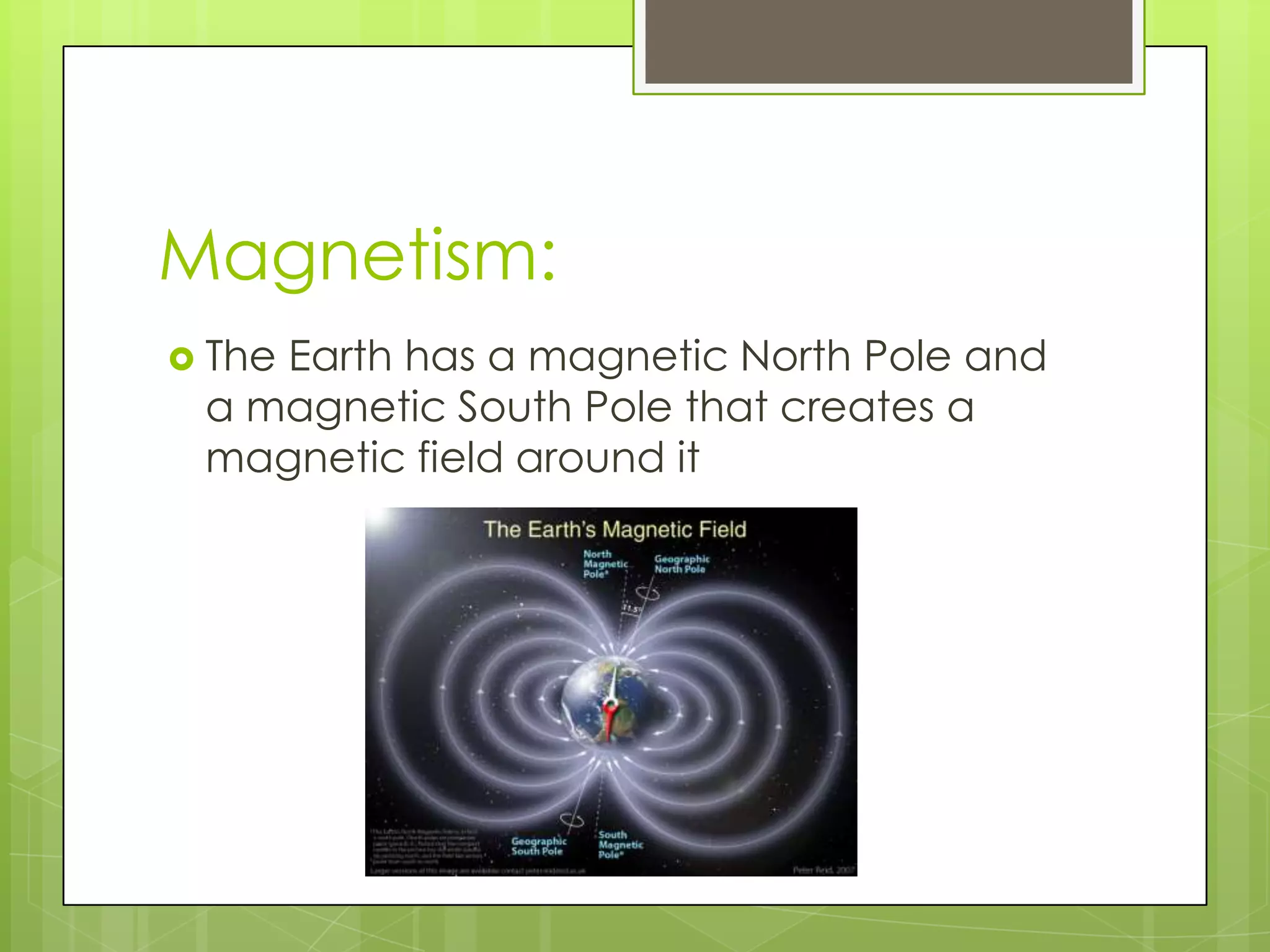
Magnetism:The Earth has a magnetic North Pole and a magnetic South Pole that creates a magnetic field around it
Gravity:The force of attraction that exists between all objects, the bigger and closer the object is, the stronger the force of gravity
Weight:The measure of the force of gravity on an object, therefore the farther you are away from Earth, the less your weight, though mass (measure of the amount of matter) remains constant
Matter: Anything that has mass and volumeEx: protons, neutrons, bacteria, atoms, feathers, rocks, etc.
Energy:The ability to do work, cannot be created or destroyed, only change formsForms:HeatLightMovementPotential to MoveElectromagnetic Waves
Energy:Energy enters the Earth as sunlight and is either absorbed by substances, organisms, or the Earth, or reflected/released back into space as heat
Matter:Very little matter enters or leaves the Earth, it is constantly changing forms within the confines of Earth and the atmosphereProtons, electrons, and neutrons make atoms; atoms make up elements; elements make up compounds; all make up matterCan exist as a solid, liquid, and gas
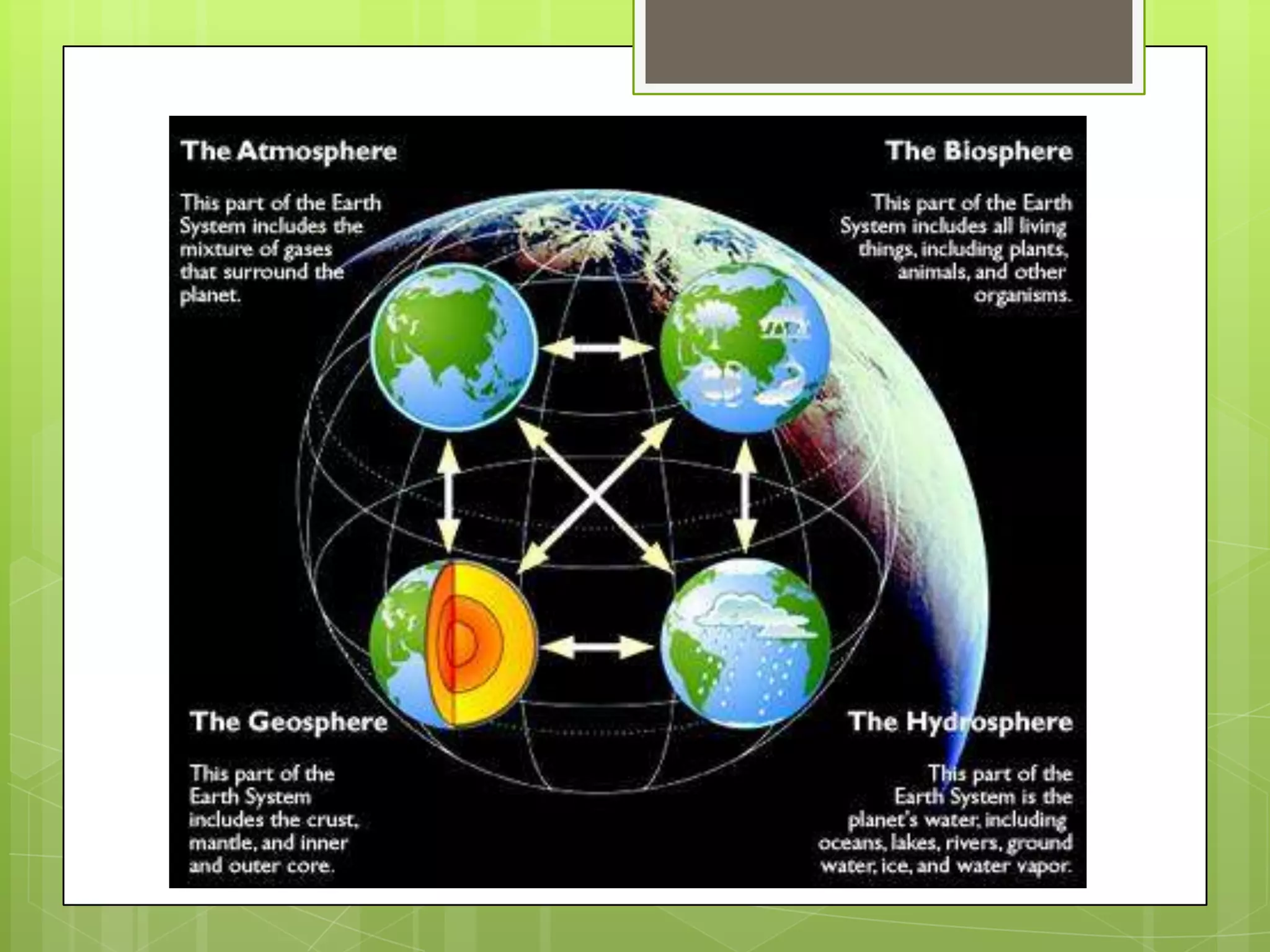
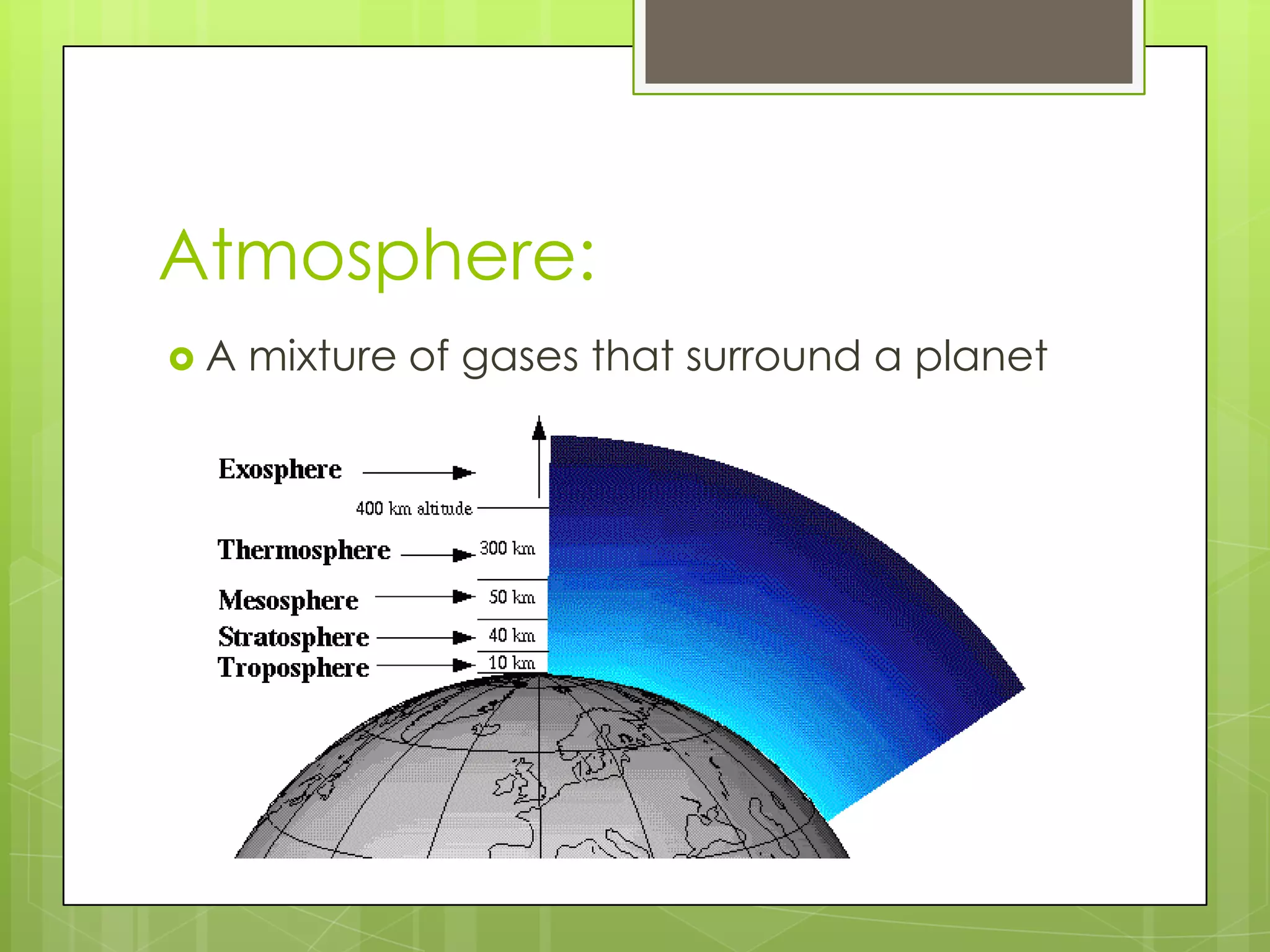
Atmosphere:A mixture of gases that surround a planet
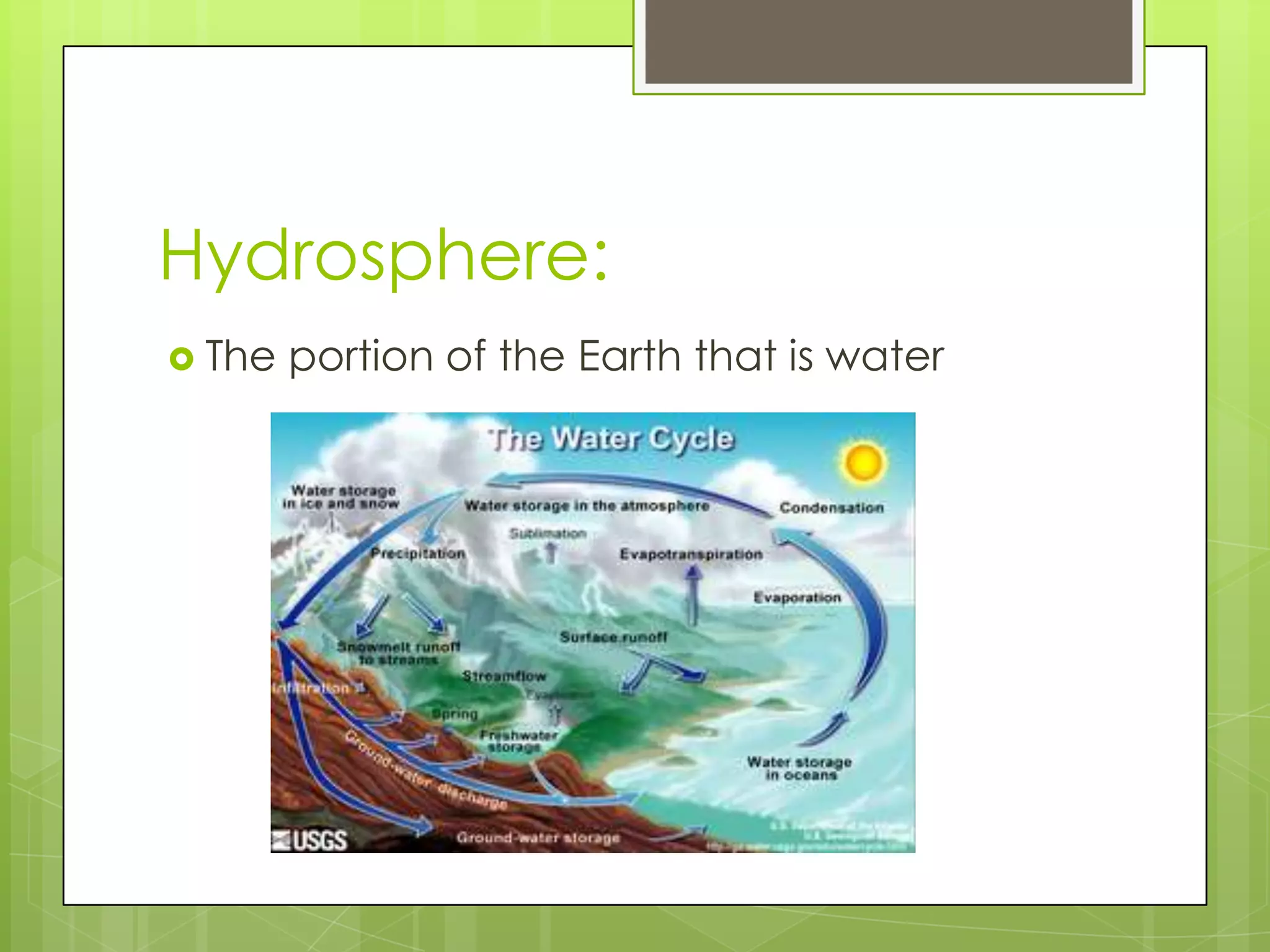
Hydrosphere:The portion of the Earth that is water
Geosphere:The mostly solid, rocky part of the Earth; extends from the center of the core to the surface of the crust
Biosphere:The part of the Earth where life exists, includes all living organisms on the Earth

1. The Earth Notes

  • 1.
  • 2.
    Earth Basics:Earth isunique because it is the only planet:With liquid water on surfaceWith oxygen in the atmosphere in such a large proportionThat supports life
  • 3.
    Basic Facts:4.6 billionyears oldMade mostly of rock71% of surface covered with waterSlightly flattened sphereRotates on its axis
  • 4.
    Layers of theEarthCrustMantleCore
  • 5.
    Crust:Thin, solid outermostlayer of the Earth that makes up less than 1% than the volume of the EarthTwo Types of Crust:OceanicContinental
  • 6.
    Mantle:Layer of “solid-ish”rock located between the crust and the coreable to move through convection currentsdenser than the crustmakes up 2/3 of the mass of the Earth
  • 7.
    MohoLayer/border between thecrust and the mantle
  • 8.
    Core:Central part ofthe Earth below the mantleTwo Parts:Outer Core – LiquidInner Core - Solid
  • 9.
    Magnetism:The Earth hasa magnetic North Pole and a magnetic South Pole that creates a magnetic field around it
  • 10.
    Gravity:The force ofattraction that exists between all objects, the bigger and closer the object is, the stronger the force of gravity
  • 11.
    Weight:The measure ofthe force of gravity on an object, therefore the farther you are away from Earth, the less your weight, though mass (measure of the amount of matter) remains constant
  • 12.
    Matter: Anything thathas mass and volumeEx: protons, neutrons, bacteria, atoms, feathers, rocks, etc.
  • 13.
    Energy:The ability todo work, cannot be created or destroyed, only change formsForms:HeatLightMovementPotential to MoveElectromagnetic Waves
  • 14.
    Energy:Energy enters theEarth as sunlight and is either absorbed by substances, organisms, or the Earth, or reflected/released back into space as heat
  • 15.
    Matter:Very little matterenters or leaves the Earth, it is constantly changing forms within the confines of Earth and the atmosphereProtons, electrons, and neutrons make atoms; atoms make up elements; elements make up compounds; all make up matterCan exist as a solid, liquid, and gas
  • 17.
    Atmosphere:A mixture ofgases that surround a planet
  • 18.
    Hydrosphere:The portion ofthe Earth that is water
  • 19.
    Geosphere:The mostly solid,rocky part of the Earth; extends from the center of the core to the surface of the crust
  • 20.
    Biosphere:The part ofthe Earth where life exists, includes all living organisms on the Earth