THE SOLAR SYSTEM
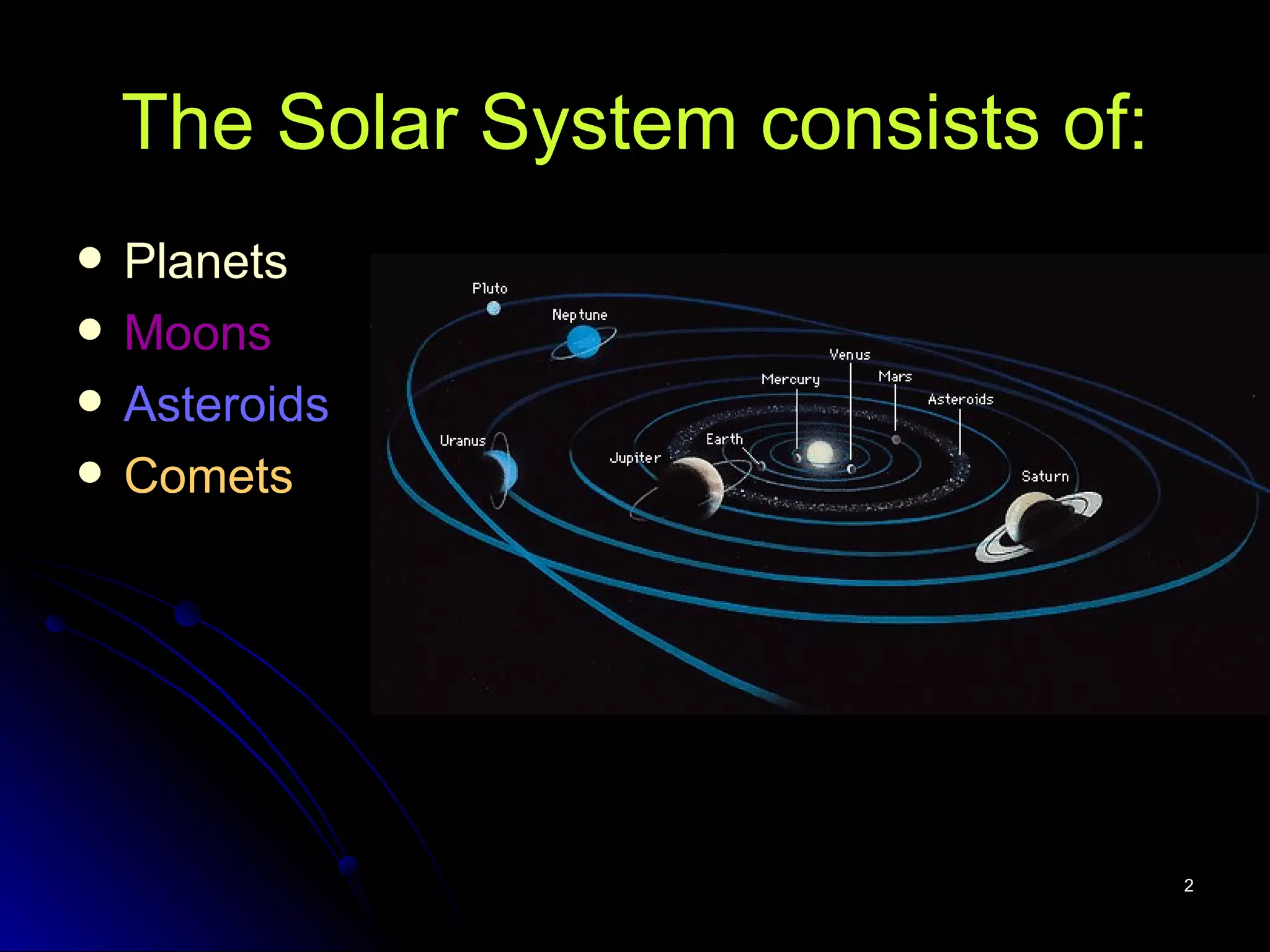
The Solar System consists of: Planets Moons Asteroids Comets
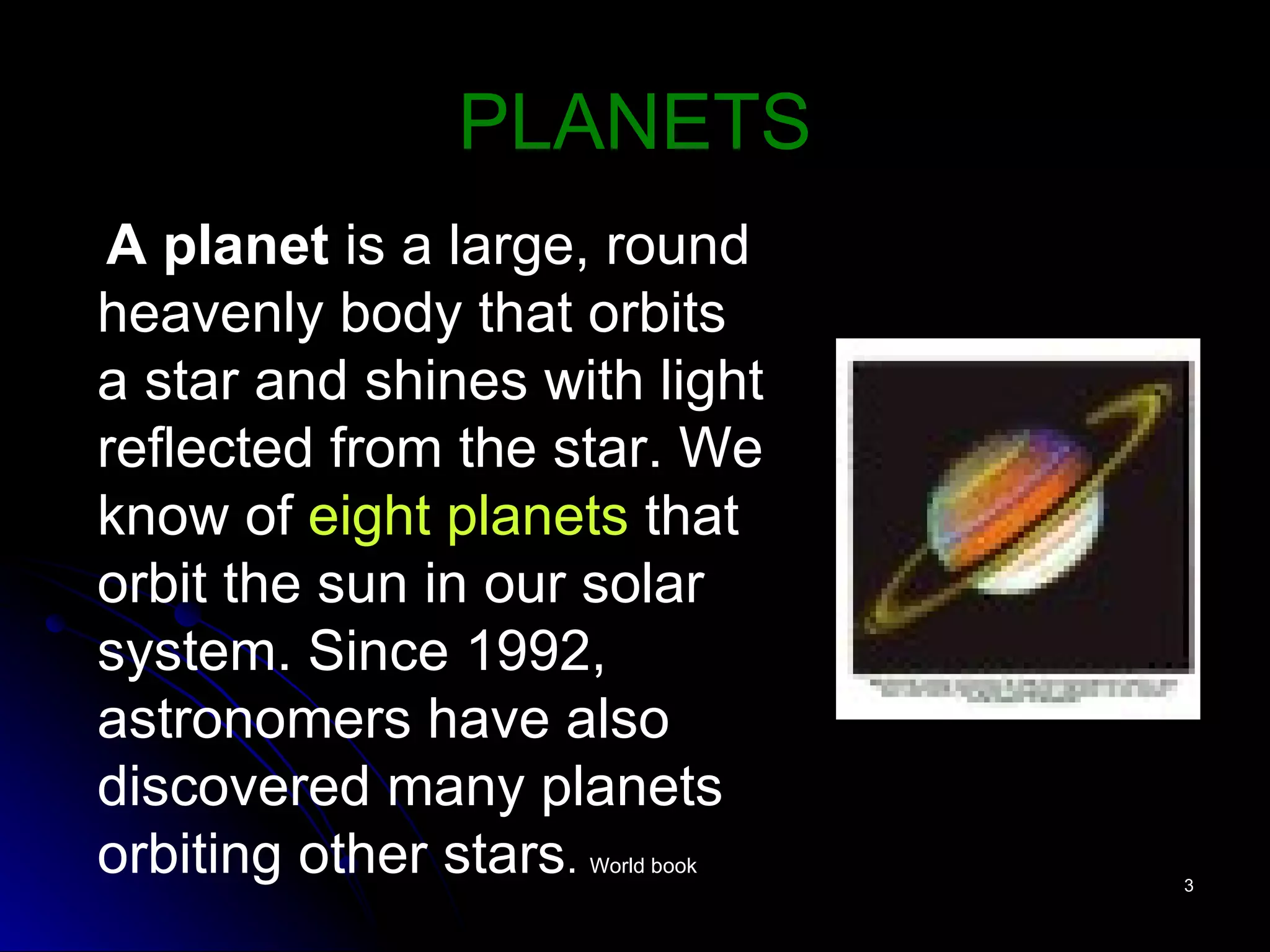
PLANETS A planet  is a large, round heavenly body that orbits a star and shines with light reflected from the star. We know of  eight planets  that orbit the sun in our solar system. Since 1992, astronomers have also discovered many planets orbiting other stars .  World book
What are the nine planets? HINT: My Very Educated Mother Just Sent Us Nine (Pizzas) Mercury Venus Earth Mars Jupiter Saturn Uranus Neptune Pluto eight
MERCURY Mer | cu | ry  «MUR kyuhr ee»,  noun.     The smallest planet in the solar system and the one nearest to the sun. Its orbit about the sun takes 88 days to complete, at a mean distance of almost 36,000,000 miles. Mercury goes around the sun about four times while the earth is going around once.    [< Latin  Mercurius ] World Book
VENUS   Venus is the sixth largest planet in the solar system and the second in distance from the sun. Venus is the brightest planet in the solar system and the one that comes closest to the earth.   World Book
EARTH Age:  At least 4 1/2 billion years Mass:  6,600,000,000,000,000,000,000 (6.6 sextillion) tons (6.0 sextillion metric tons). Surface features:   Highest land —Mount Everest, 29,035 feet (8,850 meters) above sea level.  Lowest land —shore of Dead Sea, about 1,310 feet (399 meters) below sea). Temperature:   Highest,  136 °F (58 °C) at Al Aziziyah, Libya.  Lowest,  -128.6 °F (-89.6 °C) at Vostok Station in Antarctica.  Average surface temperature,  59 °F (15 °C). Chemical makeup of the earth's crust (in percent of the crust's weight):  oxygen 46.6, silicon 27.7, aluminum 8.1, iron 5.0, calcium 3.6, sodium 2.8, potassium 2.6, magnesium 2.0, and other elements totaling 1.6.
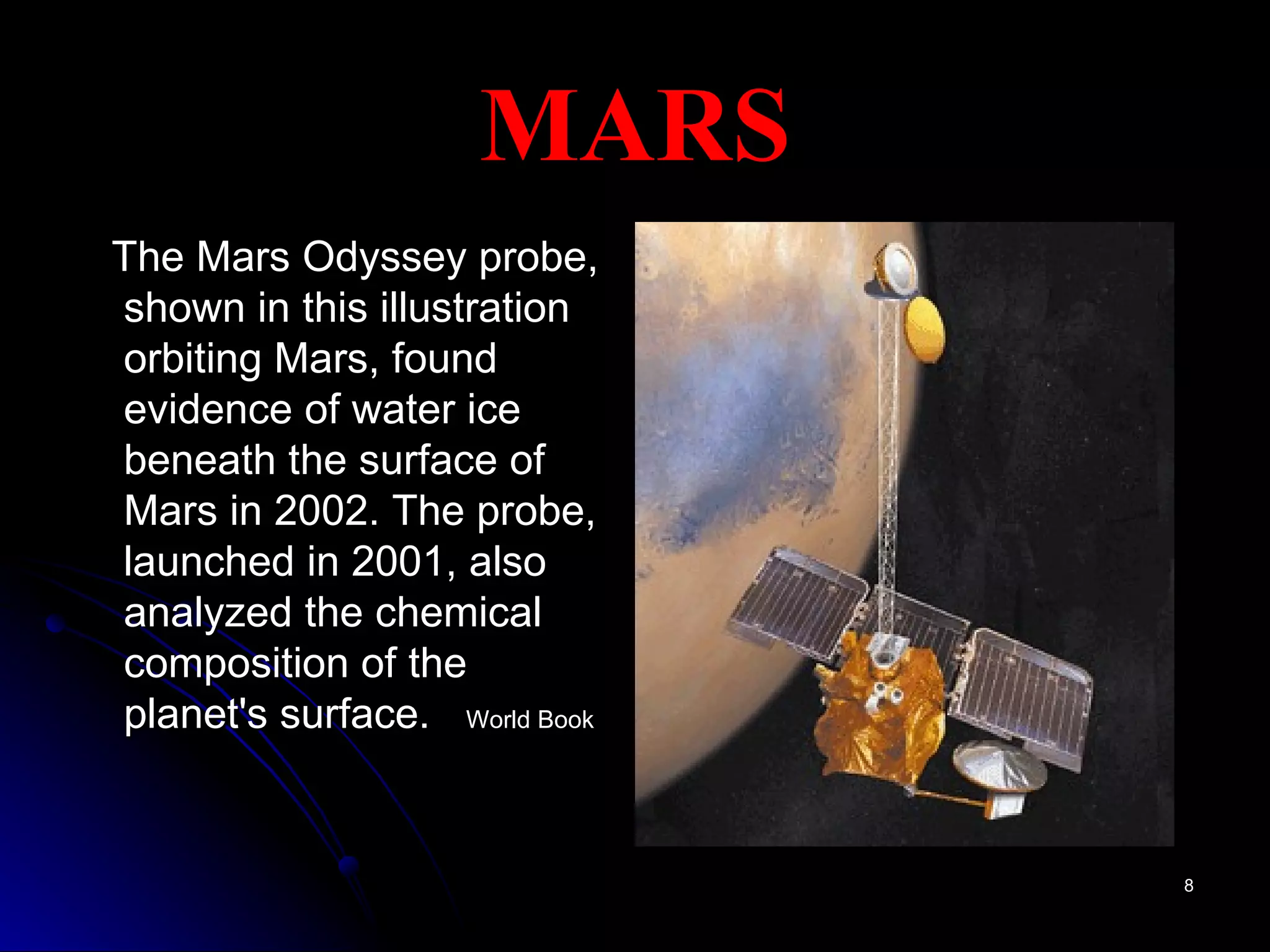
MARS The Mars Odyssey probe, shown in this illustration orbiting Mars, found evidence of water ice beneath the surface of Mars in 2002. The probe, launched in 2001, also analyzed the chemical composition of the planet's surface.  World Book
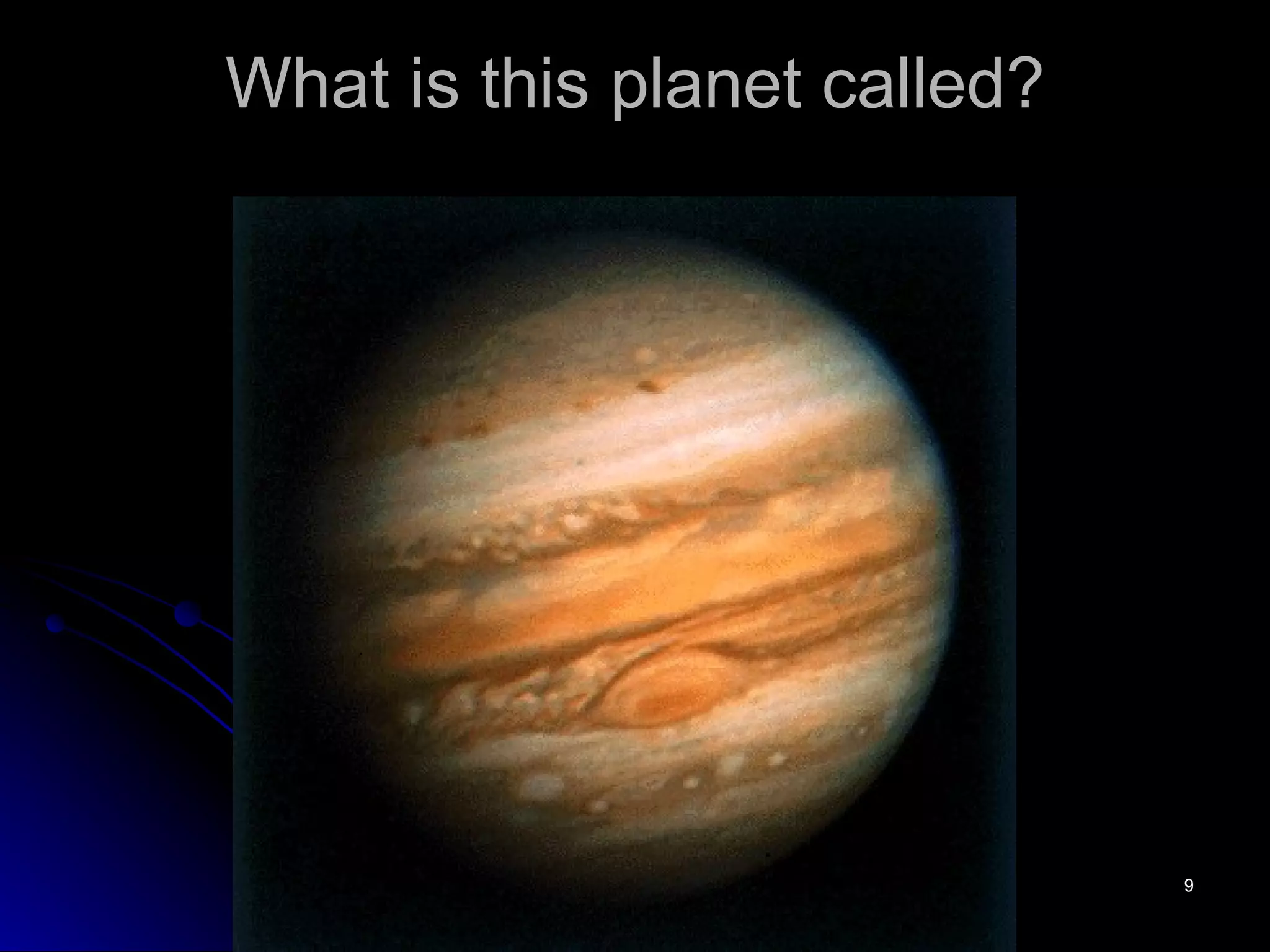
What is this planet called?
Jupiter
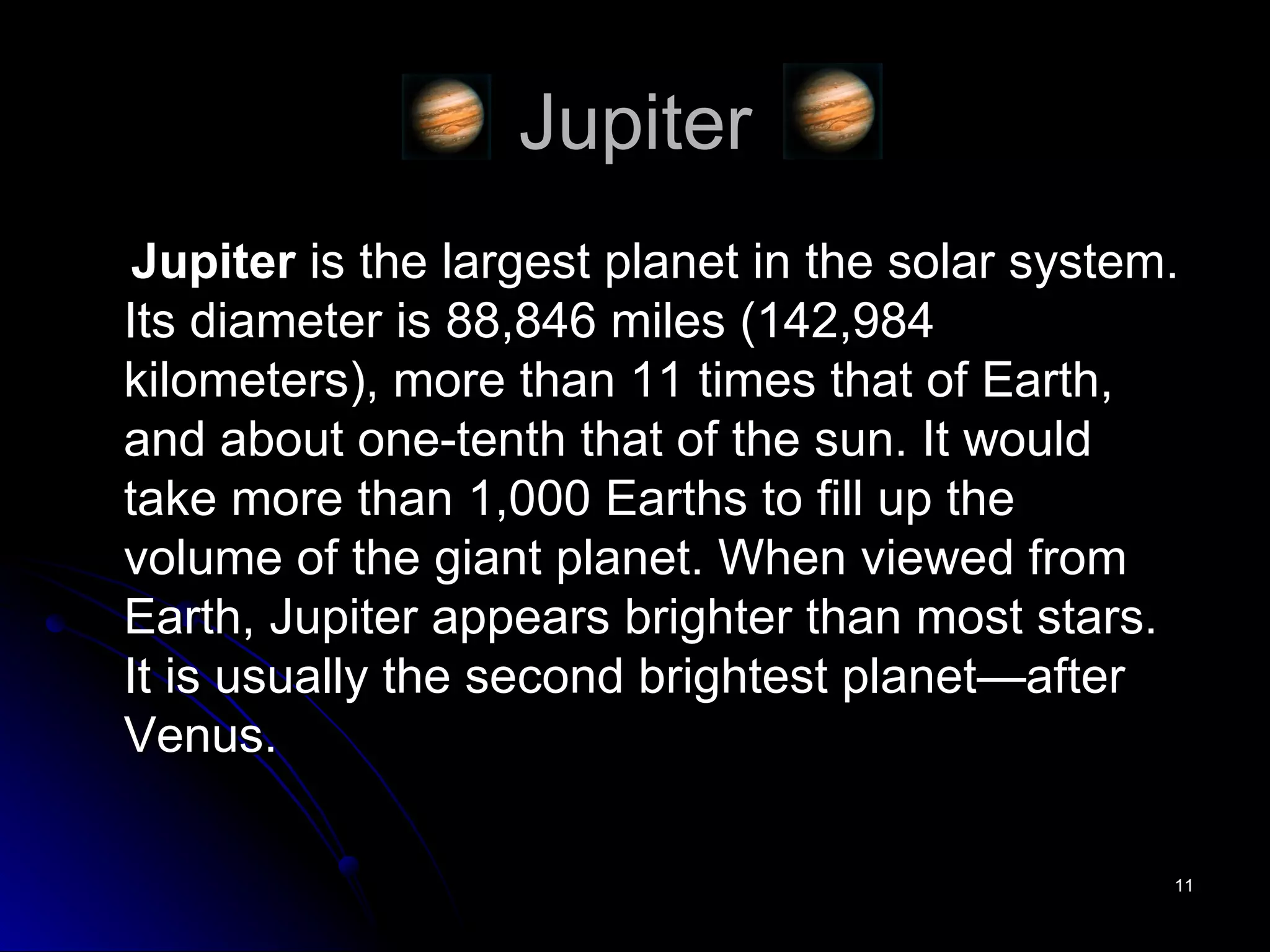
Jupiter Jupiter  is the largest planet in the solar system. Its diameter is 88,846 miles (142,984 kilometers), more than 11 times that of Earth, and about one-tenth that of the sun. It would take more than 1,000 Earths to fill up the volume of the giant planet. When viewed from Earth, Jupiter appears brighter than most stars. It is usually the second brightest planet—after Venus.
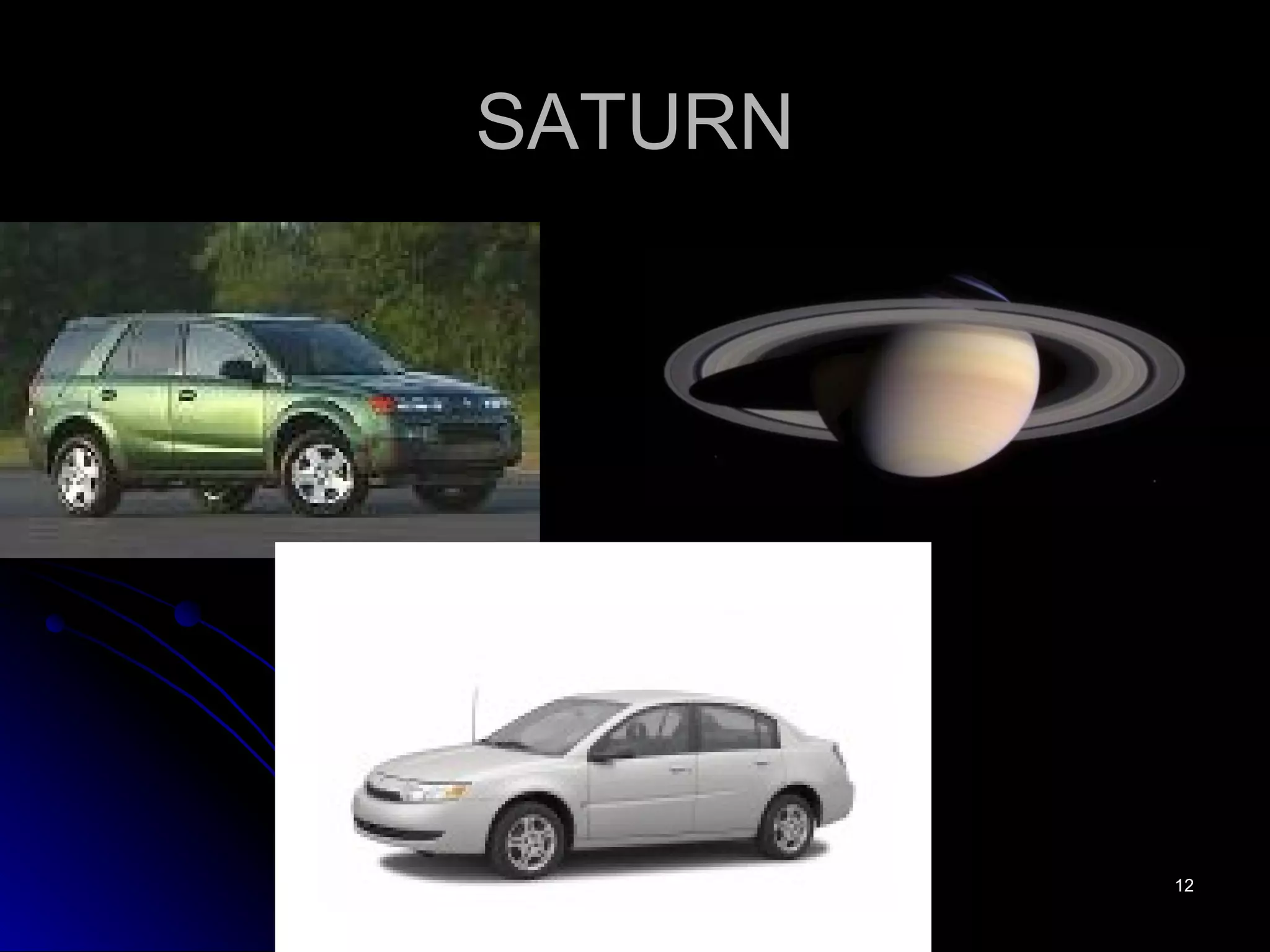
SATURN
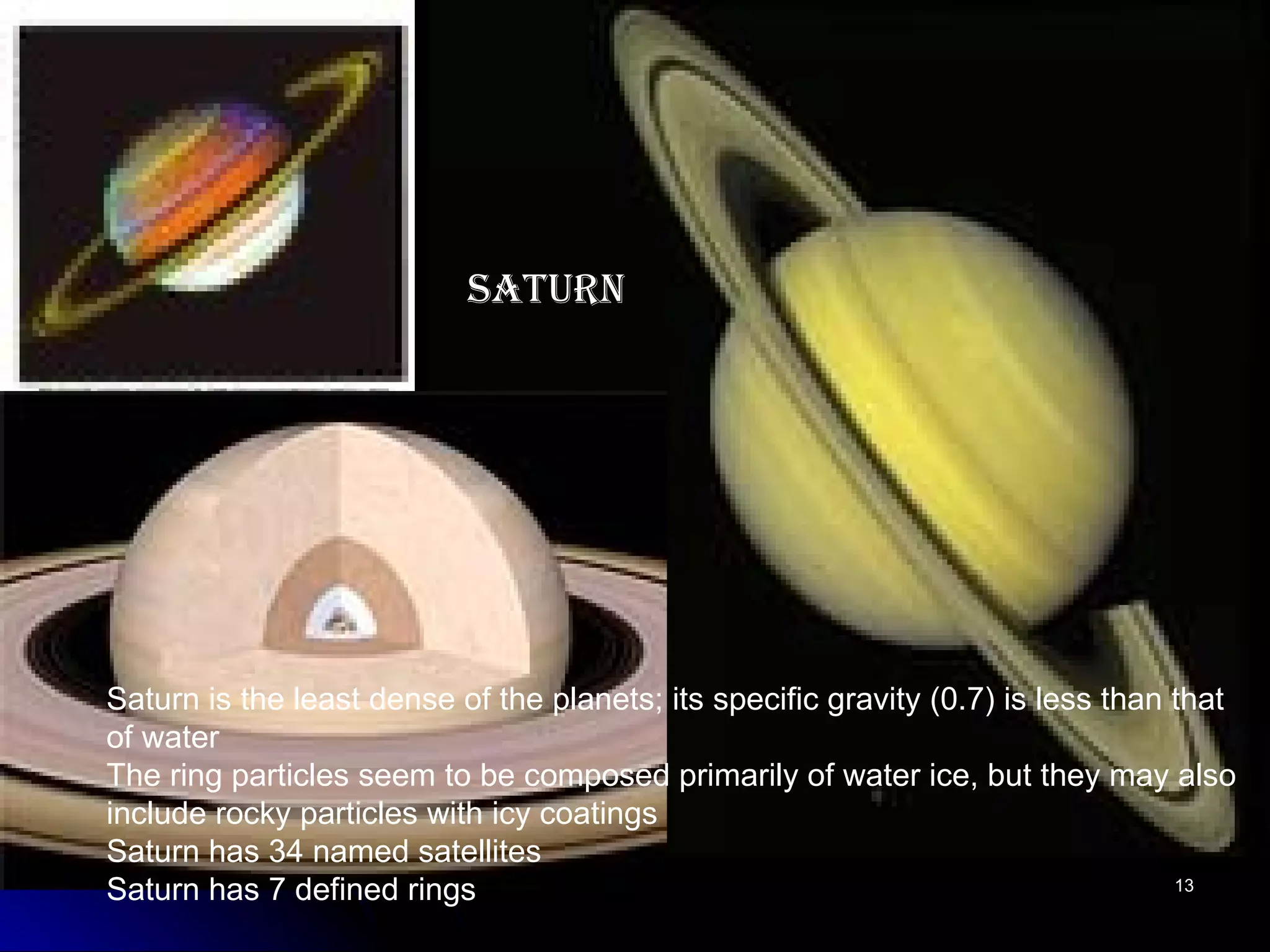
SATURN Saturn is the least dense of the planets; its specific gravity (0.7) is less than that  of water The ring particles seem to be composed primarily of water ice, but they may also  include rocky particles with icy coatings  Saturn has 34 named satellites Saturn has 7 defined rings
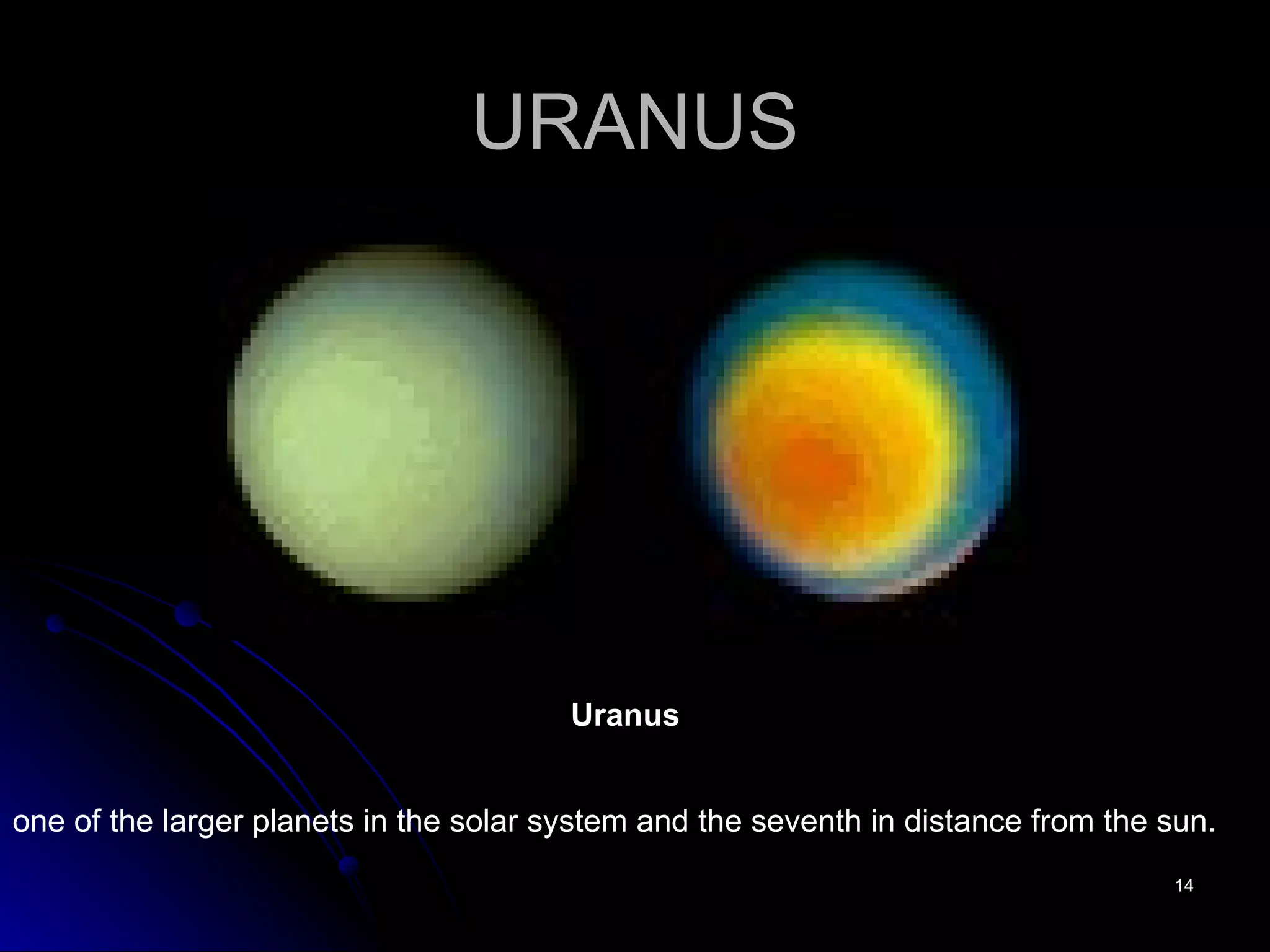
URANUS one of the larger planets in the solar system and the seventh in distance from the sun.  Uranus
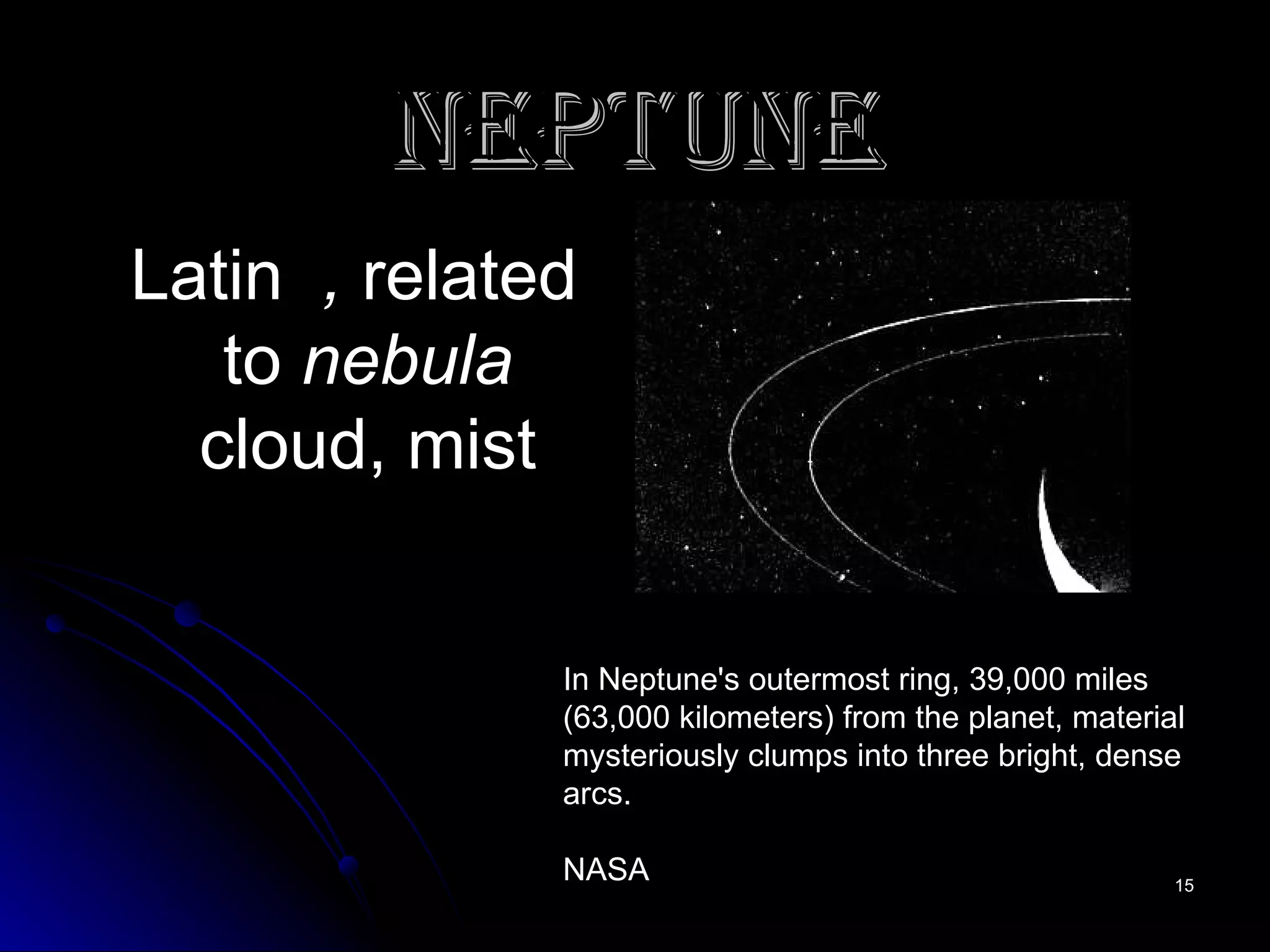
NEPTUNE   Latin  ,  related to  nebula  cloud, mist In Neptune's outermost ring, 39,000 miles (63,000 kilometers) from the planet, material mysteriously clumps into three bright, dense arcs. NASA
PLUTO Is Pluto a planet?  NO, Pluto is not a planet. It is now considered a dwarf planet The body that decides the classification of objects in the solar system, the International Astronomical Union (IAU), has changed Pluto's status as a planet and has decided against assigning it a minor planet number.  Plutoid
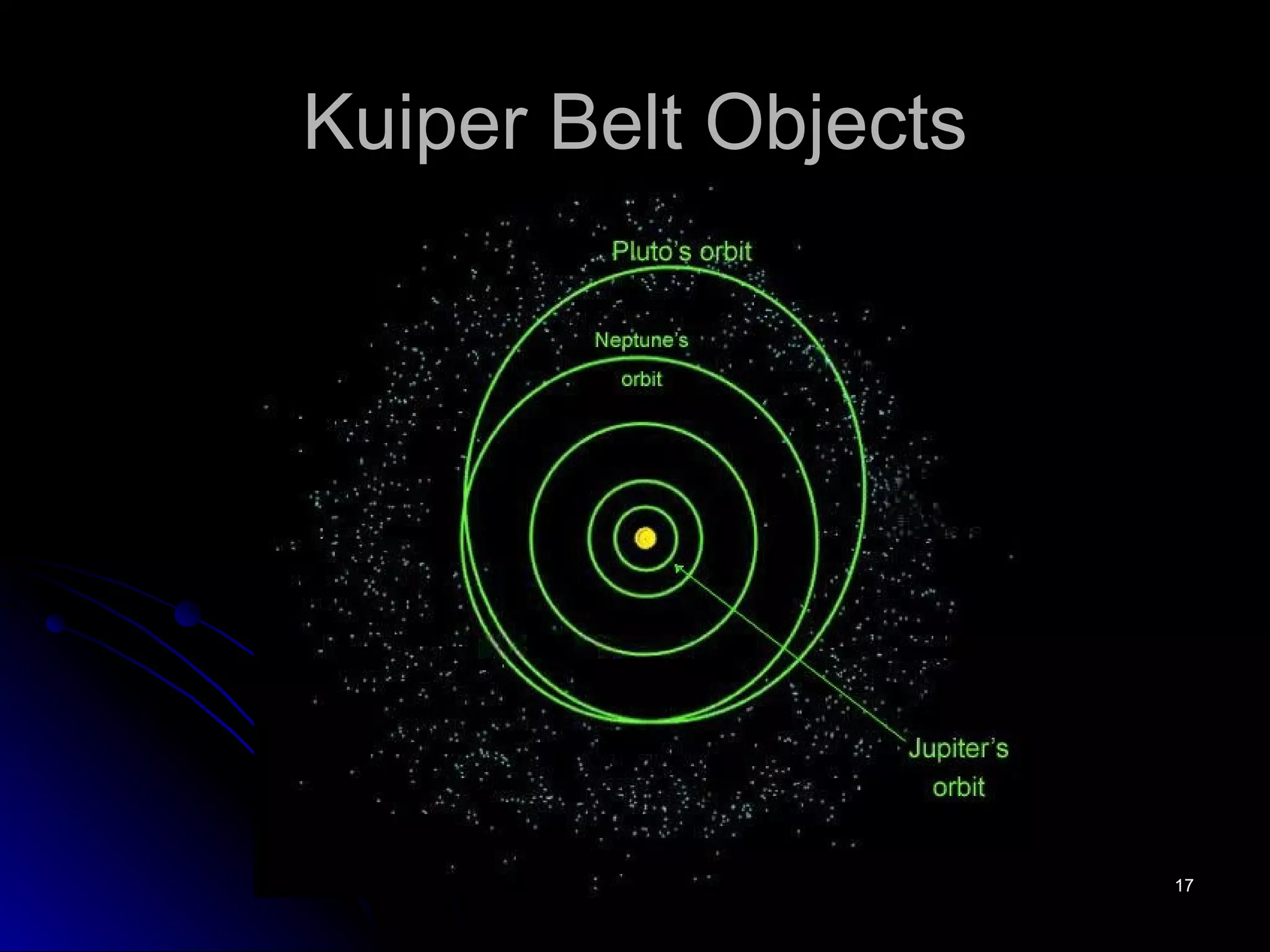
Kuiper Belt Objects
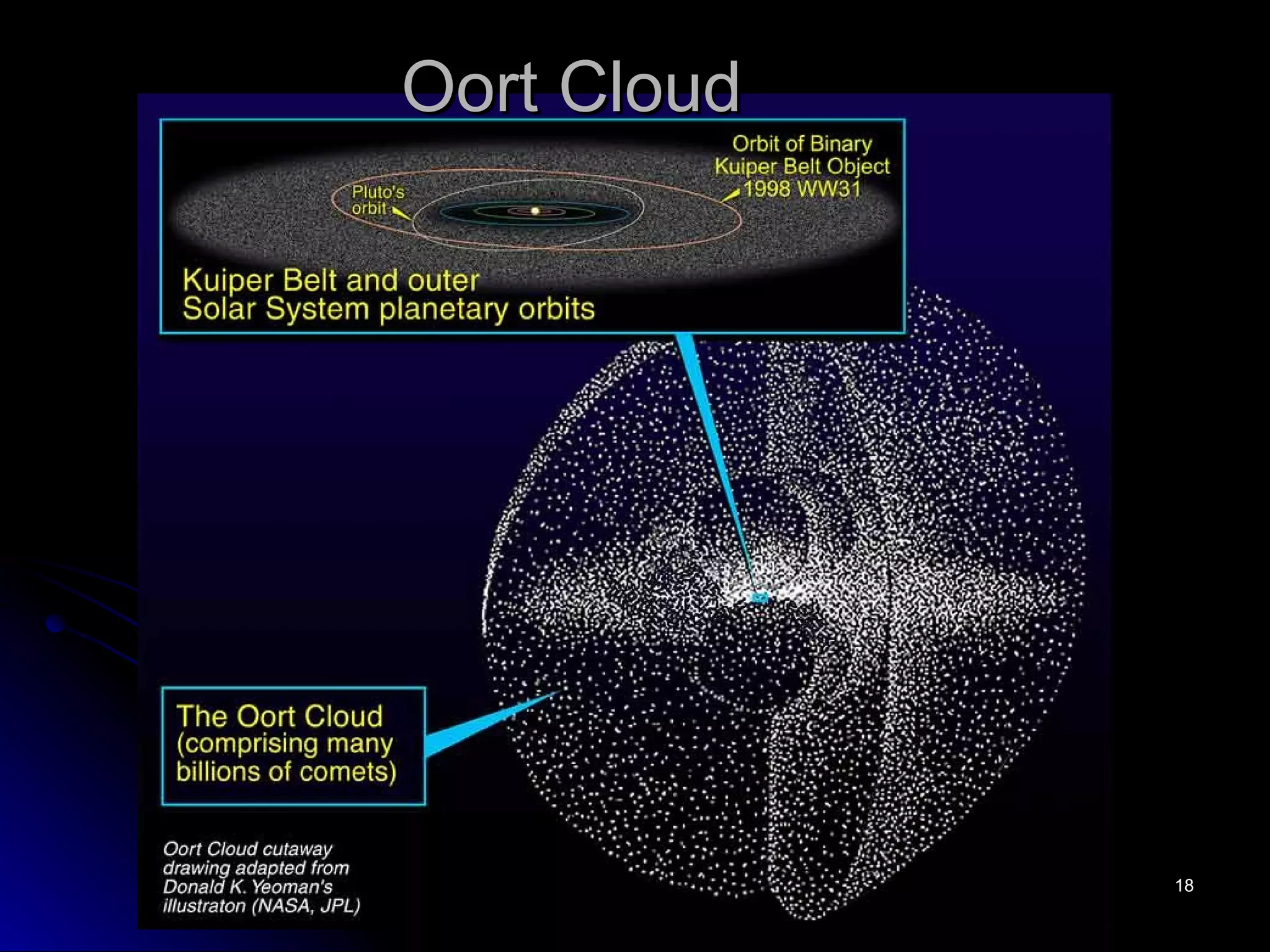
Oort Cloud
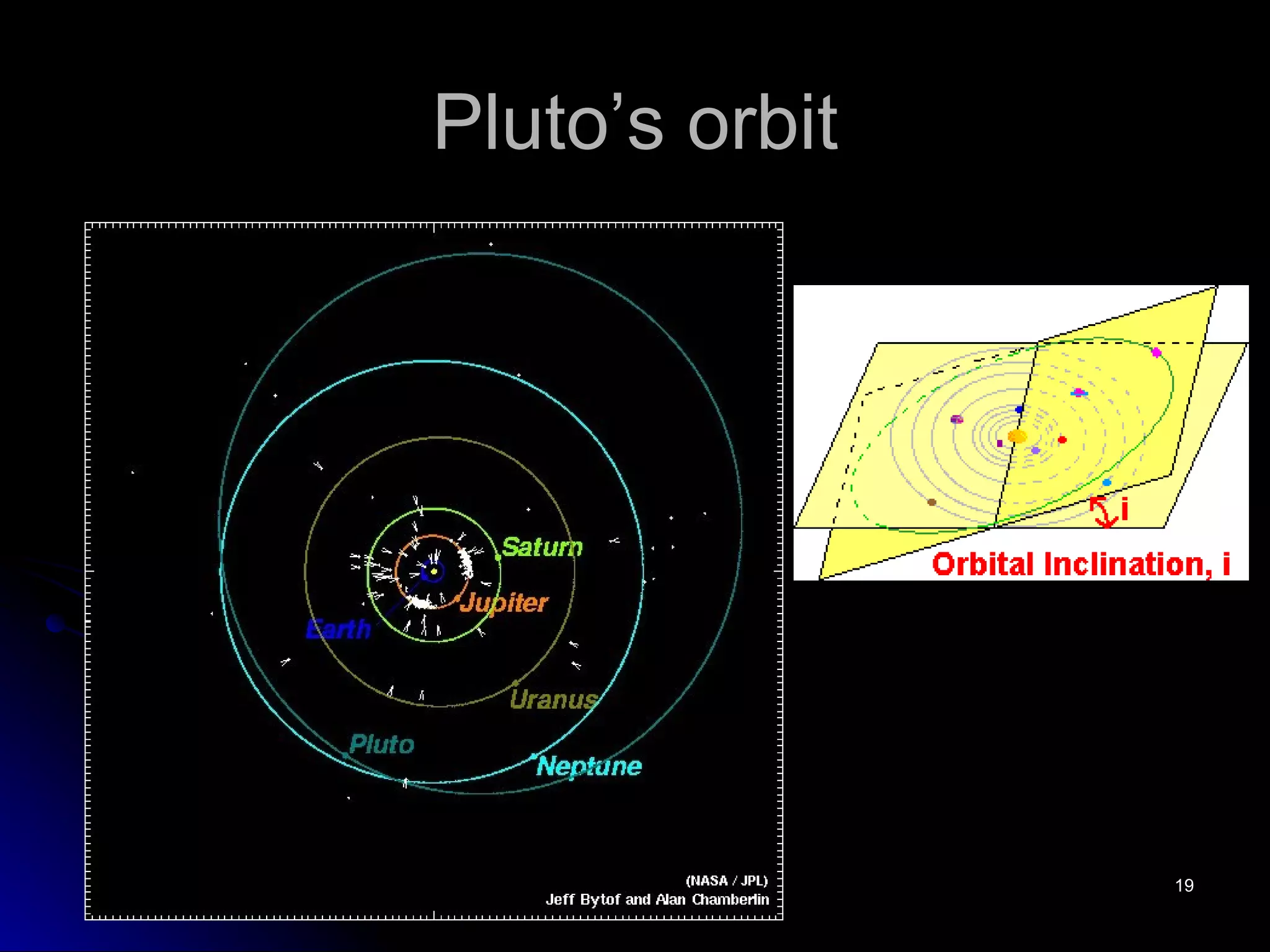
Pluto’s orbit
Where do we go from here?

Solar system Notes

  • 1.
  • 2.
    The Solar Systemconsists of: Planets Moons Asteroids Comets
  • 3.
    PLANETS A planet is a large, round heavenly body that orbits a star and shines with light reflected from the star. We know of eight planets that orbit the sun in our solar system. Since 1992, astronomers have also discovered many planets orbiting other stars . World book
  • 4.
    What are thenine planets? HINT: My Very Educated Mother Just Sent Us Nine (Pizzas) Mercury Venus Earth Mars Jupiter Saturn Uranus Neptune Pluto eight
  • 5.
    MERCURY Mer |cu | ry «MUR kyuhr ee», noun.   The smallest planet in the solar system and the one nearest to the sun. Its orbit about the sun takes 88 days to complete, at a mean distance of almost 36,000,000 miles. Mercury goes around the sun about four times while the earth is going around once. [< Latin Mercurius ] World Book
  • 6.
    VENUS   Venusis the sixth largest planet in the solar system and the second in distance from the sun. Venus is the brightest planet in the solar system and the one that comes closest to the earth. World Book
  • 7.
    EARTH Age: At least 4 1/2 billion years Mass: 6,600,000,000,000,000,000,000 (6.6 sextillion) tons (6.0 sextillion metric tons). Surface features: Highest land —Mount Everest, 29,035 feet (8,850 meters) above sea level. Lowest land —shore of Dead Sea, about 1,310 feet (399 meters) below sea). Temperature: Highest, 136 °F (58 °C) at Al Aziziyah, Libya. Lowest, -128.6 °F (-89.6 °C) at Vostok Station in Antarctica. Average surface temperature, 59 °F (15 °C). Chemical makeup of the earth's crust (in percent of the crust's weight): oxygen 46.6, silicon 27.7, aluminum 8.1, iron 5.0, calcium 3.6, sodium 2.8, potassium 2.6, magnesium 2.0, and other elements totaling 1.6.
  • 8.
    MARS The MarsOdyssey probe, shown in this illustration orbiting Mars, found evidence of water ice beneath the surface of Mars in 2002. The probe, launched in 2001, also analyzed the chemical composition of the planet's surface. World Book
  • 9.
    What is thisplanet called?
  • 10.
  • 11.
    Jupiter Jupiter is the largest planet in the solar system. Its diameter is 88,846 miles (142,984 kilometers), more than 11 times that of Earth, and about one-tenth that of the sun. It would take more than 1,000 Earths to fill up the volume of the giant planet. When viewed from Earth, Jupiter appears brighter than most stars. It is usually the second brightest planet—after Venus.
  • 12.
  • 13.
    SATURN Saturn isthe least dense of the planets; its specific gravity (0.7) is less than that of water The ring particles seem to be composed primarily of water ice, but they may also include rocky particles with icy coatings Saturn has 34 named satellites Saturn has 7 defined rings
  • 14.
    URANUS one ofthe larger planets in the solar system and the seventh in distance from the sun. Uranus
  • 15.
    NEPTUNE   Latin , related to nebula cloud, mist In Neptune's outermost ring, 39,000 miles (63,000 kilometers) from the planet, material mysteriously clumps into three bright, dense arcs. NASA
  • 16.
    PLUTO Is Plutoa planet? NO, Pluto is not a planet. It is now considered a dwarf planet The body that decides the classification of objects in the solar system, the International Astronomical Union (IAU), has changed Pluto's status as a planet and has decided against assigning it a minor planet number. Plutoid
  • 17.
  • 18.
  • 19.
  • 20.
    Where do wego from here?