Rocks & the Rock Cycle
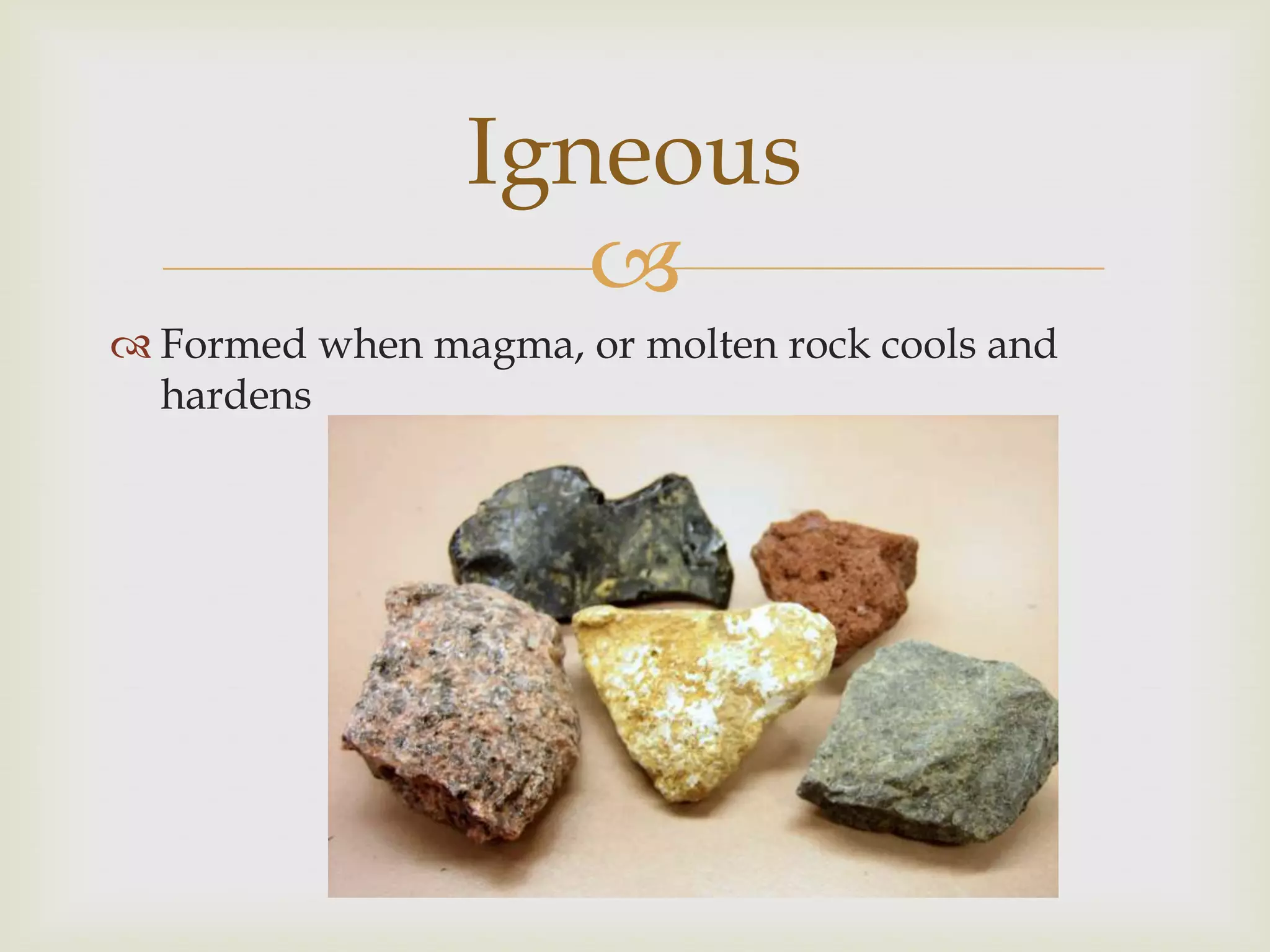
Formed when magma, or molten rock cools and hardensIgneous
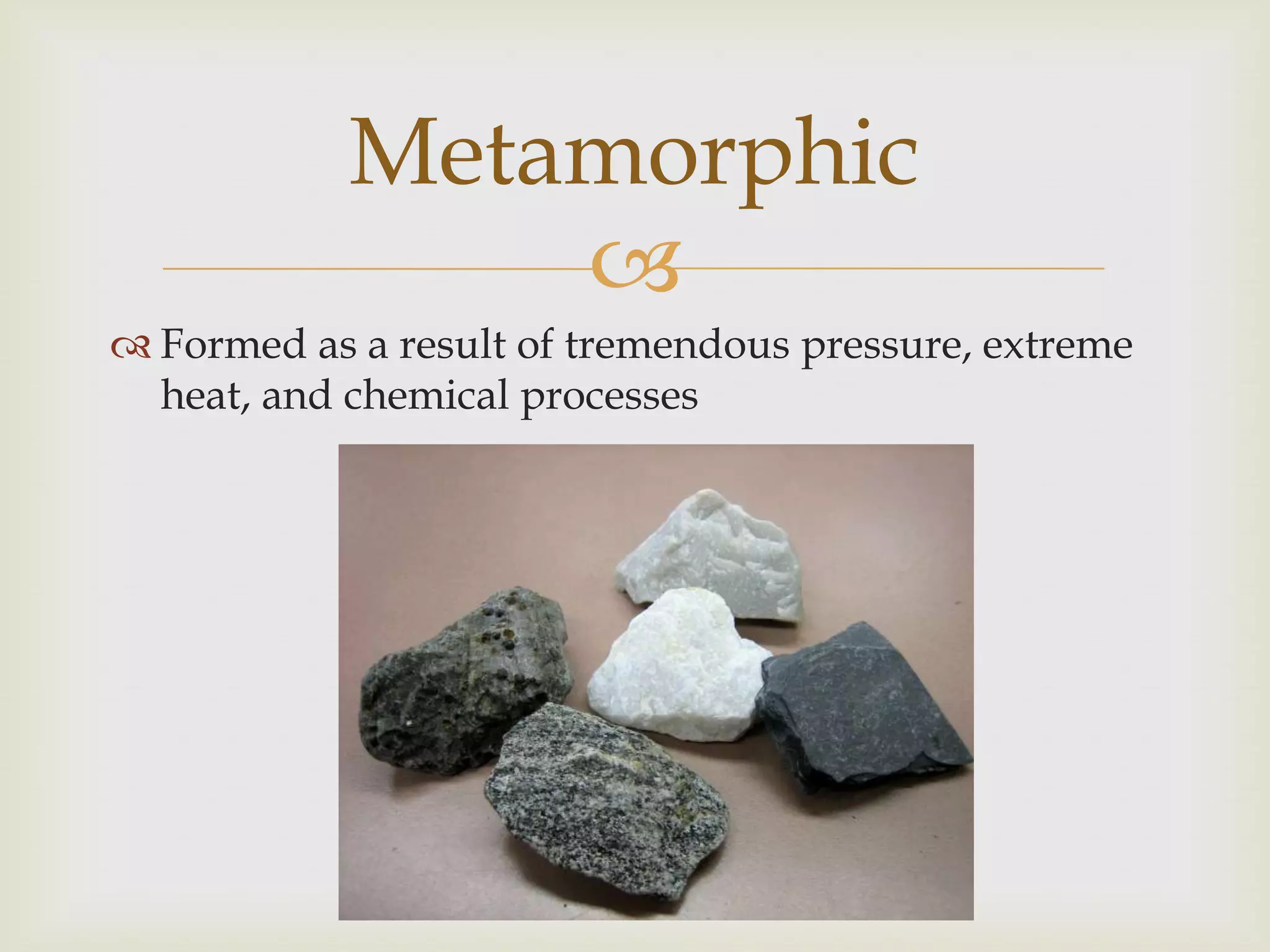
Formed as a result of tremendous pressure, extreme heat, and chemical processesMetamorphic
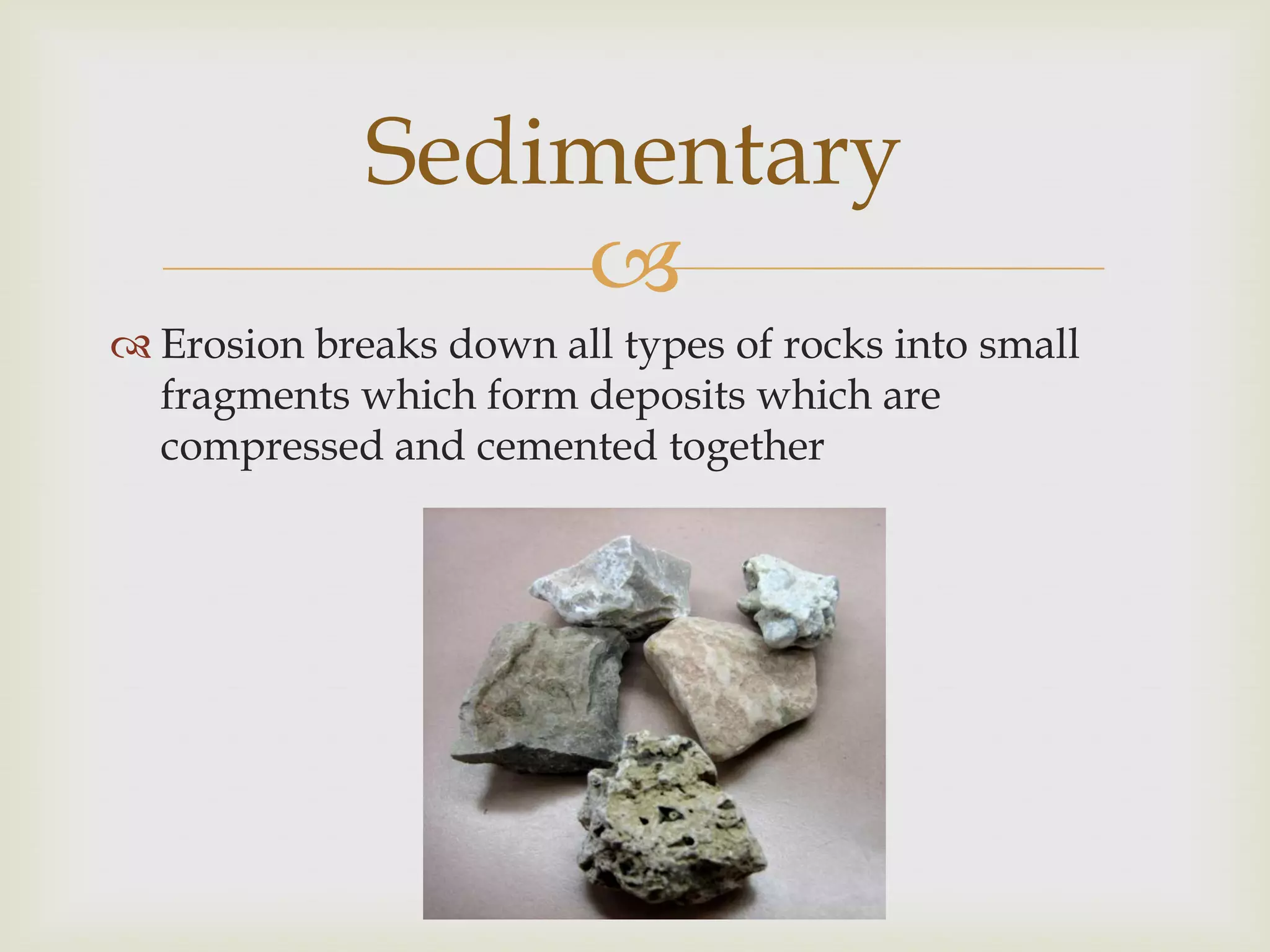
Erosion breaks down all types of rocks into small fragments which form deposits which are compressed and cemented togetherSedimentary
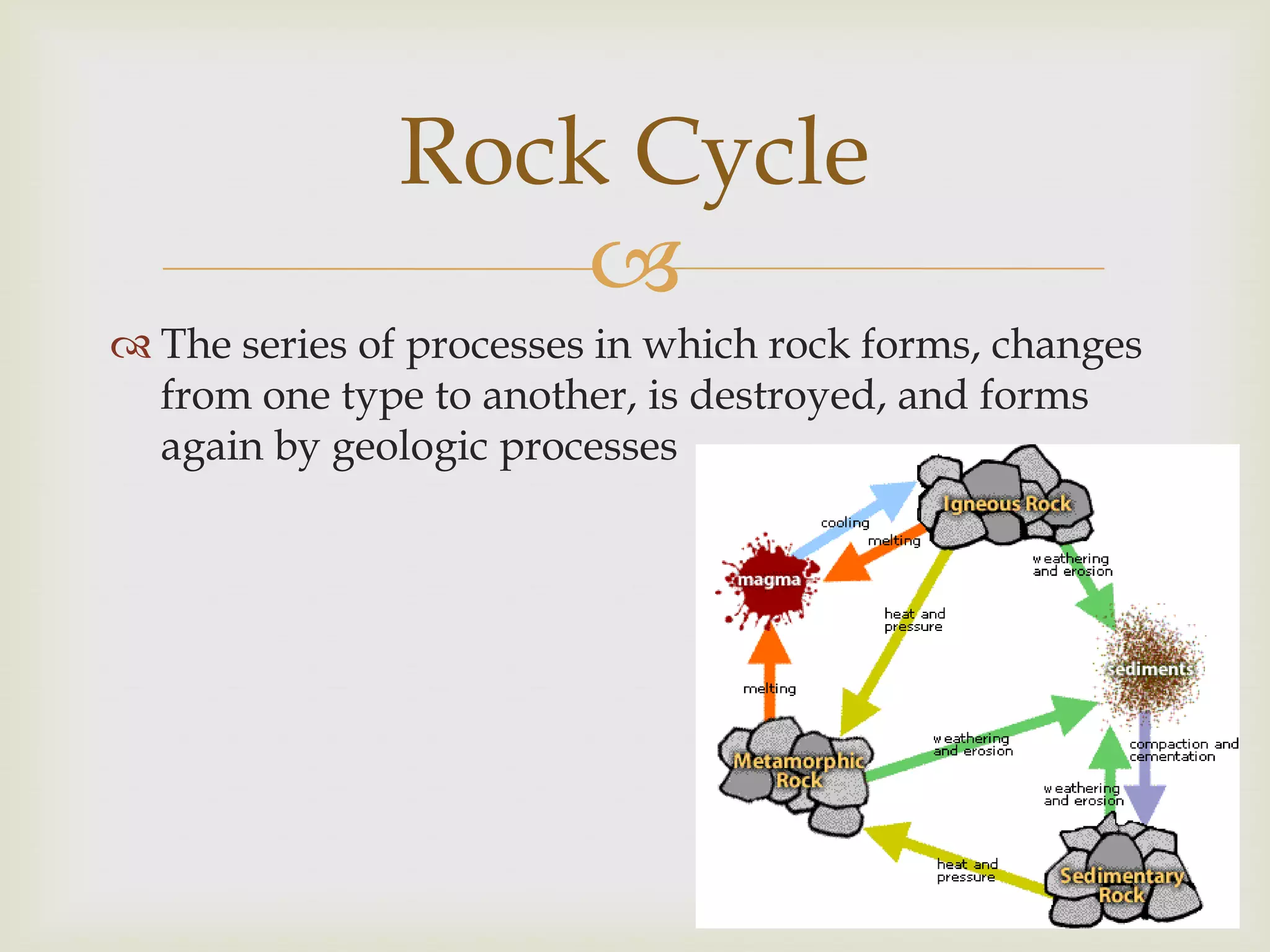
The series of processes in which rock forms, changes from one type to another, is destroyed, and forms again by geologic processesRock Cycle
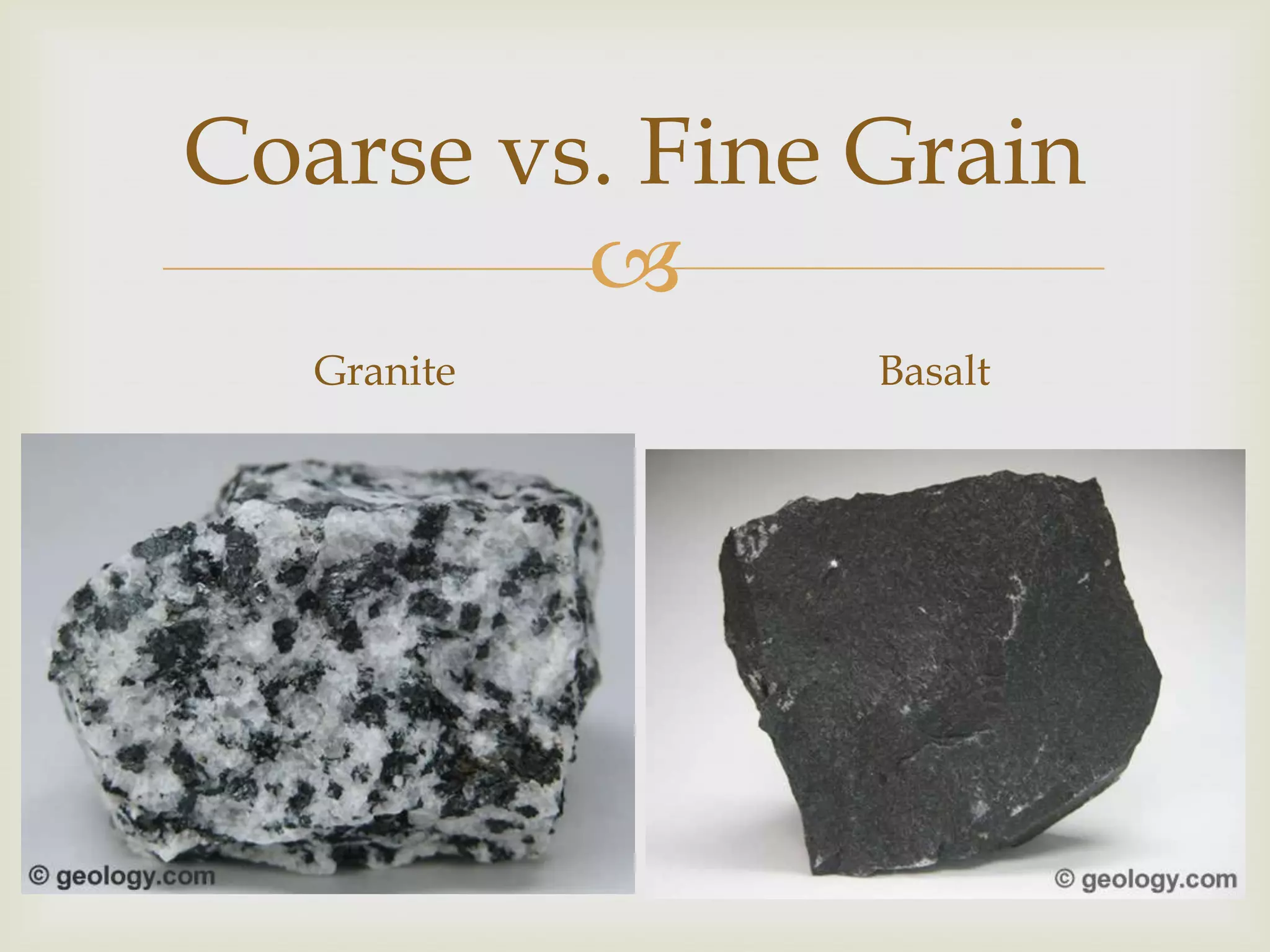
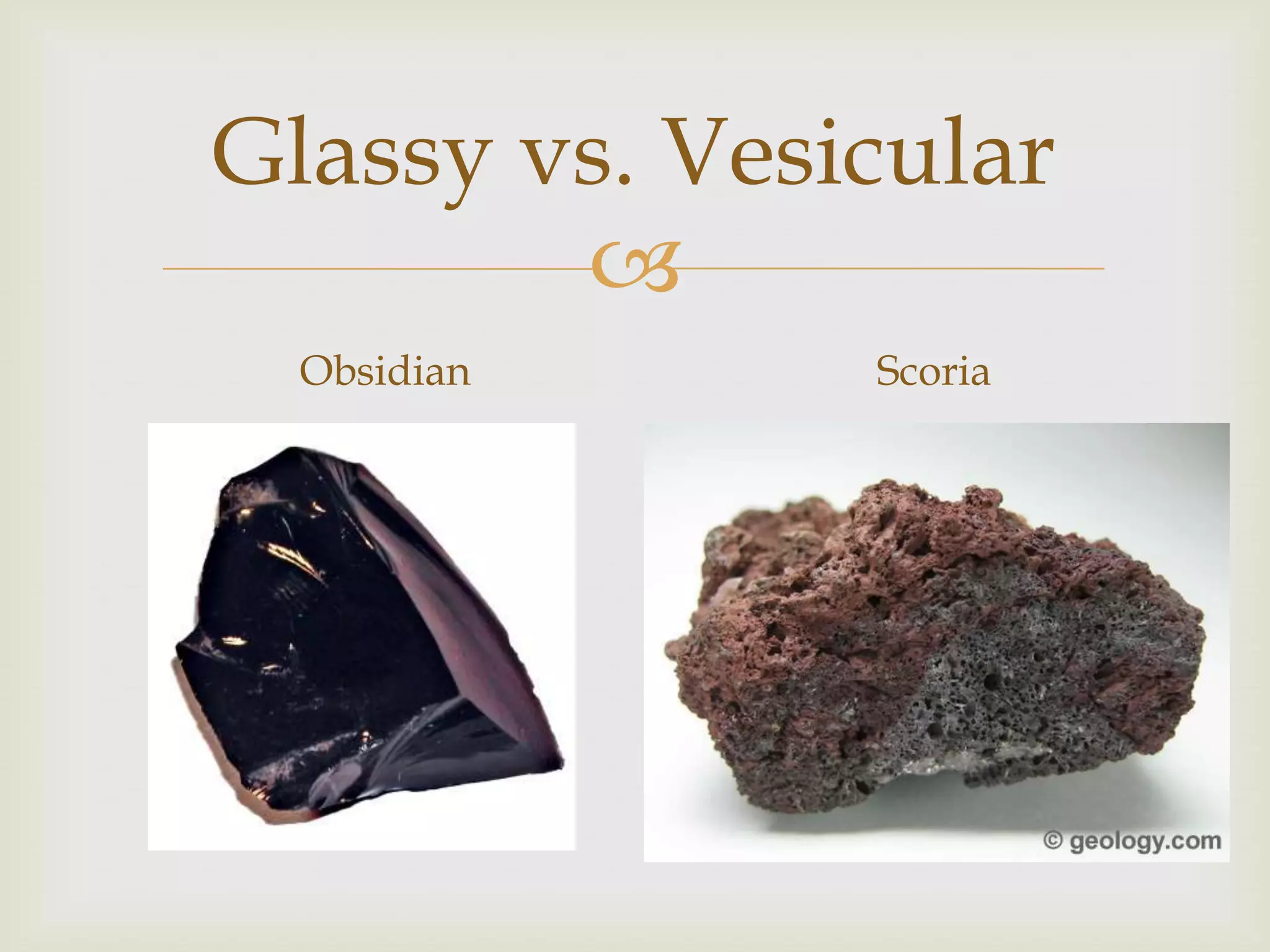
Igneous rocks can be identified by the size of crystals that are present as a result of the cooling process of melted mineralsA. Coarse Grained – large minerals suggest a slower cooling processB. Fine Grained – small grains, unseen by the eye suggest a quicker cooling processC. Glassy – when magma with very little gases in it cools very quicklyD. Vesicular – when magma with a lot of gases cools very quicklyIgneous Rocks
Coarse vs. Fine GrainGraniteBasalt
Glassy vs. VesicularObsidianScoria
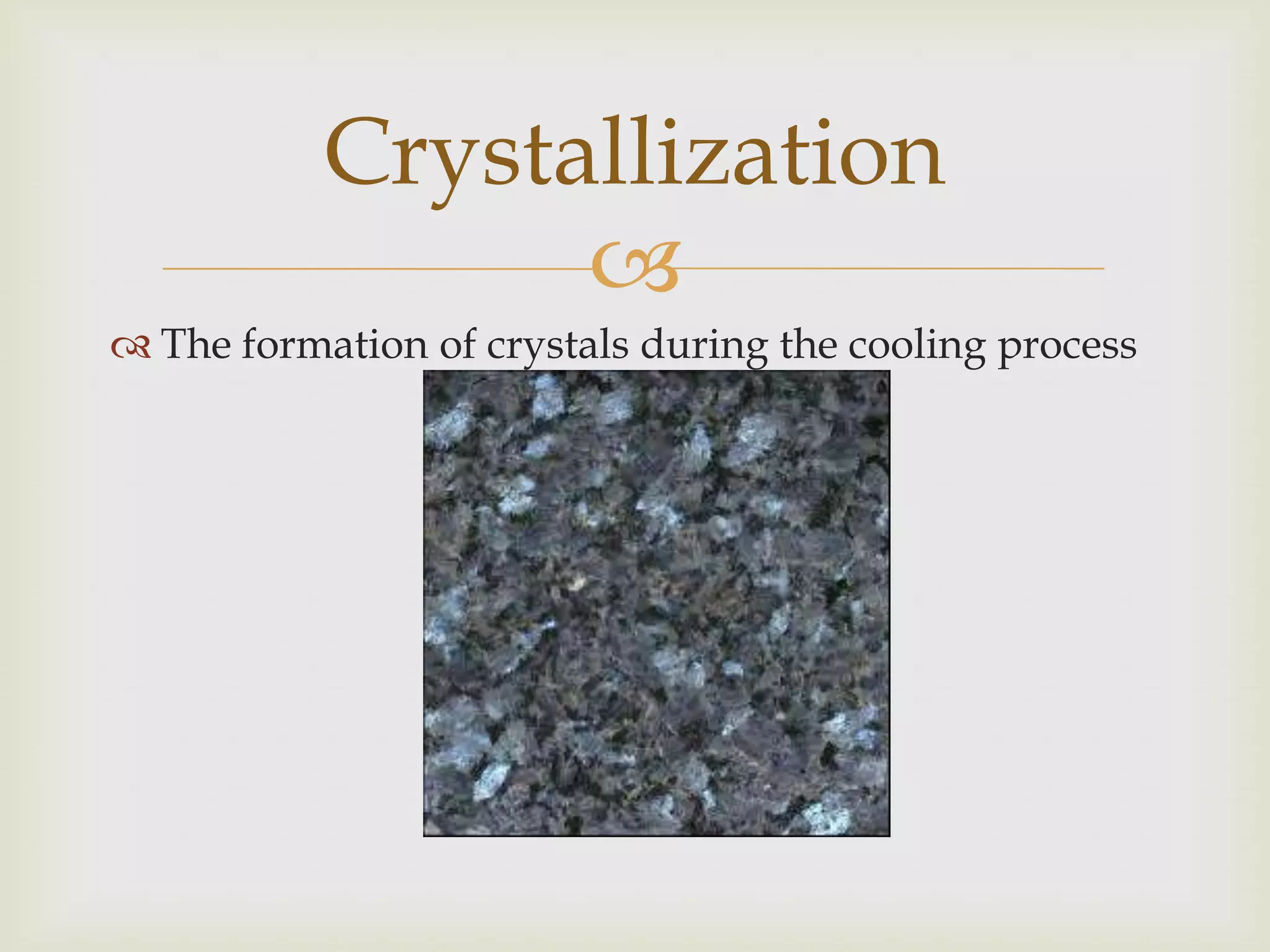
The formation of crystals during the cooling processCrystallization
Loose fragments of rock, minerals, and organic material that result from natural processes, including the physical breakdown of rockSediment
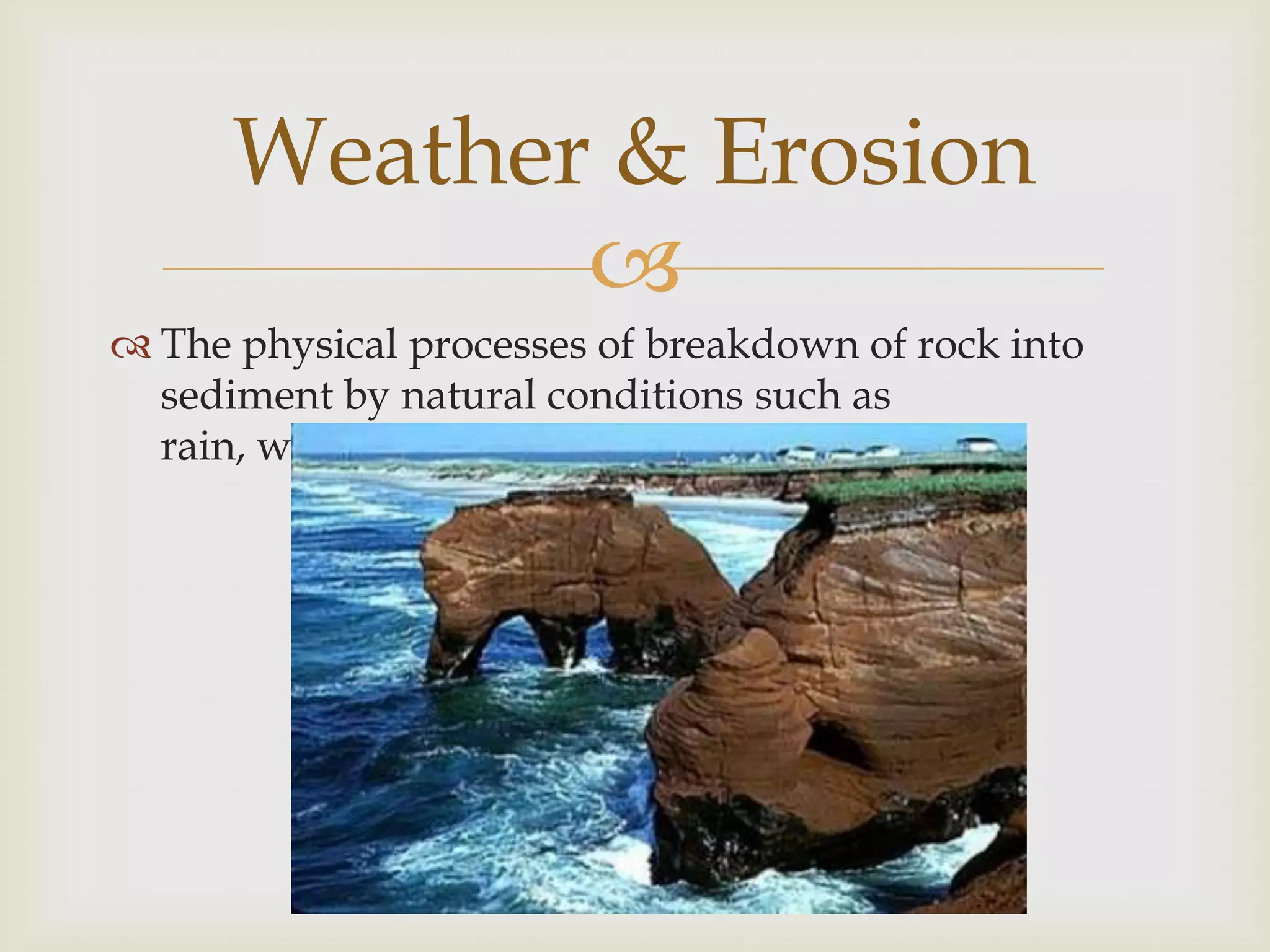
The physical processes of breakdown of rock into sediment by natural conditions such as rain, wind, etc.Weather & Erosion
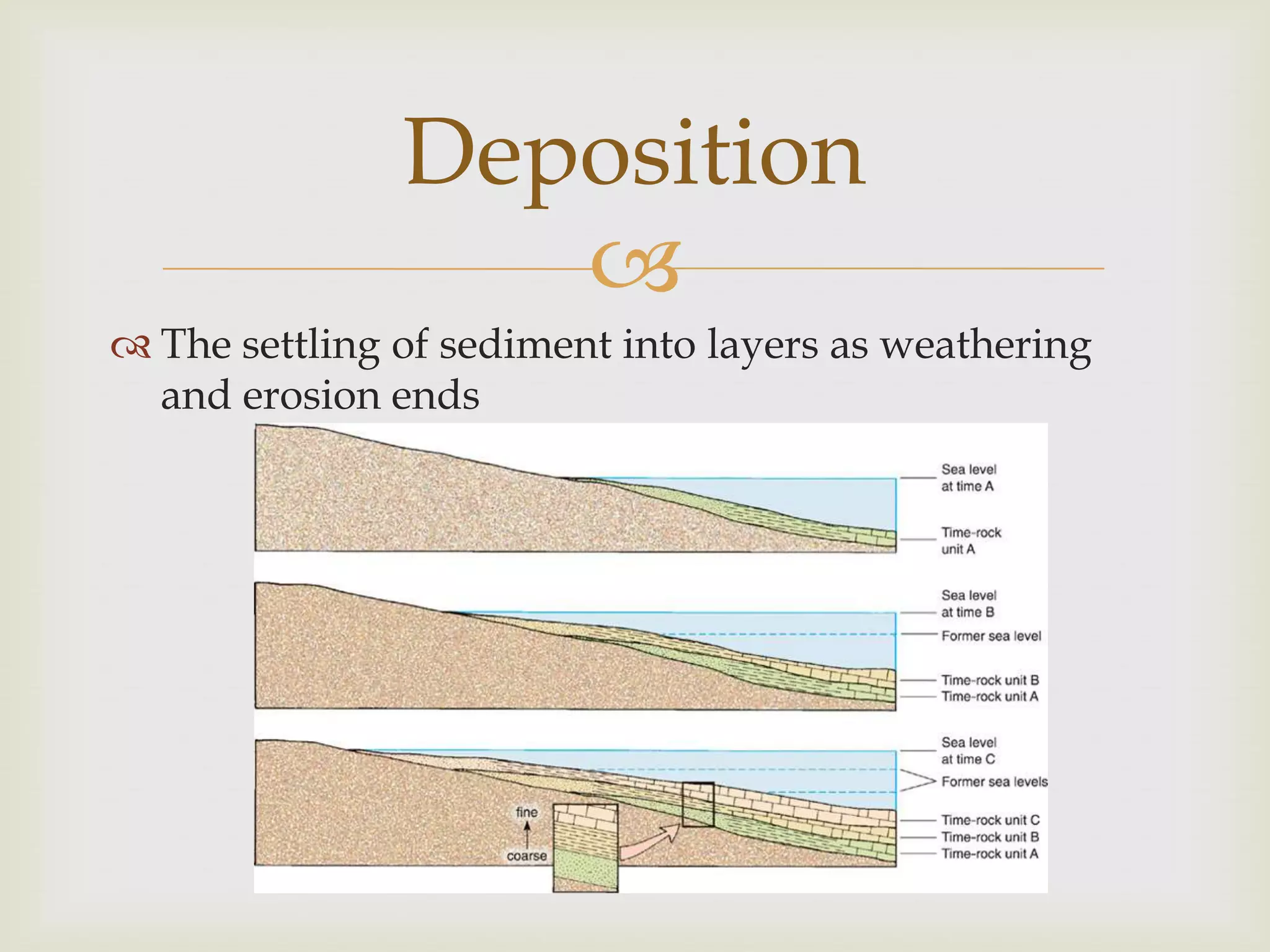
The settling of sediment into layers as weathering and erosion endsDeposition
Process in which the volume and porosity of a sediment is decreased by the weight of overlying layers of sedimentCompaction
Process in which minerals precipitate spaces between sediments and bind them together to form rocksCementation
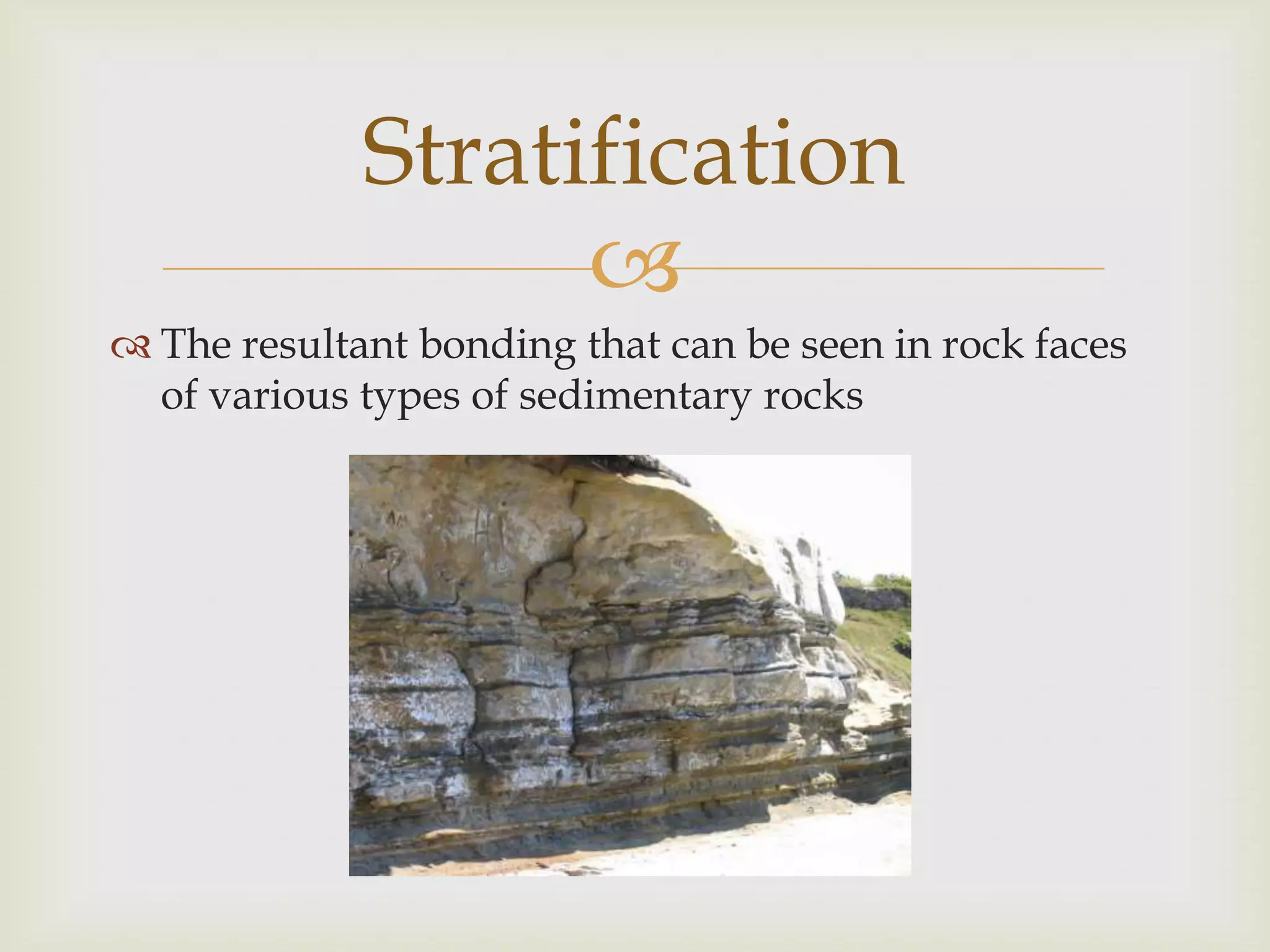
The resultant bonding that can be seen in rock faces of various types of sedimentary rocksStratification
The process in which one type of rock changes into metamorphic rock because of chemical processes or changes into metamorphic rock because of chemical processes or change in temperature and pressureCan be due to just contact with magma or due to large scale change in temperature and pressure over a large areaMetamorphism
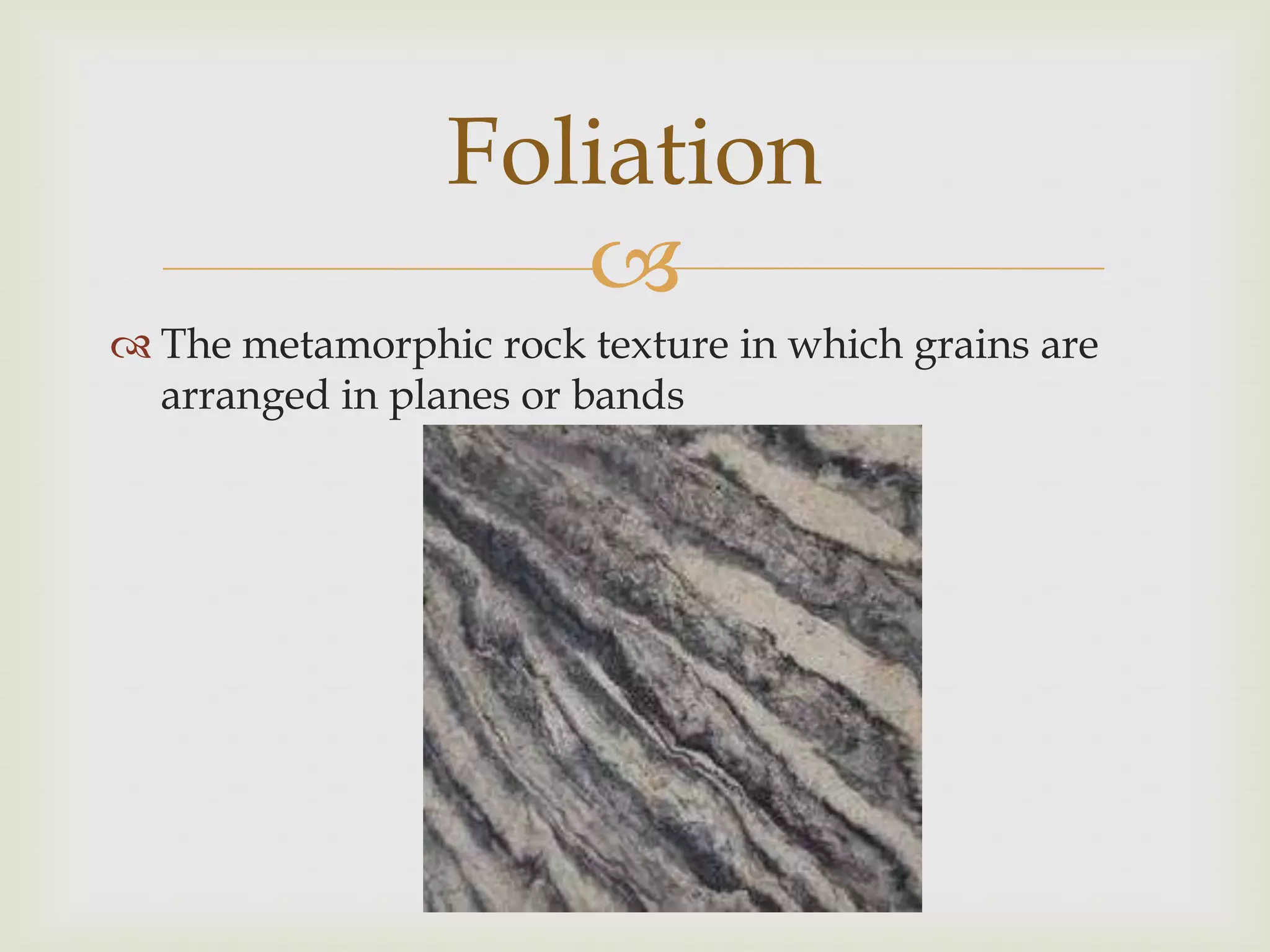
The metamorphic rock texture in which grains are arranged in planes or bandsFoliation

4. Rock and the Rock Cycle Notes

  • 1.
    Rocks & theRock Cycle
  • 2.
    Formed when magma,or molten rock cools and hardensIgneous
  • 3.
    Formed as aresult of tremendous pressure, extreme heat, and chemical processesMetamorphic
  • 4.
    Erosion breaks downall types of rocks into small fragments which form deposits which are compressed and cemented togetherSedimentary
  • 5.
    The series ofprocesses in which rock forms, changes from one type to another, is destroyed, and forms again by geologic processesRock Cycle
  • 6.
    Igneous rocks canbe identified by the size of crystals that are present as a result of the cooling process of melted mineralsA. Coarse Grained – large minerals suggest a slower cooling processB. Fine Grained – small grains, unseen by the eye suggest a quicker cooling processC. Glassy – when magma with very little gases in it cools very quicklyD. Vesicular – when magma with a lot of gases cools very quicklyIgneous Rocks
  • 7.
    Coarse vs. FineGrainGraniteBasalt
  • 8.
  • 9.
    The formation ofcrystals during the cooling processCrystallization
  • 10.
    Loose fragments ofrock, minerals, and organic material that result from natural processes, including the physical breakdown of rockSediment
  • 11.
    The physical processesof breakdown of rock into sediment by natural conditions such as rain, wind, etc.Weather & Erosion
  • 12.
    The settling ofsediment into layers as weathering and erosion endsDeposition
  • 13.
    Process in whichthe volume and porosity of a sediment is decreased by the weight of overlying layers of sedimentCompaction
  • 14.
    Process in whichminerals precipitate spaces between sediments and bind them together to form rocksCementation
  • 15.
    The resultant bondingthat can be seen in rock faces of various types of sedimentary rocksStratification
  • 16.
    The process inwhich one type of rock changes into metamorphic rock because of chemical processes or changes into metamorphic rock because of chemical processes or change in temperature and pressureCan be due to just contact with magma or due to large scale change in temperature and pressure over a large areaMetamorphism
  • 17.
    The metamorphic rocktexture in which grains are arranged in planes or bandsFoliation