The document discusses the origins and evolution of languages over time. It describes how Proto-Indo-European is hypothesized to be the common ancestor of many European languages based on identifying common features like cognates. It then outlines some of the major influences on and changes to the English language from Old English to Middle English to Modern English, including invasions by Germanic tribes, Vikings, and Normans that introduced vocabulary. Advances like the printing press helped spread English and standardize features through books.
Language Historyand Change CHAPTER 1 GABRIEL FERNANDO JARA MUÑOZ SECTION 1
2.
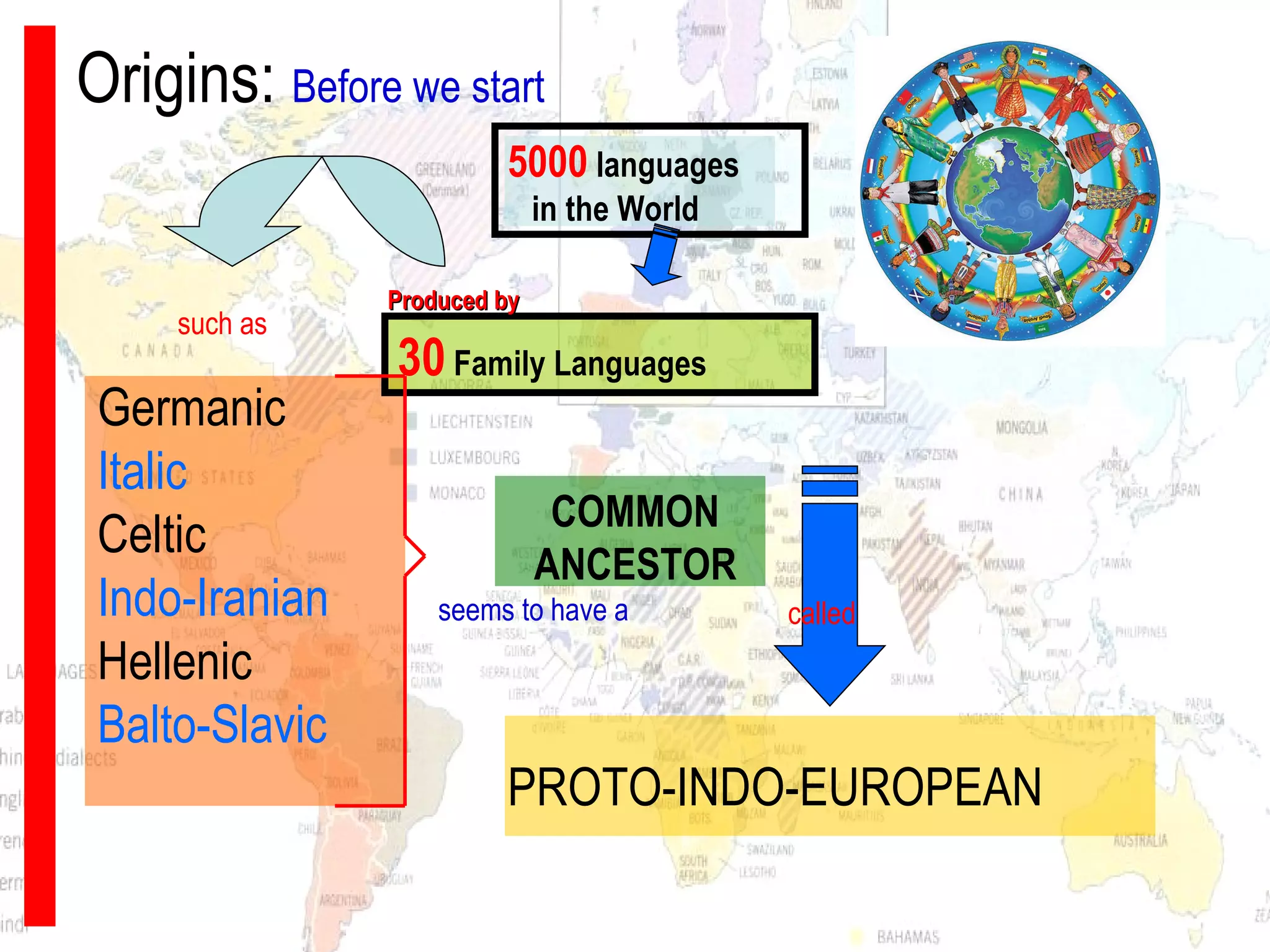
Origins: Beforewe start 30 Family Languages 5000 languages in the World PROTO-INDO-EUROPEAN called Produced by such as Germanic Italic Celtic Indo-Iranian Hellenic Balto-Slavic seems to have a COMMON ANCESTOR
3.
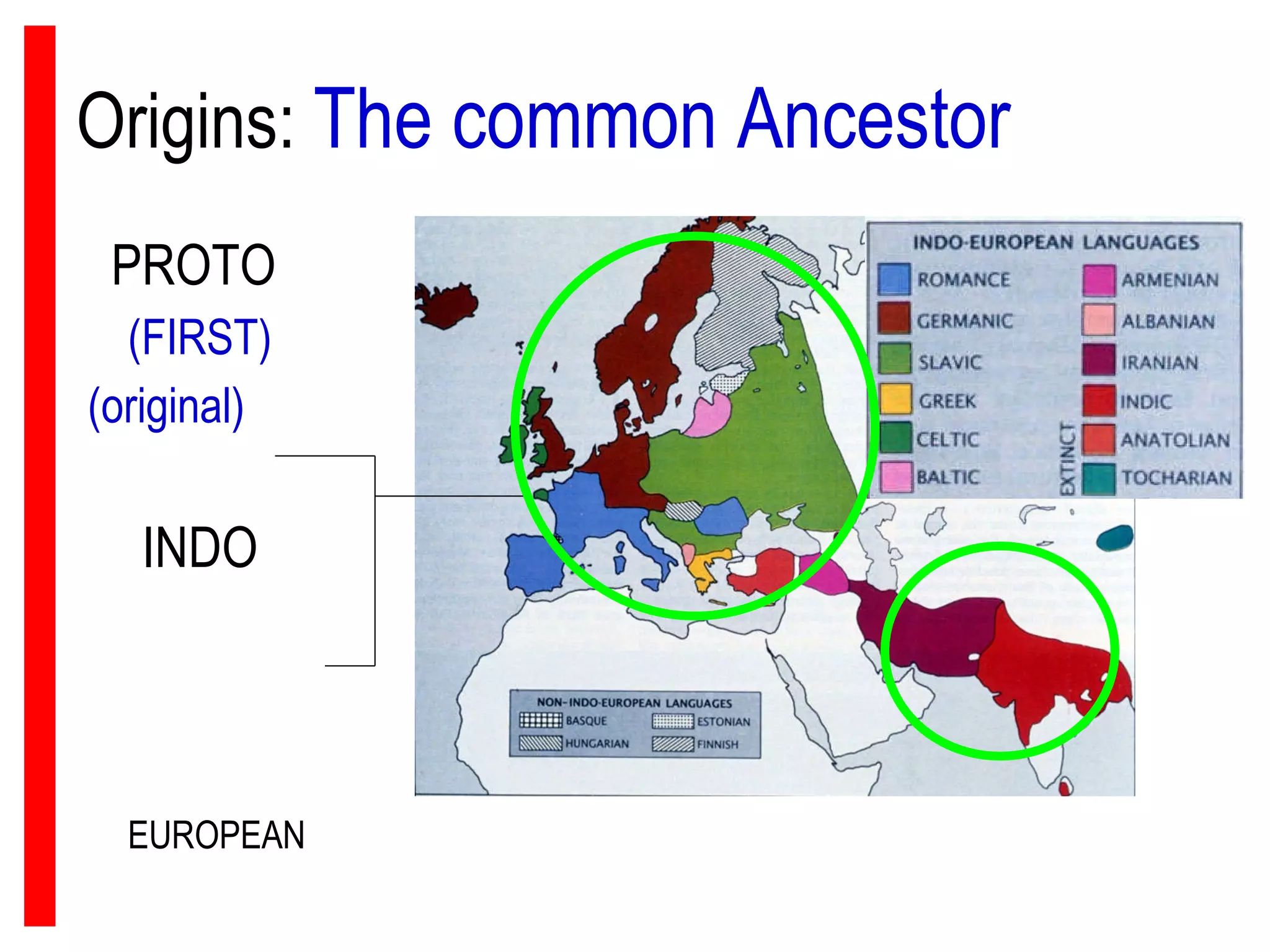
Origins: Thecommon Ancestor PROTO (FIRST) (original) INDO EUROPEAN
4.
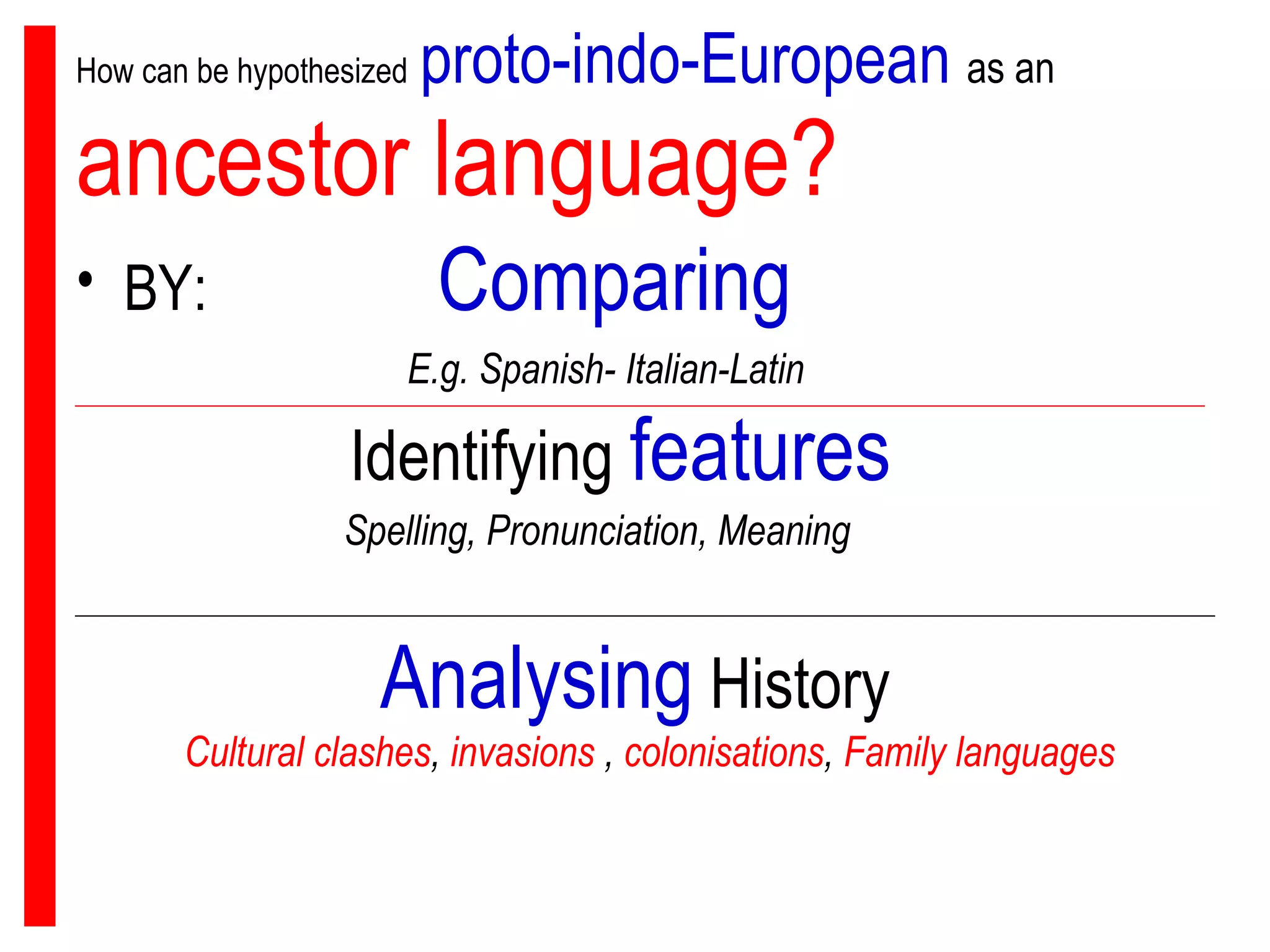
How can behypothesized proto-indo-European as an ancestor language? BY: Comparing E.g. Spanish- Italian-Latin Identifying features Spelling, Pronunciation, Meaning Analysing History Cultural clashes , invasions , colonisations , Family languages
5.
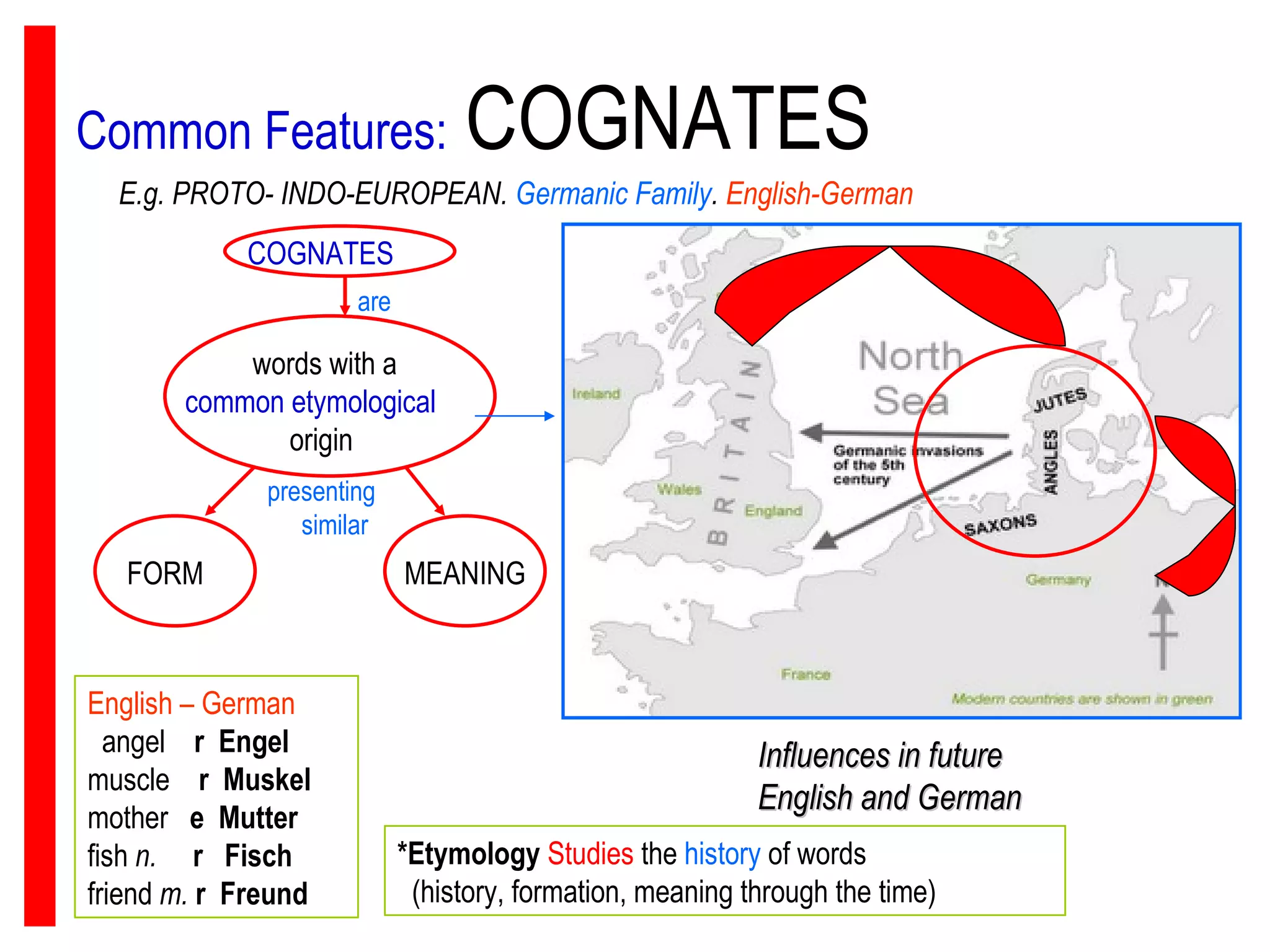
Common Features: COGNATES COGNATES words with a common etymological origin E.g. PROTO- INDO-EUROPEAN. Germanic Family . English-German FORM MEANING are presenting similar Influences in future English and German English – German angel r Engel muscle r Muskel mother e Mutter fish n. r Fisch friend m. r Freund *Etymology Studies the history of words (history, formation, meaning through the time)
6.
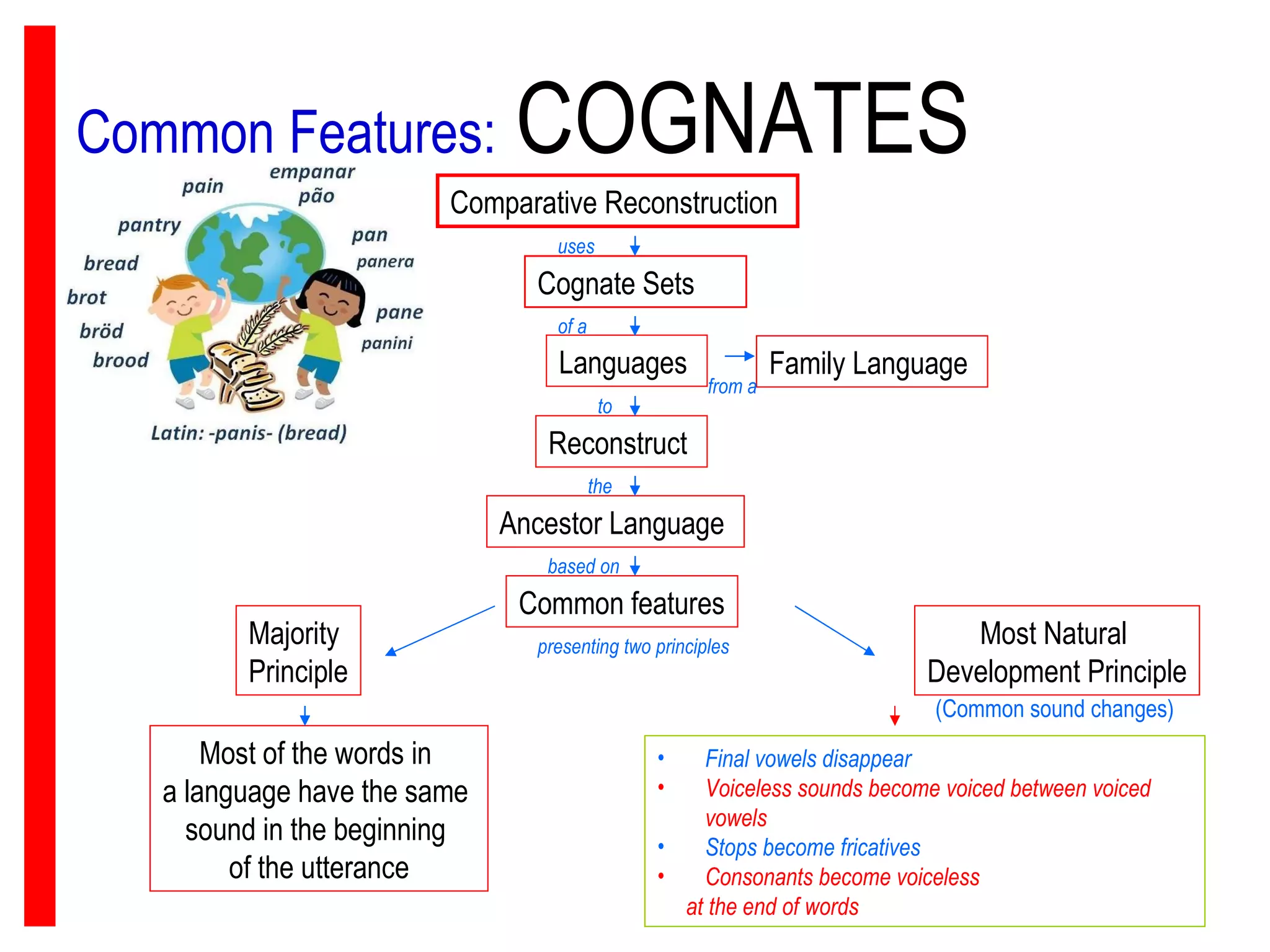
Common Features: COGNATES Cognate Sets Comparative Reconstruction Languages Family Language Ancestor Language Common features the uses Reconstruct Majority Principle Most Natural Development Principle Most of the words in a language have the same sound in the beginning of the utterance (Common sound changes) Final vowels disappear Voiceless sounds become voiced between voiced vowels Stops become fricatives Consonants become voiceless at the end of words of a from a to based on presenting two principles
7.
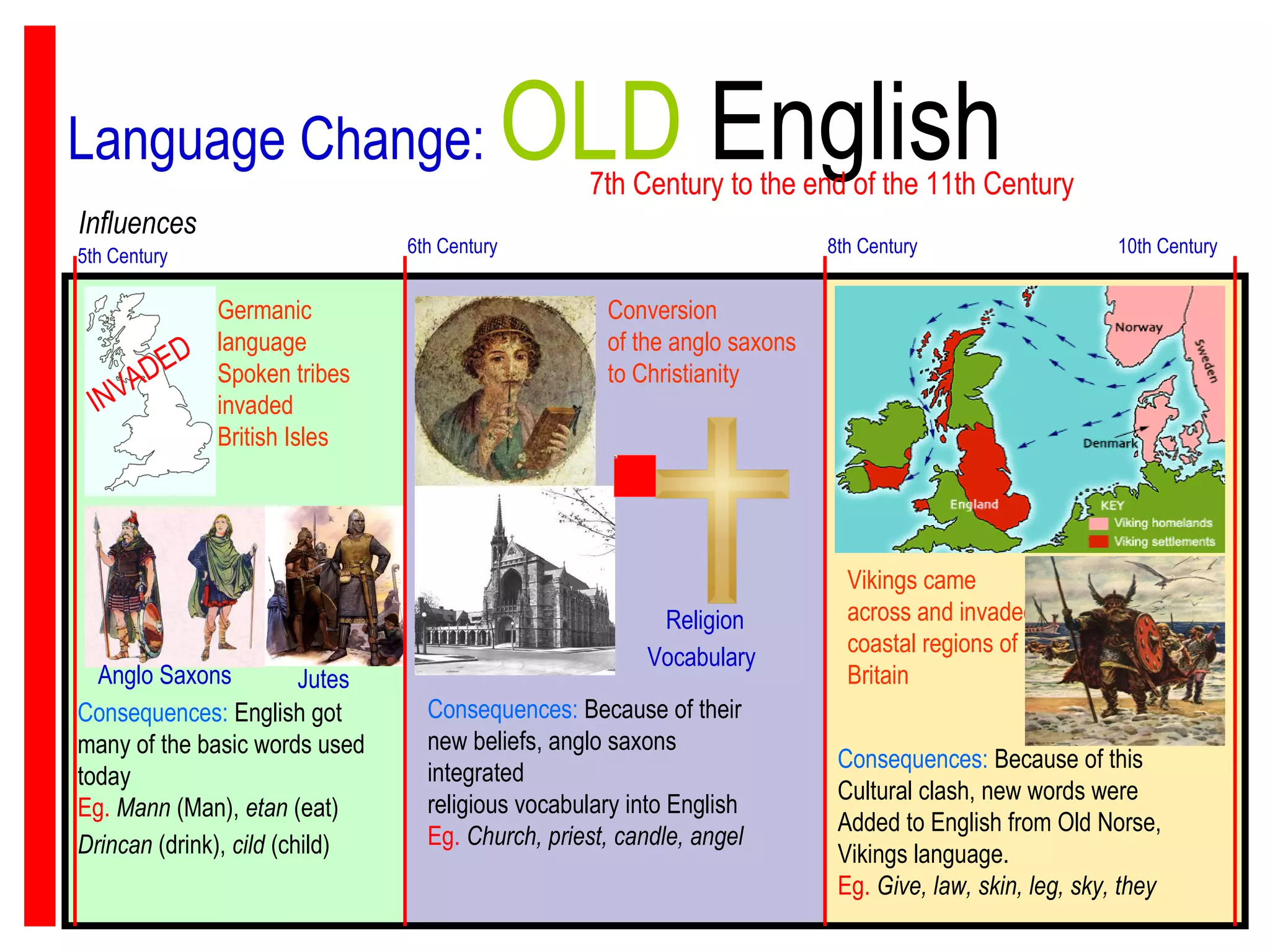
Language Change: OLD English 7th Century to the end of the 11th Century Influences Germanic language Spoken tribes invaded British Isles 5th Century Anglo Saxons Jutes Consequences: English got many of the basic words used today Eg. Mann (Man), etan (eat) Drincan (drink), cild (child) INVADED 6th Century 8th Century Conversion of the anglo saxons to Christianity Religion Vocabulary Consequences: Because of their new beliefs, anglo saxons integrated religious vocabulary into English Eg. Church, priest, candle, angel 10th Century Vikings came across and invaded coastal regions of Britain Consequences: Because of this Cultural clash, new words were Added to English from Old Norse, Vikings language. Eg. Give, law, skin, leg, sky, they
8.
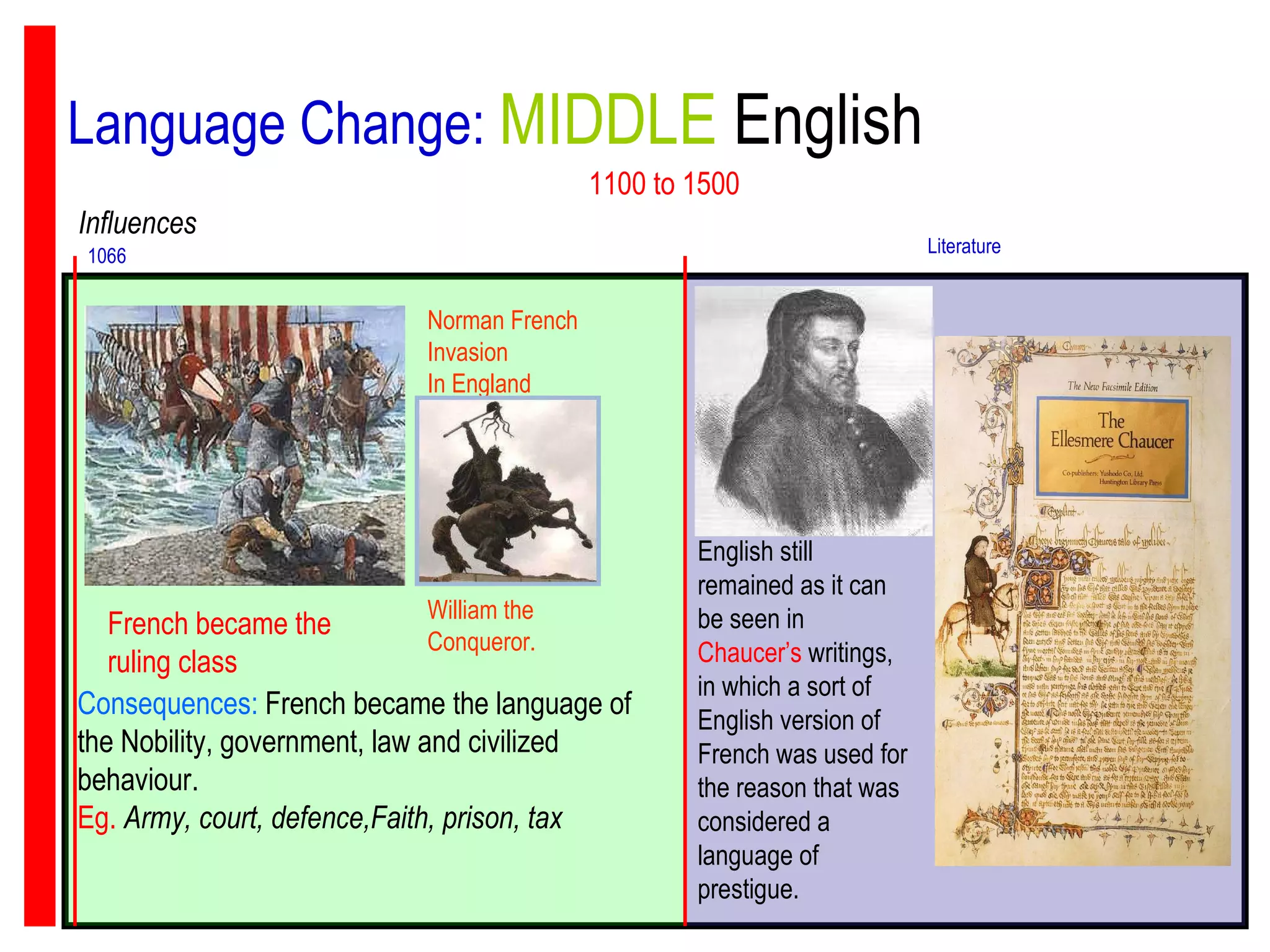
Language Change: MIDDLE English 1100 to 1500 Norman French Invasion In England 1066 William the Conqueror. French became the ruling class Influences Consequences: French became the language of the Nobility, government, law and civilized behaviour. Eg. Army, court, defence,Faith, prison, tax Literature English still remained as it can be seen in Chaucer’s writings, in which a sort of English version of French was used for the reason that was considered a language of prestigue.
9.
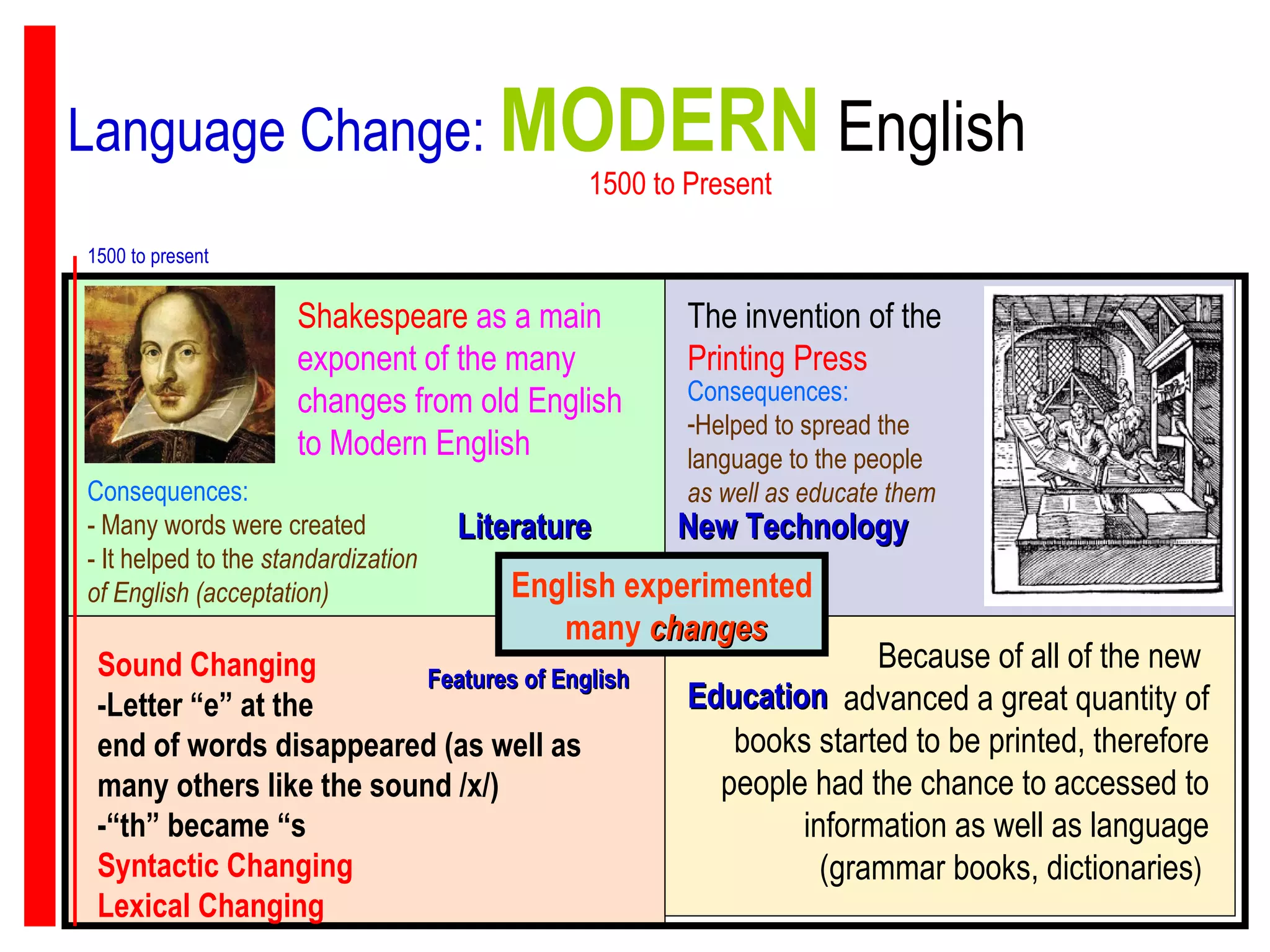
Language Change: MODERN English 1500 to Present 1500 to present Consequences: - Many words were created - It helped to the standardization of English (acceptation) Literature Shakespeare as a main exponent of the many changes from old English to Modern English English experimented many changes The invention of the Printing Press New Technology Consequences: Helped to spread the language to the people as well as educate them Features of English Education Sound Changing -Letter “e” at the end of words disappeared (as well as many others like the sound /x/) -“th” became “s Syntactic Changing Lexical Changing Because of all of the new advanced a great quantity of books started to be printed, therefore people had the chance to accessed to information as well as language (grammar books, dictionaries )
10.
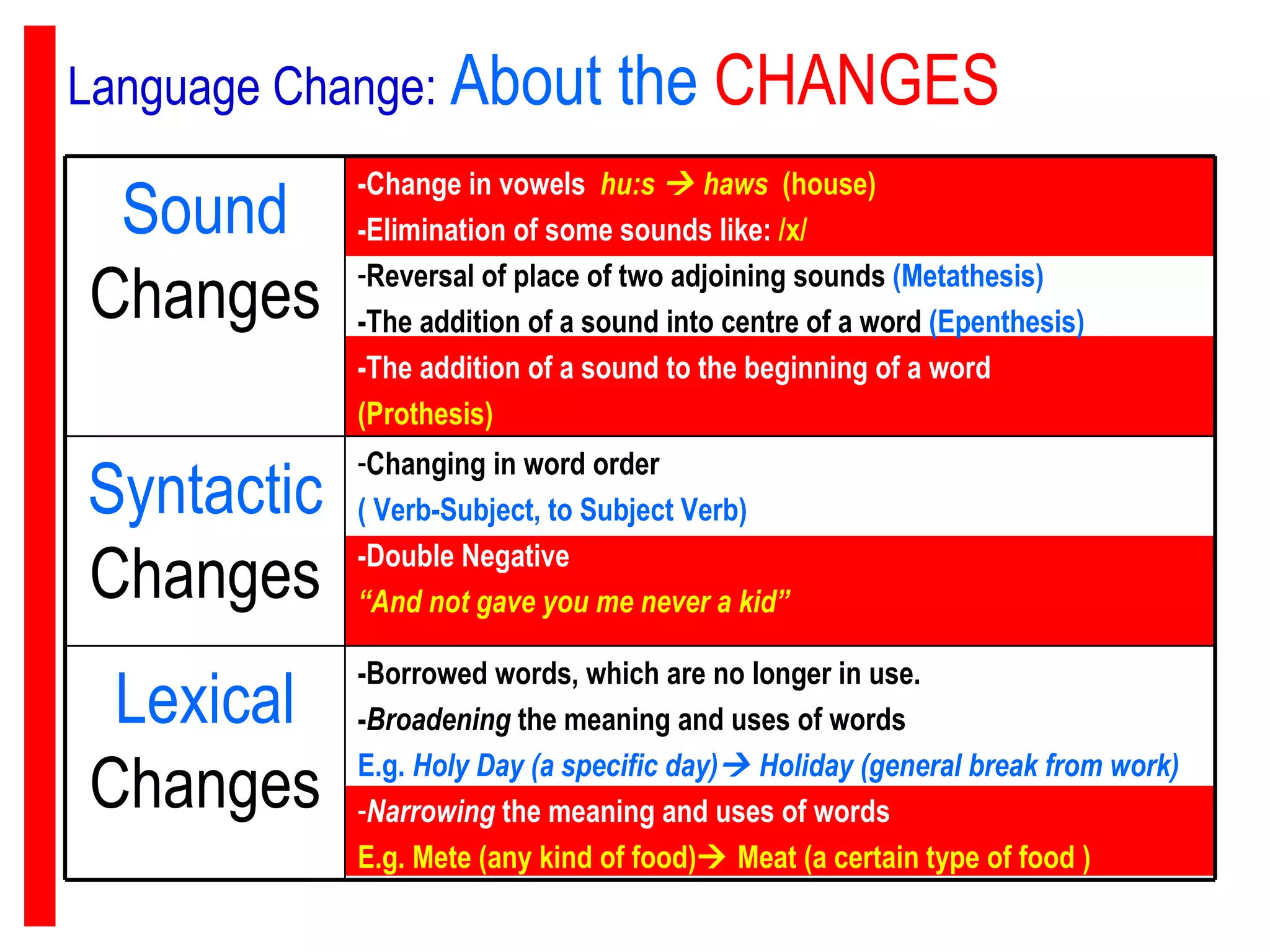
Language Change: About the CHANGES -Borrowed words, which are no longer in use. - Broadening the meaning and uses of words E.g. Holy Day (a specific day) Holiday (general break from work) Narrowing the meaning and uses of words E.g. Mete (any kind of food) Meat (a certain type of food ) Lexical Changes Changing in word order ( Verb-Subject, to Subject Verb) -Double Negative “ And not gave you me never a kid” Syntactic Changes -Change in vowels hu:s haws (house) -Elimination of some sounds like: /x/ Reversal of place of two adjoining sounds (Metathesis) -The addition of a sound into centre of a word (Epenthesis) -The addition of a sound to the beginning of a word (Prothesis) Sound Changes
11.
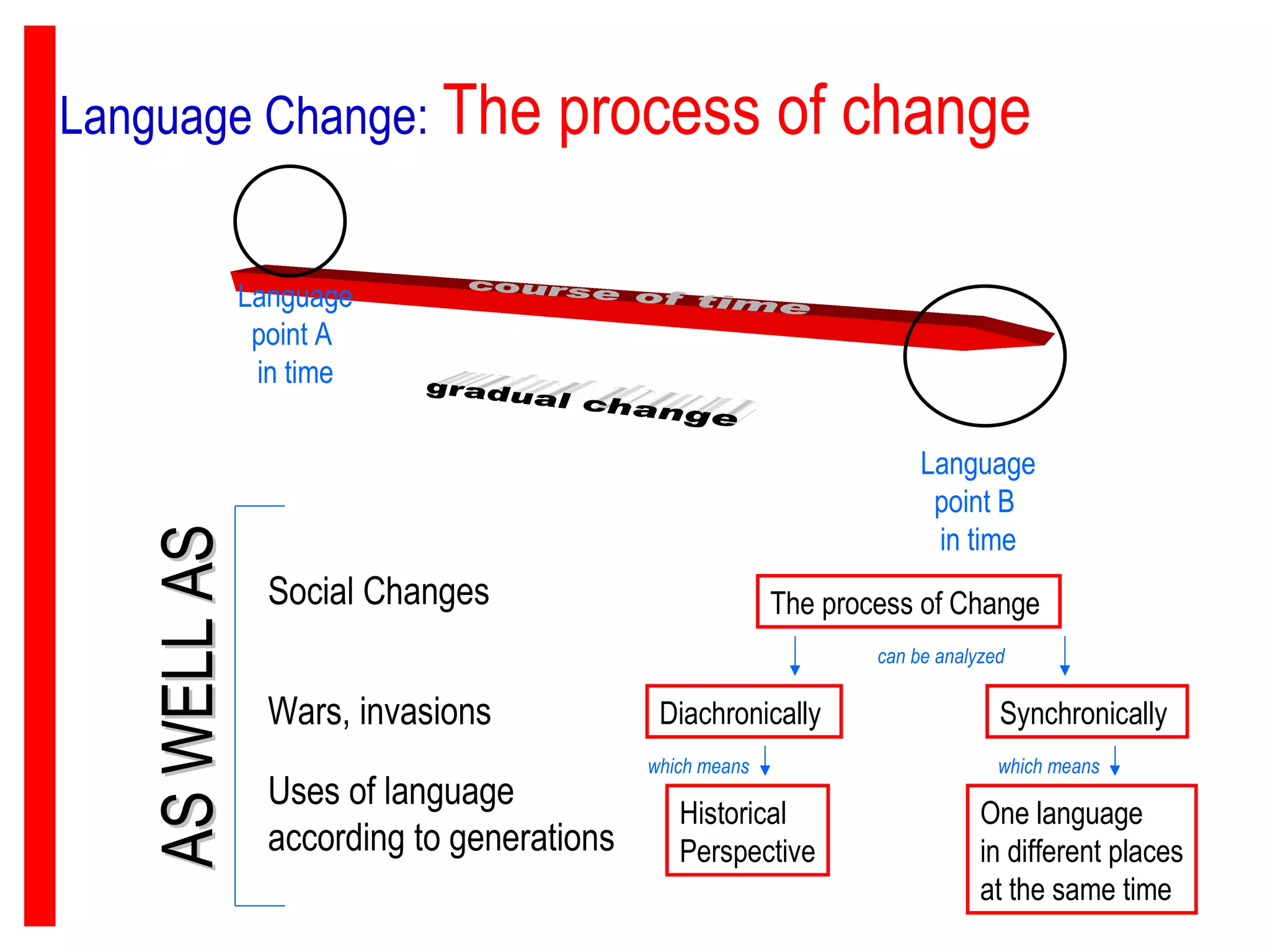
Language Change: The process of change Social Changes Wars, invasions course of time gradual change Language point A in time Language point B in time AS WELL AS Uses of language according to generations The process of Change Diachronically Synchronically Historical Perspective One language in different places at the same time can be analyzed which means which means


![[1]history of english](https://cdn.slidesharecdn.com/ss_thumbnails/1historyofenglish-130407000811-phpapp01-thumbnail.jpg?width=640&height=640&fit=bounds)


