Basic Characters of Bacteria
Hope Tan
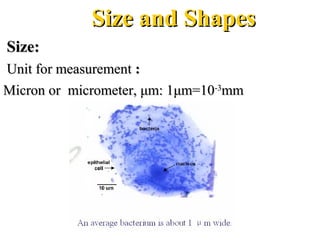
Size and ShapesSize and Shapes
Size:Size:
Unit for measurementUnit for measurement ::
Micron orMicron or micrometer, μm: 1μm=10micrometer, μm: 1μm=10-3-3
mmmm
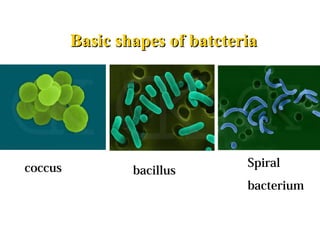
coccus bacillus
Spiral
bacterium
Basic shapes of batcteriaBasic shapes of batcteria
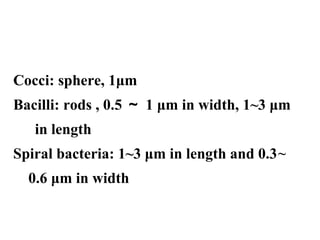
Cocci: sphere, 1μm
Bacilli: rods , 0.5 ~ 1 μm in width, 1~3 μm
  in length
Spiral bacteria: 1~3 μm in length and 0.3~
0.6 μm in width
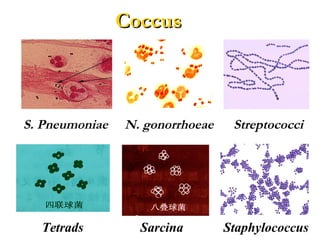
CoccusCoccus
S. Pneumoniae N. gonorrhoeae Streptococci
Tetrads Sarcina Staphylococcus
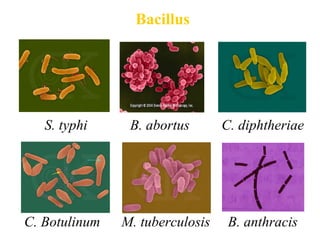
Bacillus
S. typhi B. abortus C. diphtheriae
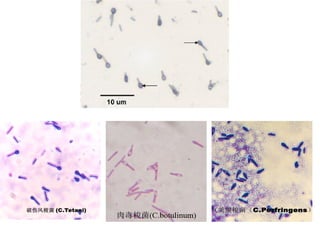
C. Botulinum M. tuberculosis B. anthracis
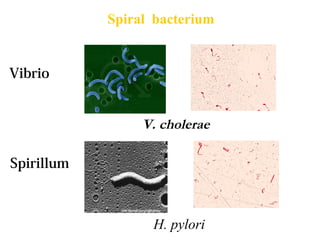
Spirillum
Vibrio
Spiral bacterium
V. cholerae
H. pylori
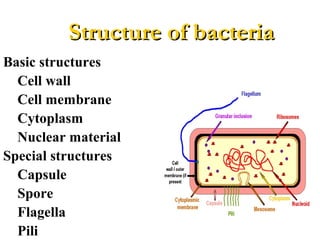
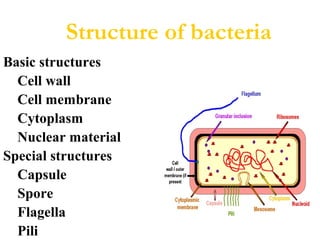
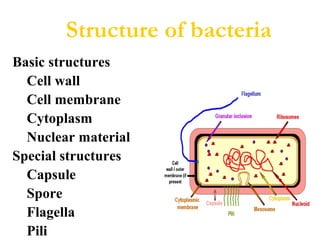
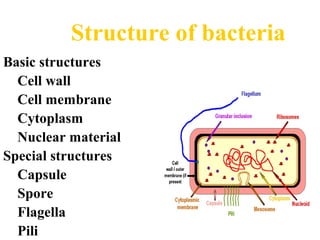
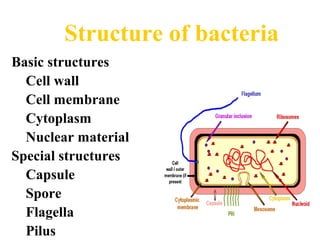
Basic structures
Cell wall
Cell membrane
Cytoplasm
Nuclear material
Special structures
Capsule
Spore
Flagella
Pili
Structure of bacteriaStructure of bacteria
Basic structure of bacteriaBasic structure of bacteria
1. Chemical composition :
A. Common component—— peptidoglycan
Also called mucopeptide or glycopeptide or
murein
Cell wallCell wall
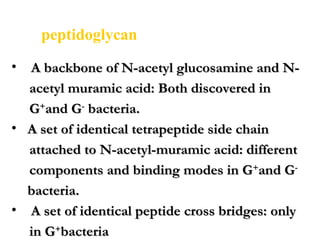
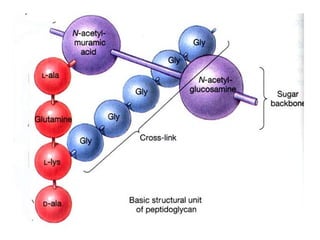
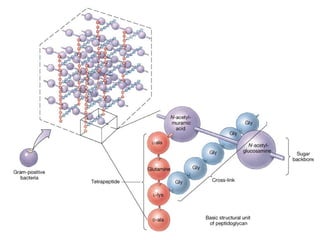
• A backbone of N-acetyl glucosamine and N-A backbone of N-acetyl glucosamine and N-
acetyl muramic acid: Both discovered inacetyl muramic acid: Both discovered in
GG++
and Gand G--
bacteria.bacteria.
• A set of identical tetrapeptide side chainA set of identical tetrapeptide side chain
attached to N-acetyl-muramic acid: differentattached to N-acetyl-muramic acid: different
components and binding modes in Gcomponents and binding modes in G++
and Gand G--
bacteria.bacteria.
• A set of identical peptide cross bridges: onlyA set of identical peptide cross bridges: only
in Gin G++
bacteriabacteria
peptidoglycan
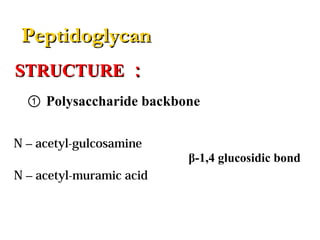
N – acetyl-gulcosamine
N – acetyl-muramic acid
β-1,4 glucosidic bond
① Polysaccharide backbone
PeptidoglycanPeptidoglycan
STRUCTURESTRUCTURE ::
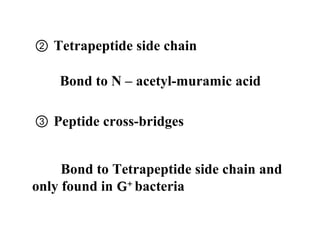
② Tetrapeptide side chain
③ Peptide cross-bridges
Bond to N – acetyl-muramic acid
Bond to Tetrapeptide side chain and
only found in GG++
bacteria
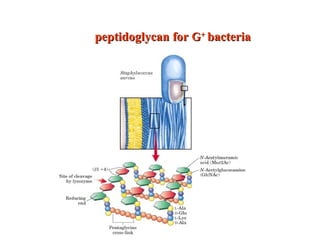
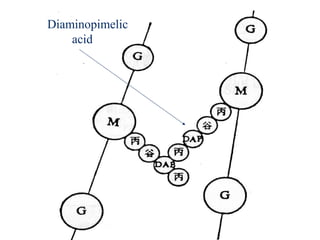
peptidoglycan forpeptidoglycan for GG++
bacteriabacteria
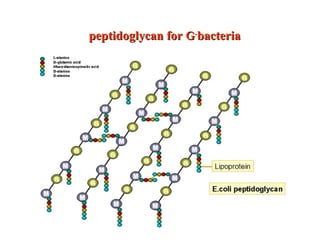
peptidoglycan forpeptidoglycan for GG--
bacteriabacteria
Diaminopimelic
acid
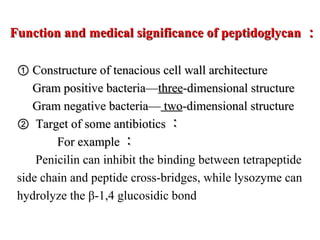
Function and medical significance of peptidoglycanFunction and medical significance of peptidoglycan ::
①① Constructure of tenacious cell wall architectureConstructure of tenacious cell wall architecture
Gram positive bacteria—Gram positive bacteria—threethree-dimensional structure-dimensional structure
Gram negative bacteria—Gram negative bacteria— twotwo-dimensional structure-dimensional structure
②② Target of some antibioticsTarget of some antibiotics ::
For exampleFor example ::
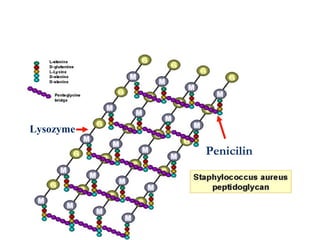
Penicilin can inhibit the binding between tetrapeptide
side chain and peptide cross-bridges, while lysozyme can
hydrolyze the β-1,4 glucosidic bond
Penicilin
Lysozyme
Reactive site of some antibiotics in peptidoglycan
Cell wallCell wall
1.1. Chemical composition ::
A.A. Common component—— peptidoglycan
B. Special componentB. Special component
Gram positive bacteria——teichoic acidGram positive bacteria——teichoic acid
Special surface proteinsSpecial surface proteins
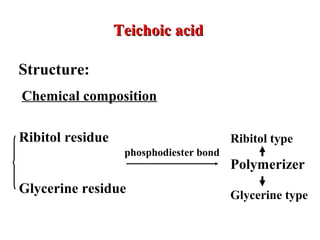
Teichoic acidTeichoic acid
Structure:
Chemical composition
phosphodiester bond
Ribitol residue
Glycerine residue
Ribitol type
Polymerizer
Glycerine type
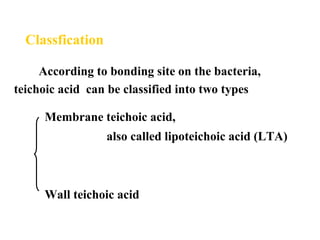
Classfication
According to bonding site on the bacteria,
teichoic acid can be classified into two types
Membrane teichoic acid,
also called lipoteichoic acid (LTA)
Wall teichoic acid
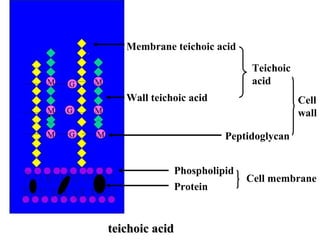
teichoic acidteichoic acid
Membrane teichoic acid
Wall teichoic acid
Peptidoglycan
Teichoic
acid
Cell
wall
Phospholipid
Protein
Cell membrane
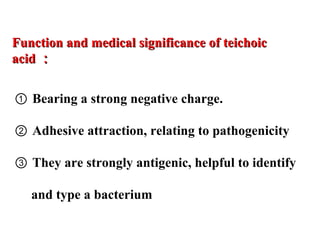
Function and medical significance of teichoicFunction and medical significance of teichoic
acidacid ::
① Bearing a strong negative charge.
② Adhesive attraction, relating to pathogenicity
③ They are strongly antigenic, helpful to identify
and type a bacterium
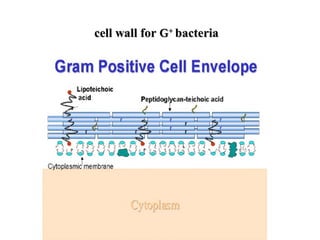
cell wall forcell wall for GG++
bacteriabacteria
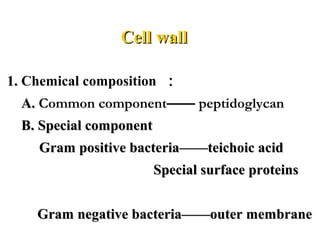
Cell wallCell wall
1.1. Chemical composition ::
A.A. Common component—— peptidoglycan
B. Special componentB. Special component
Gram positive bacteria——teichoic acidGram positive bacteria——teichoic acid
Special surface proteinsSpecial surface proteins
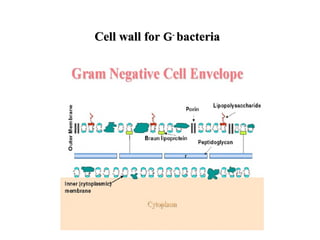
Gram negative bacteria——outer membraneGram negative bacteria——outer membrane
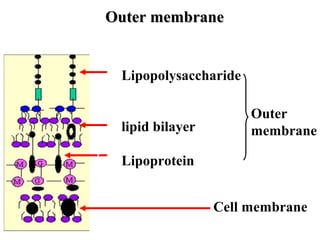
Outer membraneOuter membrane
Structure
Lipopolysaccharide
lipid bilayer
Lipoprotein
Outer
membrane
Cell membrane
Periplasmic space
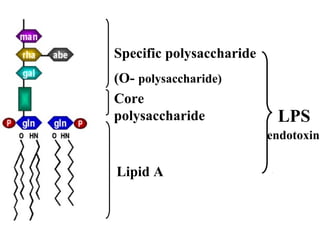
Lipid A
Core
polysaccharide
Specific polysaccharide
(O- polysaccharide)
LPS
endotoxin
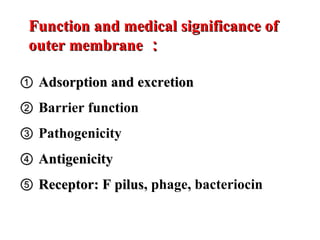
①① Adsorption and excretionAdsorption and excretion
②② Barrier function
③③ Pathogenicity
④④ AntigenicityAntigenicity
⑤⑤ Receptor: F pilusReceptor: F pilus, phage, bacteriocin
Function and medical significance ofFunction and medical significance of
outer membraneouter membrane ::
Cell wall forCell wall for GG--
bacteriabacteria
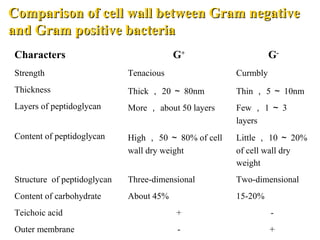
Comparison of cell wall between Gram negativeComparison of cell wall between Gram negative
and Gram positive bacteriaand Gram positive bacteria
Characters G+
G-
Strength Tenacious Curmbly
Thickness Thick , 20 ~ 80nm Thin , 5 ~ 10nm
Layers of peptidoglycan More , about 50 layers Few , 1 ~ 3
layers
Content of peptidoglycan High , 50 ~ 80% of cell
wall dry weight
Little , 10 ~ 20%
of cell wall dry
weight
Structure of peptidoglycan Three-dimensional Two-dimensional
Content of carbohydrate About 45% 15-20%
Teichoic acid + -
Outer membrane - +
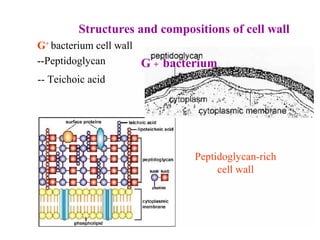
Structures and compositions of cell wall
G + bacterium
Peptidoglycan-rich
cell wall
G+
bacterium cell wall
--Peptidoglycan
-- Teichoic acid
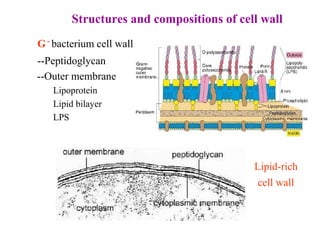
Structures and compositions of cell wall
G-
bacterium cell wall
--Peptidoglycan
--Outer membrane
Lipoprotein
Lipid bilayer
LPS
Lipid-rich
cell wall
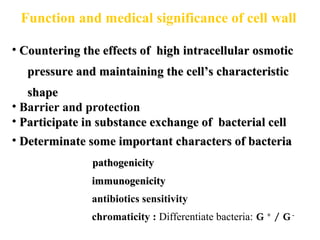
• Countering the effects of high intracellular osmoticCountering the effects of high intracellular osmotic
pressure and maintaining the cell’s characteristicpressure and maintaining the cell’s characteristic
shapeshape
• Barrier and protection
• Participate in substance exchange of bacterial cellParticipate in substance exchange of bacterial cell
Function and medical significance of cell wall
• Determinate some important characters of bacteriaDeterminate some important characters of bacteria
pathogenicitypathogenicity
immunogenicityimmunogenicity
antibiotics sensitivity
chromaticity : Differentiate bacteria: G +
 / G ­
 
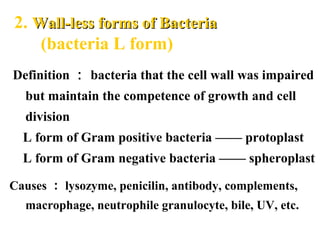
2. Wall-less forms of BacteriaWall-less forms of Bacteria
(bacteria L form)
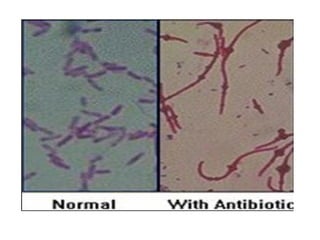
Causes : lysozyme, penicilin, antibody, complements,
macrophage, neutrophile granulocyte, bile, UV, etc.
Definition : bacteria that the cell wall was impaired
but maintain the competence of growth and cell
division
L form of Gram positive bacteria —— protoplast
L form of Gram negative bacteria —— spheroplast
Characteristics :
• Appearance : polymorph
• Chromaticity : Gram negative
• Characteristic of cultivate : hyperosmotic
pressure, low concentrated agar with
serum,
and it grows very slow
Causes :
•Lysozyme, penicillin, antibody, complements,
macropages, neutropile granulocyte, bile, UV,
etc.
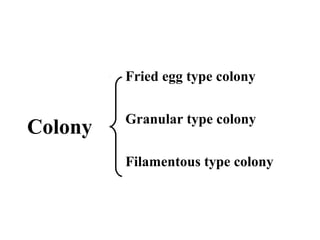
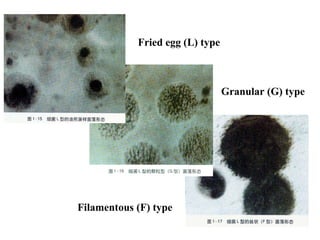
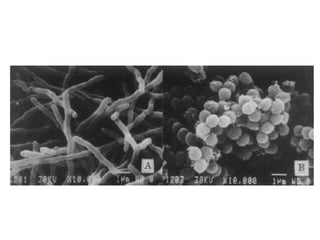
Colony
Fried egg type colony
Granular type colony
Filamentous type colony
Fried egg (L) type
Granular (G) type
Filamentous (F) type
• Reversion: L-form bacteria can revert to its
normal bacteria when the cause was removed at the
early time of formation, the determinant condition is
whether there is peptidoglycan remaining in the cell
wall. And if it is subcultivated for many times in
vitro, it can never be reverted.
•Pathogenicity : L-form bacteria bearing virulence
( diagnosis )
• Antibiotic sensitivity : changed ( cure )
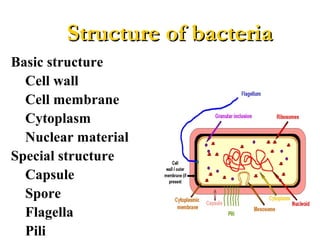
Basic structure
Cell wall
Cell membrane
Cytoplasm
Nuclear material
Special structure
Capsule
Spore
Flagella
Pili
Structure of bacteriaStructure of bacteria
No cholesterol
Important sturctures :
Cell membraneCell membrane
MesosomesMesosomes
Mesosomes are specialized structures formed by
retractable, folded and curled cytoplasmic membrane,
and divided into septal and lateral mesosome. also
called chondroid.
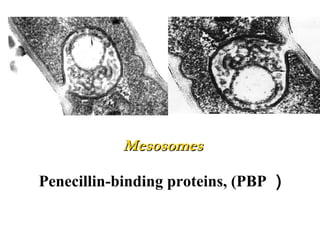
MesosomesMesosomes
Penecillin-binding proteins, (PBP )
Function
•Material transportation
•Respiration
• Biosynthesis :
Penicillin-binding protein
• Participate in cell division : mesosome
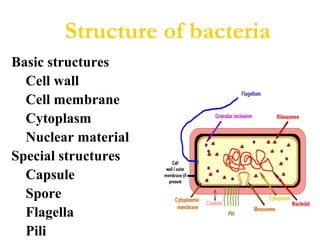
Basic structures
Cell wall
Cell membrane
Cytoplasm
Nuclear material
Special structures
Capsule
Spore
Flagella
Pili
Structure of bacteria
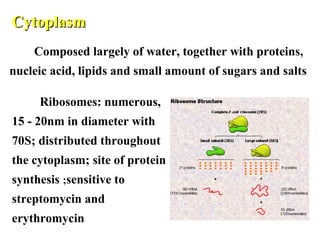
Ribosomes: numerous,
15 - 20nm in diameter with
70S; distributed throughout
the cytoplasm; site of protein
synthesis ;sensitive to
streptomycin and
erythromycin
CytoplasmCytoplasm
Composed largely of water, together with proteins,
nucleic acid, lipids and small amount of sugars and salts
Plasmids: extrachromosomal genetic elements
Plasmids are small, circular , extra-
chromosomal , double-stranded DNA
molecules. They are capable of self-replication
and contain genes that confer some important
properties, such as antibiotic
resistance , virulence factors. Plasmids are not
essential for cellular survival.
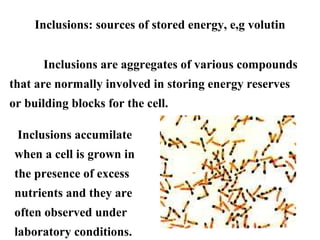
Inclusions: sources of stored energy, e,g volutin
Inclusions are aggregates of various compounds
that are normally involved in storing energy reserves
or building blocks for the cell.
Inclusions accumilate
when a cell is grown in
the presence of excess
nutrients and they are
often observed under
laboratory conditions.
Basic structures
Cell wall
Cell membrane
Cytoplasm
Nuclear material
Special structures
Capsule
Spore
Flagella
Pili
Structure of bacteria
Lacking nuclear membrane, absence of
nucleoli, hence known as nucleic material
or nucleoid, one to several per bacterium.
Nuclear material
Special structure of bacteria
Basic structures
Cell wall
Cell membrane
Cytoplasm
Nuclear material
Special structures
Capsule
Spore
Flagella
Pili
Structure of bacteria
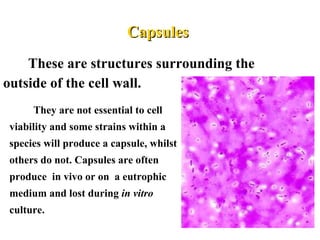
CapsulesCapsules
These are structures surrounding the
outside of the cell wall.
They are not essential to cell
viability and some strains within a
species will produce a capsule, whilst
others do not. Capsules are often
produce in vivo or on a eutrophic
medium and lost during in vitro
culture.
•  Antigenicity 
– Composition: polysaccharide 
•  Pathogenicity 
– Protection from phagocyte
– Resistance to drying 
– Adherence
Function and medical significance
Formation condition
In vivo or eutrophic
Basic structures
Cell wall
Cell membrane
Cytoplasm
Nuclear material
Special structures
Capsule
Spore
Flagella
Pili
Structure of bacteria
FlagellaFlagella
• Some bacterial species are mobile and possess
locomotory organelles - flagella. Flagella consist of
a number of proteins including flagellin
•The diameter of a flagellum is thin, 20 nm, and long
with some having a length 10 times the diameter of
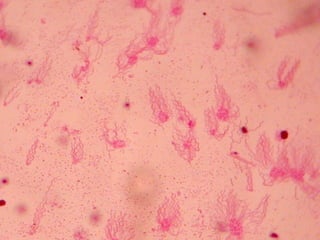
cell. Due to their small diameter, flagella cannot be
seen in the light microscope unless a special stain is
applied. Bacteria can have one or more flagella
arranged in clumps or spread all over the cell.
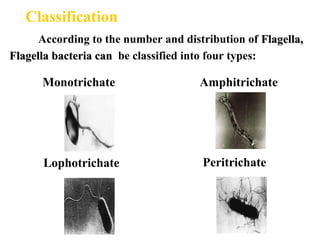
Classification
According to the number and distribution of Flagella,Flagella,
Flagella bacteria canFlagella bacteria can be classified into four types:
Monotrichate
Lophotrichate
Amphitrichate
Peritrichate
•  Motility 
•  Pathogenicity 
– e.g., Vibrio cholerae 
•  Antigenicity 
– protein 
– also called as H Ag
Function and significance
Basic structures
Cell wall
Cell membrane
Cytoplasm
Nuclear material
Special structures
Capsule
Spore
Flagella
Pilus
Structure of bacteria
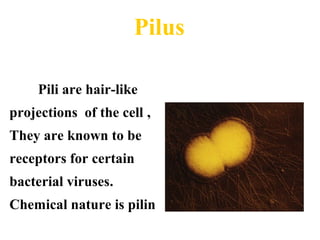
Pili are hair-like
projections of the cell ,
They are known to be
receptors for certain
bacterial viruses.
Chemical nature is pilin
Pilus
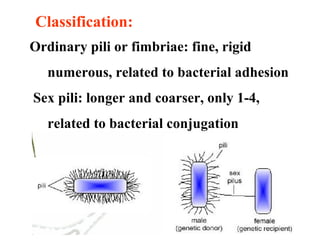
Classification:
Ordinary pili or fimbriae: fine, rigid
numerous, related to bacterial adhesion
Sex pili: longer and coarser, only 1-4,
related to bacterial conjugation
Function:
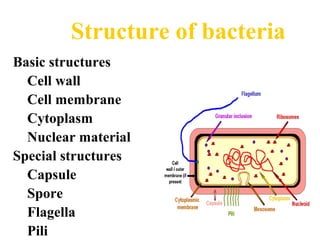
Basic structures
Cell wall
Cell membrane
Cytoplasm
Nuclear material
Special structures
Capsule
Spore
Flagella
Pili
Structure of bacteria
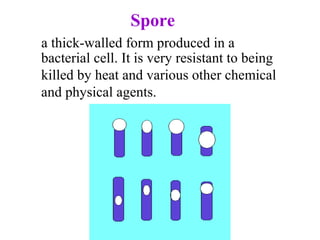
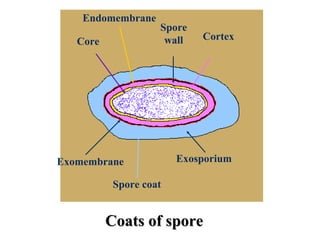
a thick­walled form produced in a 
bacterial cell. It is very resistant to being 
killed by heat and various other chemical 
and physical agents.
Spore
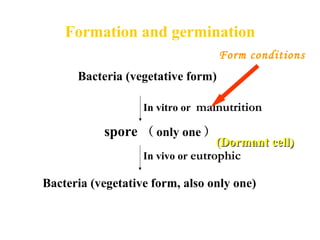
Formation and germination 
In vitro or malnutrition
In vivo or eutrophic
Bacteria (vegetative form)
spore ( only one )
Bacteria (vegetative form, also only one)
Form conditions
(Dormant cell)(Dormant cell)
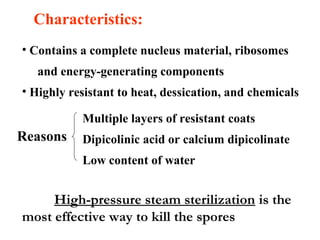
Multiple layers of resistant coats
Dipicolinic acid or calcium dipicolinate 
Low content of water
• Contains a complete nucleus material, ribosomes
and energy-generating components
• Highly resistant to heat, dessication, and chemicals
Reasons
High-pressure steam sterilization is the
most effective way to kill the spores
Characteristics:
Coats of sporeCoats of spore
Spore coat
Exosporium
Spore
wallCore Cortex
Endomembrane
Exomembrane
Medical significance
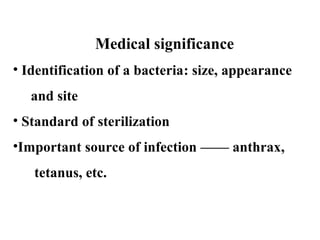
• Identification of a bacteria: size, appearance
and site
• Standard of sterilization
•Important source of infection —— anthrax,
tetanus, etc.
Bacterial Metabolism and MultiplicationBacterial Metabolism and Multiplication
Bacterial MetabolismBacterial Metabolism
Energy MetabolismEnergy Metabolism
Important Metabolic ProductsImportant Metabolic Products
1. Catabolic processes1. Catabolic processes
2. Anabolic processes2. Anabolic processes
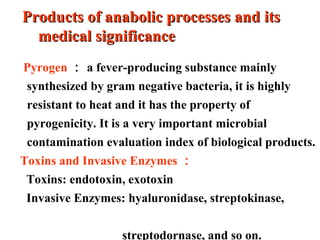
Products of anabolic processes and itsProducts of anabolic processes and its
medical significancemedical significance
Pyrogen : a fever-producing substance mainly
synthesized by gram negative bacteria, it is highly
resistant to heat and it has the property of
pyrogenicity. It is a very important microbial
contamination evaluation index of biological products.
Toxins and Invasive Enzymes :
Toxins: endotoxin, exotoxin
Invasive Enzymes: hyaluronidase, streptokinase,
streptodornase, and so on.
Pigments
Classification—lipo solubility, water solubility
Observation the pigments is helpful to the
identification of a bacteria.
Antibiotics
Substance produced by some microbes
and bearing the property of inhibition or
killing effect to some other microbe or
tumor cells.
Bactericin
Substances produced by some strains of
bacteria and bearing the antibacterial activity to
the bacteria that related to bactericin-produce
one.
Vitamins
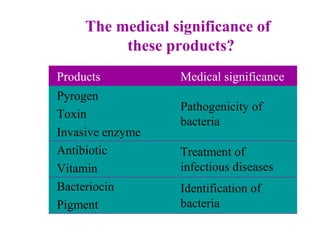
The medical significance of 
these products? 
Medical significance 
Pathogenicity of 
bacteria 
Treatment of 
infectious diseases 
Identification of 
bacteria 
Products
Pyrogen 
Toxin 
Invasive enzyme 
Antibiotic 
Vitamin 
Bacteriocin 
Pigment 
      Requirments for Bacteria GrowthRequirments for Bacteria Growth
  
1. Nutrients: 
2. Temperature 
3. Hydrogen ion concentration ( pH ) 
4. Oxygen Requirements
5. Osmotic pressure
1.NutritionNutrition
       Factors affecting bacterial growth and division
              Nutritive material::  Water
Carbon source
Nitrogen source
Minerals
Growth factors etc.etc.
      Requirments for Bacteria GrowthRequirments for Bacteria Growth
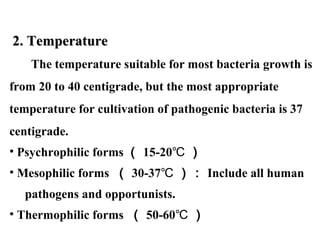
  2. Temperature2. Temperature
The temperature suitable for most bacteria growth is 
from 20 to 40 centigrade, but the most appropriate 
temperature for cultivation of pathogenic bacteria is 37 
centigrade.
• Psychrophilic forms ( 15-20℃ )
• Mesophilic forms  ( 30-37℃ ): Include all human 
     pathogens and opportunists. 
• Thermophilic forms  ( 50-60℃ )
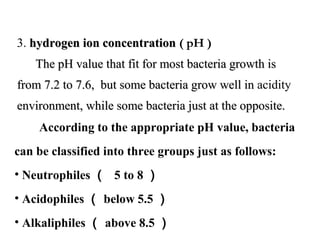
3. hydrogen ion concentrationhydrogen ion concentration ( pH )
            The pH value that fit for most bacteria growth is The pH value that fit for most bacteria growth is 
from 7.2 to 7.6,  but some bacteria grow well in from 7.2 to 7.6,  but some bacteria grow well in acidity 
environment, while some bacteria just at the opposite.environment, while some bacteria just at the opposite.
        According to the appropriate pH value, bacteria 
can be classified into three groups just as follows:
• Neutrophiles ( 5 to 8 )
• Acidophiles ( below 5.5 )
• Alkaliphiles ( above 8.5 )
•obligate aerobeobligate aerobe
•microaerophilic bacteriummicroaerophilic bacterium
•facultative anaerobefacultative anaerobe
•  obligate anaerobeobligate anaerobe
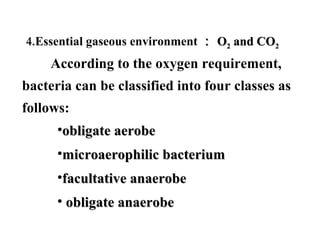
        According to the oxygen requirement, 
bacteria can be classified into four classes as 
follows: 
4.Essential gaseous environment :: OO22 and CO and CO22
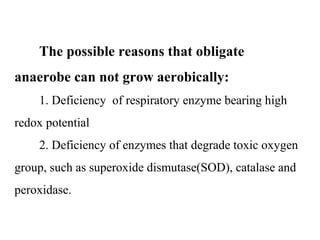
        The possible reasons that obligate 
anaerobe can not grow aerobically:
        1. Deficiency  of respiratory enzyme bearing high 
redox potential
        2. Deficiency of enzymes that degrade toxic oxygen 
group, such as superoxide dismutase(SOD), catalase and 
peroxidase.
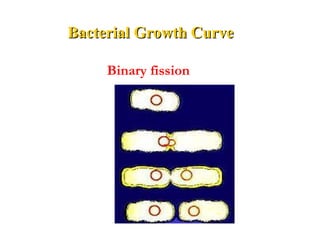
Proliferative way: Binary fission
Bacterial Growth Curve Bacterial Growth Curve 
        The reproductive speed of most 
bacteria is very fast, while some bacteria 
such as Mycobacterium tuberculosis  
grows very slow.
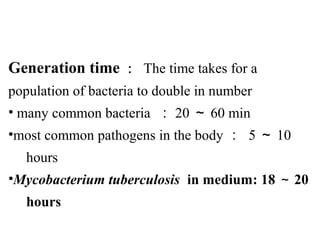
Reproductive speed :
Generation time : The time takes for a 
population of bacteria to double in number 
• many common bacteria  : 20 ~ 60 min
•most common pathogens in the body : 5 ~ 10 
     hours
•Mycobacterium tuberculosis  in medium: 18 ~ 20 
     hours
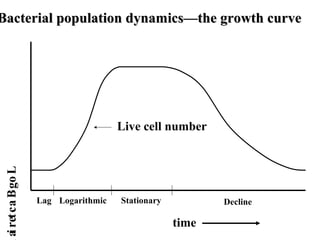
Bacterial population dynamics—the growth curveBacterial population dynamics—the growth curve
time
Log Bacteria
Lag Logarithmic Stationary Decline
Live cell number
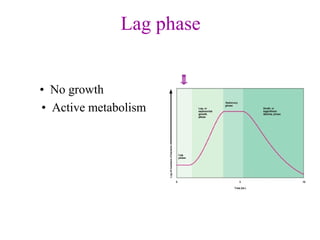
Lag phase 
•  No growth 
•  Active metabolism
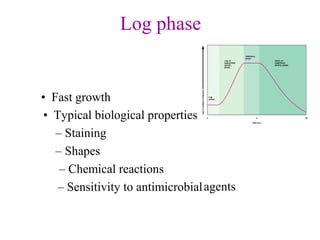
Log phase 
•  Fast growth 
•  Typical biological properties 
– Staining 
– Shapes 
– Chemical reactions 
– Sensitivity to antimicrobial agents
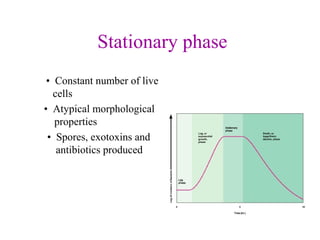
Stationary phase 
•  Constant number of live 
cells 
•  Atypical morphological 
properties 
•  Spores, exotoxins and 
antibiotics produced
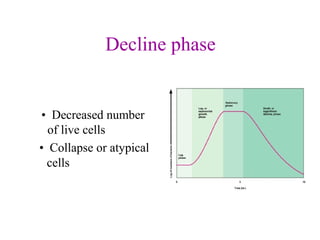
Decline phase 
•  Decreased number 
of live cells 
•  Collapse or atypical 
cells
Based on the function and the chemical components: 
  Basic Medium 
­­contains the basic nutrients for the most bacterial growth; 
­­the base of other kind of media. 
­­e.g. broth. 
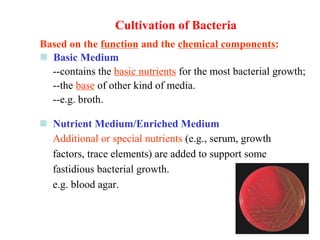
  Nutrient Medium/Enriched Medium 
Additional or special nutrients (e.g., serum, growth 
factors, trace elements) are added to support some 
fastidious bacterial growth. 
e.g. blood agar.
Cultivation of Bacteria
  Selective Medium 
The medium that can prevent the certain bacterial 
growth while permitting others. 
e.g. SS agar 
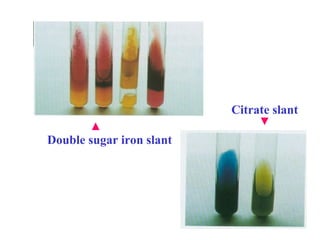
  Differential Medium 
Some special substrates and indicators are added 
into the media in order to produce a visual differ
entiation 
When several bacteria grow on the same kind of
 medium. e.g. EMB agar (Eosin­
methylene blue agar).
Double sugar iron slant 
Citrate slant
  Anaerobic Medium 
A medium for the cultivation of certain anae
robes. The medium contains reducing agent,
 such as non­saturation fatty acid.
Based on the physical state 
•   Liquid medium: 
–  Without agar. 
–  for the proliferation of bacteria. 
•   Solid medium: 
–  1.5­2.5% agar. 
–  for the isolation and identification of bacteria 
–  e.g., slant, Petri dishes/plates. 
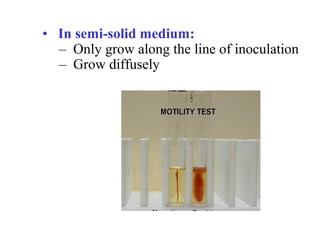
•   Semisolid medium: 
–  0.3­0.5% agar. 
– for the observation of bacterial motility and 
preservation of bacteria.
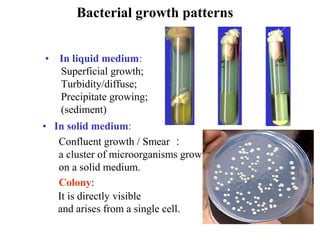
Bacterial growth patterns 
•    In liquid medium: 
Superficial growth; 
Turbidity/diffuse; 
Precipitate growing; 
(sediment) 
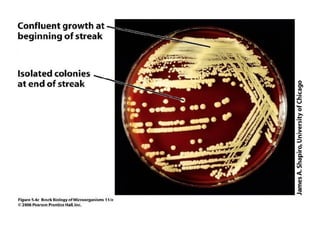
•   In solid medium: 
Confluent growth / Smear :
a cluster of microorganisms growing 
on a solid medium. 
Colony: 
It is directly visible 
and arises from a single cell.
•   In semi-solid medium: 
–  Only grow along the line of inoculation 
–  Grow diffusely
Bacterial classification
Please self-study
Summary 
2.The definitions of plasmid, capsule, flagellum, 
   pilus, spore, pyrogen, bactericin. 
1.The difference between G +  
cell wall and G ­ 
 cell wall   
3. Medical importance of four special structures
4.The characteristics of growth curve 
1 basic characters of bacteria

1 basic characters of bacteria