







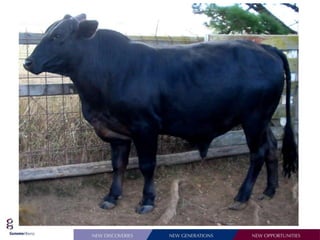
“Genomics 101”
 David Bailey, Ph.D.
    President & CEO
 Genome Alberta
metabolite
metabolite
What is Genomics?
   Genetic information is contained with DNA
    (deoxyribonucleic acid) and RNA (ribonucleic
    acids)
   Each plant, animal or bacteria carries its entire
    genetic code inside almost every one of its cells
   Genomics is the discipline that aims to decipher
    and understand the entire genetic information
    content of an organism
   Genomics marked the beginning of a new age in
    biology and medicine
What is a Gene?
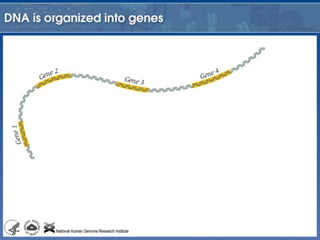
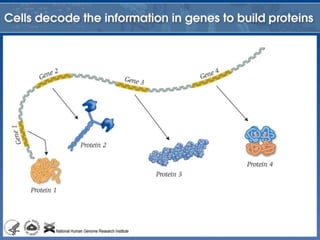
Genes are both units of inheritance and encoded messages for
the creation of a functional unit in a cell (usually a protein, but
sometimes functional RNA).

What is a Genome?
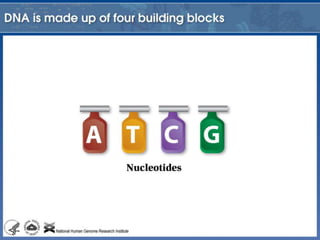
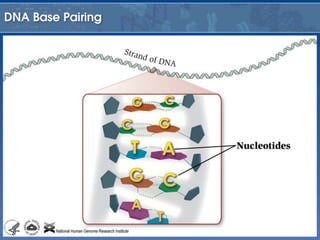
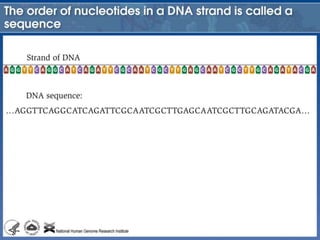
This term refers both to the full set of genes carried by a single
organism and to that carried by that organism’s species. The
precise ordering of As, Ts, Cs and Gs in organisms’ genomes
is the foundation of life’s diversity.

Concept of Dominant vs. Recessive Genes
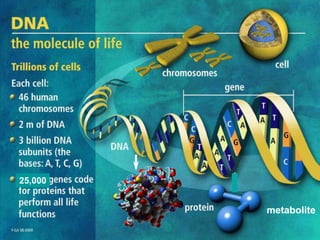
25,000


         metabolite
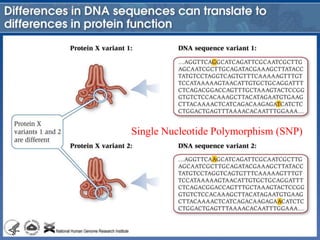
Single Nucleotide Polymorphism (SNP)
Some Interesting Genome
             Facts
   Human Genome contains about 3 billion
    basepairs
   Corn Genome contains about 2.6 billion
    basepairs but…….
   Wheat Genome contains more than 16 billion
    basepairs
    Not all genetic information encodes for
      functional molecules or life functions
Cont’d… Some Interesting Genomics
              Facts
   Humans only have 20% more genes than worms
   Around 99% of our genes have counterparts in
    mice
   Our genetic overlap with chimpanzees is about
    97.5%
   The genetic difference between one person and
    another is less than 0.1 %
   But because only a few regions of DNA actively
    encode life functions, the real difference between
    one person and another is only 0.0003 percent
More Interesting Facts
   Human Genome:
    - Took 12 years to complete at a cost of US $3 billion
    Mouse Genome:
    - Took 3 years to complete at a cost of US $300
      million
   Bovine Genome:
    - Took about 1 year at an estimated cost of US $30
      million
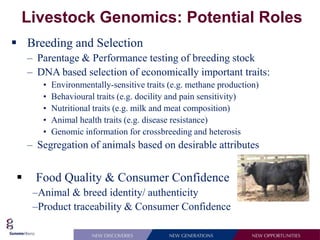
Livestock Genomics: Potential Roles
 Breeding and Selection
    – Parentage & Performance testing of breeding stock
    – DNA based selection of economically important traits:
       •   Environmentally-sensitive traits (e.g. methane production)
       •   Behavioural traits (e.g. docility and pain sensitivity)
       •   Nutritional traits (e.g. milk and meat composition)
       •   Animal health traits (e.g. disease resistance)
       •   Genomic information for crossbreeding and heterosis
    – Segregation of animals based on desirable attributes


     Food Quality & Consumer Confidence
     –Animal & breed identity/ authenticity
     –Product traceability & Consumer Confidence
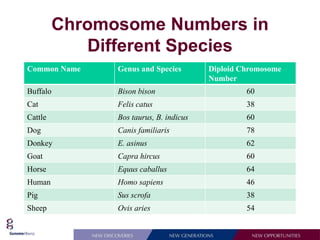
Chromosome Numbers in
            Different Species
Common Name    Genus and Species        Diploid Chromosome
                                        Number
Buffalo        Bison bison                       60
Cat            Felis catus                       38
Cattle         Bos taurus, B. indicus            60
Dog            Canis familiaris                  78
Donkey         E. asinus                         62
Goat           Capra hircus                      60
Horse          Equus caballus                    64
Human          Homo sapiens                      46
Pig            Sus scrofa                        38
Sheep          Ovis aries                        54
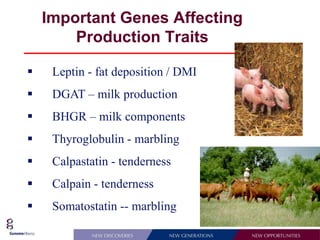
Important Genes Affecting
        Production Traits

    Leptin - fat deposition / DMI
    DGAT – milk production
    BHGR – milk components
    Thyroglobulin - marbling
    Calpastatin - tenderness
    Calpain - tenderness
    Somatostatin -- marbling
1. What are the new technologies?

2. What are the beef industry
   priorities for using these
   genomic tools?
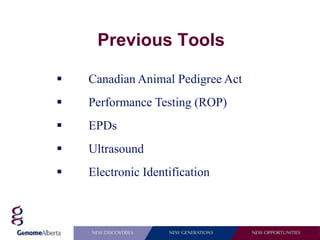
Previous Tools

   Canadian Animal Pedigree Act
   Performance Testing (ROP)
   EPDs
   Ultrasound
   Electronic Identification
New Technologies are Available
   Genetic Markers/Parentage
   Whole Genomes Sequenced
   Next-Generation Sequencers
   Bioinformatics
   Epigenetics
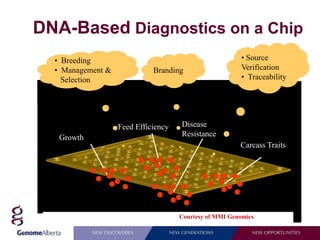
DNA-Based Diagnostics on a Chip
  • Breeding                                             • Source
  • Management &             Branding                    Verification
    Selection                                            • Traceability


                   Feed Efficiency   Disease
   Growth                            Resistance
                                                        Carcass Traits


                                     Courtesy of MMI Genomics
Delta Genomics

   50K Panel
   3K Panel
Potential Areas of Interest
   Breed improvement
   Growth rate
   Feed efficiency
   Carcass merit
   Animal welfare
   Zoonoses
   Product verification
   Others ?
Computer capability in Alberta
associated with oil and gas
industry via seismic data
Benefits
   Data management and integration of
    genomic data into evaluation systems

   Enhance our accuracy of selection or
    to identify new traits

   Identify superior cattle and provide
    validation to customers
Cont’d … Benefits

   Rapid integration of:
    –   different kinds of feed (management)
    –   rumen microflora
    –   health records and samples on
        individual animals, and
    –   Birth, growth, and carcass data upon
        termination
Reproductive or Health
          Technologies
   Pre-implantation Genetic Diagnosis (PGD)
    - Checking the fertilized egg for mutations

   Gene Enhancement
    - Could include inserting genes to create the ‘best’
      expression possible

   Treatments for monogenic diseases (single gene
    mutation or the more challenging multigenic
    disorders)
Cont’d … Reproductive or Health
Technologies

   Gut Microflora
    - Introducing or eliminating specific microbial
      communities

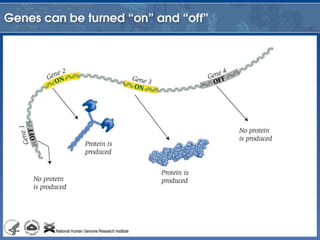
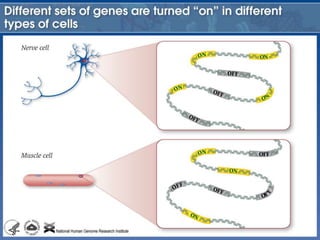
   Gene Regulation
    - Possibility of switching genes on and off in response
      to environmental stimuli
Breeding is a lot like
playing poker – it has a lot
 to do with probabilities.
metabolite
metabolite
metabolite
metabolite
Summary
   New technologies offer new opportunities for
    the cattle industry
   Expression of traits or disease resistance can
    be influenced by:
    –   pre-partum environment
    –   prepubertial environment
    –   gut or rumen microflora
    –   Feed, stress, exercise
   Real competition will come from other
    protein sources
Cont’d … Summary
   Opportunity to conduct some genomic trials
    and identify individuals with superior
    expression
   Apply genomic tools such as proposed in the
    new Alberta Livestock & Meat Strategy, and
    utilize the services of genomics provider
    companies
   Ultimate goal is to differentiate cattle in the
    market place and add value
metabolite
metabolite

Genomics 101 jun 15 2012

  • 1.
    “Genomics 101” DavidBailey, Ph.D. President & CEO Genome Alberta
  • 2.
  • 3.
  • 4.
    What is Genomics?  Genetic information is contained with DNA (deoxyribonucleic acid) and RNA (ribonucleic acids)  Each plant, animal or bacteria carries its entire genetic code inside almost every one of its cells  Genomics is the discipline that aims to decipher and understand the entire genetic information content of an organism  Genomics marked the beginning of a new age in biology and medicine
  • 5.
    What is aGene? Genes are both units of inheritance and encoded messages for the creation of a functional unit in a cell (usually a protein, but sometimes functional RNA). What is a Genome? This term refers both to the full set of genes carried by a single organism and to that carried by that organism’s species. The precise ordering of As, Ts, Cs and Gs in organisms’ genomes is the foundation of life’s diversity. Concept of Dominant vs. Recessive Genes
  • 6.
    25,000 metabolite
  • 14.
  • 15.
    Some Interesting Genome Facts  Human Genome contains about 3 billion basepairs  Corn Genome contains about 2.6 billion basepairs but…….  Wheat Genome contains more than 16 billion basepairs Not all genetic information encodes for functional molecules or life functions
  • 16.
    Cont’d… Some InterestingGenomics Facts  Humans only have 20% more genes than worms  Around 99% of our genes have counterparts in mice  Our genetic overlap with chimpanzees is about 97.5%  The genetic difference between one person and another is less than 0.1 %  But because only a few regions of DNA actively encode life functions, the real difference between one person and another is only 0.0003 percent
  • 17.
    More Interesting Facts  Human Genome: - Took 12 years to complete at a cost of US $3 billion  Mouse Genome: - Took 3 years to complete at a cost of US $300 million  Bovine Genome: - Took about 1 year at an estimated cost of US $30 million
  • 18.
    Livestock Genomics: PotentialRoles  Breeding and Selection – Parentage & Performance testing of breeding stock – DNA based selection of economically important traits: • Environmentally-sensitive traits (e.g. methane production) • Behavioural traits (e.g. docility and pain sensitivity) • Nutritional traits (e.g. milk and meat composition) • Animal health traits (e.g. disease resistance) • Genomic information for crossbreeding and heterosis – Segregation of animals based on desirable attributes  Food Quality & Consumer Confidence –Animal & breed identity/ authenticity –Product traceability & Consumer Confidence
  • 19.
    Chromosome Numbers in Different Species Common Name Genus and Species Diploid Chromosome Number Buffalo Bison bison 60 Cat Felis catus 38 Cattle Bos taurus, B. indicus 60 Dog Canis familiaris 78 Donkey E. asinus 62 Goat Capra hircus 60 Horse Equus caballus 64 Human Homo sapiens 46 Pig Sus scrofa 38 Sheep Ovis aries 54
  • 20.
    Important Genes Affecting Production Traits  Leptin - fat deposition / DMI  DGAT – milk production  BHGR – milk components  Thyroglobulin - marbling  Calpastatin - tenderness  Calpain - tenderness  Somatostatin -- marbling
  • 21.
    1. What arethe new technologies? 2. What are the beef industry priorities for using these genomic tools?
  • 22.
    Previous Tools  Canadian Animal Pedigree Act  Performance Testing (ROP)  EPDs  Ultrasound  Electronic Identification
  • 23.
    New Technologies areAvailable  Genetic Markers/Parentage  Whole Genomes Sequenced  Next-Generation Sequencers  Bioinformatics  Epigenetics
  • 24.
    DNA-Based Diagnostics ona Chip • Breeding • Source • Management & Branding Verification Selection • Traceability Feed Efficiency Disease Growth Resistance Carcass Traits Courtesy of MMI Genomics
  • 25.
    Delta Genomics  50K Panel  3K Panel
  • 26.
    Potential Areas ofInterest  Breed improvement  Growth rate  Feed efficiency  Carcass merit  Animal welfare  Zoonoses  Product verification  Others ?
  • 27.
    Computer capability inAlberta associated with oil and gas industry via seismic data
  • 28.
    Benefits  Data management and integration of genomic data into evaluation systems  Enhance our accuracy of selection or to identify new traits  Identify superior cattle and provide validation to customers
  • 29.
    Cont’d … Benefits  Rapid integration of: – different kinds of feed (management) – rumen microflora – health records and samples on individual animals, and – Birth, growth, and carcass data upon termination
  • 30.
    Reproductive or Health Technologies  Pre-implantation Genetic Diagnosis (PGD) - Checking the fertilized egg for mutations  Gene Enhancement - Could include inserting genes to create the ‘best’ expression possible  Treatments for monogenic diseases (single gene mutation or the more challenging multigenic disorders)
  • 31.
    Cont’d … Reproductiveor Health Technologies  Gut Microflora - Introducing or eliminating specific microbial communities  Gene Regulation - Possibility of switching genes on and off in response to environmental stimuli
  • 32.
    Breeding is alot like playing poker – it has a lot to do with probabilities.
  • 33.
  • 34.
  • 35.
  • 36.
  • 37.
    Summary  New technologies offer new opportunities for the cattle industry  Expression of traits or disease resistance can be influenced by: – pre-partum environment – prepubertial environment – gut or rumen microflora – Feed, stress, exercise  Real competition will come from other protein sources
  • 38.
    Cont’d … Summary  Opportunity to conduct some genomic trials and identify individuals with superior expression  Apply genomic tools such as proposed in the new Alberta Livestock & Meat Strategy, and utilize the services of genomics provider companies  Ultimate goal is to differentiate cattle in the market place and add value
  • 39.
  • 40.