FrontLine Leadership
Skills that keep frontline managers
and supervisors at the top of their game
Effective
frontline
leaders are
critical to your
organization’s
success.
When their
performance
suffers so do
bottom-line
results.
Supervisors and frontline leaders
learn how to …
• Manage and improve leadership ability
• Practice techniques for enhanced team
performance
• Build strong relationships and expand
influence
• Manage change and encourage
innovation
• Solve problems with individuals and
teams
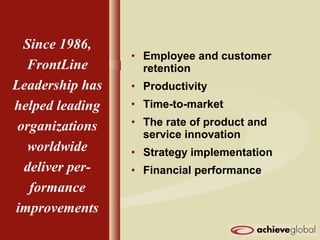
• Employee and customer
retention
• Productivity
• Time-to-market
• The rate of product and
service innovation
• Strategy implementation
• Financial performance
Since 1986,
FrontLine
Leadership has
helped leading
organizations
worldwide
deliver per-
formance
improvements
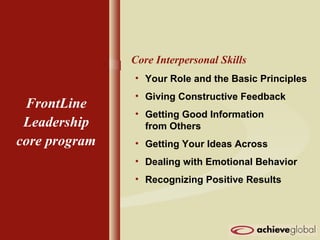
FrontLine
Leadership
core program
Core Interpersonal Skills
• Your Role and the Basic Principles
• Giving Constructive Feedback
• Getting Good Information
from Others
• Getting Your Ideas Across
• Dealing with Emotional Behavior
• Recognizing Positive Results
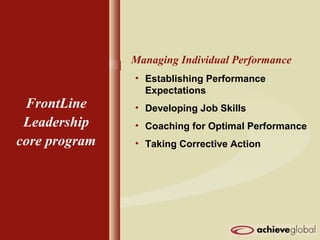
FrontLine
Leadership
core program
Managing Individual Performance
• Establishing Performance
Expectations
• Developing Job Skills
• Coaching for Optimal Performance
• Taking Corrective Action
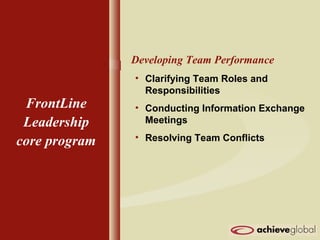
Developing Team Performance
• Clarifying Team Roles and
Responsibilities
• Conducting Information Exchange
Meetings
• Resolving Team Conflicts
FrontLine
Leadership
core program
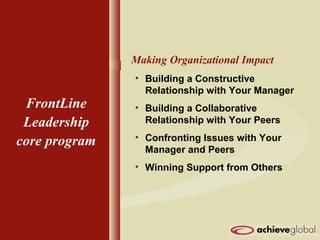
Making Organizational Impact
• Building a Constructive
Relationship with Your Manager
• Building a Collaborative
Relationship with Your Peers
• Confronting Issues with Your
Manager and Peers
• Winning Support from Others
FrontLine
Leadership
core program
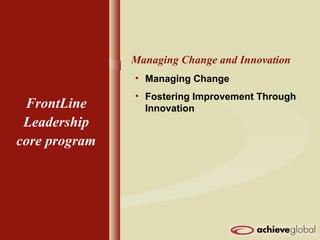
Managing Change and Innovation
• Managing Change
• Fostering Improvement Through
InnovationFrontLine
Leadership
core program
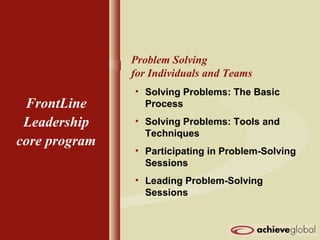
Problem Solving
for Individuals and Teams
• Solving Problems: The Basic
Process
• Solving Problems: Tools and
Techniques
• Participating in Problem-Solving
Sessions
• Leading Problem-Solving
Sessions
FrontLine
Leadership
core program
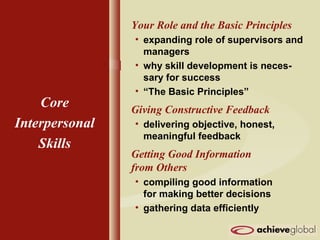
Your Role and the Basic Principles
• expanding role of supervisors and
managers
• why skill development is neces-
sary for success
• “The Basic Principles”
Giving Constructive Feedback
• delivering objective, honest,
meaningful feedback
Getting Good Information
from Others
• compiling good information
for making better decisions
• gathering data efficiently
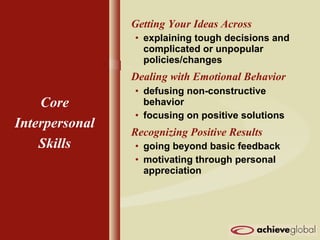
Core
Interpersonal
Skills
Getting Your Ideas Across
• explaining tough decisions and
complicated or unpopular
policies/changes
Dealing with Emotional Behavior
• defusing non-constructive
behavior
• focusing on positive solutions
Recognizing Positive Results
• going beyond basic feedback
• motivating through personal
appreciation
Core
Interpersonal
Skills
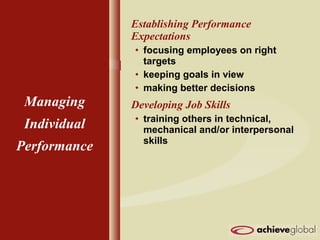
Establishing Performance
Expectations
• focusing employees on right
targets
• keeping goals in view
• making better decisions
Developing Job Skills
• training others in technical,
mechanical and/or interpersonal
skills
Managing
Individual
Performance
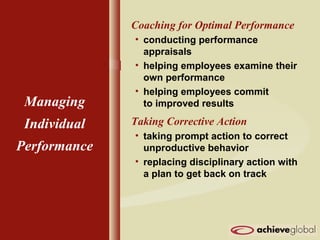
Coaching for Optimal Performance
• conducting performance
appraisals
• helping employees examine their
own performance
• helping employees commit
to improved results
Taking Corrective Action
• taking prompt action to correct
unproductive behavior
• replacing disciplinary action with
a plan to get back on track
Managing
Individual
Performance
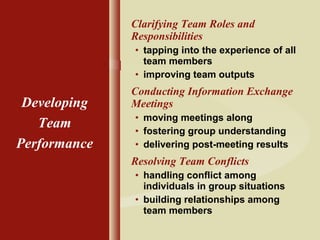
Clarifying Team Roles and
Responsibilities
• tapping into the experience of all
team members
• improving team outputs
Conducting Information Exchange
Meetings
• moving meetings along
• fostering group understanding
• delivering post-meeting results
Resolving Team Conflicts
• handling conflict among
individuals in group situations
• building relationships among
team members
Developing
Team
Performance
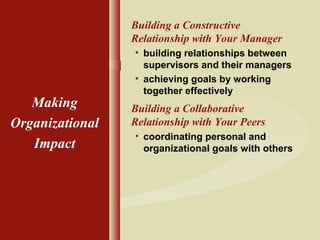
Building a Constructive
Relationship with Your Manager
• building relationships between
supervisors and their managers
• achieving goals by working
together effectively
Building a Collaborative
Relationship with Your Peers
• coordinating personal and
organizational goals with others
Making
Organizational
Impact
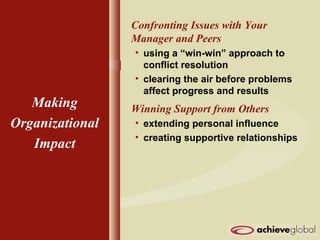
Confronting Issues with Your
Manager and Peers
• using a “win-win” approach to
conflict resolution
• clearing the air before problems
affect progress and results
Winning Support from Others
• extending personal influence
• creating supportive relationships
Making
Organizational
Impact
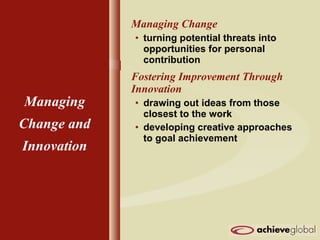
Managing Change
• turning potential threats into
opportunities for personal
contribution
Fostering Improvement Through
Innovation
• drawing out ideas from those
closest to the work
• developing creative approaches
to goal achievement
Managing
Change and
Innovation
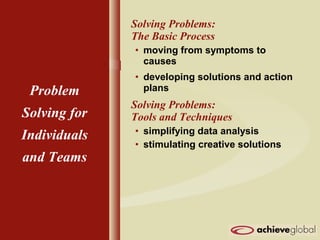
Solving Problems:
The Basic Process
• moving from symptoms to
causes
• developing solutions and action
plans
Solving Problems:
Tools and Techniques
• simplifying data analysis
• stimulating creative solutions
Problem
Solving for
Individuals
and Teams
Participating in Problem-Solving
Sessions
• contributing ideas effectively
• encouraging others to
contribute ideas effectively
Leading Problem-Solving Sessions
• focusing on the process and
content of problem-solving
sessions
• encouraging balanced
participation
• building creative solutions
Problem
Solving for
Individuals
and Teams
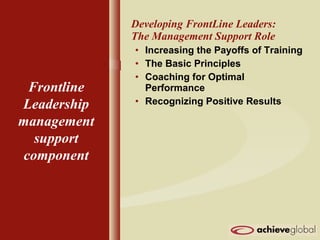
Developing FrontLine Leaders:
The Management Support Role
• Increasing the Payoffs of Training
• The Basic Principles
• Coaching for Optimal
Performance
• Recognizing Positive Results
Frontline
Leadership
management
support
component
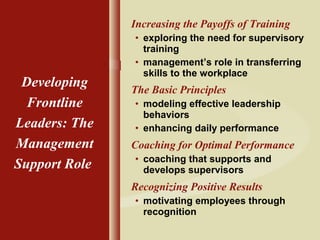
Increasing the Payoffs of Training
• exploring the need for supervisory
training
• management’s role in transferring
skills to the workplace
The Basic Principles
• modeling effective leadership
behaviors
• enhancing daily performance
Coaching for Optimal Performance
• coaching that supports and
develops supervisors
Recognizing Positive Results
• motivating employees through
recognition
Developing
Frontline
Leaders: The
Management
Support Role

031 Front Line Leadership

  • 1.
    FrontLine Leadership Skills thatkeep frontline managers and supervisors at the top of their game
  • 2.
    Effective frontline leaders are critical toyour organization’s success. When their performance suffers so do bottom-line results.
  • 3.
    Supervisors and frontlineleaders learn how to … • Manage and improve leadership ability • Practice techniques for enhanced team performance • Build strong relationships and expand influence • Manage change and encourage innovation • Solve problems with individuals and teams
  • 4.
    • Employee andcustomer retention • Productivity • Time-to-market • The rate of product and service innovation • Strategy implementation • Financial performance Since 1986, FrontLine Leadership has helped leading organizations worldwide deliver per- formance improvements
  • 5.
    FrontLine Leadership core program Core InterpersonalSkills • Your Role and the Basic Principles • Giving Constructive Feedback • Getting Good Information from Others • Getting Your Ideas Across • Dealing with Emotional Behavior • Recognizing Positive Results
  • 6.
    FrontLine Leadership core program Managing IndividualPerformance • Establishing Performance Expectations • Developing Job Skills • Coaching for Optimal Performance • Taking Corrective Action
  • 7.
    Developing Team Performance •Clarifying Team Roles and Responsibilities • Conducting Information Exchange Meetings • Resolving Team Conflicts FrontLine Leadership core program
  • 8.
    Making Organizational Impact •Building a Constructive Relationship with Your Manager • Building a Collaborative Relationship with Your Peers • Confronting Issues with Your Manager and Peers • Winning Support from Others FrontLine Leadership core program
  • 9.
    Managing Change andInnovation • Managing Change • Fostering Improvement Through InnovationFrontLine Leadership core program
  • 10.
    Problem Solving for Individualsand Teams • Solving Problems: The Basic Process • Solving Problems: Tools and Techniques • Participating in Problem-Solving Sessions • Leading Problem-Solving Sessions FrontLine Leadership core program
  • 11.
    Your Role andthe Basic Principles • expanding role of supervisors and managers • why skill development is neces- sary for success • “The Basic Principles” Giving Constructive Feedback • delivering objective, honest, meaningful feedback Getting Good Information from Others • compiling good information for making better decisions • gathering data efficiently Core Interpersonal Skills
  • 12.
    Getting Your IdeasAcross • explaining tough decisions and complicated or unpopular policies/changes Dealing with Emotional Behavior • defusing non-constructive behavior • focusing on positive solutions Recognizing Positive Results • going beyond basic feedback • motivating through personal appreciation Core Interpersonal Skills
  • 13.
    Establishing Performance Expectations • focusingemployees on right targets • keeping goals in view • making better decisions Developing Job Skills • training others in technical, mechanical and/or interpersonal skills Managing Individual Performance
  • 14.
    Coaching for OptimalPerformance • conducting performance appraisals • helping employees examine their own performance • helping employees commit to improved results Taking Corrective Action • taking prompt action to correct unproductive behavior • replacing disciplinary action with a plan to get back on track Managing Individual Performance
  • 15.
    Clarifying Team Rolesand Responsibilities • tapping into the experience of all team members • improving team outputs Conducting Information Exchange Meetings • moving meetings along • fostering group understanding • delivering post-meeting results Resolving Team Conflicts • handling conflict among individuals in group situations • building relationships among team members Developing Team Performance
  • 16.
    Building a Constructive Relationshipwith Your Manager • building relationships between supervisors and their managers • achieving goals by working together effectively Building a Collaborative Relationship with Your Peers • coordinating personal and organizational goals with others Making Organizational Impact
  • 17.
    Confronting Issues withYour Manager and Peers • using a “win-win” approach to conflict resolution • clearing the air before problems affect progress and results Winning Support from Others • extending personal influence • creating supportive relationships Making Organizational Impact
  • 18.
    Managing Change • turningpotential threats into opportunities for personal contribution Fostering Improvement Through Innovation • drawing out ideas from those closest to the work • developing creative approaches to goal achievement Managing Change and Innovation
  • 19.
    Solving Problems: The BasicProcess • moving from symptoms to causes • developing solutions and action plans Solving Problems: Tools and Techniques • simplifying data analysis • stimulating creative solutions Problem Solving for Individuals and Teams
  • 20.
    Participating in Problem-Solving Sessions •contributing ideas effectively • encouraging others to contribute ideas effectively Leading Problem-Solving Sessions • focusing on the process and content of problem-solving sessions • encouraging balanced participation • building creative solutions Problem Solving for Individuals and Teams
  • 21.
    Developing FrontLine Leaders: TheManagement Support Role • Increasing the Payoffs of Training • The Basic Principles • Coaching for Optimal Performance • Recognizing Positive Results Frontline Leadership management support component
  • 22.
    Increasing the Payoffsof Training • exploring the need for supervisory training • management’s role in transferring skills to the workplace The Basic Principles • modeling effective leadership behaviors • enhancing daily performance Coaching for Optimal Performance • coaching that supports and develops supervisors Recognizing Positive Results • motivating employees through recognition Developing Frontline Leaders: The Management Support Role