Progressive Discipline
Training Employees to Follow Correct Standards of Business
Training Presented by:
Angie Breivik, Jennifer Burns, Ashlee Jenkins,
Shay Lloyd and Amber Marstella
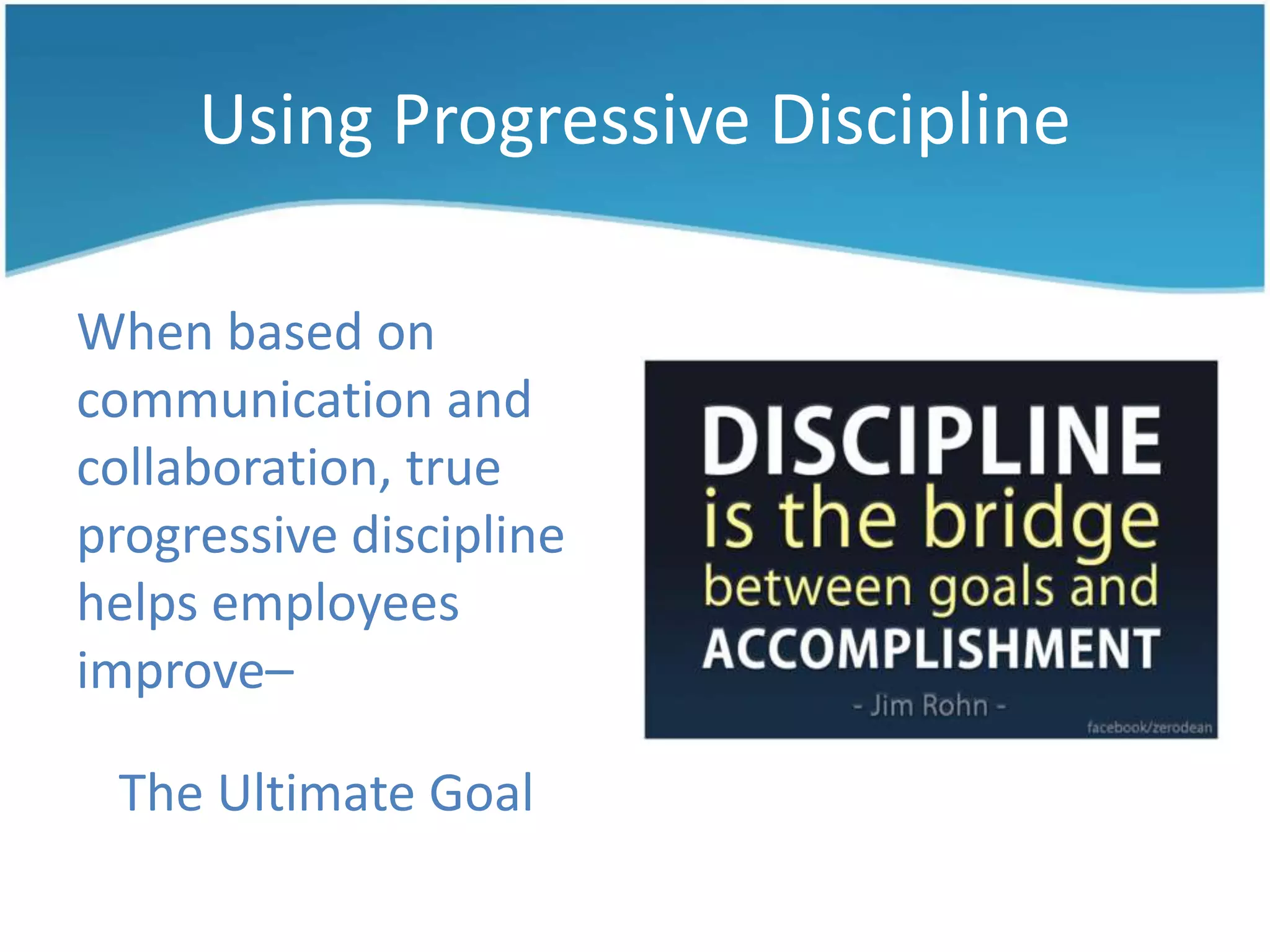
Using Progressive Discipline
When based on
communication and
collaboration, true
progressive discipline
helps employees
improve–
The Ultimate Goal
How to Deliver that Disciplinary Message
in a Way That Produces Actual
Improvement:
• Communication of Discipline
• Listening to the Associate’s
Concerns and Setting Goals
• Follow Up
Communication of Discipline
• Decide how to respond.
– Consider the effect of the employee’s behavior
– Determine the frequency of the behavior
– Review the empoyee’s disciplinary history
• Prepare to speak with the associate.
– Be ready to explain the problem and why it has to
be corrected.
– Be sure to have a few concrete examples of what
the employee needs to improve on and why.
Communication of Discipline
• Start by telling the employee
about the problem and how it’s
affecting the company.
– Review any previous conversations
regarding this opportunity to
improve
• Ask Questions to discover how
you could help the associate
overcome the issue.
Effective Listening
• Careful listening enables you to understand
your employee better.
– Avoid the tendency to think about what you are
going to say next.
– More important than speaking is listening.
– Be genuine.
• When they know their feelings and thoughts
are important to you, they are more likely to
be receptive to your progressive discipline.
Make Plans Toward
Improvement
• Goals reflect desires and a vision
of what a person can achieve.
– Carefully considered goals will give
the associate clear direction.
– Be specific and realisitic
• Goals will help the employee
work effectively and lead them to
stretch and grow.
– Measure their progress.
– Evaluate their efforts.
Following Up
• Key to effective discipline
– Further demonstrates your interest in the
employee’s professional success.
– Conveys a message of serious importance.
• Schedule meetings
• Know their goals
• Be timely
• Be attentive
• Give praise and recognition
“Praise the slightest improvement and praise every
improvement.” –Dale Carnegie
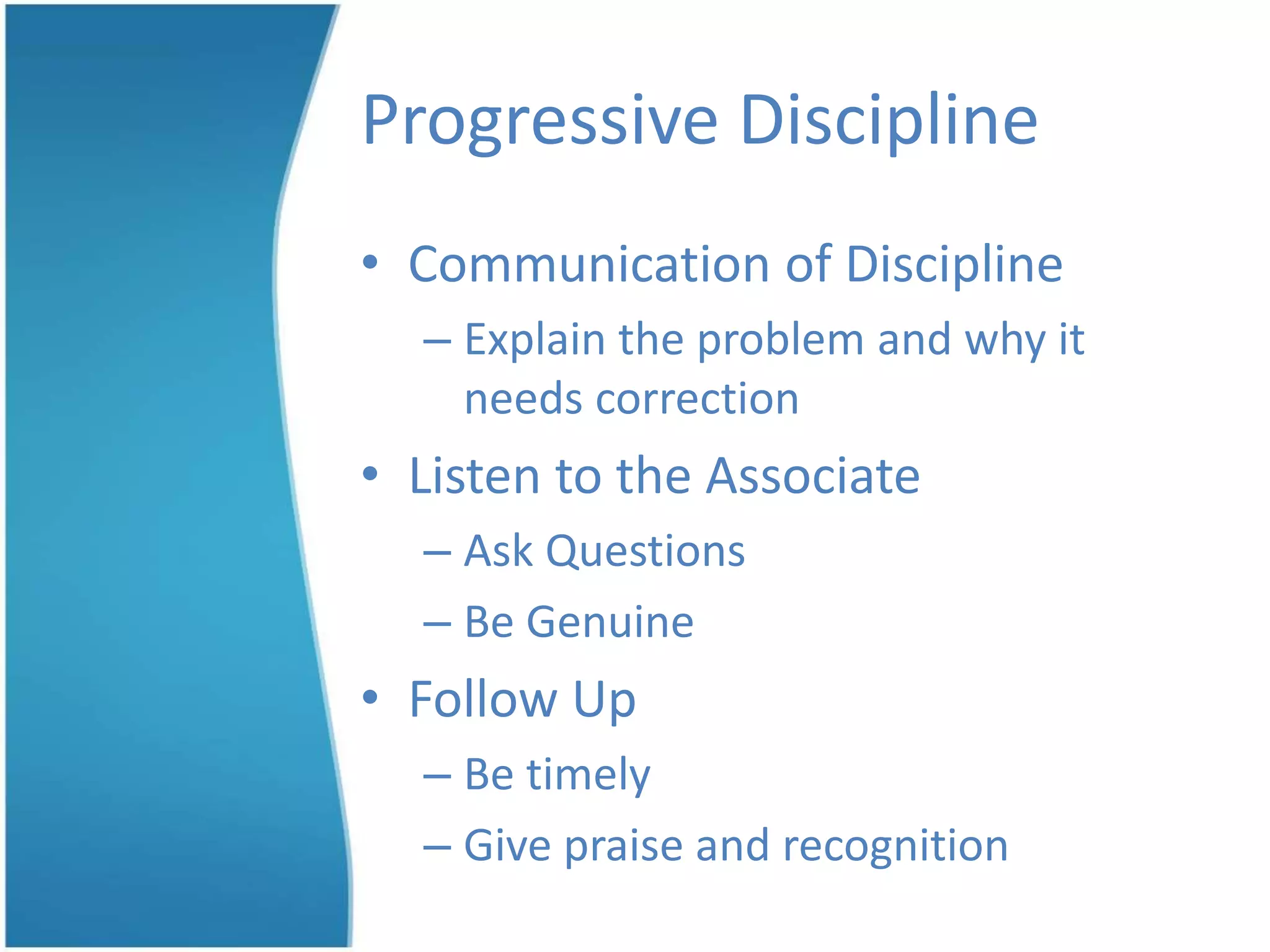
Progressive Discipline
• Communication of Discipline
– Explain the problem and why it
needs correction
• Listen to the Associate
– Ask Questions
– Be Genuine
• Follow Up
– Be timely
– Give praise and recognition
Discipline
The Difference Between
Good and Great

Progressive Discipline

  • 1.
    Progressive Discipline Training Employeesto Follow Correct Standards of Business Training Presented by: Angie Breivik, Jennifer Burns, Ashlee Jenkins, Shay Lloyd and Amber Marstella
  • 2.
    Using Progressive Discipline Whenbased on communication and collaboration, true progressive discipline helps employees improve– The Ultimate Goal
  • 3.
    How to Deliverthat Disciplinary Message in a Way That Produces Actual Improvement: • Communication of Discipline • Listening to the Associate’s Concerns and Setting Goals • Follow Up
  • 4.
    Communication of Discipline •Decide how to respond. – Consider the effect of the employee’s behavior – Determine the frequency of the behavior – Review the empoyee’s disciplinary history • Prepare to speak with the associate. – Be ready to explain the problem and why it has to be corrected. – Be sure to have a few concrete examples of what the employee needs to improve on and why.
  • 5.
    Communication of Discipline •Start by telling the employee about the problem and how it’s affecting the company. – Review any previous conversations regarding this opportunity to improve • Ask Questions to discover how you could help the associate overcome the issue.
  • 6.
    Effective Listening • Carefullistening enables you to understand your employee better. – Avoid the tendency to think about what you are going to say next. – More important than speaking is listening. – Be genuine. • When they know their feelings and thoughts are important to you, they are more likely to be receptive to your progressive discipline.
  • 7.
    Make Plans Toward Improvement •Goals reflect desires and a vision of what a person can achieve. – Carefully considered goals will give the associate clear direction. – Be specific and realisitic • Goals will help the employee work effectively and lead them to stretch and grow. – Measure their progress. – Evaluate their efforts.
  • 8.
    Following Up • Keyto effective discipline – Further demonstrates your interest in the employee’s professional success. – Conveys a message of serious importance. • Schedule meetings • Know their goals • Be timely • Be attentive • Give praise and recognition “Praise the slightest improvement and praise every improvement.” –Dale Carnegie
  • 9.
    Progressive Discipline • Communicationof Discipline – Explain the problem and why it needs correction • Listen to the Associate – Ask Questions – Be Genuine • Follow Up – Be timely – Give praise and recognition
  • 10.