Presented by –
Soni Singh
M-Tech (S.E)
1st Year
Overviews:-
What is prototype model?
Need / importanceof the prototype model
Advantageand disadvantageof the prototype model
Reference
Sdlc models
SDLC(Softwaredevelopment lifecycle) is a framework that
describes the activities performed
development project.
at each step of a software
SDLC models are following
Waterfall model
Iterative model
Prototype model
Spiral model
types:-
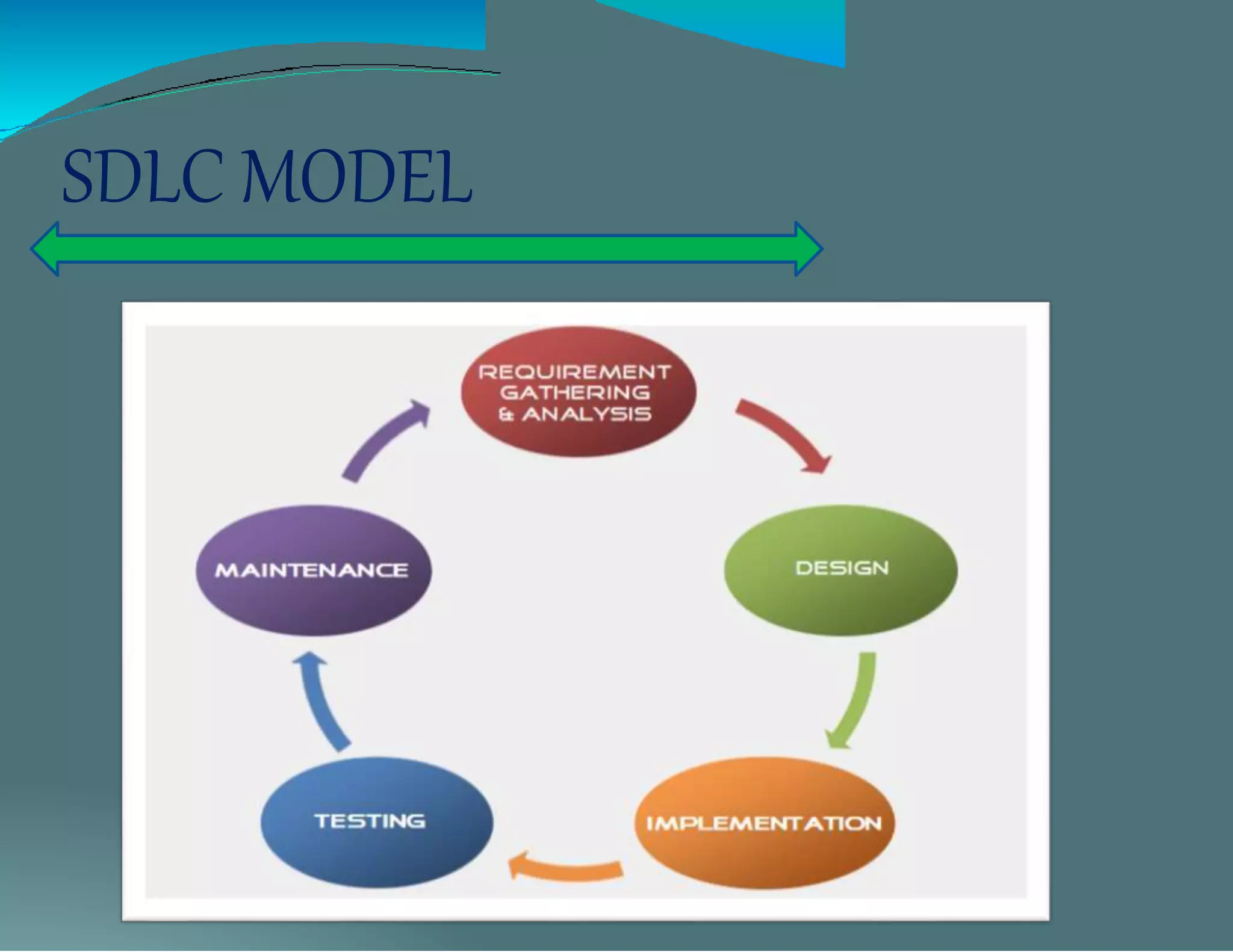
SDLC MODEL
Prototype model
proposals and try them out before
 A prototyping model suggest that before carrying out the
development of the actual software, a working prototype of
the
system should be built.
 A prototype is a toy implementation of the system.
 Prototype is a working model of software with some
limited functionality.
Prototyping is used to allow the users evaluate the developer
implementation.
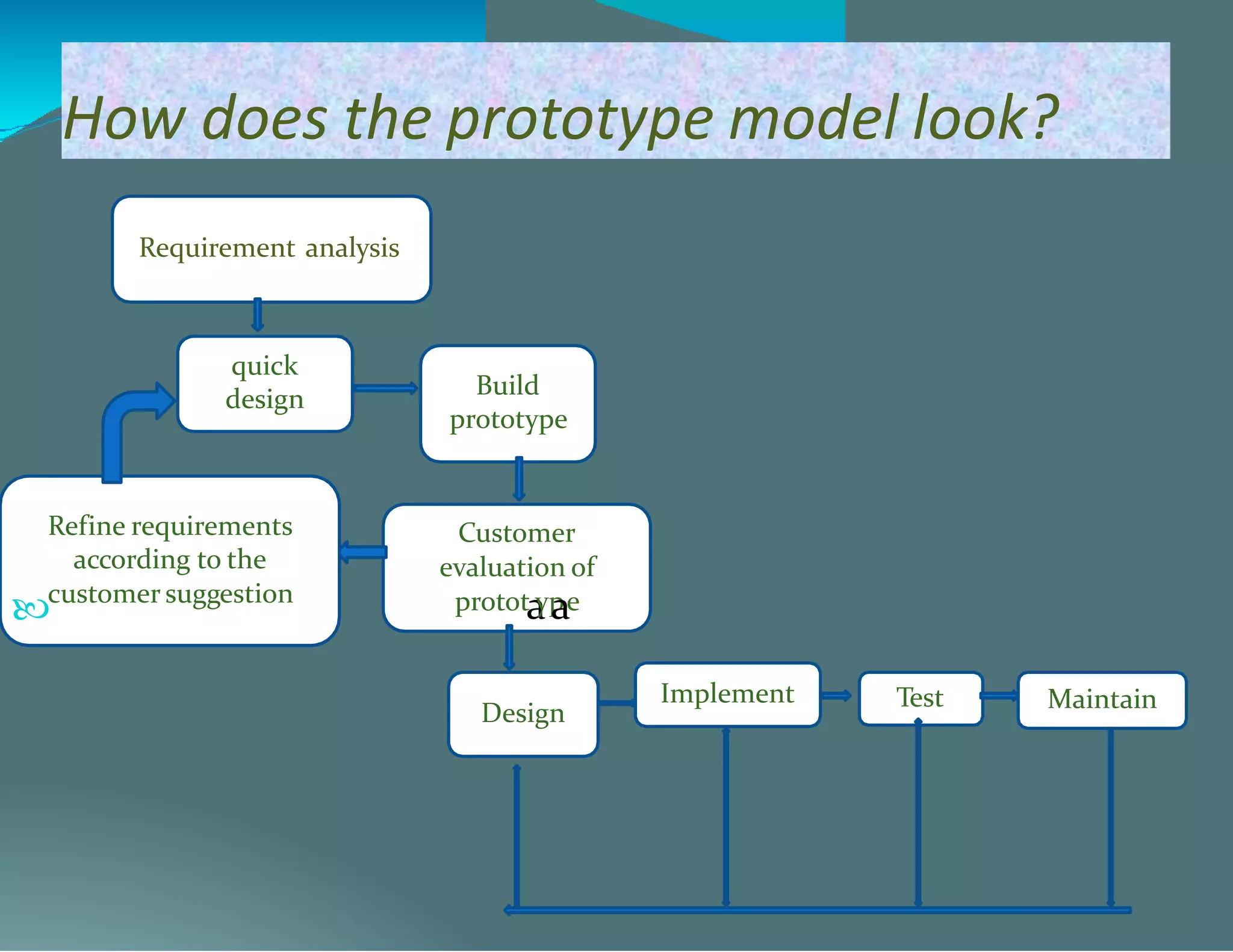
How does the prototype model look?
Requirement analysis
quick
design Build
prototype
Refine requirements
according to the
customer suggestion
Customer
evaluation of
prototaypae
Implement Test Maintain
Design
Steps of the prototype model
 Requirements gathering and Analysis:
A prototype model begins with requirementsanalysis, and the
requirements of the system are define in detail. The user is
interviewed in order to know the requirementsof the system.
 Quick design:
When requirementsare known, aquick design for the system
is created. It is nota detailed design , it includes the
importantaspectsof the system, which gives an idea of the
system to the user.
 Build prototype:
Information gathering from quick design is modified to form a
prototype .It represents a ‘rough’ design of the required system.
 Customerevaluation of prototype:
The build prototype is presented to the customer for
his/her
evaluation.
 Prototype refinement:
Once the user evaluate the prototype, it is refined according to the
requirements . When the user is satisfied to the developed
prototype a final system is developed based on the final prototype
, which is developed by the iterative method means we design the
system according to the final prototype , after that implement , test
the product to find the errorand at last we maintain the system.
,
Need of the prototype model:-
 Prototype provides a method to examine design
problems
and evaluating solutions.
 “…Prototypes are not self explanatory….Clarifying what
aspects of a prototypecorrespond to the eventual artifact─
and what don’t─ is a key part of successful prototyping.”
 The developmentof the prototype model is expensive but
is
a good model because it satisfy all the requirements of the
customers.
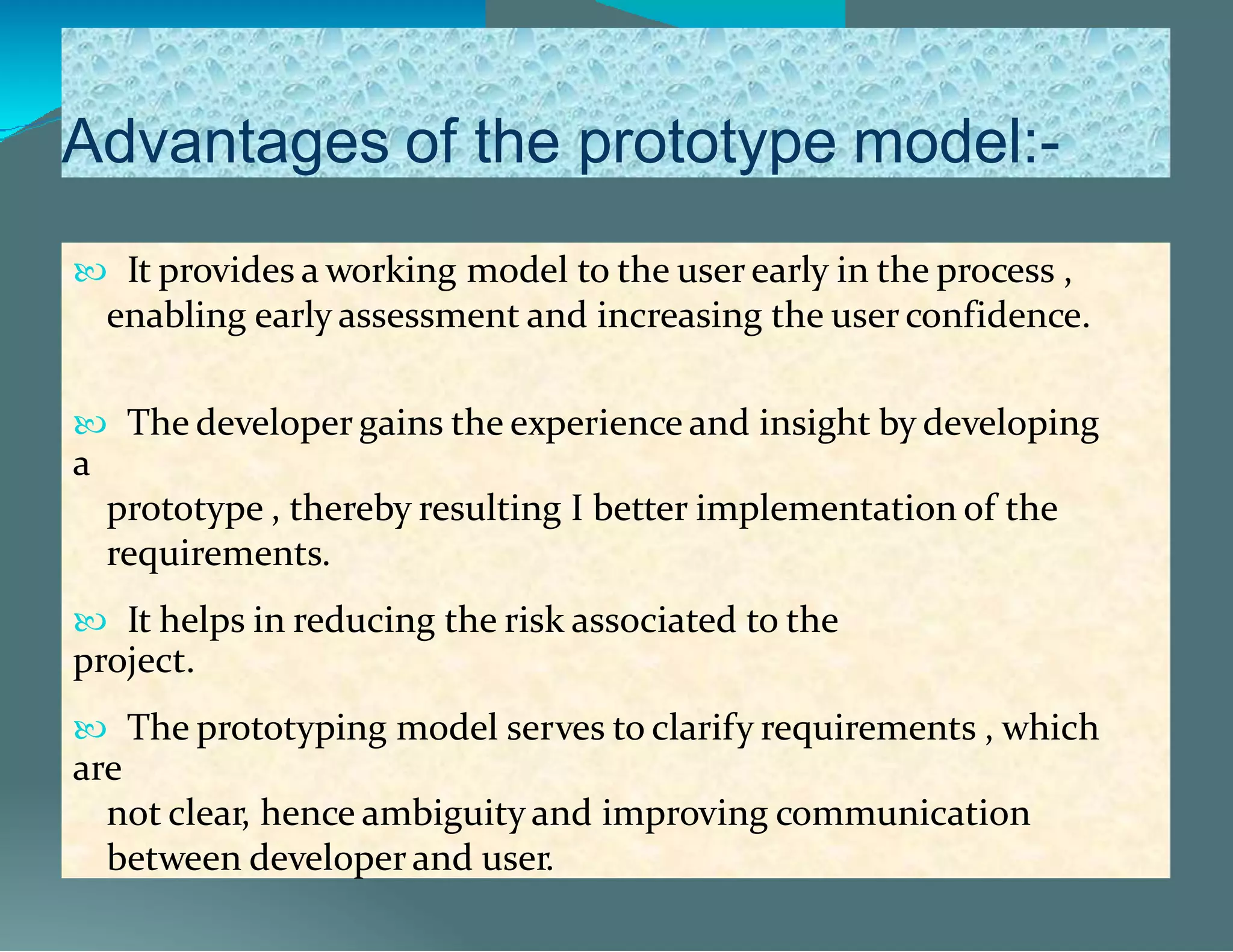
Advantages of the prototype model:-
 It provides a working model to the user early in the process ,
enabling early assessment and increasing the user confidence.
 The developer gains the experience and insight by developing
a
prototype , thereby resulting I better implementation of the
requirements.
 It helps in reducing the risk associated to the
project.
 The prototyping model serves to clarify requirements , which
are
not clear, hence ambiguity and improving communication
between developer and user.
 There is a great involvementof the users in software
development. Hence the requirements of the users are met
to the greatest extent.
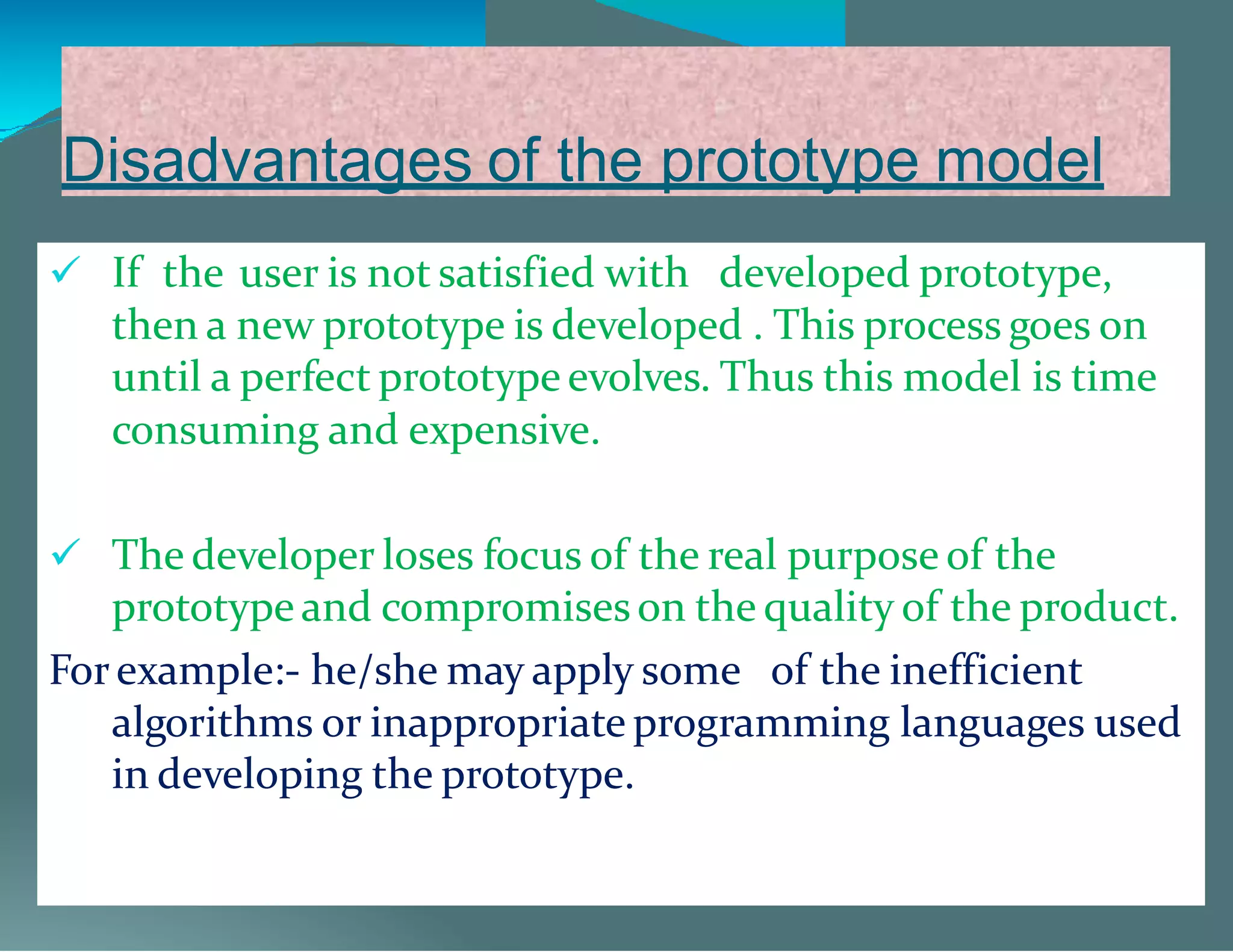
Disadvantages of the prototype model
 If the user is not satisfied with developed prototype,
then a new prototype is developed . This process goes on
until a perfect prototype evolves. Thus this model is time
consuming and expensive.
 The developer loses focus of the real purpose of the
prototype and compromiseson the quality of the product.
Forexample:- he/she may apply some of the inefficient
algorithms or inappropriate programming languages used
in developing the prototype.
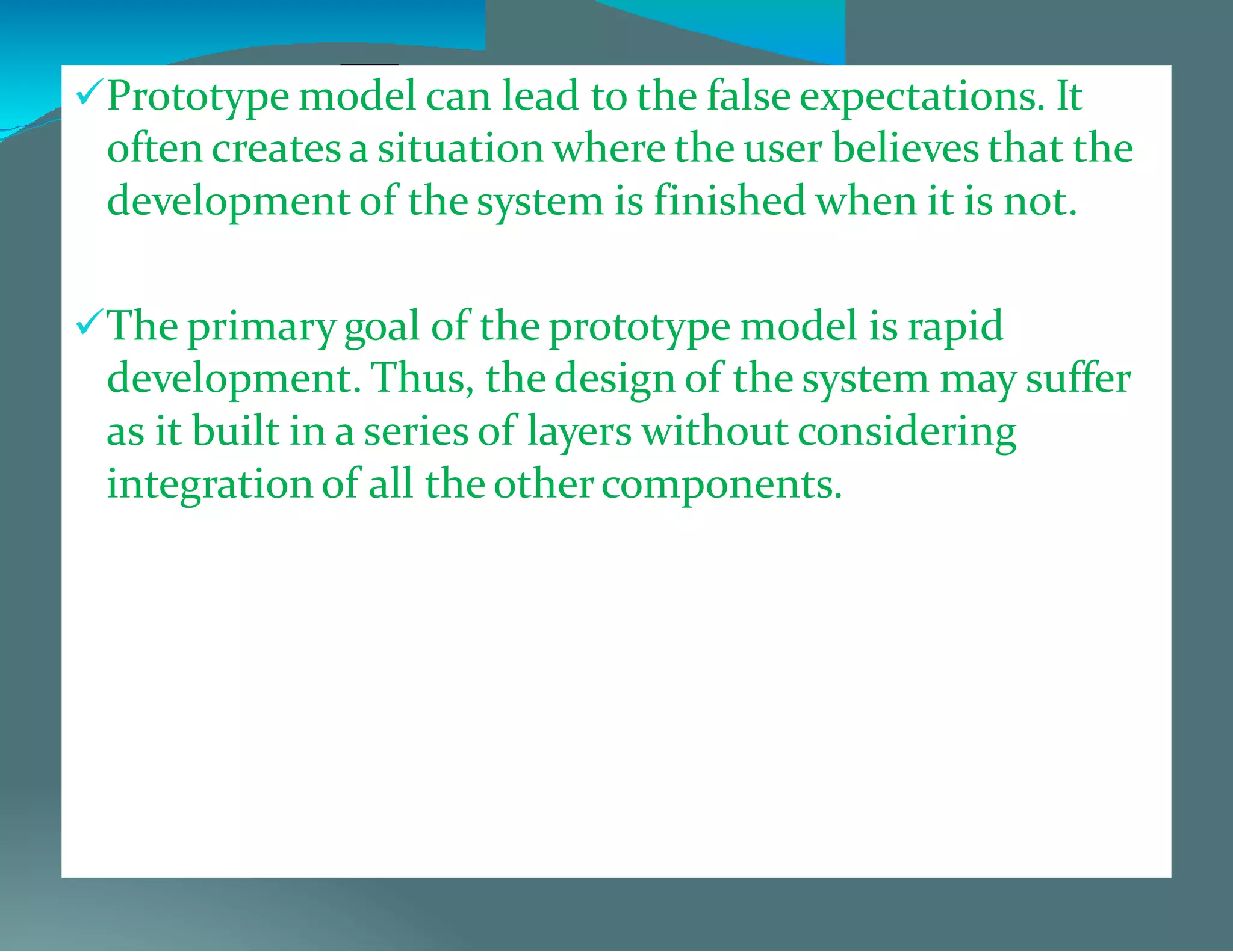
Prototype model can lead to the false expectations. It
often creates a situation where the user believes that the
development of the system is finished when it is not.
The primary goal of the prototype model is rapid
development. Thus, the design of the system may suffer
as it built in a series of layers without considering
integration of all the othercomponents.
References
 www.Google.com
www.slideshare.com
www.youtube.com
Thank you

Prototypemodel in SDLC ppt

  • 1.
    Presented by – SoniSingh M-Tech (S.E) 1st Year
  • 2.
    Overviews:- What is prototypemodel? Need / importanceof the prototype model Advantageand disadvantageof the prototype model Reference
  • 3.
    Sdlc models SDLC(Softwaredevelopment lifecycle)is a framework that describes the activities performed development project. at each step of a software SDLC models are following Waterfall model Iterative model Prototype model Spiral model types:-
  • 4.
  • 5.
    Prototype model proposals andtry them out before  A prototyping model suggest that before carrying out the development of the actual software, a working prototype of the system should be built.  A prototype is a toy implementation of the system.  Prototype is a working model of software with some limited functionality. Prototyping is used to allow the users evaluate the developer implementation.
  • 6.
    How does theprototype model look? Requirement analysis quick design Build prototype Refine requirements according to the customer suggestion Customer evaluation of prototaypae Implement Test Maintain Design
  • 7.
    Steps of theprototype model  Requirements gathering and Analysis: A prototype model begins with requirementsanalysis, and the requirements of the system are define in detail. The user is interviewed in order to know the requirementsof the system.  Quick design: When requirementsare known, aquick design for the system is created. It is nota detailed design , it includes the importantaspectsof the system, which gives an idea of the system to the user.
  • 8.
     Build prototype: Informationgathering from quick design is modified to form a prototype .It represents a ‘rough’ design of the required system.  Customerevaluation of prototype: The build prototype is presented to the customer for his/her evaluation.  Prototype refinement: Once the user evaluate the prototype, it is refined according to the requirements . When the user is satisfied to the developed prototype a final system is developed based on the final prototype , which is developed by the iterative method means we design the system according to the final prototype , after that implement , test the product to find the errorand at last we maintain the system. ,
  • 9.
    Need of theprototype model:-  Prototype provides a method to examine design problems and evaluating solutions.  “…Prototypes are not self explanatory….Clarifying what aspects of a prototypecorrespond to the eventual artifact─ and what don’t─ is a key part of successful prototyping.”  The developmentof the prototype model is expensive but is a good model because it satisfy all the requirements of the customers.
  • 10.
    Advantages of theprototype model:-  It provides a working model to the user early in the process , enabling early assessment and increasing the user confidence.  The developer gains the experience and insight by developing a prototype , thereby resulting I better implementation of the requirements.  It helps in reducing the risk associated to the project.  The prototyping model serves to clarify requirements , which are not clear, hence ambiguity and improving communication between developer and user.
  • 11.
     There isa great involvementof the users in software development. Hence the requirements of the users are met to the greatest extent.
  • 12.
    Disadvantages of theprototype model  If the user is not satisfied with developed prototype, then a new prototype is developed . This process goes on until a perfect prototype evolves. Thus this model is time consuming and expensive.  The developer loses focus of the real purpose of the prototype and compromiseson the quality of the product. Forexample:- he/she may apply some of the inefficient algorithms or inappropriate programming languages used in developing the prototype.
  • 13.
    Prototype model canlead to the false expectations. It often creates a situation where the user believes that the development of the system is finished when it is not. The primary goal of the prototype model is rapid development. Thus, the design of the system may suffer as it built in a series of layers without considering integration of all the othercomponents.
  • 14.
  • 15.