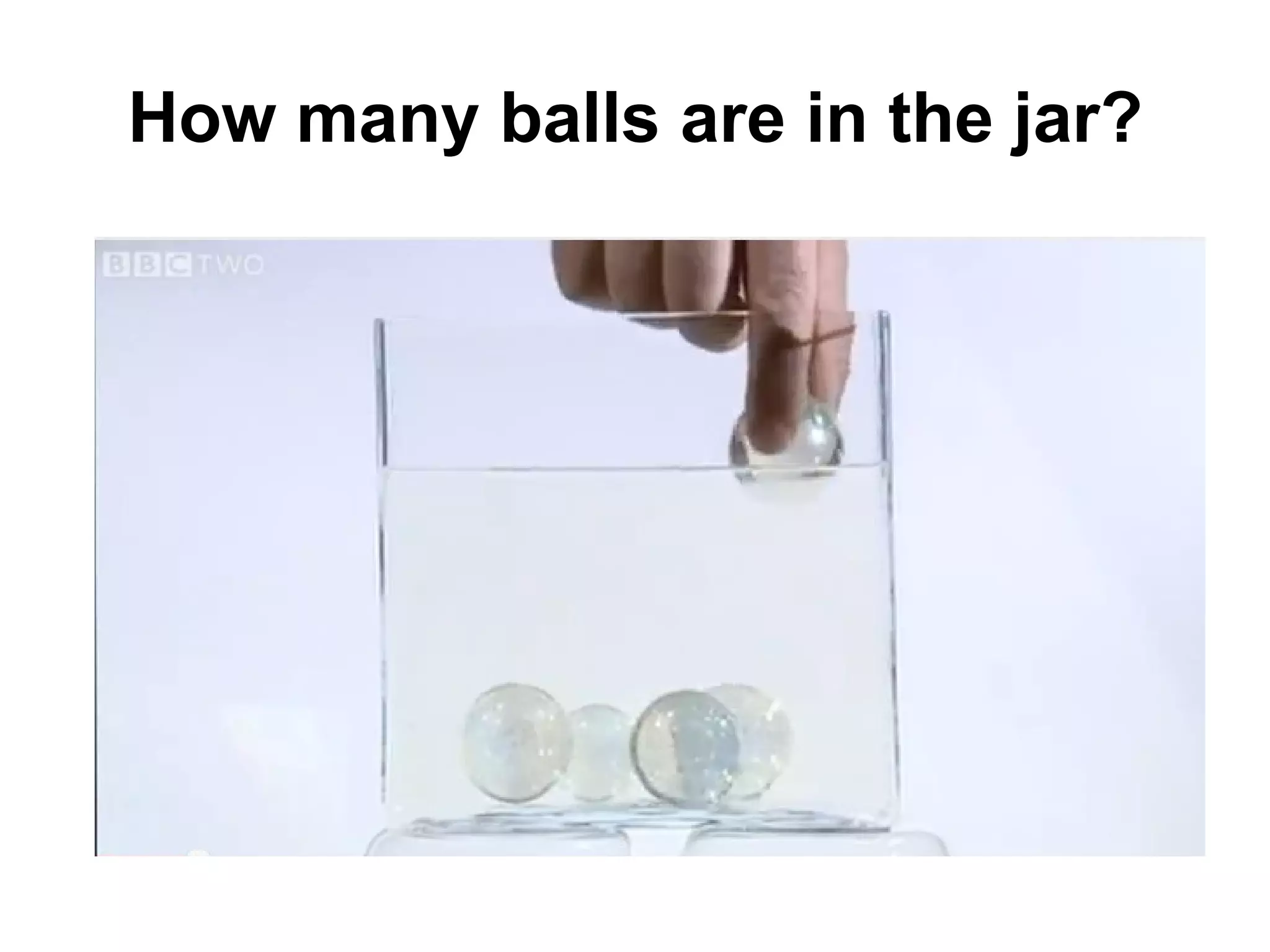
How many balls are in the jar?
What happens when light  meets an object?  Learning Objectives : To understand that materials may be transparent, translucent or opaque.  To know that light may be absorbed, transmitted or reflected when it hits an object.
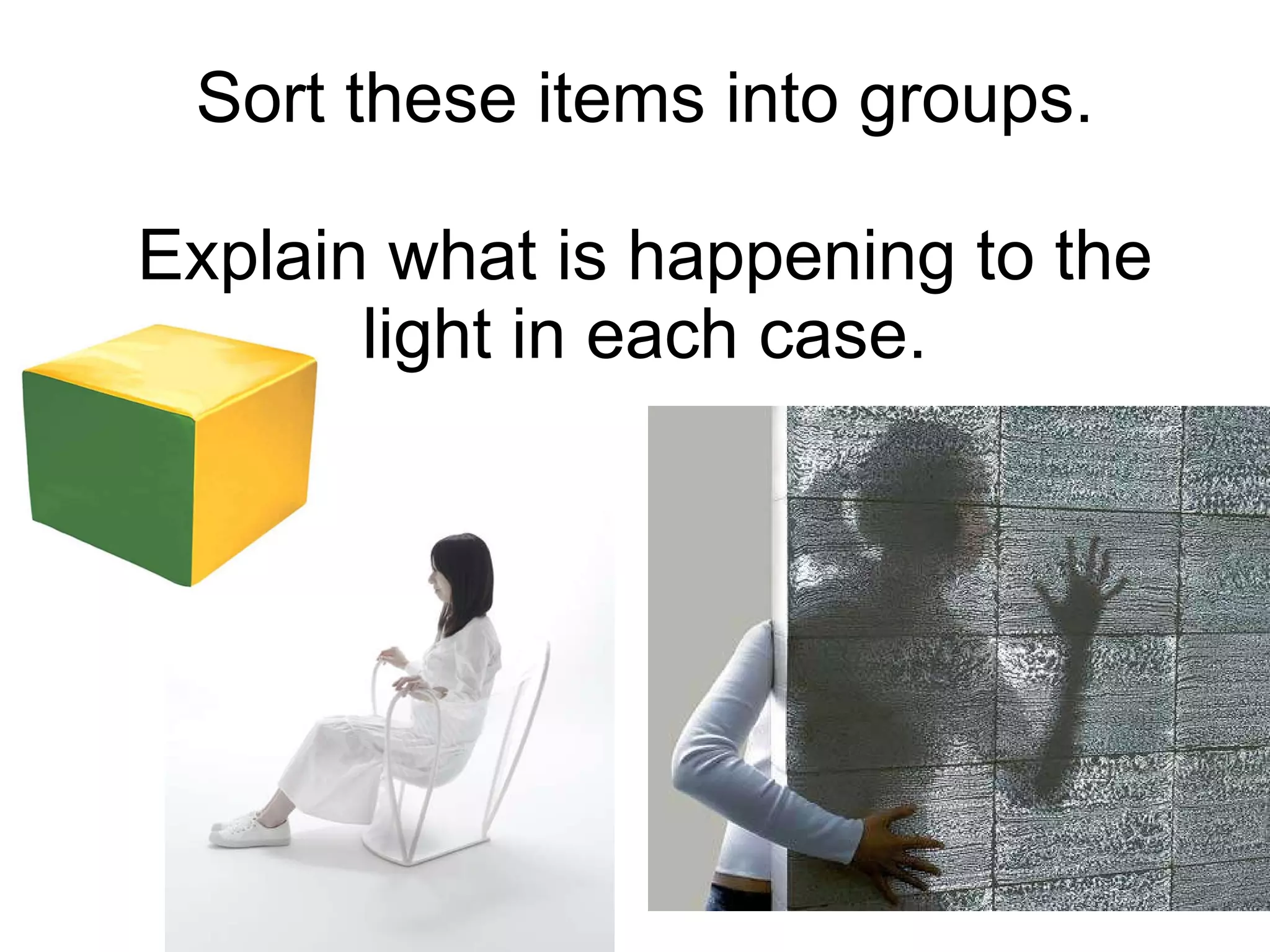
Sort these items into groups. Explain what is happening to the light in each case.
Fill in the gaps in the sentences below: An object that allows all light to pass through it is called…………………… An object that allows just some light to pass through it is called…………………… An object that allows no light to pass through it is called………………………… translucent  transparent  opaque transparent translucent opaque
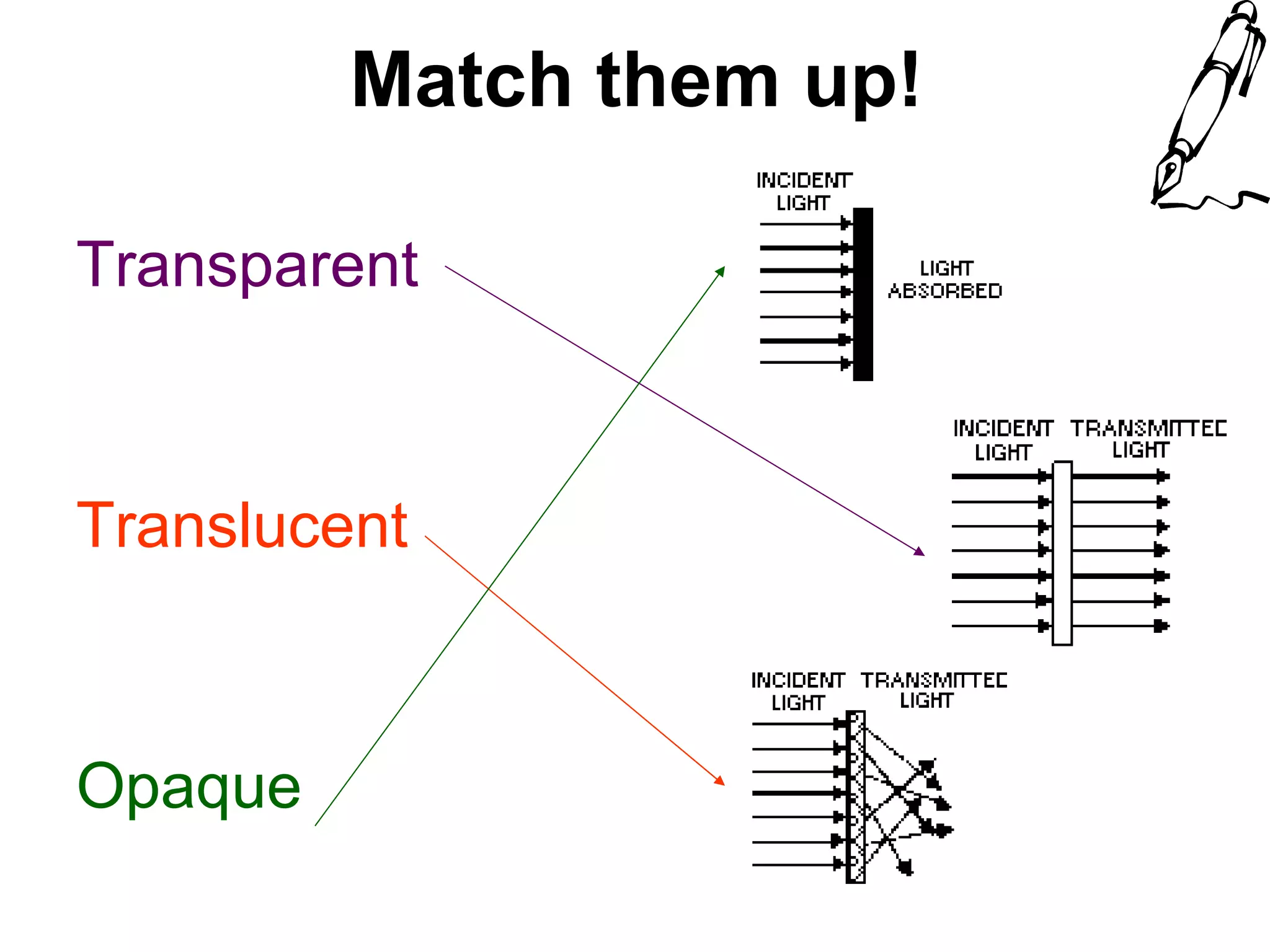
Match them up! Transparent Translucent Opaque
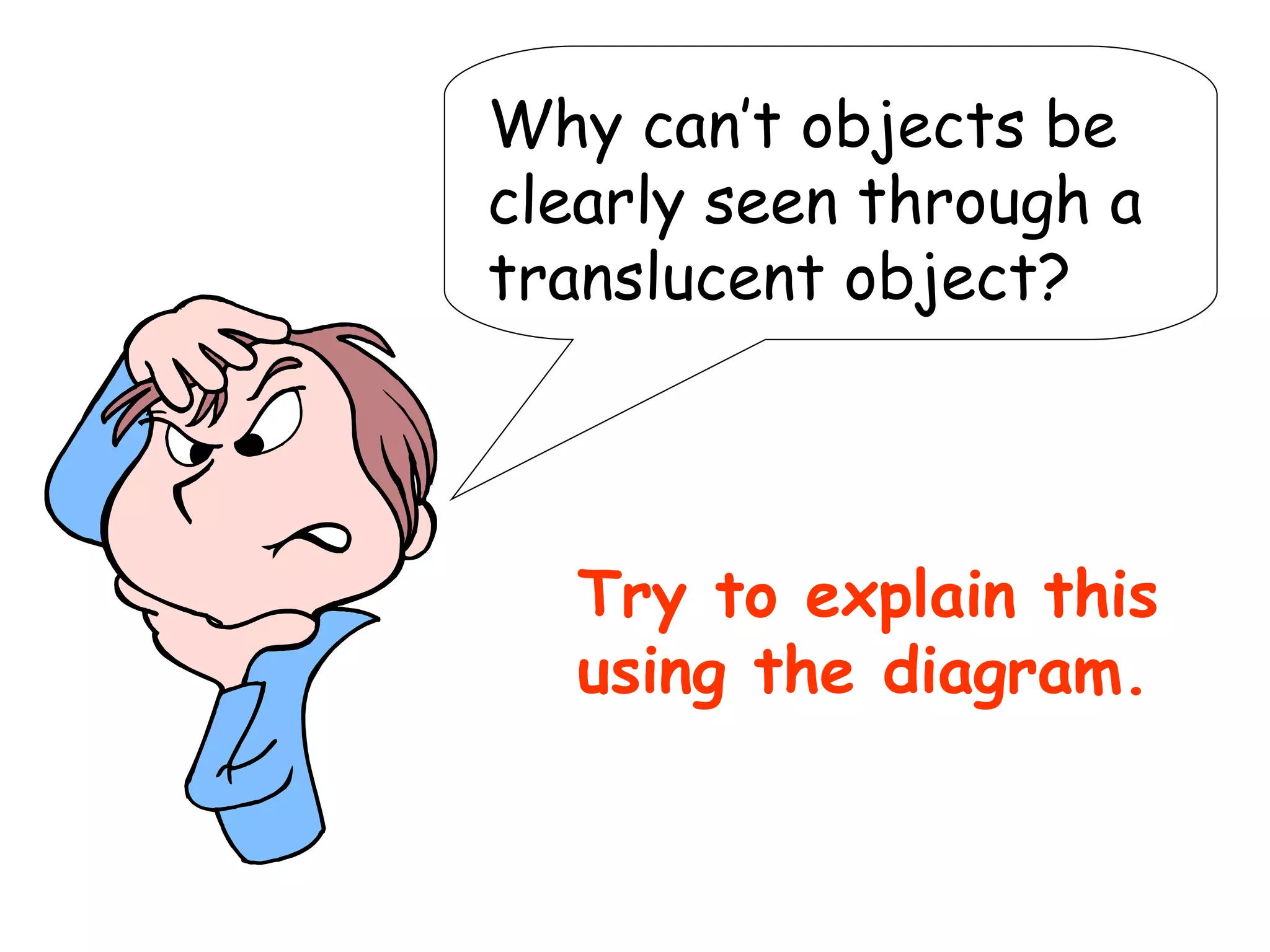
Why can’t objects be clearly seen through a translucent object? Try to explain this using the diagram.
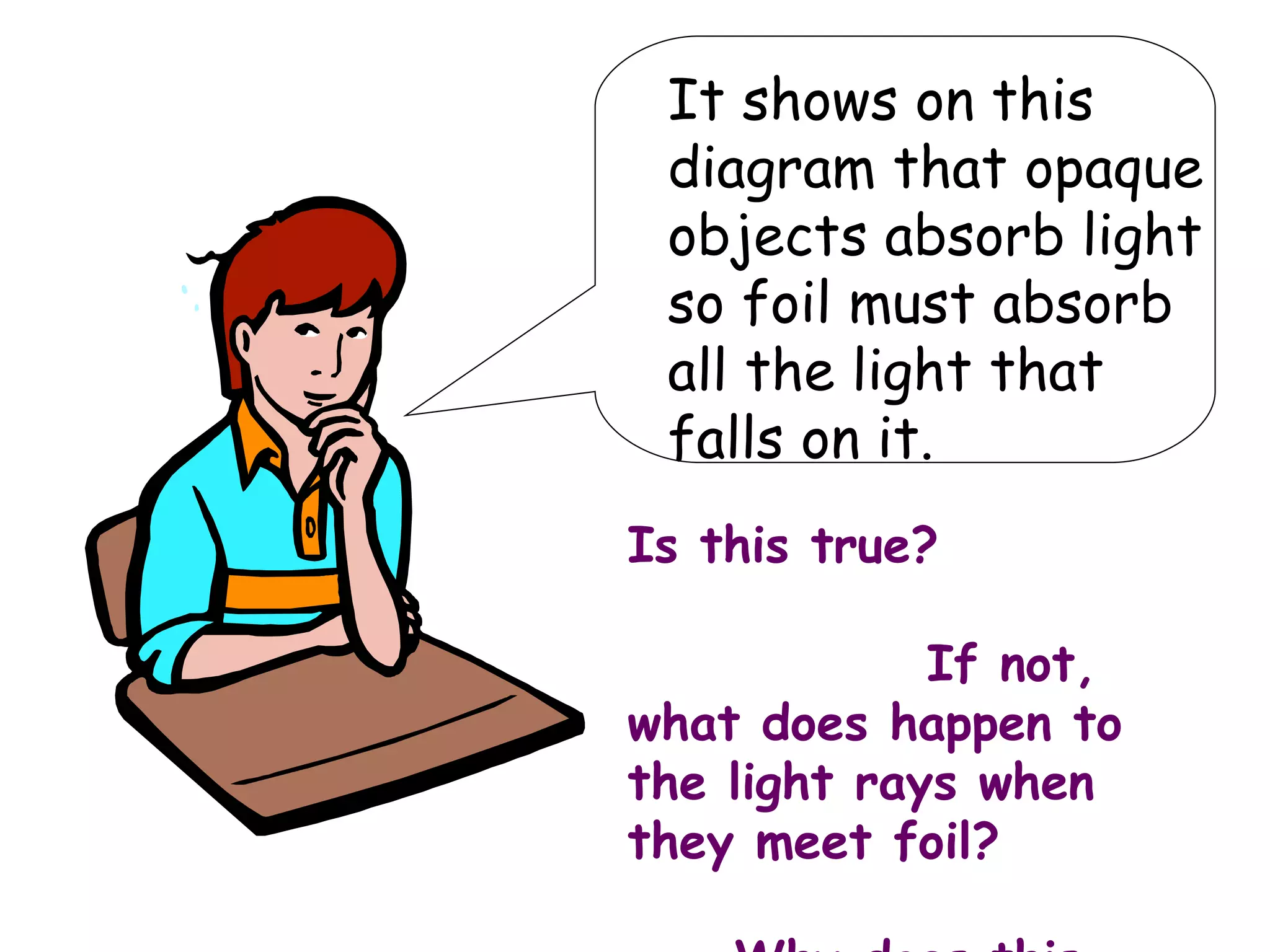
It shows on this diagram that opaque objects absorb light so foil must absorb all the light that falls on it. Is this true?  If not, what does happen to the light rays when they meet foil?  Why does this mean that it is opaque?
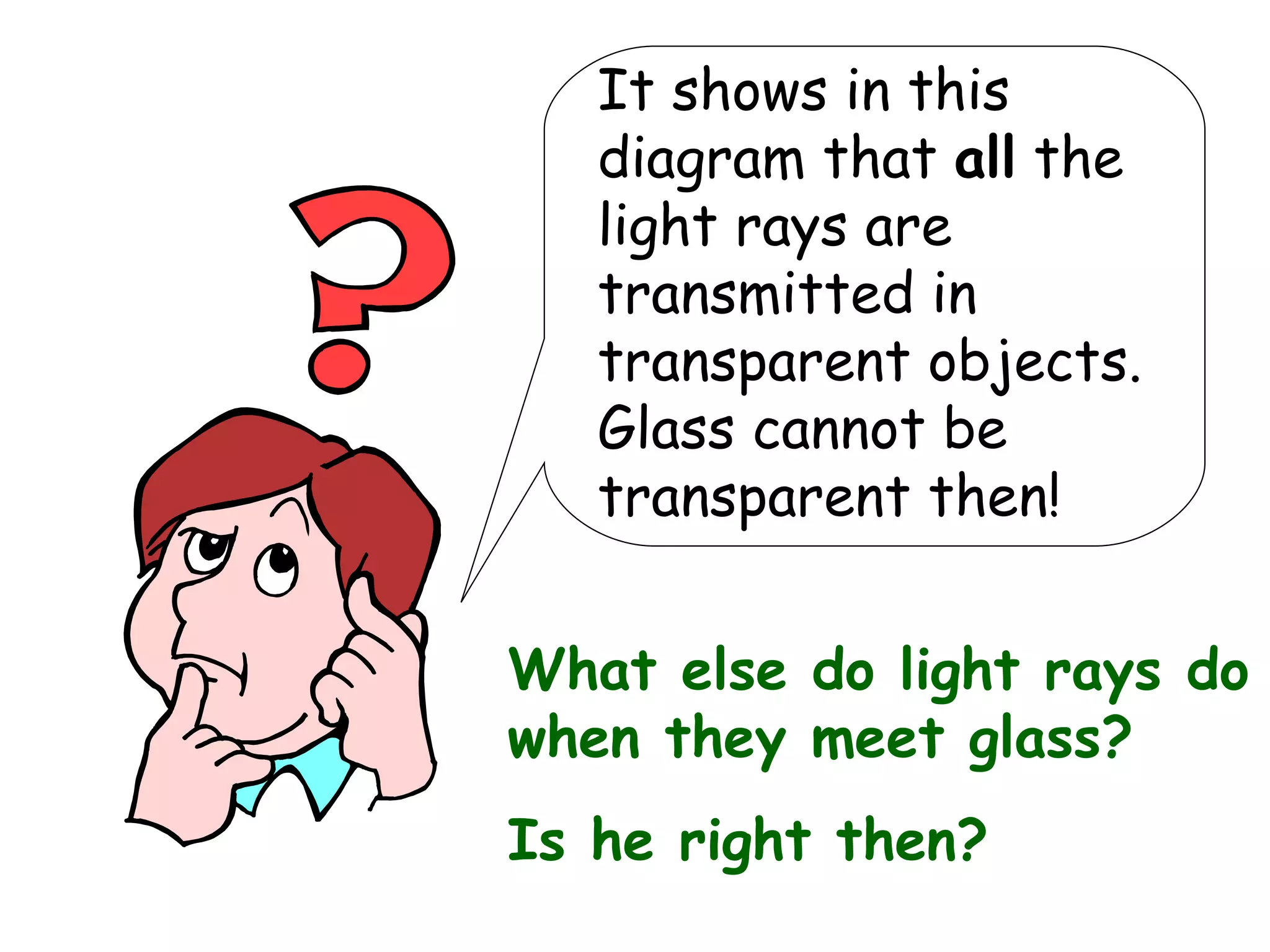
It shows in this diagram that  all  the light rays are transmitted in transparent objects.  Glass cannot be transparent then!  What else do light rays do when they meet glass?  Is he right then?
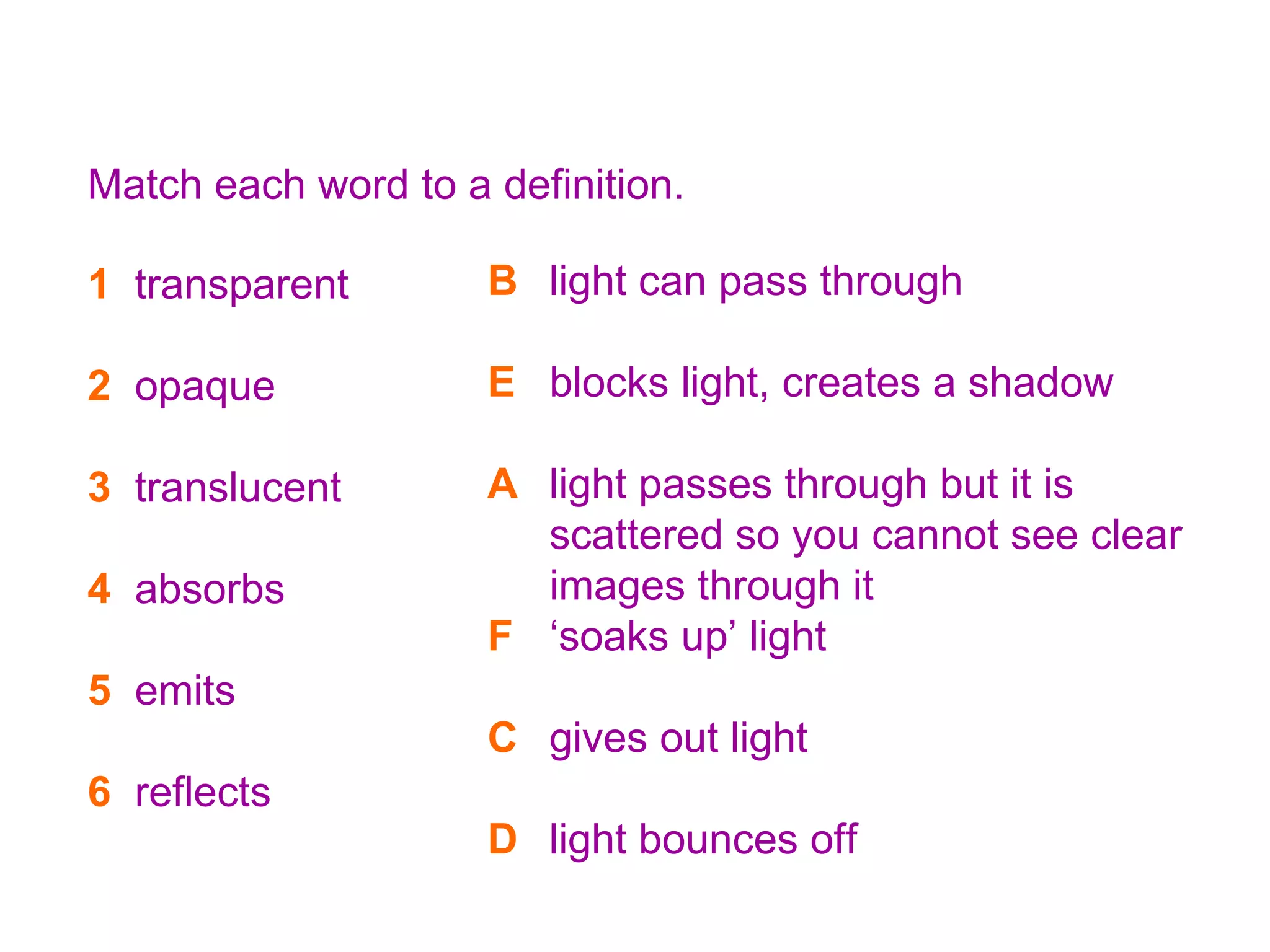
8K Light words and heavy meanings Match each word to a definition. 1   transparent 2   opaque 3   translucent 4   absorbs 5   emits 6   reflects A light passes through but it is scattered so you cannot see clear images through it B light can pass through C gives out light D light bounces off E blocks light, creates a shadow F ‘soaks up’ light B light can pass through E blocks light, creates a shadow A light passes through but it is scattered so you cannot see clear images through it F ‘soaks up’ light C gives out light D light bounces off
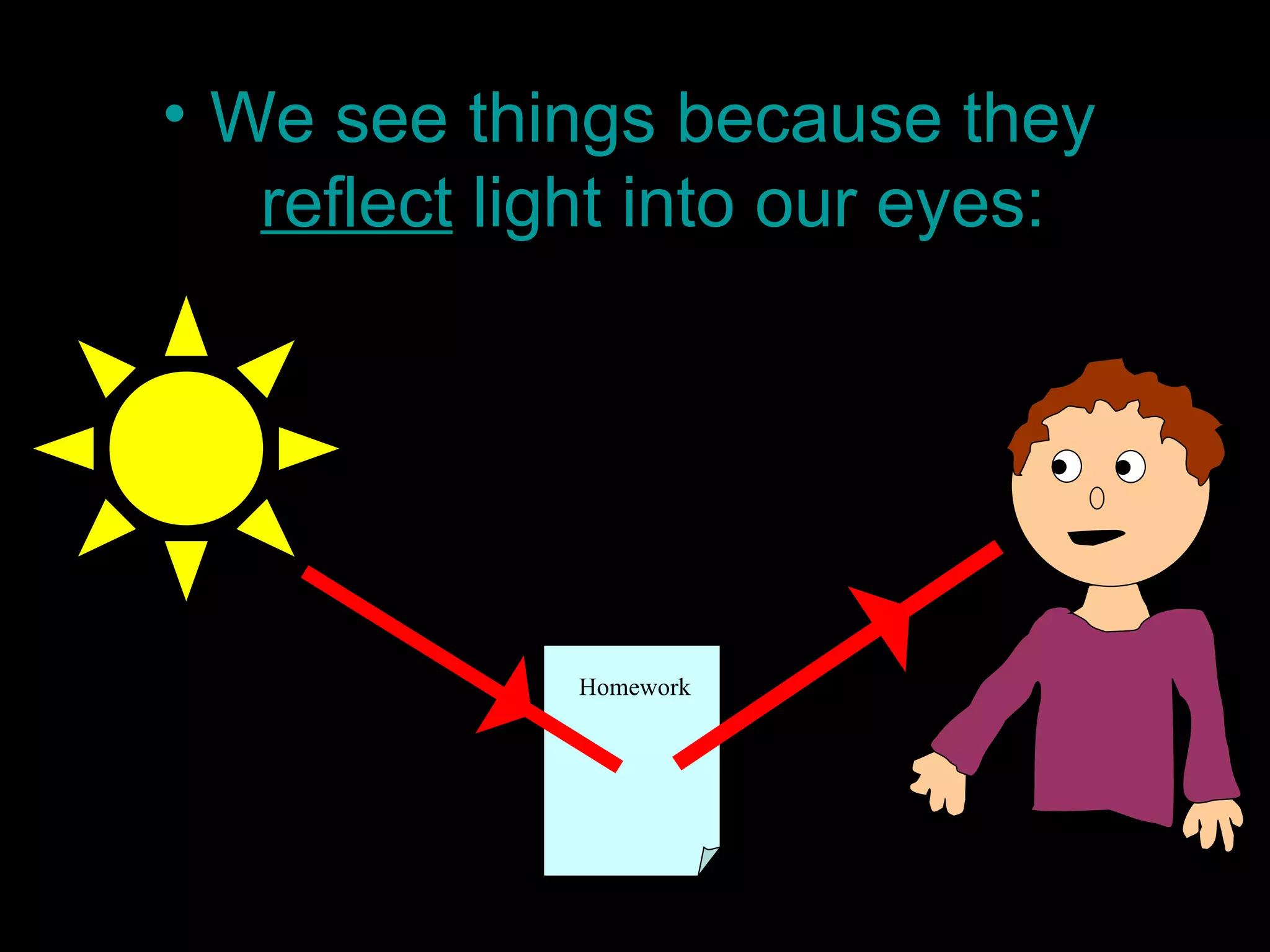
We see things because they  reflect  light into our eyes: Homework
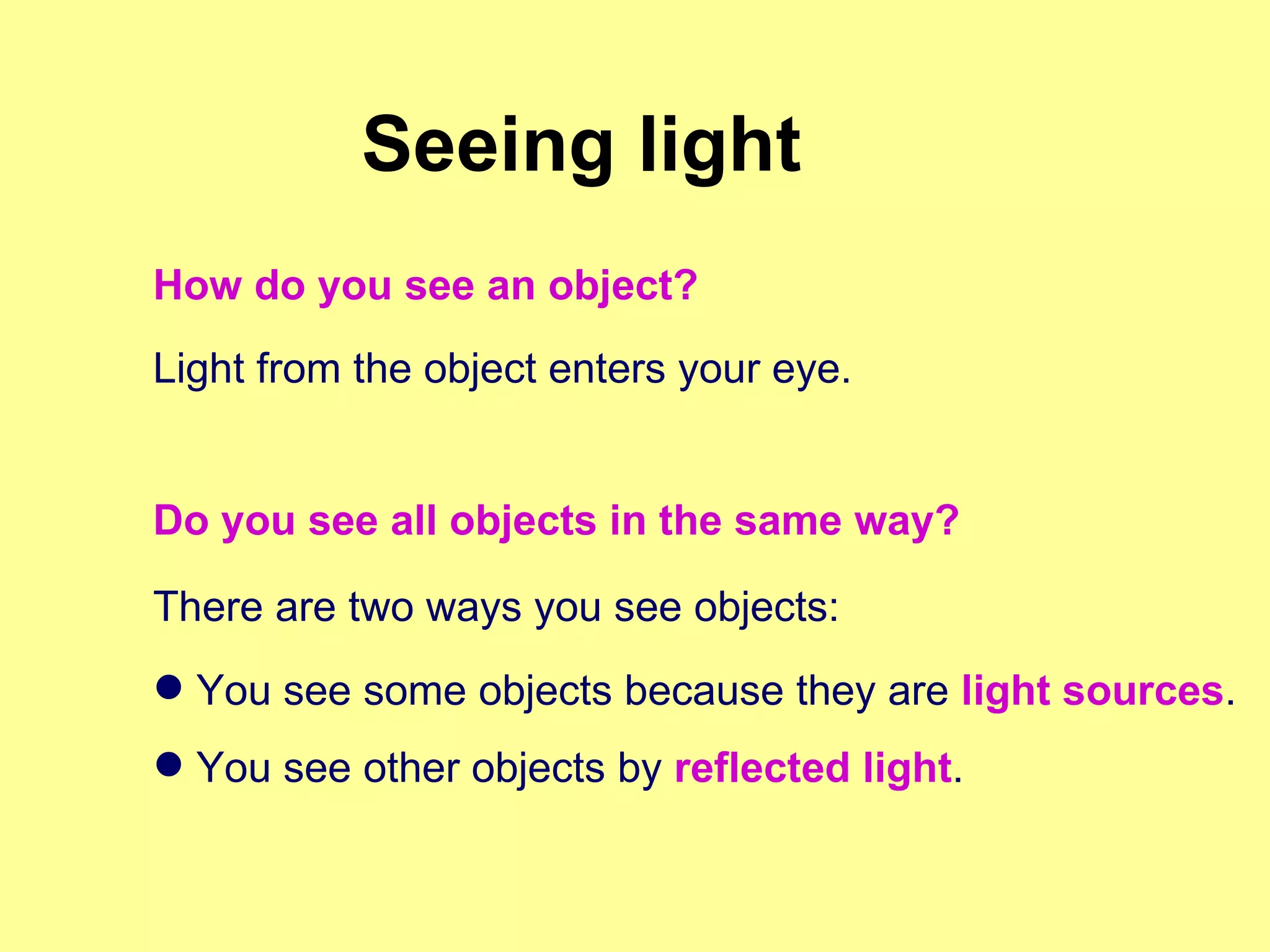
Light from the object enters your eye. Do you see all objects in the same way? There are two ways you see objects: You see some objects because they are  light sources . You see other objects by  reflected light . Seeing light How do you see an object?
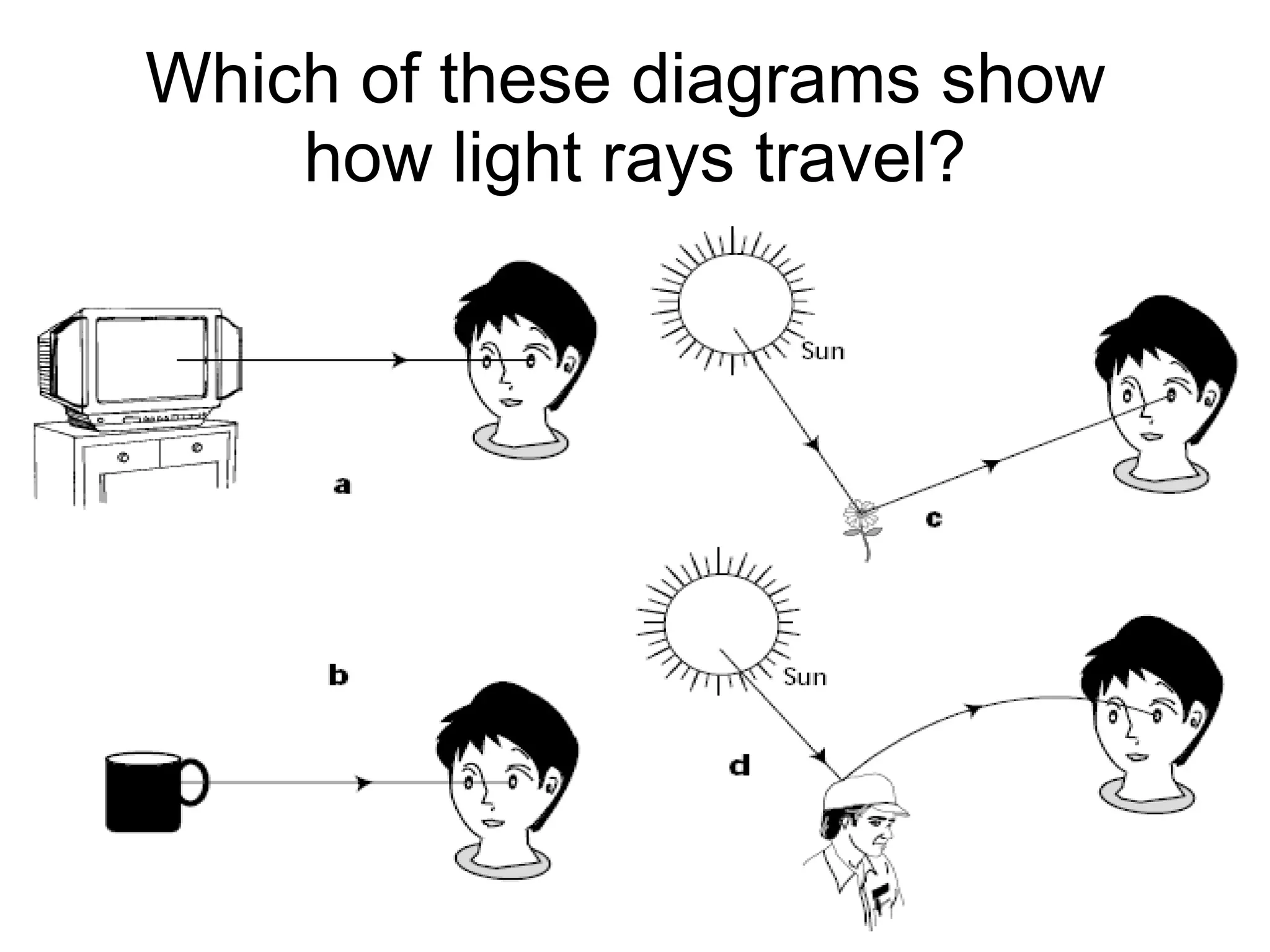
Which of these diagrams show  how light rays travel?
What happens when light  meets an object?  Learning Objectives : To understand that materials may be transparent, translucent or opaque.  To know that light may be absorbed, transmitted or reflected when it hits an object.

02 translucent transparent

  • 1.
    How many ballsare in the jar?
  • 2.
    What happens whenlight meets an object? Learning Objectives : To understand that materials may be transparent, translucent or opaque. To know that light may be absorbed, transmitted or reflected when it hits an object.
  • 3.
    Sort these itemsinto groups. Explain what is happening to the light in each case.
  • 4.
    Fill in thegaps in the sentences below: An object that allows all light to pass through it is called…………………… An object that allows just some light to pass through it is called…………………… An object that allows no light to pass through it is called………………………… translucent transparent opaque transparent translucent opaque
  • 5.
    Match them up!Transparent Translucent Opaque
  • 6.
    Why can’t objectsbe clearly seen through a translucent object? Try to explain this using the diagram.
  • 7.
    It shows onthis diagram that opaque objects absorb light so foil must absorb all the light that falls on it. Is this true? If not, what does happen to the light rays when they meet foil? Why does this mean that it is opaque?
  • 8.
    It shows inthis diagram that all the light rays are transmitted in transparent objects. Glass cannot be transparent then! What else do light rays do when they meet glass? Is he right then?
  • 9.
    8K Light wordsand heavy meanings Match each word to a definition. 1 transparent 2 opaque 3 translucent 4 absorbs 5 emits 6 reflects A light passes through but it is scattered so you cannot see clear images through it B light can pass through C gives out light D light bounces off E blocks light, creates a shadow F ‘soaks up’ light B light can pass through E blocks light, creates a shadow A light passes through but it is scattered so you cannot see clear images through it F ‘soaks up’ light C gives out light D light bounces off
  • 10.
    We see thingsbecause they reflect light into our eyes: Homework
  • 11.
    Light from theobject enters your eye. Do you see all objects in the same way? There are two ways you see objects: You see some objects because they are light sources . You see other objects by reflected light . Seeing light How do you see an object?
  • 12.
    Which of thesediagrams show how light rays travel?
  • 13.
    What happens whenlight meets an object? Learning Objectives : To understand that materials may be transparent, translucent or opaque. To know that light may be absorbed, transmitted or reflected when it hits an object.