Science - Unit :
1 - Natural
Phenomena
Chapter – 1 : Light &
Shadows
Luminous & Non -
Luminous Objects
• The Objects that give off Light are
called Luminous Objects.
• The Objects that don't give off Light
are called Non - Luminous
Objects.
• The Non – Luminous Objects are
made from different Materials.
• Some Materials allow Light to pass
through them and some do not.
Materials
& Light
Transparent
Materials
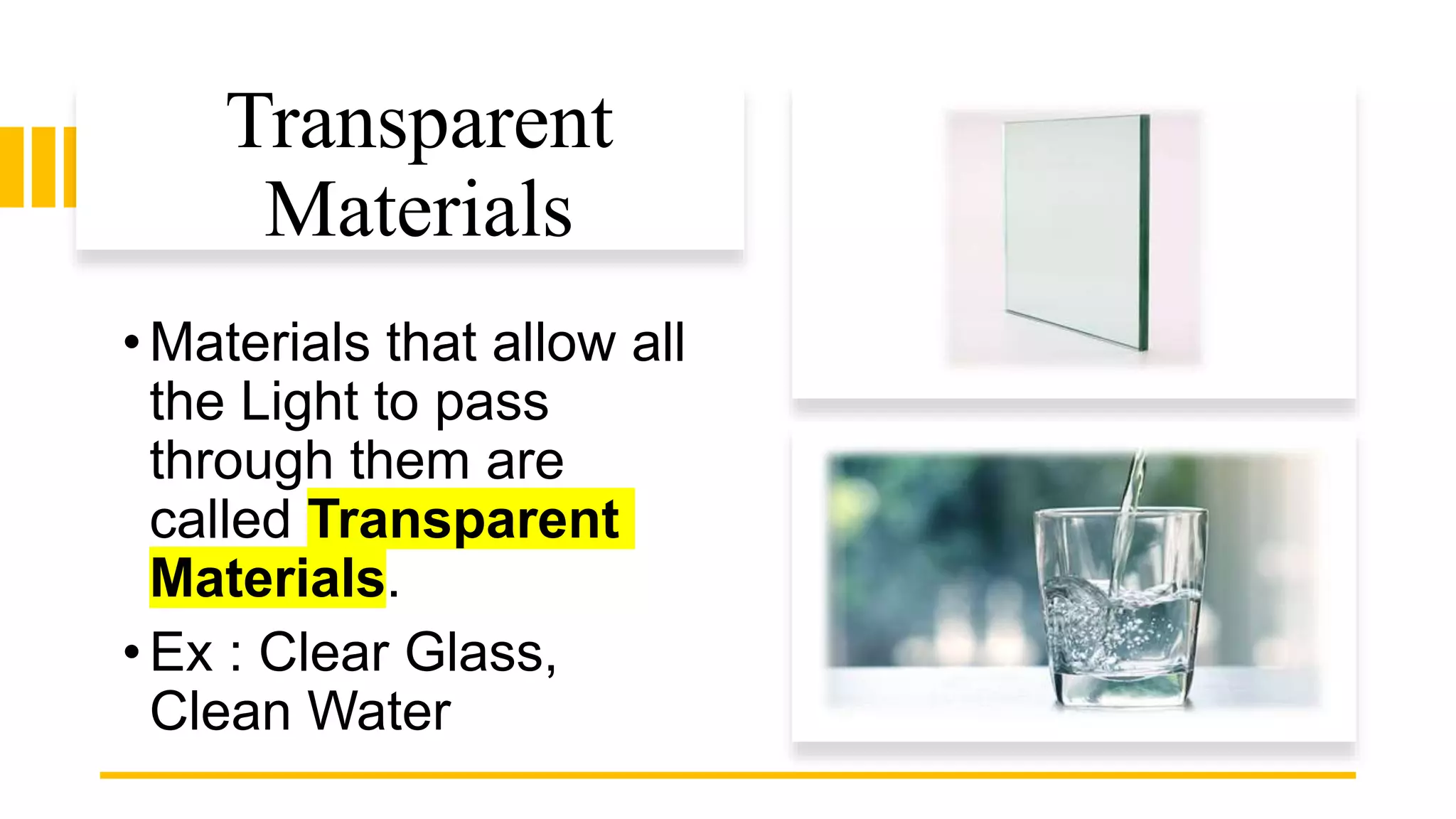
•Materials that allow all
the Light to pass
through them are
called Transparent
Materials.
•Ex : Clear Glass,
Clean Water
Translucent
Materials
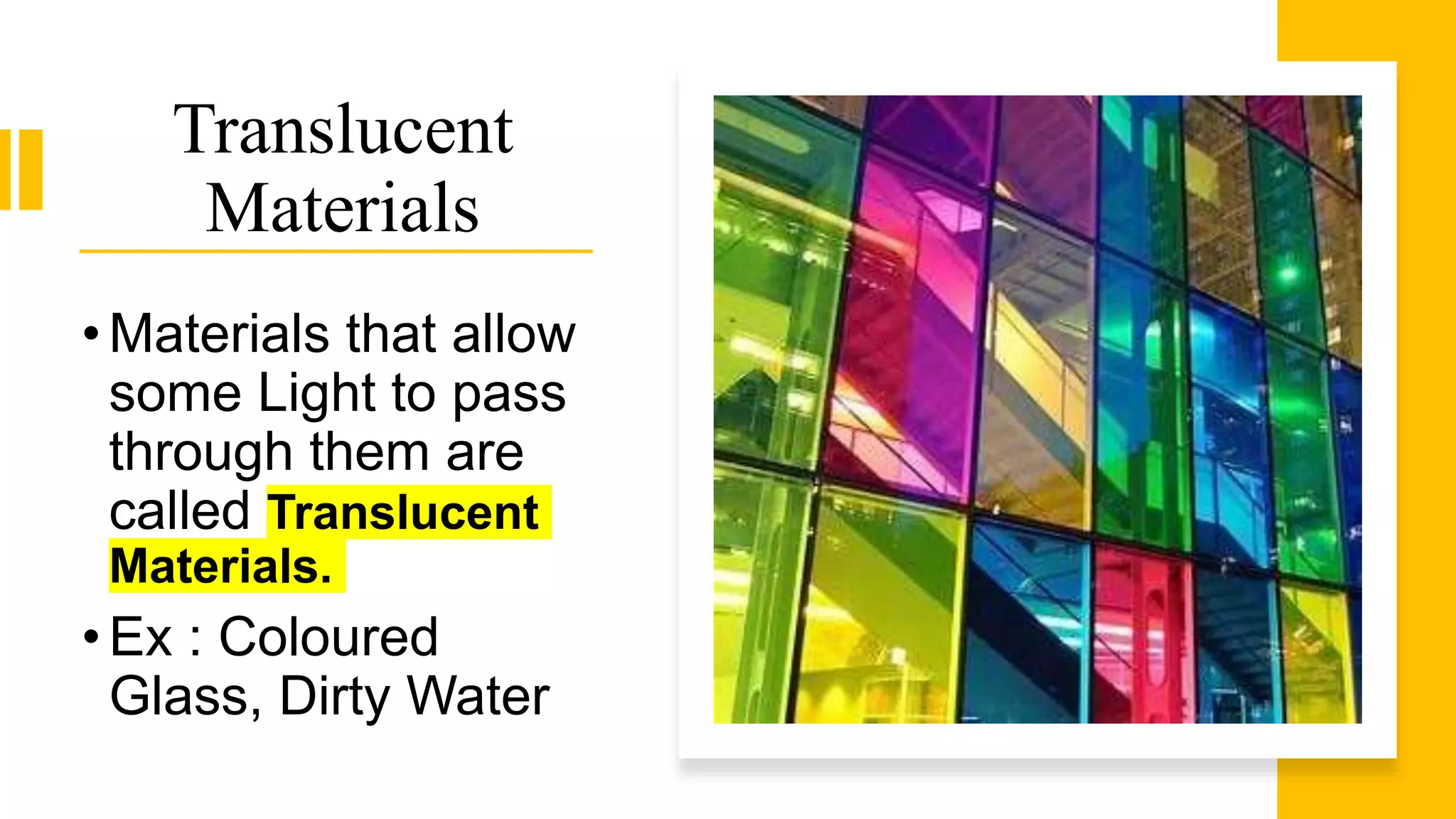
•Materials that allow
some Light to pass
through them are
called Translucent
Materials.
•Ex : Coloured
Glass, Dirty Water
Opaque Materials
• Materials that
completely Block
the Light are called
Opaque
Materials.
• Ex : Mud,
Wood, Mirror
Shadows
Shadow
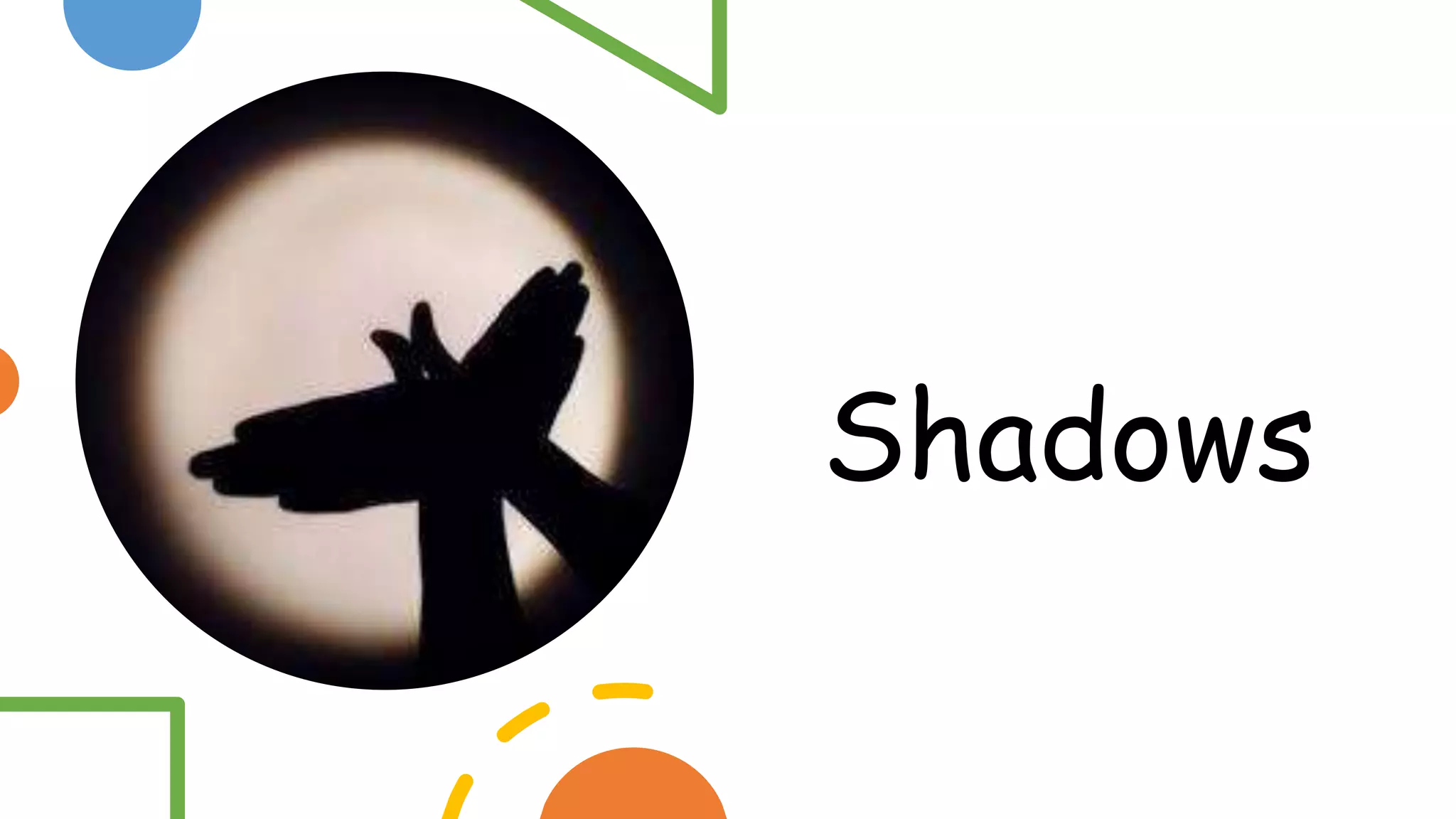
• When a Translucent OR an Opaque Object is placed
before a Source of Light, a Dark Spot is formed on the
opposite side of the Source of Light.
• The Dark Spot is
formed because Translucent Objects Block some
Light, Opaque Objects Bolck the Light completely.
• A Dark Spot formed by a Translucent OR an Opaque
Object, When it Blocks Light is called a Shadow.
3 Things For A Shadow To Form....
A Source of
Light.
A Translucent
OR an Opaque
Object.
A Surface on
which a Shadow
can be Formed.
Features of a
Shadow
Feature - 1
A Shadow is Formed
on the Opposite Side
of the Light Source.
A Shadow is Black
even when the
Object is of any
other colour.
Feature - 2
Feature - 3
The Shadow shows
only the Shape OR
Outline of the Object,
not the Details.
Feature - 4
The Size of a Shadow
depends on the Distance
between the Object & the
Source of Light.

Light & Shadows

  • 1.
    Science - Unit: 1 - Natural Phenomena Chapter – 1 : Light & Shadows
  • 2.
    Luminous & Non- Luminous Objects • The Objects that give off Light are called Luminous Objects. • The Objects that don't give off Light are called Non - Luminous Objects. • The Non – Luminous Objects are made from different Materials. • Some Materials allow Light to pass through them and some do not.
  • 3.
  • 4.
    Transparent Materials •Materials that allowall the Light to pass through them are called Transparent Materials. •Ex : Clear Glass, Clean Water
  • 5.
    Translucent Materials •Materials that allow someLight to pass through them are called Translucent Materials. •Ex : Coloured Glass, Dirty Water
  • 6.
    Opaque Materials • Materialsthat completely Block the Light are called Opaque Materials. • Ex : Mud, Wood, Mirror
  • 7.
  • 8.
    Shadow • When aTranslucent OR an Opaque Object is placed before a Source of Light, a Dark Spot is formed on the opposite side of the Source of Light. • The Dark Spot is formed because Translucent Objects Block some Light, Opaque Objects Bolck the Light completely. • A Dark Spot formed by a Translucent OR an Opaque Object, When it Blocks Light is called a Shadow.
  • 9.
    3 Things ForA Shadow To Form.... A Source of Light. A Translucent OR an Opaque Object. A Surface on which a Shadow can be Formed.
  • 10.
  • 11.
    Feature - 1 AShadow is Formed on the Opposite Side of the Light Source.
  • 12.
    A Shadow isBlack even when the Object is of any other colour. Feature - 2
  • 13.
    Feature - 3 TheShadow shows only the Shape OR Outline of the Object, not the Details.
  • 14.
    Feature - 4 TheSize of a Shadow depends on the Distance between the Object & the Source of Light.