Digestion Learning Objectives : Describe what digestion is. Explain how digestion occurs in humans. Starter : Explain what digestion means to you.
Digestion Digestion is the process by which food is… … Broken down into smaller bits… … And the nutrients are absorbed into the body.
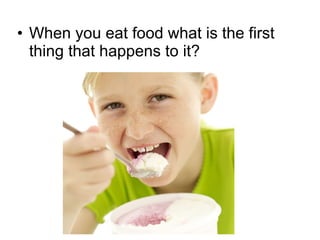
When you eat food what is the first thing that happens to it?
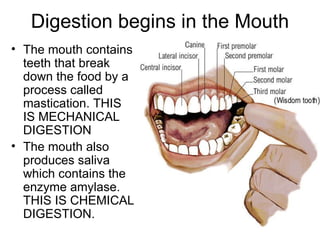
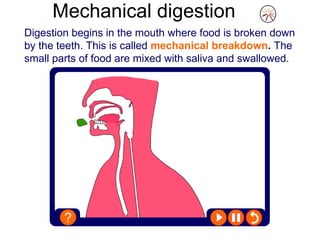
Digestion begins in the Mouth The mouth contains teeth that break down the food by a process called mastication. THIS IS MECHANICAL DIGESTION The mouth also produces saliva which contains the enzyme amylase. THIS IS CHEMICAL DIGESTION.
Digestion begins in the mouth where food is broken down by the teeth. This is called  mechanical breakdown .  The small parts of food are mixed with saliva and swallowed. Mechanical digestion
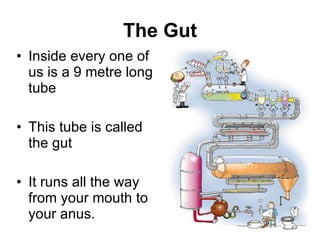
The Gut Inside every one of us is a 9 metre long tube This tube is called the gut It runs all the way from your mouth to your anus.
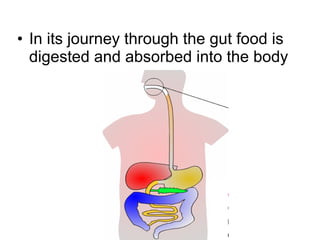
In its journey through the gut food is digested and absorbed into the body
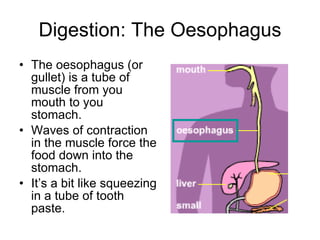
Digestion: The Oesophagus The oesophagus (or gullet) is a tube of muscle from you mouth to you stomach. Waves of contraction in the muscle force the food down into the stomach.  It’s a bit like squeezing in a tube of tooth paste.
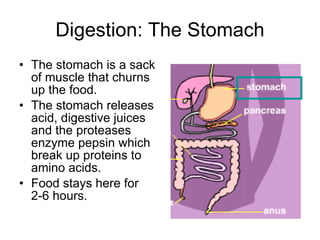
Digestion: The Stomach The stomach is a sack of muscle that churns up the food. The stomach releases acid, digestive juices and the proteases enzyme pepsin which break up proteins to amino acids. Food stays here for 2-6 hours.
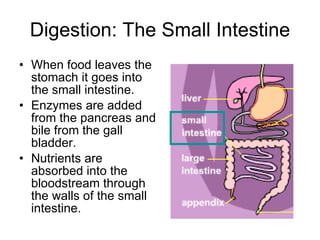
Digestion: The Small Intestine When food leaves the stomach it goes into the small intestine. Enzymes are added from the pancreas and bile from the gall bladder. Nutrients are absorbed into the bloodstream through the walls of the small intestine.
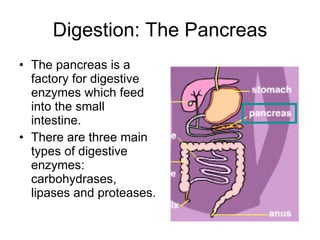
Digestion: The Pancreas The pancreas is a factory for digestive enzymes which feed into the small intestine. There are three main types of digestive enzymes: carbohydrases, lipases and proteases.
Digestion: Enzymes Enzymes and biological catalysts that speed up the rate of a chemical reaction. Digestive enzymes speed up the break down of carbohydrates, fats and proteins into smaller particles so they can be absorbed into the blood stream. Carbohydrases break down carbohydrates into simple sugars. Lipases break down fats (lipids) into fatty acids. Proteases break down proteins into amino acids.
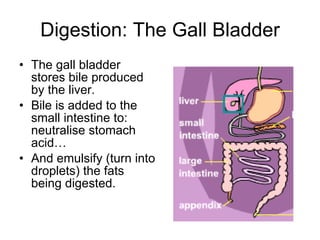
Digestion: The Gall Bladder The gall bladder stores bile produced by the liver. Bile is added to the small intestine to: neutralise stomach acid… And emulsify (turn into droplets) the fats being digested.
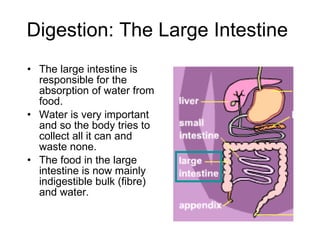
Digestion: The Large Intestine  The large intestine is responsible for the absorption of water from food. Water is very important and so the body tries to collect all it can and waste none. The food in the large intestine is now mainly indigestible bulk (fibre) and water.
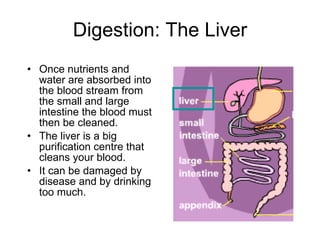
Digestion: The Liver Once nutrients and water are absorbed into the blood stream from the small and large intestine the blood must then be cleaned. The liver is a big purification centre that cleans your blood. It can be damaged by disease and by drinking too much.
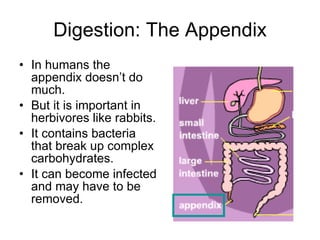
Digestion: The Appendix In humans the appendix doesn’t do much. But it is important in herbivores like rabbits. It contains bacteria that break up complex carbohydrates. It can become infected and may have to be removed.
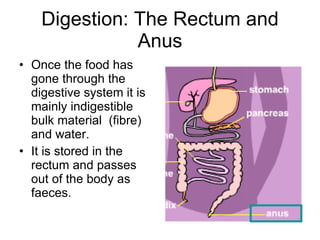
Digestion: The Rectum and Anus Once the food has gone through the digestive system it is mainly indigestible bulk material  (fibre) and water. It is stored in the rectum and passes out of the body as faeces.
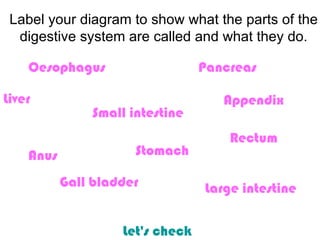
Label your diagram to show what the parts of the digestive system are called and what they do. Small intestine Anus Stomach Pancreas Large intestine Oesophagus Liver Rectum Appendix Gall bladder Let's check
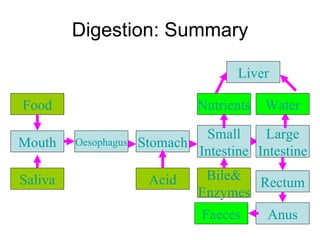
Digestion: Summary Faeces Liver Food Saliva Mouth Oesophagus Stomach Acid Rectum Anus Small Intestine Large Intestine Water Nutrients Bile& Enzymes
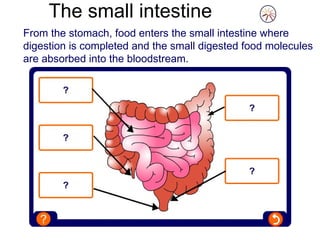
From the stomach, food enters the small intestine where digestion is completed and the small digested food molecules are absorbed into the bloodstream. The small intestine
Digestion Learning Objectives : Describe what digestion is. Explain how digestion occurs in humans.

Y7 Life 09 digestion

  • 1.
    Digestion Learning Objectives: Describe what digestion is. Explain how digestion occurs in humans. Starter : Explain what digestion means to you.
  • 2.
    Digestion Digestion isthe process by which food is… … Broken down into smaller bits… … And the nutrients are absorbed into the body.
  • 3.
    When you eatfood what is the first thing that happens to it?
  • 4.
    Digestion begins inthe Mouth The mouth contains teeth that break down the food by a process called mastication. THIS IS MECHANICAL DIGESTION The mouth also produces saliva which contains the enzyme amylase. THIS IS CHEMICAL DIGESTION.
  • 5.
    Digestion begins inthe mouth where food is broken down by the teeth. This is called mechanical breakdown . The small parts of food are mixed with saliva and swallowed. Mechanical digestion
  • 6.
    The Gut Insideevery one of us is a 9 metre long tube This tube is called the gut It runs all the way from your mouth to your anus.
  • 7.
    In its journeythrough the gut food is digested and absorbed into the body
  • 8.
    Digestion: The OesophagusThe oesophagus (or gullet) is a tube of muscle from you mouth to you stomach. Waves of contraction in the muscle force the food down into the stomach. It’s a bit like squeezing in a tube of tooth paste.
  • 9.
    Digestion: The StomachThe stomach is a sack of muscle that churns up the food. The stomach releases acid, digestive juices and the proteases enzyme pepsin which break up proteins to amino acids. Food stays here for 2-6 hours.
  • 10.
    Digestion: The SmallIntestine When food leaves the stomach it goes into the small intestine. Enzymes are added from the pancreas and bile from the gall bladder. Nutrients are absorbed into the bloodstream through the walls of the small intestine.
  • 11.
    Digestion: The PancreasThe pancreas is a factory for digestive enzymes which feed into the small intestine. There are three main types of digestive enzymes: carbohydrases, lipases and proteases.
  • 12.
    Digestion: Enzymes Enzymesand biological catalysts that speed up the rate of a chemical reaction. Digestive enzymes speed up the break down of carbohydrates, fats and proteins into smaller particles so they can be absorbed into the blood stream. Carbohydrases break down carbohydrates into simple sugars. Lipases break down fats (lipids) into fatty acids. Proteases break down proteins into amino acids.
  • 13.
    Digestion: The GallBladder The gall bladder stores bile produced by the liver. Bile is added to the small intestine to: neutralise stomach acid… And emulsify (turn into droplets) the fats being digested.
  • 14.
    Digestion: The LargeIntestine The large intestine is responsible for the absorption of water from food. Water is very important and so the body tries to collect all it can and waste none. The food in the large intestine is now mainly indigestible bulk (fibre) and water.
  • 15.
    Digestion: The LiverOnce nutrients and water are absorbed into the blood stream from the small and large intestine the blood must then be cleaned. The liver is a big purification centre that cleans your blood. It can be damaged by disease and by drinking too much.
  • 16.
    Digestion: The AppendixIn humans the appendix doesn’t do much. But it is important in herbivores like rabbits. It contains bacteria that break up complex carbohydrates. It can become infected and may have to be removed.
  • 17.
    Digestion: The Rectumand Anus Once the food has gone through the digestive system it is mainly indigestible bulk material (fibre) and water. It is stored in the rectum and passes out of the body as faeces.
  • 18.
    Label your diagramto show what the parts of the digestive system are called and what they do. Small intestine Anus Stomach Pancreas Large intestine Oesophagus Liver Rectum Appendix Gall bladder Let's check
  • 19.
    Digestion: Summary FaecesLiver Food Saliva Mouth Oesophagus Stomach Acid Rectum Anus Small Intestine Large Intestine Water Nutrients Bile& Enzymes
  • 20.
    From the stomach,food enters the small intestine where digestion is completed and the small digested food molecules are absorbed into the bloodstream. The small intestine
  • 21.
    Digestion Learning Objectives: Describe what digestion is. Explain how digestion occurs in humans.