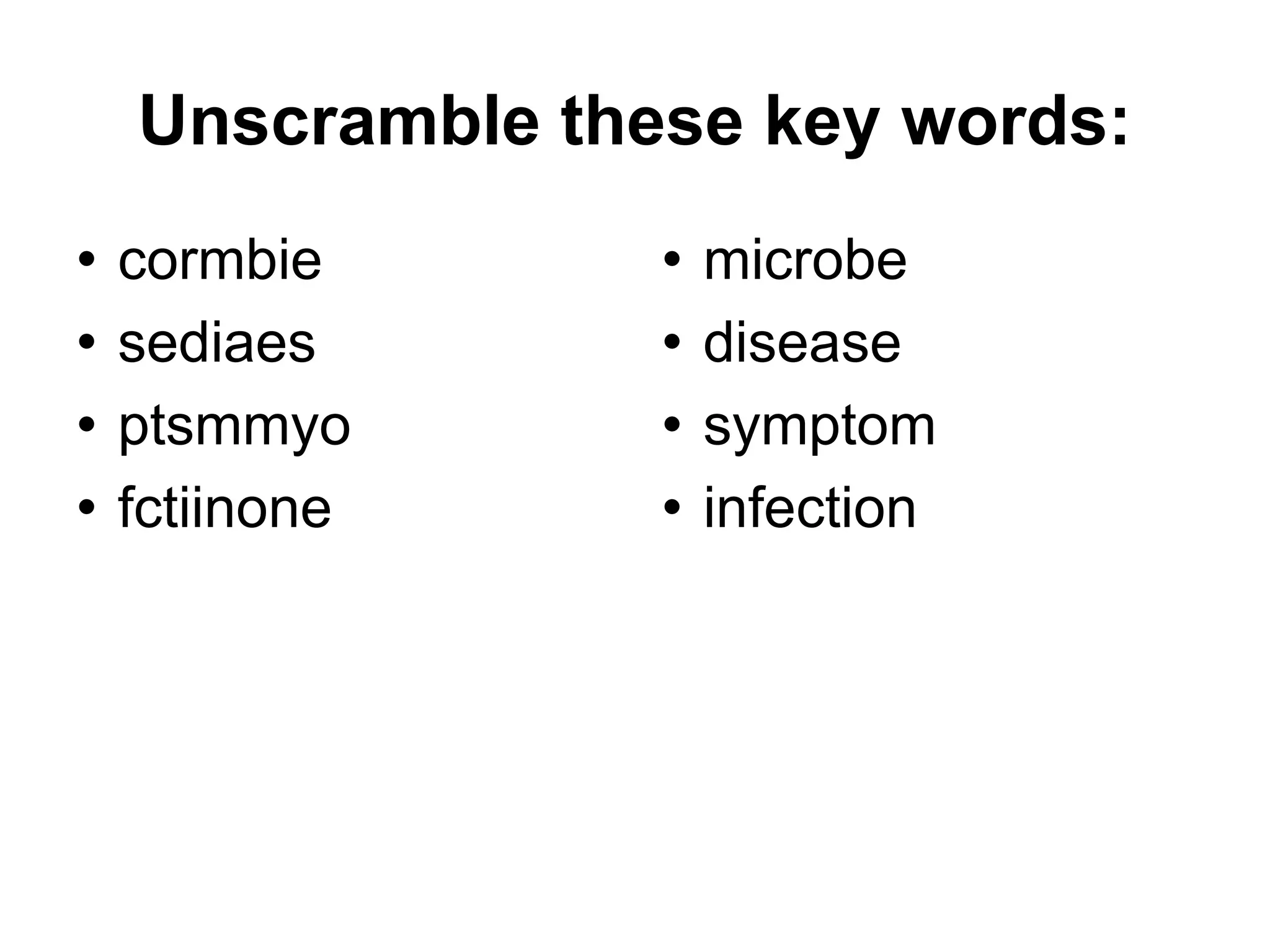
Unscramble these key words: cormbie sediaes ptsmmyo fctiinone microbe disease symptom infection
Name 5 diseases Discuss with your partner
Studying Diseases Learning Objectives : Understand that infectious diseases are spread by microbes. Know that there are three main types of microbes. Explain the causes of disease.
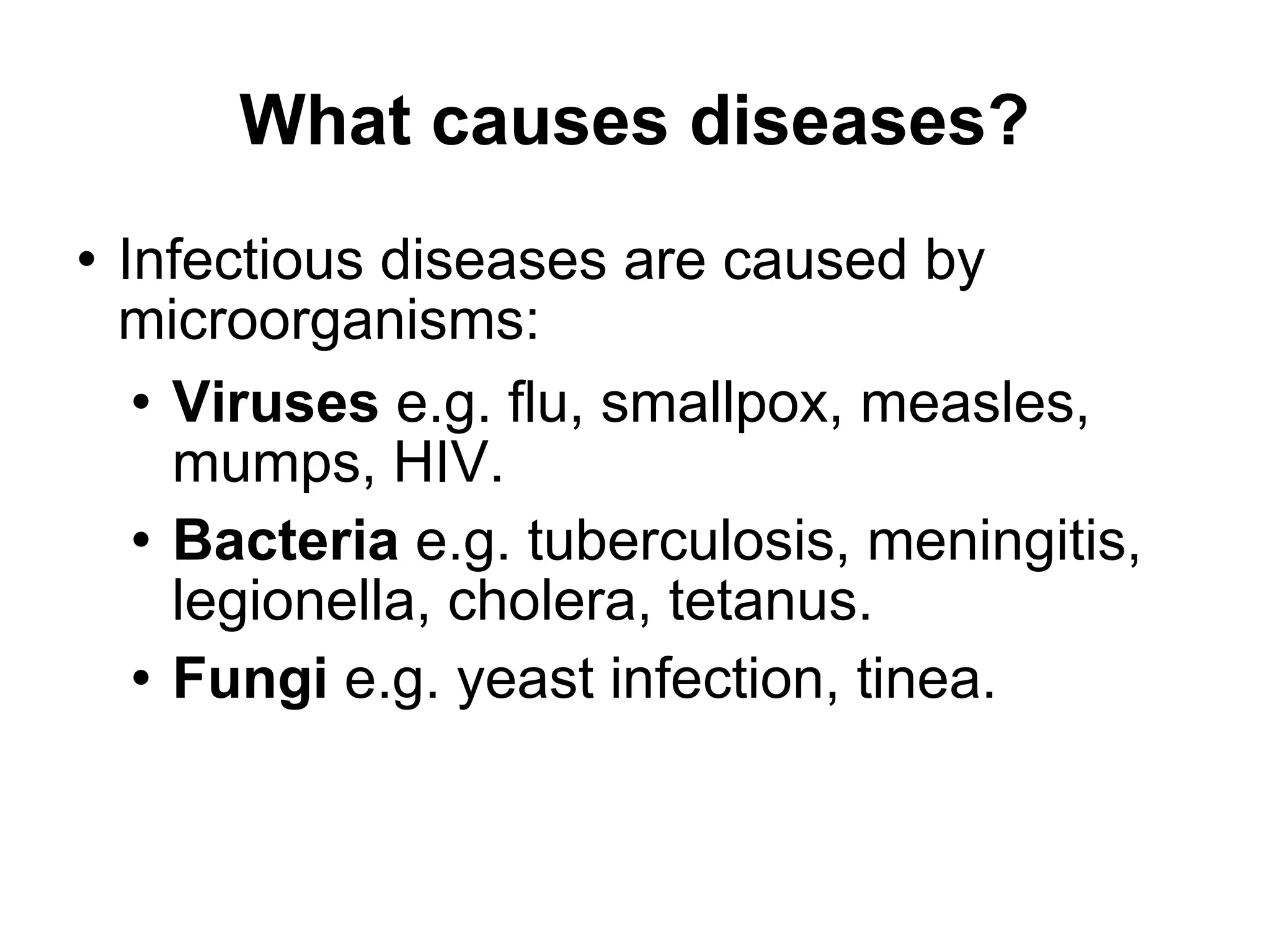
What causes diseases? Infectious diseases are caused by microorganisms: Viruses  e.g. flu, smallpox, measles, mumps, HIV. Bacteria  e.g. tuberculosis, meningitis, legionella, cholera, tetanus. Fungi  e.g. yeast infection, tinea.
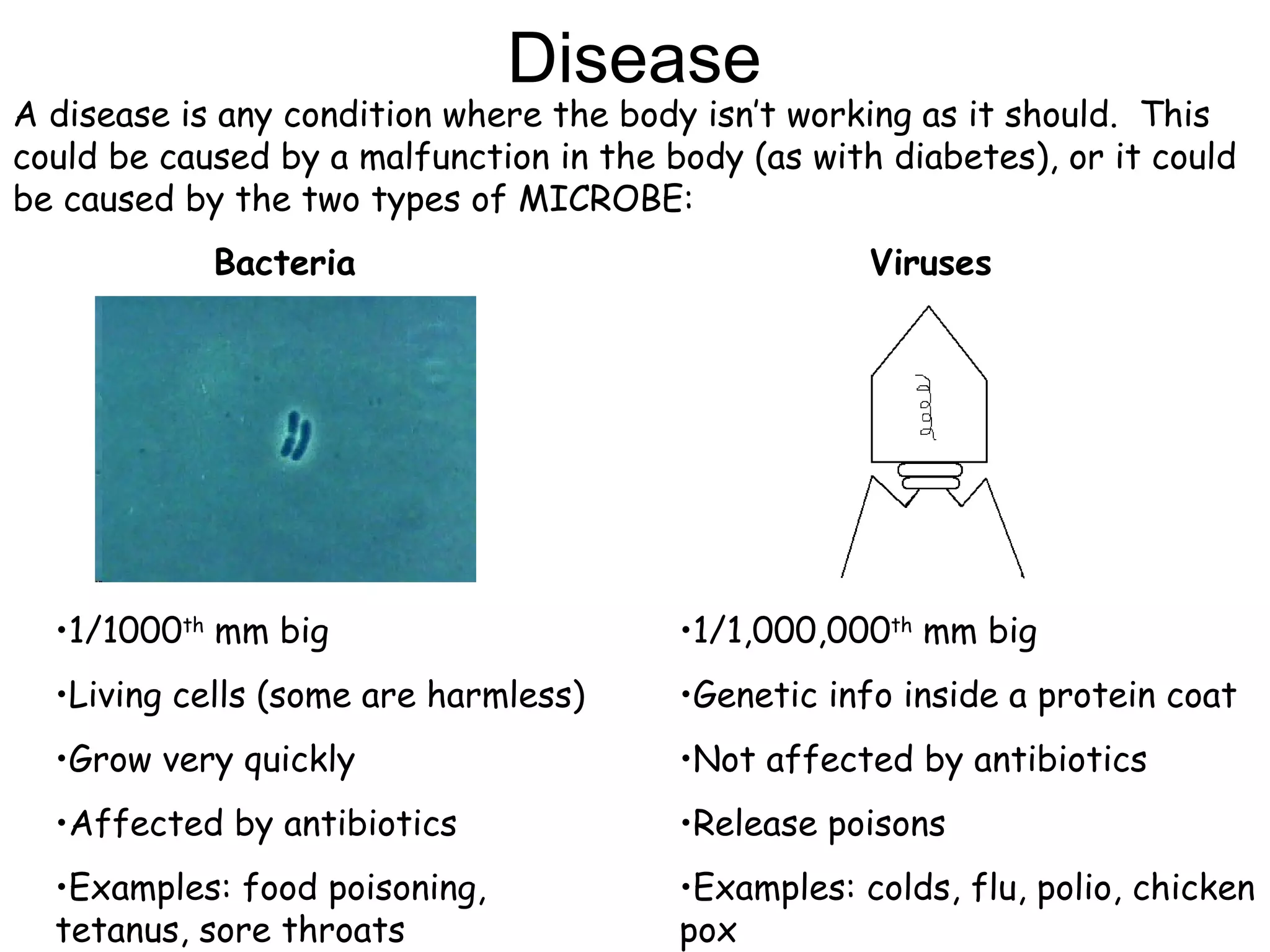
Disease A disease is any condition where the body isn’t working as it should.  This could be caused by a malfunction in the body (as with diabetes), or it could be caused by the two types of MICROBE: Viruses Bacteria 1/1000 th  mm big Living cells (some are harmless) Grow very quickly Affected by antibiotics Examples: food poisoning, tetanus, sore throats 1/1,000,000 th  mm big Genetic info inside a protein coat Not affected by antibiotics Release poisons Examples: colds, flu, polio, chicken pox
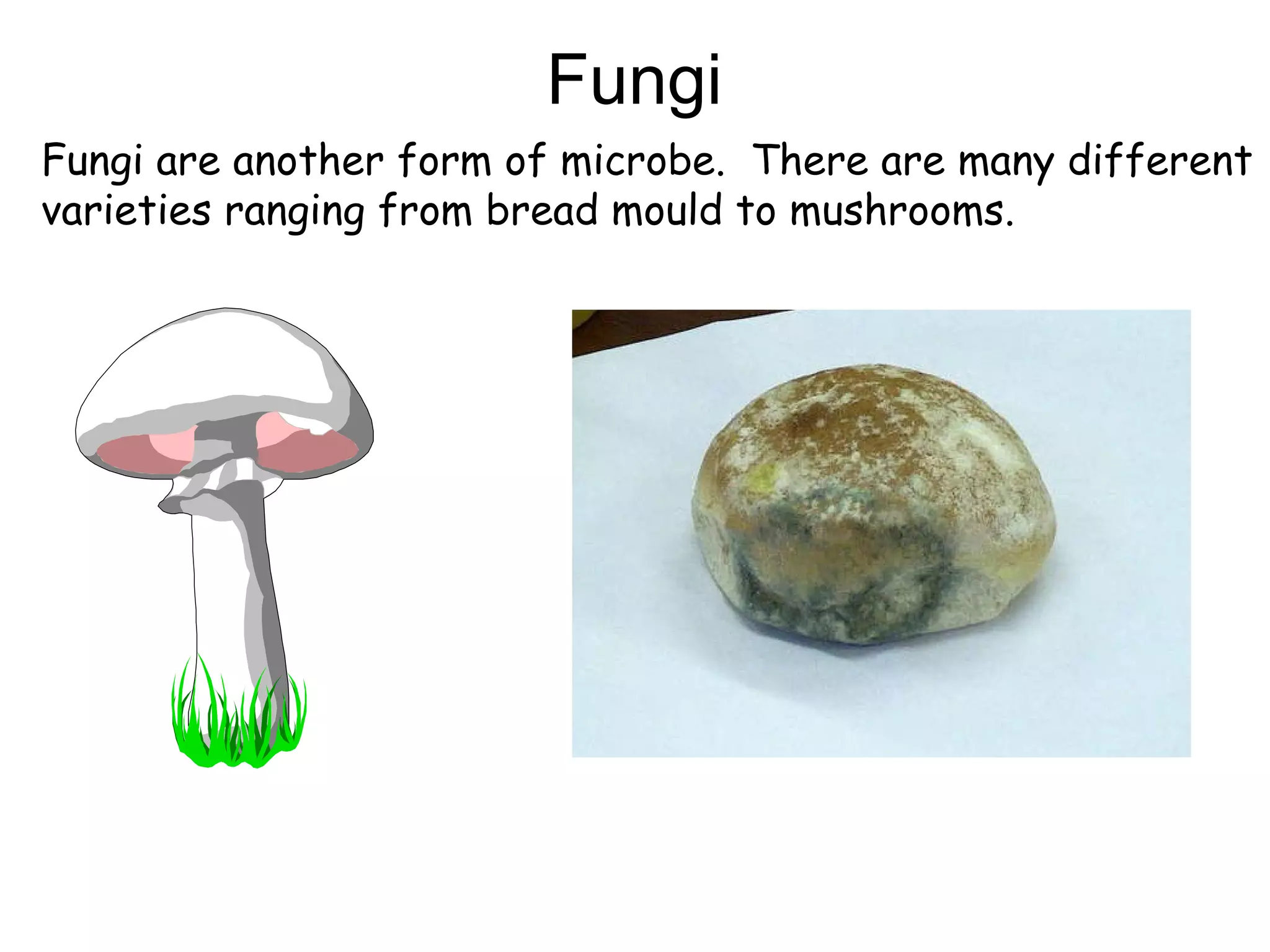
Fungi Fungi are another form of microbe.  There are many different varieties ranging from bread mould to mushrooms.
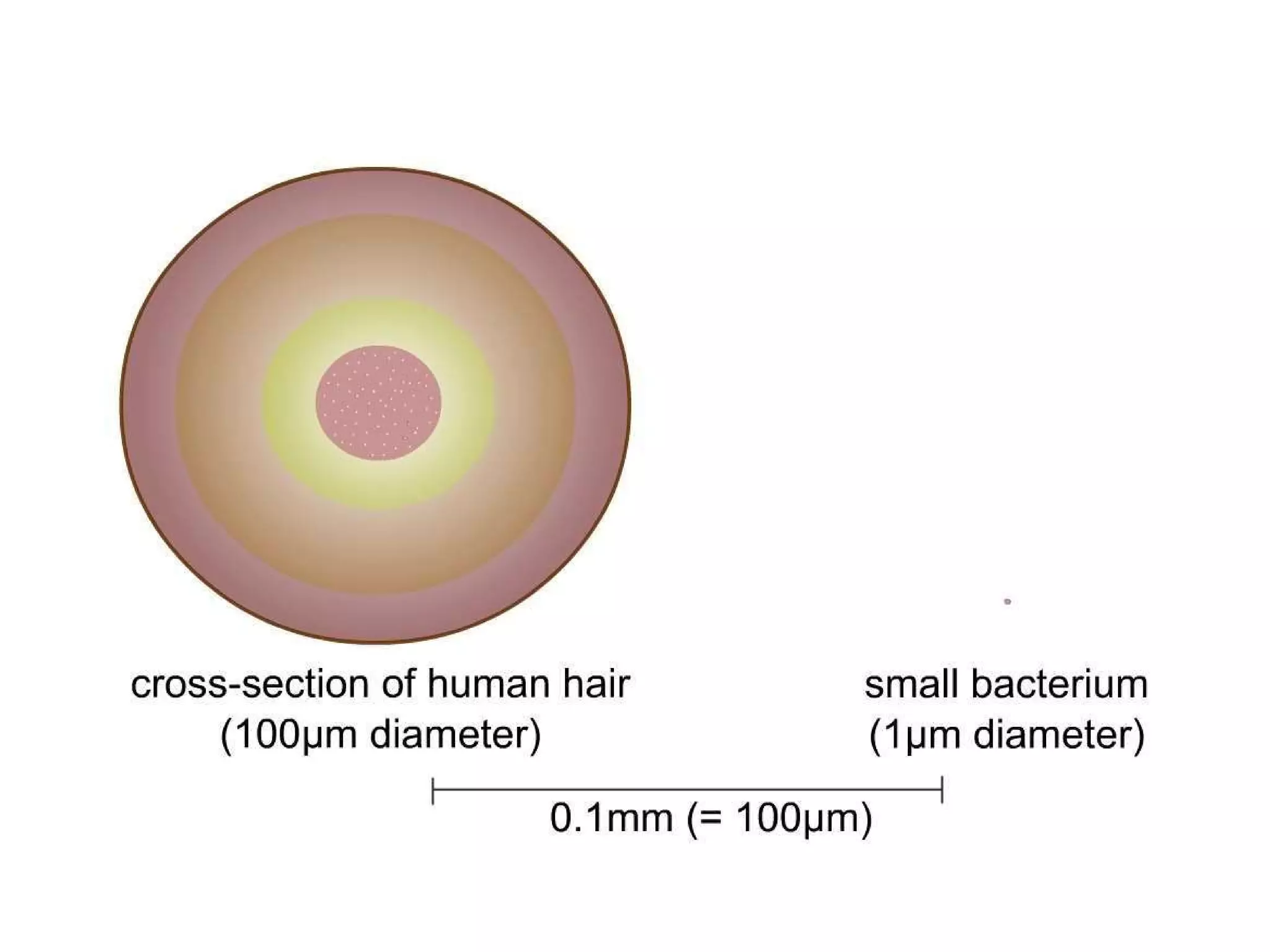
8C Getting smaller!
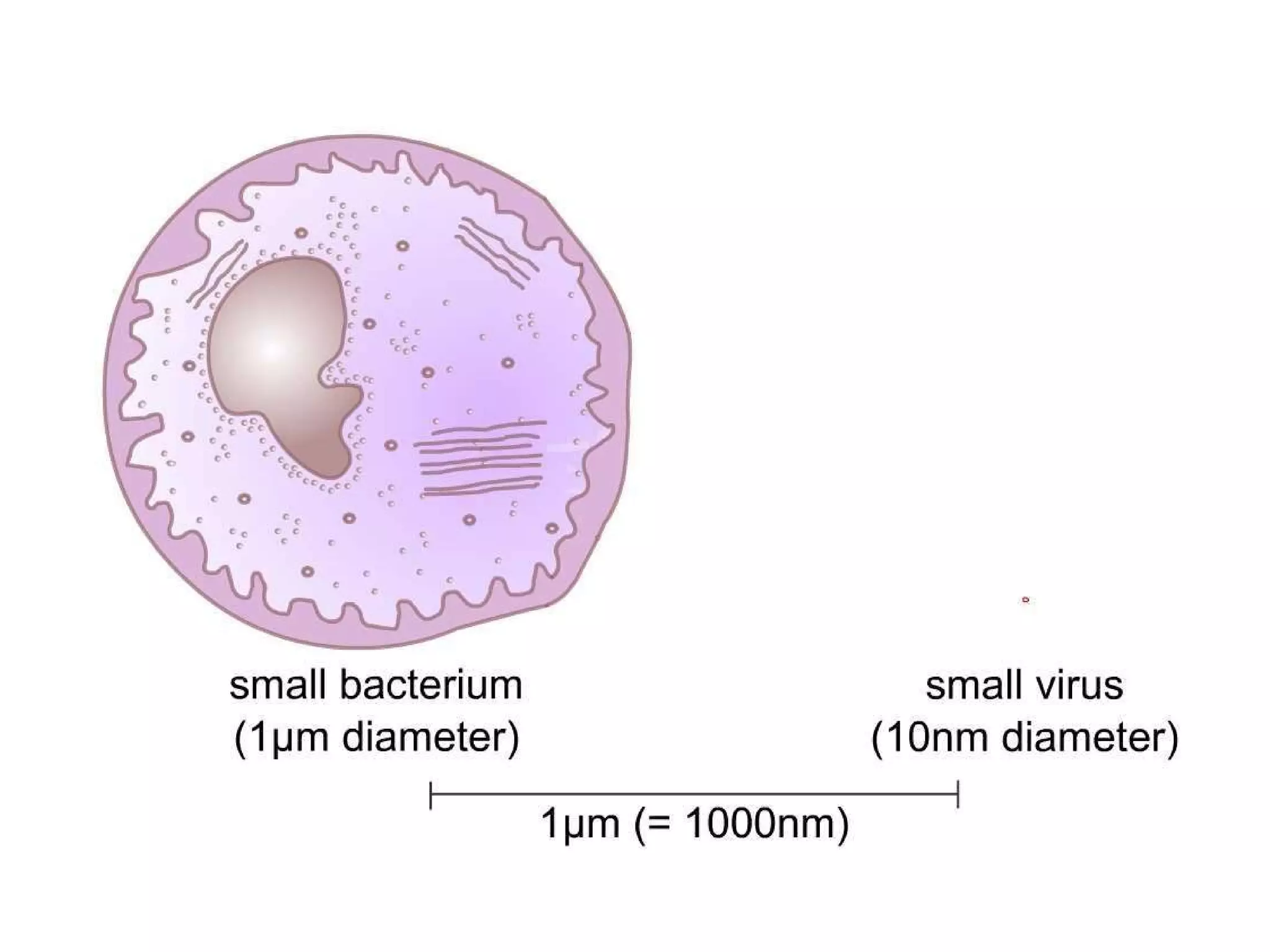
8C Even smaller!
8C Bacteria or viruses?
How are diseases spread? Malaria is caused by any one of four species of one-celled parasites, called  Plasmodium .  The parasite is spread to people by the female  Anopheles  mosquito, which feeds on human blood.
How are diseases spread? Athlete’s foot is a fungal infection. It can lead to intense itching, cracked, blistered or peeling areas of skin, redness and scaling. Spreads easily, typically communal areas such as pools, showers and changing rooms or anywhere where you may walk around barefooted
Think of another infection Describe how it is spread - write it in your book.
Growing Microorganisms What do microorganisms need to be able to grow and replicate? Food Water Warmth
Doubling every time If you start with just one microorganism In ideal conditions bacteria reproduce about every 20 minutes. Work out how many bacteria could be made in a school day.
8C Catch that! Match each sentence with the correct ending: 1   Chicken pox can be spread by…   2   Salmonella can be spread by...    3   Hepatitis and HIV can be spread by...     4   Colds and flu can be spread by… 5   Typhoid and gastro-enteritis can be spread by… 6   Syphilis and HIV can be spread by… A … blood transfer.   B … sexual intercourse.   C … touch.   D … eating contaminated food. E … drinking contaminated water. F … droplets from a cough or sneeze. C … touch. D … eating contaminated food. A … blood transfer.   F … droplets from a cough or sneeze. E … drinking contaminated water.   B … sexual intercourse.
1. All bacteria cause illness. 2.   Viruses can only reproduce inside living cells. 3.   We can eat some fungi. 4.   Live yoghurt contains living bacteria. 5.   Antibiotics can destroy viruses. 8C Tiny truths and little lies True or False? FALSE TRUE TRUE  TRUE  FALSE
8C Tiny truths and little lies True or False? FALSE TRUE TRUE TRUE FALSE 1.   Viruses are bigger than bacteria. 2.   We can see some fungi with the naked eye. 3.   Viruses inject their genetic material into living cells. 4.   Microbes grow easily in raw or cooked food left in a warm place. 5.   Micro means ‘causes disease’.
Studying Diseases Learning Objectives : Understand that infectious diseases are spread by microbes. Know that there are three main types of microbes. Explain the causes of disease.

Y8 Humans 10 infectious diseases

  • 1.
    Unscramble these keywords: cormbie sediaes ptsmmyo fctiinone microbe disease symptom infection
  • 2.
    Name 5 diseasesDiscuss with your partner
  • 3.
    Studying Diseases LearningObjectives : Understand that infectious diseases are spread by microbes. Know that there are three main types of microbes. Explain the causes of disease.
  • 4.
    What causes diseases?Infectious diseases are caused by microorganisms: Viruses e.g. flu, smallpox, measles, mumps, HIV. Bacteria e.g. tuberculosis, meningitis, legionella, cholera, tetanus. Fungi e.g. yeast infection, tinea.
  • 5.
    Disease A diseaseis any condition where the body isn’t working as it should. This could be caused by a malfunction in the body (as with diabetes), or it could be caused by the two types of MICROBE: Viruses Bacteria 1/1000 th mm big Living cells (some are harmless) Grow very quickly Affected by antibiotics Examples: food poisoning, tetanus, sore throats 1/1,000,000 th mm big Genetic info inside a protein coat Not affected by antibiotics Release poisons Examples: colds, flu, polio, chicken pox
  • 6.
    Fungi Fungi areanother form of microbe. There are many different varieties ranging from bread mould to mushrooms.
  • 7.
  • 8.
  • 9.
  • 10.
    How are diseasesspread? Malaria is caused by any one of four species of one-celled parasites, called Plasmodium . The parasite is spread to people by the female Anopheles mosquito, which feeds on human blood.
  • 11.
    How are diseasesspread? Athlete’s foot is a fungal infection. It can lead to intense itching, cracked, blistered or peeling areas of skin, redness and scaling. Spreads easily, typically communal areas such as pools, showers and changing rooms or anywhere where you may walk around barefooted
  • 12.
    Think of anotherinfection Describe how it is spread - write it in your book.
  • 13.
    Growing Microorganisms Whatdo microorganisms need to be able to grow and replicate? Food Water Warmth
  • 14.
    Doubling every timeIf you start with just one microorganism In ideal conditions bacteria reproduce about every 20 minutes. Work out how many bacteria could be made in a school day.
  • 15.
    8C Catch that!Match each sentence with the correct ending: 1 Chicken pox can be spread by…   2 Salmonella can be spread by...    3 Hepatitis and HIV can be spread by...     4 Colds and flu can be spread by… 5 Typhoid and gastro-enteritis can be spread by… 6 Syphilis and HIV can be spread by… A … blood transfer.   B … sexual intercourse.   C … touch.   D … eating contaminated food. E … drinking contaminated water. F … droplets from a cough or sneeze. C … touch. D … eating contaminated food. A … blood transfer.   F … droplets from a cough or sneeze. E … drinking contaminated water. B … sexual intercourse.
  • 16.
    1. All bacteriacause illness. 2. Viruses can only reproduce inside living cells. 3. We can eat some fungi. 4. Live yoghurt contains living bacteria. 5. Antibiotics can destroy viruses. 8C Tiny truths and little lies True or False? FALSE TRUE TRUE TRUE FALSE
  • 17.
    8C Tiny truthsand little lies True or False? FALSE TRUE TRUE TRUE FALSE 1. Viruses are bigger than bacteria. 2. We can see some fungi with the naked eye. 3. Viruses inject their genetic material into living cells. 4. Microbes grow easily in raw or cooked food left in a warm place. 5. Micro means ‘causes disease’.
  • 18.
    Studying Diseases LearningObjectives : Understand that infectious diseases are spread by microbes. Know that there are three main types of microbes. Explain the causes of disease.