Renaissance Paintings
Focus on
Leonardo Da Vinci &
Michelangelo
•Renaissance art is the paintings
sculpture and decorative art of
renaissance period
•The wave of renaissance art was
emerged in Italy in around 1400
century.
•Painter and architect Giotto di
Bondone(1267-1337). One of the
forerunners of the Renaissance.
•Renaissance art was developed
in parallel with developments in
philosophy, literature, music and
science.
Giotto di Bondone(1267-1337)
•In renaissance period the laws of liner perspective were
discovered and employed in paintings
•It gives the fullest sense of a painting
•Church was no longer the only savior of the artists
•Painters were started backed by the rich nobles and
aristocrats
•Along with biblical themed artworks, nonreligious themed
paintings became popular as subject matter of paintings
•The technique of oil painting was introduced in 15th
century
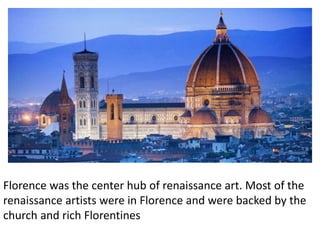
Florence was the center hub of renaissance art. Most of the
renaissance artists were in Florence and were backed by the
church and rich Florentines
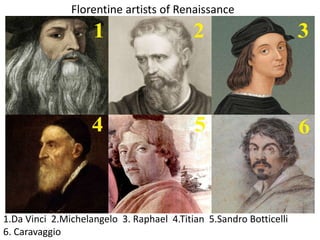
Florentine artists of Renaissance
1.Da Vinci 2.Michelangelo 3. Raphael 4.Titian 5.Sandro Botticelli
6. Caravaggio
Leonardo da Vinci
Leonardo da Vinci
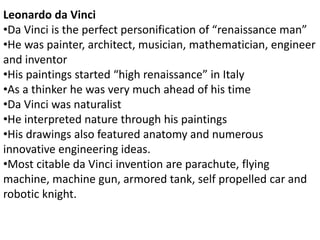
•Da Vinci is the perfect personification of “renaissance man”
•He was painter, architect, musician, mathematician, engineer
and inventor
•His paintings started “high renaissance” in Italy
•As a thinker he was very much ahead of his time
•Da Vinci was naturalist
•He interpreted nature through his paintings
•His drawings also featured anatomy and numerous
innovative engineering ideas.
•Most citable da Vinci invention are parachute, flying
machine, machine gun, armored tank, self propelled car and
robotic knight.
Leonardo's Virgin of the Rocks demonstrates his
interest in nature
Mona Lisa, Leonardo da
Vinci's most renowned
masterpiece. With her
secret smile Mona Lisa
still puzzles us.
The Last Supper is Vinci's study of psychological reactions.
Last Supper depicts Jesus Christ tells His followers that one of
them will kill him. In Last Supper Vinci wanted to portray the
mixed emotions of surprise, horror, and guilt of human kind.
Vinci's drawing the Vitruvian Man depicts ideal human
proportions with geometry described by the ancient
Roman architect Vitruvius.
Vinci's innovative ideas were 500 years ahead of his time. Da Vinci's Notebook
contains his advanced innovative drawings about 1.Self propelled cart 2. Flying
machine 3.Parachute 4. Armored tank 5.Robotic knight 6. Triple barrel cannon
Drawing of the human fetus in
uterus from Da Vinci's anatomical
notebooks
Da Vinci's anatomical study of
shoulder and neck
Leonardo's Aerial Screw
Though the first actual helicopter wasn’t built until the 1940s, it is
believed that Leonardo da Vinci’s sketches from the late fifteenth
century were the predecessor to the modern day flying machine
Michelangelo
•Painter, sculpture, poet and
architect Michelangelo was
another towering figure of high
renaissance
•Unlike Leonardo he was an
idealist
•At the center of his all paintings
is the human figure
•His human figures are powerful
colossal and magnificent
•Michelangelo applied classical
Greek style of painting in his
various biblical themed artwork.
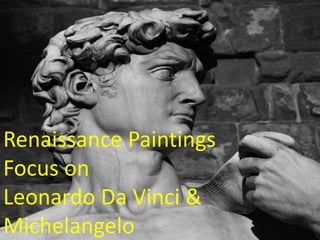
David is a masterpiece of Michelangelo created between 1501 and 1504
represents the Biblical hero David, a favored subject in the art of Florence
The last judgment
Michelangelo painted on the ceiling of the
Sistine chapel in Rome from 1508 to 1512
depicting scenes from the book of Genesis.
The Pietà is a subject in Christian art
depicting the Virgin Mary cradling the
dead body of Jesus
The Moses (1513–1515) housed in the
church of San Pietro in Rome. in 1505
Commissioned by Pope Julius II for his tomb
Michelangelo's The creation of Adam depicts philosophical
questions into the meaning of life and the universe.
It represents renaissance realism at its height .
•Renaissance architecture had its roots in
the past
•In renaissance period Painting style,
sculpture and new building style was
eclectic
• Italian renaissance art got inspiration
from Greek gothic and ancient roman
style
•Renaissance artists wanted to rediscover
the hidden mysterious of the soul and
the universe and the were worshiper of
beauty
The Villa Rotonda a
highly influential
renaissance
architecture drew for
inspiration on the
Roman pantheon. It
shows renaissance art
actually rejuvenated
the past and searched
inspiration in the past
Pantheon in Rome was
built in 118-128 AD
End of the Slides

Renaissance paintings

  • 1.
  • 2.
    •Renaissance art isthe paintings sculpture and decorative art of renaissance period •The wave of renaissance art was emerged in Italy in around 1400 century. •Painter and architect Giotto di Bondone(1267-1337). One of the forerunners of the Renaissance. •Renaissance art was developed in parallel with developments in philosophy, literature, music and science. Giotto di Bondone(1267-1337)
  • 3.
    •In renaissance periodthe laws of liner perspective were discovered and employed in paintings •It gives the fullest sense of a painting •Church was no longer the only savior of the artists •Painters were started backed by the rich nobles and aristocrats •Along with biblical themed artworks, nonreligious themed paintings became popular as subject matter of paintings •The technique of oil painting was introduced in 15th century
  • 4.
    Florence was thecenter hub of renaissance art. Most of the renaissance artists were in Florence and were backed by the church and rich Florentines
  • 5.
    Florentine artists ofRenaissance 1.Da Vinci 2.Michelangelo 3. Raphael 4.Titian 5.Sandro Botticelli 6. Caravaggio
  • 6.
  • 7.
    Leonardo da Vinci •DaVinci is the perfect personification of “renaissance man” •He was painter, architect, musician, mathematician, engineer and inventor •His paintings started “high renaissance” in Italy •As a thinker he was very much ahead of his time •Da Vinci was naturalist •He interpreted nature through his paintings •His drawings also featured anatomy and numerous innovative engineering ideas. •Most citable da Vinci invention are parachute, flying machine, machine gun, armored tank, self propelled car and robotic knight.
  • 8.
    Leonardo's Virgin ofthe Rocks demonstrates his interest in nature
  • 9.
    Mona Lisa, Leonardoda Vinci's most renowned masterpiece. With her secret smile Mona Lisa still puzzles us.
  • 10.
    The Last Supperis Vinci's study of psychological reactions. Last Supper depicts Jesus Christ tells His followers that one of them will kill him. In Last Supper Vinci wanted to portray the mixed emotions of surprise, horror, and guilt of human kind.
  • 11.
    Vinci's drawing theVitruvian Man depicts ideal human proportions with geometry described by the ancient Roman architect Vitruvius.
  • 12.
    Vinci's innovative ideaswere 500 years ahead of his time. Da Vinci's Notebook contains his advanced innovative drawings about 1.Self propelled cart 2. Flying machine 3.Parachute 4. Armored tank 5.Robotic knight 6. Triple barrel cannon
  • 13.
    Drawing of thehuman fetus in uterus from Da Vinci's anatomical notebooks Da Vinci's anatomical study of shoulder and neck
  • 14.
    Leonardo's Aerial Screw Thoughthe first actual helicopter wasn’t built until the 1940s, it is believed that Leonardo da Vinci’s sketches from the late fifteenth century were the predecessor to the modern day flying machine
  • 15.
  • 16.
    •Painter, sculpture, poetand architect Michelangelo was another towering figure of high renaissance •Unlike Leonardo he was an idealist •At the center of his all paintings is the human figure •His human figures are powerful colossal and magnificent •Michelangelo applied classical Greek style of painting in his various biblical themed artwork. David is a masterpiece of Michelangelo created between 1501 and 1504 represents the Biblical hero David, a favored subject in the art of Florence
  • 17.
  • 18.
    Michelangelo painted onthe ceiling of the Sistine chapel in Rome from 1508 to 1512 depicting scenes from the book of Genesis.
  • 19.
    The Pietà isa subject in Christian art depicting the Virgin Mary cradling the dead body of Jesus The Moses (1513–1515) housed in the church of San Pietro in Rome. in 1505 Commissioned by Pope Julius II for his tomb
  • 20.
    Michelangelo's The creationof Adam depicts philosophical questions into the meaning of life and the universe. It represents renaissance realism at its height .
  • 21.
    •Renaissance architecture hadits roots in the past •In renaissance period Painting style, sculpture and new building style was eclectic • Italian renaissance art got inspiration from Greek gothic and ancient roman style •Renaissance artists wanted to rediscover the hidden mysterious of the soul and the universe and the were worshiper of beauty
  • 22.
    The Villa Rotondaa highly influential renaissance architecture drew for inspiration on the Roman pantheon. It shows renaissance art actually rejuvenated the past and searched inspiration in the past Pantheon in Rome was built in 118-128 AD
  • 23.
    End of theSlides