BT COTTON
 Bt Cotton is a genetically modified organism cotton variety, which produces an
insecticide against bollworm. It is produced by Monsanto.
 Bt cotton refers to transgenic cotton which contains endotoxin protein inducing
gene from soil bacterium Bacillus thuringiensis.
 The first transgenic plant was developed in 1987 in U.S.A. by Monsanto.
WHAT IS BT COTTON
 India ranks no: 1 in the world accounting for 20%of the total area planted under BT
cotton.
 Ranks 3rd position with 13% in the production of BT cotton.
 Average yield is only 319 kg/ha as compared to world average of 603 kg/ha.
 Loss due to damage to cotton crop is estimated to be more than Rs.1200 crores/yr
 Cotton is one of the major fibre crops of global significance.
 It is cultivated in tropical and subtropical regions of more than eighty countries of
world occupying nearly 33 m ha with an annual production of 19 to 20 million tones of
bales.
 China, U.S.A., India, Pakistan, Uzbkistan,Australia, Brazil, Greece, Argentina and
Egypt are major cotton producing countries.
 In India, 162 species of insect pests attack in different stages of cotton.
 Three types of bollwormviz:
 American bollworm (Helicoverpa armigera), Pink bollworm (Pectionphora
gossypiella) and Spotted bollworm (Earias vitella), normally referred as bollworm
complex are by far the most damaging and loss inducing pests of cotton.
 all over the country causing as high as 80% losses in cotton.
Why Bt Cotton?
 Transgenic plants contain foreign gene or genetically modified gene of the same
species.
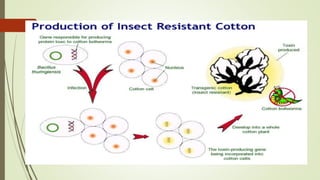
 Bt cotton has been genetically modified by the insertion of one or more genes from
a common soil bacterium bacillus thuringenesis, these genes encode for the
production of insecticidal proteins and thus genetically transformed plants produce
one or more toxins as they grow.
 India has bred Bt-cotton varieties such as Bikaneri Nerma and hybrids such as
NHH-44.
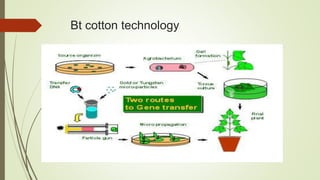
Bt cotton technology
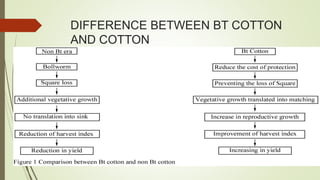
DIFFERENCE BETWEEN BT COTTON
AND COTTON
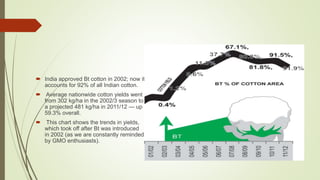
 India approved Bt cotton in 2002; now it
accounts for 92% of all Indian cotton.
 Average nationwide cotton yields went
from 302 kg/ha in the 2002/3 season to
a projected 481 kg/ha in 2011/12 — up
59.3% overall.
 This chart shows the trends in yields,
which took off after Bt was introduced
in 2002 (as we are constantly reminded
by GMO enthusiasts).
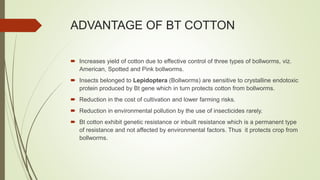
 Increases yield of cotton due to effective control of three types of bollworms, viz.
American, Spotted and Pink bollworms.
 Insects belonged to Lepidoptera (Bollworms) are sensitive to crystalline endotoxic
protein produced by Bt gene which in turn protects cotton from bollworms.
 Reduction in the cost of cultivation and lower farming risks.
 Reduction in environmental pollution by the use of insecticides rarely.
 Bt cotton exhibit genetic resistance or inbuilt resistance which is a permanent type
of resistance and not affected by environmental factors. Thus it protects crop from
bollworms.
ADVANTAGE OF BT COTTON
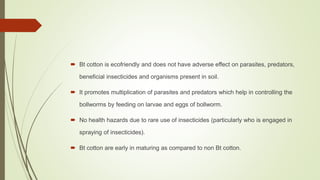
 Bt cotton is ecofriendly and does not have adverse effect on parasites, predators,
beneficial insecticides and organisms present in soil.
 It promotes multiplication of parasites and predators which help in controlling the
bollworms by feeding on larvae and eggs of bollworm.
 No health hazards due to rare use of insecticides (particularly who is engaged in
spraying of insecticides).
 Bt cotton are early in maturing as compared to non Bt cotton.
 High cost of Bt cotton seeds as compared to non Bt cotton seeds.
 Effectiveness up to 120 days, after that the toxin producing efficiency of the Bt
gene drastically reduces.
 Ineffective against sucking pests like jassids, aphids, whitefly etc.
 High cost of seeds.
 Higher fertilizer and irrigation cost.
 Higher harvest cost.
DISADVANTAGE
THANK YOU

Bt cotton

  • 1.
  • 2.
     Bt Cottonis a genetically modified organism cotton variety, which produces an insecticide against bollworm. It is produced by Monsanto.  Bt cotton refers to transgenic cotton which contains endotoxin protein inducing gene from soil bacterium Bacillus thuringiensis.  The first transgenic plant was developed in 1987 in U.S.A. by Monsanto. WHAT IS BT COTTON
  • 3.
     India ranksno: 1 in the world accounting for 20%of the total area planted under BT cotton.  Ranks 3rd position with 13% in the production of BT cotton.  Average yield is only 319 kg/ha as compared to world average of 603 kg/ha.  Loss due to damage to cotton crop is estimated to be more than Rs.1200 crores/yr
  • 4.
     Cotton isone of the major fibre crops of global significance.  It is cultivated in tropical and subtropical regions of more than eighty countries of world occupying nearly 33 m ha with an annual production of 19 to 20 million tones of bales.  China, U.S.A., India, Pakistan, Uzbkistan,Australia, Brazil, Greece, Argentina and Egypt are major cotton producing countries.
  • 5.
     In India,162 species of insect pests attack in different stages of cotton.  Three types of bollwormviz:  American bollworm (Helicoverpa armigera), Pink bollworm (Pectionphora gossypiella) and Spotted bollworm (Earias vitella), normally referred as bollworm complex are by far the most damaging and loss inducing pests of cotton.  all over the country causing as high as 80% losses in cotton. Why Bt Cotton?
  • 6.
     Transgenic plantscontain foreign gene or genetically modified gene of the same species.  Bt cotton has been genetically modified by the insertion of one or more genes from a common soil bacterium bacillus thuringenesis, these genes encode for the production of insecticidal proteins and thus genetically transformed plants produce one or more toxins as they grow.  India has bred Bt-cotton varieties such as Bikaneri Nerma and hybrids such as NHH-44.
  • 7.
  • 9.
    DIFFERENCE BETWEEN BTCOTTON AND COTTON
  • 10.
     India approvedBt cotton in 2002; now it accounts for 92% of all Indian cotton.  Average nationwide cotton yields went from 302 kg/ha in the 2002/3 season to a projected 481 kg/ha in 2011/12 — up 59.3% overall.  This chart shows the trends in yields, which took off after Bt was introduced in 2002 (as we are constantly reminded by GMO enthusiasts).
  • 11.
     Increases yieldof cotton due to effective control of three types of bollworms, viz. American, Spotted and Pink bollworms.  Insects belonged to Lepidoptera (Bollworms) are sensitive to crystalline endotoxic protein produced by Bt gene which in turn protects cotton from bollworms.  Reduction in the cost of cultivation and lower farming risks.  Reduction in environmental pollution by the use of insecticides rarely.  Bt cotton exhibit genetic resistance or inbuilt resistance which is a permanent type of resistance and not affected by environmental factors. Thus it protects crop from bollworms. ADVANTAGE OF BT COTTON
  • 12.
     Bt cottonis ecofriendly and does not have adverse effect on parasites, predators, beneficial insecticides and organisms present in soil.  It promotes multiplication of parasites and predators which help in controlling the bollworms by feeding on larvae and eggs of bollworm.  No health hazards due to rare use of insecticides (particularly who is engaged in spraying of insecticides).  Bt cotton are early in maturing as compared to non Bt cotton.
  • 13.
     High costof Bt cotton seeds as compared to non Bt cotton seeds.  Effectiveness up to 120 days, after that the toxin producing efficiency of the Bt gene drastically reduces.  Ineffective against sucking pests like jassids, aphids, whitefly etc.  High cost of seeds.  Higher fertilizer and irrigation cost.  Higher harvest cost. DISADVANTAGE
  • 14.