Polyurethane
Introduction
 Polyurethane (PUR and PU) is a polymer composed of a chain
of organic units joined by carbamate (urethane) links.
 Most of the polyurethanes are thermosetting polymers that they
don't melt when heated, but thermoplastic polymers are also
available.
 Polyurethanes are used in the manufacture of nonflexible, high-
resilience foam seating; microcellular foam seals and gaskets;
durable elastomeric wheels and tires (such as roller
coaster, escalator and skateboard wheels);;; high
performance adhesives; surface coatings and surface
sealants; synthetic fibers ; hard-plastic parts (e.g., for electronic
instruments); and hoses.
Preparation
 Polyurethane polymers are traditionally and most
commonly formed by reacting a di- or polyisocyanate with
a polyol.
Physical properties
 Hardness
 Tensile strength
 Compression strength
 Impact resistance
 Abrasion resistance
 Tear strength
Applications
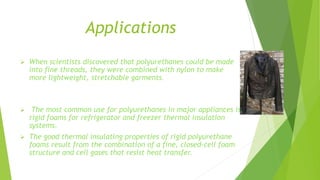
 When scientists discovered that polyurethanes could be made
into fine threads, they were combined with nylon to make
more lightweight, stretchable garments.
 The most common use for polyurethanes in major appliances is
rigid foams for refrigerator and freezer thermal insulation
systems.
 The good thermal insulating properties of rigid polyurethane
foams result from the combination of a fine, closed-cell foam
structure and cell gases that resist heat transfer.
 Polyurethanes play a major role in modern materials, such as composite
wood.
 Polyurethanes based binders are used in composite wood products to
permanently glue organic materials into oriented strand board, medium-
density fiberboard, long-strand lumber, laminated-veneer lumber.
 Non-foam polyurethanes are frequently used in the electrical and
electronics industries to encapsulate, seal and insulate fragile, pressure-
sensitive, microelectronic components, underwater cables and printed
circuit boards. Which are oftenly referred as “potting compounds”.
 Polyurethane, mostly in the form of flexible foam, is one of the
most popular materials used in home furnishings such as
furniture, bedding and carpet underlay.
 As a cushioning material for upholstered furniture, flexible
polyurethane foam works to make furniture more durable,
comfortable and supportive.
 Polyurethane epoxy resins seal boat hulls from water, weather,
corrosion and elements that increase drag, affect hydrodynamics
and reduce durability.
 Polyurethane packaging foam is widely used to safely protect and
transport many items, such as electronic and medical diagnostic
equipment, delicate glassware and large industrial parts.
Biodegradation
 Two species of the Ecuadorian fungus Pestalotiopsis are
capable of biodegrading Polyurethane in aerobic and
anaerobic conditions
 Polyester type polyurethanes are more easily biodegraded
by fungus than polyether type.
Thank You

Polyurethane

  • 1.
  • 2.
    Introduction  Polyurethane (PURand PU) is a polymer composed of a chain of organic units joined by carbamate (urethane) links.  Most of the polyurethanes are thermosetting polymers that they don't melt when heated, but thermoplastic polymers are also available.  Polyurethanes are used in the manufacture of nonflexible, high- resilience foam seating; microcellular foam seals and gaskets; durable elastomeric wheels and tires (such as roller coaster, escalator and skateboard wheels);;; high performance adhesives; surface coatings and surface sealants; synthetic fibers ; hard-plastic parts (e.g., for electronic instruments); and hoses.
  • 3.
    Preparation  Polyurethane polymersare traditionally and most commonly formed by reacting a di- or polyisocyanate with a polyol.
  • 4.
    Physical properties  Hardness Tensile strength  Compression strength  Impact resistance  Abrasion resistance  Tear strength
  • 5.
    Applications  When scientistsdiscovered that polyurethanes could be made into fine threads, they were combined with nylon to make more lightweight, stretchable garments.  The most common use for polyurethanes in major appliances is rigid foams for refrigerator and freezer thermal insulation systems.  The good thermal insulating properties of rigid polyurethane foams result from the combination of a fine, closed-cell foam structure and cell gases that resist heat transfer.
  • 6.
     Polyurethanes playa major role in modern materials, such as composite wood.  Polyurethanes based binders are used in composite wood products to permanently glue organic materials into oriented strand board, medium- density fiberboard, long-strand lumber, laminated-veneer lumber.  Non-foam polyurethanes are frequently used in the electrical and electronics industries to encapsulate, seal and insulate fragile, pressure- sensitive, microelectronic components, underwater cables and printed circuit boards. Which are oftenly referred as “potting compounds”.
  • 7.
     Polyurethane, mostlyin the form of flexible foam, is one of the most popular materials used in home furnishings such as furniture, bedding and carpet underlay.  As a cushioning material for upholstered furniture, flexible polyurethane foam works to make furniture more durable, comfortable and supportive.
  • 8.
     Polyurethane epoxyresins seal boat hulls from water, weather, corrosion and elements that increase drag, affect hydrodynamics and reduce durability.  Polyurethane packaging foam is widely used to safely protect and transport many items, such as electronic and medical diagnostic equipment, delicate glassware and large industrial parts.
  • 9.
    Biodegradation  Two speciesof the Ecuadorian fungus Pestalotiopsis are capable of biodegrading Polyurethane in aerobic and anaerobic conditions  Polyester type polyurethanes are more easily biodegraded by fungus than polyether type.
  • 10.