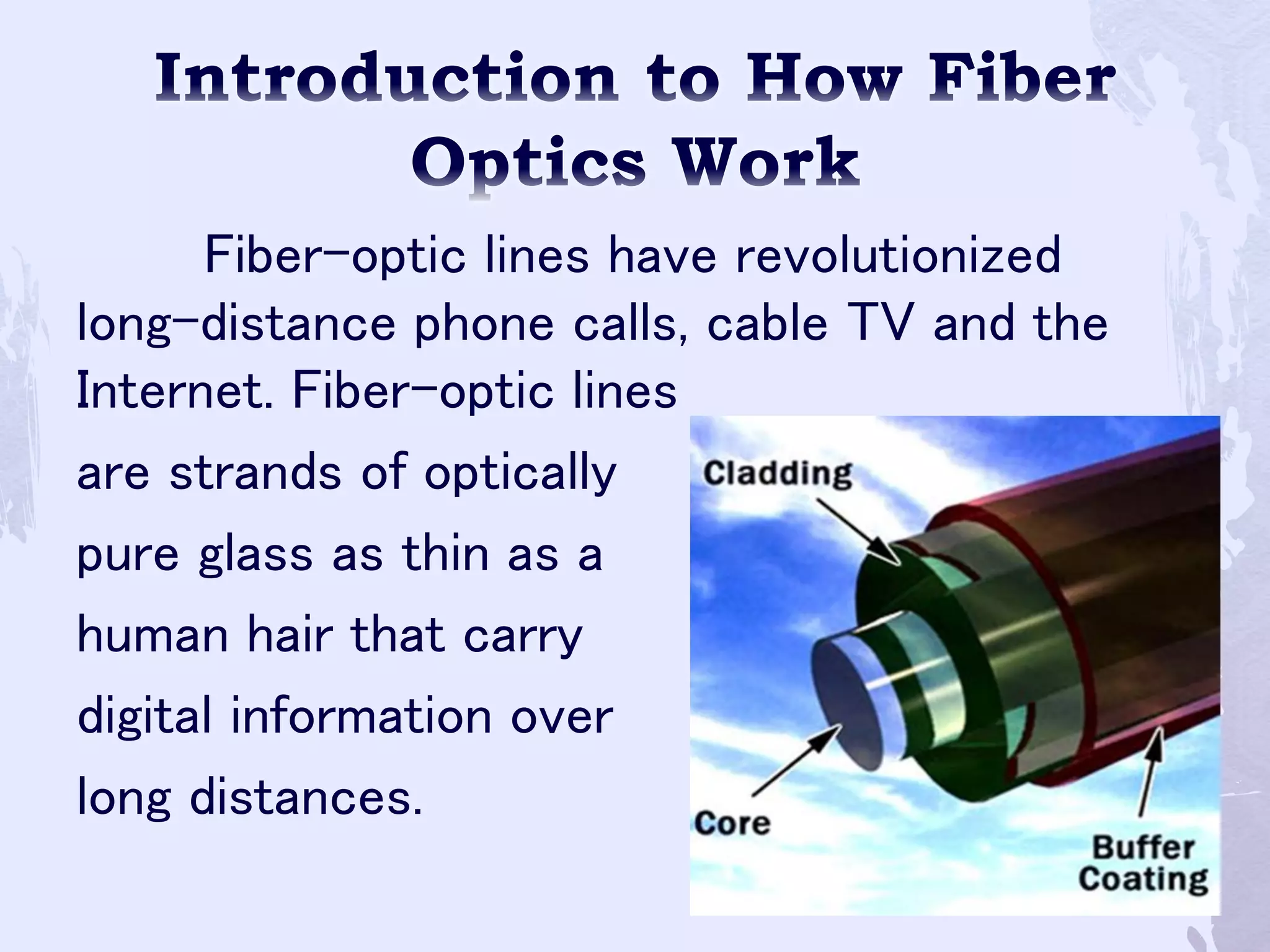
Fiber-optic lines have revolutionized
long-distance phone calls, cable TV and the
Internet. Fiber-optic lines
are strands of optically
pure glass as thin as a
human hair that carry
digital information over
long distances.
Fiber optics is matter of the glass without
the mixture of the thinness like the hair. They
are placed in a thing called an optical cable and
can send light signal more than a long distance.
They are comprised of Core, Cladding, Buffer
coating. And there are two types of Single-
mode fibers and Multi-mode fibers.
The light of the optical fiber cable goes
ahead through the center while bouncing off
cladding consistently. It does total reflection.
Because the cladding does not absorb any light
from the core, the light wave can travel great
distances. However, impurities are included in
glass. Therefore, a part of the light signal is
broken down.
Fiber-optic relay systems consist of the
following:
Transmitter
-Produces and encodes the light signals
Optical fiber
-Conducts the light signals over a distance
Optical regenerator
-May be necessary to boost the light signal
Optical receiver
-Receives and decodes the light signals
Optical fiber has the following advantages in
comparison with a conventional metal wire.
 Less expensive
 Higher carrying capacity
 Thinner
 Less signal degradation
 Light signals
 Low power
 Digital signals
 Non-flammable
 Lightweigh
 Flexible
The optical fiber is made of optical glass
without the mixture. The optical glass without
this mixture is made of the following steps.
 Making a preform glass cylinder
 Drawing the fibers from the preform
 Testing the fibers

Introduction to how fiber optics work

  • 1.
    Fiber-optic lines haverevolutionized long-distance phone calls, cable TV and the Internet. Fiber-optic lines are strands of optically pure glass as thin as a human hair that carry digital information over long distances.
  • 2.
    Fiber optics ismatter of the glass without the mixture of the thinness like the hair. They are placed in a thing called an optical cable and can send light signal more than a long distance. They are comprised of Core, Cladding, Buffer coating. And there are two types of Single- mode fibers and Multi-mode fibers.
  • 3.
    The light ofthe optical fiber cable goes ahead through the center while bouncing off cladding consistently. It does total reflection. Because the cladding does not absorb any light from the core, the light wave can travel great distances. However, impurities are included in glass. Therefore, a part of the light signal is broken down.
  • 4.
    Fiber-optic relay systemsconsist of the following: Transmitter -Produces and encodes the light signals Optical fiber -Conducts the light signals over a distance Optical regenerator -May be necessary to boost the light signal Optical receiver -Receives and decodes the light signals
  • 5.
    Optical fiber hasthe following advantages in comparison with a conventional metal wire.  Less expensive  Higher carrying capacity  Thinner  Less signal degradation  Light signals  Low power  Digital signals  Non-flammable  Lightweigh  Flexible
  • 6.
    The optical fiberis made of optical glass without the mixture. The optical glass without this mixture is made of the following steps.  Making a preform glass cylinder  Drawing the fibers from the preform  Testing the fibers