
Ms.Beenapani Mohapatra
LECTURER in REHABILITATION PSYCHOLOGY
NATIONAL INSTITUTE FOR THE MENTALLY HANDICAPPED

Manovikasnagar, Secunderabad-500 009
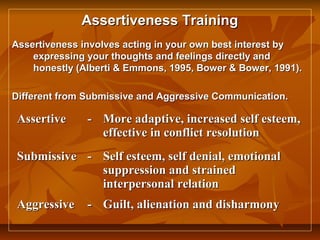
Assertiveness Training
Assertiveness involves acting in your own best interest by
expressing your thoughts and feelings directly and
honestly (Alberti & Emmons, 1995, Bower & Bower, 1991).
Different from Submissive and Aggressive Communication.

Assertive

- More adaptive, increased self esteem,
effective in conflict resolution

Submissive - Self esteem, self denial, emotional
suppression and strained
interpersonal relation
Aggressive

- Guilt, alienation and disharmony
Components of Assertiveness
Physical
 Vocal
 Assertion muscle level

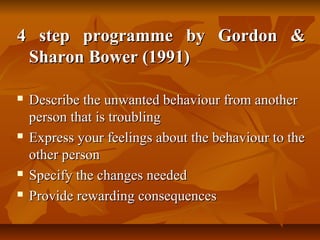
4 step programme by Gordon &
Sharon Bower (1991)







Describe the unwanted behaviour from another
person that is troubling
Express your feelings about the behaviour to the
other person
Specify the changes needed
Provide rewarding consequences
Assertiveness
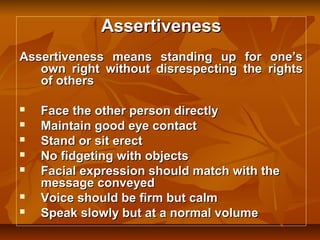
Assertiveness means standing up for one’s
own right without disrespecting the rights
of others









Face the other person directly
Maintain good eye contact
Stand or sit erect
No fidgeting with objects
Facial expression should match with the
message conveyed
Voice should be firm but calm
Speak slowly but at a normal volume
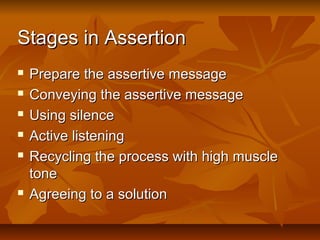
Stages in Assertion








Prepare the assertive message
Conveying the assertive message
Using silence
Active listening
Recycling the process with high muscle
tone
Agreeing to a solution
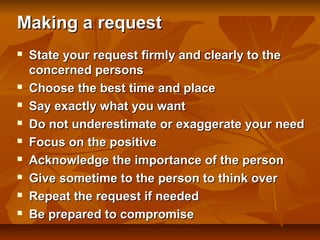
Making a request











State your request firmly and clearly to the
concerned persons
Choose the best time and place
Say exactly what you want
Do not underestimate or exaggerate your need
Focus on the positive
Acknowledge the importance of the person
Give sometime to the person to think over
Repeat the request if needed
Be prepared to compromise
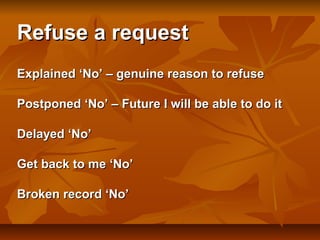
Refuse a request
Explained ‘No’ – genuine reason to refuse
Postponed ‘No’ – Future I will be able to do it
Delayed ‘No’
Get back to me ‘No’
Broken record ‘No’
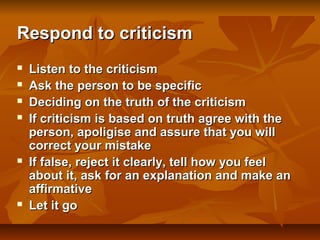
Respond to criticism









Listen to the criticism
Ask the person to be specific
Deciding on the truth of the criticism
If criticism is based on truth agree with the
person, apoligise and assure that you will
correct your mistake
If false, reject it clearly, tell how you feel
about it, ask for an explanation and make an
affirmative
Let it go
Assertiveness training

Assertiveness training

  • 1.
    Ms.Beenapani Mohapatra LECTURER inREHABILITATION PSYCHOLOGY NATIONAL INSTITUTE FOR THE MENTALLY HANDICAPPED Manovikasnagar, Secunderabad-500 009
  • 2.
    Assertiveness Training Assertiveness involvesacting in your own best interest by expressing your thoughts and feelings directly and honestly (Alberti & Emmons, 1995, Bower & Bower, 1991). Different from Submissive and Aggressive Communication. Assertive - More adaptive, increased self esteem, effective in conflict resolution Submissive - Self esteem, self denial, emotional suppression and strained interpersonal relation Aggressive - Guilt, alienation and disharmony
  • 3.
    Components of Assertiveness Physical Vocal  Assertion muscle level 
  • 4.
    4 step programmeby Gordon & Sharon Bower (1991)     Describe the unwanted behaviour from another person that is troubling Express your feelings about the behaviour to the other person Specify the changes needed Provide rewarding consequences
  • 5.
    Assertiveness Assertiveness means standingup for one’s own right without disrespecting the rights of others        Face the other person directly Maintain good eye contact Stand or sit erect No fidgeting with objects Facial expression should match with the message conveyed Voice should be firm but calm Speak slowly but at a normal volume
  • 6.
    Stages in Assertion       Preparethe assertive message Conveying the assertive message Using silence Active listening Recycling the process with high muscle tone Agreeing to a solution
  • 7.
    Making a request          Stateyour request firmly and clearly to the concerned persons Choose the best time and place Say exactly what you want Do not underestimate or exaggerate your need Focus on the positive Acknowledge the importance of the person Give sometime to the person to think over Repeat the request if needed Be prepared to compromise
  • 8.
    Refuse a request Explained‘No’ – genuine reason to refuse Postponed ‘No’ – Future I will be able to do it Delayed ‘No’ Get back to me ‘No’ Broken record ‘No’
  • 9.
    Respond to criticism       Listento the criticism Ask the person to be specific Deciding on the truth of the criticism If criticism is based on truth agree with the person, apoligise and assure that you will correct your mistake If false, reject it clearly, tell how you feel about it, ask for an explanation and make an affirmative Let it go