ASSERTIVENESS
AMANJIT KAUR
6794
MBA 5th
“B”
ASSERTIVENESS
Assertiveness means standing up for
your personal rights - expressing
thoughts, feelings and beliefs in
direct, honest and appropriate ways.
COND..
Assertiveness is a particular mode of
communication.
During the second half of the 20th
century, assertiveness was increasingly
singled out as a behavioral skill by
many personal development experts,
behavior therapists etc.
Assertiveness is often linked to self
esteem.
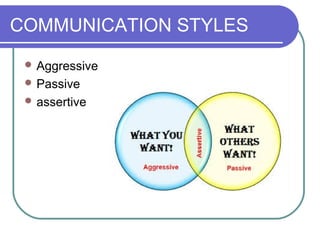
COMMUNICATION STYLES
 Aggressive
 Passive
 assertive
COMMUNICATION STYLES
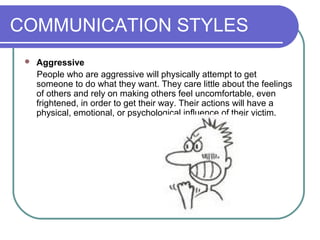
 Aggressive
People who are aggressive will physically attempt to get
someone to do what they want. They care little about the feelings
of others and rely on making others feel uncomfortable, even
frightened, in order to get their way. Their actions will have a
physical, emotional, or psychological influence of their victim.
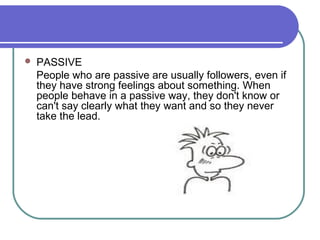
 PASSIVE
People who are passive are usually followers, even if
they have strong feelings about something. When
people behave in a passive way, they don't know or
can't say clearly what they want and so they never
take the lead.
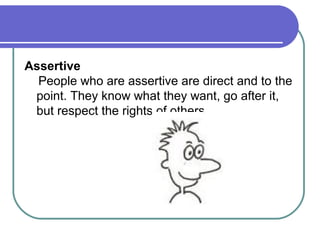
Assertive
People who are assertive are direct and to the
point. They know what they want, go after it,
but respect the rights of others.
Benefits of Assertiveness
Acting assertive helps maintain honesty in relationships, allows you to
feel more in control of your world, and improves your ability to make
decisions. you to act passively to confirm to these believes. A few
examples include
 the right to decide how to lead your life,
 the right to pursue goals and dreams,
 the right to a valid opinion,
 the right to say how you want to be treated,
 the right to say “no”,
 the right to change your mind,
 the right to privacy,
 the right to ask for help, and many more.
Acting to assert any of these rights leads many people to think they are
acting selfish. Acting assertive helps maintain honesty in relationships,
allows you to feel more in control of your world, and improves your ability
to make decisions.
Assertive people
 They feel free to express their feelings, thoughts, and
desires.
 They are also able to initiate and maintain comfortable
relationships with people.
 They know their rights.
 They have control over their anger. This does not
mean that they repress this feeling; it means that they
control anger and talk about it in a reasoning manner.
 "Assertive people are willing to compromise with
others, rather than always wanting their own way and
tend to have good self-esteem.
 "Assertive people enter friendships from an 'I count my
needs. I count your needs position.
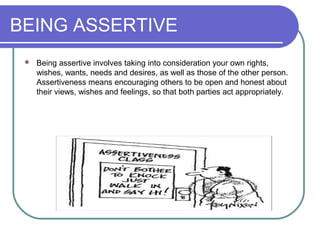
BEING ASSERTIVE
 Being assertive involves taking into consideration your own rights,
wishes, wants, needs and desires, as well as those of the other person.
Assertiveness means encouraging others to be open and honest about
their views, wishes and feelings, so that both parties act appropriately.
Assertiveness - Tips & Techniques
 By being assertive we can feel better about
ourselves - improving self-esteem and
personal confidence. Sometimes the way we
react and respond to others can make us feel
inadequate, guilty or regretful. These may be
signs of passive behavior. We may also feel
angry and critical of others during
conversations, this may be a sign of more
aggressive behavior.
Two types of techniques:
 1. Fogging
 2. Stuck Record
1. FOGGING
Fogging is a useful technique if people are behaving
in a manipulative or aggressive way.

fogging involves agreeing with any truth that may be
contained within statements, even if critical. By not
responding in the expected way, in other words by
being defensive or argumentative, the other person
will cease confrontation as the desired effect is not
being achieved. When the atmosphere is less heated,
it will be possible to discuss the issues more
reasonably.
2.The Stuck Record
The Stuck Record technique employs the key
assertive skill of 'calm persistence'.
 Continually repeating a request will ensure the
discussion does not become side-tracked and
involved in irrelevant argument. The key is to
stay calm, be very clear in what you want, stick
to the point and not give up. Accept a
compromise only if you are happy with the
outcome.
POSITIVE AND NEGATIVE
ENQIRES
 Positive enquiry is a simple technique for
handling positive comments such as praise
and compliments.
 People often struggle with responding to
praise and compliments, especially those with
lower self-esteem as they may feel inadequate
or that the positive comments are not justified.
It is important to give positive feedback to
others when appropriate but also to react
appropriately to positive feedback that you
receive.
 Negative Enquiry
is Dealing with criticism can be difficult,
remember that any criticism received is just
somebody's opinion.
CONCLUSION
 When practicing these assertiveness techniques it is
important to remember what assertiveness is and its
importance in the communication process. Being
assertive is not the same as being aggressive; on the
contrary, assertiveness means standing up for what
you believe. Assertiveness is expressing your
thoughts, emotions, beliefs and opinions in an honest
and appropriate way. As assertiveness should be
encouraged in others it is also important to remember
that we should always respect the thoughts, feelings,
opinions and beliefs of other people.
Assertiveness

Assertiveness

  • 1.
  • 2.
    ASSERTIVENESS Assertiveness means standingup for your personal rights - expressing thoughts, feelings and beliefs in direct, honest and appropriate ways.
  • 3.
    COND.. Assertiveness is aparticular mode of communication. During the second half of the 20th century, assertiveness was increasingly singled out as a behavioral skill by many personal development experts, behavior therapists etc. Assertiveness is often linked to self esteem.
  • 4.
  • 5.
    COMMUNICATION STYLES  Aggressive Peoplewho are aggressive will physically attempt to get someone to do what they want. They care little about the feelings of others and rely on making others feel uncomfortable, even frightened, in order to get their way. Their actions will have a physical, emotional, or psychological influence of their victim.
  • 6.
     PASSIVE People whoare passive are usually followers, even if they have strong feelings about something. When people behave in a passive way, they don't know or can't say clearly what they want and so they never take the lead.
  • 7.
    Assertive People who areassertive are direct and to the point. They know what they want, go after it, but respect the rights of others.
  • 8.
    Benefits of Assertiveness Actingassertive helps maintain honesty in relationships, allows you to feel more in control of your world, and improves your ability to make decisions. you to act passively to confirm to these believes. A few examples include  the right to decide how to lead your life,  the right to pursue goals and dreams,  the right to a valid opinion,  the right to say how you want to be treated,  the right to say “no”,  the right to change your mind,  the right to privacy,  the right to ask for help, and many more. Acting to assert any of these rights leads many people to think they are acting selfish. Acting assertive helps maintain honesty in relationships, allows you to feel more in control of your world, and improves your ability to make decisions.
  • 9.
    Assertive people  Theyfeel free to express their feelings, thoughts, and desires.  They are also able to initiate and maintain comfortable relationships with people.  They know their rights.  They have control over their anger. This does not mean that they repress this feeling; it means that they control anger and talk about it in a reasoning manner.  "Assertive people are willing to compromise with others, rather than always wanting their own way and tend to have good self-esteem.  "Assertive people enter friendships from an 'I count my needs. I count your needs position.
  • 10.
    BEING ASSERTIVE  Beingassertive involves taking into consideration your own rights, wishes, wants, needs and desires, as well as those of the other person. Assertiveness means encouraging others to be open and honest about their views, wishes and feelings, so that both parties act appropriately.
  • 11.
    Assertiveness - Tips& Techniques  By being assertive we can feel better about ourselves - improving self-esteem and personal confidence. Sometimes the way we react and respond to others can make us feel inadequate, guilty or regretful. These may be signs of passive behavior. We may also feel angry and critical of others during conversations, this may be a sign of more aggressive behavior.
  • 12.
    Two types oftechniques:  1. Fogging  2. Stuck Record
  • 13.
    1. FOGGING Fogging isa useful technique if people are behaving in a manipulative or aggressive way.  fogging involves agreeing with any truth that may be contained within statements, even if critical. By not responding in the expected way, in other words by being defensive or argumentative, the other person will cease confrontation as the desired effect is not being achieved. When the atmosphere is less heated, it will be possible to discuss the issues more reasonably.
  • 14.
    2.The Stuck Record TheStuck Record technique employs the key assertive skill of 'calm persistence'.  Continually repeating a request will ensure the discussion does not become side-tracked and involved in irrelevant argument. The key is to stay calm, be very clear in what you want, stick to the point and not give up. Accept a compromise only if you are happy with the outcome.
  • 15.
    POSITIVE AND NEGATIVE ENQIRES Positive enquiry is a simple technique for handling positive comments such as praise and compliments.  People often struggle with responding to praise and compliments, especially those with lower self-esteem as they may feel inadequate or that the positive comments are not justified. It is important to give positive feedback to others when appropriate but also to react appropriately to positive feedback that you receive.
  • 16.
     Negative Enquiry isDealing with criticism can be difficult, remember that any criticism received is just somebody's opinion.
  • 17.
    CONCLUSION  When practicingthese assertiveness techniques it is important to remember what assertiveness is and its importance in the communication process. Being assertive is not the same as being aggressive; on the contrary, assertiveness means standing up for what you believe. Assertiveness is expressing your thoughts, emotions, beliefs and opinions in an honest and appropriate way. As assertiveness should be encouraged in others it is also important to remember that we should always respect the thoughts, feelings, opinions and beliefs of other people.