Downloaded 1,303 times
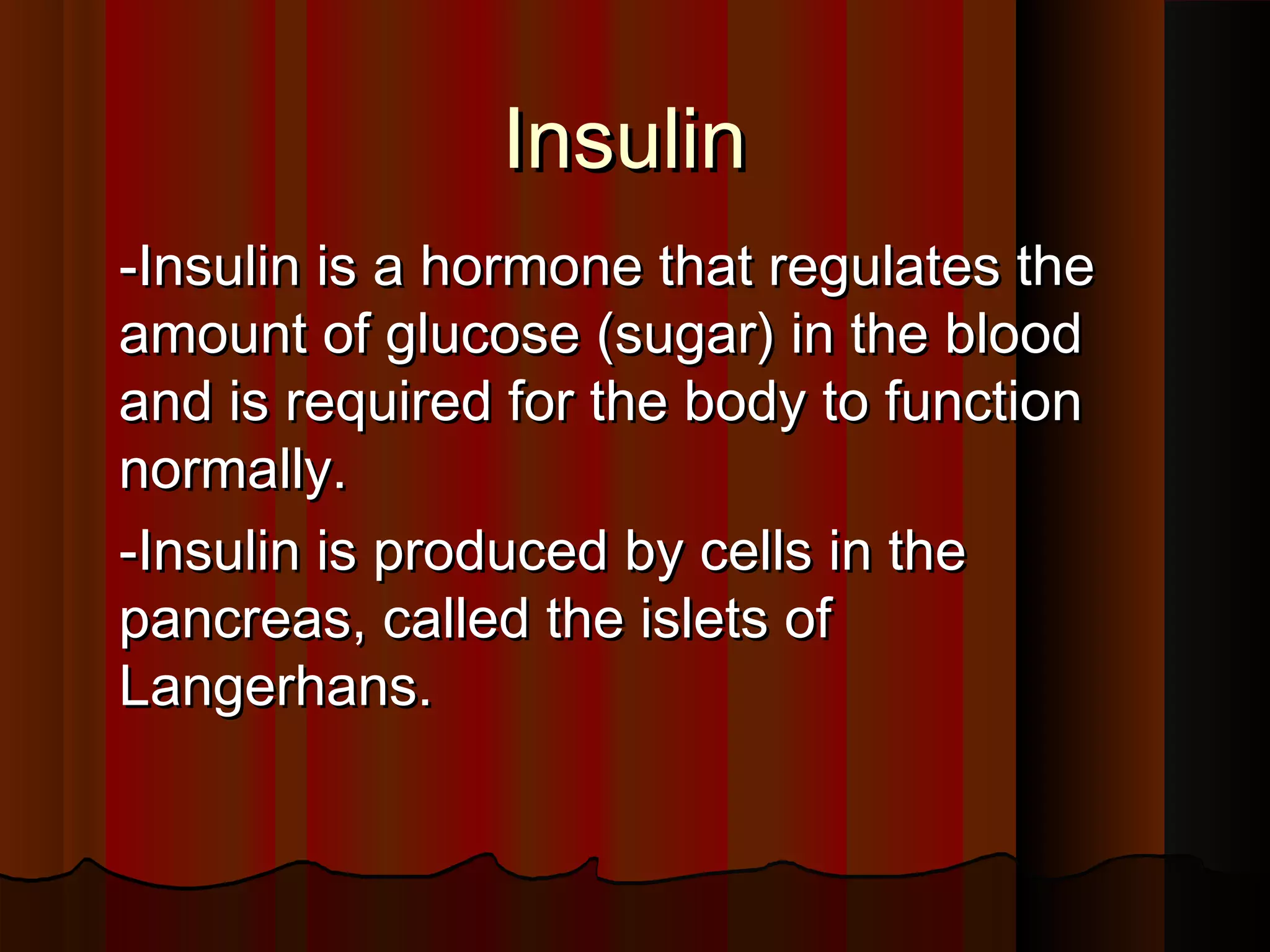
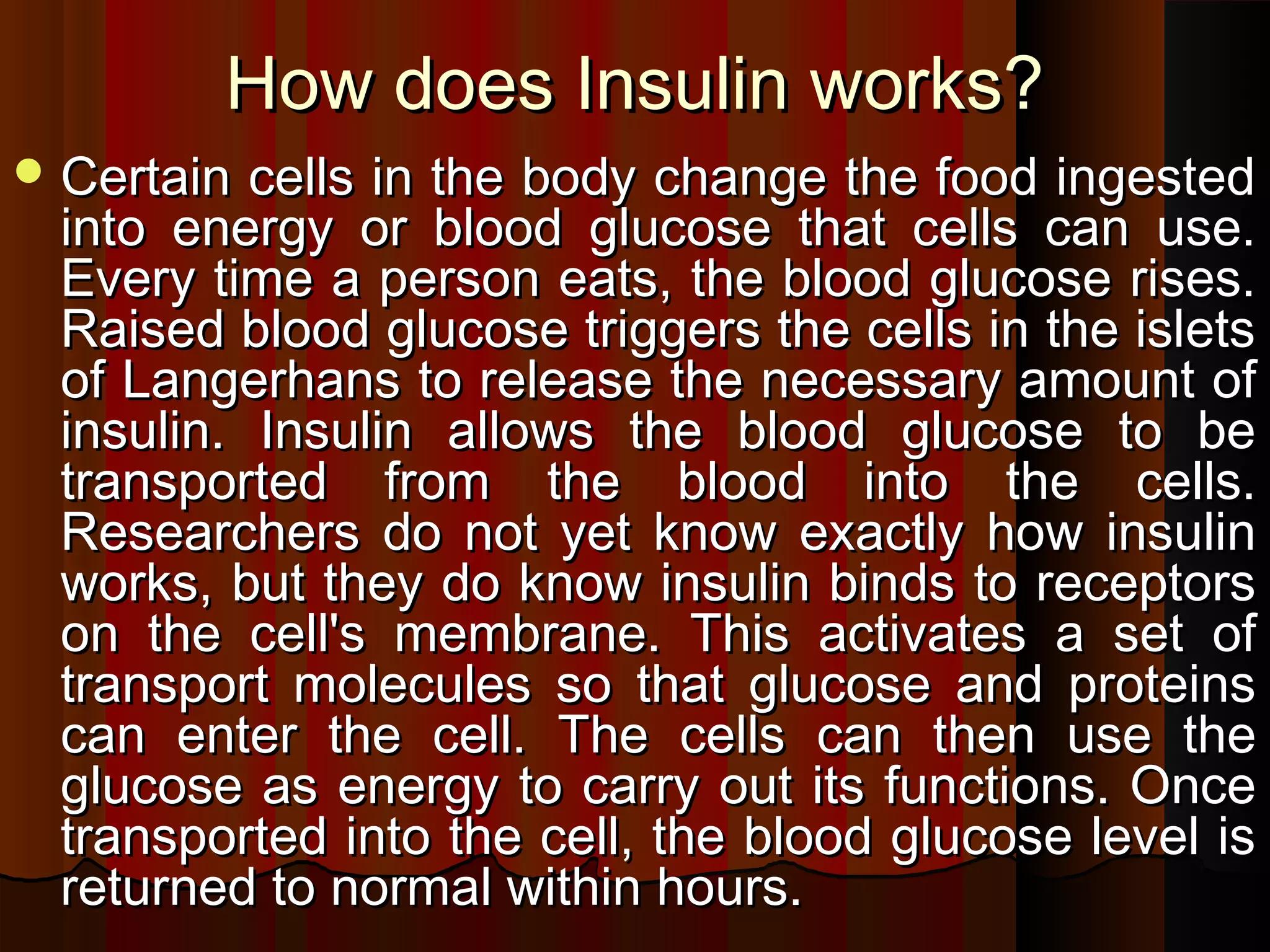
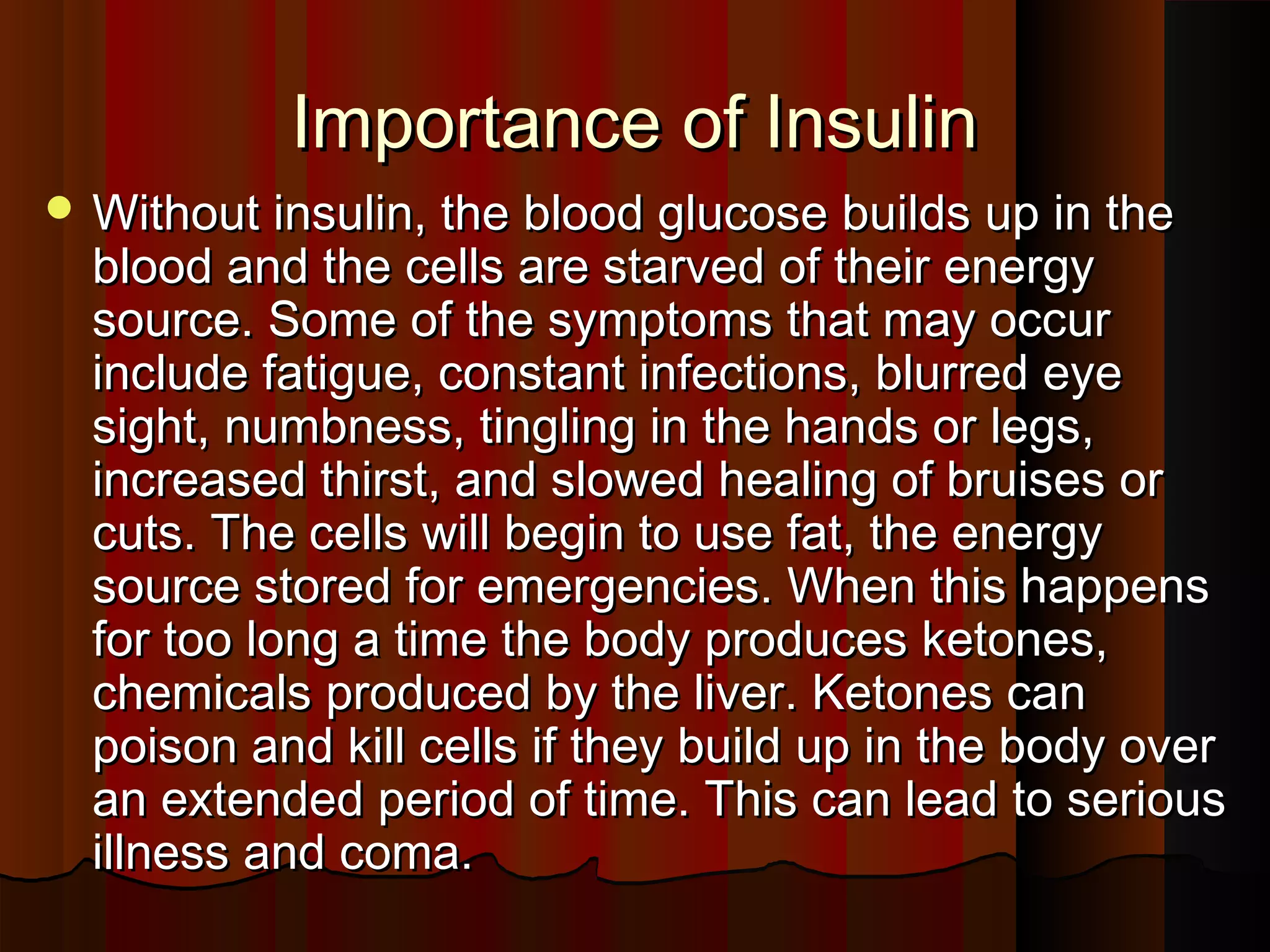
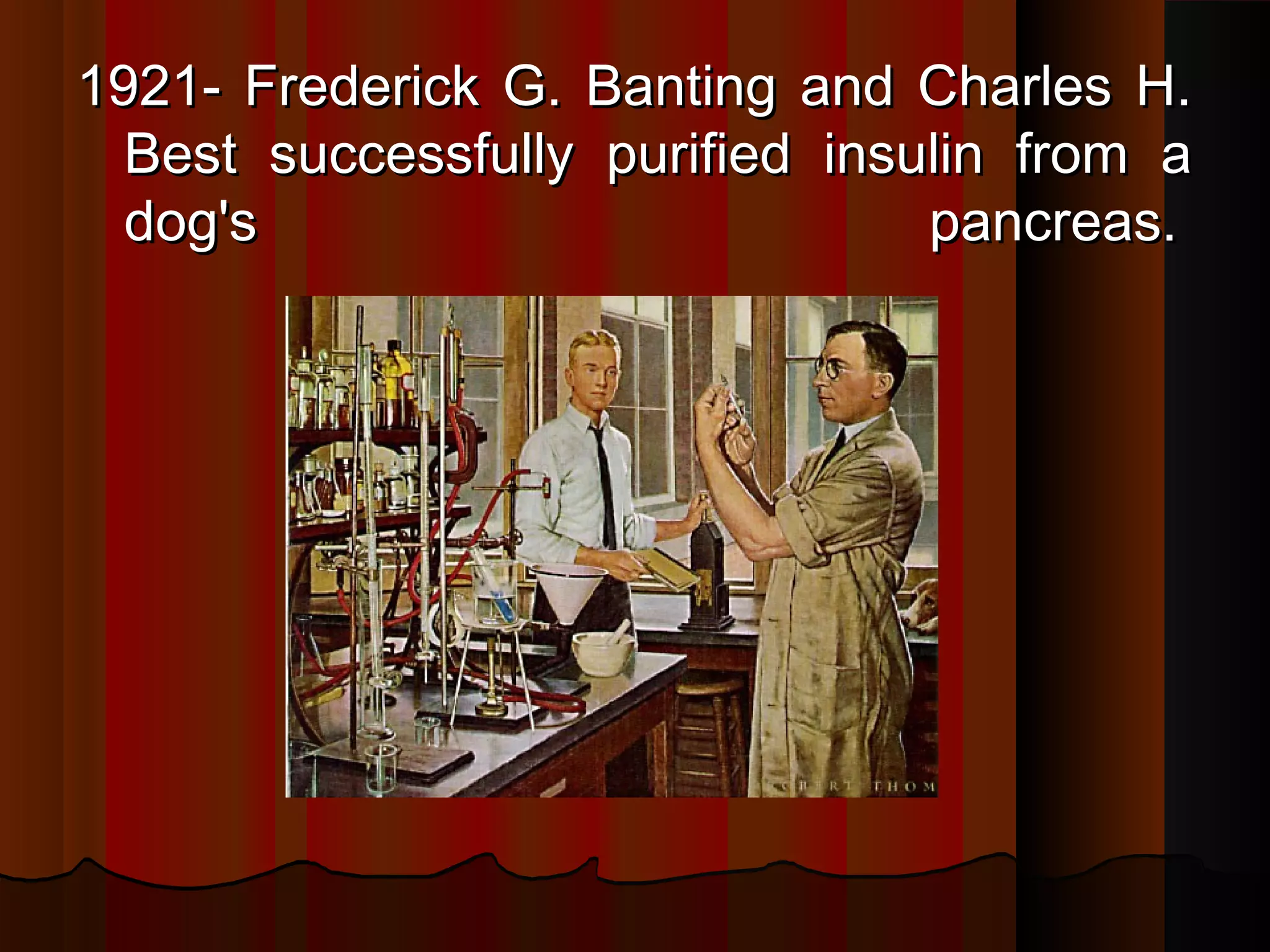
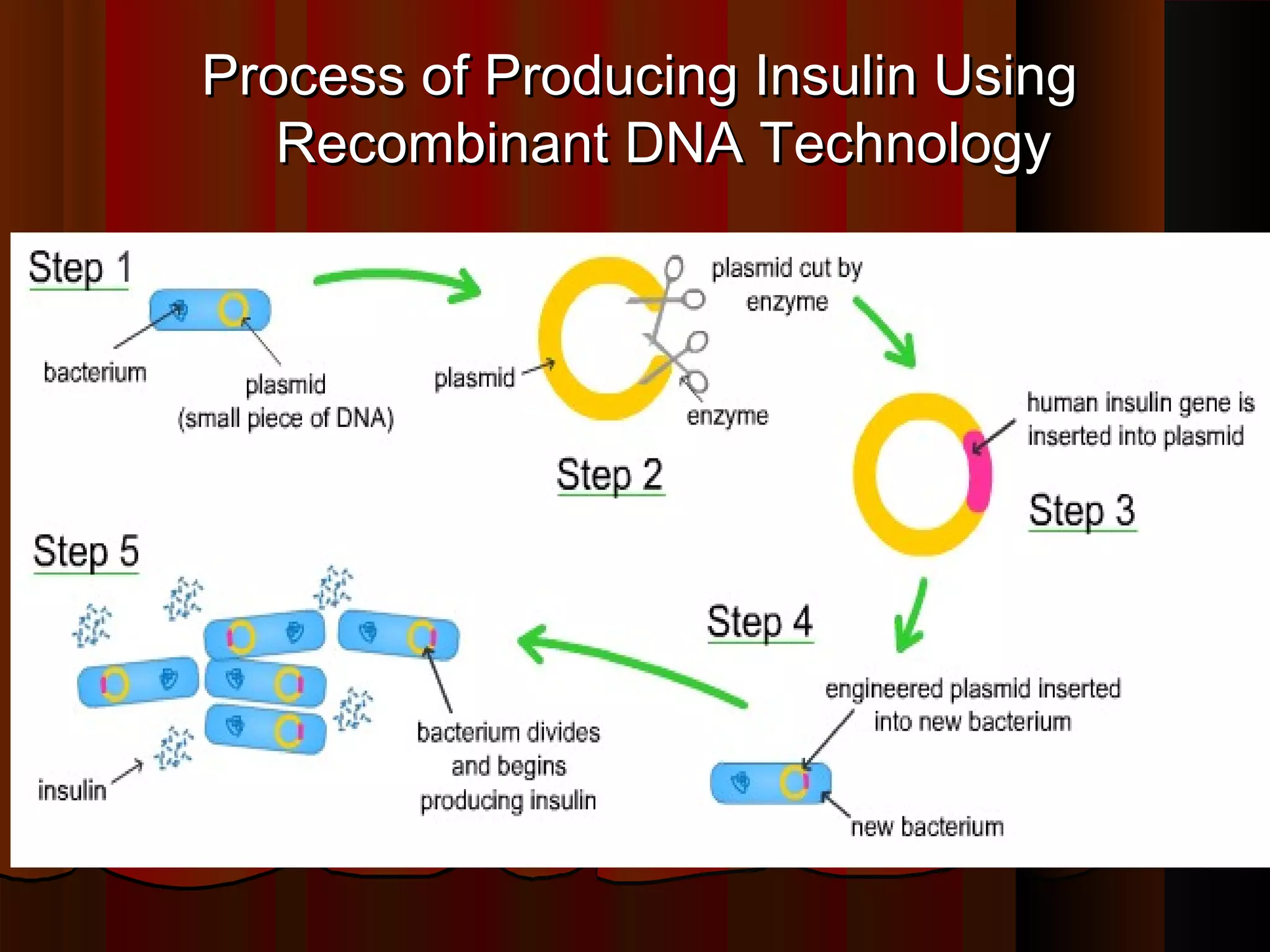
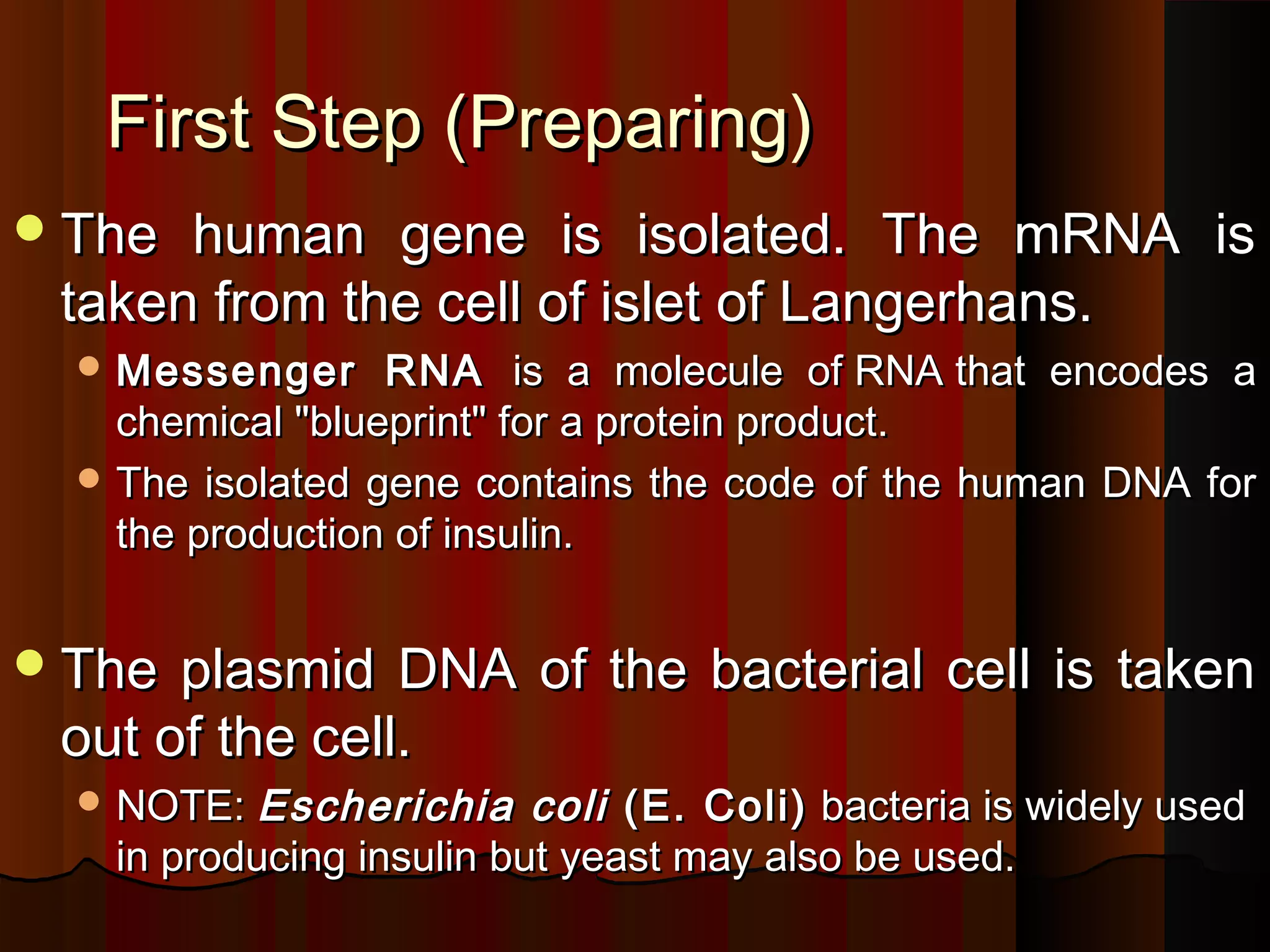
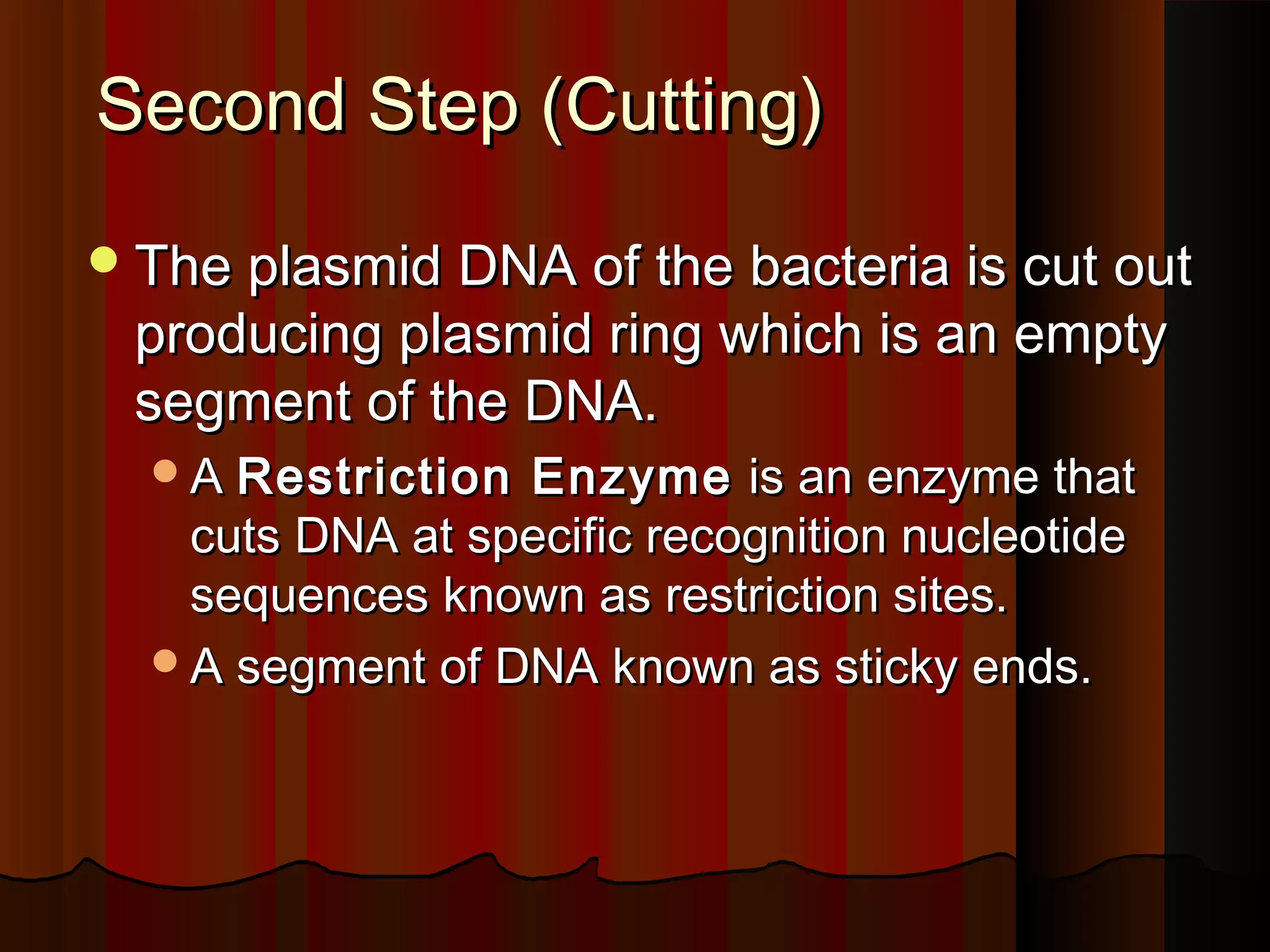
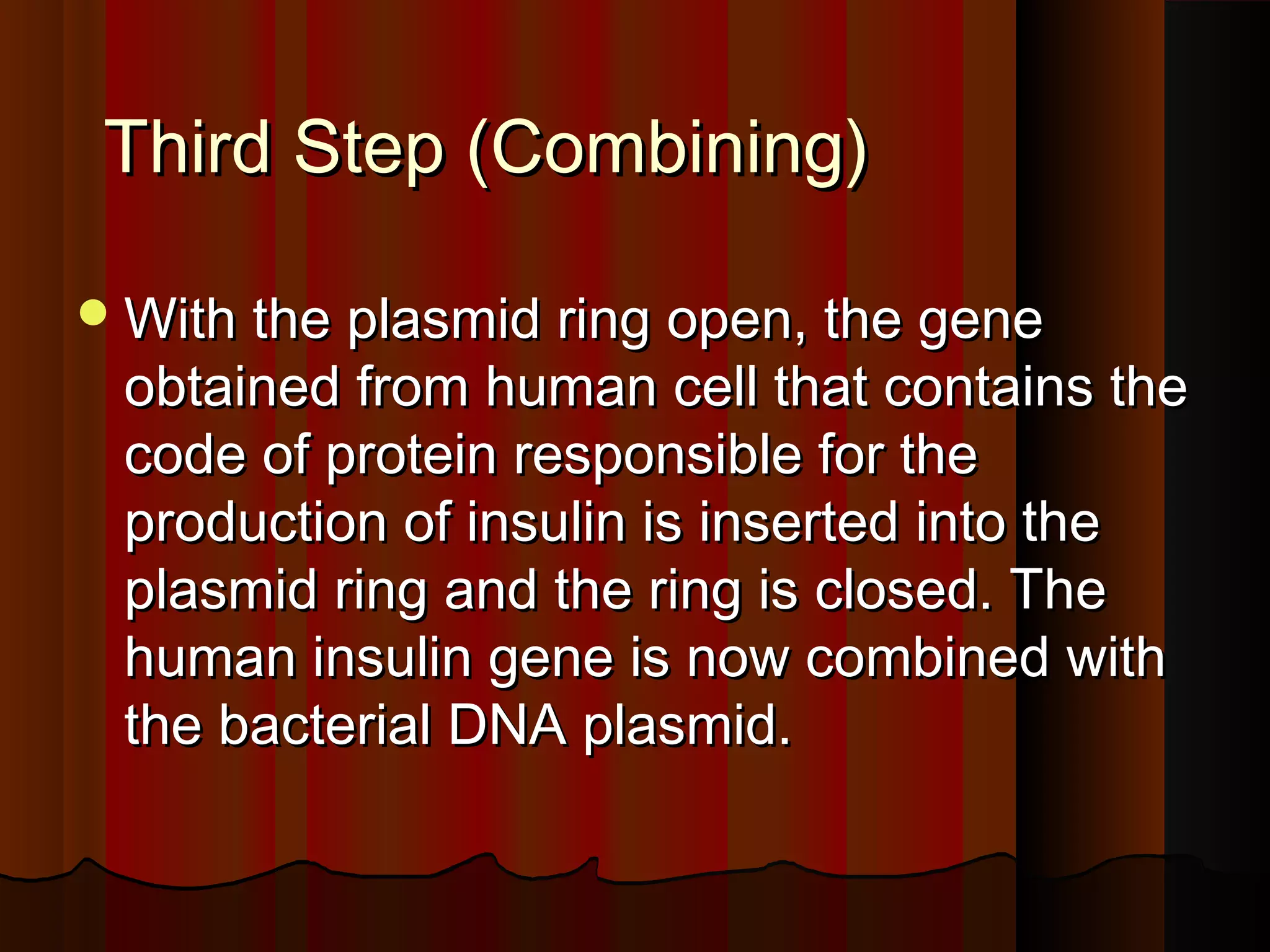

Insulin is a hormone produced by the pancreas that regulates blood sugar levels. It allows glucose in the bloodstream to enter cells and be used for energy. Without insulin, blood sugar builds up and cells are deprived of energy, leading to serious health issues. Diabetes occurs when the body does not produce enough insulin or the cells do not respond properly to insulin. Historically, insulin was purified from animals but is now commonly produced through recombinant DNA technology using modified bacteria. This process involves isolating the human insulin gene, inserting it into bacterial DNA, and causing the bacteria to express and mass produce human insulin.


![INSULIN AND OTHER ANTIDIABETEC DRUGS [Autosaved] [Autosaved].pptx](https://cdn.slidesharecdn.com/ss_thumbnails/insulinandotherantidiabetecdrugsautosavedautosaved-220731124033-32b4f1bb-thumbnail.jpg?width=640&height=640&fit=bounds)


