 Insulin is a harmone that regulates the amount of
glucose (sugar) in the blood and is required for the
body to function normally .
 Insulin is produced by cells in the pancreas, called
the islet of langerhans .
ISLET OF LANGERHANS
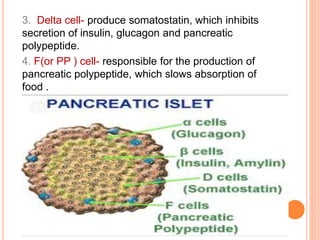
o There are three major cell types in islet of
langerhans –
1. Beta cells-produce insulin
o Insulin isanabolic – increase the storage of glucose
fatty acid and amino acid .
2. Alpha cell- produce glucagon.
o Glucagon is catabolic- mobilies glucose, fatty acid
from stores into the blood stream .
o Increase plasma glucose by stimulating hepatic
glucogenolysis and glucogenesis .
o Increase lipolysis in adipose tissue .
3. Delta cell- produce somatostatin, which inhibits
secretion of insulin, glucagon and pancreatic
polypeptide.
4. F(or PP ) cell- responsible for the production of
pancreatic polypeptide, which slows absorption of
food .
 1921 – Dr. Frederick banting and charles best
discovered Insulin .
 1923 – Banting and Best recived nobel prize .
 1956 – chemical structure of insulin was fully
workedout by Sanger.
History of Insulin
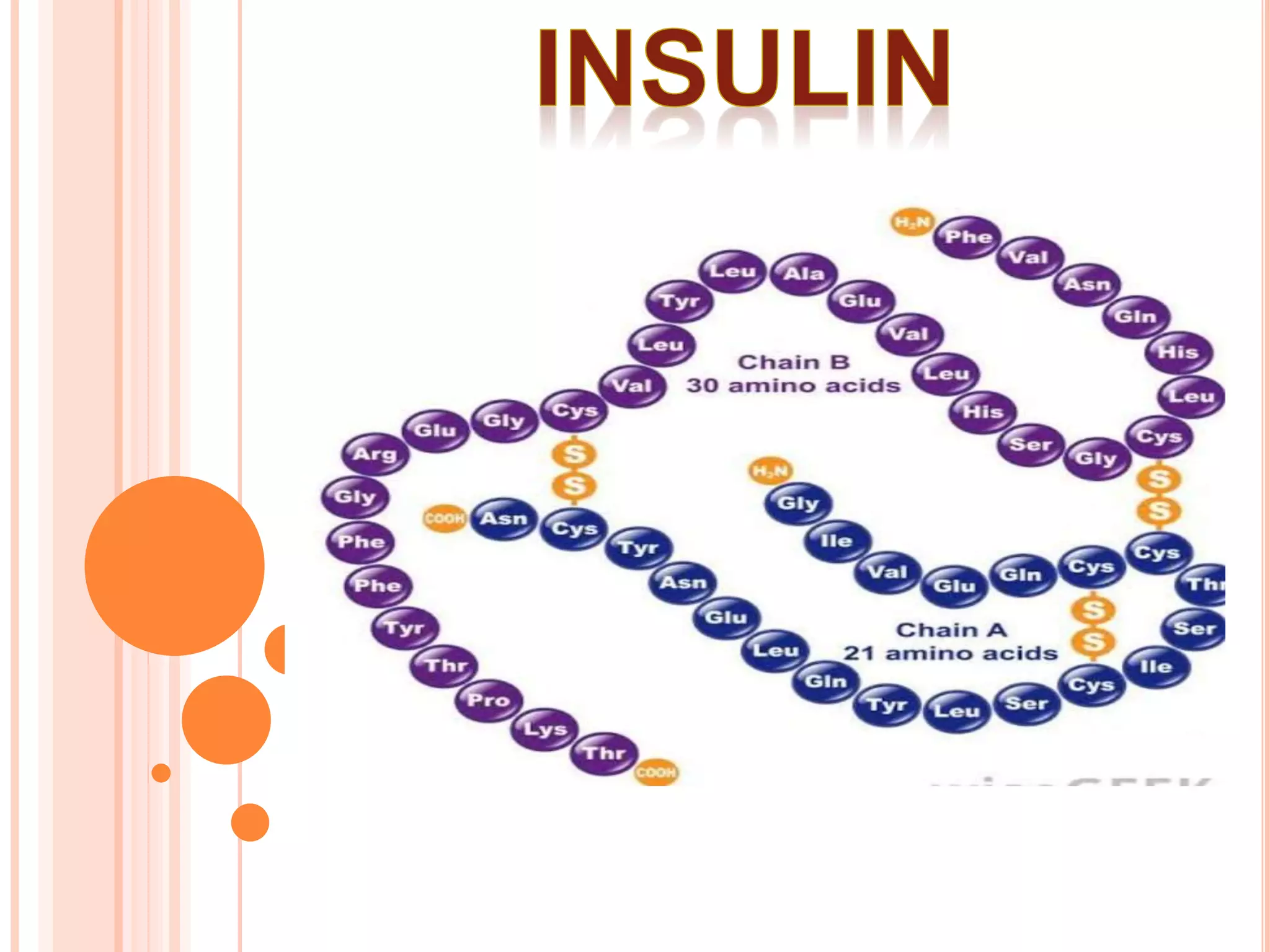
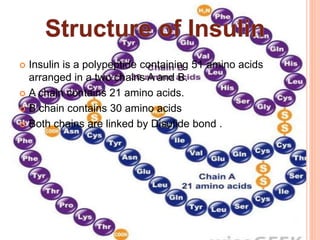
 Insulin is a polypeptide containing 51 amino acids
arranged in a two chains A and B.
 A chain contains 21 amino acids.
 B chain contains 30 amino acids
 Both chains are linked by Disufide bond .
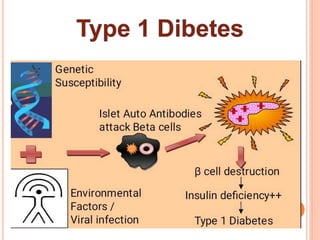
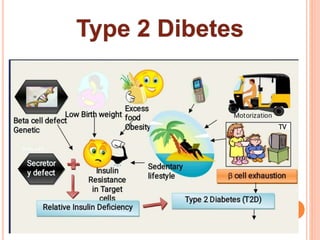
o People who do not produce the necessar amount of
insulin have Dibetes.
o There are two general types of dibetes
Type 1 Dibetes
Type 2 Dibetes
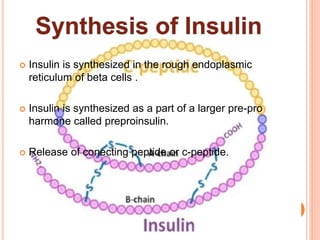
 Insulin is synthesized in the rough endoplasmic
reticulum of beta cells .
 Insulin is synthesized as a part of a larger pre-pro
harmone called preproinsulin.
 Release of conecting peptide or c-peptide.
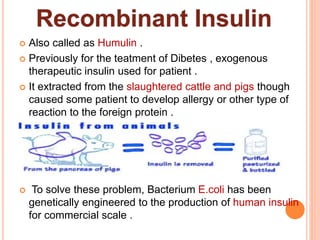
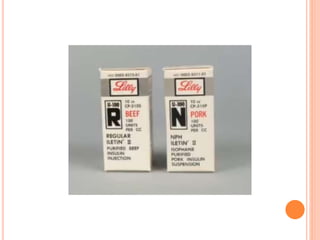
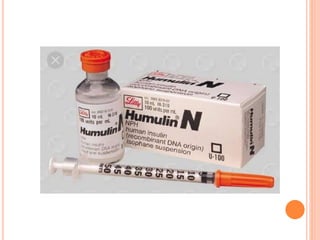
 Also called as Humulin .
 Previously for the teatment of Dibetes , exogenous
therapeutic insulin used for patient .
 It extracted from the slaughtered cattle and pigs though
caused some patient to develop allergy or other type of
reaction to the foreign protein .
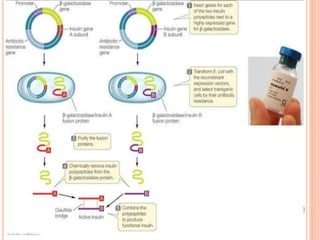
 To solve these problem, Bacterium E.coli has been
genetically engineered to the production of human insulin
for commercial scale .
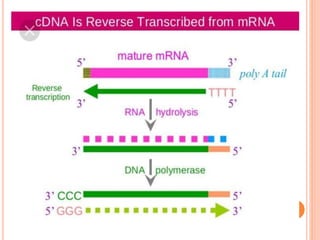
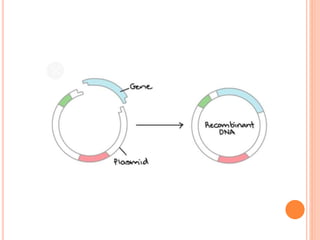
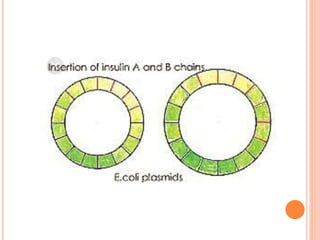
 In 1983, Eli lilly an American company prepared two
DNA sequences corresponding to A and B , chains
of human insulin and introduced them in plasmid of
E.coli to produce insulin chains .
 Chais A and B were produced seprately , extracted
and combined by creating disufide bonds to form
human insulin .human insulin is the only animal
protein to have been made in bacteria in such away
that its structure is obsolutely identical to that of the
natural molecule .
 This reduces the possibility of complication resuting
from antibody production .
Application of Humulin
• Same as human insulin .
• It starts work more slowly but lasts longer than regular
insulin.
• Insulin isophene works by helping blood sugar (glucose)
get into cells so your body can use it for energy.
Insulin

Insulin

  • 2.
     Insulin isa harmone that regulates the amount of glucose (sugar) in the blood and is required for the body to function normally .  Insulin is produced by cells in the pancreas, called the islet of langerhans .
  • 3.
    ISLET OF LANGERHANS oThere are three major cell types in islet of langerhans – 1. Beta cells-produce insulin o Insulin isanabolic – increase the storage of glucose fatty acid and amino acid . 2. Alpha cell- produce glucagon. o Glucagon is catabolic- mobilies glucose, fatty acid from stores into the blood stream . o Increase plasma glucose by stimulating hepatic glucogenolysis and glucogenesis . o Increase lipolysis in adipose tissue .
  • 4.
    3. Delta cell-produce somatostatin, which inhibits secretion of insulin, glucagon and pancreatic polypeptide. 4. F(or PP ) cell- responsible for the production of pancreatic polypeptide, which slows absorption of food .
  • 5.
     1921 –Dr. Frederick banting and charles best discovered Insulin .  1923 – Banting and Best recived nobel prize .  1956 – chemical structure of insulin was fully workedout by Sanger. History of Insulin
  • 6.
     Insulin isa polypeptide containing 51 amino acids arranged in a two chains A and B.  A chain contains 21 amino acids.  B chain contains 30 amino acids  Both chains are linked by Disufide bond .
  • 7.
    o People whodo not produce the necessar amount of insulin have Dibetes. o There are two general types of dibetes Type 1 Dibetes Type 2 Dibetes
  • 10.
     Insulin issynthesized in the rough endoplasmic reticulum of beta cells .  Insulin is synthesized as a part of a larger pre-pro harmone called preproinsulin.  Release of conecting peptide or c-peptide.
  • 11.
     Also calledas Humulin .  Previously for the teatment of Dibetes , exogenous therapeutic insulin used for patient .  It extracted from the slaughtered cattle and pigs though caused some patient to develop allergy or other type of reaction to the foreign protein .  To solve these problem, Bacterium E.coli has been genetically engineered to the production of human insulin for commercial scale .
  • 13.
     In 1983,Eli lilly an American company prepared two DNA sequences corresponding to A and B , chains of human insulin and introduced them in plasmid of E.coli to produce insulin chains .  Chais A and B were produced seprately , extracted and combined by creating disufide bonds to form human insulin .human insulin is the only animal protein to have been made in bacteria in such away that its structure is obsolutely identical to that of the natural molecule .  This reduces the possibility of complication resuting from antibody production .
  • 20.
    Application of Humulin •Same as human insulin . • It starts work more slowly but lasts longer than regular insulin. • Insulin isophene works by helping blood sugar (glucose) get into cells so your body can use it for energy.