Learning Objectives
At the end of this module, we will be able to:
• Understand Definition, Function, Importance,
History, of insulin
• Description of Insulin production using rDNA
Technology
• Advantages of recombinant insulin
Outline
Introduction
Structure and function of insulin
Genetic engineering of insulin
Process of insulin formation
Advantages of recombinant insulin
Introduction
• The earliest uses of biotechnology in pharmaceutical
manufacturing is the use of recombinant DNA technology to
modify Escherichia coli bacteria to produce human insulin,
which was performed at Genentech in the early hours of
August 21, 1978, Goeddel succeeded in reconstituting the two
amino acid chains into one molecule: human insulin. With
only twelve employees, Genentech joined the race against the
biggest research institutions in the world.
• Insulin is a hormone produced by β-cells of islets of
Langerhans of pancreas. It was discovered by sir Edward
Sharpey Schafer (1916) while studying Islets of Langerhans
• People who do not produce the necessary amount of insulin
have diabetes.
Structure of insulin
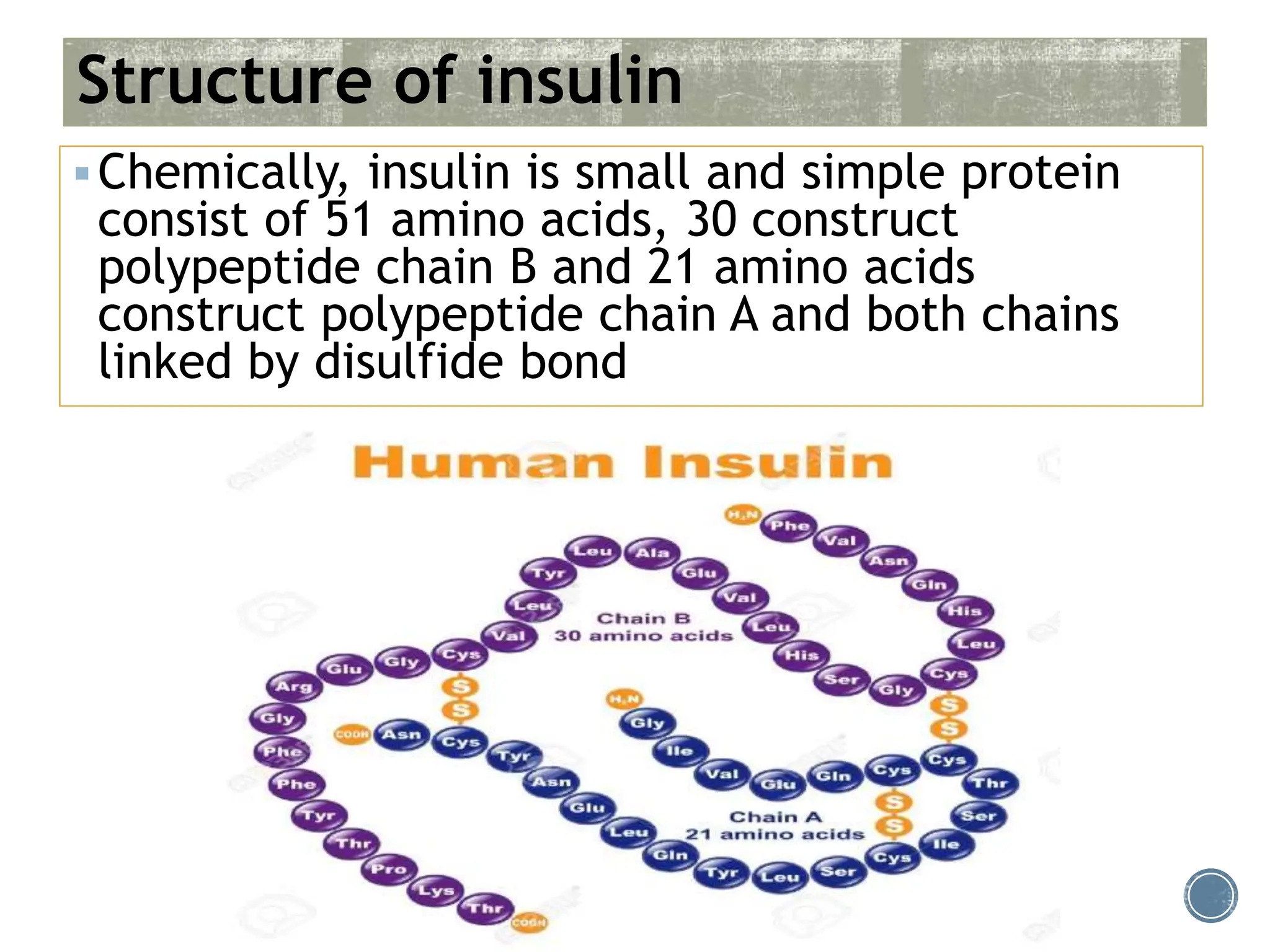
Chemically, insulin is small and simple protein
consist of 51 amino acids, 30 construct
polypeptide chain B and 21 amino acids
construct polypeptide chain A and both chains
linked by disulfide bond
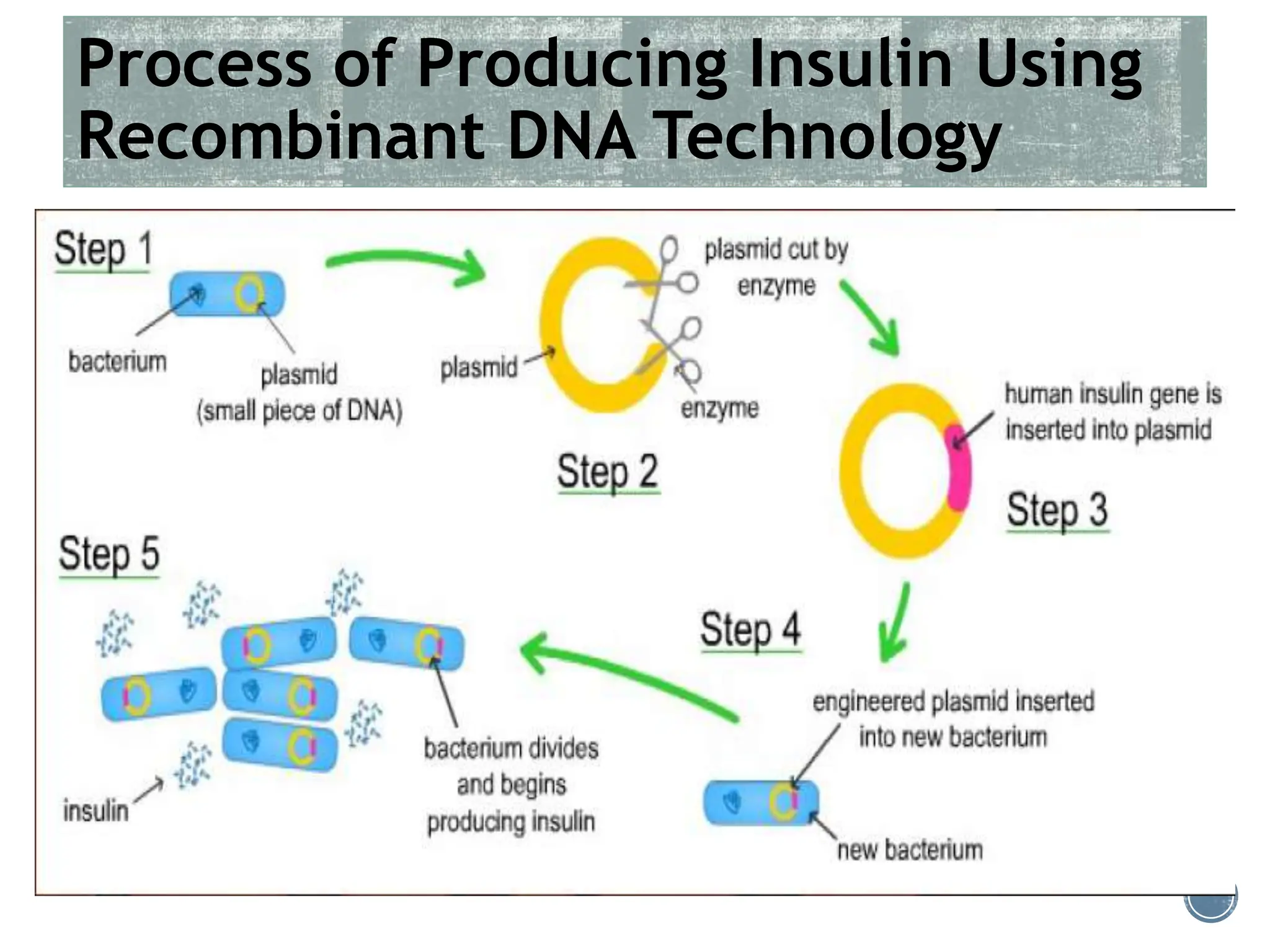
Process of Producing Insulin Using
Recombinant DNA Technology
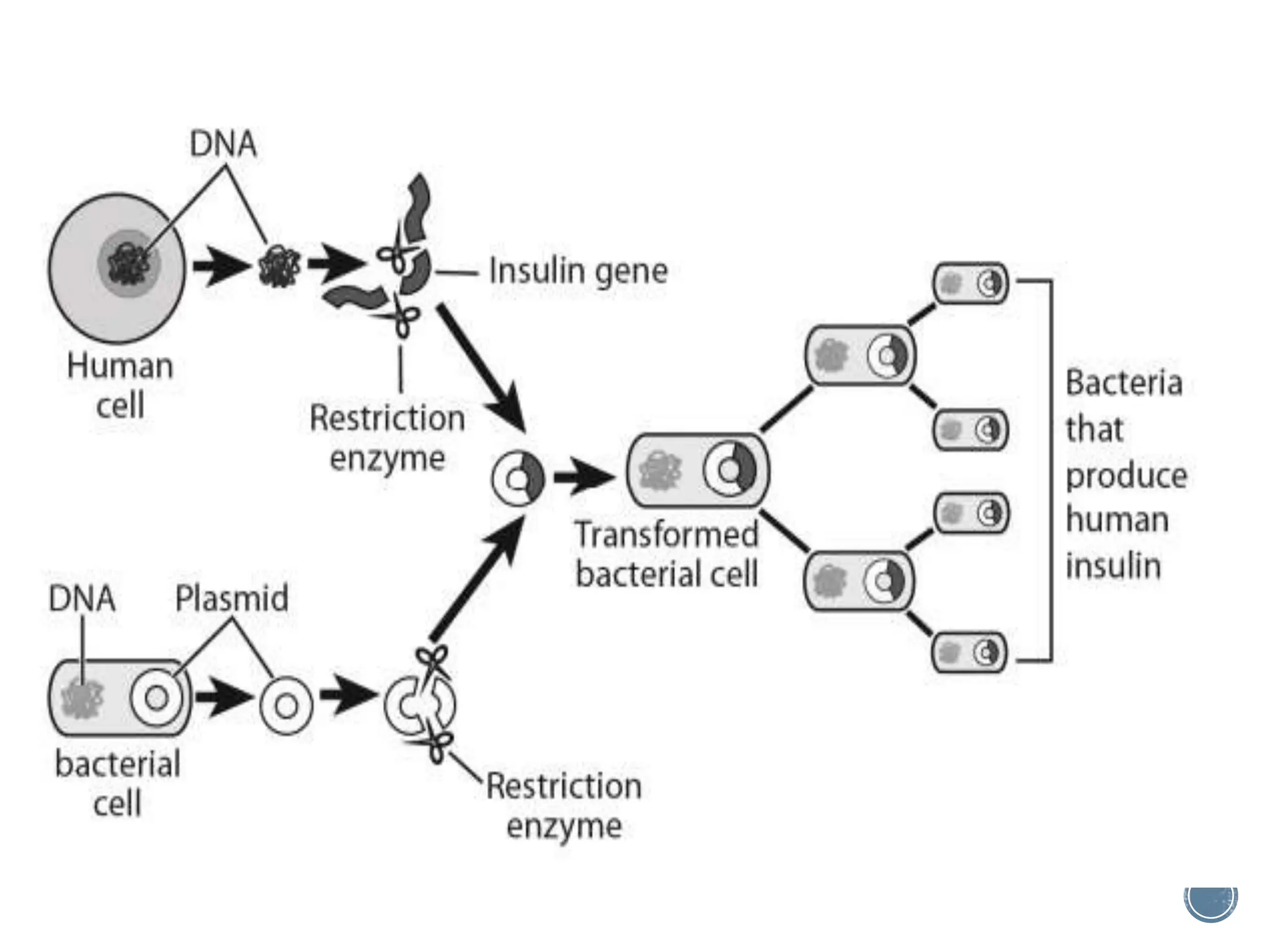
First Step (Preparing)
 The human gene is isolated. The mRNA is taken from the
cell of islet of Langerhans.
Messenger RNA is a molecule of RNA that encodes a chemical
"blueprint" for a protein product.
The isolated gene contains the code of the human DNA for the
production of insulin.
 The plasmid DNA of the bacterial cell is taken out of the
cell.
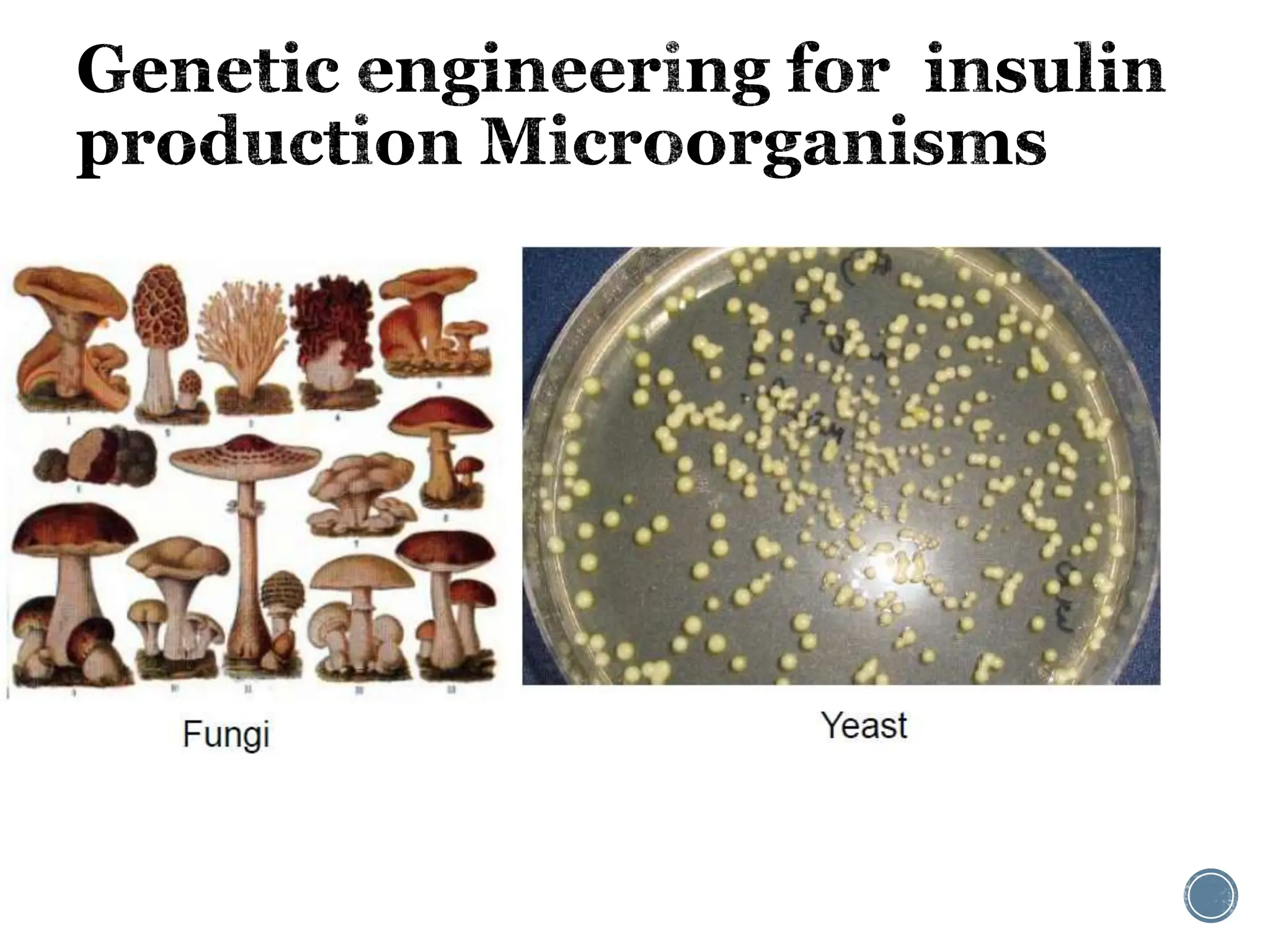
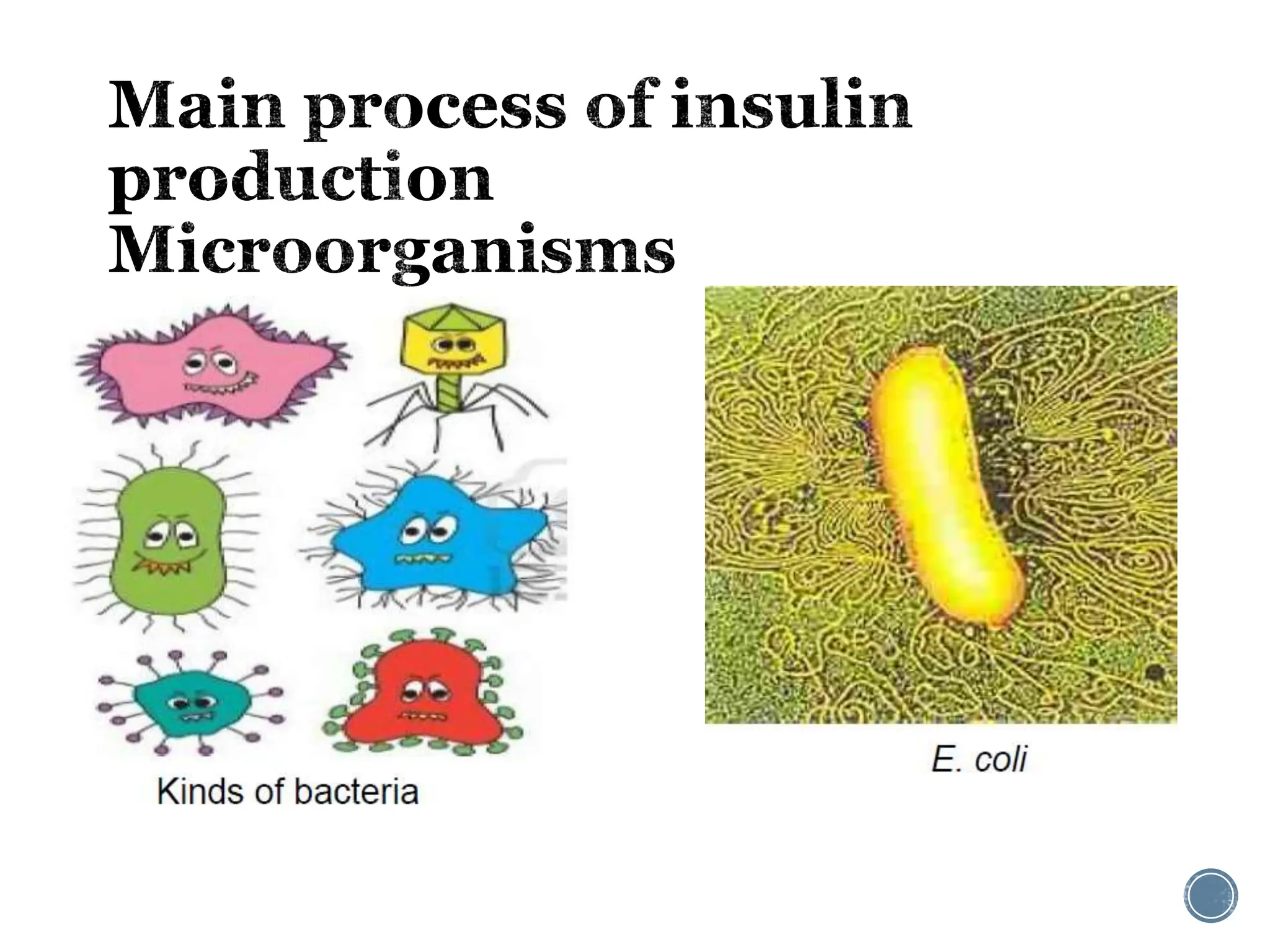
NOTE: Escherichia coli (E. Coli) bacteria is widely used in
producing insulin but yeast may also be used.
Second Step (Cutting)
 The plasmid DNA of the bacteria is cut out producing plasmid ring
which is an empty segment of the DNA.
A Restriction Enzyme is an enzyme that cuts DNA at specific recognition
nucleotide sequences known as restriction sites.
A segment of DNA known as sticky ends.
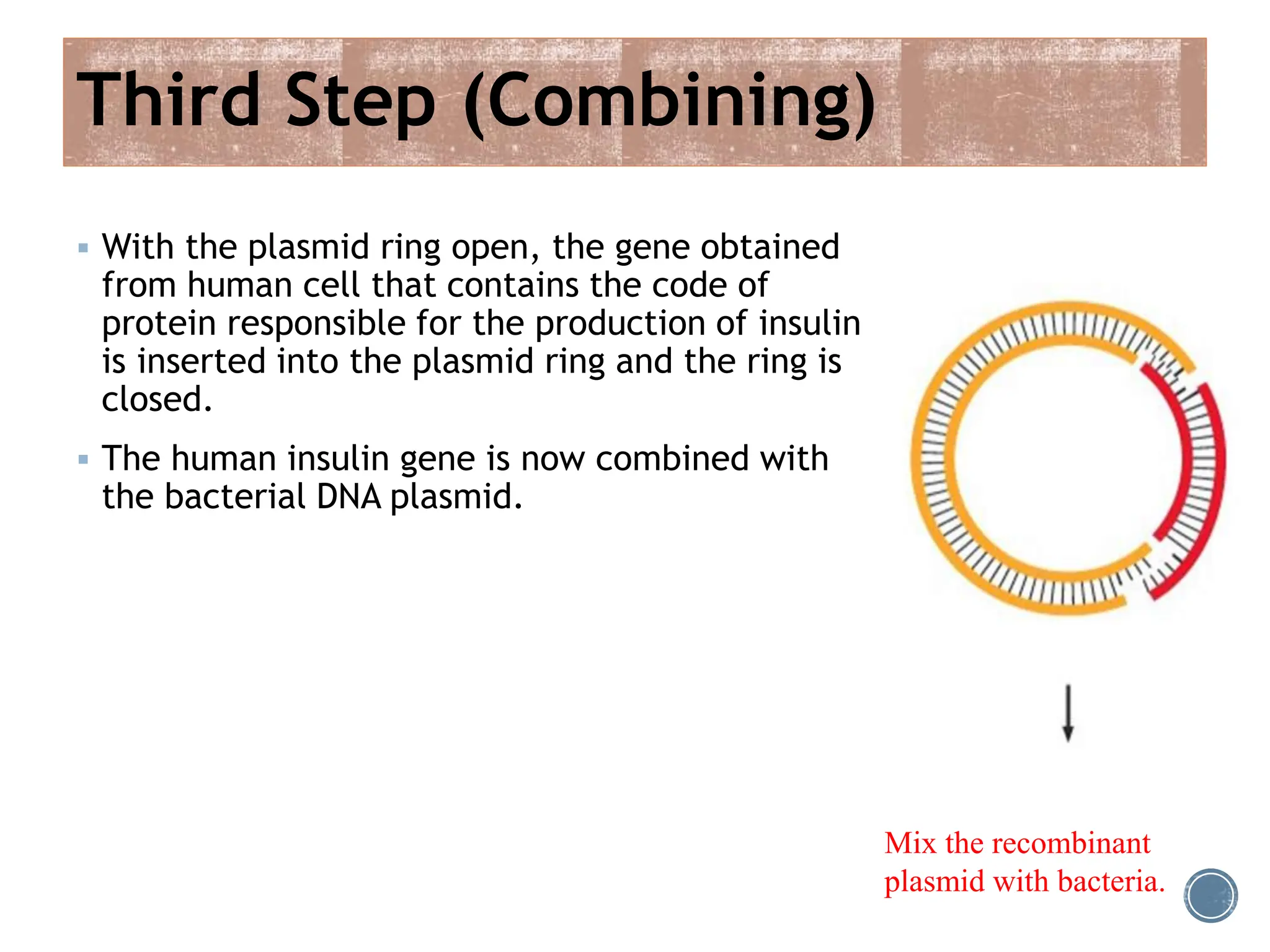
Third Step (Combining)
 With the plasmid ring open, the gene obtained
from human cell that contains the code of
protein responsible for the production of insulin
is inserted into the plasmid ring and the ring is
closed.
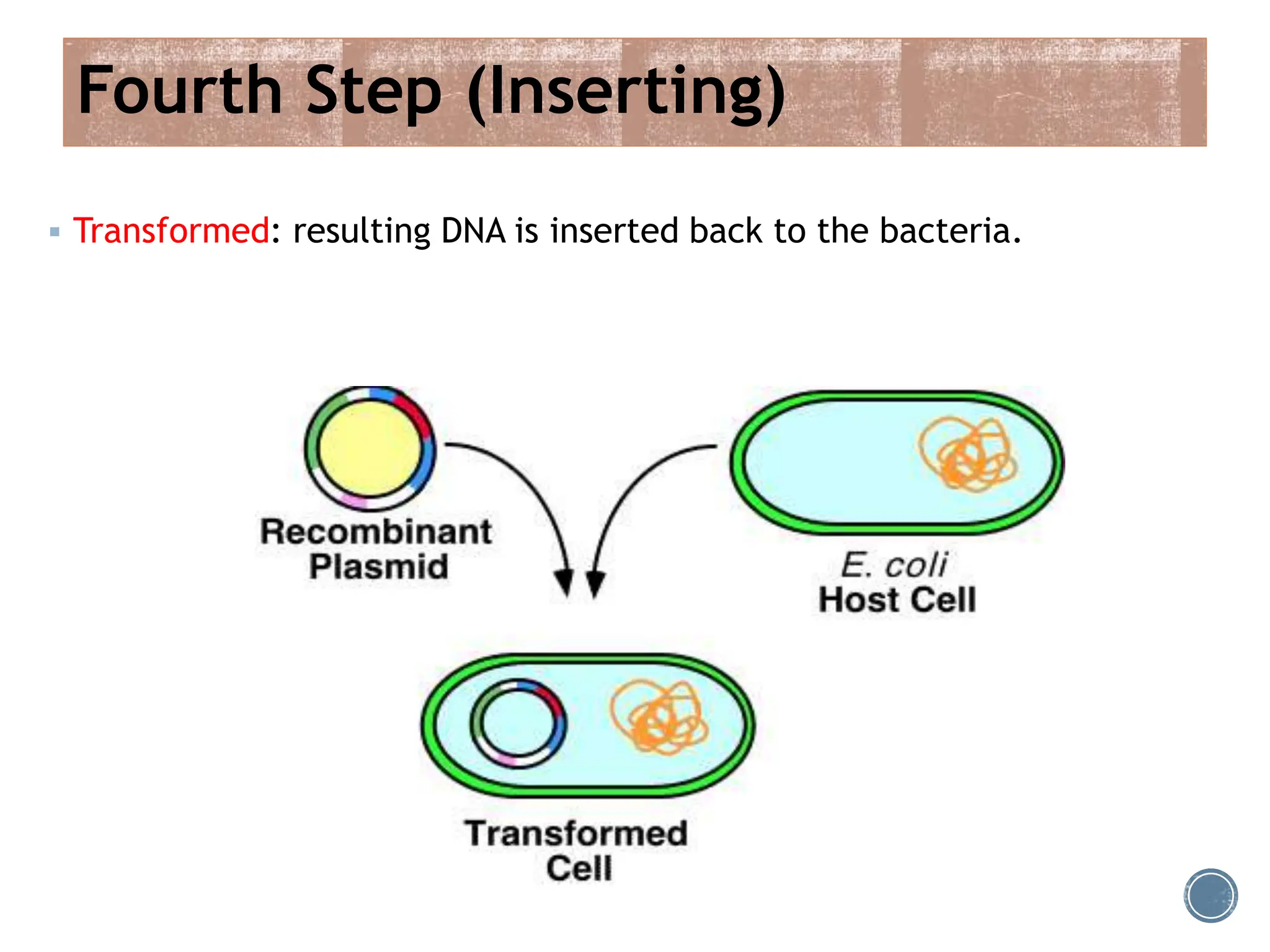
 The human insulin gene is now combined with
the bacterial DNA plasmid.
Mix the recombinant
plasmid with bacteria.
Fourth Step (Inserting)
 Transformed: resulting DNA is inserted back to the bacteria.
Production
 The cells need nutrients in order to grow, divide, and live. While
they live, the bacterial cell processes turn on the gene for
human insulin and the insulin is produced in the cell. When the
bacterial cells reproduce by dividing, the human insulin gene is
also reproduced in the newly created cells.
Advantages of recombinant insulin :
2. It is safe and has the least side effects, unlike the insulin obtained from non-
human sources such as pigs and cows.
3. Recombinant insulin can be synthesized in large quantities in a short period of
time.
4. It does not cause any immune rejection like animal insulin.
6. Recombinant insulin can be used for insulin therapy for diabetes mellitus patients.
7. It does not cause allergic responses.
8. It is rapidly absorbed from the site of injection.
9. It has increased shelf life and does not degrade rapidly.
Other human hormones of
genetic engineering production
www.google.com
www.byjus.com

insulinproductionbygeneticengineering-191102112850.pptx

  • 2.
    Learning Objectives At theend of this module, we will be able to: • Understand Definition, Function, Importance, History, of insulin • Description of Insulin production using rDNA Technology • Advantages of recombinant insulin
  • 3.
    Outline Introduction Structure and functionof insulin Genetic engineering of insulin Process of insulin formation Advantages of recombinant insulin
  • 4.
    Introduction • The earliestuses of biotechnology in pharmaceutical manufacturing is the use of recombinant DNA technology to modify Escherichia coli bacteria to produce human insulin, which was performed at Genentech in the early hours of August 21, 1978, Goeddel succeeded in reconstituting the two amino acid chains into one molecule: human insulin. With only twelve employees, Genentech joined the race against the biggest research institutions in the world. • Insulin is a hormone produced by β-cells of islets of Langerhans of pancreas. It was discovered by sir Edward Sharpey Schafer (1916) while studying Islets of Langerhans • People who do not produce the necessary amount of insulin have diabetes.
  • 6.
    Structure of insulin Chemically,insulin is small and simple protein consist of 51 amino acids, 30 construct polypeptide chain B and 21 amino acids construct polypeptide chain A and both chains linked by disulfide bond
  • 9.
    Process of ProducingInsulin Using Recombinant DNA Technology
  • 10.
    First Step (Preparing) The human gene is isolated. The mRNA is taken from the cell of islet of Langerhans. Messenger RNA is a molecule of RNA that encodes a chemical "blueprint" for a protein product. The isolated gene contains the code of the human DNA for the production of insulin.  The plasmid DNA of the bacterial cell is taken out of the cell. NOTE: Escherichia coli (E. Coli) bacteria is widely used in producing insulin but yeast may also be used.
  • 11.
    Second Step (Cutting) The plasmid DNA of the bacteria is cut out producing plasmid ring which is an empty segment of the DNA. A Restriction Enzyme is an enzyme that cuts DNA at specific recognition nucleotide sequences known as restriction sites. A segment of DNA known as sticky ends.
  • 12.
    Third Step (Combining) With the plasmid ring open, the gene obtained from human cell that contains the code of protein responsible for the production of insulin is inserted into the plasmid ring and the ring is closed.  The human insulin gene is now combined with the bacterial DNA plasmid. Mix the recombinant plasmid with bacteria.
  • 13.
    Fourth Step (Inserting) Transformed: resulting DNA is inserted back to the bacteria.
  • 14.
    Production  The cellsneed nutrients in order to grow, divide, and live. While they live, the bacterial cell processes turn on the gene for human insulin and the insulin is produced in the cell. When the bacterial cells reproduce by dividing, the human insulin gene is also reproduced in the newly created cells.
  • 16.
    Advantages of recombinantinsulin : 2. It is safe and has the least side effects, unlike the insulin obtained from non- human sources such as pigs and cows. 3. Recombinant insulin can be synthesized in large quantities in a short period of time. 4. It does not cause any immune rejection like animal insulin. 6. Recombinant insulin can be used for insulin therapy for diabetes mellitus patients. 7. It does not cause allergic responses. 8. It is rapidly absorbed from the site of injection. 9. It has increased shelf life and does not degrade rapidly.
  • 17.
    Other human hormonesof genetic engineering production
  • 18.