FICCI               CE


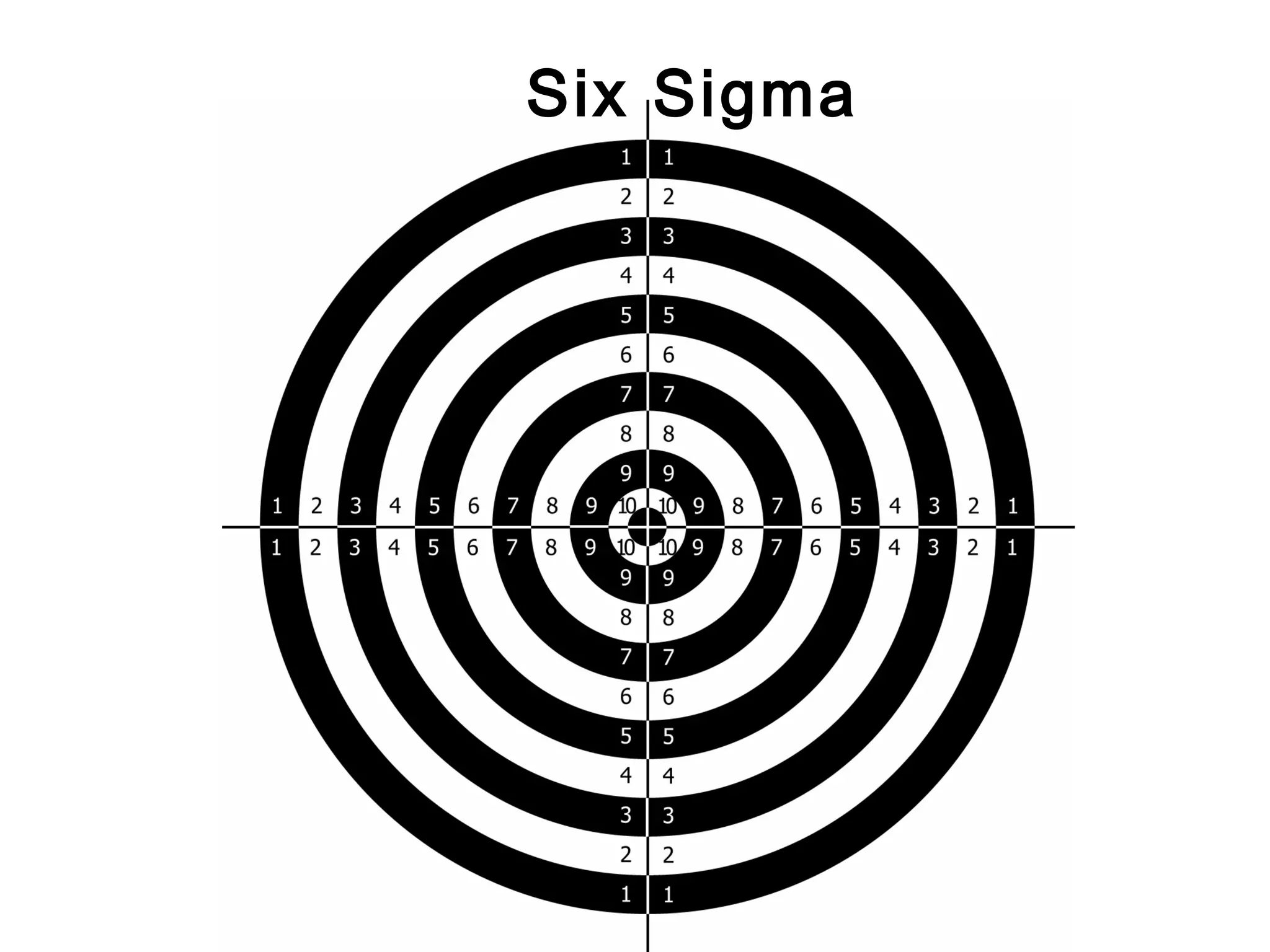
        Six Sigma
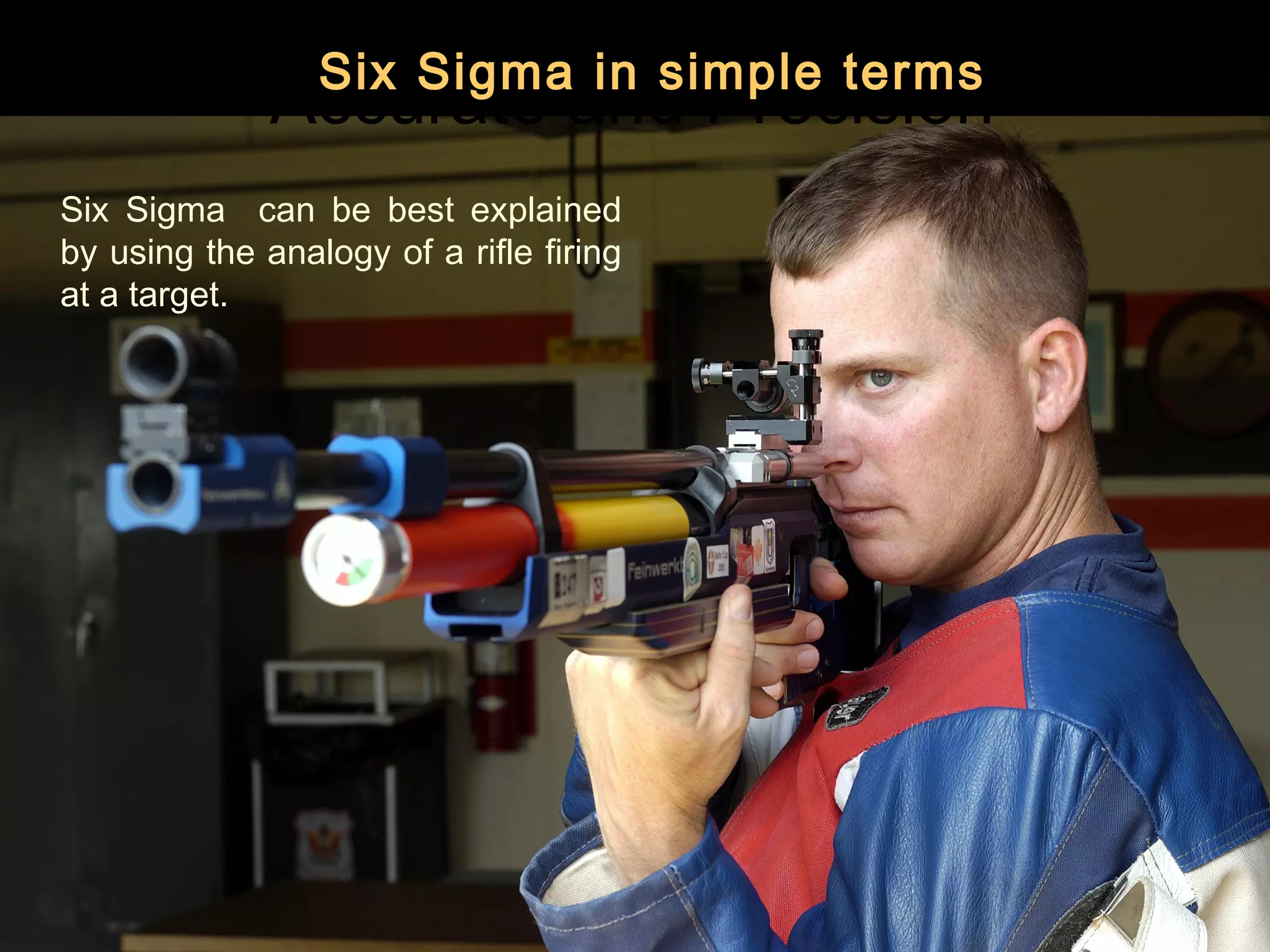
Six Sigma in simple terms
              Accurate and Precision
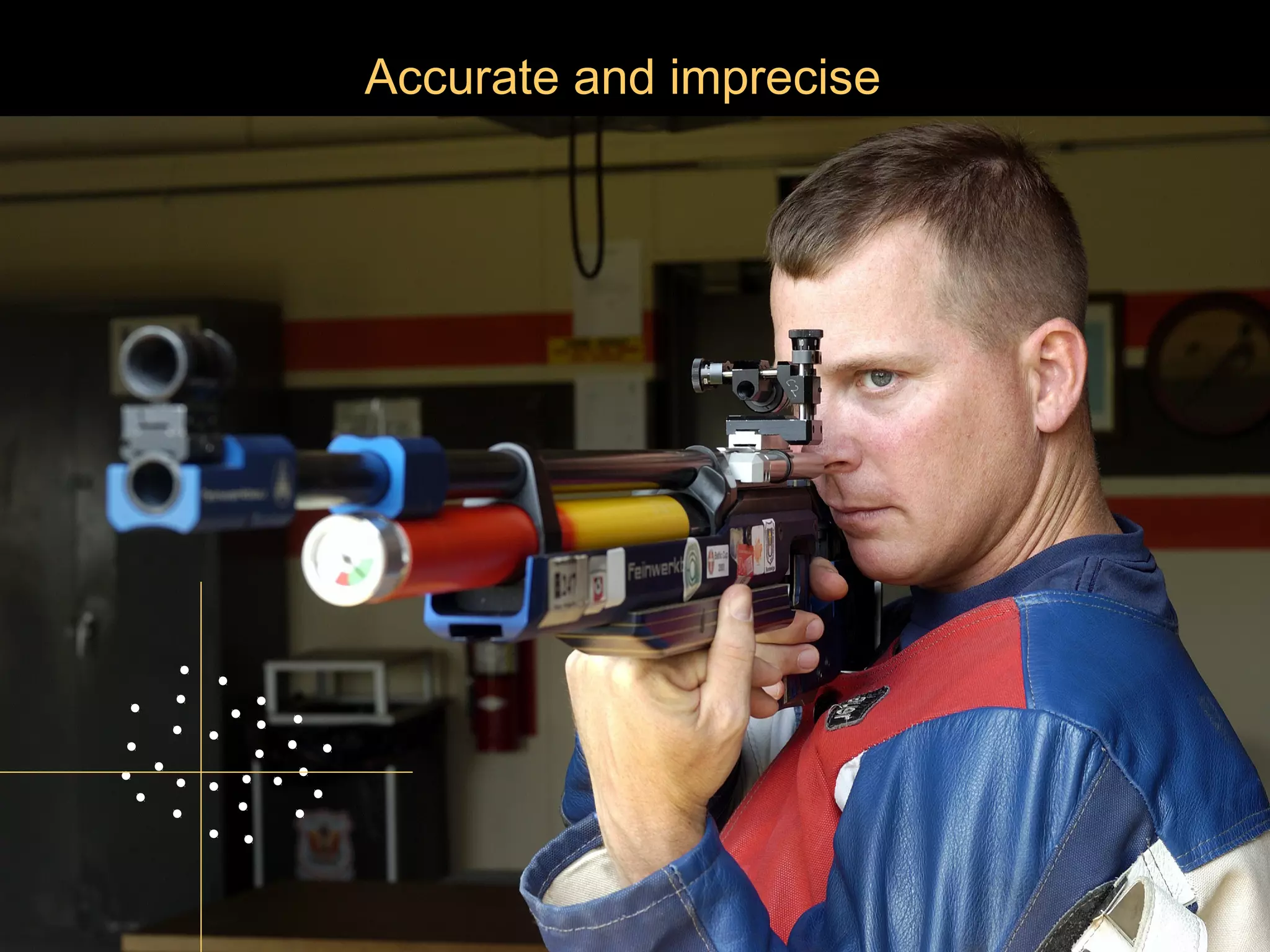
Six Sigma can be best explained
by using the analogy of a rifle firing
at a target.
Accuracy and precision
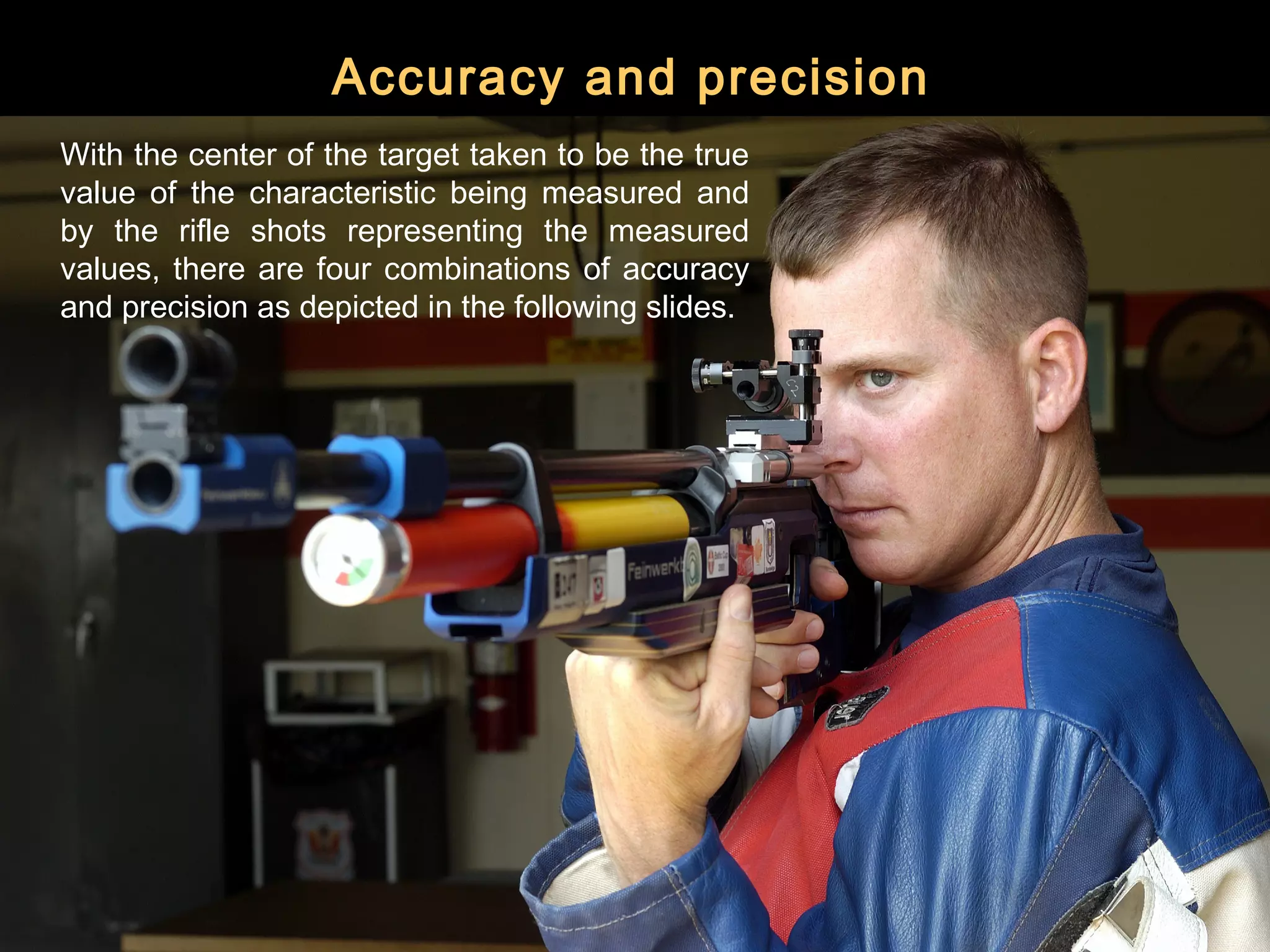
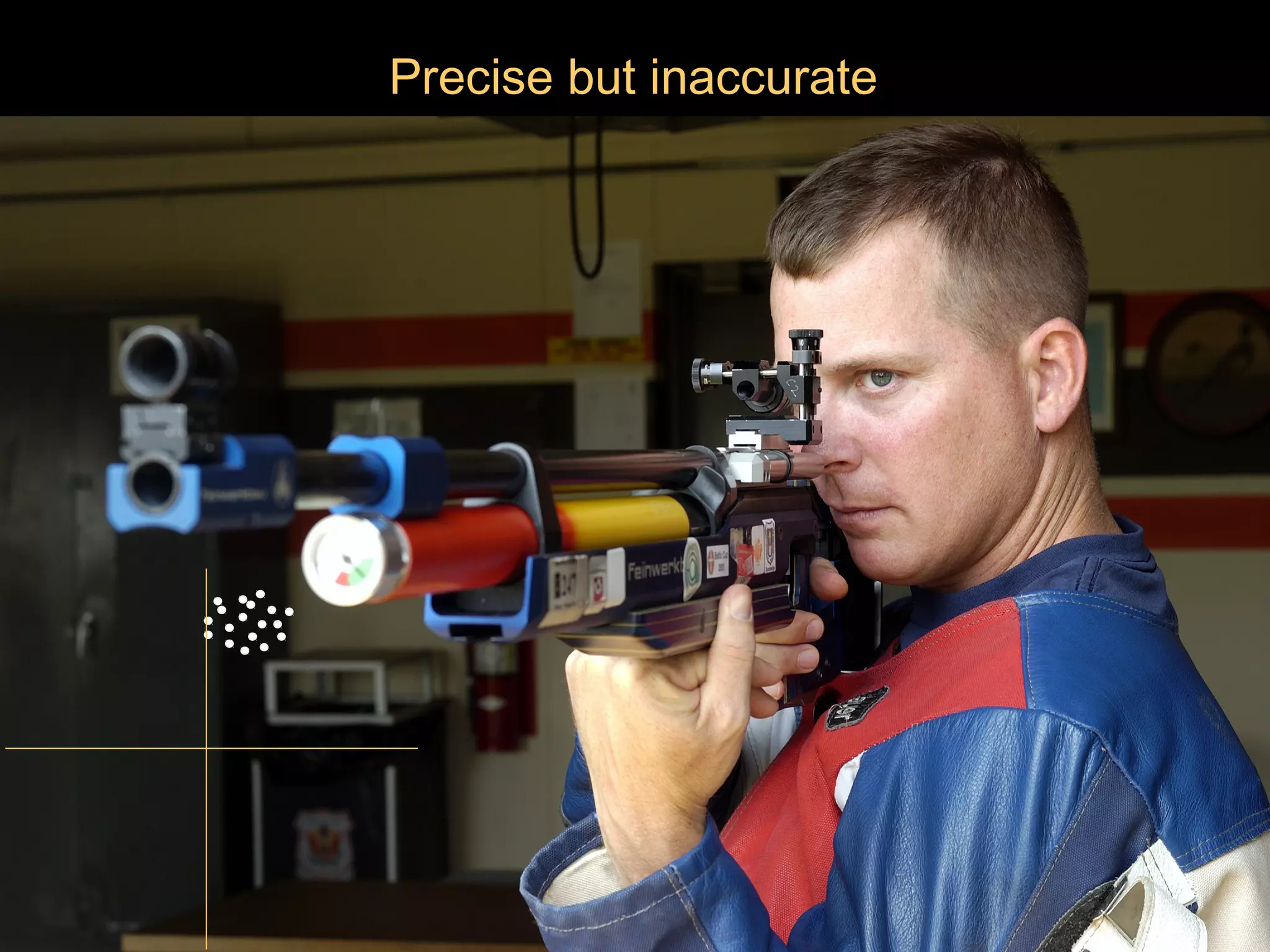
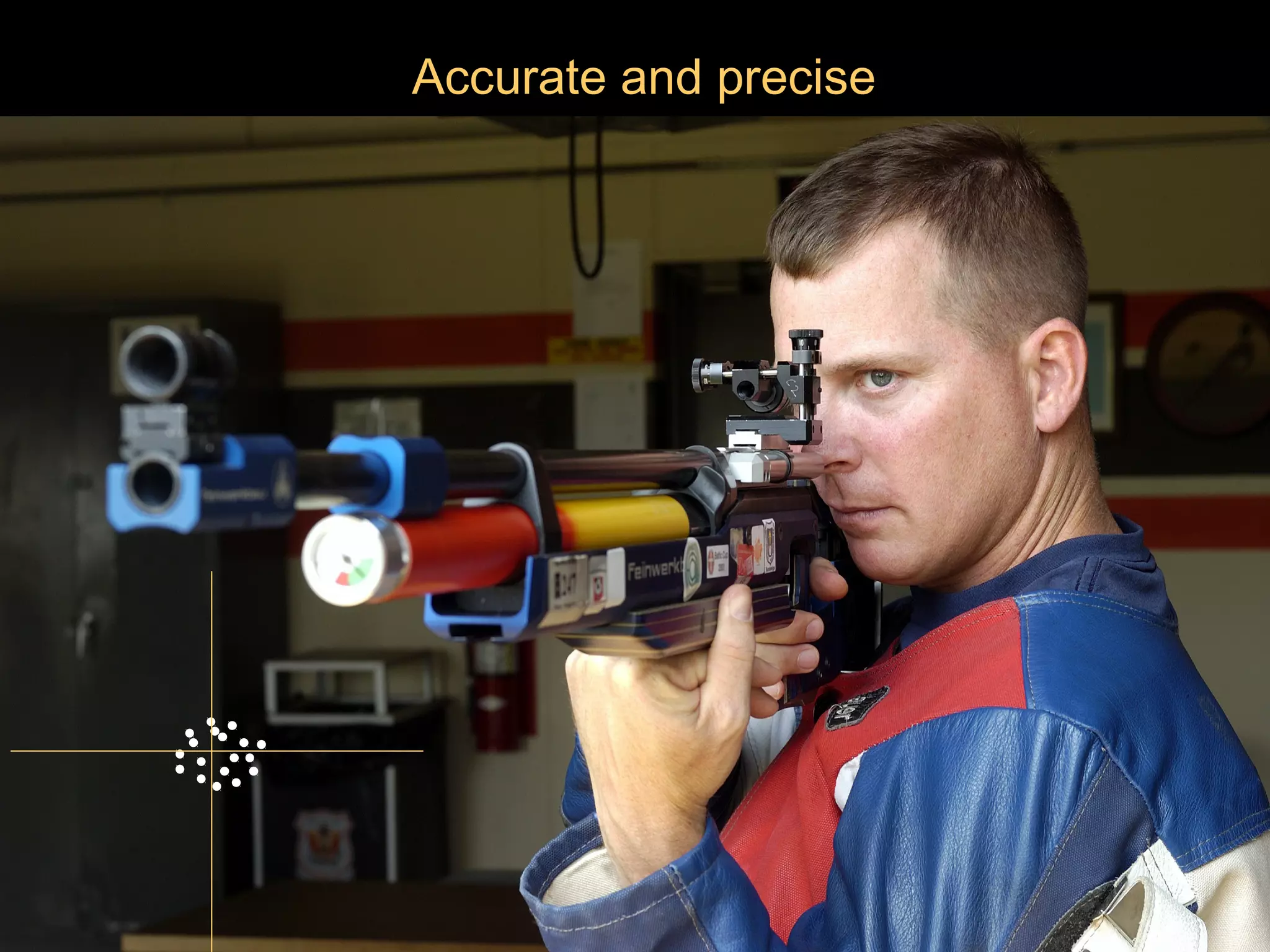
With the center of the target taken to be the true
value of the characteristic being measured and
by the rifle shots representing the measured
values, there are four combinations of accuracy
and precision as depicted in the following slides.
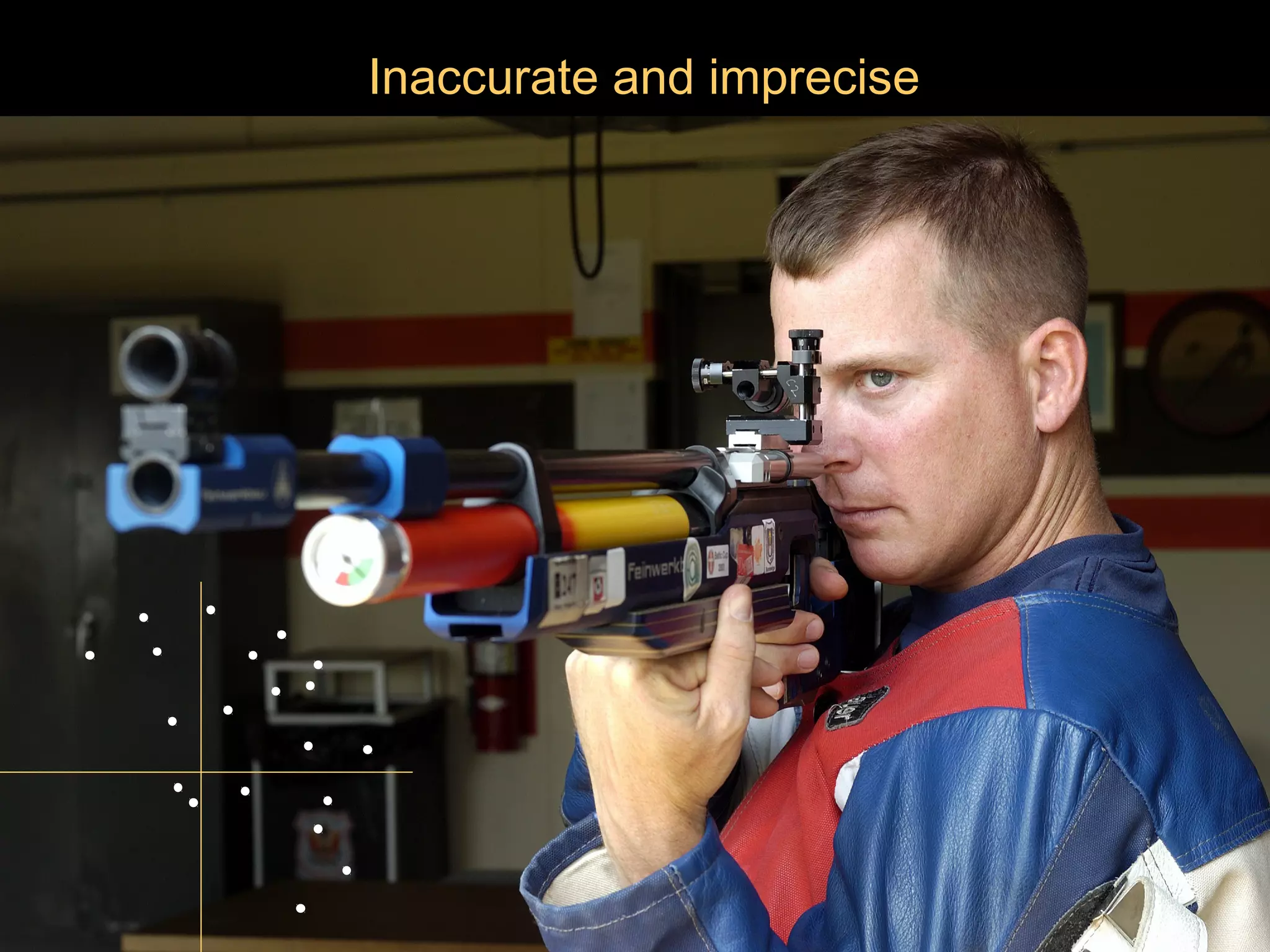
Inaccurate and imprecise
Accurate and imprecise
Precise but inaccurate
Accurate and precise
Objectives of Six Sigma


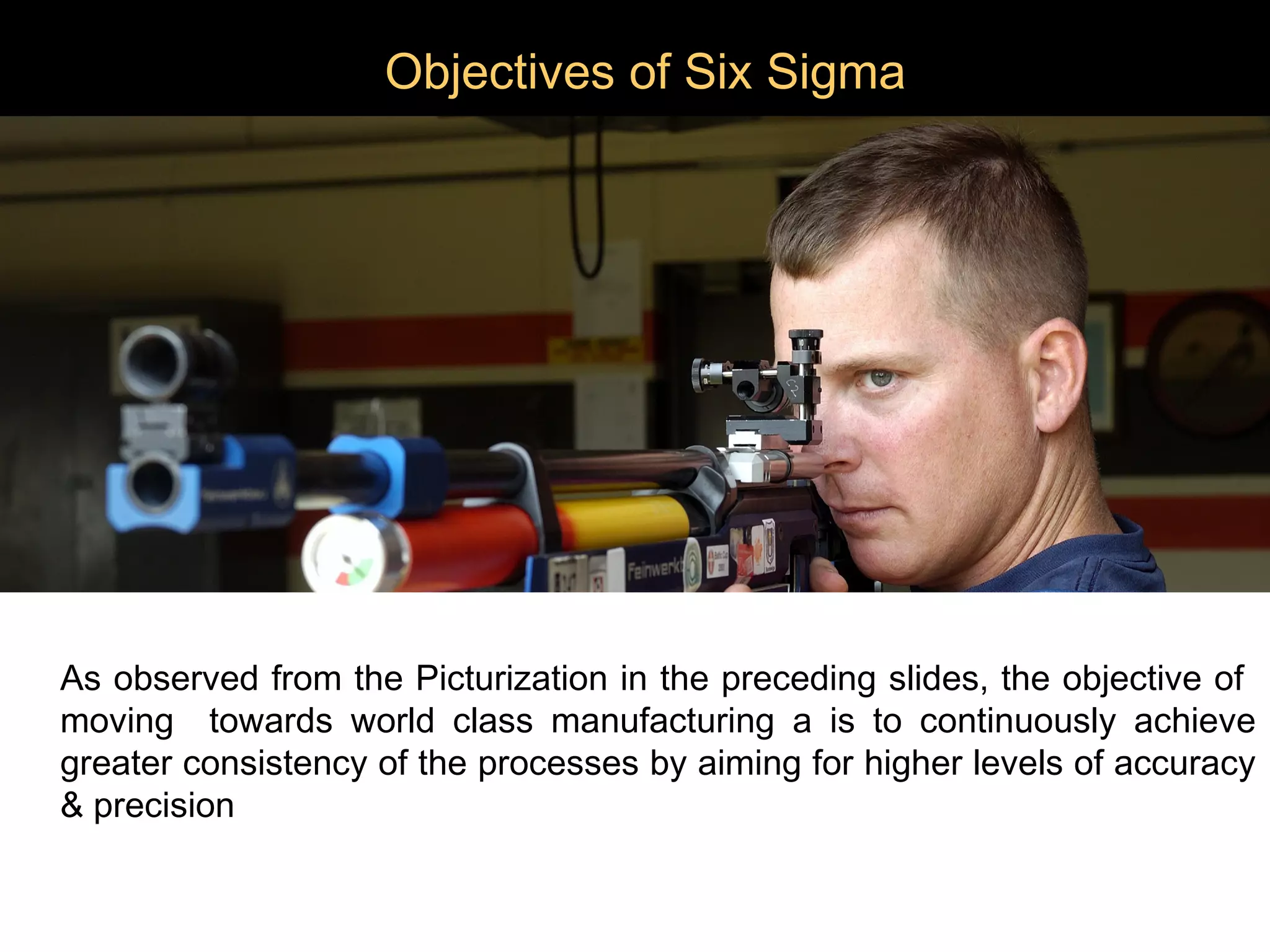
As observed from the Picturization in the preceding slides, the objective of
moving towards world class manufacturing a is to continuously achieve
greater consistency of the processes by aiming for higher levels of accuracy
& precision
FICCI                                                                         CE


                 Sigma in statistical terms


        Standard deviation is also referred to as the Greek letter sigma in
        quality management literature. Consequently process variation
        can be described by how many sigmas ( i.e how many multiples of
        standard deviation or SD ) fit within the specification limits.The
        higher this number, the better is the quality and vice versa.
        Sigma is a statistical measure of the quality consistency
        for a particular process / product.
FICCI                                                                      CE


        Sigma process


        From a sigma process we come to know that at what distance,
        in terms of the standard deviation, the specification limits are
        placed from the target value.
FICCI                                                                         CE


        Move beyond 3 sigma


          Until a few years back all statistical process controls were
          designed on the basis of 3 sigma limits. It is only in the recent
          years that this concept has been challenged and the
          organizations have started looking for quality levels beyond 3
          Sigma.
FICCI                                                                                            CE


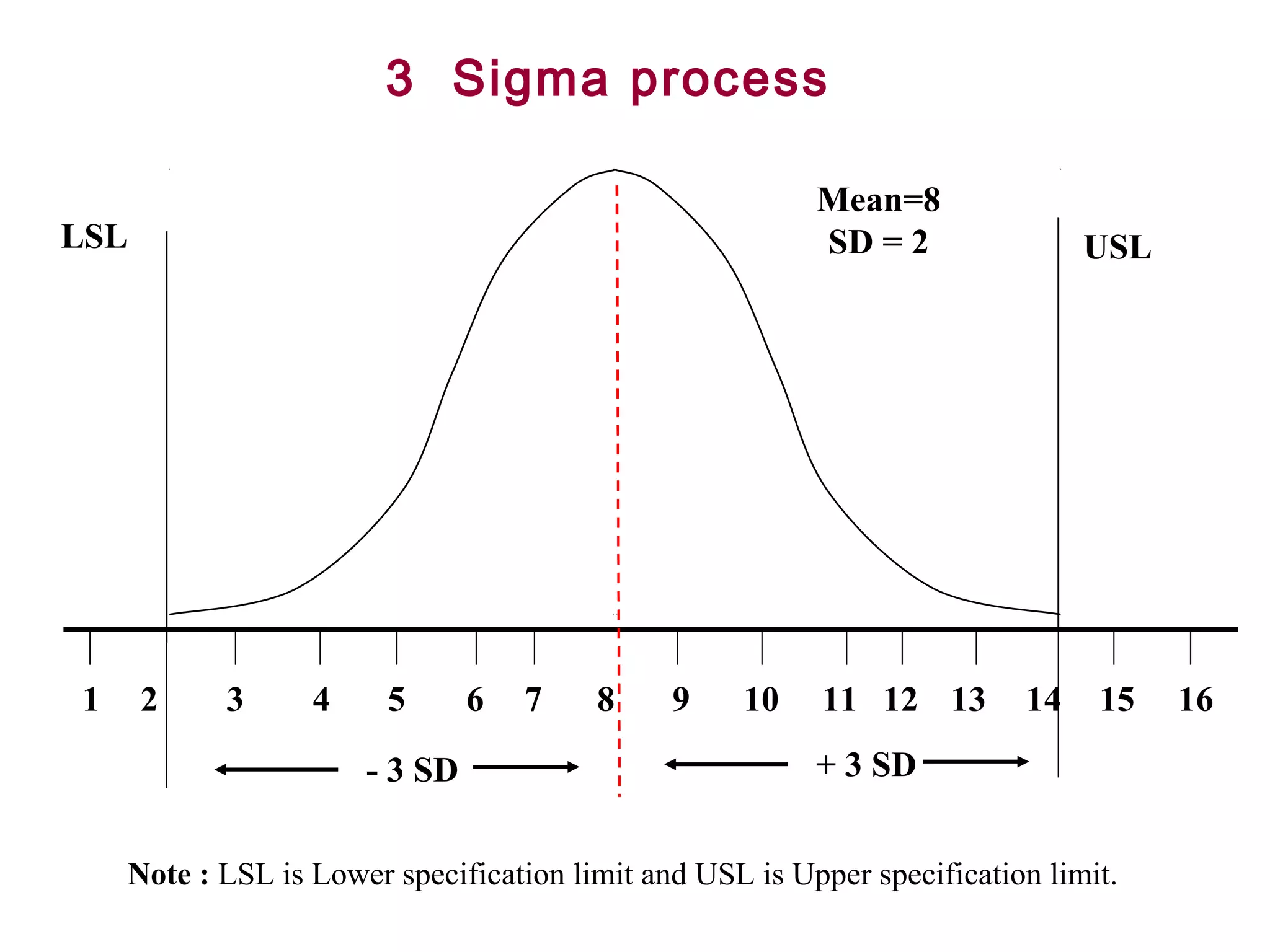
                                3 Sigma process

                                                                 Mean=8
    LSL                                                          SD = 2               USL


        1    2     3      4     5      6   7    8     9    10     11 12 13       14    15   16

                              - 3 SD                             + 3 SD


            Note : LSL is Lower specification limit and USL is Upper specification limit.
FICCI                                                                              CE


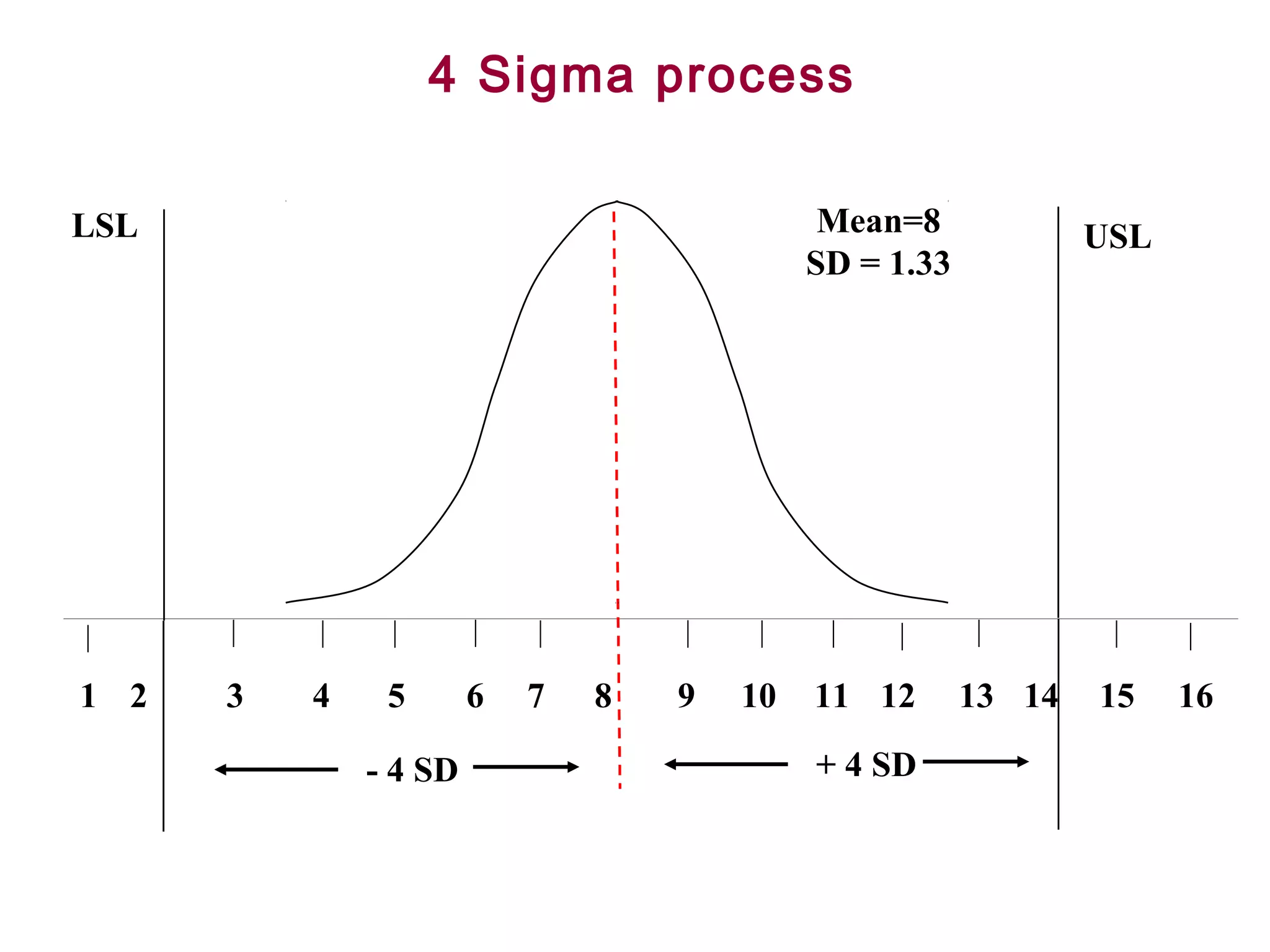
                           4 Sigma process

        LSL                                          Mean=8             USL
                                                    SD = 1.33


        1 2   3   4    5       6   7   8   9   10   11 12       13 14   15    16

                      - 4 SD                        + 4 SD
FICCI                                                                          CE


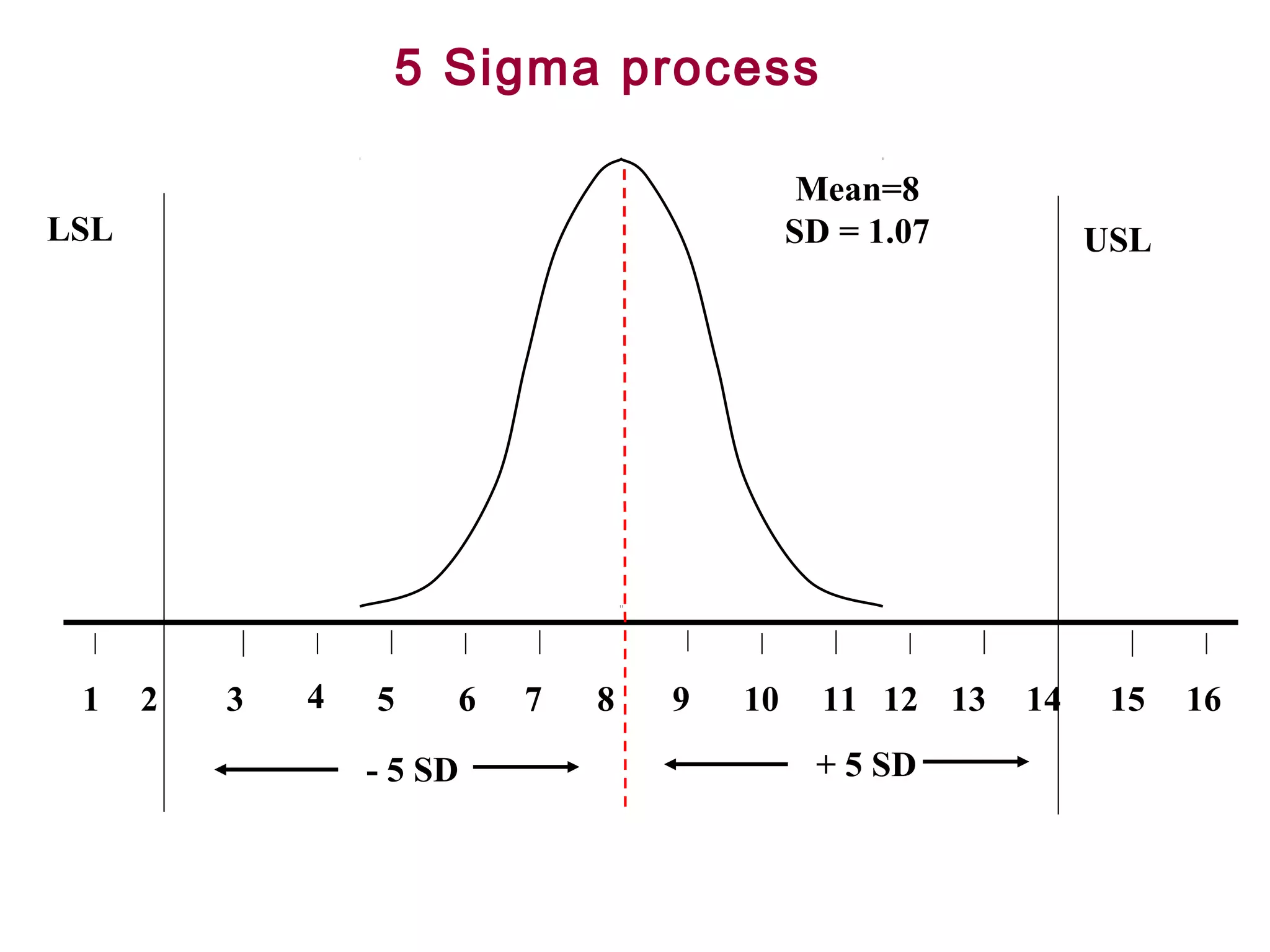
                         5 Sigma process

                                                   Mean=8
   LSL                                            SD = 1.07         USL


        1   2   3   4   5    6   7   8   9   10     11 12 13   14    15   16

                        - 5 SD                     + 5 SD
FICCI                                                                             CE


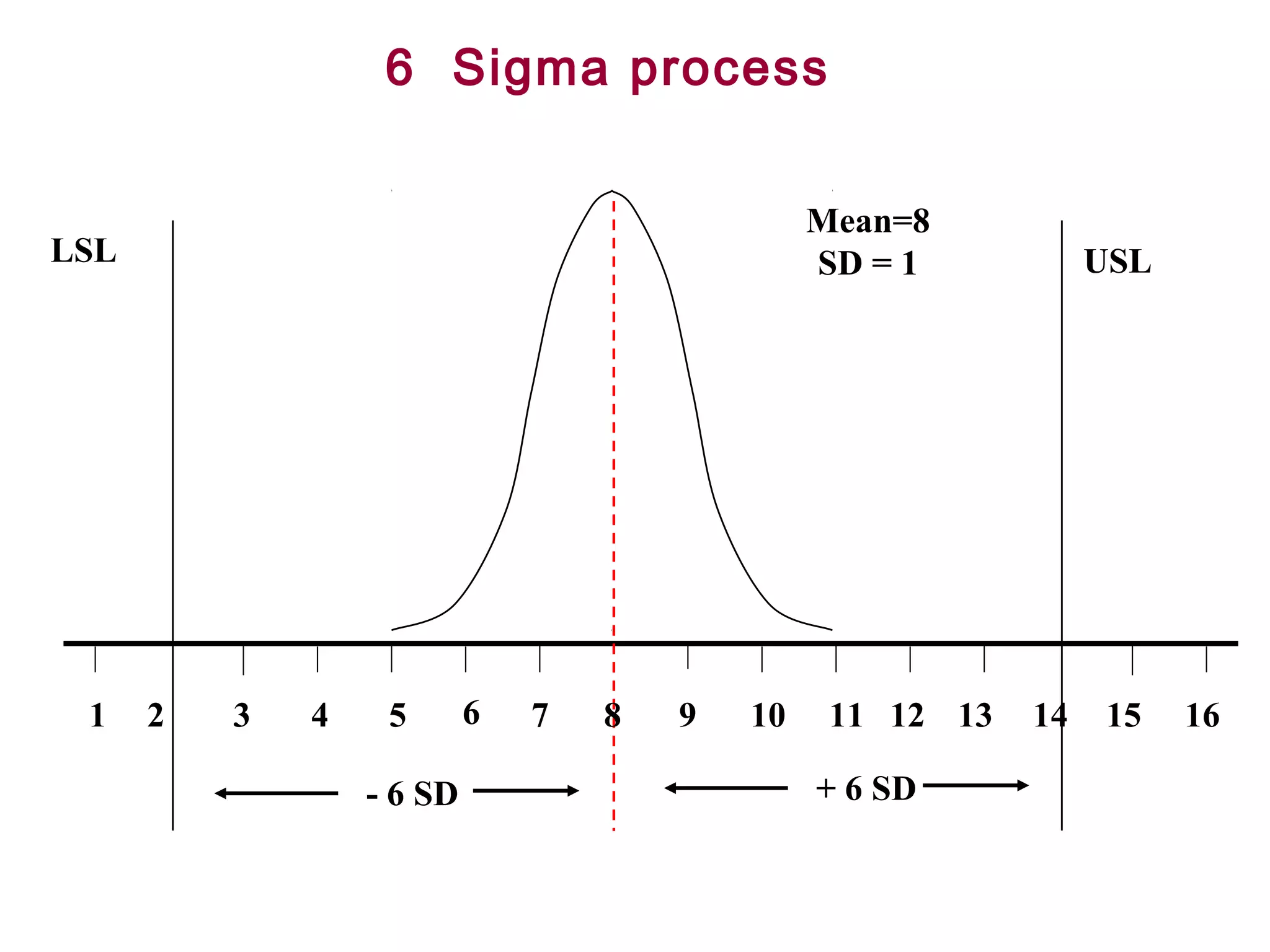
                         6 Sigma process

                                                      Mean=8
   LSL                                                SD = 1           USL


        1   2   3   4    5       6   7   8   9   10    11 12 13   14   15    16

                        - 6 SD                        + 6 SD
FICCI                                                                   CE


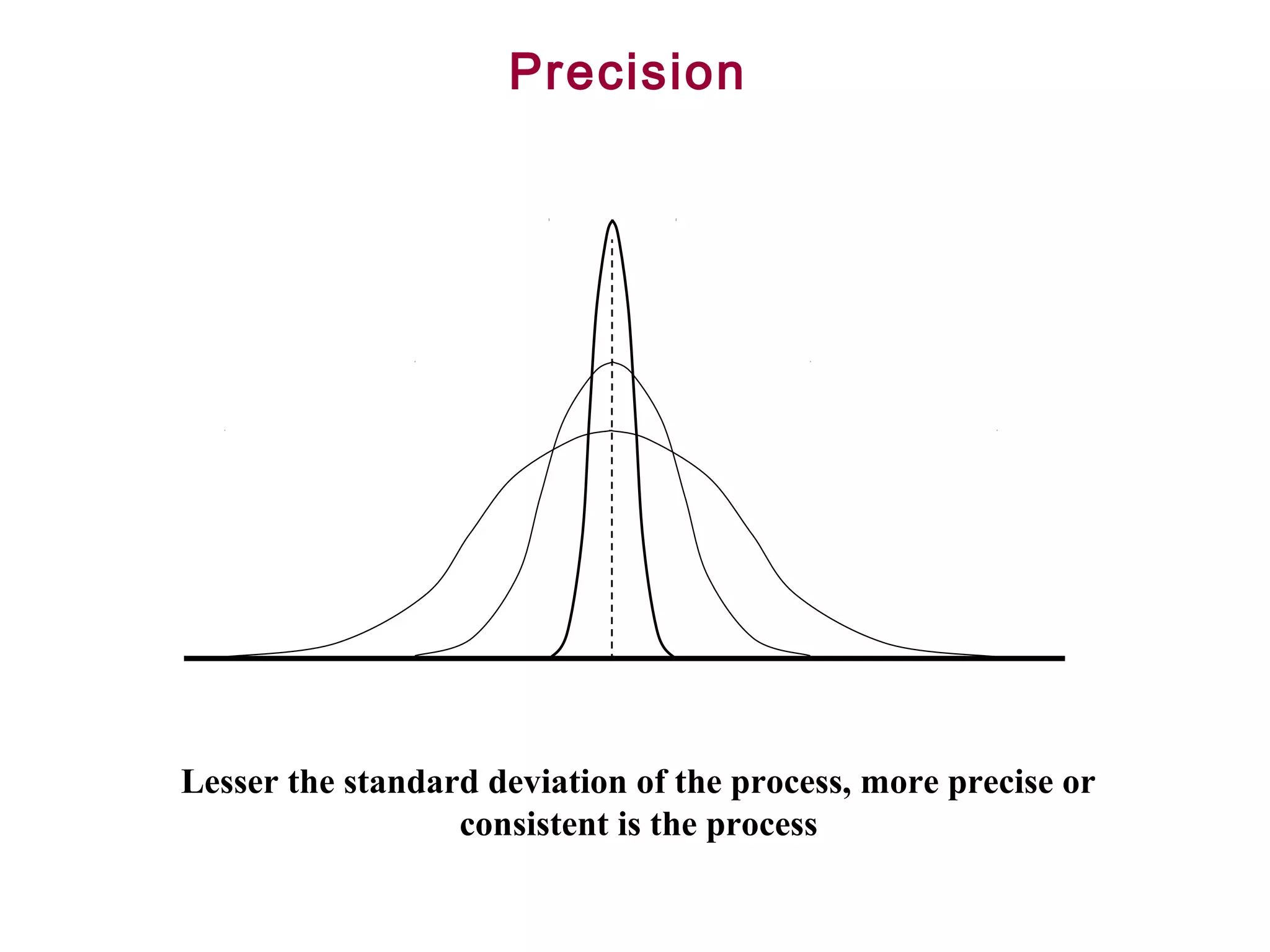
                             Precision


        Lesser the standard deviation of the process, more precise or
                          consistent is the process
FICCI                                                                            CE


         3 Sigma Vs 6 Sigma


        The goal of Six Sigma program is to reduce the variation in every
        process to such an extent that the spread of 12 sigmas i.e. 6 Sigmas
        on either side of the mean fits within the process specifications. The
        figure on next slide shows what this looks like.
FICCI                                                                                                 CE

                                3 Sigma Vs 6 Sigma
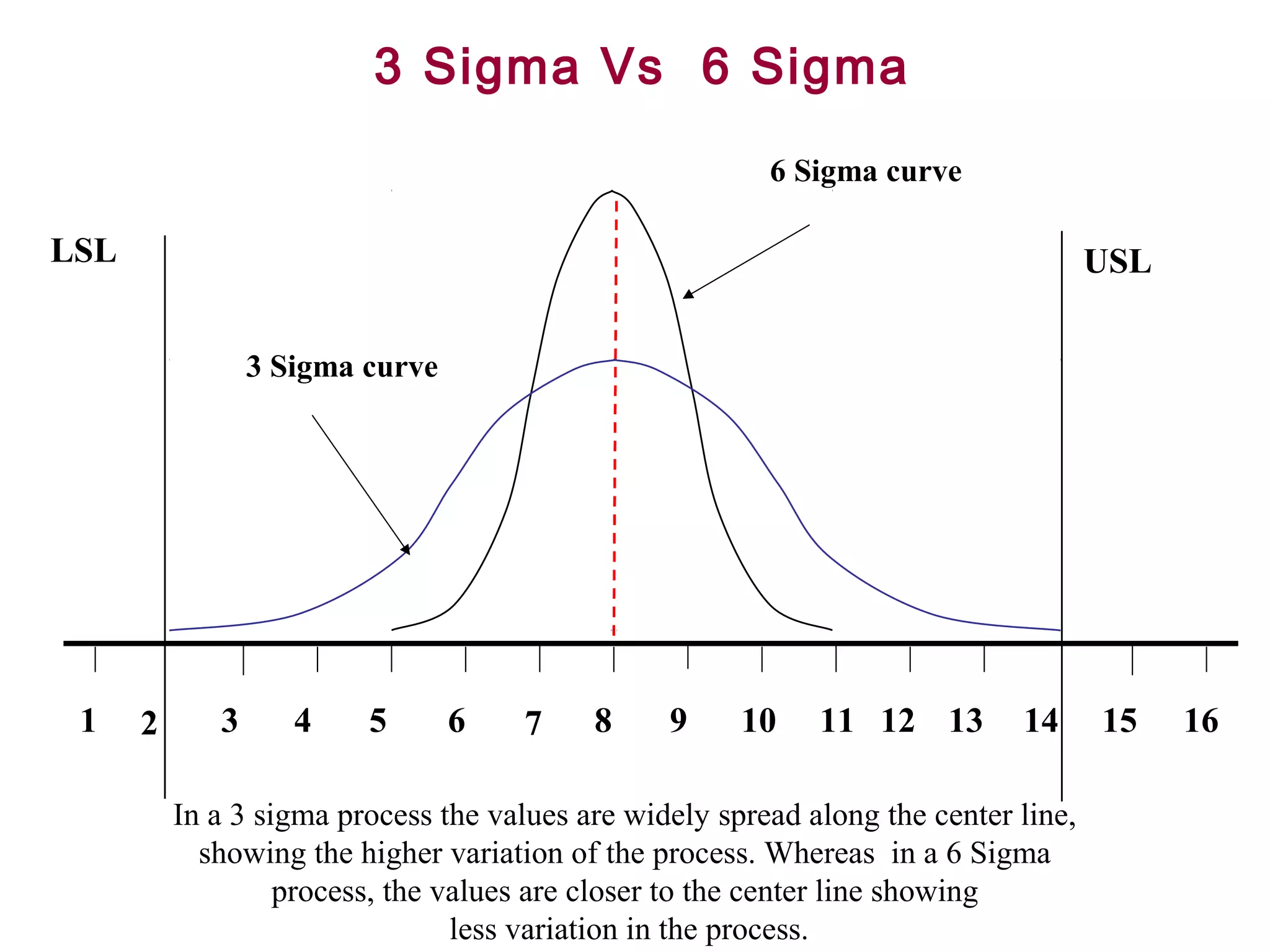
                                                               6 Sigma curve

   LSL                                                                                     USL

                       3 Sigma curve


        1   2      3      4    5       6    7    8     9     10    11 12 13        14      15    16

                In a 3 sigma process the values are widely spread along the center line,
                  showing the higher variation of the process. Whereas in a 6 Sigma
                         process, the values are closer to the center line showing
                                       less variation in the process.
FICCI                                                                                                 CE


        3 Sigma Vs 6 Sigma


         The comparison on the previous slide also shows a process in which the process
         spread of Six Sigmas (ie. 3 Sigmas on either side just fits within the specifications). In
         this case one must be extremely careful to ensure that the process average never
         slips off the target, otherwise the curve will shift and non-conforming items will
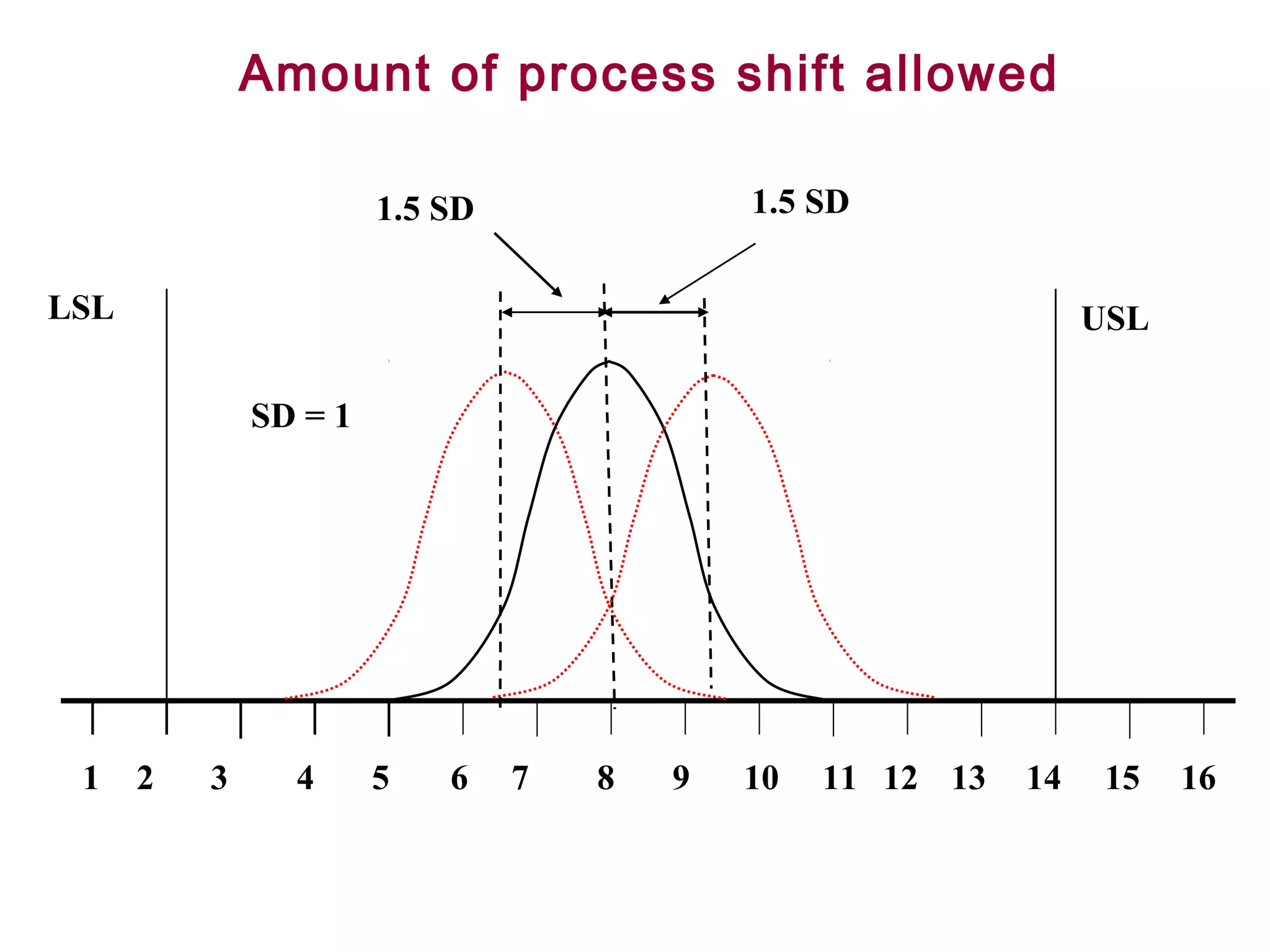
         increase. With Six Sigma requirement the process mean can shift by as much as 1.5
         sigma before the likelihood of non-conforming items is increased. Even if the process
         mean does shift off center by as much as 1.5 sigma, only 3.4 non-conforming items
         per million parts should result.
FICCI                                                                             CE


                    Amount of process shift allowed

                             1.5 SD               1.5 SD


   LSL                                                                 USL

                    SD = 1


        1   2   3     4      5   6    7   8   9   10   11 12 13   14    15   16
FICCI                                                          CE


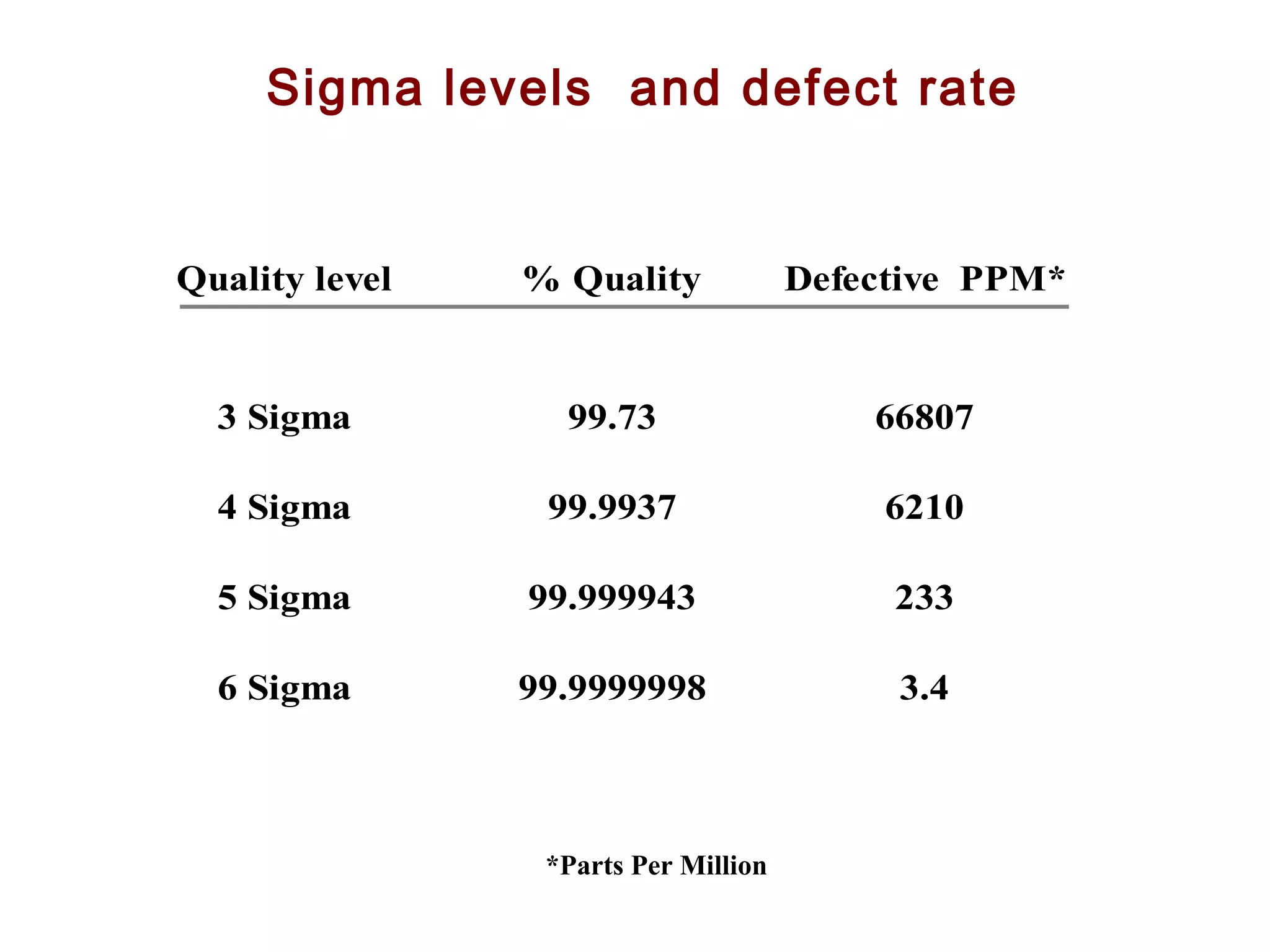
             Sigma levels and defect rate


        Quality level   % Quality             Defective PPM*


          3 Sigma         99.73                   66807

          4 Sigma        99.9937                  6210

          5 Sigma       99.999943                  233

          6 Sigma       99.9999998                 3.4


                         *Parts Per Million
FICCI                                                              CE


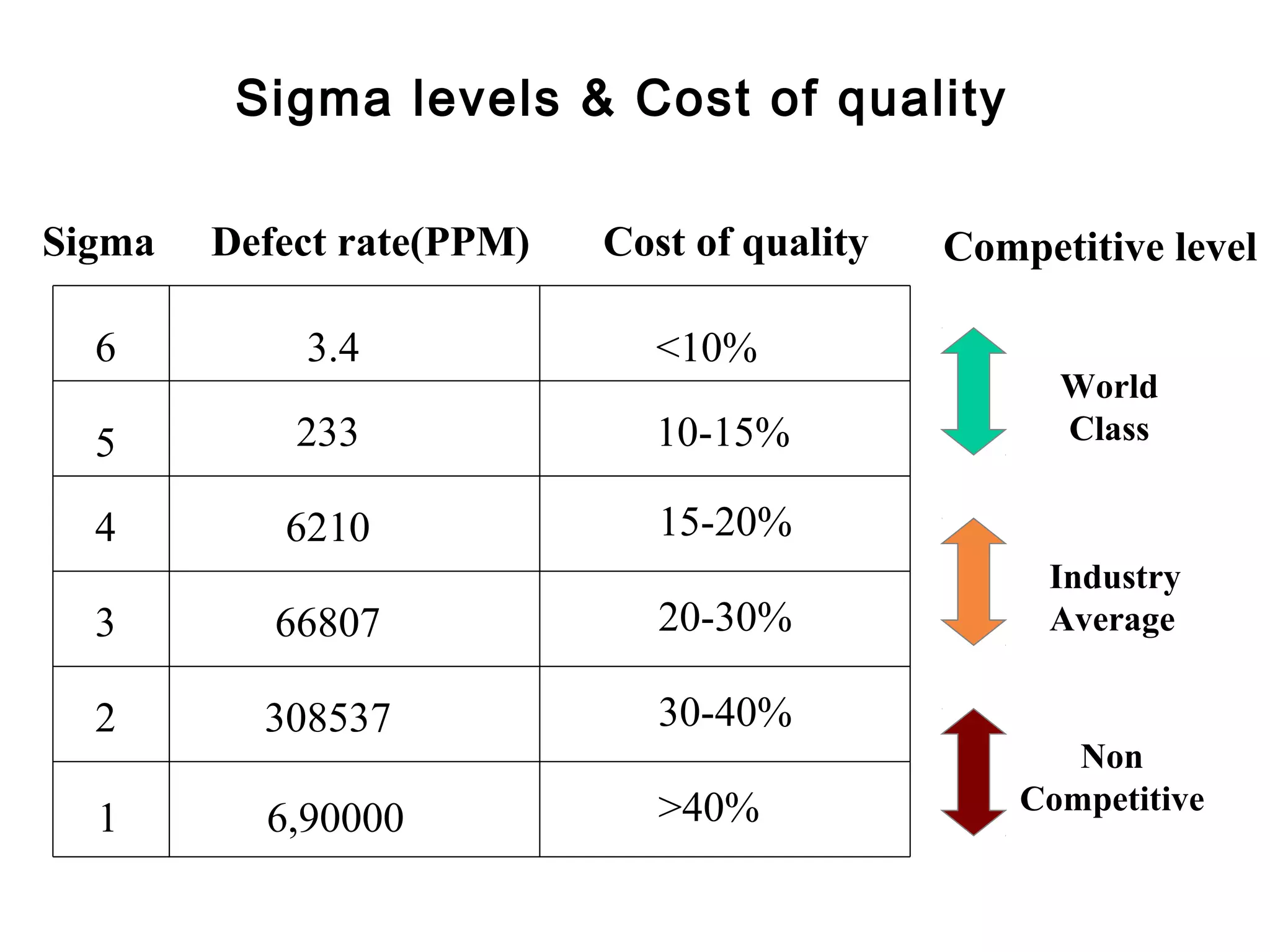
             Sigma levels & Cost of quality

  Sigma     Defect rate(PPM)   Cost of quality   Competitive level

        6       3.4              <10%
                                                       World
        5       233              10-15%                Class

        4      6210               15-20%
                                                      Industry
        3      66807              20-30%              Average

        2     308537              30-40%
                                                        Non
                                  >40%               Competitive
        1     6,90000
FICCI   CE

Six sigma & levels of sigma processes

  • 1.
    FICCI CE Six Sigma
  • 2.
    Six Sigma insimple terms Accurate and Precision Six Sigma can be best explained by using the analogy of a rifle firing at a target.
  • 3.
    Accuracy and precision Withthe center of the target taken to be the true value of the characteristic being measured and by the rifle shots representing the measured values, there are four combinations of accuracy and precision as depicted in the following slides.
  • 4.
  • 5.
  • 6.
  • 7.
  • 8.
    Objectives of SixSigma As observed from the Picturization in the preceding slides, the objective of moving towards world class manufacturing a is to continuously achieve greater consistency of the processes by aiming for higher levels of accuracy & precision
  • 9.
    FICCI CE Sigma in statistical terms Standard deviation is also referred to as the Greek letter sigma in quality management literature. Consequently process variation can be described by how many sigmas ( i.e how many multiples of standard deviation or SD ) fit within the specification limits.The higher this number, the better is the quality and vice versa. Sigma is a statistical measure of the quality consistency for a particular process / product.
  • 10.
    FICCI CE Sigma process From a sigma process we come to know that at what distance, in terms of the standard deviation, the specification limits are placed from the target value.
  • 11.
    FICCI CE Move beyond 3 sigma Until a few years back all statistical process controls were designed on the basis of 3 sigma limits. It is only in the recent years that this concept has been challenged and the organizations have started looking for quality levels beyond 3 Sigma.
  • 12.
    FICCI CE 3 Sigma process Mean=8 LSL SD = 2 USL 1 2 3 4 5 6 7 8 9 10 11 12 13 14 15 16 - 3 SD + 3 SD Note : LSL is Lower specification limit and USL is Upper specification limit.
  • 13.
    FICCI CE 4 Sigma process LSL Mean=8 USL SD = 1.33 1 2 3 4 5 6 7 8 9 10 11 12 13 14 15 16 - 4 SD + 4 SD
  • 14.
    FICCI CE 5 Sigma process Mean=8 LSL SD = 1.07 USL 1 2 3 4 5 6 7 8 9 10 11 12 13 14 15 16 - 5 SD + 5 SD
  • 15.
    FICCI CE 6 Sigma process Mean=8 LSL SD = 1 USL 1 2 3 4 5 6 7 8 9 10 11 12 13 14 15 16 - 6 SD + 6 SD
  • 16.
    FICCI CE Precision Lesser the standard deviation of the process, more precise or consistent is the process
  • 17.
    FICCI CE 3 Sigma Vs 6 Sigma The goal of Six Sigma program is to reduce the variation in every process to such an extent that the spread of 12 sigmas i.e. 6 Sigmas on either side of the mean fits within the process specifications. The figure on next slide shows what this looks like.
  • 18.
    FICCI CE 3 Sigma Vs 6 Sigma 6 Sigma curve LSL USL 3 Sigma curve 1 2 3 4 5 6 7 8 9 10 11 12 13 14 15 16 In a 3 sigma process the values are widely spread along the center line, showing the higher variation of the process. Whereas in a 6 Sigma process, the values are closer to the center line showing less variation in the process.
  • 19.
    FICCI CE 3 Sigma Vs 6 Sigma The comparison on the previous slide also shows a process in which the process spread of Six Sigmas (ie. 3 Sigmas on either side just fits within the specifications). In this case one must be extremely careful to ensure that the process average never slips off the target, otherwise the curve will shift and non-conforming items will increase. With Six Sigma requirement the process mean can shift by as much as 1.5 sigma before the likelihood of non-conforming items is increased. Even if the process mean does shift off center by as much as 1.5 sigma, only 3.4 non-conforming items per million parts should result.
  • 20.
    FICCI CE Amount of process shift allowed 1.5 SD 1.5 SD LSL USL SD = 1 1 2 3 4 5 6 7 8 9 10 11 12 13 14 15 16
  • 21.
    FICCI CE Sigma levels and defect rate Quality level % Quality Defective PPM* 3 Sigma 99.73 66807 4 Sigma 99.9937 6210 5 Sigma 99.999943 233 6 Sigma 99.9999998 3.4 *Parts Per Million
  • 22.
    FICCI CE Sigma levels & Cost of quality Sigma Defect rate(PPM) Cost of quality Competitive level 6 3.4 <10% World 5 233 10-15% Class 4 6210 15-20% Industry 3 66807 20-30% Average 2 308537 30-40% Non >40% Competitive 1 6,90000
  • 23.